
Search
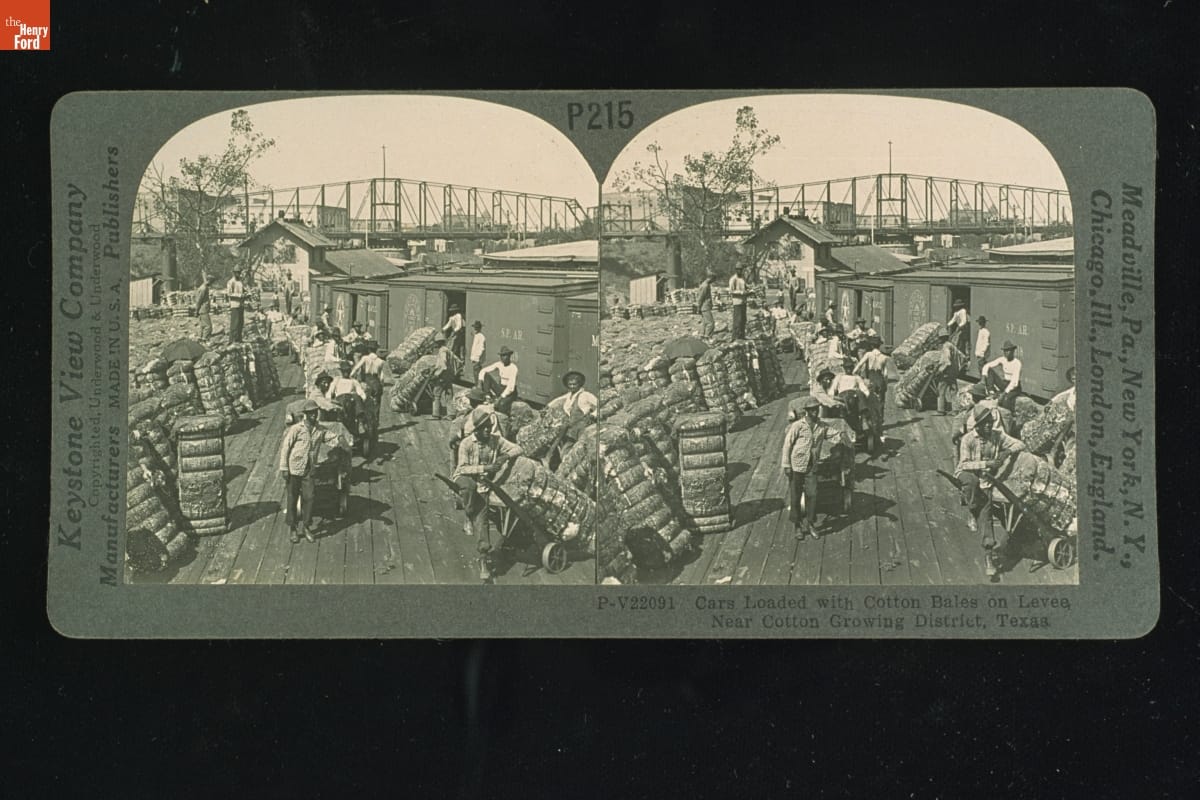
- Cars Loaded with Cotton Bales on Levee, near Cotton Growing District, Texas, circa 1920 -
- circa 1920
- Collections - Artifact
Cars Loaded with Cotton Bales on Levee, near Cotton Growing District, Texas, circa 1920
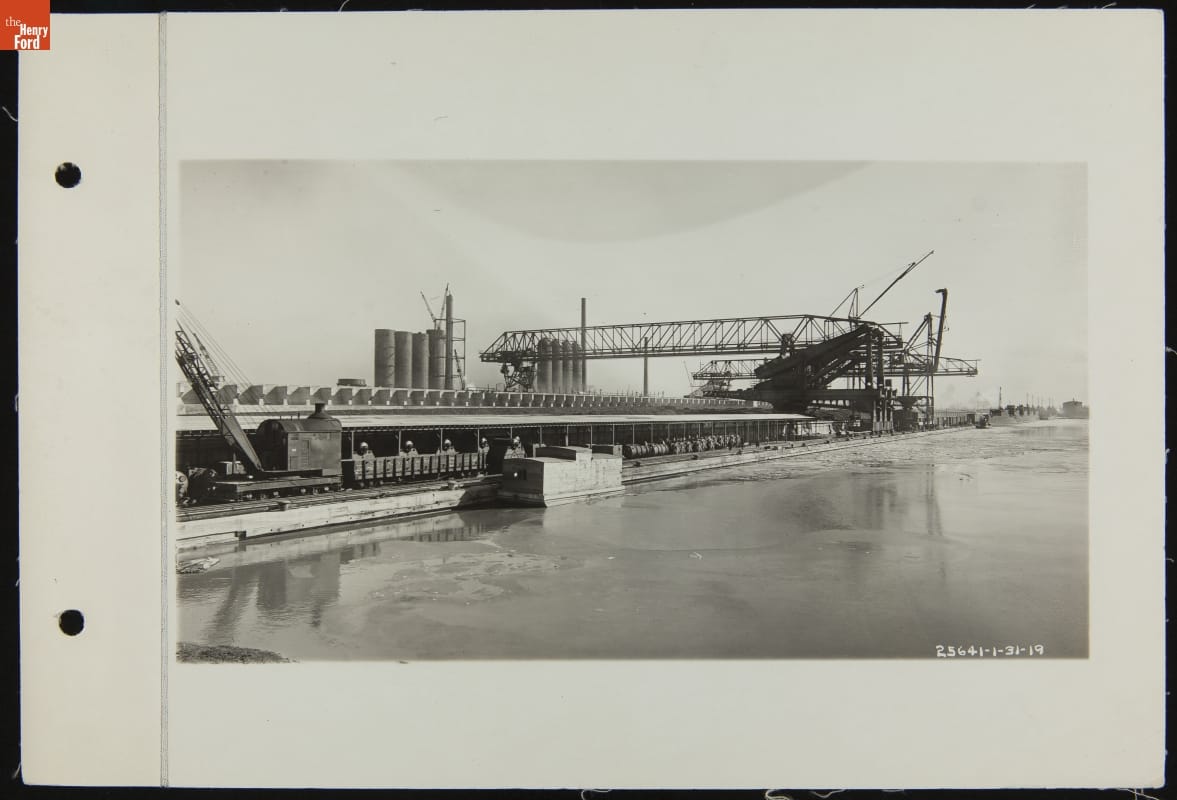
- Unloading Cranes at Dock by the Ford Rouge Plant Blast Furnace, January 1919 - Iron ore and limestone used at the Rouge were sourced from Great Lakes mines and quarries. These bulk commodities generally were delivered to the plant by lake-going freighters. Large cranes at the Rouge's mile-long boat slip unloaded the materials and moved them to nearby storage bins.
- January 31, 1919
- Collections - Artifact
Unloading Cranes at Dock by the Ford Rouge Plant Blast Furnace, January 1919
Iron ore and limestone used at the Rouge were sourced from Great Lakes mines and quarries. These bulk commodities generally were delivered to the plant by lake-going freighters. Large cranes at the Rouge's mile-long boat slip unloaded the materials and moved them to nearby storage bins.
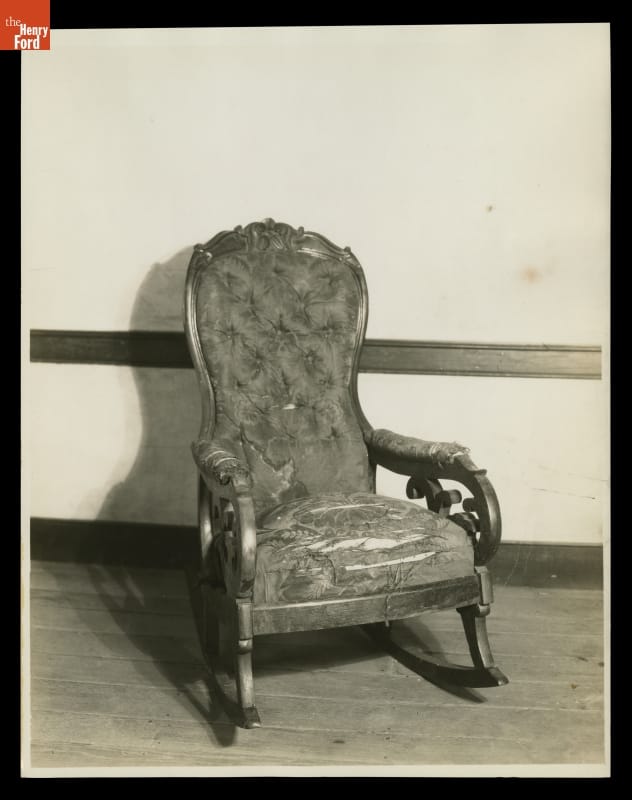
- The Abraham Lincoln Chair after Shipment to Greenfield Village, January 1930 - Henry Ford identified with self-made men who came from humble origins -- traits personified by Abraham Lincoln. In the late 1920s Ford began to acquire significant Lincoln-related artifacts including the chair in which President Lincoln had been sitting when he was shot. Ford clearly understood the chair's importance -- this rocker became a symbol of Lincoln's vision and personal sacrifice. Ford had the chair's arrival and unpacking filmed and photographed.
- January 06, 1930
- Collections - Artifact
The Abraham Lincoln Chair after Shipment to Greenfield Village, January 1930
Henry Ford identified with self-made men who came from humble origins -- traits personified by Abraham Lincoln. In the late 1920s Ford began to acquire significant Lincoln-related artifacts including the chair in which President Lincoln had been sitting when he was shot. Ford clearly understood the chair's importance -- this rocker became a symbol of Lincoln's vision and personal sacrifice. Ford had the chair's arrival and unpacking filmed and photographed.
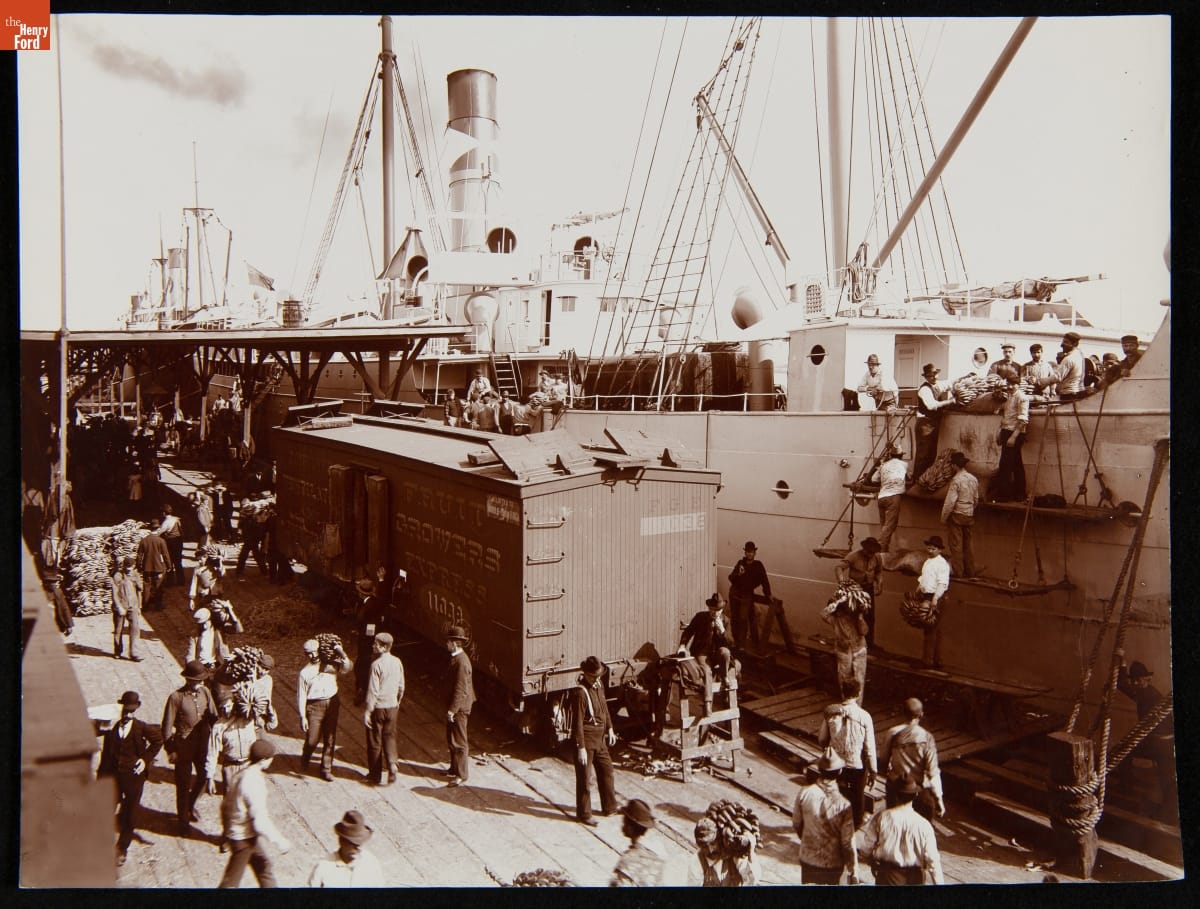
- Unloading Bananas from Steamer, New Orleans, Louisiana, 1900-1910 - Bananas arrived on grocery store shelves via a transportation system controlled by competing fruit companies and their government allies. Refrigerated railcars moved the crop from Central American plantations to ships bound for U.S. ports in the Gulf of Mexico. This photograph shows dockworkers in New Orleans, Louisiana, transferring bunches of bananas -- each weighing around 86 pounds -- to a refrigerated railcar for transport to market.
- 1900-1910
- Collections - Artifact
Unloading Bananas from Steamer, New Orleans, Louisiana, 1900-1910
Bananas arrived on grocery store shelves via a transportation system controlled by competing fruit companies and their government allies. Refrigerated railcars moved the crop from Central American plantations to ships bound for U.S. ports in the Gulf of Mexico. This photograph shows dockworkers in New Orleans, Louisiana, transferring bunches of bananas -- each weighing around 86 pounds -- to a refrigerated railcar for transport to market.
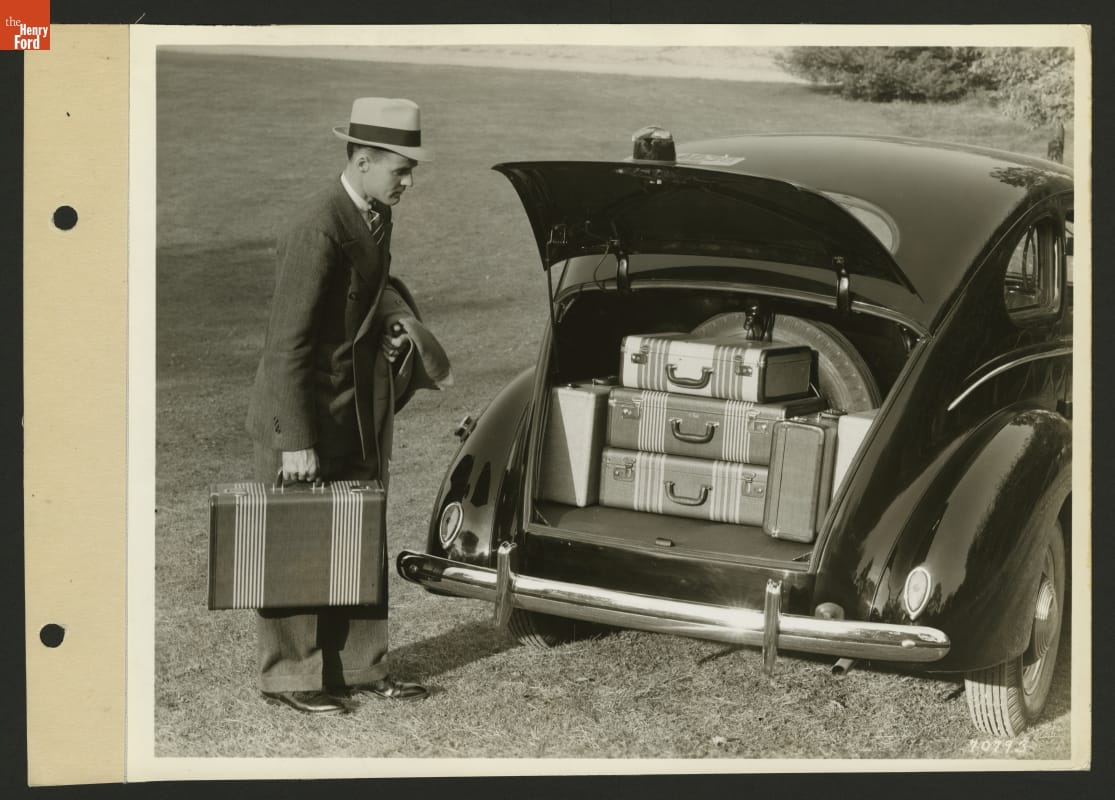
- Loading Luggage into the Trunk of 1939 Ford V-8 Automobile - Packing was easier by the late 1930s, when cars had integrated trunks. In this photograph, Ford promoted the spacious trunk of its 1939 V-8 Fordor Sedan.
- October 04, 1938
- Collections - Artifact
Loading Luggage into the Trunk of 1939 Ford V-8 Automobile
Packing was easier by the late 1930s, when cars had integrated trunks. In this photograph, Ford promoted the spacious trunk of its 1939 V-8 Fordor Sedan.
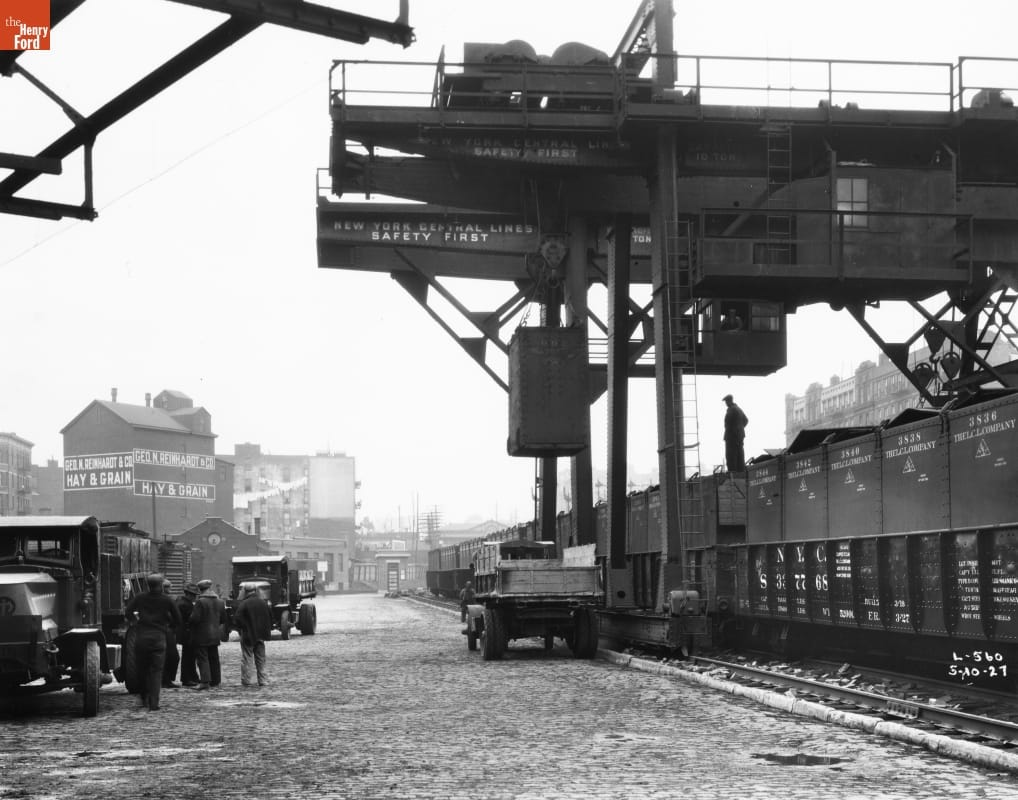
- Crane Unloading Cargo from Railroad Cars into a Mack Model AC Dump Truck. 1927 - Mack AC trucks were introduced in 1916 and were continuously manufactured through 1939. During that time span, AC trucks earned a sterling reputation for their reliability and durability. Aside from the civilian tasks that these trucks accomplished, the Mack AC gained international fame for its military service in World War I -- along with the nickname "Bulldog," coined by British engineers.
- May 10, 1927
- Collections - Artifact
Crane Unloading Cargo from Railroad Cars into a Mack Model AC Dump Truck. 1927
Mack AC trucks were introduced in 1916 and were continuously manufactured through 1939. During that time span, AC trucks earned a sterling reputation for their reliability and durability. Aside from the civilian tasks that these trucks accomplished, the Mack AC gained international fame for its military service in World War I -- along with the nickname "Bulldog," coined by British engineers.
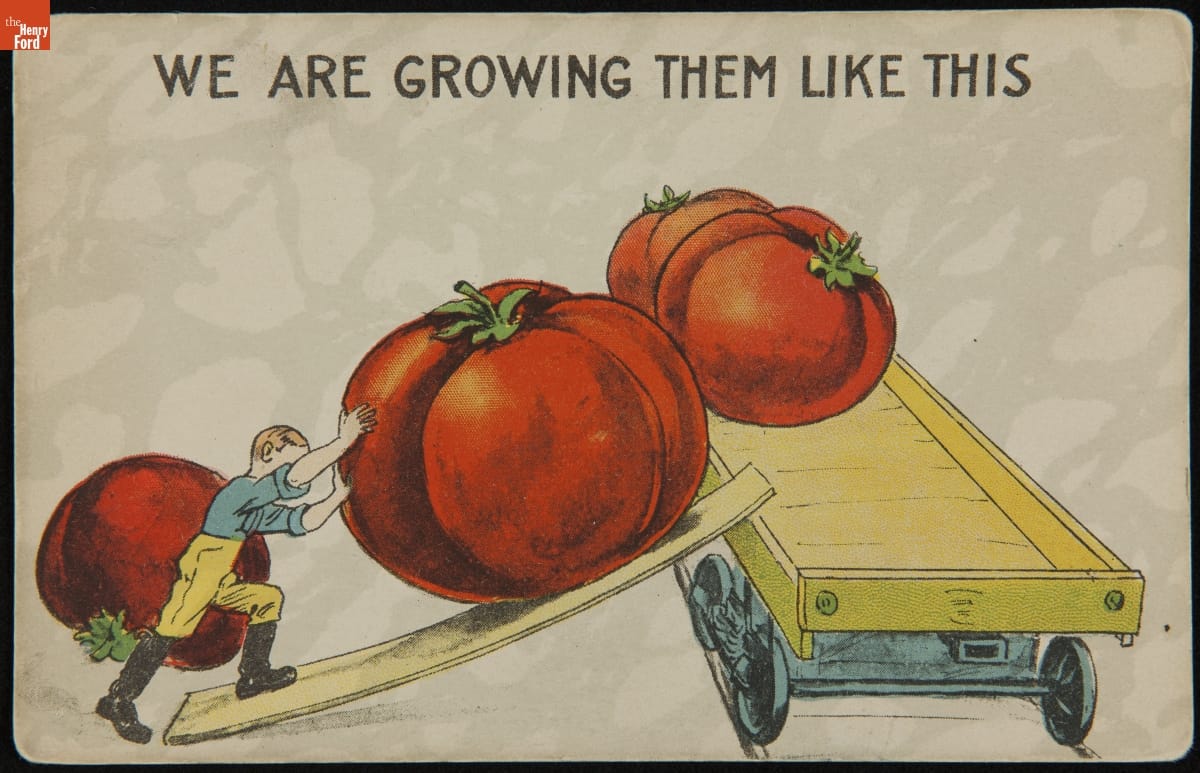
- Postcard, "We Are Growing Them Like This," circa 1910 -
- circa 1910
- Collections - Artifact
Postcard, "We Are Growing Them Like This," circa 1910
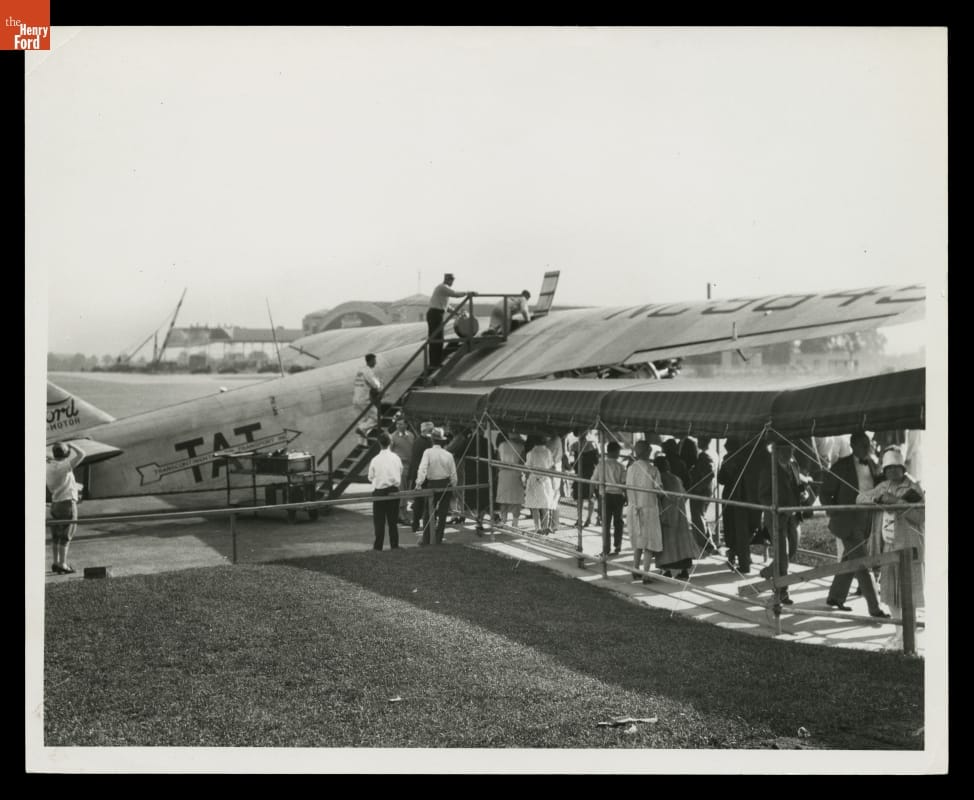
- Loading Passengers and Luggage on a Ford Tri-Motor Transcontinental Air Transport Flight, 1929-1930 - Passengers, protected from weather by a covered walkway, board a Ford Tri-Motor for a Transcontinental Air Transport flight. Their luggage is being loaded into a compartment built into the airplane's wing. The unusual storage arrangement provided room for cargo without taking up any of the limited space in the cabin.
- 1929-1930
- Collections - Artifact
Loading Passengers and Luggage on a Ford Tri-Motor Transcontinental Air Transport Flight, 1929-1930
Passengers, protected from weather by a covered walkway, board a Ford Tri-Motor for a Transcontinental Air Transport flight. Their luggage is being loaded into a compartment built into the airplane's wing. The unusual storage arrangement provided room for cargo without taking up any of the limited space in the cabin.
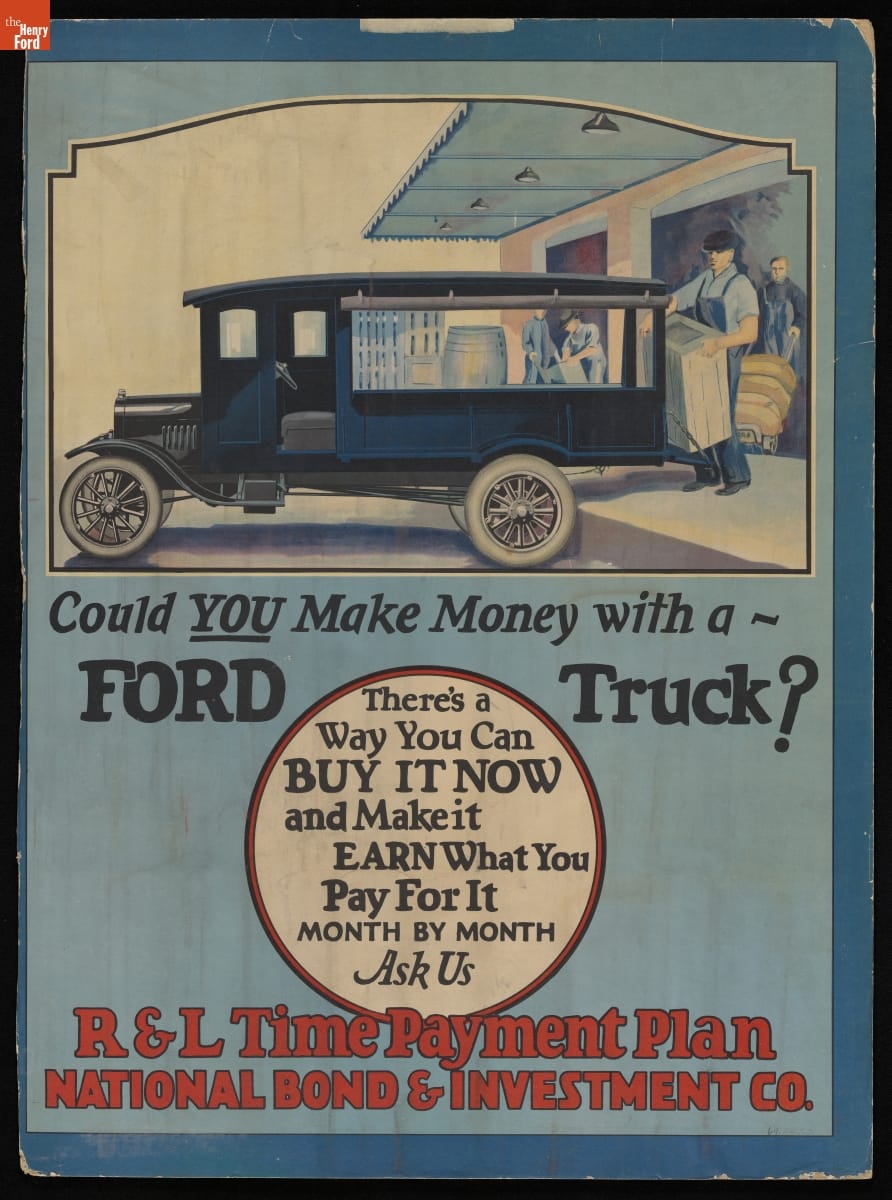
- Advertising Poster, "Could YOU Make Money With a Ford Truck?," circa 1925 - In the late nineteenth century, printers developed a lithograph method that produced brightly colored posters. Manufacturers quickly adopted the new poster style to advertise their products. This poster promotes the R&L Time Payment Plan to buy a Ford Model T vehicle. A novel concept, the National Bond & Investment Company probably offered its time payment plan through Ford dealerships.
- circa 1925
- Collections - Artifact
Advertising Poster, "Could YOU Make Money With a Ford Truck?," circa 1925
In the late nineteenth century, printers developed a lithograph method that produced brightly colored posters. Manufacturers quickly adopted the new poster style to advertise their products. This poster promotes the R&L Time Payment Plan to buy a Ford Model T vehicle. A novel concept, the National Bond & Investment Company probably offered its time payment plan through Ford dealerships.
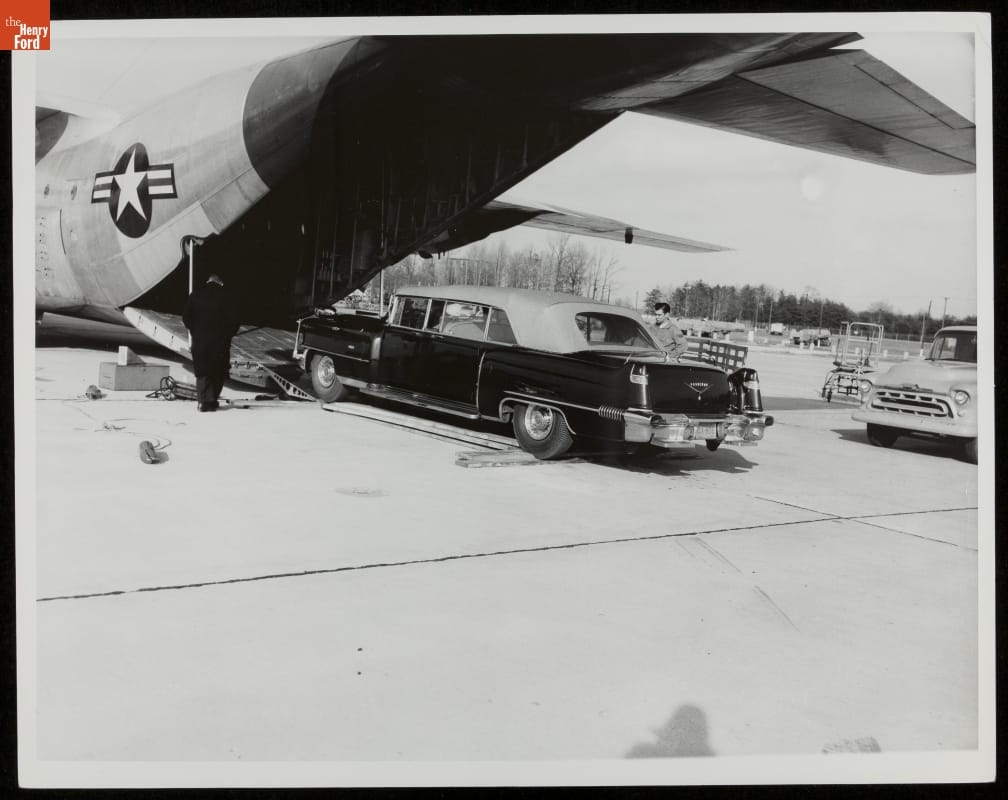
- Loading the 1956 Cadillac Presidential Limousine into C-130 Hercules Transport Plane, 1964 - Around 1960, the United States Secret Service began using one of Lockheed's versatile C-130 Hercules transport aircraft to carry presidential vehicles. This was faster and more direct than shipping state cars ahead of the President via railcar or boat -- though loading lengthy automobiles into the plane's cargo compartment was a persistent challenge.
- August 21, 1964
- Collections - Artifact
Loading the 1956 Cadillac Presidential Limousine into C-130 Hercules Transport Plane, 1964
Around 1960, the United States Secret Service began using one of Lockheed's versatile C-130 Hercules transport aircraft to carry presidential vehicles. This was faster and more direct than shipping state cars ahead of the President via railcar or boat -- though loading lengthy automobiles into the plane's cargo compartment was a persistent challenge.