
Search
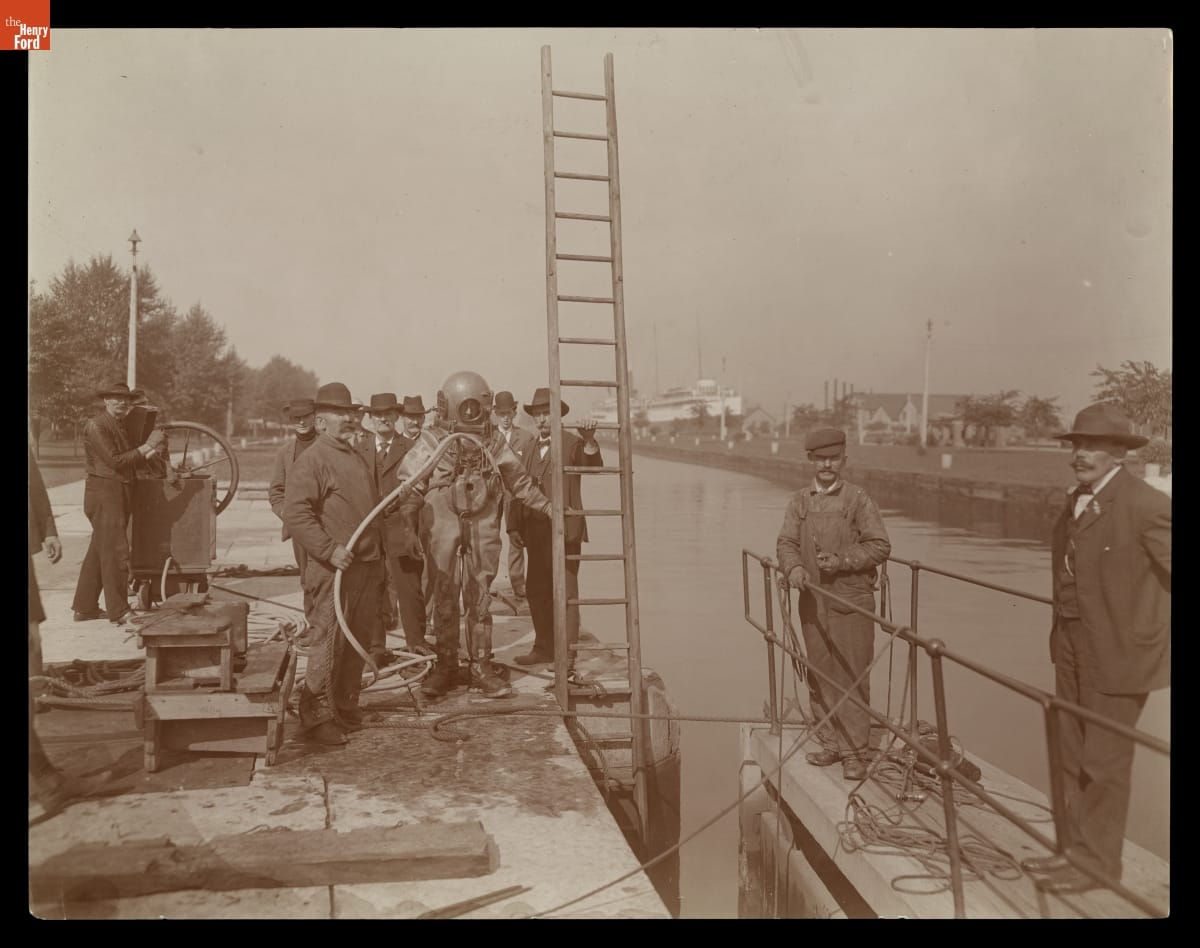
- Diver Repairing a Lock Gate at Sault Sainte Marie, Michigan, 1908 - The first lock at Sault Ste. Marie, Michigan, opened in 1855. It allowed boats to navigate the 21-foot climb from Lake Huron to Lake Superior along the St. Marys River. Over time, additional locks were built on the American and Canadian sides of the river. The Soo Locks became one of the world's busiest waterways -- despite being closed in winter.
- 1908
- Collections - Artifact
Diver Repairing a Lock Gate at Sault Sainte Marie, Michigan, 1908
The first lock at Sault Ste. Marie, Michigan, opened in 1855. It allowed boats to navigate the 21-foot climb from Lake Huron to Lake Superior along the St. Marys River. Over time, additional locks were built on the American and Canadian sides of the river. The Soo Locks became one of the world's busiest waterways -- despite being closed in winter.
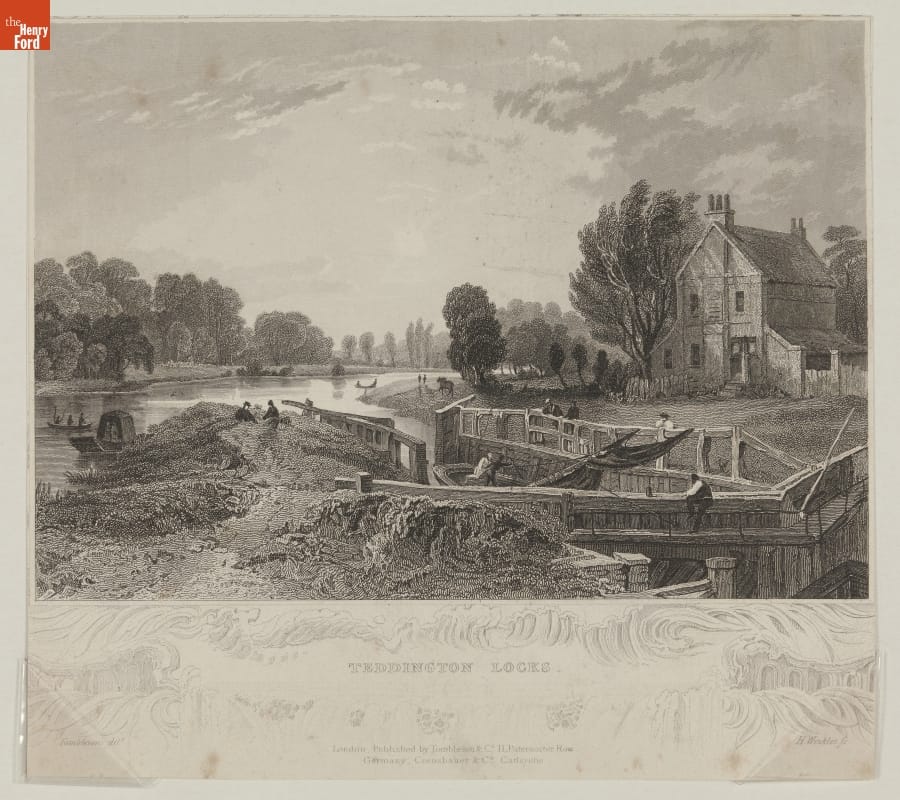
- Steel Engraving, "Teddington Locks," circa 1837 - Before railroads, rivers provided quick transportation routes for people and goods. But rapids and dams impeded a boat's movement. To avert these obstacles, a lock was built to lift or lower a boat from one navigable section of a waterway to another. This steel engraving, done about 1837, depicts the Teddington locks on the River Thames in England.
- 1835-1840
- Collections - Artifact
Steel Engraving, "Teddington Locks," circa 1837
Before railroads, rivers provided quick transportation routes for people and goods. But rapids and dams impeded a boat's movement. To avert these obstacles, a lock was built to lift or lower a boat from one navigable section of a waterway to another. This steel engraving, done about 1837, depicts the Teddington locks on the River Thames in England.
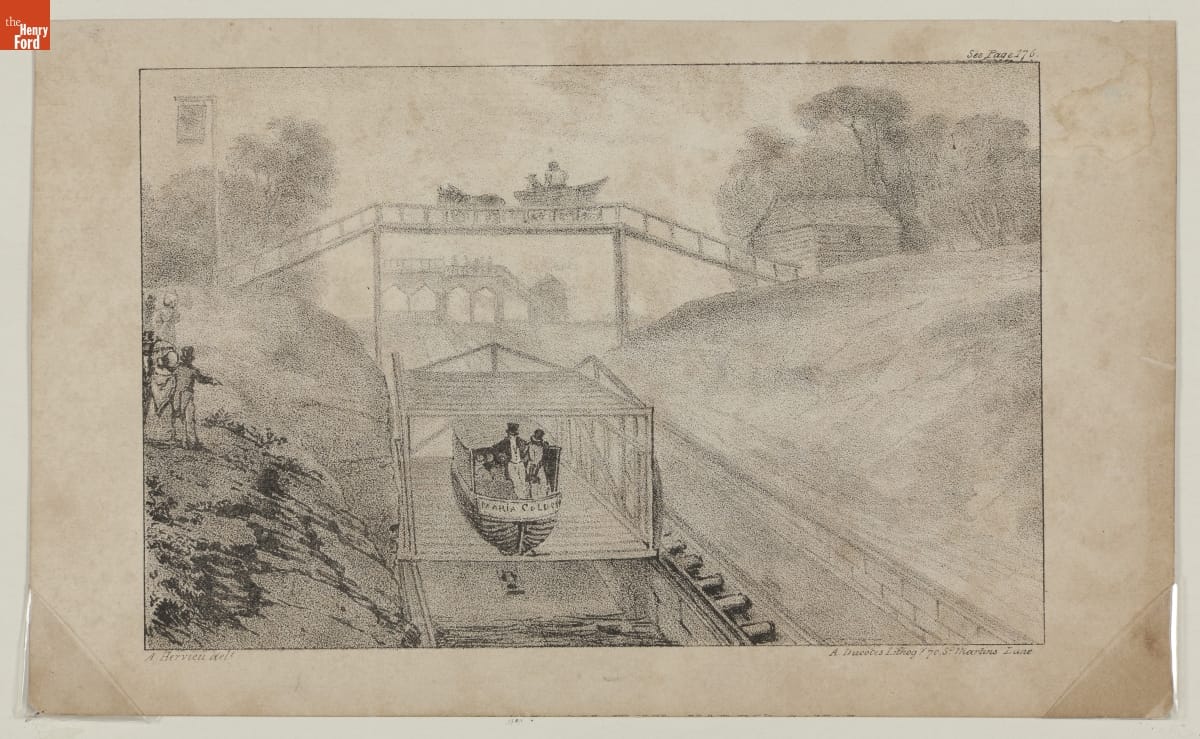
- Lithograph, Canal Boat on New Jersey Canal, circa 1830 - This image illustrates a method of shifting boats from one level to another that was used on parts of New Jersey canals. A boat was floated, and then fastened, on a submerged wheeled cradle. The cradle was then lowered or pulled up an inclined plane. At the new level the cradle moved on submerged tracks, and the boat was released.
- circa 1830
- Collections - Artifact
Lithograph, Canal Boat on New Jersey Canal, circa 1830
This image illustrates a method of shifting boats from one level to another that was used on parts of New Jersey canals. A boat was floated, and then fastened, on a submerged wheeled cradle. The cradle was then lowered or pulled up an inclined plane. At the new level the cradle moved on submerged tracks, and the boat was released.
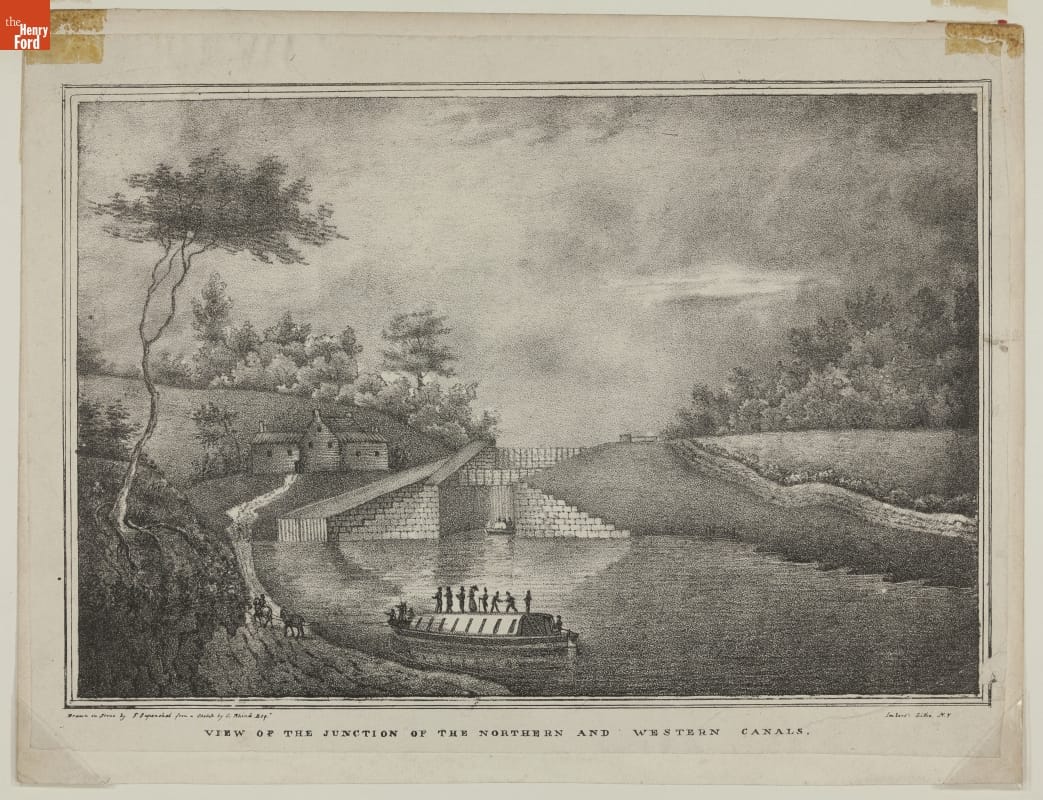
- Lithograph, "View of the Junction of the Northern and Western Canals," 1825 - The construction of Erie Canal, connecting the Hudson River to Lake Erie, began in 1817 and completed in 1825, opened the Midwest of the United States to settlement and commerce. Passengers assembled on the roof of a packet boat on the Erie Canal to watch the process of pulling the boat through a lock, while experienced travelers remained below.
- 1825
- Collections - Artifact
Lithograph, "View of the Junction of the Northern and Western Canals," 1825
The construction of Erie Canal, connecting the Hudson River to Lake Erie, began in 1817 and completed in 1825, opened the Midwest of the United States to settlement and commerce. Passengers assembled on the roof of a packet boat on the Erie Canal to watch the process of pulling the boat through a lock, while experienced travelers remained below.
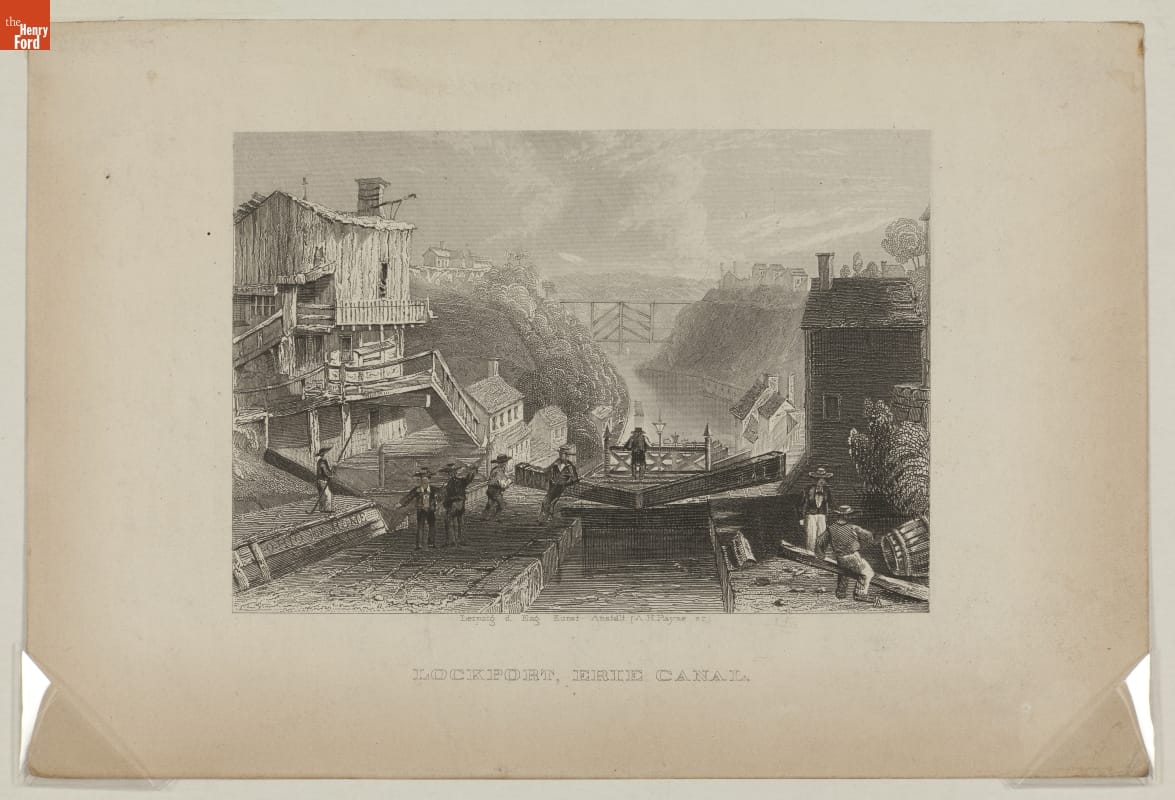
- Steel Engraving, "Lockport, Erie Canal," circa 1850 - The first half of the 19th century was the heyday of canal construction in the United States. The Erie Canal, connecting Albany, New York, with Buffalo, New York, began in 1817 and was completed in 1825. This print shows the canal from the top of the series of locks at Lockport, one of the most difficult portions of this canal's construction.
- circa 1850
- Collections - Artifact
Steel Engraving, "Lockport, Erie Canal," circa 1850
The first half of the 19th century was the heyday of canal construction in the United States. The Erie Canal, connecting Albany, New York, with Buffalo, New York, began in 1817 and was completed in 1825. This print shows the canal from the top of the series of locks at Lockport, one of the most difficult portions of this canal's construction.
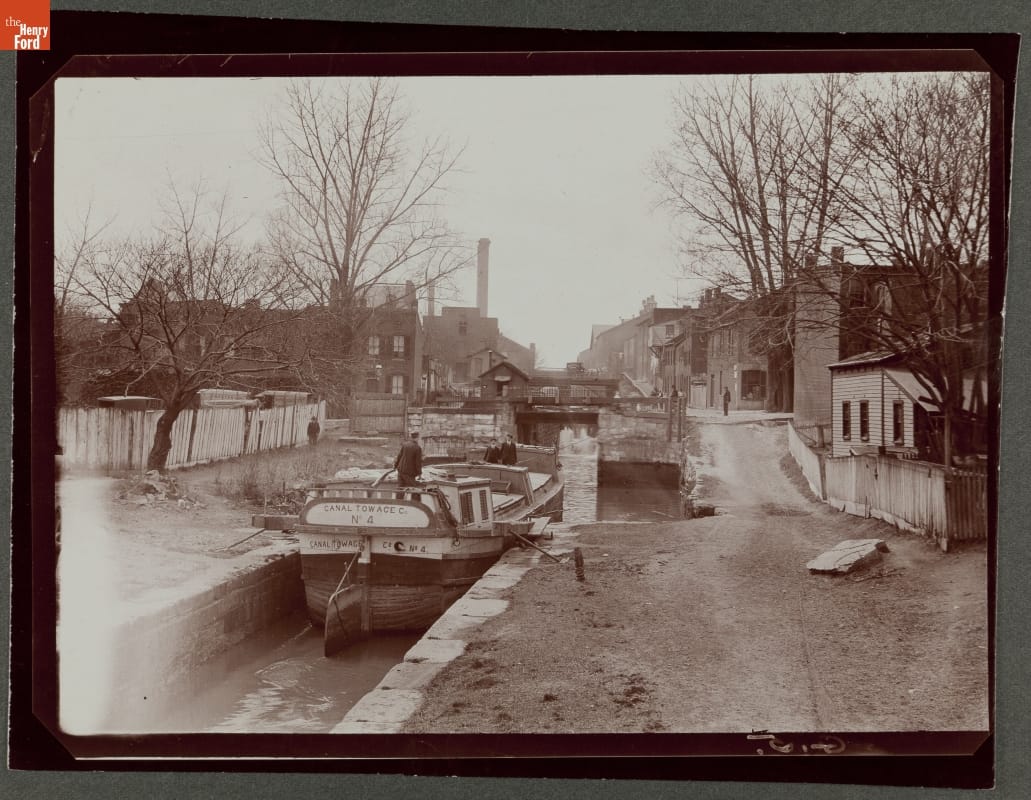
- The Lower Locks, Chesapeake and Ohio Canal, Washington D.C., 1910-1920 - President George Washington was devoted to improving the Potomac, the only river bisecting the Appalachian mountain barrier and an important trade route. Americans continued work on the waterway, completing the Chesapeake and Ohio Canal in 1850. This photograph shows a boat using one of many lift locks, which raised or lowered water to make the canal navigable.
- 1910-1920
- Collections - Artifact
The Lower Locks, Chesapeake and Ohio Canal, Washington D.C., 1910-1920
President George Washington was devoted to improving the Potomac, the only river bisecting the Appalachian mountain barrier and an important trade route. Americans continued work on the waterway, completing the Chesapeake and Ohio Canal in 1850. This photograph shows a boat using one of many lift locks, which raised or lowered water to make the canal navigable.
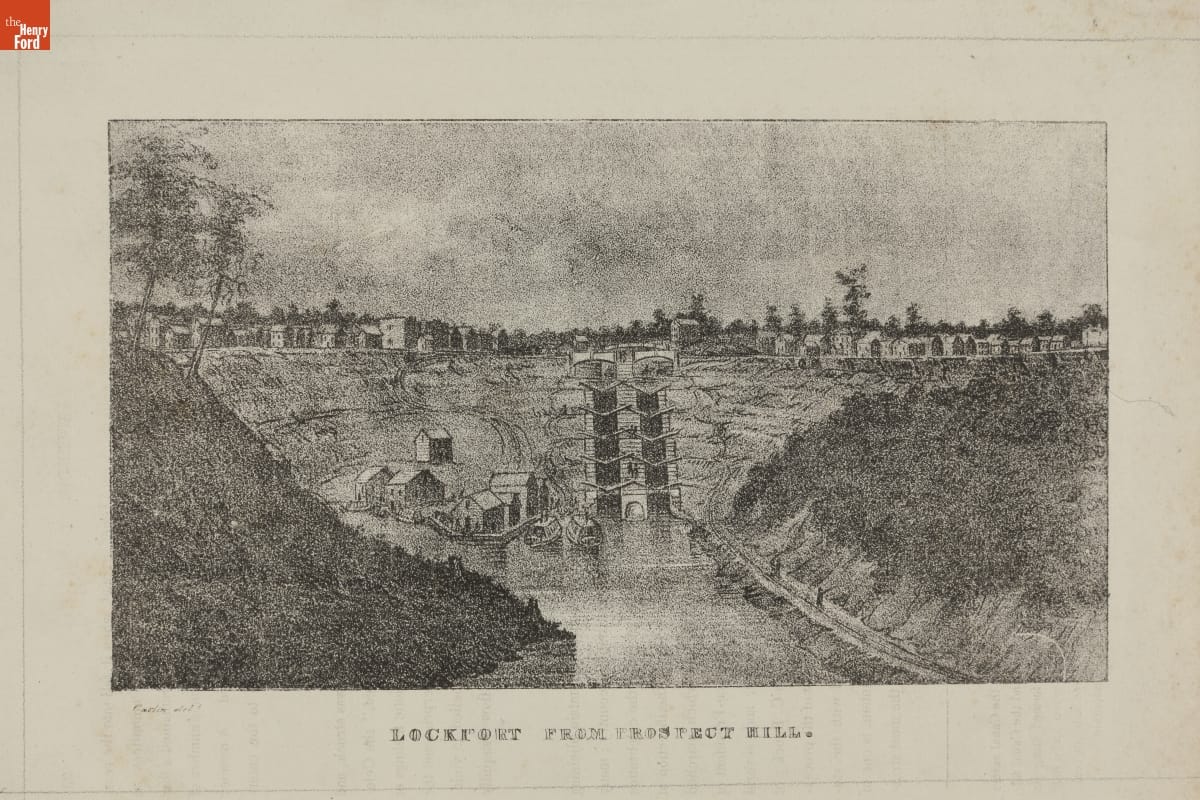
- "Lockport from Prospect Hill," 1825 - The construction of Erie Canal, connecting the Hudson River to Lake Erie, began in 1817 and completed in 1825, opened the Midwest of the United States to settlement and commerce. This lithograph illustrates a view from Prospect Hill of the locks at Lockport, New York.
- 1825
- Collections - Artifact
"Lockport from Prospect Hill," 1825
The construction of Erie Canal, connecting the Hudson River to Lake Erie, began in 1817 and completed in 1825, opened the Midwest of the United States to settlement and commerce. This lithograph illustrates a view from Prospect Hill of the locks at Lockport, New York.
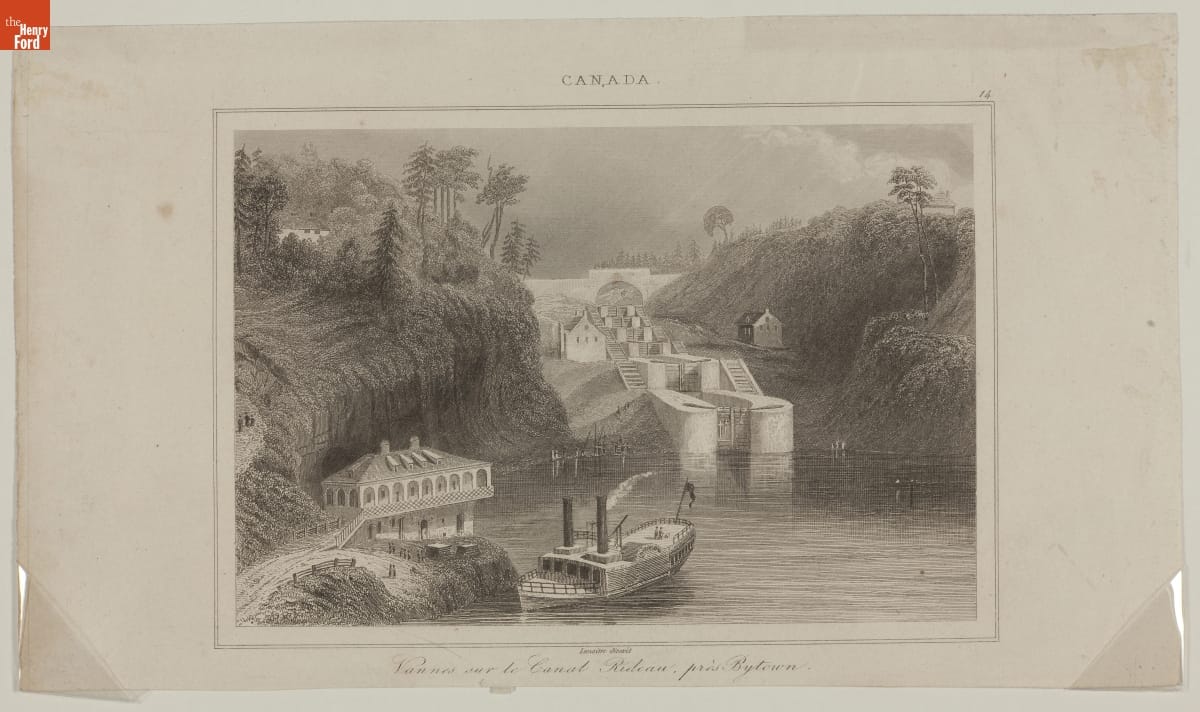
- Steel Engraving, Series of Locks on the Rideau Canal at Ottawa, Canada, circa 1847 - This 1840s engraving features a series of locks in the Rideau Canal near Bytown, now Ottawa, Canada. Construction of the Rideau Canal began in 1826, connecting Ottawa to Kingston, Ontario on Lake Ontario. The Rideau Canal, or Rideau Waterway, is still in use today, with most of its original structures still intact, and registered as an UNESCO World Heritage Site.
- circa 1847
- Collections - Artifact
Steel Engraving, Series of Locks on the Rideau Canal at Ottawa, Canada, circa 1847
This 1840s engraving features a series of locks in the Rideau Canal near Bytown, now Ottawa, Canada. Construction of the Rideau Canal began in 1826, connecting Ottawa to Kingston, Ontario on Lake Ontario. The Rideau Canal, or Rideau Waterway, is still in use today, with most of its original structures still intact, and registered as an UNESCO World Heritage Site.
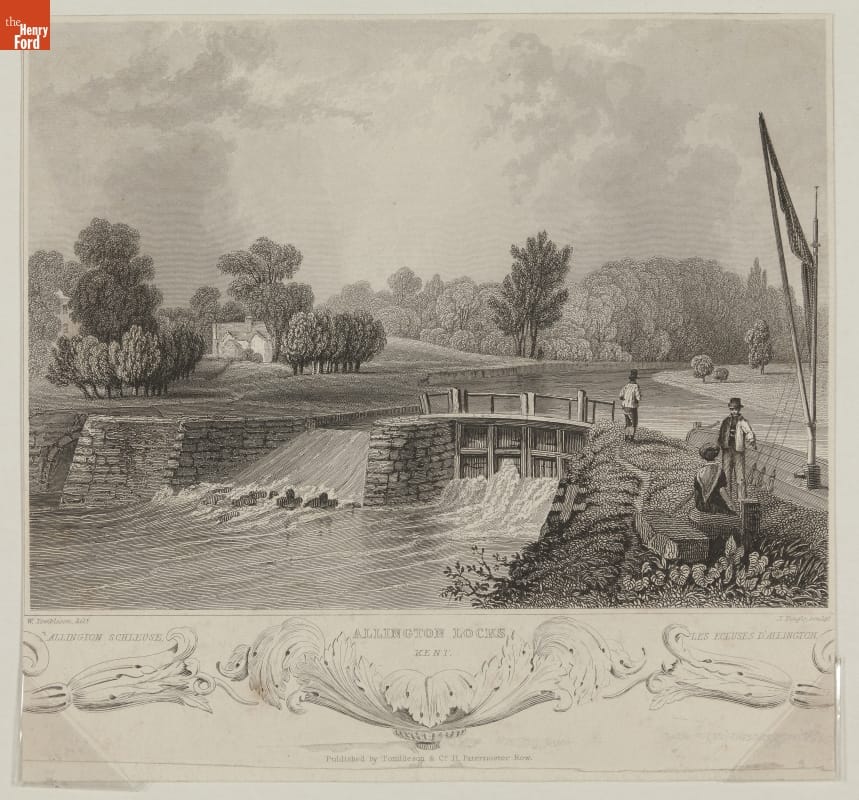
- Steel Engraving, Allington Locks, Kent.," circa 1837 - Before railroads, rivers provided quick transportation routes for people and goods. But rapids and dams impeded a boat's movement. To avert these obstacles, a lock was built to lift or lower a boat from one navigable section of a waterway to another. This steel engraving, done about 1837, depicts the Allington locks on the River Medway in England.
- circa 1837
- Collections - Artifact
Steel Engraving, Allington Locks, Kent.," circa 1837
Before railroads, rivers provided quick transportation routes for people and goods. But rapids and dams impeded a boat's movement. To avert these obstacles, a lock was built to lift or lower a boat from one navigable section of a waterway to another. This steel engraving, done about 1837, depicts the Allington locks on the River Medway in England.
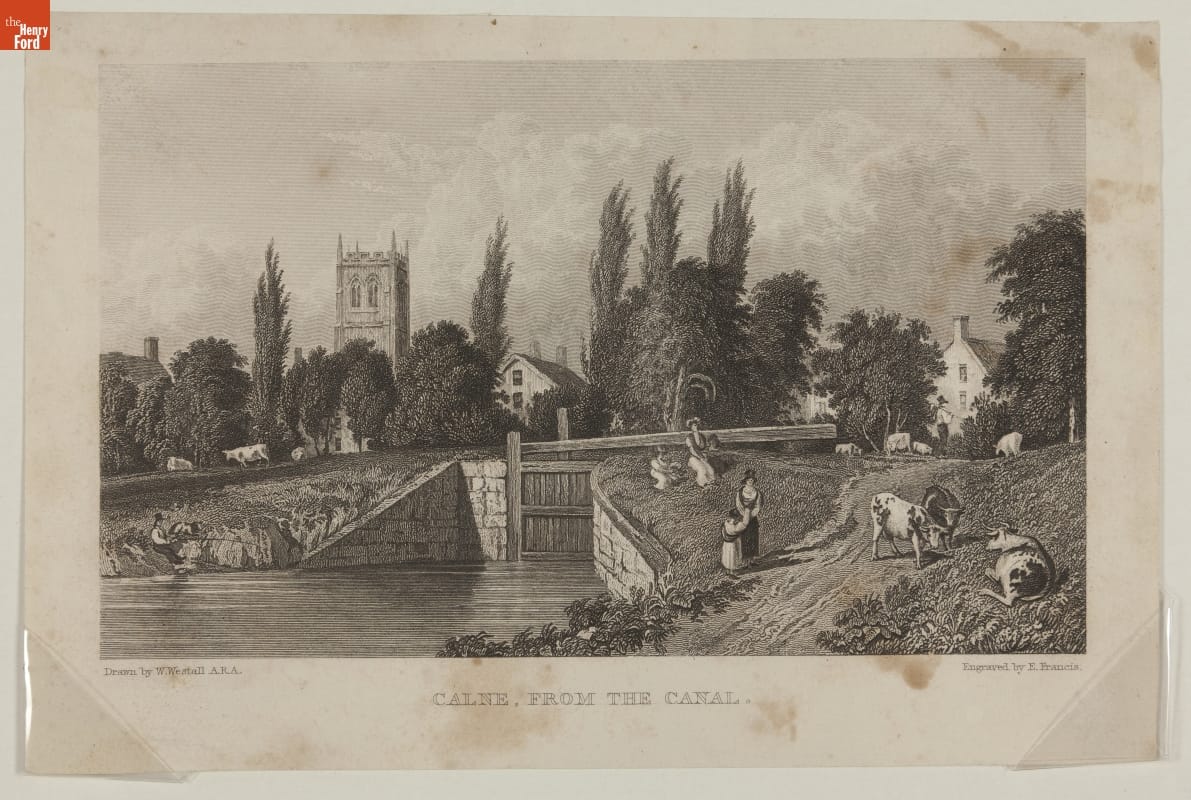
- "Calne, from the Canal" (Small English Canal Lock depicted 1835-1840), Steel Engraving - Before railroads, rivers provided quick transportation routes for people and goods. Canals connected these waterways and opened up new areas to increased trade. Locks lifted or lowered a boat from one navigable section to another. This steel engraving depicts the canal locks at Calne, England.
- 1835-1840
- Collections - Artifact
"Calne, from the Canal" (Small English Canal Lock depicted 1835-1840), Steel Engraving
Before railroads, rivers provided quick transportation routes for people and goods. Canals connected these waterways and opened up new areas to increased trade. Locks lifted or lowered a boat from one navigable section to another. This steel engraving depicts the canal locks at Calne, England.