
Search
- Train with Steam Locomotive, Passenger and Freight Cars, circa 1856 - Locomotive boilers had to stay hot to produce steam. Lagging -- insulation around the boiler -- was crucial. This American-type locomotive of the 1850s had narrow wooden strips mounted around its boiler for insulation. But the wood deteriorated quickly when exposed to weather and sparks. Improved designs placed a protective sheet metal jacket over the wood.
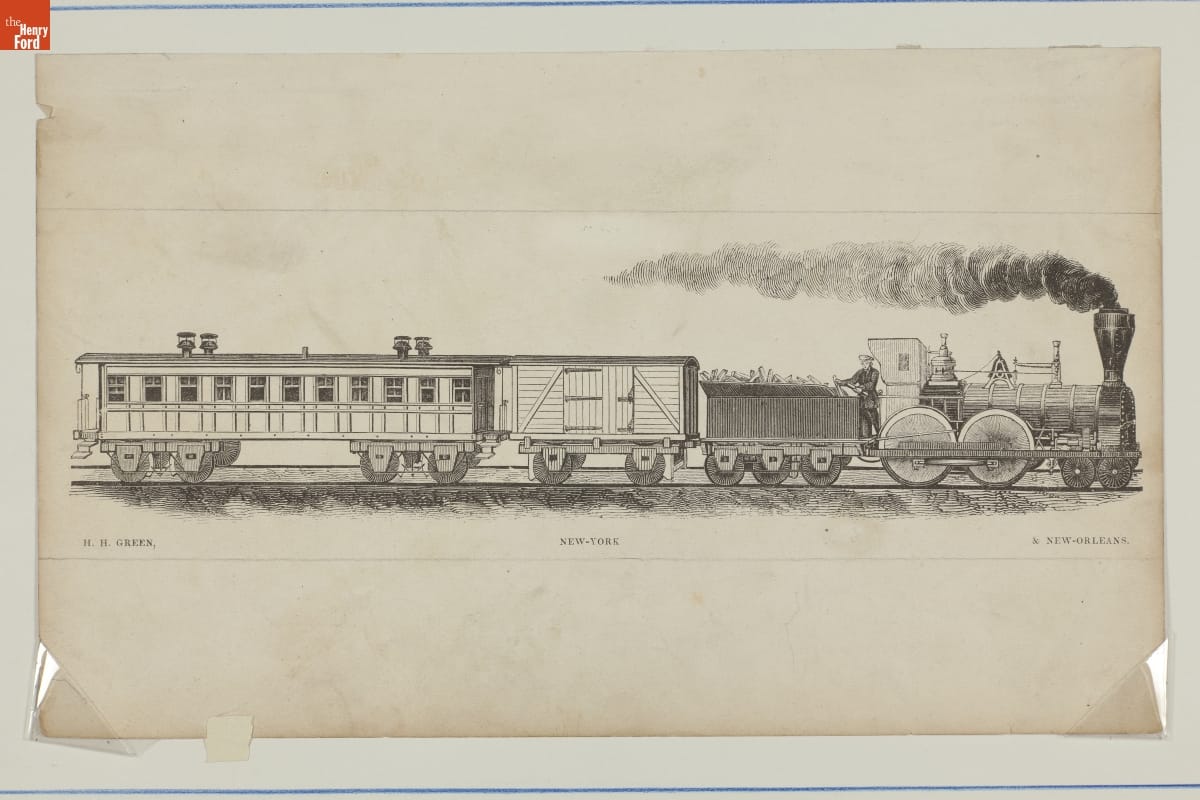
- circa 1856
- Collections - Artifact
Train with Steam Locomotive, Passenger and Freight Cars, circa 1856
Locomotive boilers had to stay hot to produce steam. Lagging -- insulation around the boiler -- was crucial. This American-type locomotive of the 1850s had narrow wooden strips mounted around its boiler for insulation. But the wood deteriorated quickly when exposed to weather and sparks. Improved designs placed a protective sheet metal jacket over the wood.
- Letter from E.P. Goodrich to Ann Goodrich, 1851 - This 1851 letter describes a trip on the Michigan Central Railroad from Detroit to Chicago. Author E.P. Goodrich colorfully relates the trials of mid-19th-century rail travel. Equipment breakdowns, smoke, and cinders were common, and average speeds were low. Because the Michigan Central wasn't completed into Chicago until 1852, Goodrich finished his journey by steamboat from New Buffalo across Lake Michigan.
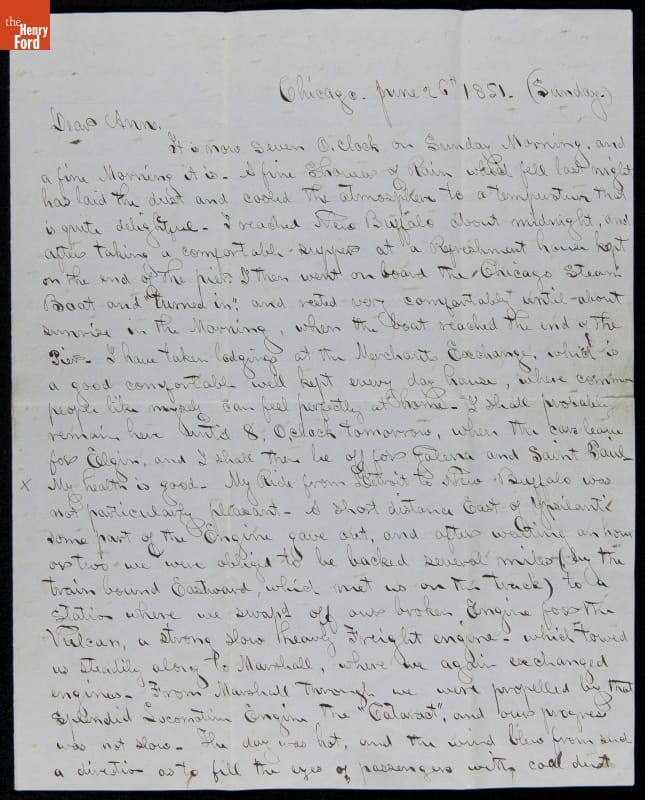
- June 26, 1851
- Collections - Artifact
Letter from E.P. Goodrich to Ann Goodrich, 1851
This 1851 letter describes a trip on the Michigan Central Railroad from Detroit to Chicago. Author E.P. Goodrich colorfully relates the trials of mid-19th-century rail travel. Equipment breakdowns, smoke, and cinders were common, and average speeds were low. Because the Michigan Central wasn't completed into Chicago until 1852, Goodrich finished his journey by steamboat from New Buffalo across Lake Michigan.
- H.K. Porter Company Catalog, "Porter Steam Locomotives," 1943 - Founded in 1866, the H.K. Porter Company of Pittsburgh, Pennsylvania, built light industrial locomotives. These smaller engines were used in mines, mills, factories, construction sites, agricultural operations, and other specialized applications. Porter manufactured more than 8,000 steam, gasoline, and diesel-powered locomotives before exiting the business in 1950.
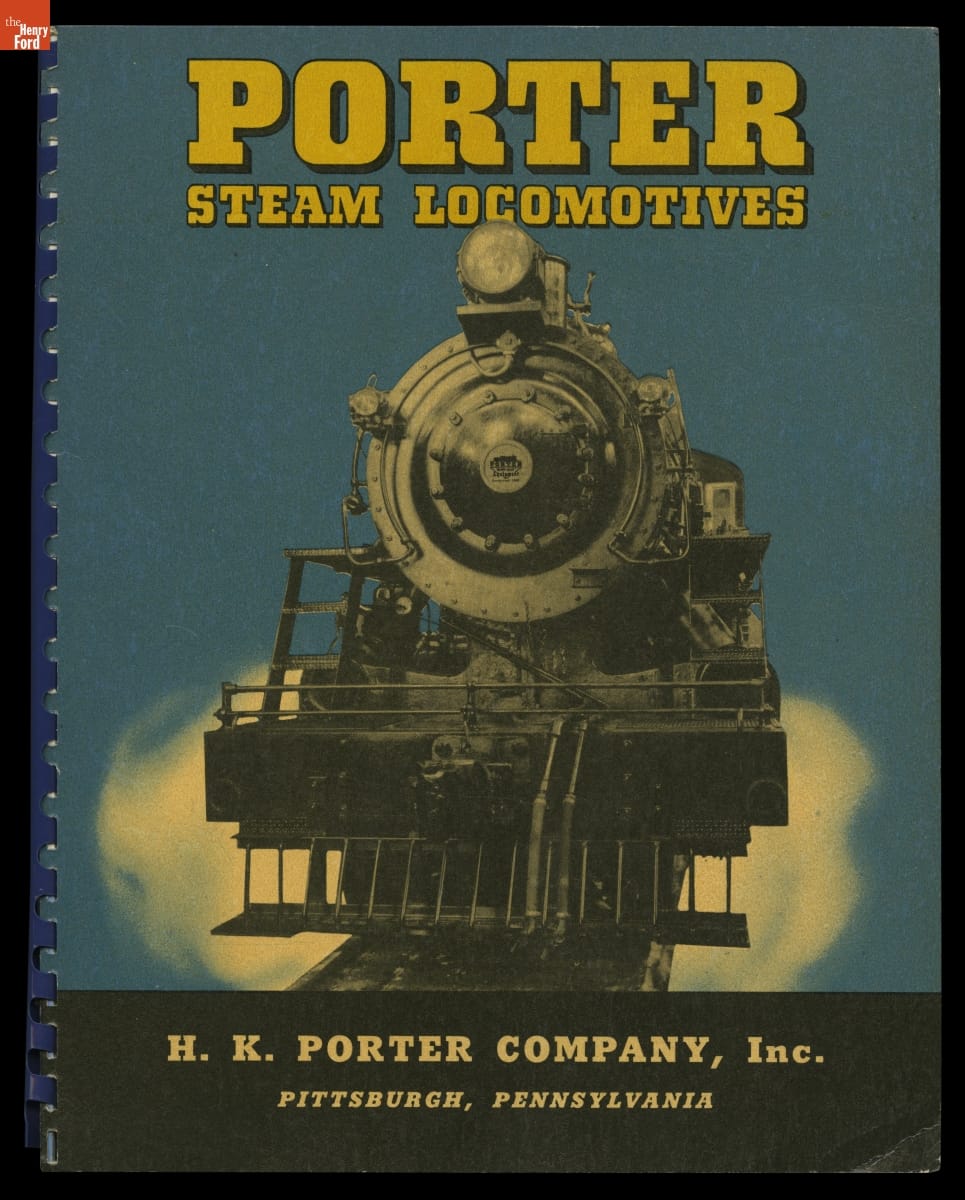
- 1943
- Collections - Artifact
H.K. Porter Company Catalog, "Porter Steam Locomotives," 1943
Founded in 1866, the H.K. Porter Company of Pittsburgh, Pennsylvania, built light industrial locomotives. These smaller engines were used in mines, mills, factories, construction sites, agricultural operations, and other specialized applications. Porter manufactured more than 8,000 steam, gasoline, and diesel-powered locomotives before exiting the business in 1950.
- General Electric Company Catalog, "Electric Mine Locomotives," 1904 - At the turn of the 20th century, General Electric manufactured several models of electric locomotives for use in underground mines -- where smoke and soot from steam locomotives was dangerous and impractical. These small mine locomotives collected electricity from overhead lines or third rails that ran alongside the track. GE also built larger electric locomotives for use with conventional railcars aboveground.
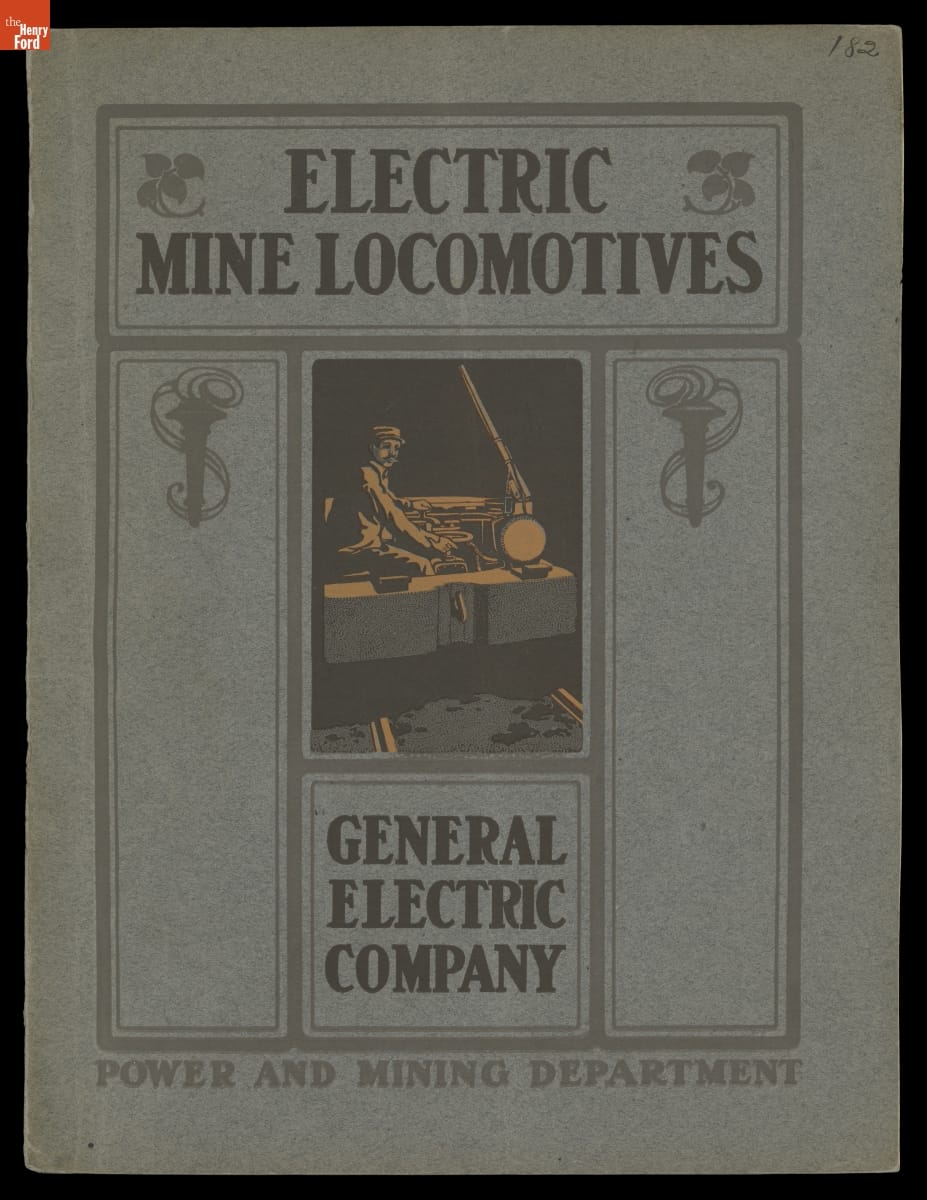
- 1904
- Collections - Artifact
General Electric Company Catalog, "Electric Mine Locomotives," 1904
At the turn of the 20th century, General Electric manufactured several models of electric locomotives for use in underground mines -- where smoke and soot from steam locomotives was dangerous and impractical. These small mine locomotives collected electricity from overhead lines or third rails that ran alongside the track. GE also built larger electric locomotives for use with conventional railcars aboveground.
- Passengers on the Fremont, Elkhorn and Missouri Valley Railroad, South Dakota, circa 1895 - Passengers gathered for a photograph when the Fremont, Elkhorn, and Missouri Valley train stopped in a South Dakota mountain pass. The photograph, taken about 1907, shows the happy group on the back platform while the engineer and others peer out from the side.
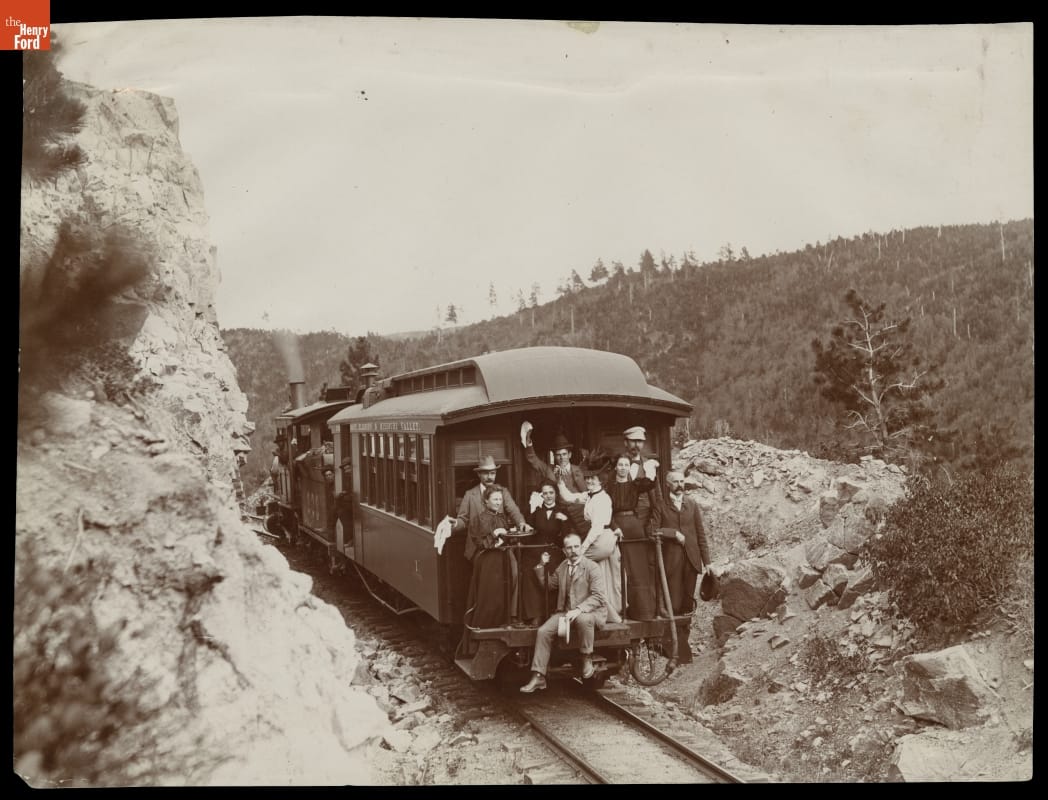
- circa 1895
- Collections - Artifact
Passengers on the Fremont, Elkhorn and Missouri Valley Railroad, South Dakota, circa 1895
Passengers gathered for a photograph when the Fremont, Elkhorn, and Missouri Valley train stopped in a South Dakota mountain pass. The photograph, taken about 1907, shows the happy group on the back platform while the engineer and others peer out from the side.
- Diesel Locomotive in North Yard, Ford Rouge Plant, September 1937 - Some 100 miles of railroad track covered the grounds of Ford Motor Company's Rouge plant. The automaker maintained its own fleet of locomotives to move incoming railcars loaded with raw materials, and outgoing railcars filled with finished parts and automobiles, around the complex. Additionally, specialized tank cars ferried molten iron from the factory's blast furnaces to its foundry.
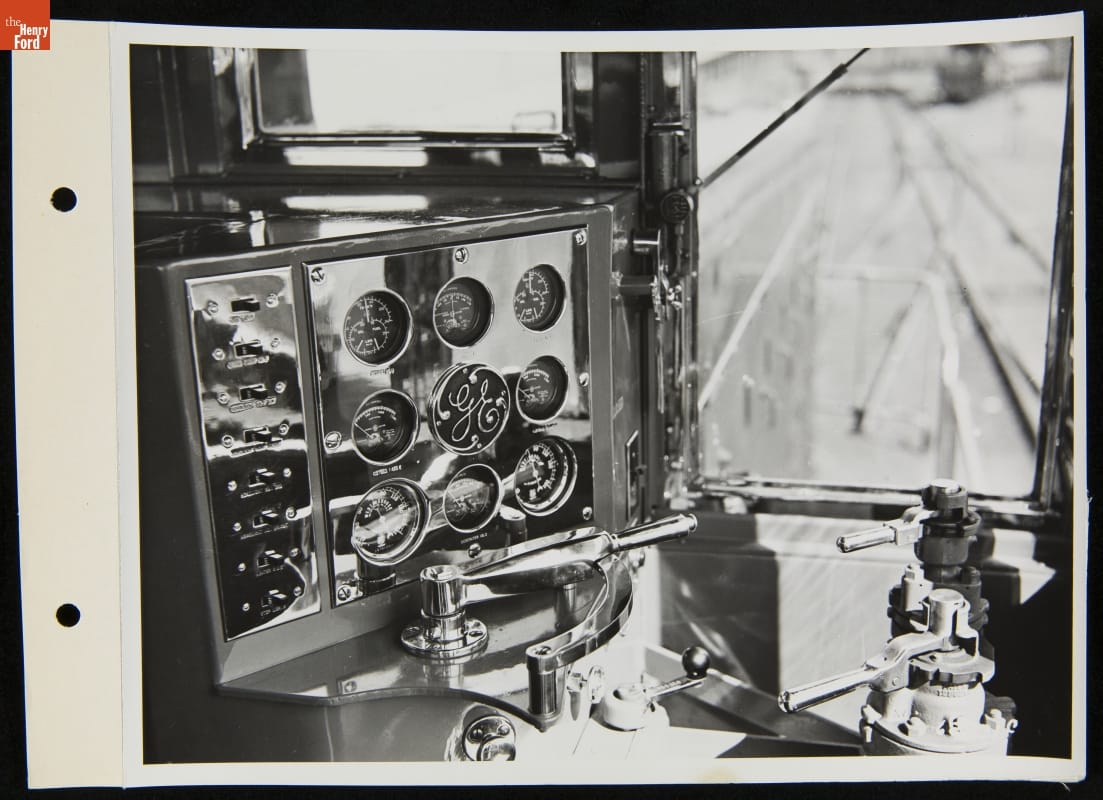
- September 20, 1937
- Collections - Artifact
Diesel Locomotive in North Yard, Ford Rouge Plant, September 1937
Some 100 miles of railroad track covered the grounds of Ford Motor Company's Rouge plant. The automaker maintained its own fleet of locomotives to move incoming railcars loaded with raw materials, and outgoing railcars filled with finished parts and automobiles, around the complex. Additionally, specialized tank cars ferried molten iron from the factory's blast furnaces to its foundry.
- Diesel Locomotives at the Ford Rouge Plant, November 1937 - Some 100 miles of railroad track covered the grounds of Ford Motor Company's Rouge plant. The automaker maintained its own fleet of locomotives to move incoming railcars loaded with raw materials, and outgoing railcars filled with finished parts and automobiles, around the complex. Additionally, specialized tank cars ferried molten iron from the factory's blast furnaces to its foundry.
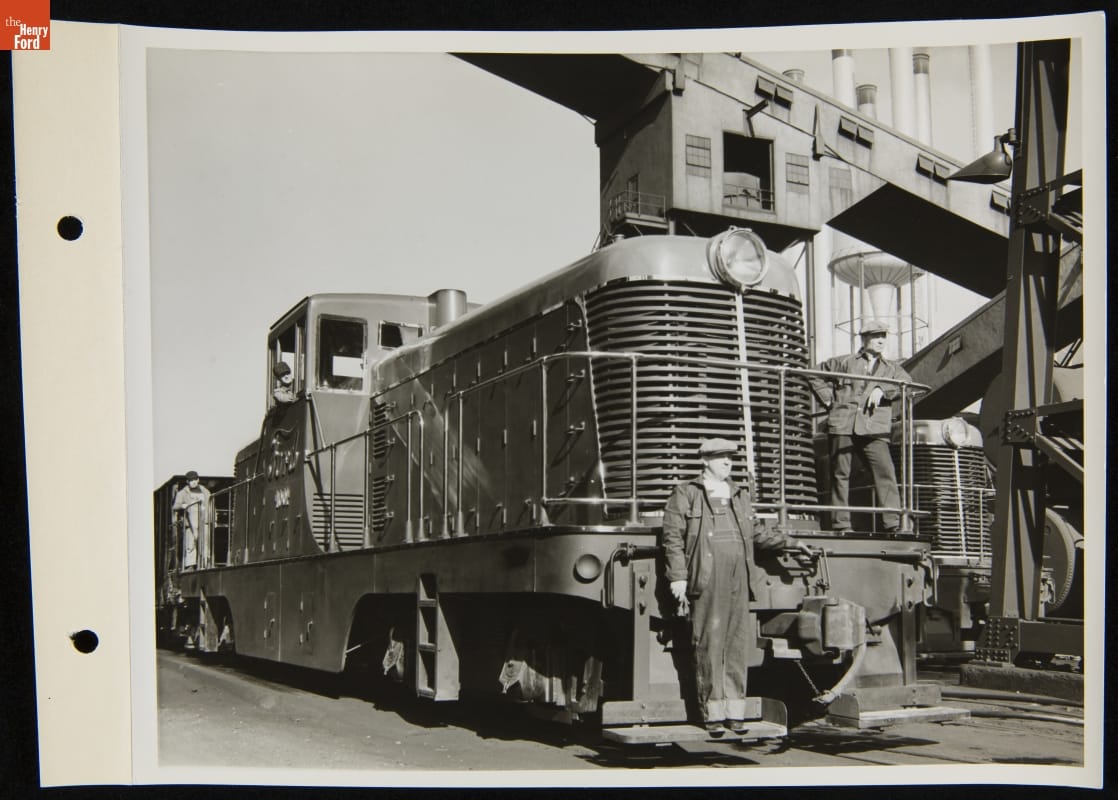
- November 10, 1937
- Collections - Artifact
Diesel Locomotives at the Ford Rouge Plant, November 1937
Some 100 miles of railroad track covered the grounds of Ford Motor Company's Rouge plant. The automaker maintained its own fleet of locomotives to move incoming railcars loaded with raw materials, and outgoing railcars filled with finished parts and automobiles, around the complex. Additionally, specialized tank cars ferried molten iron from the factory's blast furnaces to its foundry.
- "Oiling Up Before the Start," Engineer Working on Michigan Central Railroad K-Class Locomotive, 1904 - An engineman is seen oiling the side rods on a Michigan Central Railroad locomotive about 1905. The 4-4-2 Atlantic-type locomotive, with its tall driving wheels, was built to pull fast passenger trains on the Michigan Central's Detroit-Chicago mainline. But speed was relative. Even the fastest regularly scheduled trains might have averaged only 40 miles per hour in 1905.
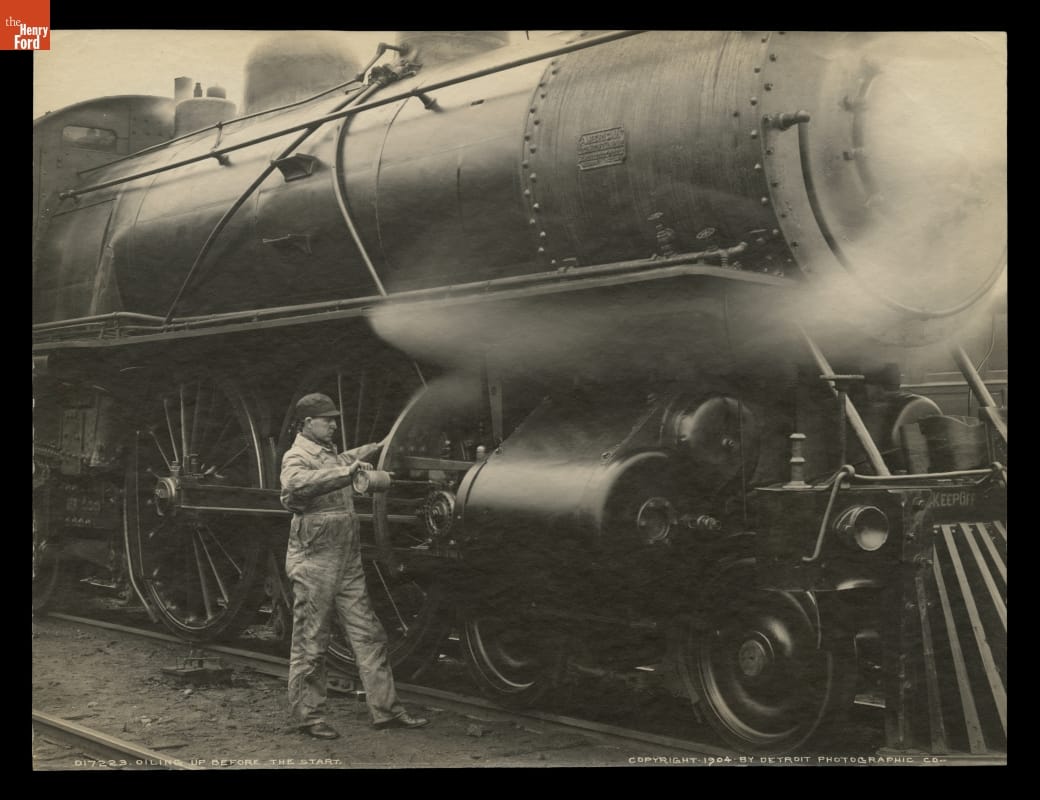
- 1904
- Collections - Artifact
"Oiling Up Before the Start," Engineer Working on Michigan Central Railroad K-Class Locomotive, 1904
An engineman is seen oiling the side rods on a Michigan Central Railroad locomotive about 1905. The 4-4-2 Atlantic-type locomotive, with its tall driving wheels, was built to pull fast passenger trains on the Michigan Central's Detroit-Chicago mainline. But speed was relative. Even the fastest regularly scheduled trains might have averaged only 40 miles per hour in 1905.
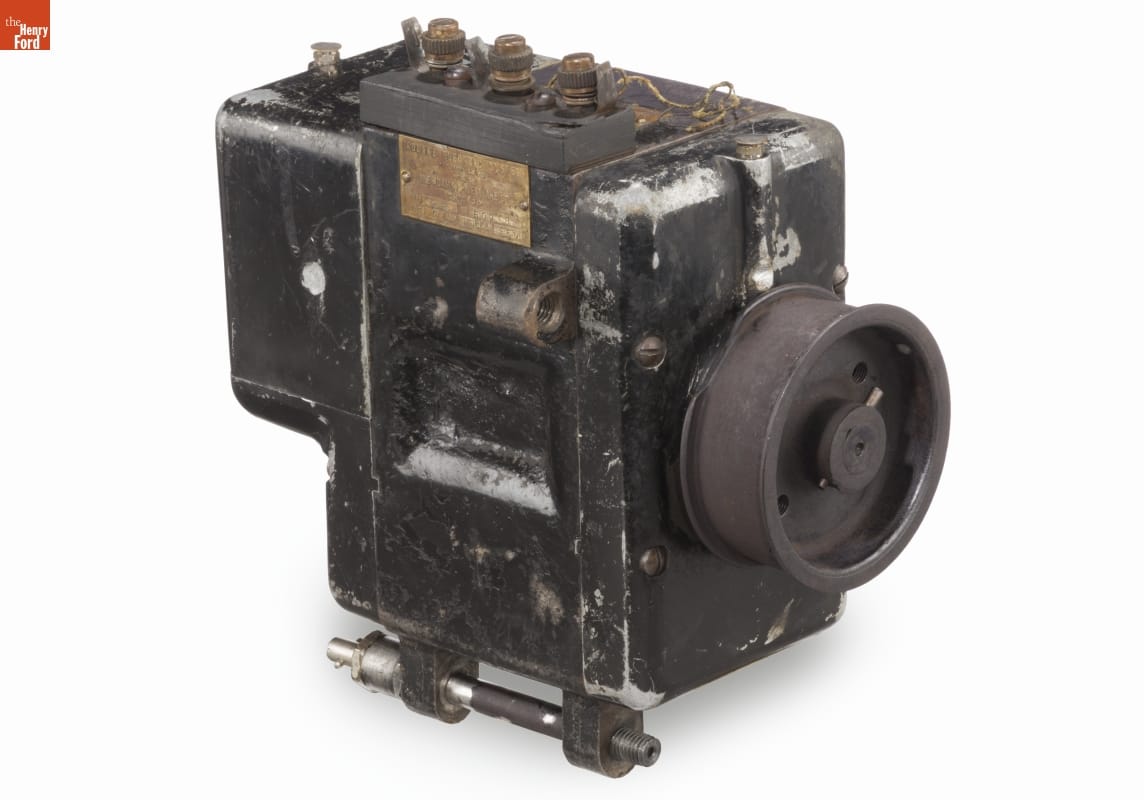
- Adams & Westlake Co. Type 3205 Adlake Electric System, 1910-1915 -
- 1910-1915
- Collections - Artifact
Adams & Westlake Co. Type 3205 Adlake Electric System, 1910-1915
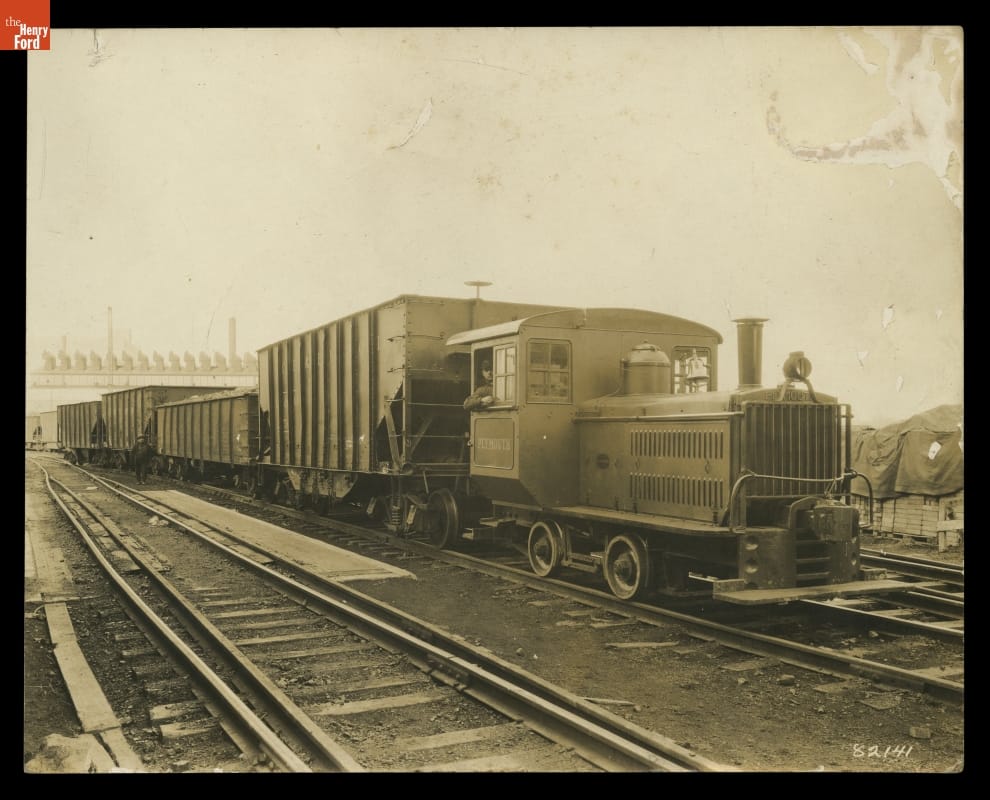
- Engineer Charles Vaughn in Plymouth Locomotive at Mistersky Power Plant, West Jefferson Avenue, Detroit, Michigan, circa 1930 - Engineer Charles Vaughn shuttles carloads of coal at Detroit's Mistersky Power Plant around 1930. The gasoline-powered Plymouth locomotive did not require the coal and water used by steam engines, and it could be operated by one person. The locomotive's light weight and simple operation made it ideal for small industrial railroads. This engine joined The Henry Ford's collection in 1979.
- circa 1930
- Collections - Artifact
Engineer Charles Vaughn in Plymouth Locomotive at Mistersky Power Plant, West Jefferson Avenue, Detroit, Michigan, circa 1930
Engineer Charles Vaughn shuttles carloads of coal at Detroit's Mistersky Power Plant around 1930. The gasoline-powered Plymouth locomotive did not require the coal and water used by steam engines, and it could be operated by one person. The locomotive's light weight and simple operation made it ideal for small industrial railroads. This engine joined The Henry Ford's collection in 1979.