
Search
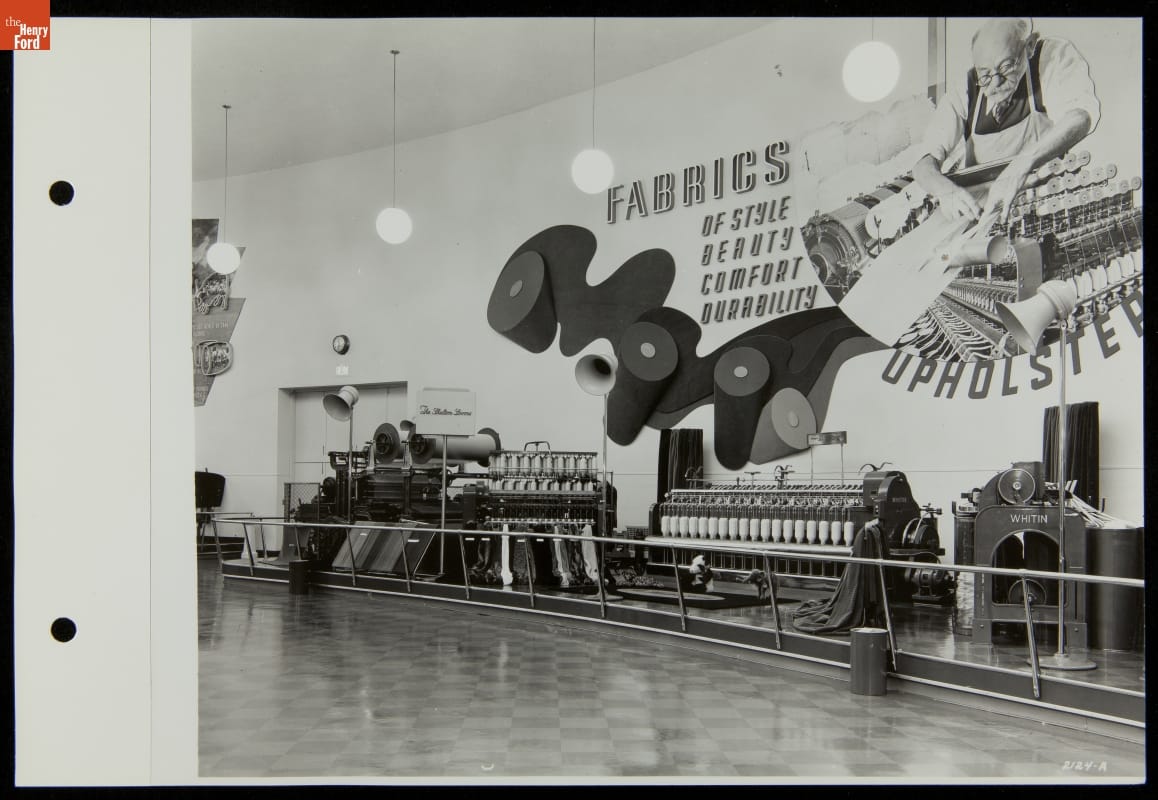
- Shelton Looms Exhibit, Ford Exposition, New York World's Fair, 1940 - Henry Ford viewed national expositions as business opportunities <EM>and</EM> platforms for public education. During the 1939-40 New York World's Fair, Ford Motor Company spent more than $5 million to build and maintain an elaborate exposition space. Informative displays and manufacturing demonstrations inside Ford's massive fair building offered visitors an in-depth, entertaining, and educational look at industrial processes.
- May 16, 1940
- Collections - Artifact
Shelton Looms Exhibit, Ford Exposition, New York World's Fair, 1940
Henry Ford viewed national expositions as business opportunities and platforms for public education. During the 1939-40 New York World's Fair, Ford Motor Company spent more than $5 million to build and maintain an elaborate exposition space. Informative displays and manufacturing demonstrations inside Ford's massive fair building offered visitors an in-depth, entertaining, and educational look at industrial processes.
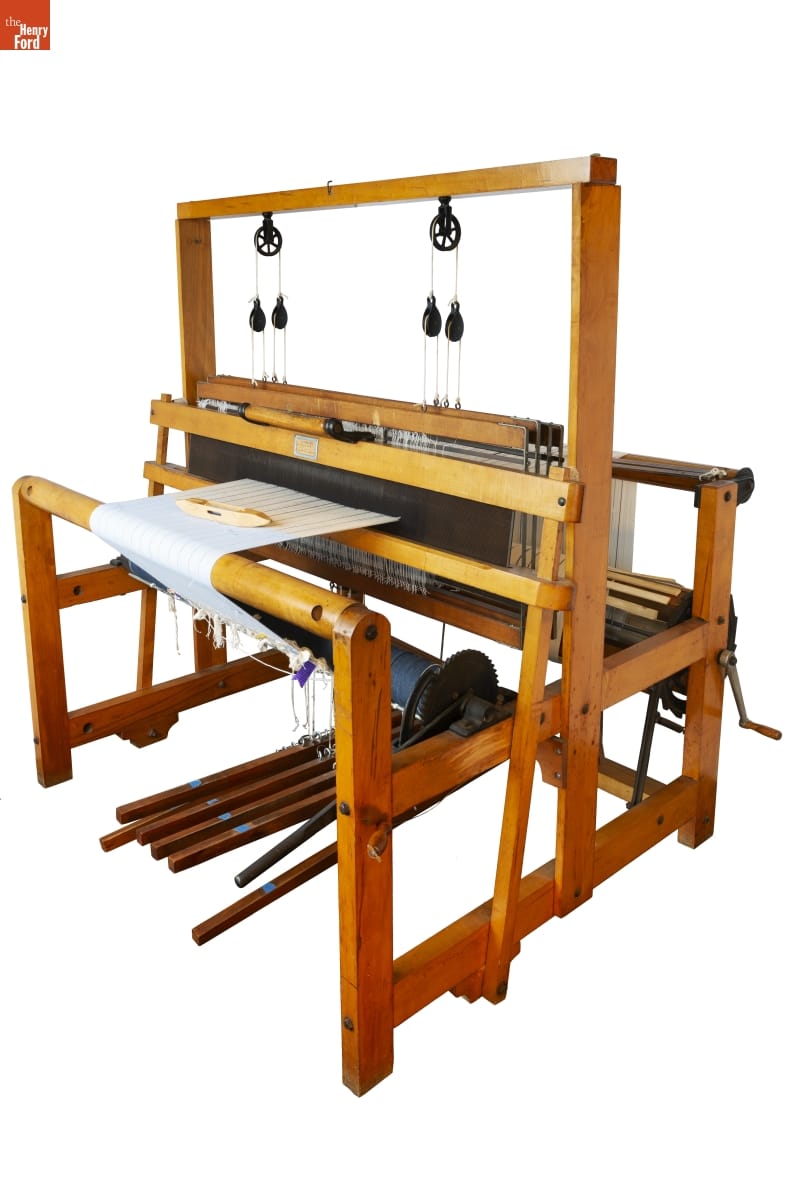
- Reed Loom Company "Cambridge" Loom, circa 1935 - By the 1920s, most everyday items were made in factories by machines rather than by hand. Some people began to appreciate and revive traditional handcrafts like weaving. Artisan and hobby weavers purchased looms to create woven goods at home. The owner of this loom produced household textiles and other fabrics for home use and for sale, to supplement his family's income.
- circa 1935
- Collections - Artifact
Reed Loom Company "Cambridge" Loom, circa 1935
By the 1920s, most everyday items were made in factories by machines rather than by hand. Some people began to appreciate and revive traditional handcrafts like weaving. Artisan and hobby weavers purchased looms to create woven goods at home. The owner of this loom produced household textiles and other fabrics for home use and for sale, to supplement his family's income.
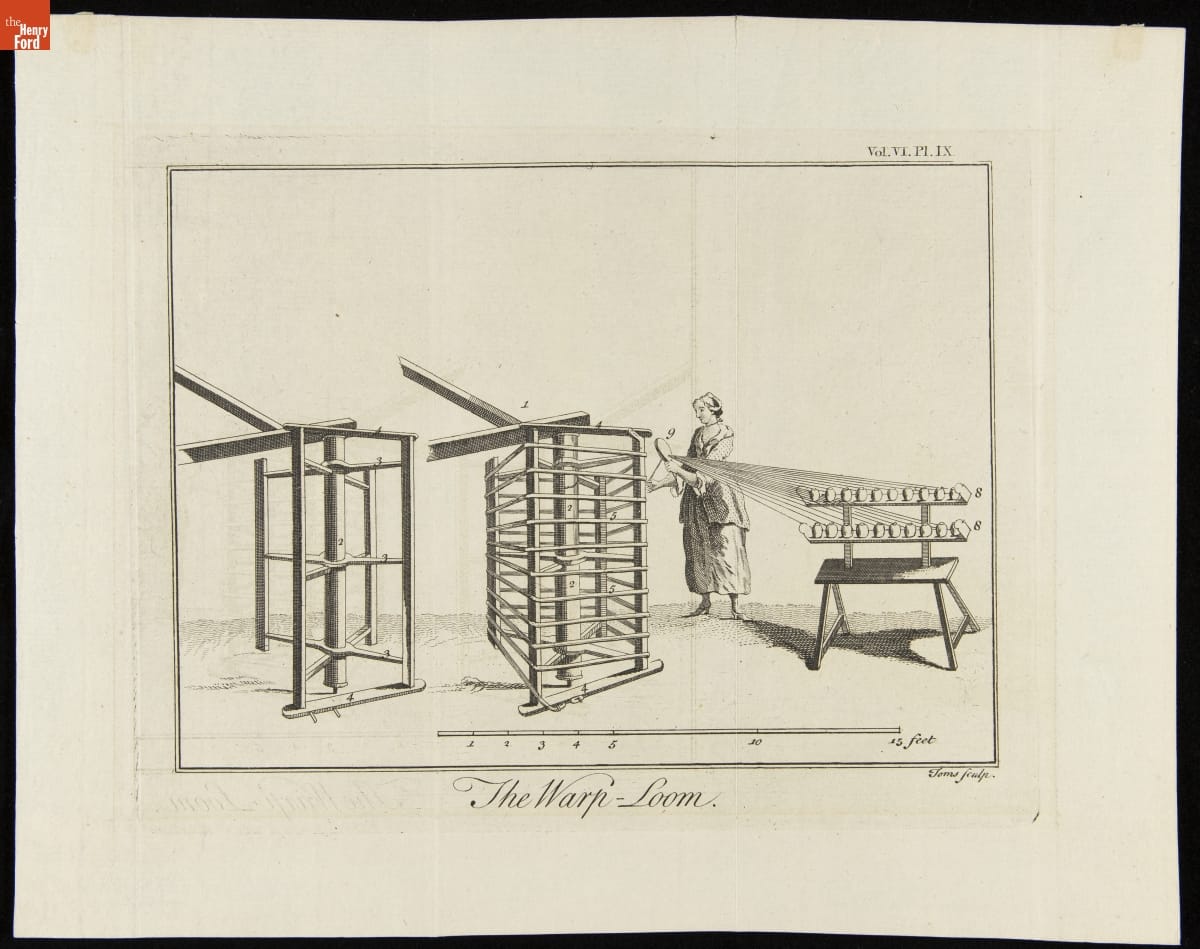
- The Warp-Loom, 1748 -
- 1748
- Collections - Artifact
The Warp-Loom, 1748
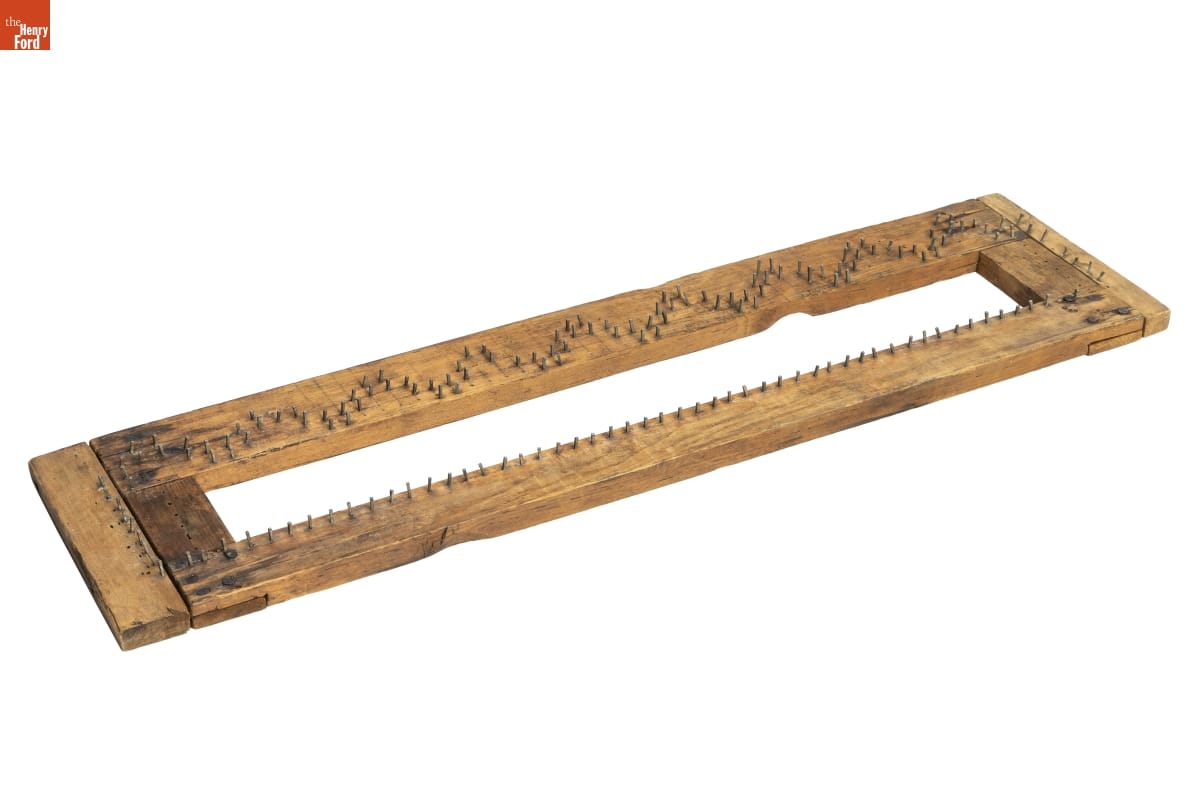
- Lace Loom -
- Collections - Artifact
Lace Loom
- Draw Loom inside Gunsolly Carding Mill in Greenfield Village, April 1, 1940 -
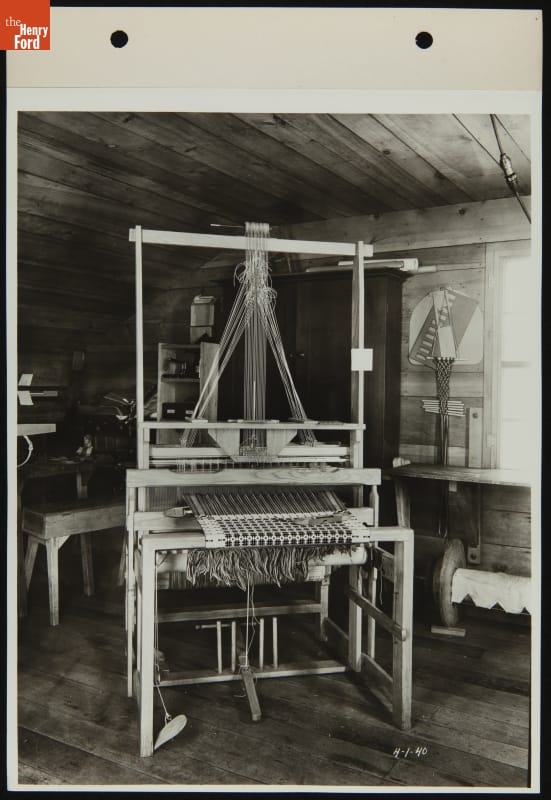
- April 01, 1940
- Collections - Artifact
Draw Loom inside Gunsolly Carding Mill in Greenfield Village, April 1, 1940
- Model of a Page Fence Loom -
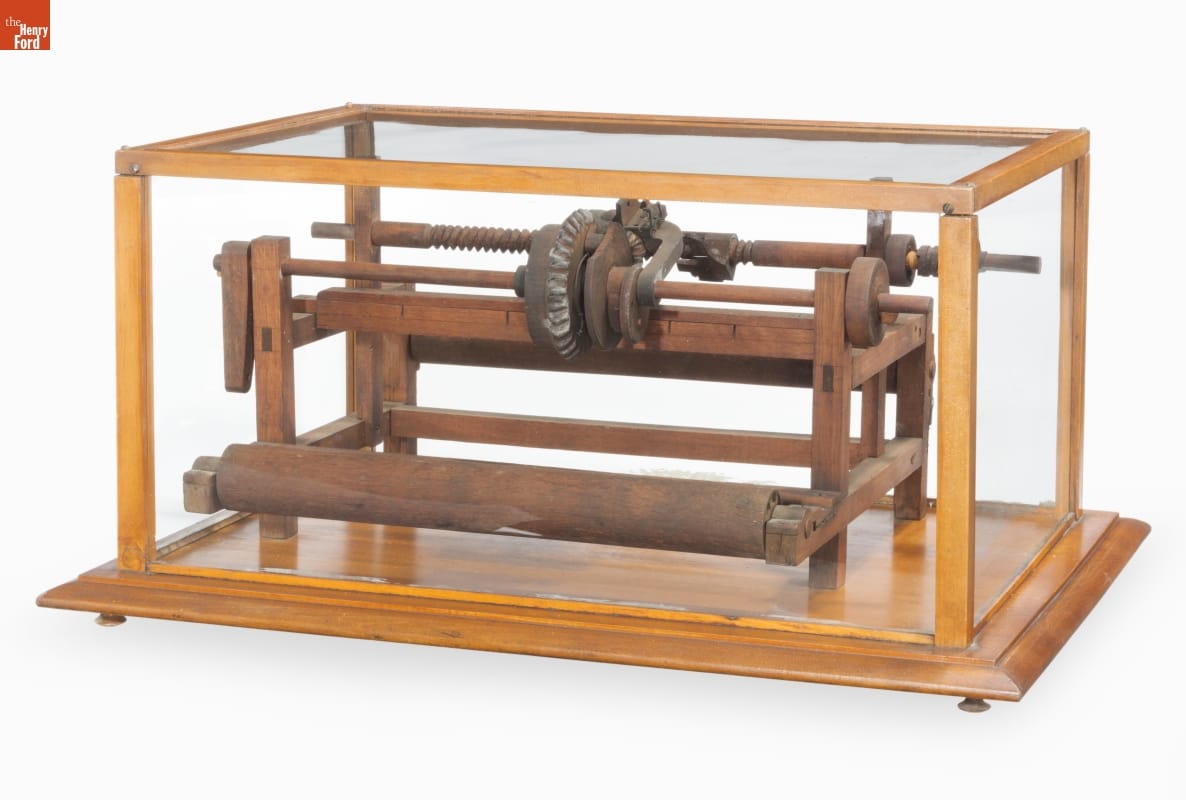
- Collections - Artifact
Model of a Page Fence Loom
- Sidney Holloway with Student at the Cotton Gin Mill (now the Weaving Shop), Greenfield Village, 1949 - Sidney Holloway (1901-1960) was instrumental in establishing the weaving program at Greenfield Village. Holloway, once employed in the Ford Motor Company's Textile Department, began working with Henry Ford's textile-making collections in 1930. Through hands-on experience and self-study, he mastered the weaving craft. Holloway would engage Greenfield Village visitors for thirty years and pass on his skills to the next generation of artisans.
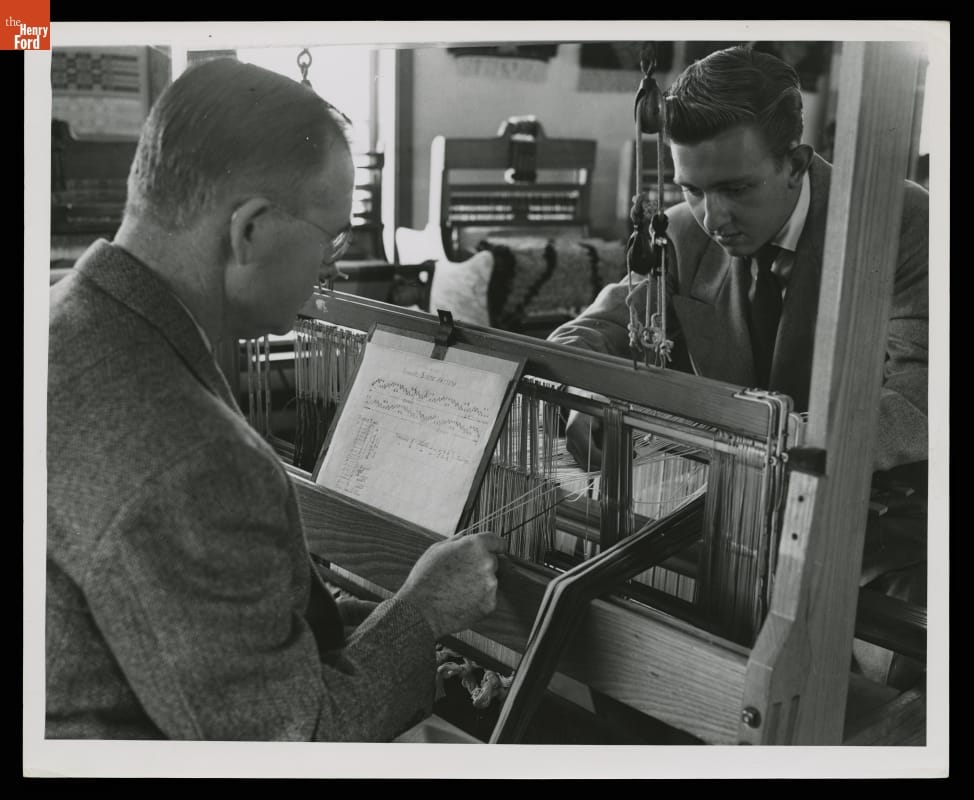
- September 30, 1949
- Collections - Artifact
Sidney Holloway with Student at the Cotton Gin Mill (now the Weaving Shop), Greenfield Village, 1949
Sidney Holloway (1901-1960) was instrumental in establishing the weaving program at Greenfield Village. Holloway, once employed in the Ford Motor Company's Textile Department, began working with Henry Ford's textile-making collections in 1930. Through hands-on experience and self-study, he mastered the weaving craft. Holloway would engage Greenfield Village visitors for thirty years and pass on his skills to the next generation of artisans.
- Weaving Demonstration in Plymouth Carding Mill (now Gunsolly Carding Mill), Greenfield Village, 1935 - Craftspeople have presented weaving demonstrations at Greenfield Village since it opened to the public in 1933. Over the years, weavers have used several historic and refurbished looms located in the Plymouth Carding Mill (now Gunsolly Carding Mill) to create hand-crafted textiles. These presentations and resulting products help tell the story of textile production in America.
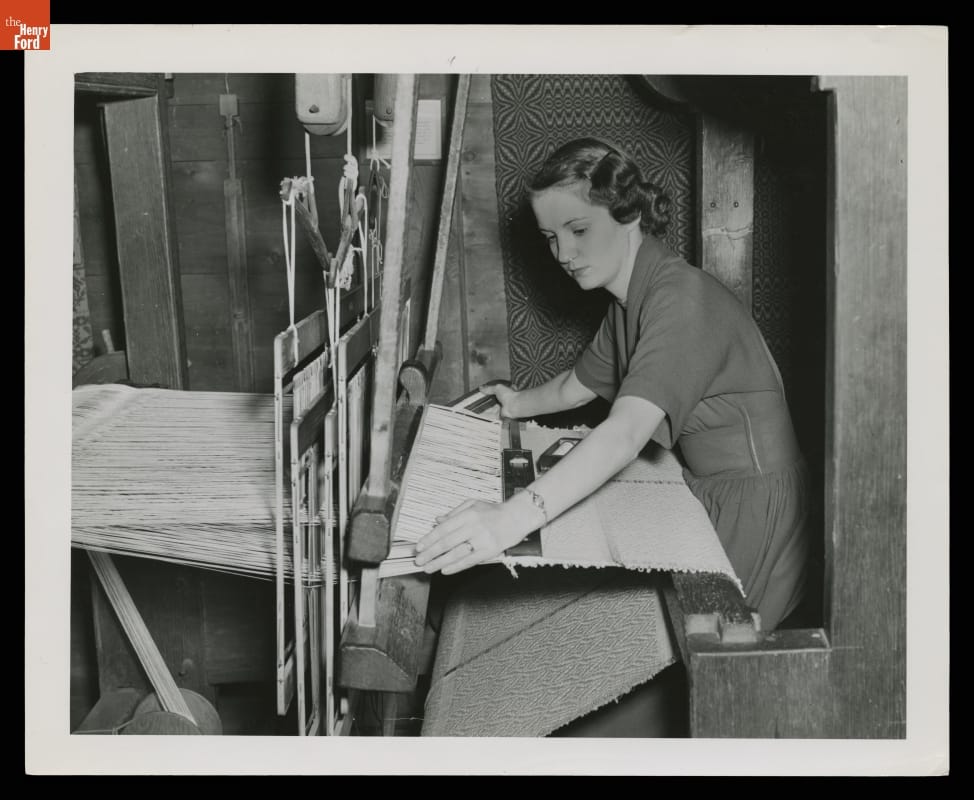
- March 27, 1935
- Collections - Artifact
Weaving Demonstration in Plymouth Carding Mill (now Gunsolly Carding Mill), Greenfield Village, 1935
Craftspeople have presented weaving demonstrations at Greenfield Village since it opened to the public in 1933. Over the years, weavers have used several historic and refurbished looms located in the Plymouth Carding Mill (now Gunsolly Carding Mill) to create hand-crafted textiles. These presentations and resulting products help tell the story of textile production in America.
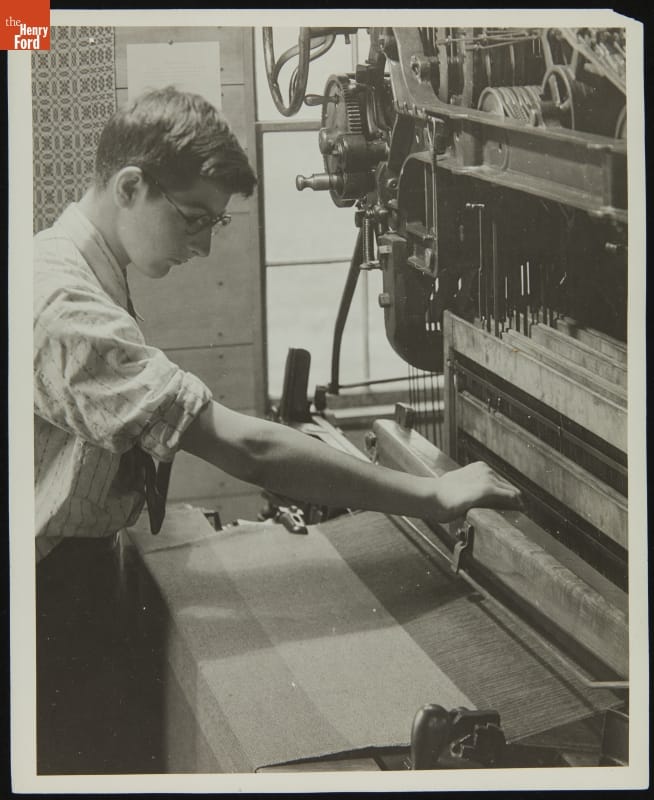
- Young Man at Power Loom in Plymouth Carding Mill (now Gunsolly Carding Mill), Greenfield Village, circa 1935 - Craftspeople have presented weaving demonstrations at Greenfield Village since it opened to the public in 1933. Over the years, weavers have used several historic and refurbished looms located in the Plymouth Carding Mill (now Gunsolly Carding Mill) to create hand-crafted textiles. These presentations and resulting products help tell the story of textile production in America.
- circa 1935
- Collections - Artifact
Young Man at Power Loom in Plymouth Carding Mill (now Gunsolly Carding Mill), Greenfield Village, circa 1935
Craftspeople have presented weaving demonstrations at Greenfield Village since it opened to the public in 1933. Over the years, weavers have used several historic and refurbished looms located in the Plymouth Carding Mill (now Gunsolly Carding Mill) to create hand-crafted textiles. These presentations and resulting products help tell the story of textile production in America.
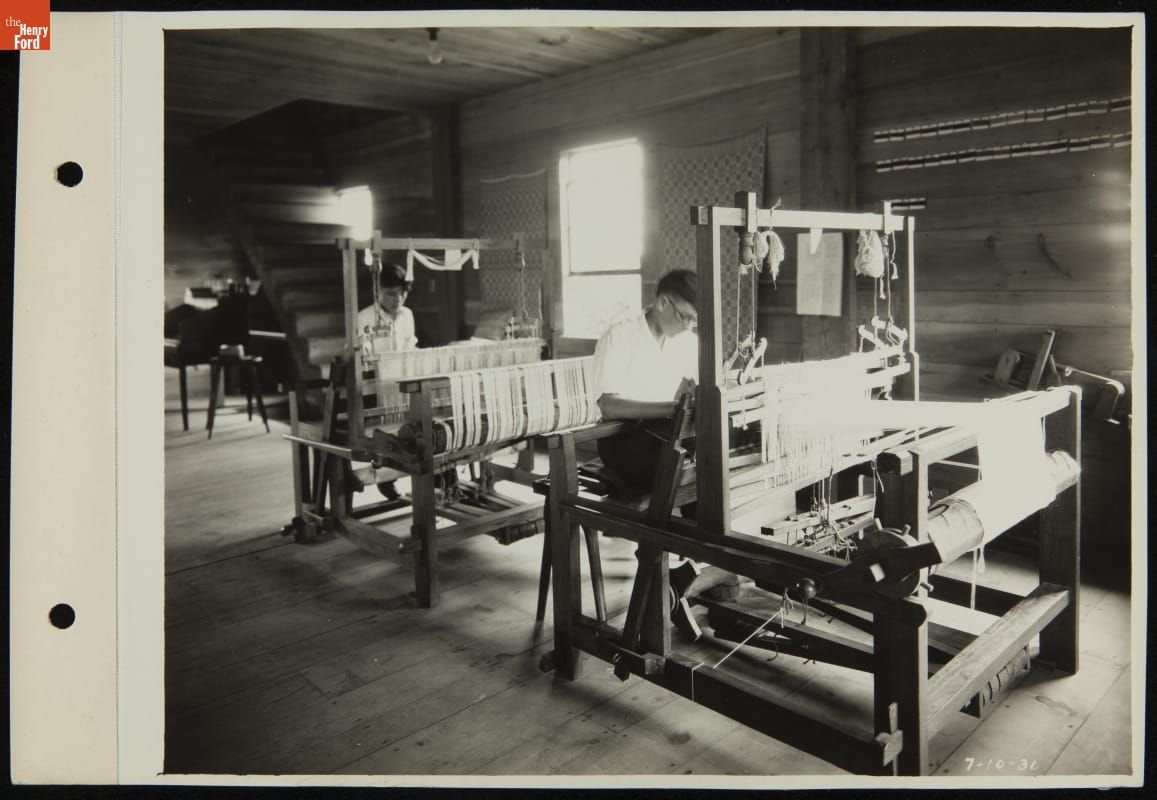
- Student Weavers in Plymouth Carding Mill (now Gunsolly Carding Mill), Greenfield Village, 1930 - Henry Ford believed in "learning by doing." Students enrolled in the Edison Institute Schools located on the grounds of Ford's Greenfield Village had ample opportunities for practical, hands-on training. Students, if they desired, could learn to weave. Beginners used small tabletop looms. As they progressed students created woven materials using larger looms located in Greenfield Village's Plymouth Carding Mill and Weaving Shed.
- July 10, 1930
- Collections - Artifact
Student Weavers in Plymouth Carding Mill (now Gunsolly Carding Mill), Greenfield Village, 1930
Henry Ford believed in "learning by doing." Students enrolled in the Edison Institute Schools located on the grounds of Ford's Greenfield Village had ample opportunities for practical, hands-on training. Students, if they desired, could learn to weave. Beginners used small tabletop looms. As they progressed students created woven materials using larger looms located in Greenfield Village's Plymouth Carding Mill and Weaving Shed.