
Search
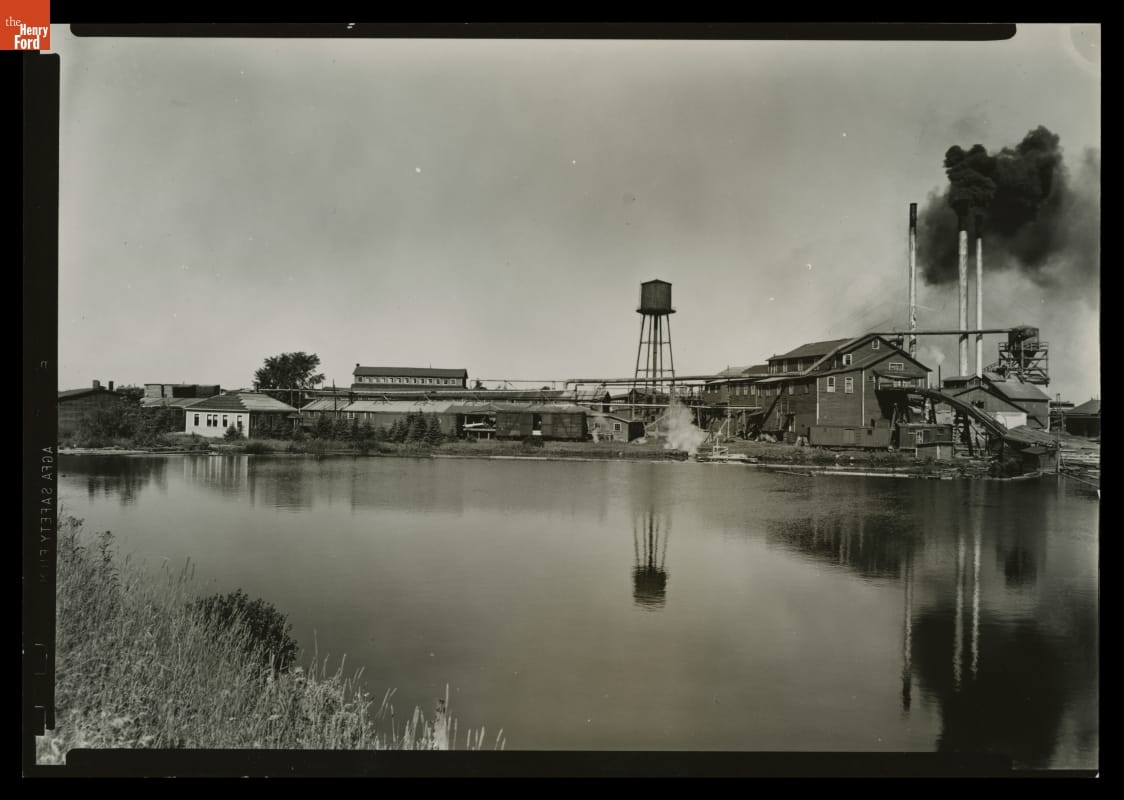
- Roddis Lumber & Veneer Company, 1915-1930 -
- 1915-1935
- Collections - Artifact
Roddis Lumber & Veneer Company, 1915-1930
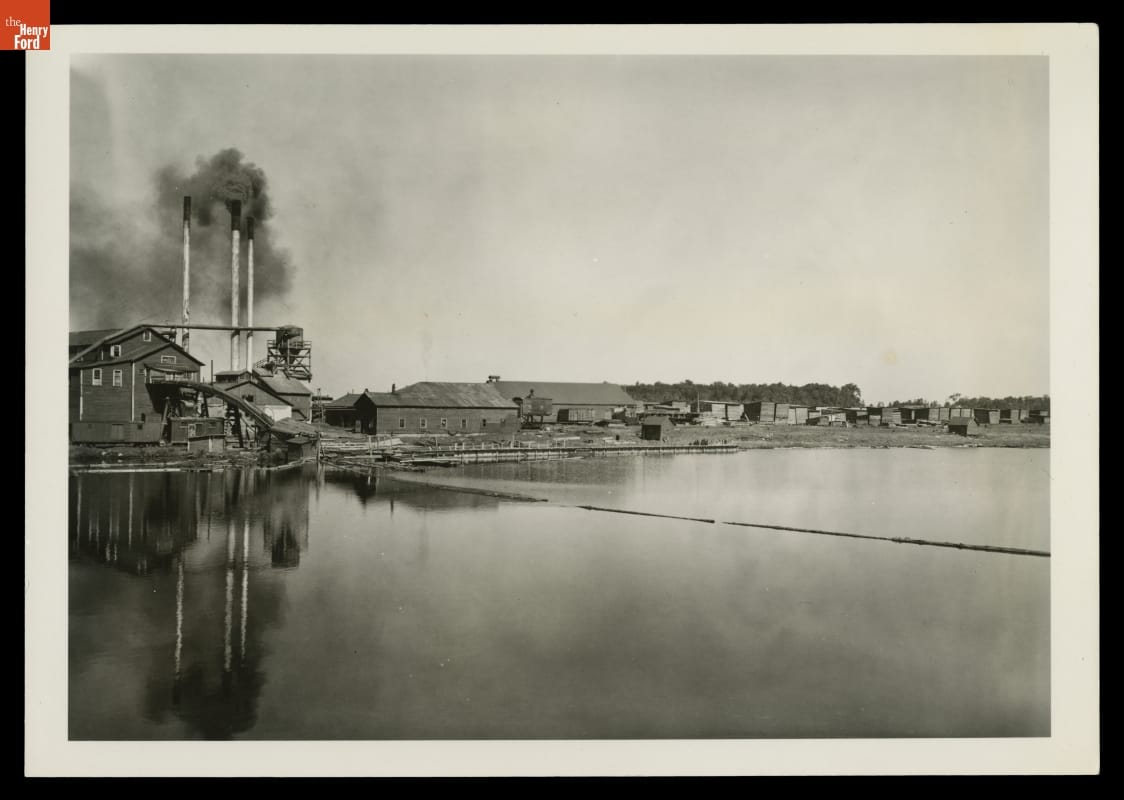
- Roddis Lumber & Veneer Company, 1915-1930 -
- 1915-1935
- Collections - Artifact
Roddis Lumber & Veneer Company, 1915-1930
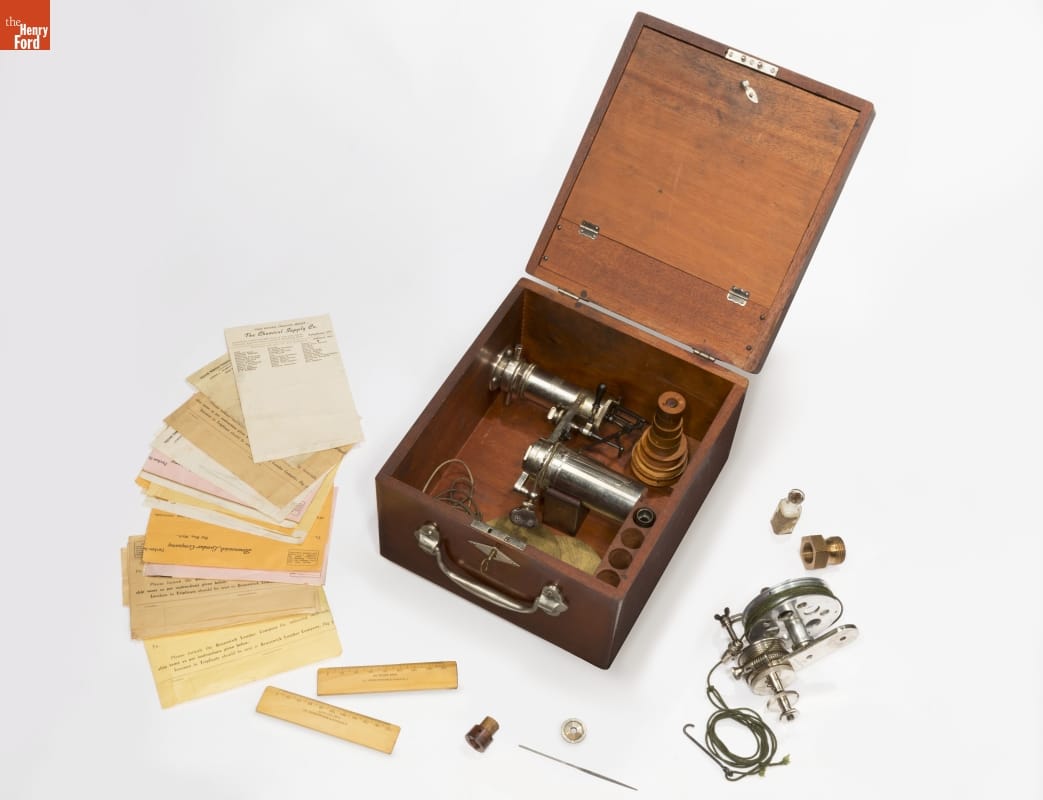
- James L. Robertson & Sons Indicator, circa 1900 -
- circa 1900
- Collections - Artifact
James L. Robertson & Sons Indicator, circa 1900
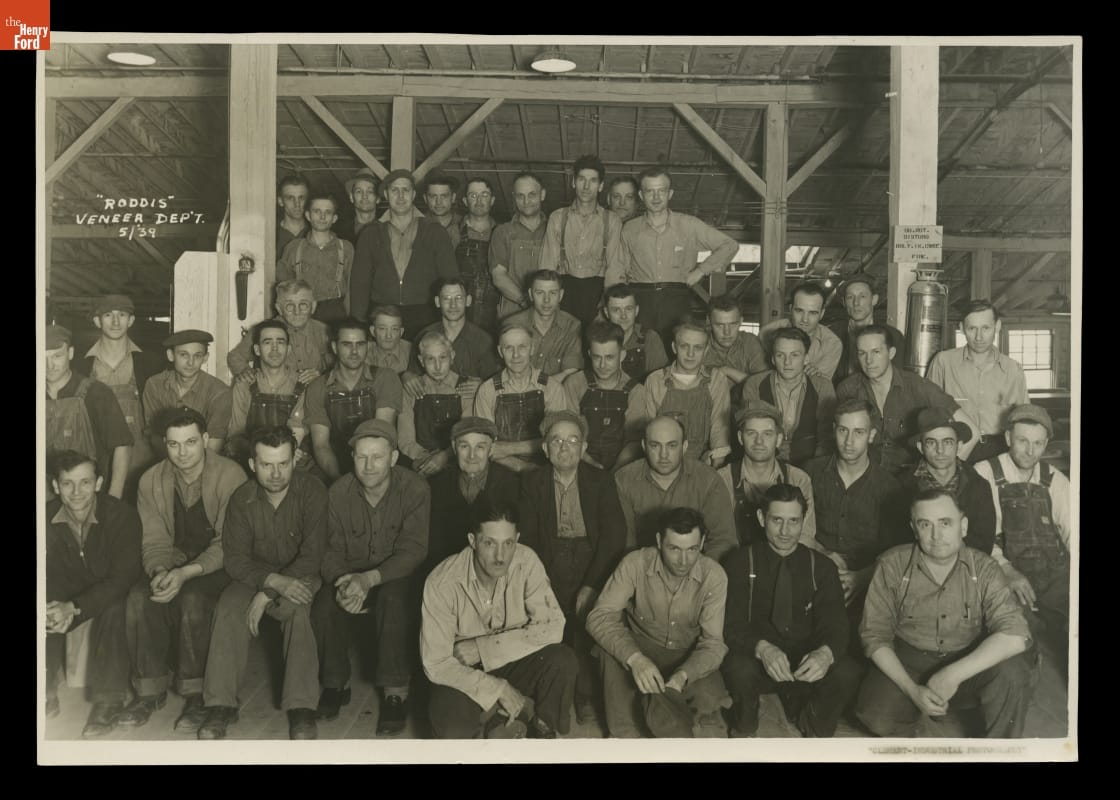
- Roddis Veneer Department, May 1939 -
- May 01, 1939
- Collections - Artifact
Roddis Veneer Department, May 1939
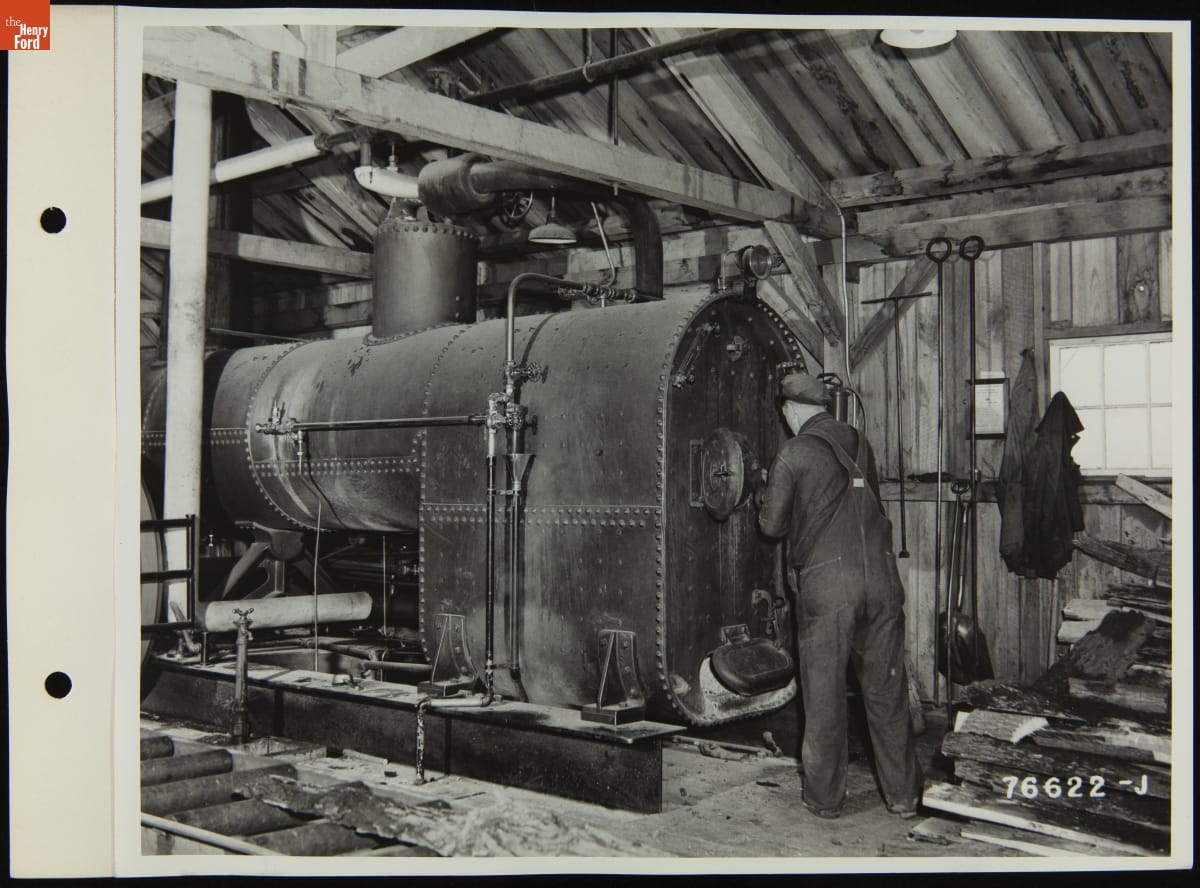
- Worker inside the Sawmill at the Willow Run Bomber Plant, March 5, 1942 - During World War II, Ford Motor Company built B-24 bomber airplanes at its Willow Run plant, located 35 miles west of Detroit. Work on the factory's buildings started in March 1941. As trees were cleared, Ford erected an on-site sawmill that processed them into lumber. Much of that lumber went into temporary structures and housing at the rising factory.
- March 05, 1942
- Collections - Artifact
Worker inside the Sawmill at the Willow Run Bomber Plant, March 5, 1942
During World War II, Ford Motor Company built B-24 bomber airplanes at its Willow Run plant, located 35 miles west of Detroit. Work on the factory's buildings started in March 1941. As trees were cleared, Ford erected an on-site sawmill that processed them into lumber. Much of that lumber went into temporary structures and housing at the rising factory.
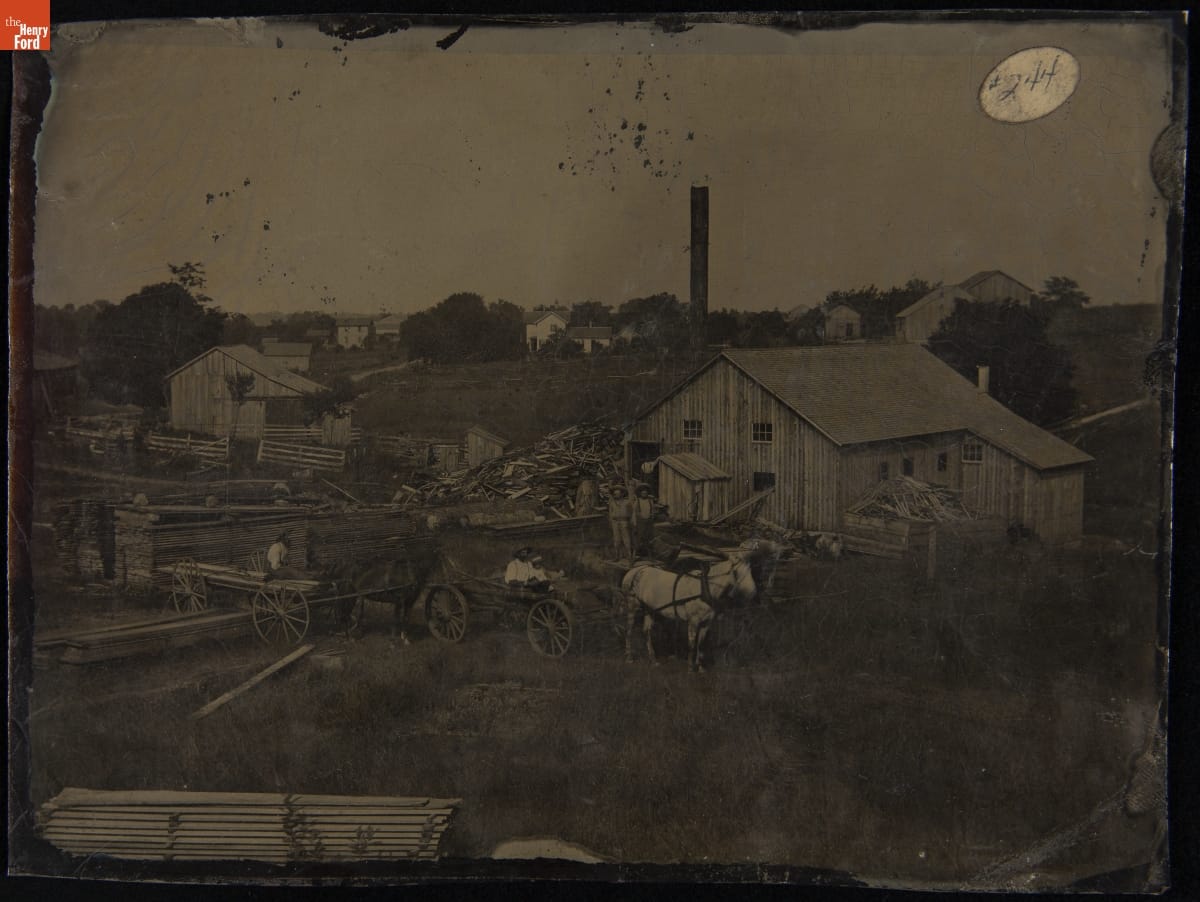
- Workers and Horse-drawn Wagons at a Sawmill, 1880-1900 - Tintypes, the popular "instant photographs" of the 19th century, could be produced in a matter of minutes at a price most people could afford. At first, outdoor tintypes were rare. But after a new, more convenient process for making tintypes was introduced in the 1880s, photographs of outdoor scenes became more common.
- 1880-1900
- Collections - Artifact
Workers and Horse-drawn Wagons at a Sawmill, 1880-1900
Tintypes, the popular "instant photographs" of the 19th century, could be produced in a matter of minutes at a price most people could afford. At first, outdoor tintypes were rare. But after a new, more convenient process for making tintypes was introduced in the 1880s, photographs of outdoor scenes became more common.
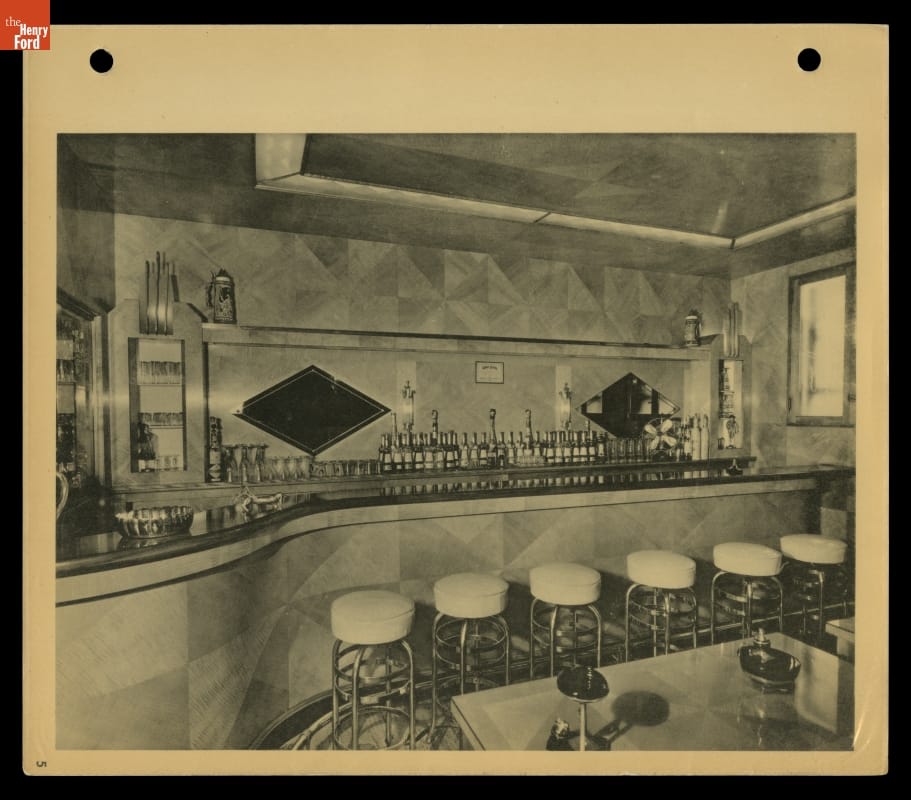
- Roddis Decorative Veneer Paneling Product Used in an Unidentified Bar, 1928-1937 -
- circa 1930-circa 1935
- Collections - Artifact
Roddis Decorative Veneer Paneling Product Used in an Unidentified Bar, 1928-1937
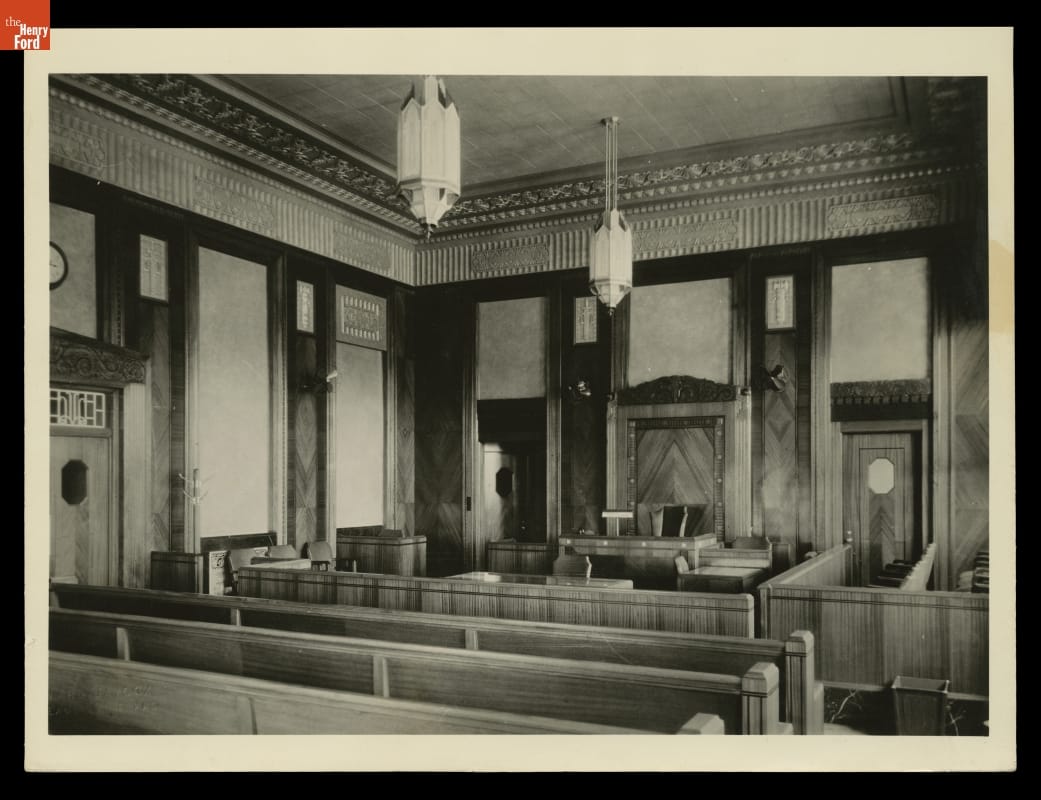
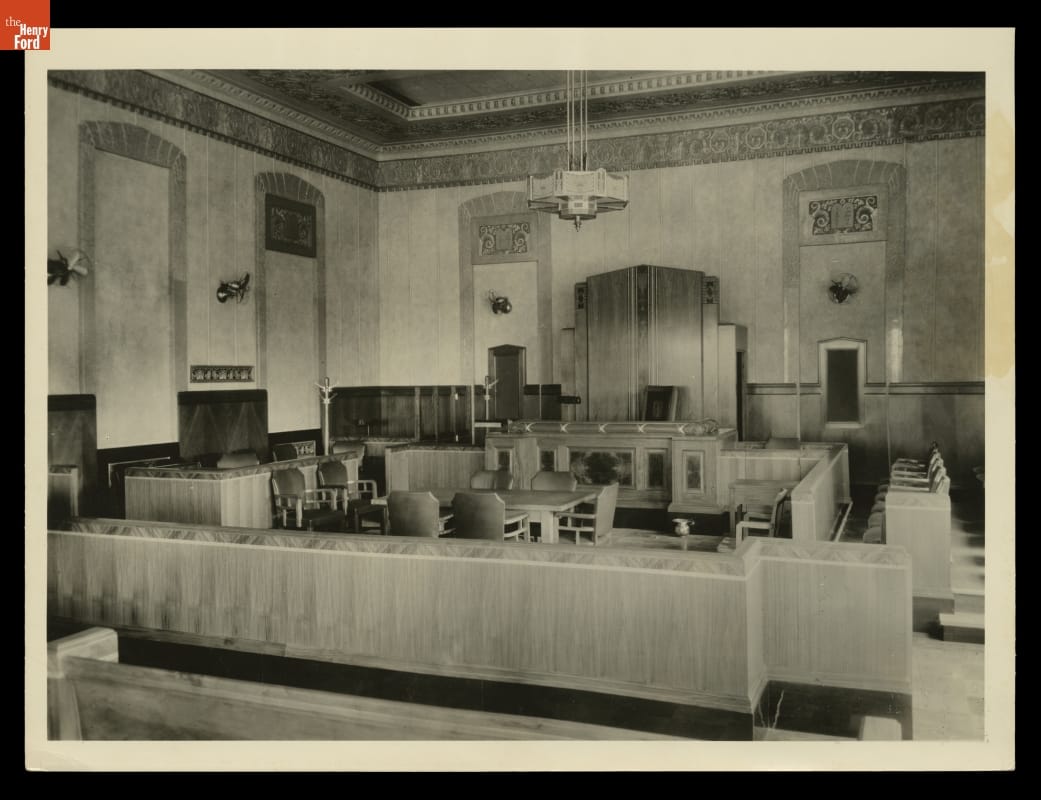
- Roddis Veneer in Courtroom, Jefferson County Courthouse, Beaumont, Texas, circa 1932 -
- circa 1932
- Collections - Artifact
Roddis Veneer in Courtroom, Jefferson County Courthouse, Beaumont, Texas, circa 1932
- Roddis Veneer Used in Courtroom, Jefferson County Courthouse, Beaumont, Texas, circa 1932 -
- circa 1932
- Collections - Artifact
Roddis Veneer Used in Courtroom, Jefferson County Courthouse, Beaumont, Texas, circa 1932
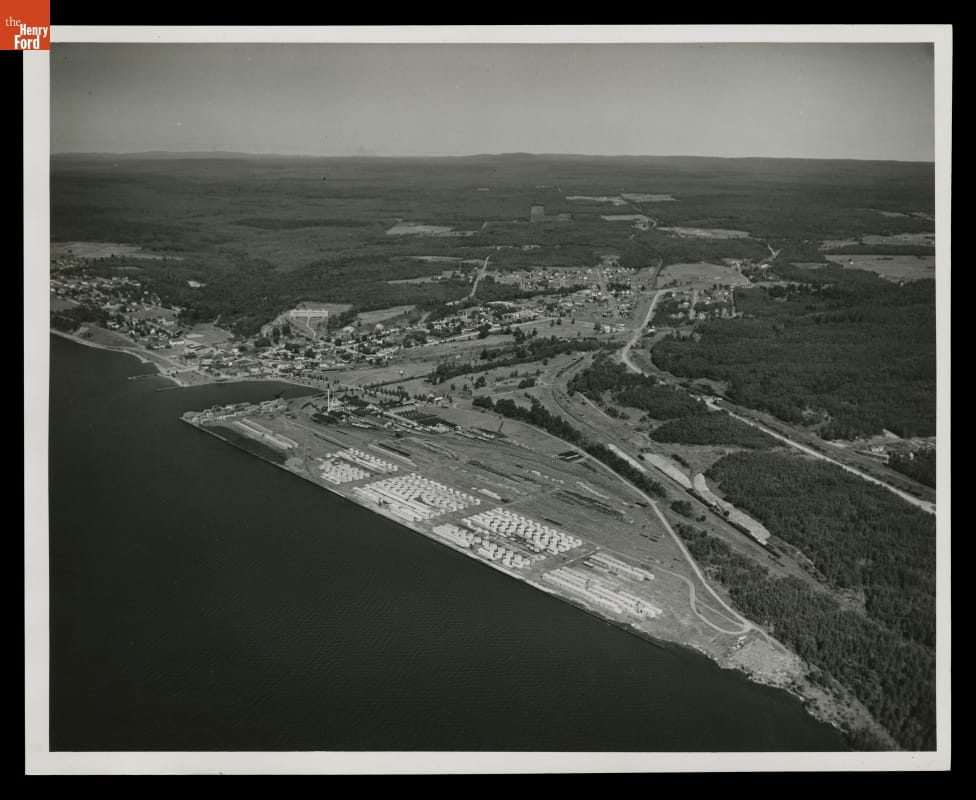
- Aerial View of Ford Motor Company Sawmill, L'Anse, Michigan, August 1946 - In pursuit of self-sufficient automobile manufacture, Henry Ford and Ford Motor Company purchased over 313,000 acres of timberland for logging in the Upper Peninsula of Michigan. Ford established several remote milling sites, including this one at L'Anse on Keweenaw Bay. Lumber produced here was shipped to a plant at Iron Mountain and made into parts for Ford automobiles.
- August 06, 1946
- Collections - Artifact
Aerial View of Ford Motor Company Sawmill, L'Anse, Michigan, August 1946
In pursuit of self-sufficient automobile manufacture, Henry Ford and Ford Motor Company purchased over 313,000 acres of timberland for logging in the Upper Peninsula of Michigan. Ford established several remote milling sites, including this one at L'Anse on Keweenaw Bay. Lumber produced here was shipped to a plant at Iron Mountain and made into parts for Ford automobiles.