
Search
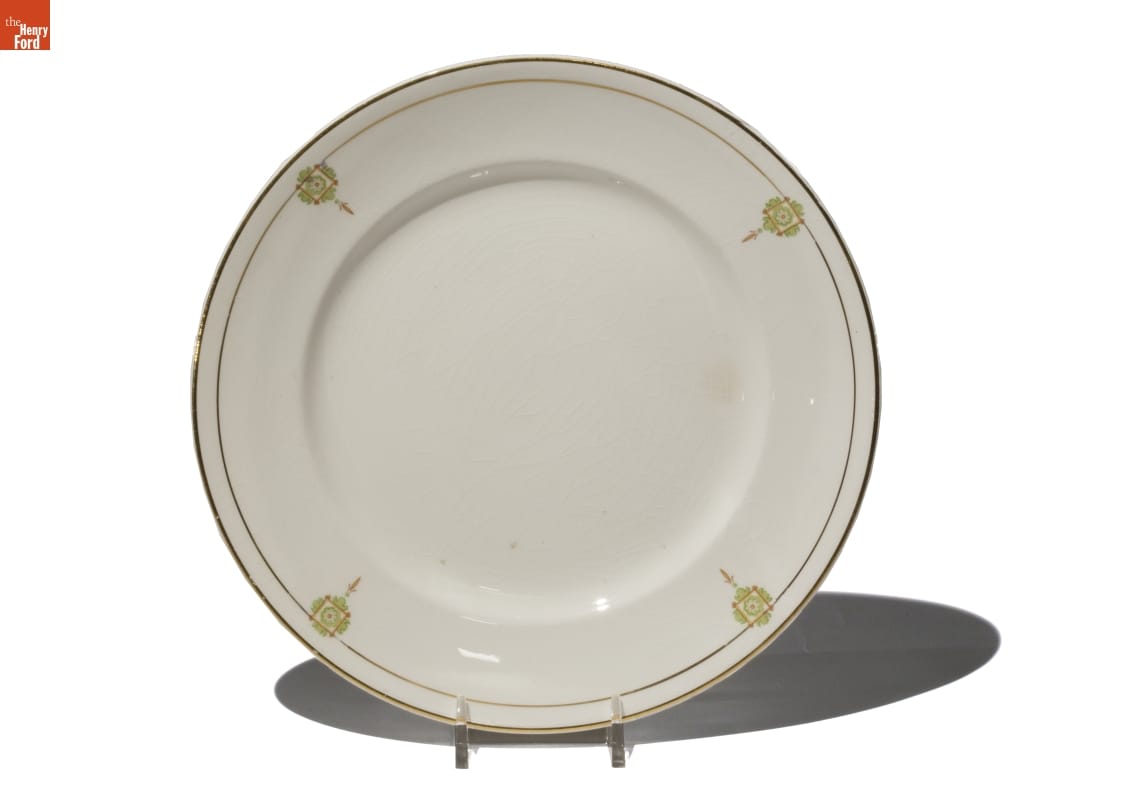
- Luncheon Plate, 1923 - Henry Ford, Thomas Edison, Harvey Firestone and naturalist John Burroughs embarked on a series of camping trips between 1916 and 1924. These self-proclaimed Vagabonds loved to explore nature and the pre-industrial landscape, but they also camped in style. This group of well-to-do adventurers brought along service staff and all needed amenities including a set of durable, Art and Crafts-patterned china.
- 1923
- Collections - Artifact
Luncheon Plate, 1923
Henry Ford, Thomas Edison, Harvey Firestone and naturalist John Burroughs embarked on a series of camping trips between 1916 and 1924. These self-proclaimed Vagabonds loved to explore nature and the pre-industrial landscape, but they also camped in style. This group of well-to-do adventurers brought along service staff and all needed amenities including a set of durable, Art and Crafts-patterned china.
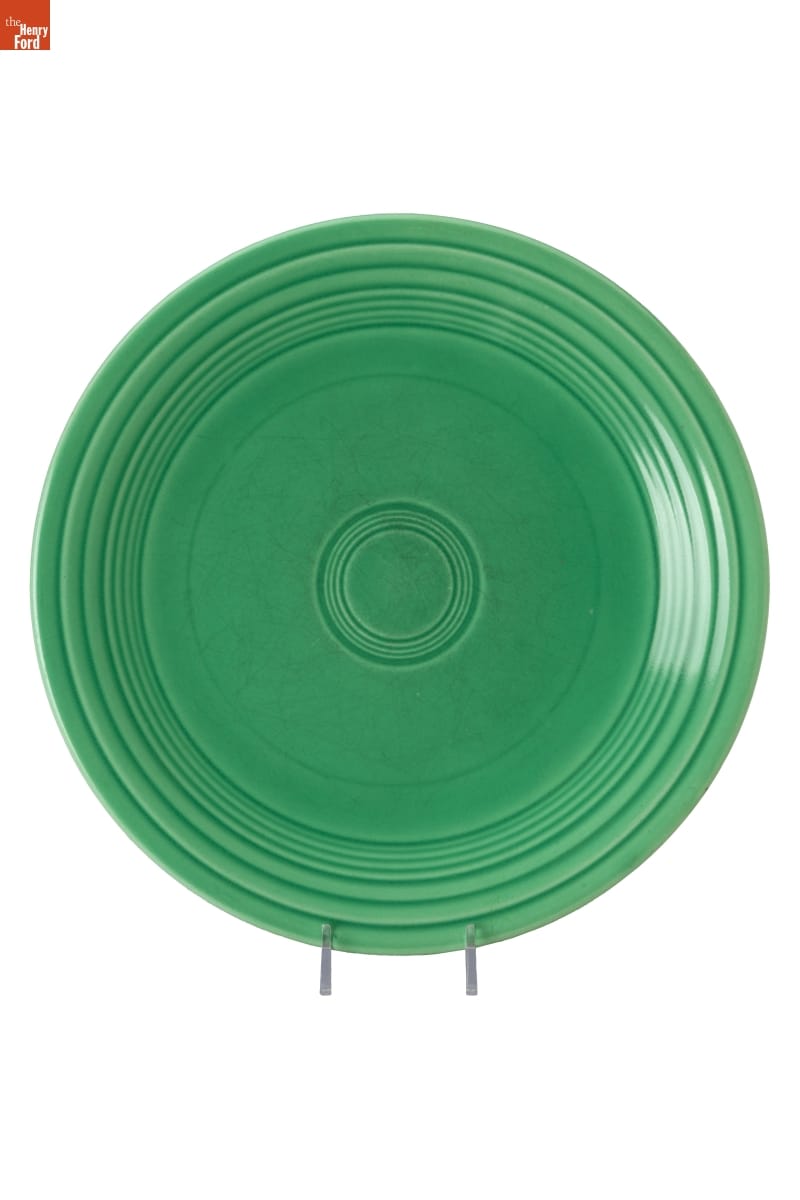
- Fiesta Ware Luncheon Plate, 1936-1951 - Colorful Fiesta ware was one of many inexpensive, yet fashionable dinnerware sets produced for the middle market during the Great Depression, sold at retailers like F.W. Woolworth's, Kresge, and department store bargain basements. Thanks to revived interest in Art Deco, the line was resurrected in 1986 by the Homer Laughlin China Company, and remains in production today.
- 1936-1951
- Collections - Artifact
Fiesta Ware Luncheon Plate, 1936-1951
Colorful Fiesta ware was one of many inexpensive, yet fashionable dinnerware sets produced for the middle market during the Great Depression, sold at retailers like F.W. Woolworth's, Kresge, and department store bargain basements. Thanks to revived interest in Art Deco, the line was resurrected in 1986 by the Homer Laughlin China Company, and remains in production today.
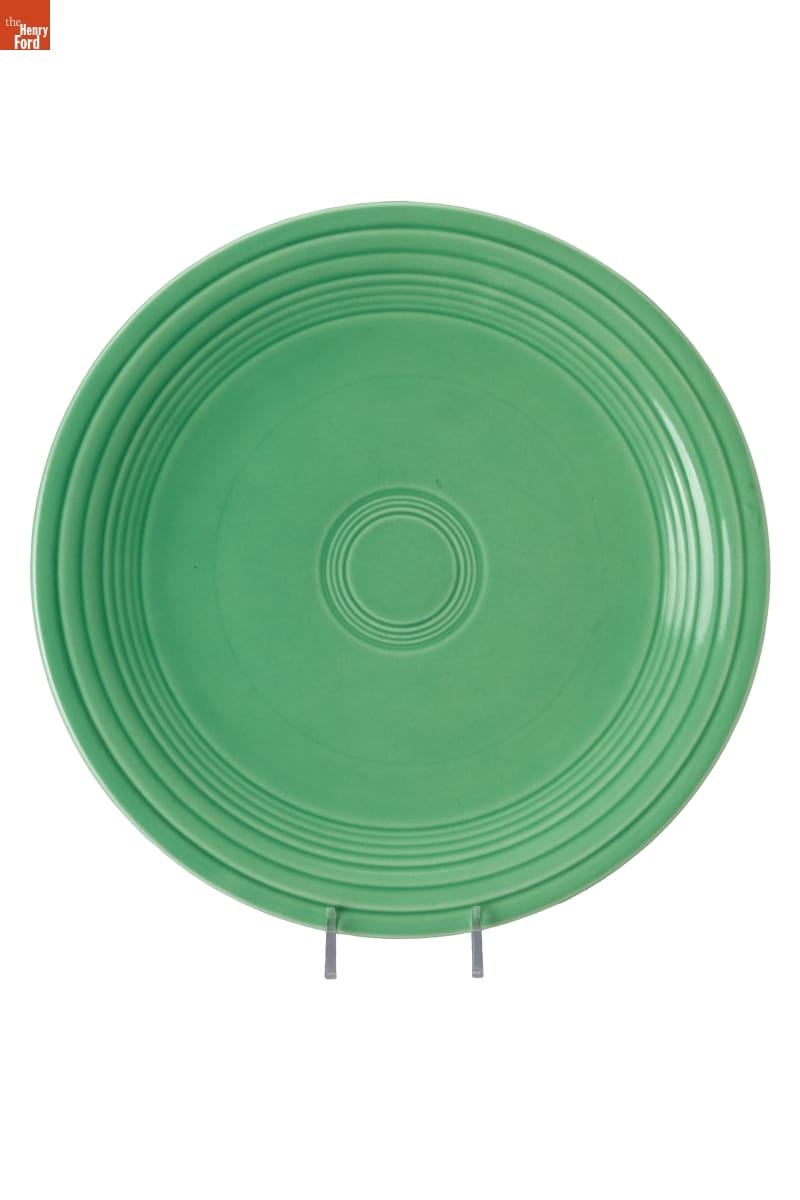
- Fiesta Ware Luncheon Plate, 1936-1951 - Colorful Fiesta ware was one of many inexpensive, yet fashionable dinnerware sets produced for the middle market during the Great Depression, sold at retailers like F.W. Woolworth's, Kresge, and department store bargain basements. Thanks to revived interest in Art Deco, the line was resurrected in 1986 by the Homer Laughlin China Company, and remains in production today.
- 1936-1951
- Collections - Artifact
Fiesta Ware Luncheon Plate, 1936-1951
Colorful Fiesta ware was one of many inexpensive, yet fashionable dinnerware sets produced for the middle market during the Great Depression, sold at retailers like F.W. Woolworth's, Kresge, and department store bargain basements. Thanks to revived interest in Art Deco, the line was resurrected in 1986 by the Homer Laughlin China Company, and remains in production today.
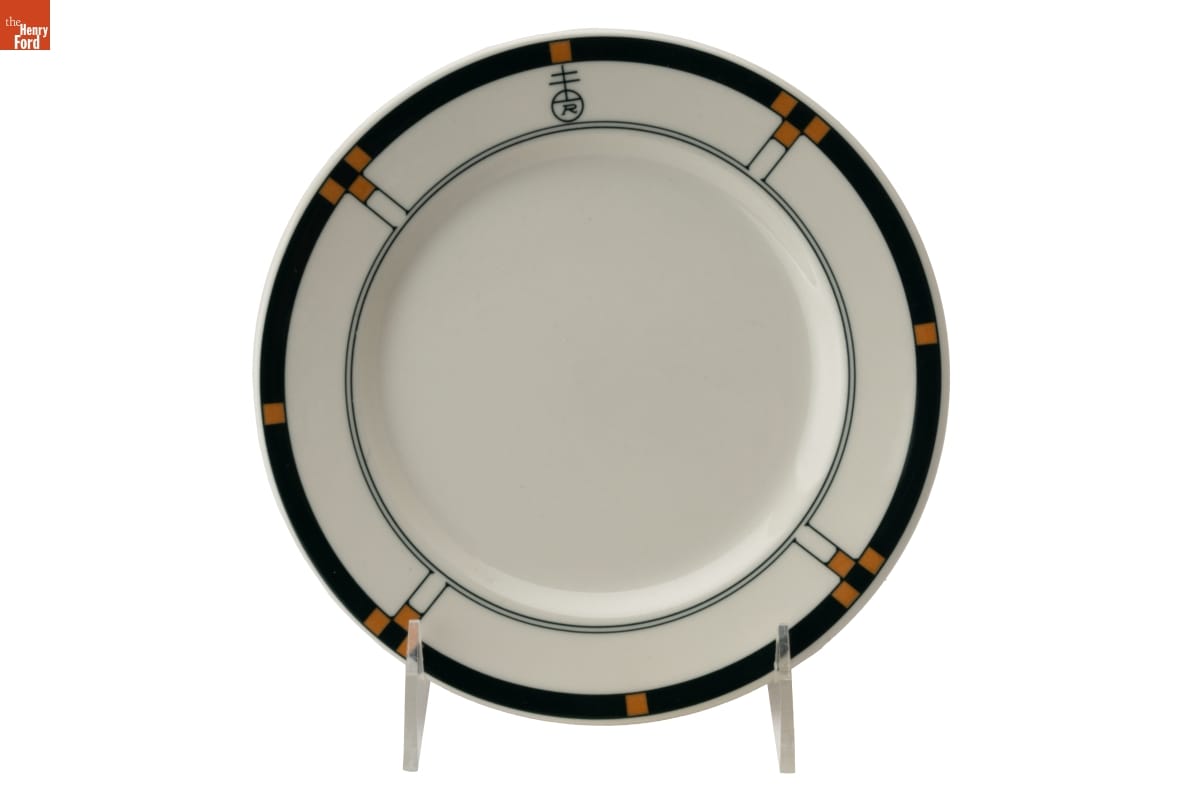
- Roycroft Inn Luncheon Plate, 1980-2000 - The Roycrofters were a community of craft workers and artists founded in 1895, part of the Arts and Crafts movement in the United States. Located in East Aurora, New York, its campus housed various craft shops and provided an inn to welcome visitors. This plate from the late 1900s displays an original design by Dard Hunter (1883-1966).
- 1980-2000
- Collections - Artifact
Roycroft Inn Luncheon Plate, 1980-2000
The Roycrofters were a community of craft workers and artists founded in 1895, part of the Arts and Crafts movement in the United States. Located in East Aurora, New York, its campus housed various craft shops and provided an inn to welcome visitors. This plate from the late 1900s displays an original design by Dard Hunter (1883-1966).
- Christmas Luncheon Plates, 1955-1960 - Christmas often means special meals and desserts. By the mid-20 century, disposable holiday-themed paper plates offered a convenient, and inexpensive, way to serve them. Decorated with seasonal designs, paper plates added a festive touch to celebrations--while making cleanup easier.
- 1955-1960
- Collections - Artifact
Christmas Luncheon Plates, 1955-1960
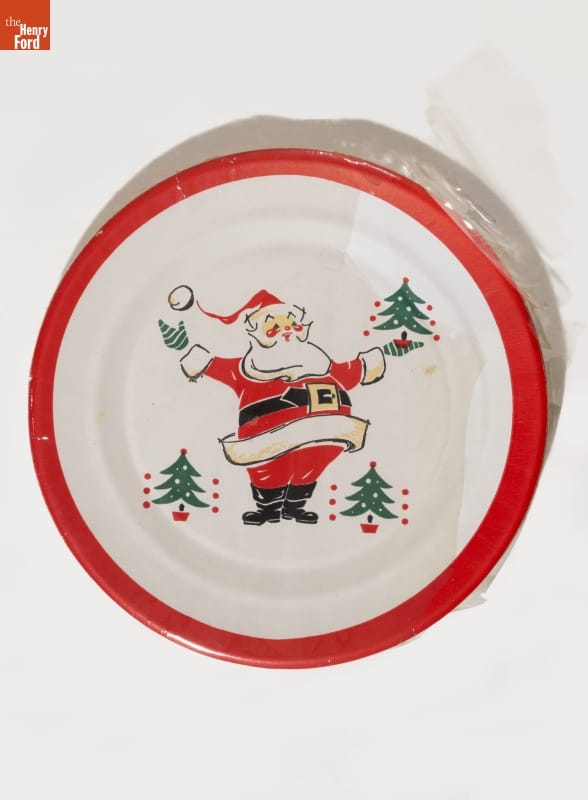
Christmas often means special meals and desserts. By the mid-20 century, disposable holiday-themed paper plates offered a convenient, and inexpensive, way to serve them. Decorated with seasonal designs, paper plates added a festive touch to celebrations--while making cleanup easier.
- Sears Coffee House Lunch Plate, 1966 - Many Sears department stores during the mid-20th century featured in-store cafeterias. Customers could stop in for a quick cup of coffee and a bite to eat or sit down for a meal after a long day of shopping. Employees served food on durable, vitreous china plates, like this one, emblazoned with the Sears Coffee House logo.
- 1966
- Collections - Artifact
Sears Coffee House Lunch Plate, 1966
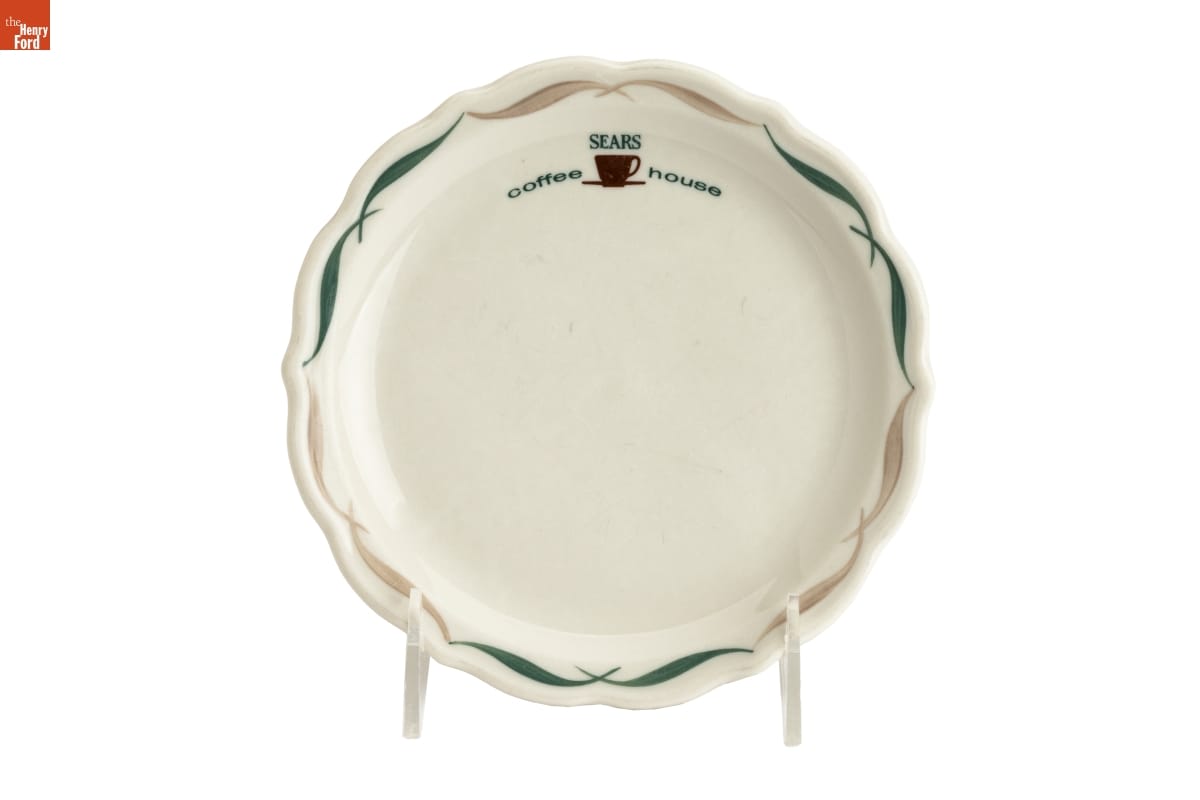
Many Sears department stores during the mid-20th century featured in-store cafeterias. Customers could stop in for a quick cup of coffee and a bite to eat or sit down for a meal after a long day of shopping. Employees served food on durable, vitreous china plates, like this one, emblazoned with the Sears Coffee House logo.
- Fiesta Ware Luncheon Plate, 1936-1951 - Colorful Fiesta ware was one of many inexpensive, yet fashionable dinnerware sets produced for the middle market during the Great Depression, sold at retailers like F.W. Woolworth's, Kresge, and department store bargain basements. Thanks to revived interest in Art Deco, the line was resurrected in 1986 by the Homer Laughlin China Company, and remains in production today.
- 1936-1951
- Collections - Artifact
Fiesta Ware Luncheon Plate, 1936-1951
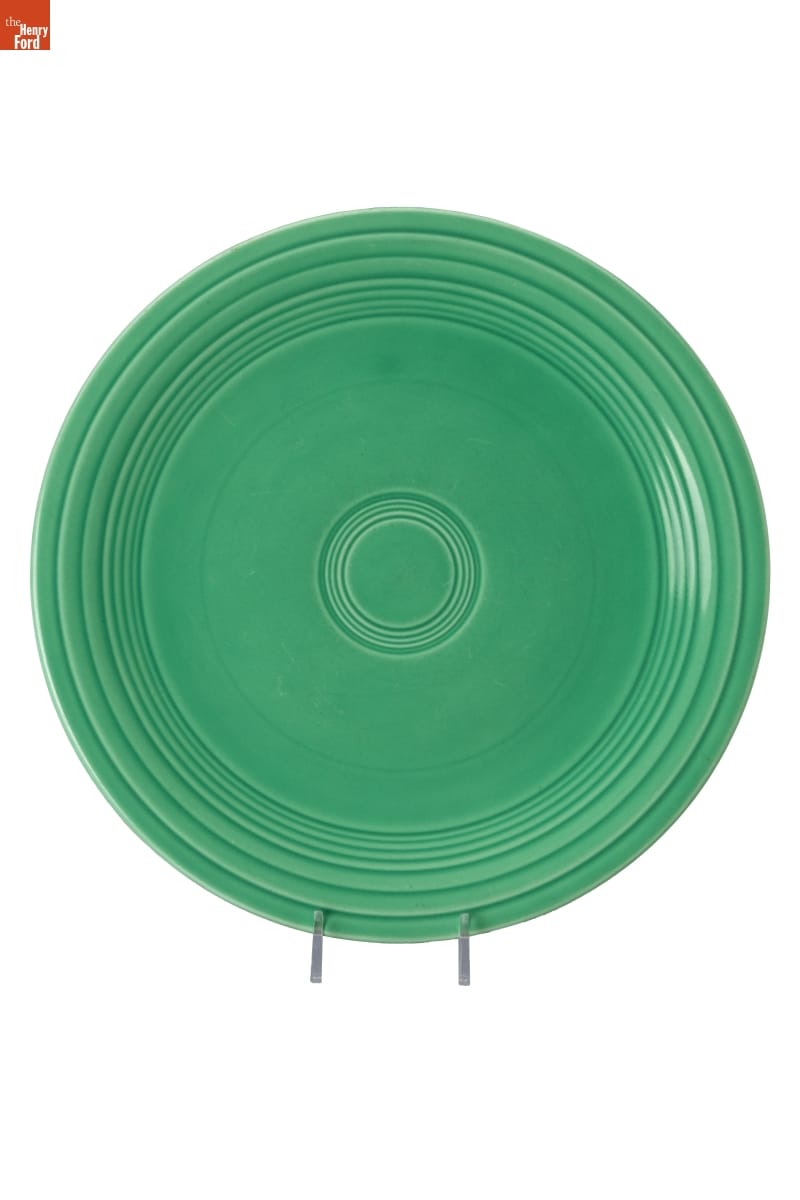
Colorful Fiesta ware was one of many inexpensive, yet fashionable dinnerware sets produced for the middle market during the Great Depression, sold at retailers like F.W. Woolworth's, Kresge, and department store bargain basements. Thanks to revived interest in Art Deco, the line was resurrected in 1986 by the Homer Laughlin China Company, and remains in production today.
- Howard Johnson's "Simple Simon and the Pieman" Lunch Plate, 1956 - In the 1920s, Howard Deering Johnson began selling ice cream from food stands around Boston, Massachusetts. Johnson later expanded his business to full-service restaurants. He franchised these orange-roofed establishments across America -- locating them along highways to cater to the traveling public. The Simple Simon and the Pieman logo -- seen on this plate -- became a recognizable symbol to his motoring patrons.
- 1956
- Collections - Artifact
Howard Johnson's "Simple Simon and the Pieman" Lunch Plate, 1956
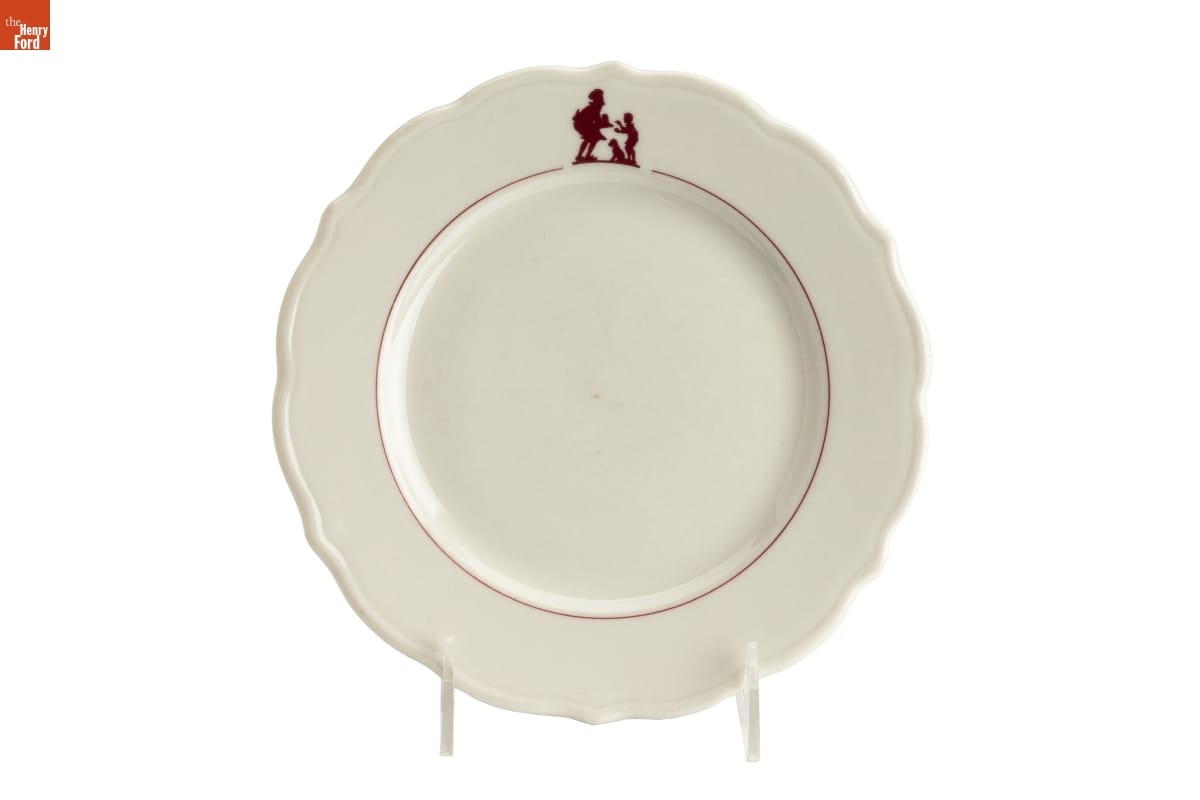
In the 1920s, Howard Deering Johnson began selling ice cream from food stands around Boston, Massachusetts. Johnson later expanded his business to full-service restaurants. He franchised these orange-roofed establishments across America -- locating them along highways to cater to the traveling public. The Simple Simon and the Pieman logo -- seen on this plate -- became a recognizable symbol to his motoring patrons.
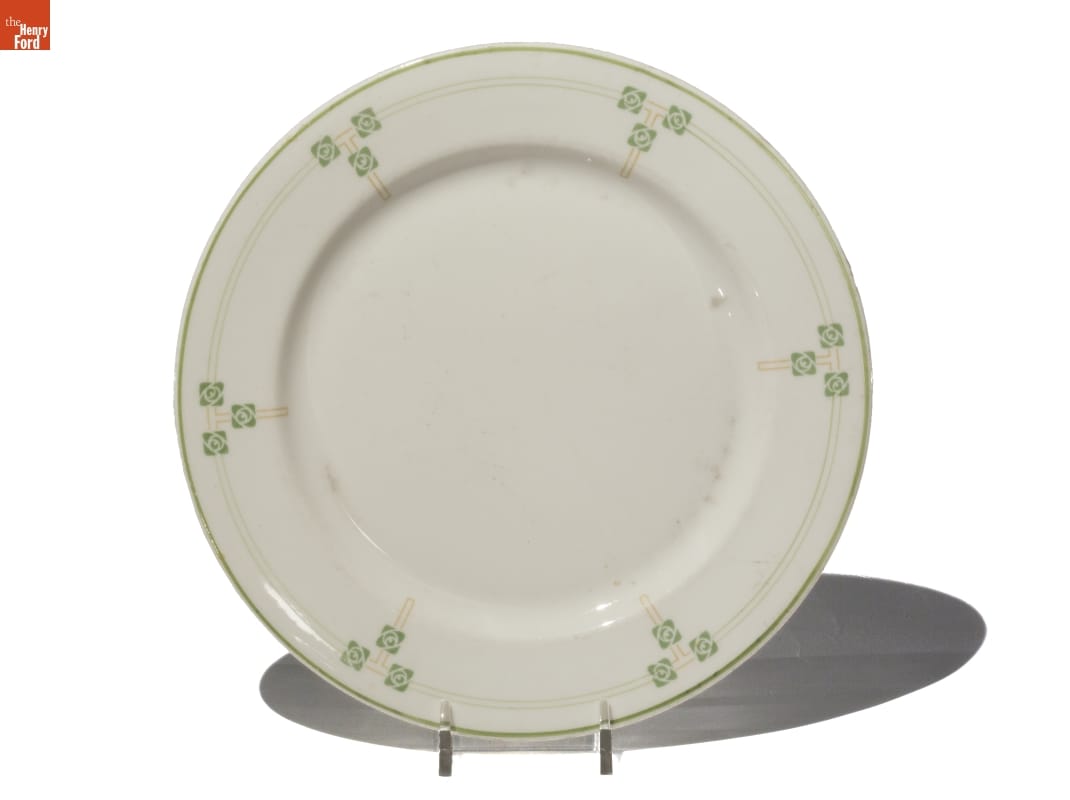
- Luncheon Plate in Tudor Rose Pattern, 1912-1919 - Henry Ford, Thomas Edison, Harvey Firestone and naturalist John Burroughs embarked on a series of camping trips between 1916 and 1924. These self-proclaimed Vagabonds loved to explore nature and the pre-industrial landscape, but they also camped in style. This group of well-to-do adventurers brought along service staff and all needed amenities including a set of durable, Art and Crafts-patterned china.
- 1912-1919
- Collections - Artifact
Luncheon Plate in Tudor Rose Pattern, 1912-1919
Henry Ford, Thomas Edison, Harvey Firestone and naturalist John Burroughs embarked on a series of camping trips between 1916 and 1924. These self-proclaimed Vagabonds loved to explore nature and the pre-industrial landscape, but they also camped in style. This group of well-to-do adventurers brought along service staff and all needed amenities including a set of durable, Art and Crafts-patterned china.
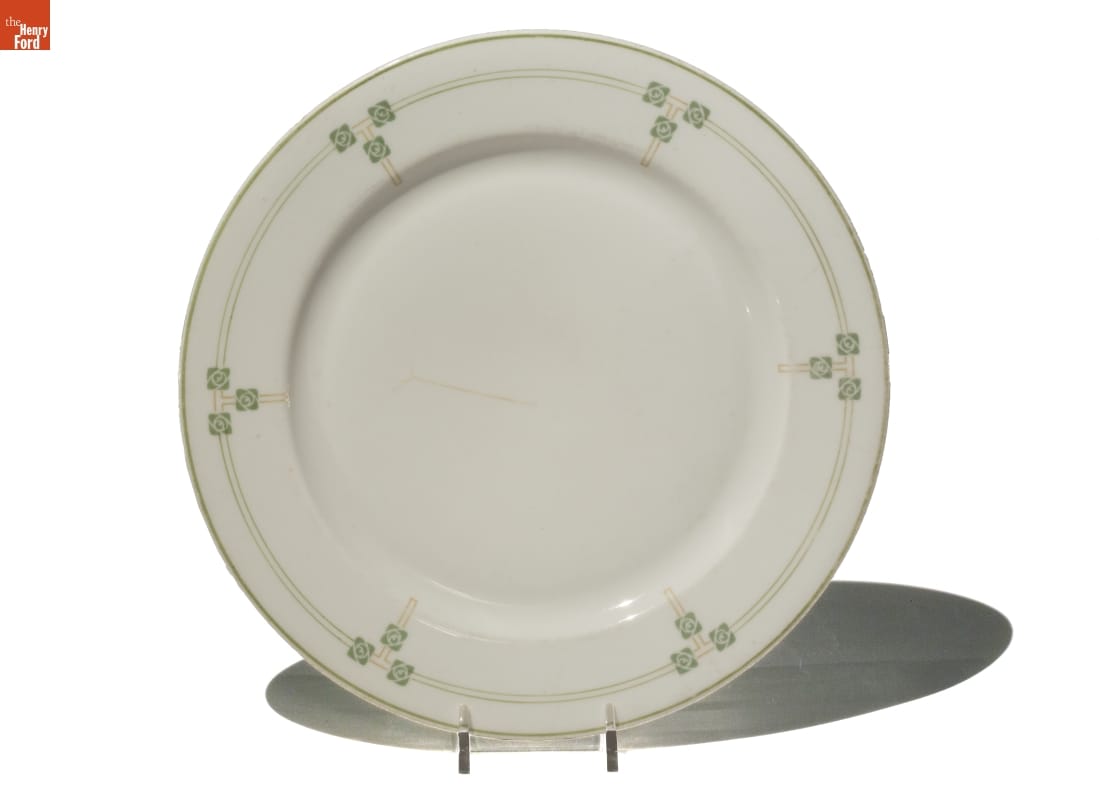
- Luncheon Plate in Tudor Rose Pattern, 1912-1919 - Henry Ford, Thomas Edison, Harvey Firestone and naturalist John Burroughs embarked on a series of camping trips between 1916 and 1924. These self-proclaimed Vagabonds loved to explore nature and the pre-industrial landscape, but they also camped in style. This group of well-to-do adventurers brought along service staff and all needed amenities including a set of durable, Art and Crafts-patterned china.
- 1912-1919
- Collections - Artifact
Luncheon Plate in Tudor Rose Pattern, 1912-1919
Henry Ford, Thomas Edison, Harvey Firestone and naturalist John Burroughs embarked on a series of camping trips between 1916 and 1924. These self-proclaimed Vagabonds loved to explore nature and the pre-industrial landscape, but they also camped in style. This group of well-to-do adventurers brought along service staff and all needed amenities including a set of durable, Art and Crafts-patterned china.