
Search
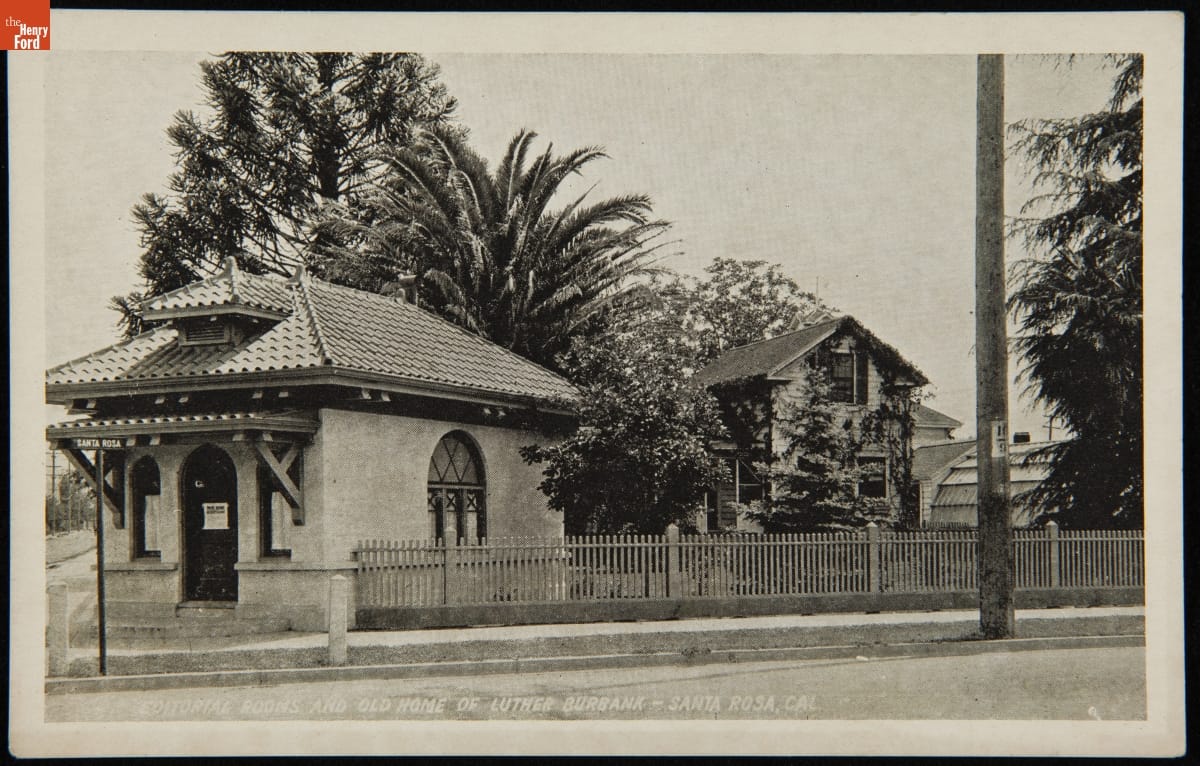
- Editorial Rooms and Old Home of Luther Burbank - Santa Rosa, California, 1915 - Luther Burbank (1849-1926), an American horticulturalist and author, gained a reputation for selective breeding that yielded more than 800 new fruits, vegetables, flowers, and other plants. He opened this Bureau of Information in 1910 to sell seeds and souvenirs. The Luther Burbank Society, organized in 1910, used Burbank's old home as an editorial office and the Bureau for storage of their multi-volume series on Burbank, published in 1913-1914.
- 1915
- Collections - Artifact
Editorial Rooms and Old Home of Luther Burbank - Santa Rosa, California, 1915
Luther Burbank (1849-1926), an American horticulturalist and author, gained a reputation for selective breeding that yielded more than 800 new fruits, vegetables, flowers, and other plants. He opened this Bureau of Information in 1910 to sell seeds and souvenirs. The Luther Burbank Society, organized in 1910, used Burbank's old home as an editorial office and the Bureau for storage of their multi-volume series on Burbank, published in 1913-1914.
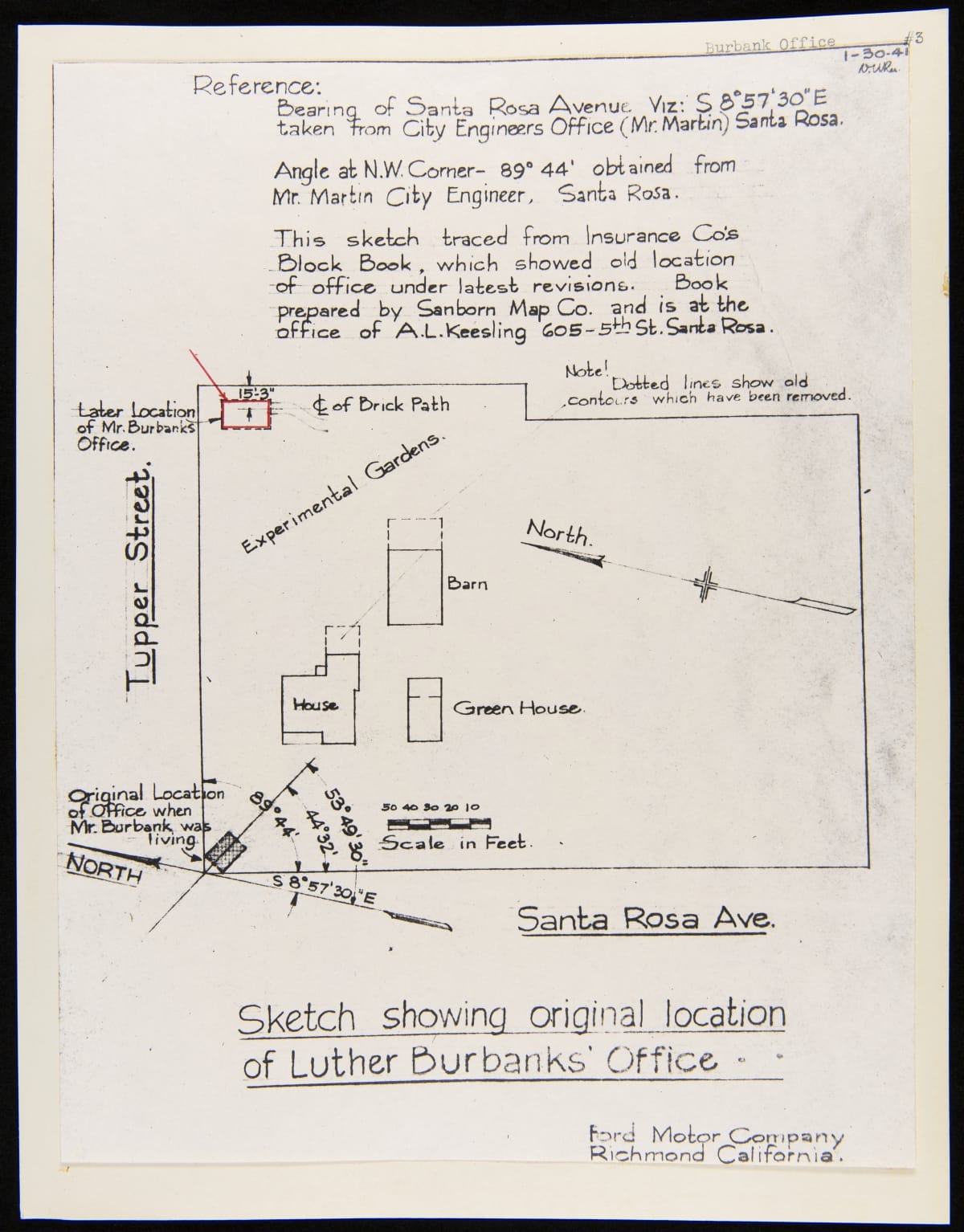
- Sketch Showing Original Location of Luther Burbank Garden Office, Santa Rosa, California, January 30, 1941 - Luther Burbank (1849-1926), a much-heralded American horticulturalist, gained a reputation for selectively breeding more than 800 new fruits, vegetables, flowers, and other plants. He opened a "Bureau of Information" in 1910 to sell seeds and souvenirs. Burbank's widow described it as the "little office" when she offered it to Henry Ford in 1928. This map documents its original locations in Santa Rosa, California.
- January 30, 1941
- Collections - Artifact
Sketch Showing Original Location of Luther Burbank Garden Office, Santa Rosa, California, January 30, 1941
Luther Burbank (1849-1926), a much-heralded American horticulturalist, gained a reputation for selectively breeding more than 800 new fruits, vegetables, flowers, and other plants. He opened a "Bureau of Information" in 1910 to sell seeds and souvenirs. Burbank's widow described it as the "little office" when she offered it to Henry Ford in 1928. This map documents its original locations in Santa Rosa, California.
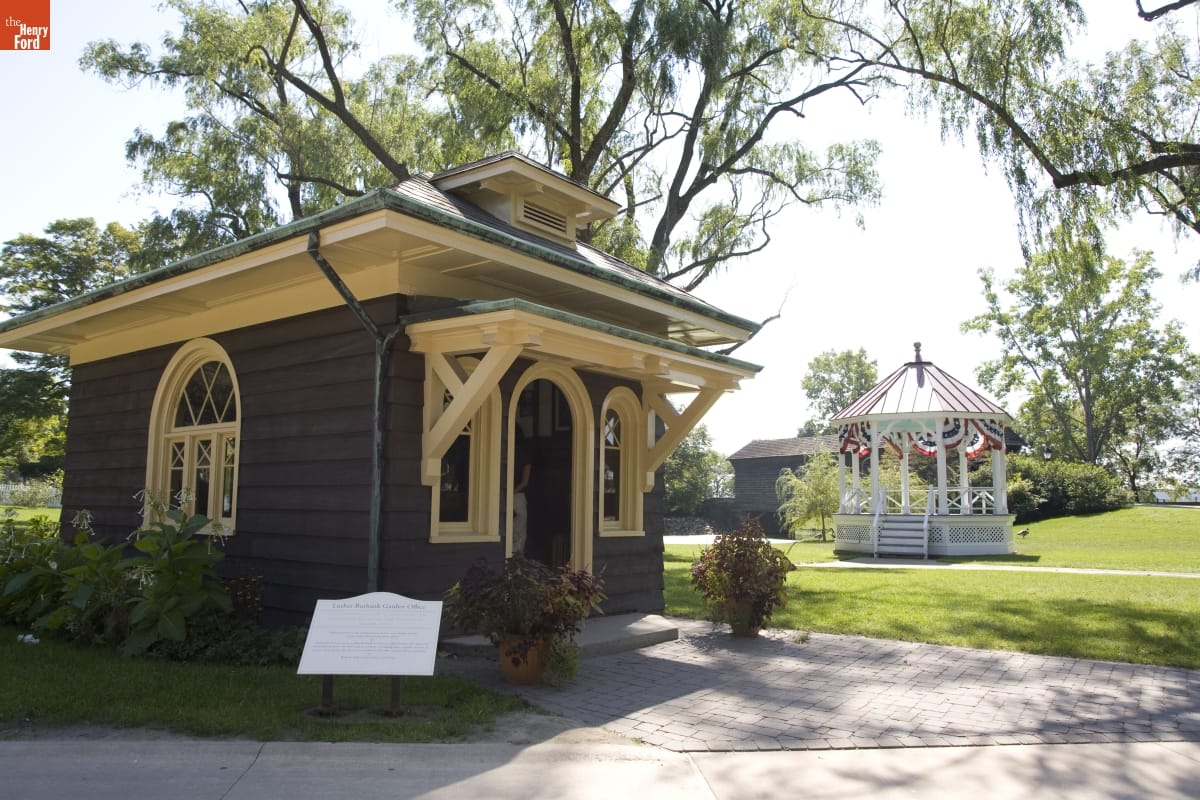
- Luther Burbank Garden Office in Greenfield Village, September 2007 -
- September 01, 2007
- Collections - Artifact
Luther Burbank Garden Office in Greenfield Village, September 2007
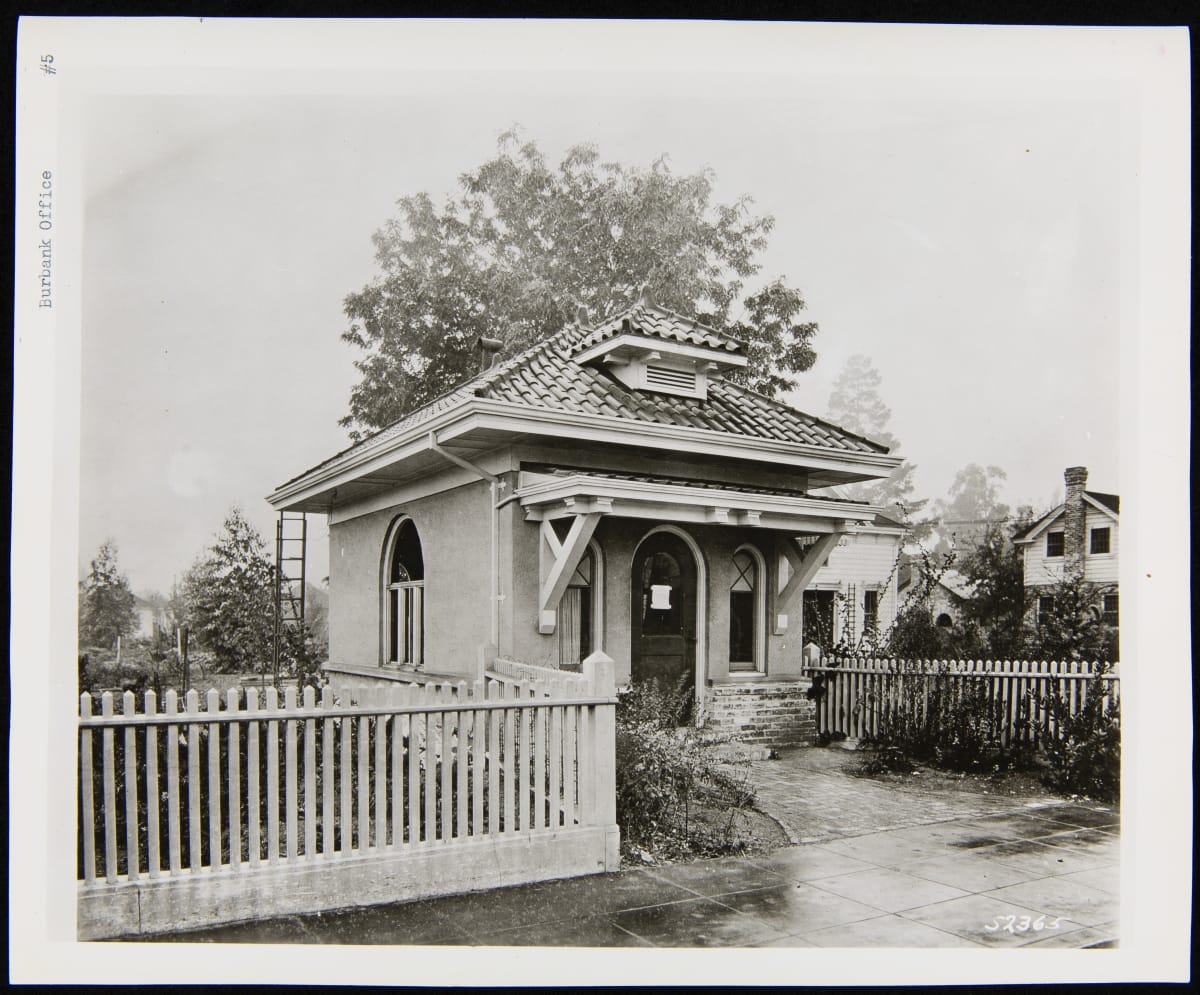
- Burbank Experimental Gardens Information Office, 1928 - Luther Burbank (1849-1926), a much-heralded American horticulturalist, gained a reputation for selectively breeding more than 800 new fruits, vegetables, flowers, and other plants. He opened this building in 1910 to sell seeds and souvenirs to inquisitive patrons. It served many purposes over the years and was moved once before Burbank's widow sent it to Henry Ford in 1928 for inclusion in Greenfield Village.
- 1928
- Collections - Artifact
Burbank Experimental Gardens Information Office, 1928
Luther Burbank (1849-1926), a much-heralded American horticulturalist, gained a reputation for selectively breeding more than 800 new fruits, vegetables, flowers, and other plants. He opened this building in 1910 to sell seeds and souvenirs to inquisitive patrons. It served many purposes over the years and was moved once before Burbank's widow sent it to Henry Ford in 1928 for inclusion in Greenfield Village.
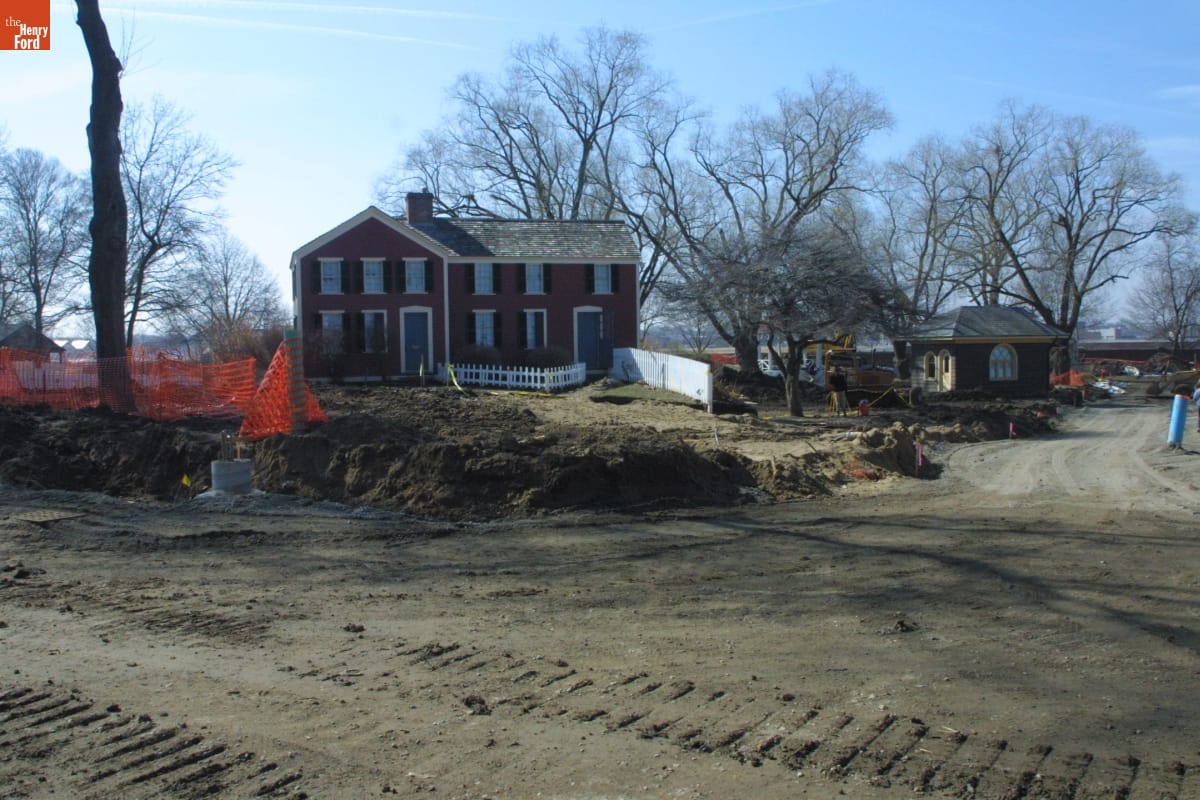
- Luther Burbank Birthplace during the Greenfield Village Restoration Project, March 2003 - By 2000, Greenfield Village began showing its age. Buildings and crumbling infrastructure desperately needed repair. Museum planners envisioned a revitalized village. They created themed "Historic Districts" by relocating and refurbishing the historic structures. Workers repaved streets and upgraded water, sewer, electric, and gas lines. In June 2003, nine months after restoration began, visitors passed through a new entrance into a reborn Greenfield Village.
- March 01, 2003
- Collections - Artifact
Luther Burbank Birthplace during the Greenfield Village Restoration Project, March 2003
By 2000, Greenfield Village began showing its age. Buildings and crumbling infrastructure desperately needed repair. Museum planners envisioned a revitalized village. They created themed "Historic Districts" by relocating and refurbishing the historic structures. Workers repaved streets and upgraded water, sewer, electric, and gas lines. In June 2003, nine months after restoration began, visitors passed through a new entrance into a reborn Greenfield Village.
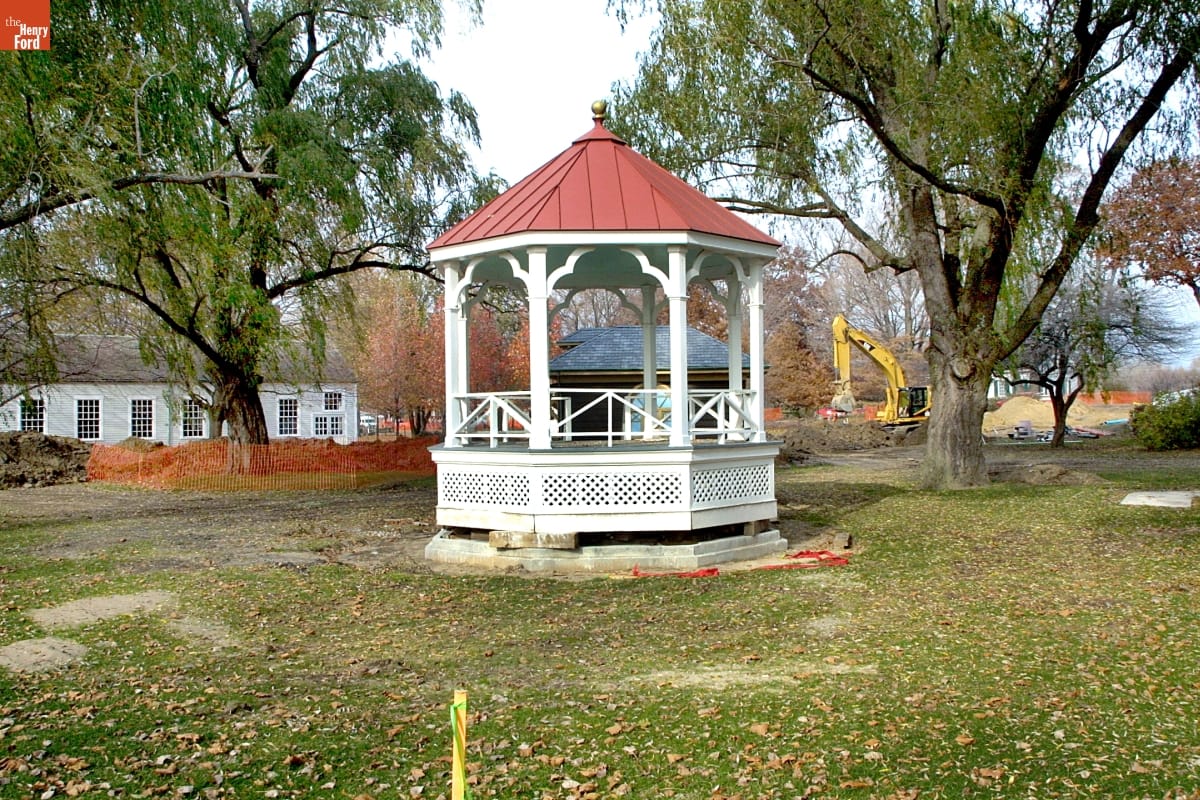
- Bandstand at New Site after Relocation during the Greenfield Village Restoration Project, November 2002 - By 2000, Greenfield Village began showing its age. Buildings and crumbling infrastructure desperately needed repair. Museum planners envisioned a revitalized village. They created themed "Historic Districts" by relocating and refurbishing the historic structures. Workers repaved streets and upgraded water, sewer, electric, and gas lines. In June 2003, nine months after restoration began, visitors passed through a new entrance into a reborn Greenfield Village.
- November 01, 2002
- Collections - Artifact
Bandstand at New Site after Relocation during the Greenfield Village Restoration Project, November 2002
By 2000, Greenfield Village began showing its age. Buildings and crumbling infrastructure desperately needed repair. Museum planners envisioned a revitalized village. They created themed "Historic Districts" by relocating and refurbishing the historic structures. Workers repaved streets and upgraded water, sewer, electric, and gas lines. In June 2003, nine months after restoration began, visitors passed through a new entrance into a reborn Greenfield Village.
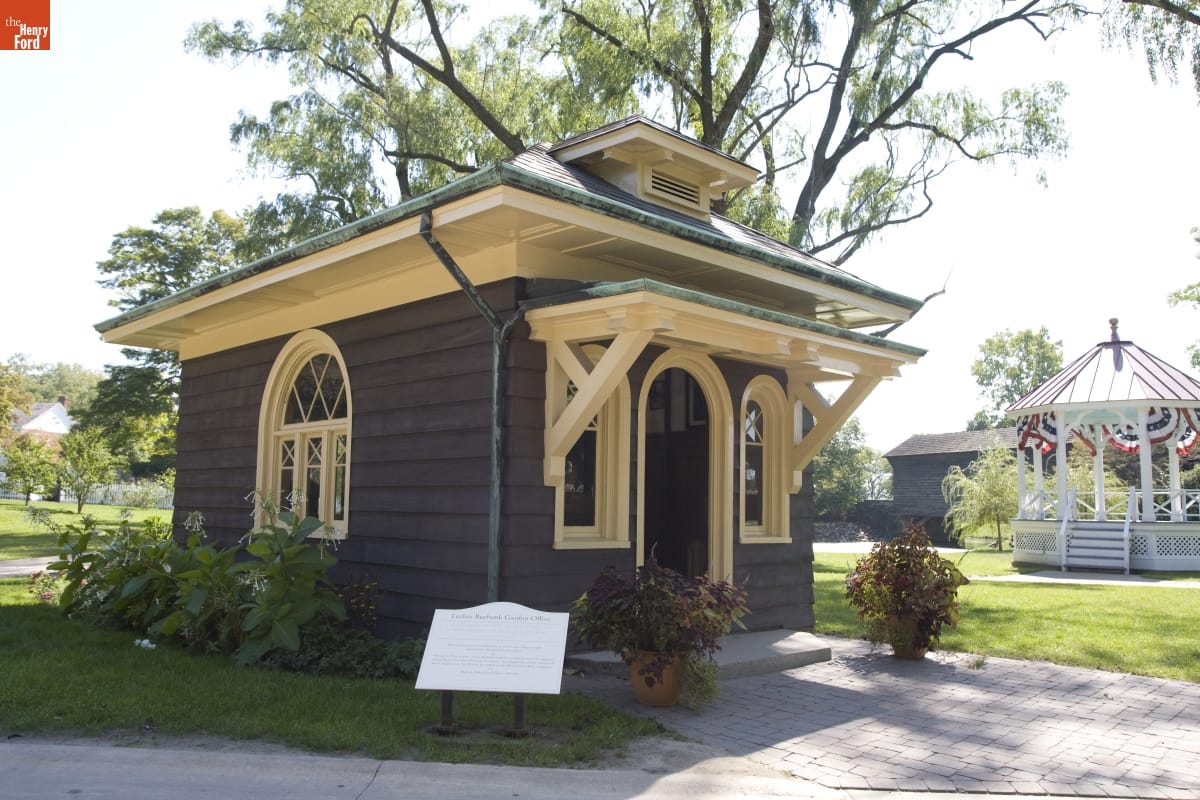
- Luther Burbank Garden Office in Greenfield Village, September 2007 -
- September 01, 2007
- Collections - Artifact
Luther Burbank Garden Office in Greenfield Village, September 2007
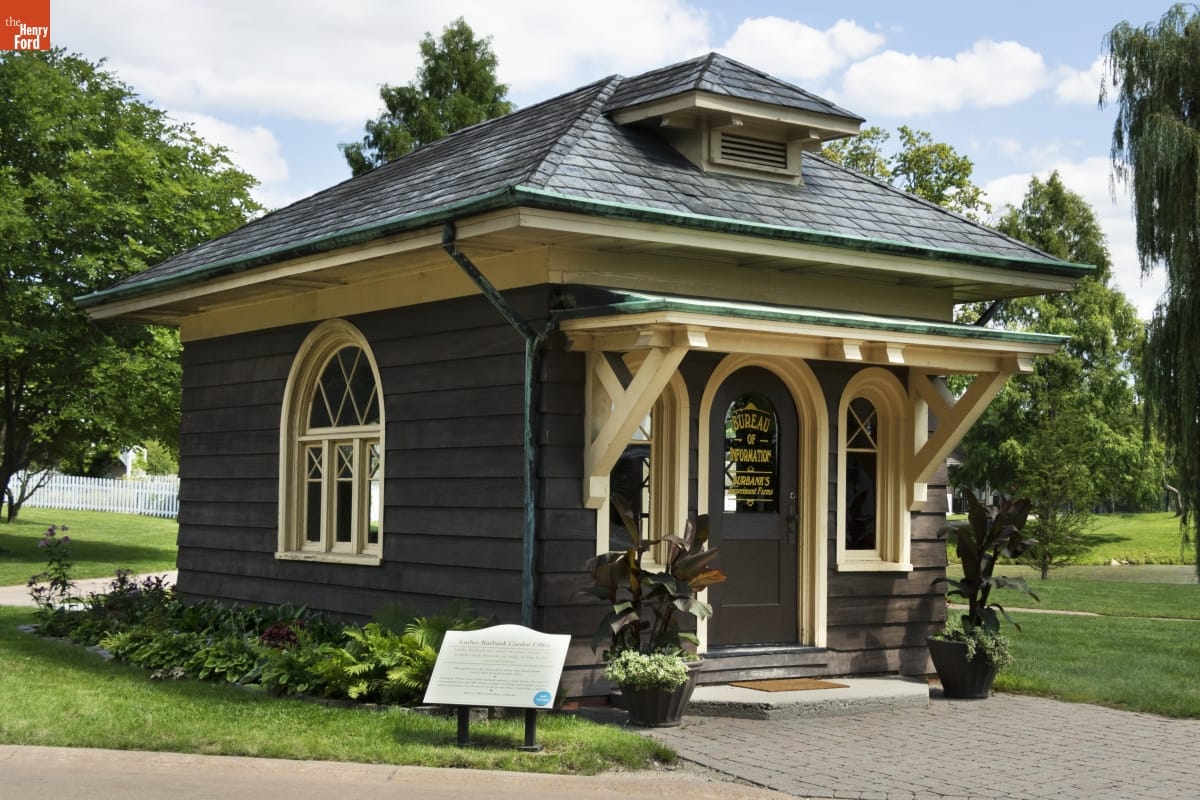
- Luther Burbank Garden Office - Luther Burbank (1849-1926), an American horticulturalist and author, gained a reputation for selective breeding that yielded more than 800 new fruits, vegetables, flowers, and other plants. He opened this Bureau of Information in 1910 at the corner of his 40-acre experimental garden in Santa Rosa to sell seeds and souvenirs. It served various purposes over the years until Burbank's widow offered it to Henry Ford in 1928.
- 1909
- Collections - Artifact
Luther Burbank Garden Office
Luther Burbank (1849-1926), an American horticulturalist and author, gained a reputation for selective breeding that yielded more than 800 new fruits, vegetables, flowers, and other plants. He opened this Bureau of Information in 1910 at the corner of his 40-acre experimental garden in Santa Rosa to sell seeds and souvenirs. It served various purposes over the years until Burbank's widow offered it to Henry Ford in 1928.
- Luther Burbank Garden Office, Original Site, Santa Rosa, California, circa 1910 - Luther Burbank (1849-1926), an American horticulturalist and author, gained a reputation for selective breeding that yielded more than 800 new fruits, vegetables, flowers, and other plants. He opened this Bureau of Information in 1910 at the corner of his 40-acre experimental garden in Santa Rosa to sell seeds and souvenirs. After 1913, the building had various uses until Burbank's widow offered it to Henry Ford in 1928.
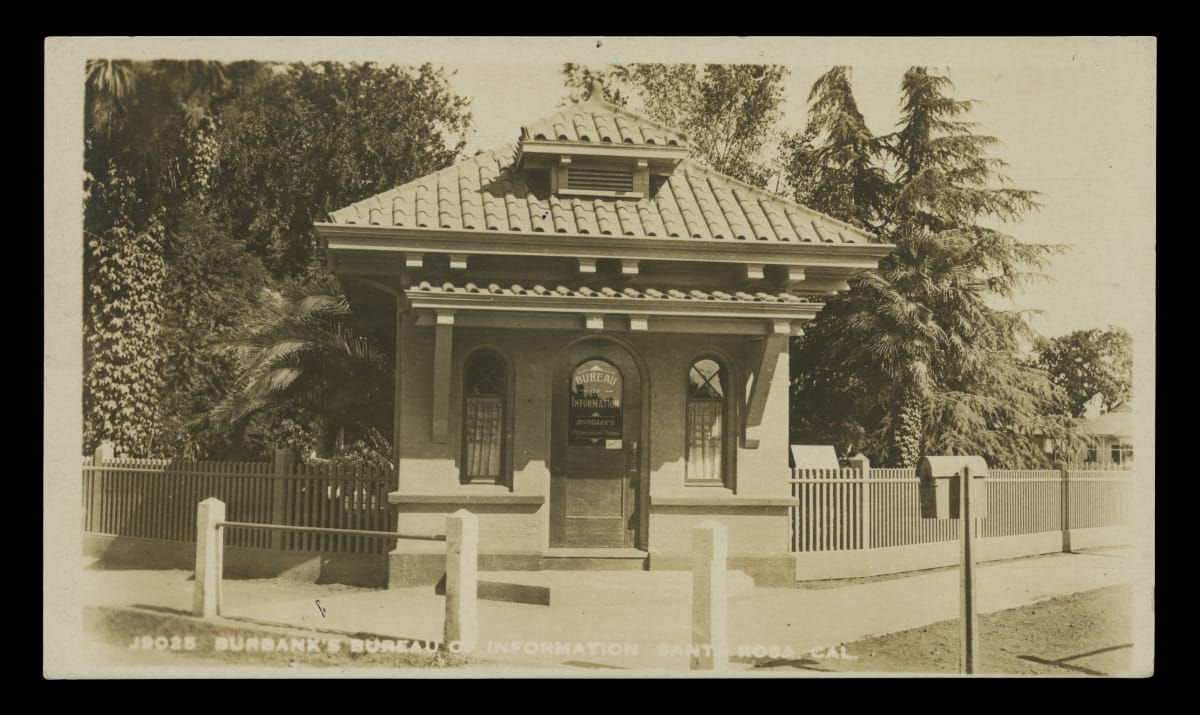
- circa 1910
- Collections - Artifact
Luther Burbank Garden Office, Original Site, Santa Rosa, California, circa 1910
Luther Burbank (1849-1926), an American horticulturalist and author, gained a reputation for selective breeding that yielded more than 800 new fruits, vegetables, flowers, and other plants. He opened this Bureau of Information in 1910 at the corner of his 40-acre experimental garden in Santa Rosa to sell seeds and souvenirs. After 1913, the building had various uses until Burbank's widow offered it to Henry Ford in 1928.
- Construction Work on Duffield Road (later called Maple Lane) in Greenfield Village, October 1929 -
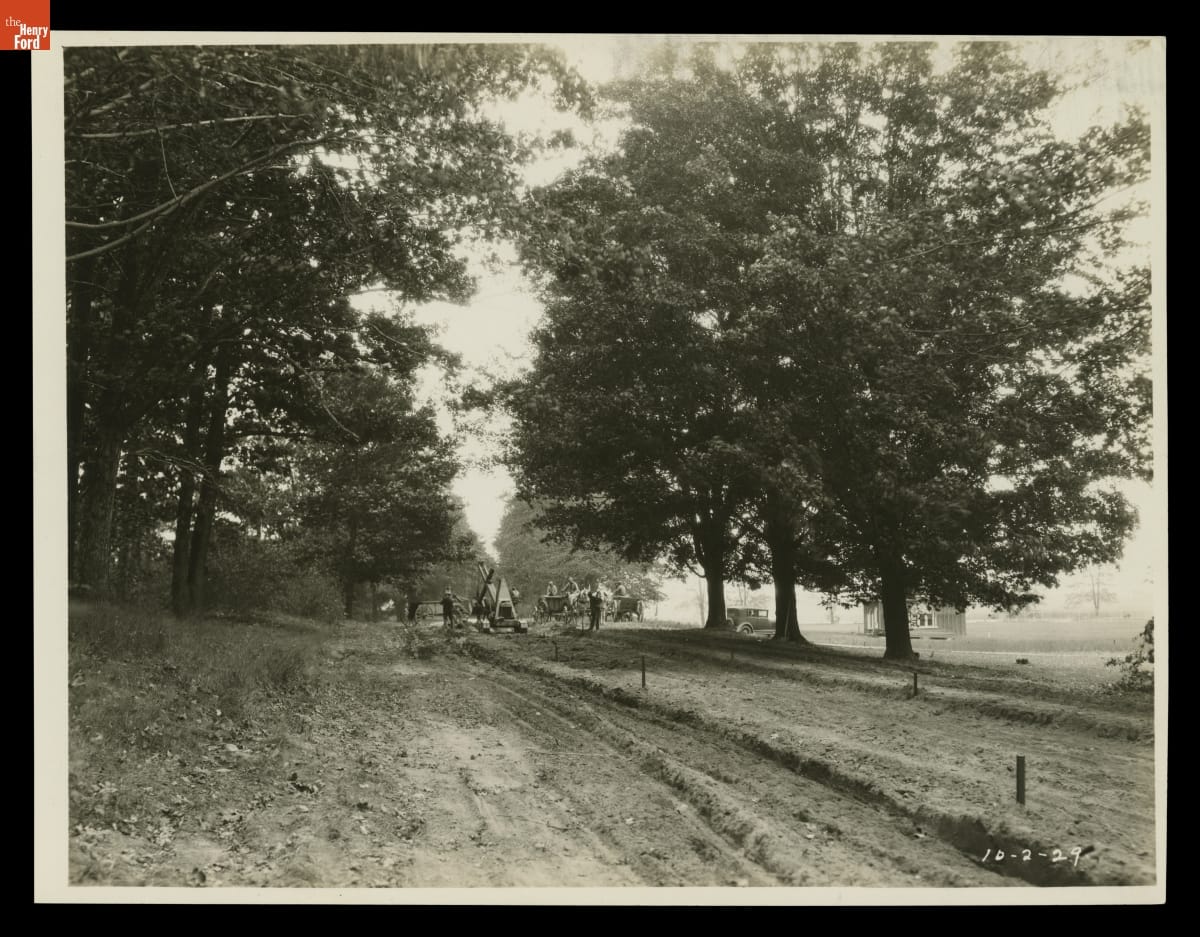
- October 02, 1929
- Collections - Artifact
Construction Work on Duffield Road (later called Maple Lane) in Greenfield Village, October 1929