
Search
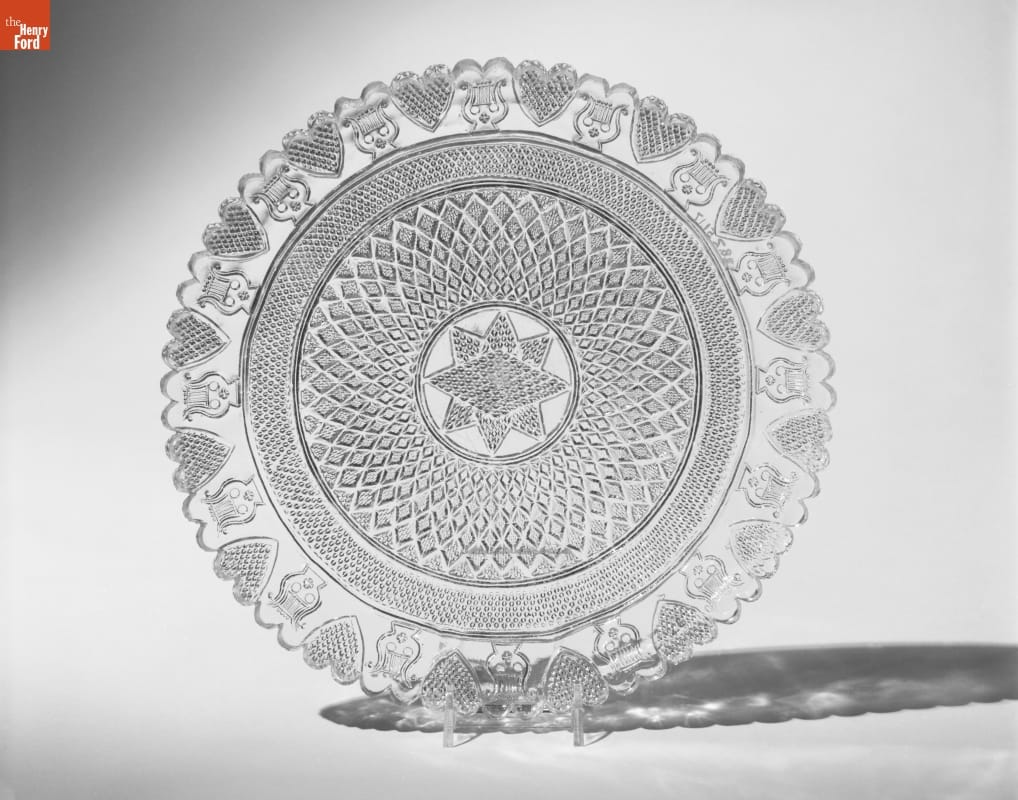
- Dish, 1825-1845 - Mechanically pressed glass was an innovation in glass history, making decorative, "patterned" glass available to a broad audience. One of the earliest types of pressed glass, dating to the 1830s is known as "Lacy Glass". Complex stippled patterns were developed to help hide technical defects caused by early presses, when the glass gather was cut off and dropped into a mold.
- 1825-1845
- Collections - Artifact
Dish, 1825-1845
Mechanically pressed glass was an innovation in glass history, making decorative, "patterned" glass available to a broad audience. One of the earliest types of pressed glass, dating to the 1830s is known as "Lacy Glass". Complex stippled patterns were developed to help hide technical defects caused by early presses, when the glass gather was cut off and dropped into a mold.
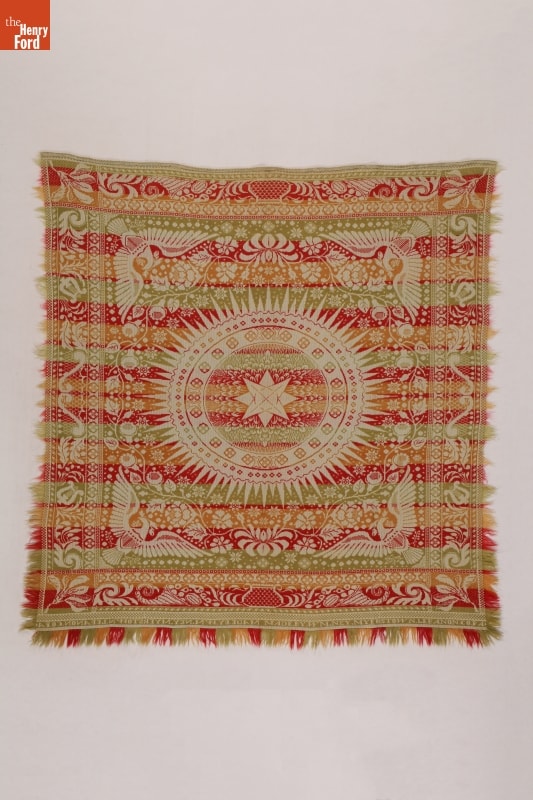
- Coverlet Woven by William Ney, 1860-1880 -
- 1860-1880
- Collections - Artifact
Coverlet Woven by William Ney, 1860-1880
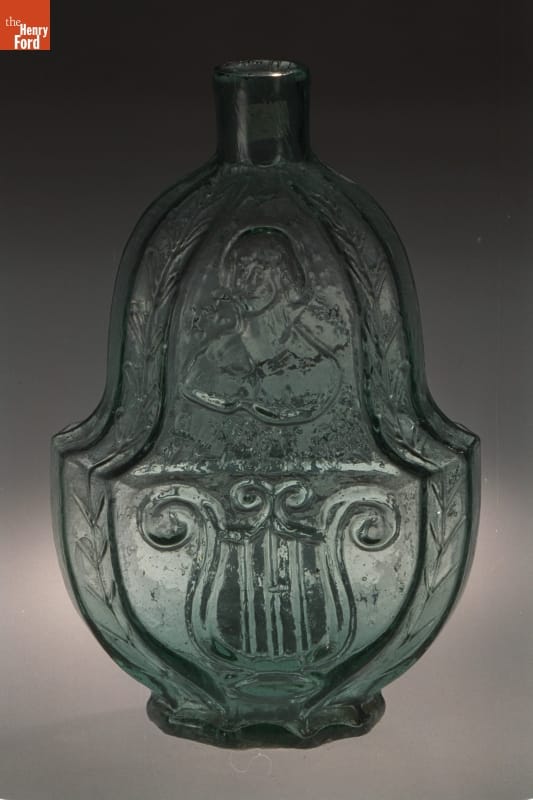
- Flask, 1851-1855 - Glass factories in America began producing inexpensive, mold-formed flasks in the early 1800s. These figured flasks, often decorated with symbols of national pride, appealed to America's common man. The Swedish singer, Jenny Lind, caused a sensation when she toured America from 1850-1852. Her name and image adorned a number of everyday objects -- like this flask -- for years to come.
- 1851-1855
- Collections - Artifact
Flask, 1851-1855
Glass factories in America began producing inexpensive, mold-formed flasks in the early 1800s. These figured flasks, often decorated with symbols of national pride, appealed to America's common man. The Swedish singer, Jenny Lind, caused a sensation when she toured America from 1850-1852. Her name and image adorned a number of everyday objects -- like this flask -- for years to come.
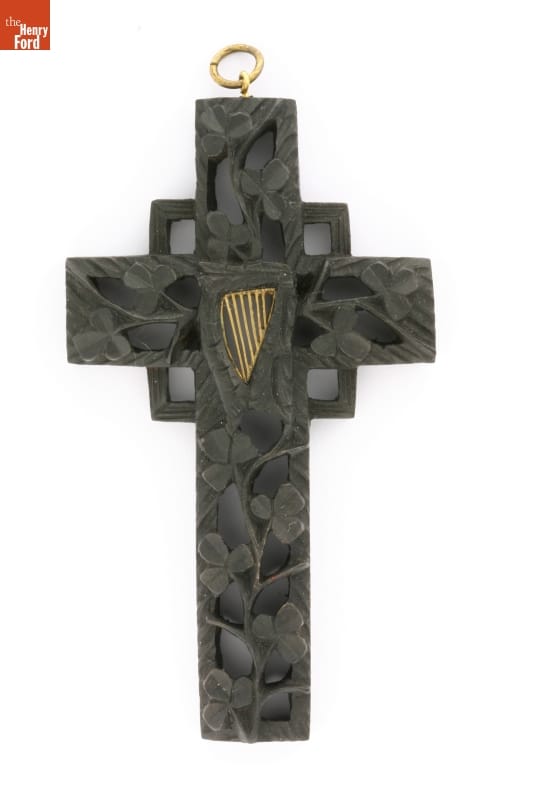
- Bogwood Cross Pendant, 1850-1880 - Bogwood is long-buried wood found in peat bogs or other environments where the wood is preserved from decay. Craftsmen carve the wood into jewelry, trinkets, and other decorative items. In the mid-to-late nineteenth century, a rich supply of bogwood came from Ireland. Bogwood jewelry carved during this period tended to reflect Celtic and Irish designs and motifs.
- 1850-1880
- Collections - Artifact
Bogwood Cross Pendant, 1850-1880
Bogwood is long-buried wood found in peat bogs or other environments where the wood is preserved from decay. Craftsmen carve the wood into jewelry, trinkets, and other decorative items. In the mid-to-late nineteenth century, a rich supply of bogwood came from Ireland. Bogwood jewelry carved during this period tended to reflect Celtic and Irish designs and motifs.
- Cup Plate, 1825-1860 - Americans in the early 19th century poured hot tea into their saucers to cool -- leaving the staining liquid around the teacup's base. Hostesses would provide guests with cup plates to prevent damage to tablecloths and wood. Pressed glass cup plates were popular from the 1820s to the 1860s. Pressed designs varied from purely decorative to images of famous men, places and events.
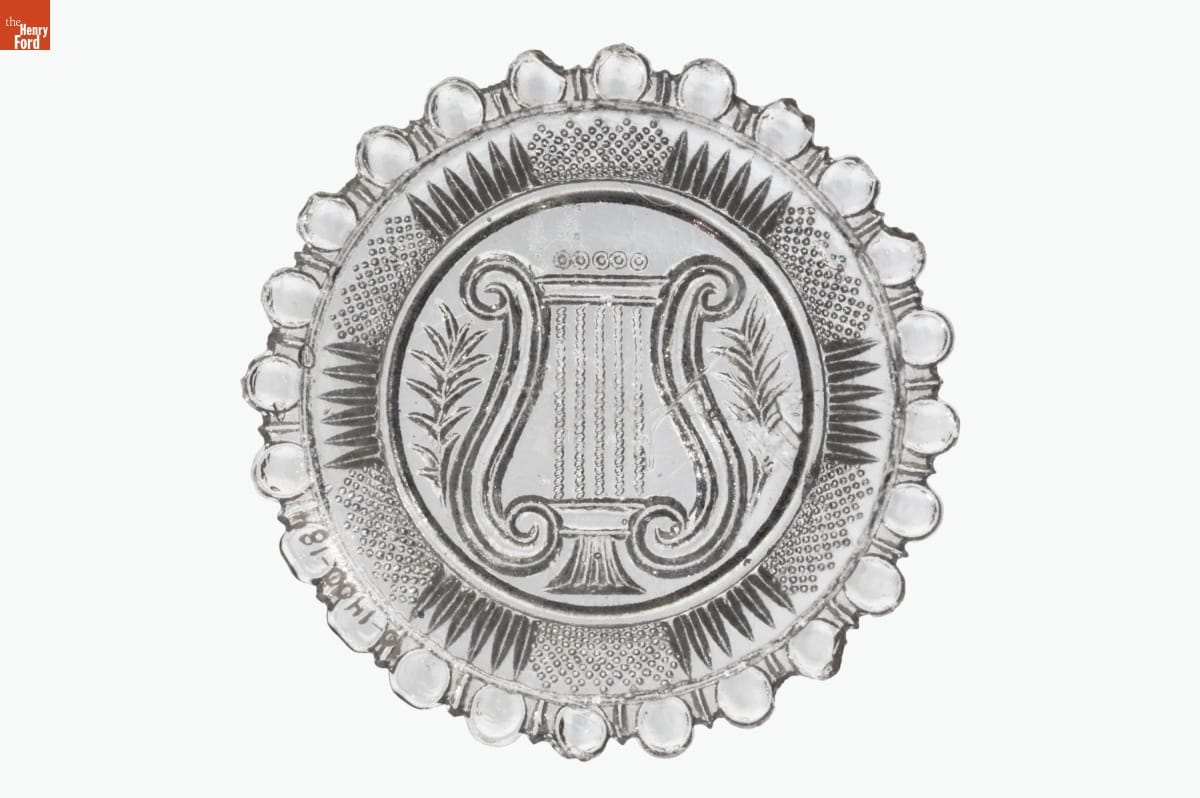
- 1825-1860
- Collections - Artifact
Cup Plate, 1825-1860
Americans in the early 19th century poured hot tea into their saucers to cool -- leaving the staining liquid around the teacup's base. Hostesses would provide guests with cup plates to prevent damage to tablecloths and wood. Pressed glass cup plates were popular from the 1820s to the 1860s. Pressed designs varied from purely decorative to images of famous men, places and events.
- Spindle Hook, 1850-1900 -
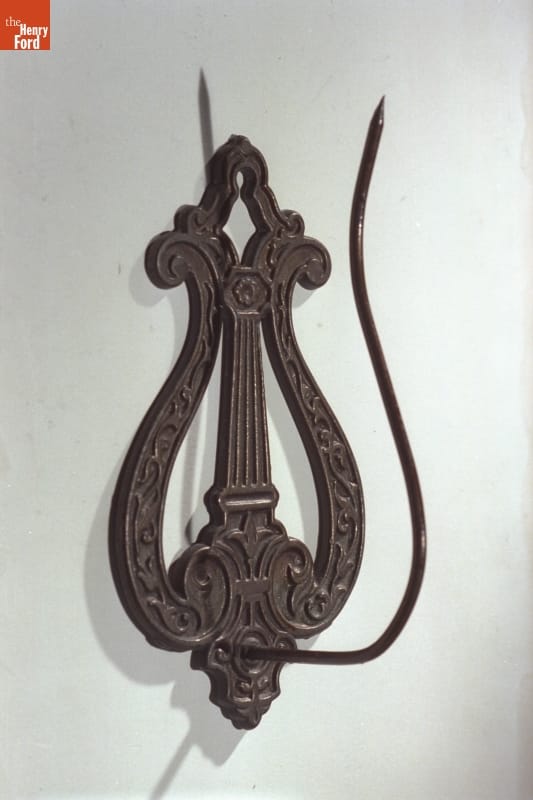
- 1850-1900
- Collections - Artifact
Spindle Hook, 1850-1900