
Search
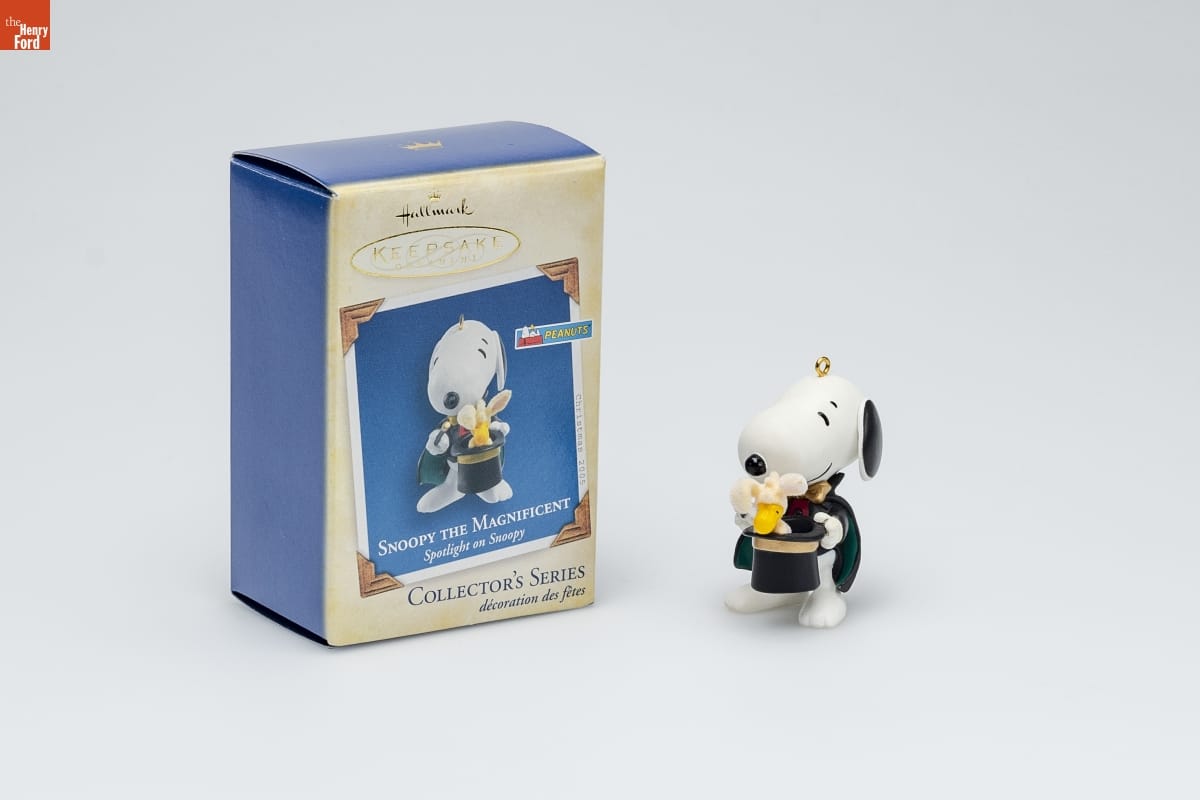
- Hallmark "Spotlight on Snoopy Series: Snoopy the Magnificent" Christmas Ornament, 2005 - Already known for greeting cards, Hallmark introduced a line of Christmas ornaments in 1973. The company's annual release of an increasing array of ornaments revolutionized Christmas decorating, appealing to customers' interest in marking memories and milestones as well as expressing one's personality and unique tastes.
- 2005
- Collections - Artifact
Hallmark "Spotlight on Snoopy Series: Snoopy the Magnificent" Christmas Ornament, 2005
Already known for greeting cards, Hallmark introduced a line of Christmas ornaments in 1973. The company's annual release of an increasing array of ornaments revolutionized Christmas decorating, appealing to customers' interest in marking memories and milestones as well as expressing one's personality and unique tastes.
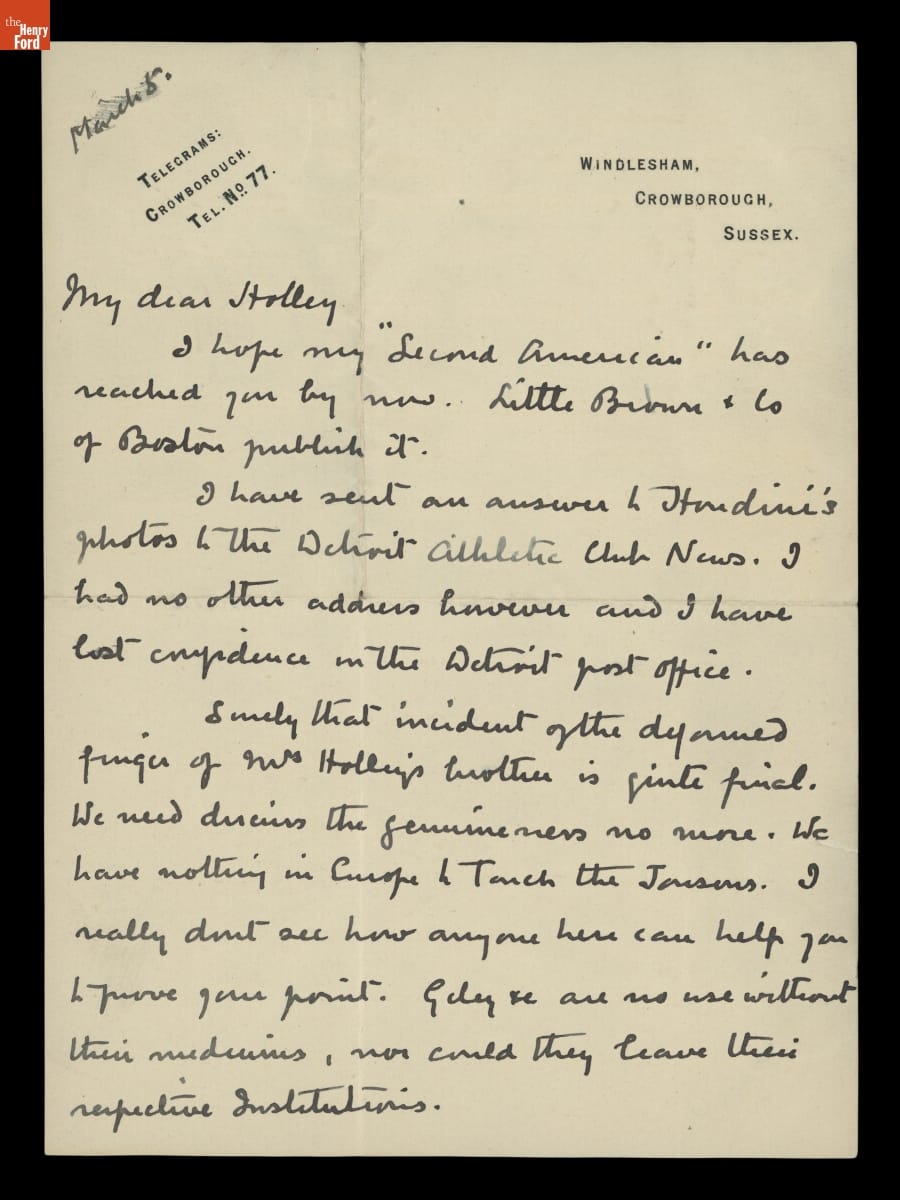
- Letter from Arthur Conan Doyle to George M. Holley, March 5, 1924 - George Holley, founder of Holley Motor Company, and Sir Arthur Conan Doyle, famed author, became acquainted after Holley attended one of Doyle's lectures in Detroit. From 1923 to 1929, the two maintained a robust correspondence. Spiritualism was a frequent topic as they traded recommendations of mediums, bemoaned skeptics like Harry Houdini, and discussed the state of belief on both sides of the Atlantic.
- March 05, 1924
- Collections - Artifact
Letter from Arthur Conan Doyle to George M. Holley, March 5, 1924
George Holley, founder of Holley Motor Company, and Sir Arthur Conan Doyle, famed author, became acquainted after Holley attended one of Doyle's lectures in Detroit. From 1923 to 1929, the two maintained a robust correspondence. Spiritualism was a frequent topic as they traded recommendations of mediums, bemoaned skeptics like Harry Houdini, and discussed the state of belief on both sides of the Atlantic.
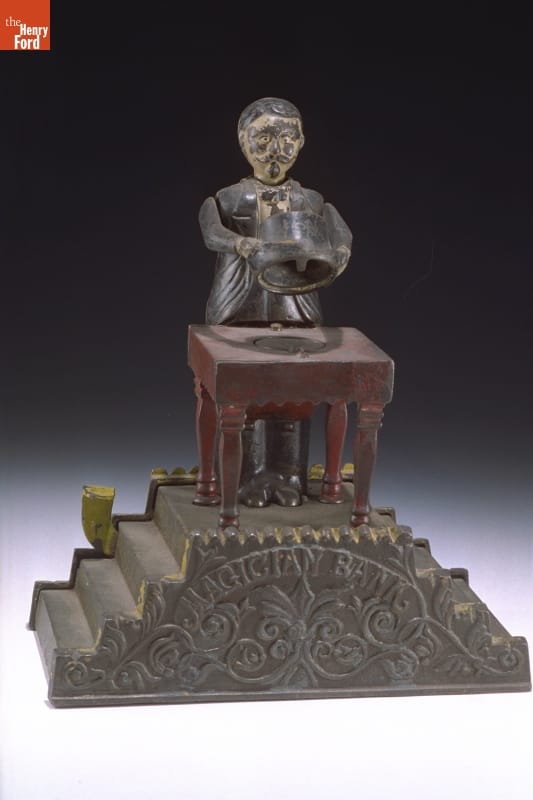
- Magician Bank, 1901-1920 - Cast iron mechanical banks, which used ingenious mechanisms to deposit money, became particularly popular between 1870 and 1930. Banks were produced in a variety of forms, such as this magician. When the lever on the step is depressed, a coin placed on the table "disappears" under the table while the magician lowers his hat over the coin and nods his head.
- 1901-1920
- Collections - Artifact
Magician Bank, 1901-1920
Cast iron mechanical banks, which used ingenious mechanisms to deposit money, became particularly popular between 1870 and 1930. Banks were produced in a variety of forms, such as this magician. When the lever on the step is depressed, a coin placed on the table "disappears" under the table while the magician lowers his hat over the coin and nods his head.
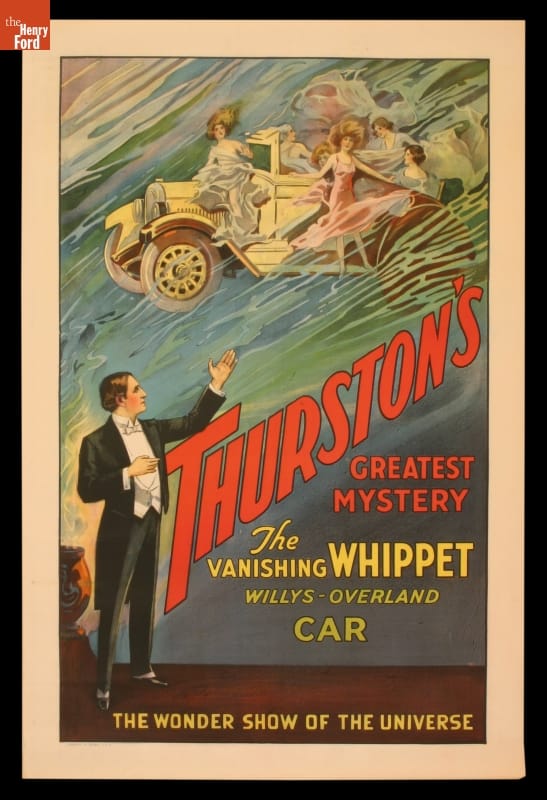
- Theatrical Poster, "Thurston's Greatest Mystery: The Vanishing Whippet Willys-Overland Car," 1927 - Willys-Overland of Toledo, Ohio, introduced its low-priced Whippet car for 1926. Generally marketed as its own make, the Whippet was slim but quick -- like the breed of dogs for which it was named. The car boasted four-wheel brakes and full-pressure lubrication, and prices started around $525. The Great Depression ended Whippet production in 1931.
- 1927
- Collections - Artifact
Theatrical Poster, "Thurston's Greatest Mystery: The Vanishing Whippet Willys-Overland Car," 1927
Willys-Overland of Toledo, Ohio, introduced its low-priced Whippet car for 1926. Generally marketed as its own make, the Whippet was slim but quick -- like the breed of dogs for which it was named. The car boasted four-wheel brakes and full-pressure lubrication, and prices started around $525. The Great Depression ended Whippet production in 1931.
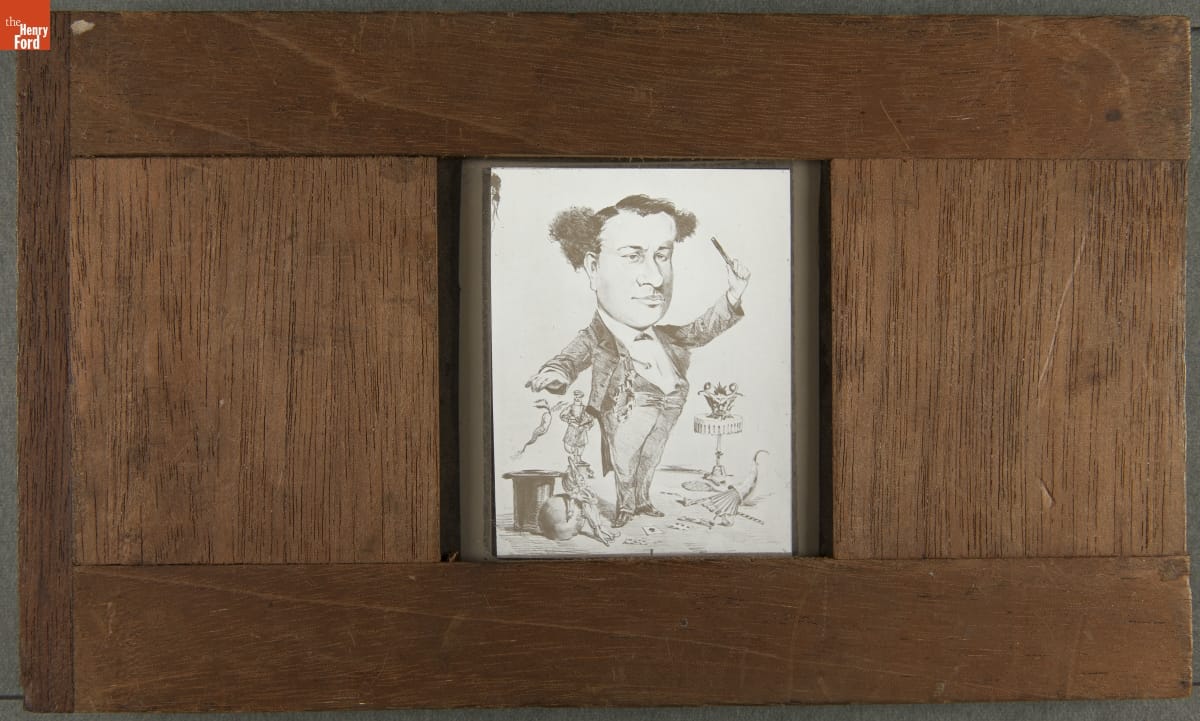
- Lantern Slide, Harry Houdini Caricature, 1900-1920 - Magic lanterns use a concave mirror and light source to project images on glass slides with painted or photographic scenes. Developed in the 17th century, magic lanterns predate slide projectors and motion pictures. In the hands of magicians, they became "lanterns of fright," projecting wondrous images and apparitions. Slide themes ranged widely: exotic travel, folklore, advertising, history, science, and art.
- 1900-1920
- Collections - Artifact
Lantern Slide, Harry Houdini Caricature, 1900-1920
Magic lanterns use a concave mirror and light source to project images on glass slides with painted or photographic scenes. Developed in the 17th century, magic lanterns predate slide projectors and motion pictures. In the hands of magicians, they became "lanterns of fright," projecting wondrous images and apparitions. Slide themes ranged widely: exotic travel, folklore, advertising, history, science, and art.
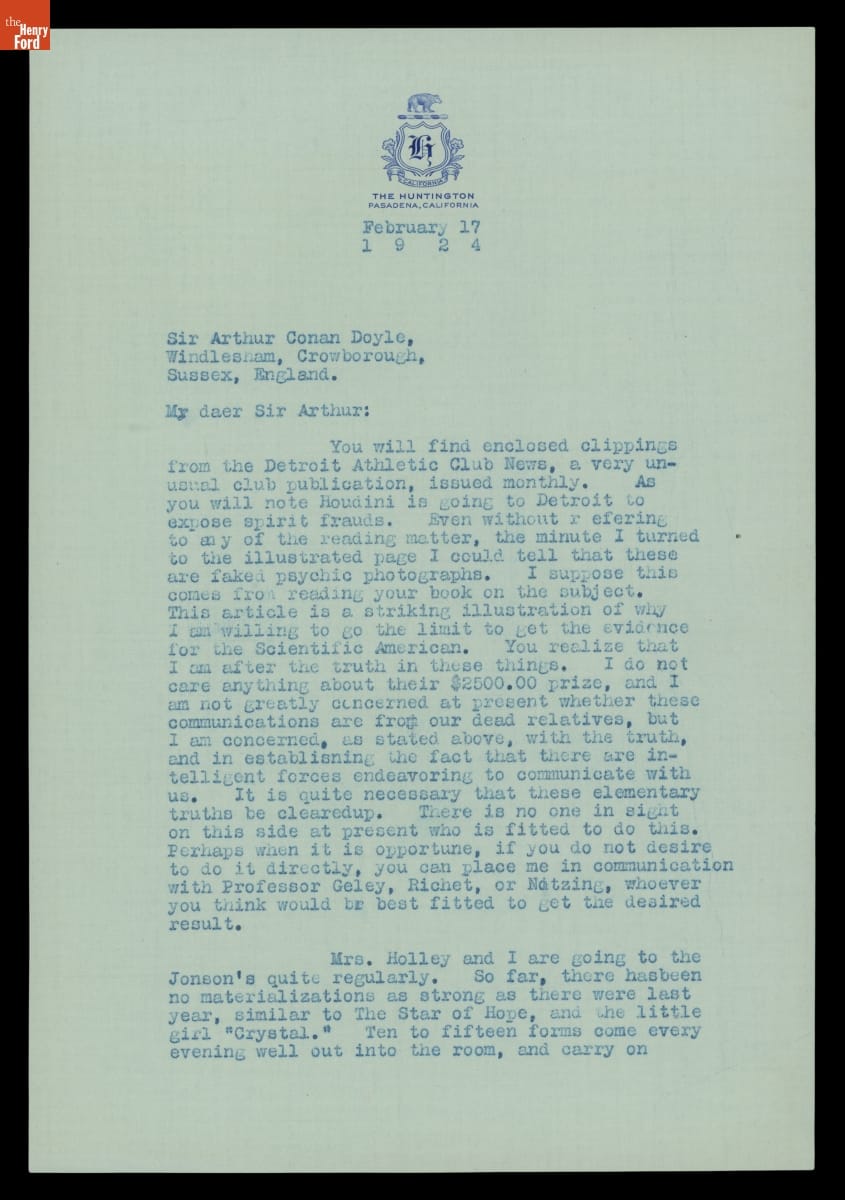
- Letter from George M. Holley to Arthur Conan Doyle, February 17, 1924 - George Holley, founder of Holley Motor Company, and Sir Arthur Conan Doyle, famed author, became acquainted after Holley attended one of Doyle's lectures in Detroit. From 1923 to 1929, the two maintained a robust correspondence. Spiritualism was a frequent topic as they traded recommendations of mediums, bemoaned skeptics like Harry Houdini, and discussed the state of belief on both sides of the Atlantic.
- February 17, 1924
- Collections - Artifact
Letter from George M. Holley to Arthur Conan Doyle, February 17, 1924
George Holley, founder of Holley Motor Company, and Sir Arthur Conan Doyle, famed author, became acquainted after Holley attended one of Doyle's lectures in Detroit. From 1923 to 1929, the two maintained a robust correspondence. Spiritualism was a frequent topic as they traded recommendations of mediums, bemoaned skeptics like Harry Houdini, and discussed the state of belief on both sides of the Atlantic.
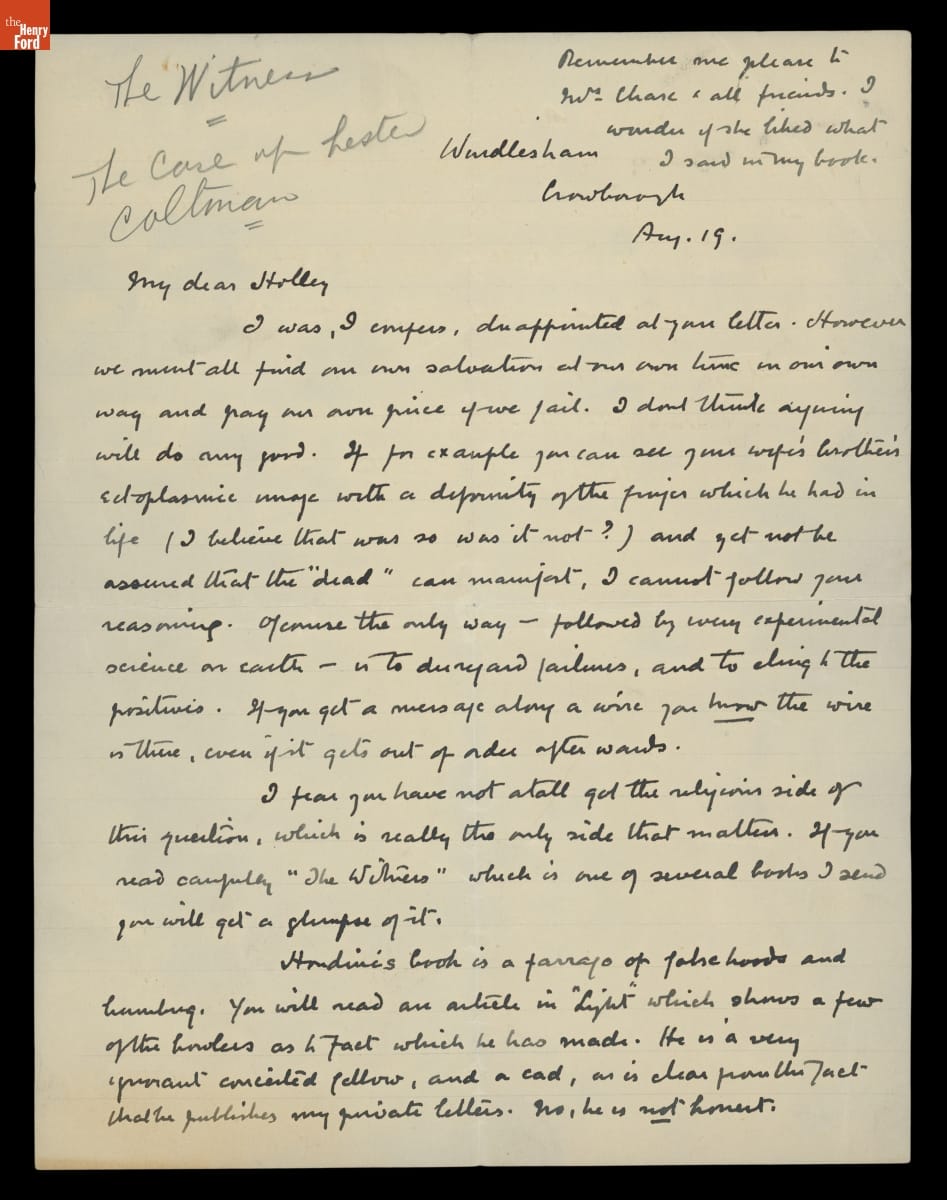
- Letter from Arthur Conan Doyle to George M. Holley, August 19 - George Holley, founder of Holley Motor Company, and Sir Arthur Conan Doyle, famed author, became acquainted after Holley attended one of Doyle's lectures in Detroit. From 1923 to 1929, the two maintained a robust correspondence. Spiritualism was a frequent topic as they traded recommendations of mediums, bemoaned skeptics like Harry Houdini, and discussed the state of belief on both sides of the Atlantic.
- Collections - Artifact
Letter from Arthur Conan Doyle to George M. Holley, August 19
George Holley, founder of Holley Motor Company, and Sir Arthur Conan Doyle, famed author, became acquainted after Holley attended one of Doyle's lectures in Detroit. From 1923 to 1929, the two maintained a robust correspondence. Spiritualism was a frequent topic as they traded recommendations of mediums, bemoaned skeptics like Harry Houdini, and discussed the state of belief on both sides of the Atlantic.
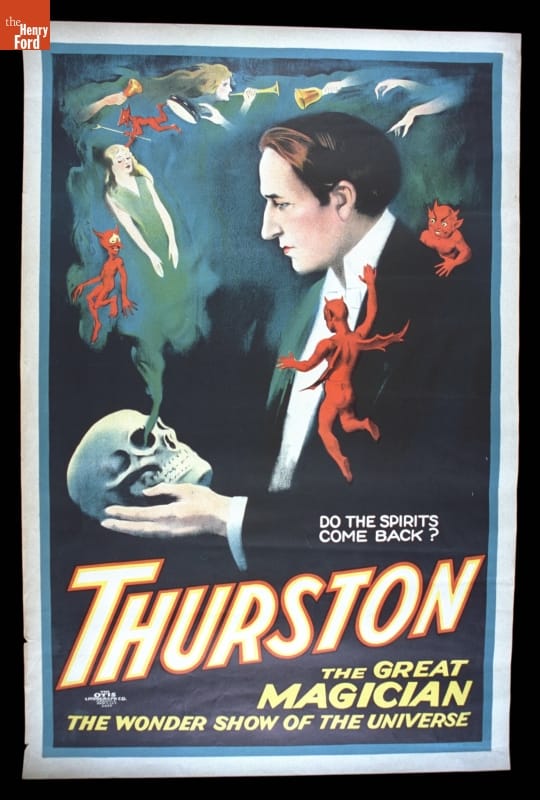
- Advertising Poster, "Thurston The Great Magician," circa 1930 - In the 1920s, a friendly rivalry existed between two magicians: Howard Thurston and Harry Houdini. While Houdini distrusted and publically debunked seance mediums, Thurston was a "healthy skeptic." He acknowledged trickery among Spiritualists, yet he was cautiously open to the potential of life after death communication. Thurston's stage illusions often referenced popular supernatural phenomena of the late-19th and early-20th centuries.
- circa 1930
- Collections - Artifact
Advertising Poster, "Thurston The Great Magician," circa 1930
In the 1920s, a friendly rivalry existed between two magicians: Howard Thurston and Harry Houdini. While Houdini distrusted and publically debunked seance mediums, Thurston was a "healthy skeptic." He acknowledged trickery among Spiritualists, yet he was cautiously open to the potential of life after death communication. Thurston's stage illusions often referenced popular supernatural phenomena of the late-19th and early-20th centuries.
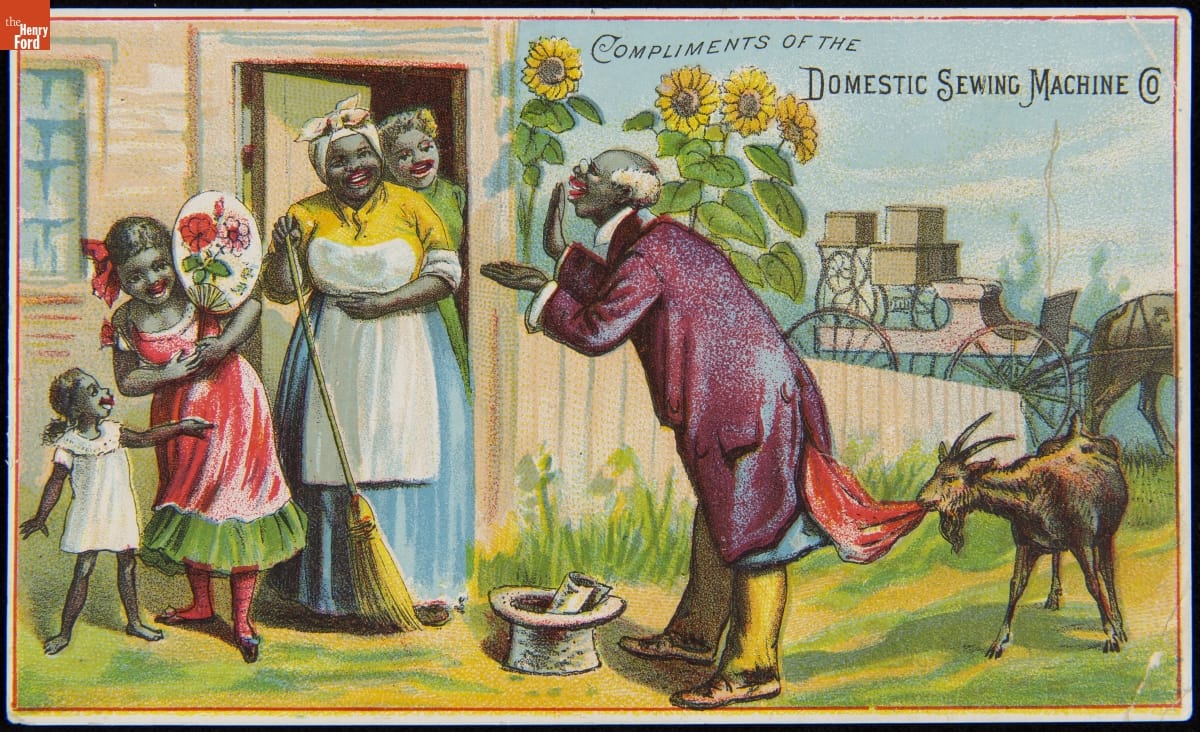
- Trade Card for Domestic Sewing Machine Company, 1880-1900 - Late-nineteenth-century manufacturers used trade cards to promote and sell products. These colorful advertisements also reflected the racial prejudices of the time. Card illustrators typically depicted African Americans with enlarged or distorted features, either wearing colorful clothes or dressed as servants, and often involved in some comical mishap. These depictions affirmed the discriminatory biases that many white Americans -- the consumers of these cards -- held.
- 1880-1900
- Collections - Artifact
Trade Card for Domestic Sewing Machine Company, 1880-1900
Late-nineteenth-century manufacturers used trade cards to promote and sell products. These colorful advertisements also reflected the racial prejudices of the time. Card illustrators typically depicted African Americans with enlarged or distorted features, either wearing colorful clothes or dressed as servants, and often involved in some comical mishap. These depictions affirmed the discriminatory biases that many white Americans -- the consumers of these cards -- held.
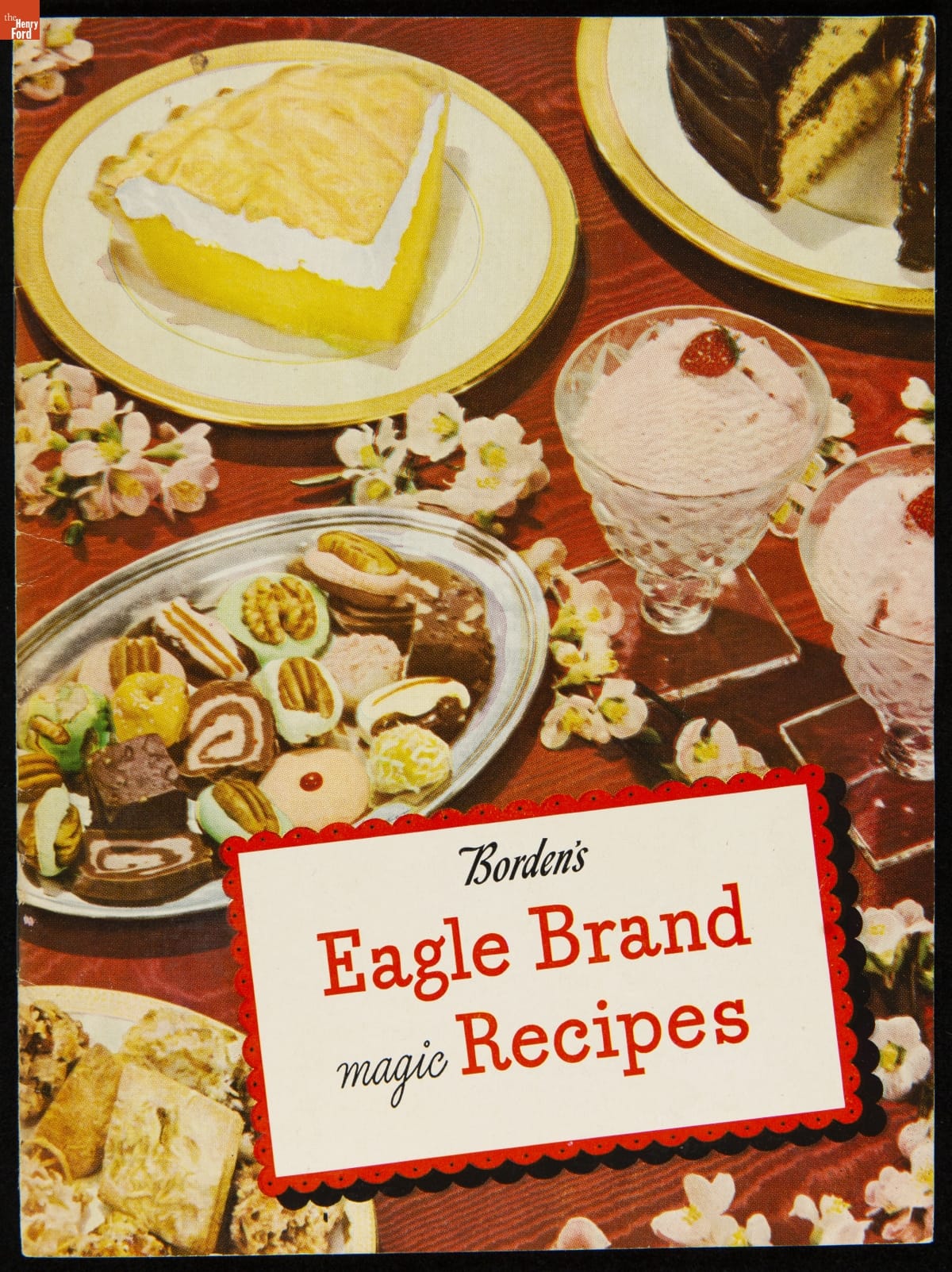
- Recipe Booklet, "Borden's Eagle Brand Magic Recipes," 1946 - Before the invention of pasteurized milk, fresh milk was often unsafe to drink, as it soured quickly. After experimenting with ways to preserve milk, Gail Borden introduced Eagle Brand Sweetened Condensed Milk in 1856. What was advertised as nourishment for young children soon gained popularity as a baking and cooking ingredient. This booklet from 1946 features recipes using Borden's Eagle Brand Condensed Milk.
- 1946
- Collections - Artifact
Recipe Booklet, "Borden's Eagle Brand Magic Recipes," 1946
Before the invention of pasteurized milk, fresh milk was often unsafe to drink, as it soured quickly. After experimenting with ways to preserve milk, Gail Borden introduced Eagle Brand Sweetened Condensed Milk in 1856. What was advertised as nourishment for young children soon gained popularity as a baking and cooking ingredient. This booklet from 1946 features recipes using Borden's Eagle Brand Condensed Milk.