
Search
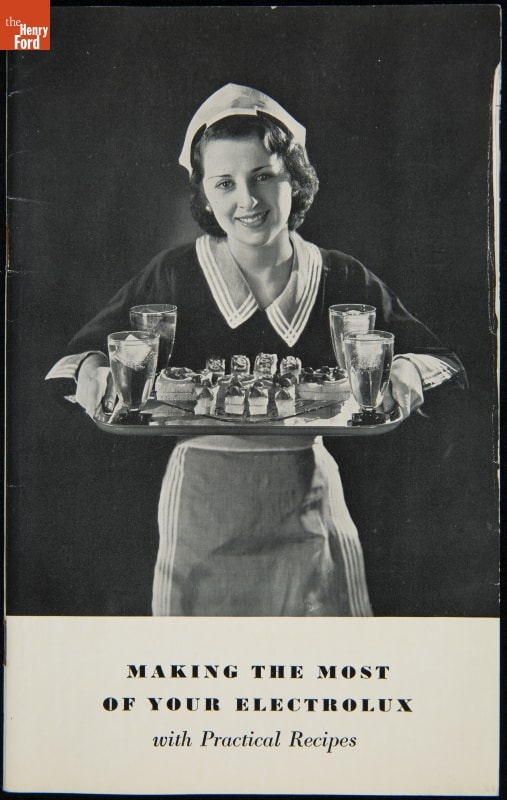
- "Making the Most of Your Electrolux with Practical Recipes," 1932 -
- 1932
- Collections - Artifact
"Making the Most of Your Electrolux with Practical Recipes," 1932
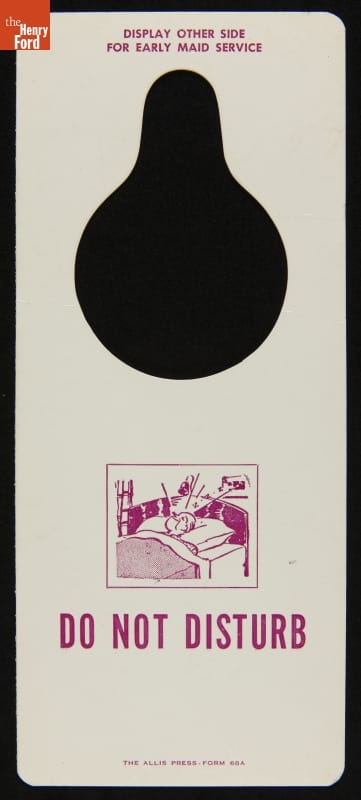
- Two-sided Sign, "Do Not Disturb" or "Early Morning Maid Service," 1955-1970 - Like today, proprietors of mid-20th century hotels, motels and inns provided "Do Not Disturb" signs for weary travelers who wanted a restful stay. Guests placed the sign outside on their door to alert staff to be quiet and not enter. This sign also allowed guests to request maid service; they just flipped the sign over.
- 1955-1970
- Collections - Artifact
Two-sided Sign, "Do Not Disturb" or "Early Morning Maid Service," 1955-1970
Like today, proprietors of mid-20th century hotels, motels and inns provided "Do Not Disturb" signs for weary travelers who wanted a restful stay. Guests placed the sign outside on their door to alert staff to be quiet and not enter. This sign also allowed guests to request maid service; they just flipped the sign over.
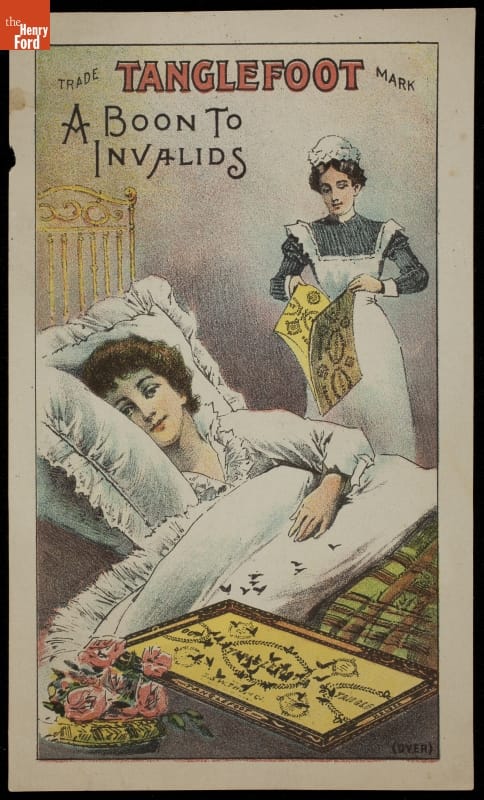
- Trade Card for Tanglefoot Sticky Fly Paper, O. & W. Thum Co., circa 1900 - In this trade card advertising Tanglefoot flypaper as "a boon to invalids," a frail patient is saved from further disease and annoyance by the strip of flypaper on her bed, bristling with dead flies. During the turn-of-the-century heyday of America's interest in newly discovered germ theory, Tanglefoot advertised that their nontoxic flypaper (as opposed to common arsenic flypaper) caught "the germ with the fly."
- circa 1900
- Collections - Artifact
Trade Card for Tanglefoot Sticky Fly Paper, O. & W. Thum Co., circa 1900
In this trade card advertising Tanglefoot flypaper as "a boon to invalids," a frail patient is saved from further disease and annoyance by the strip of flypaper on her bed, bristling with dead flies. During the turn-of-the-century heyday of America's interest in newly discovered germ theory, Tanglefoot advertised that their nontoxic flypaper (as opposed to common arsenic flypaper) caught "the germ with the fly."
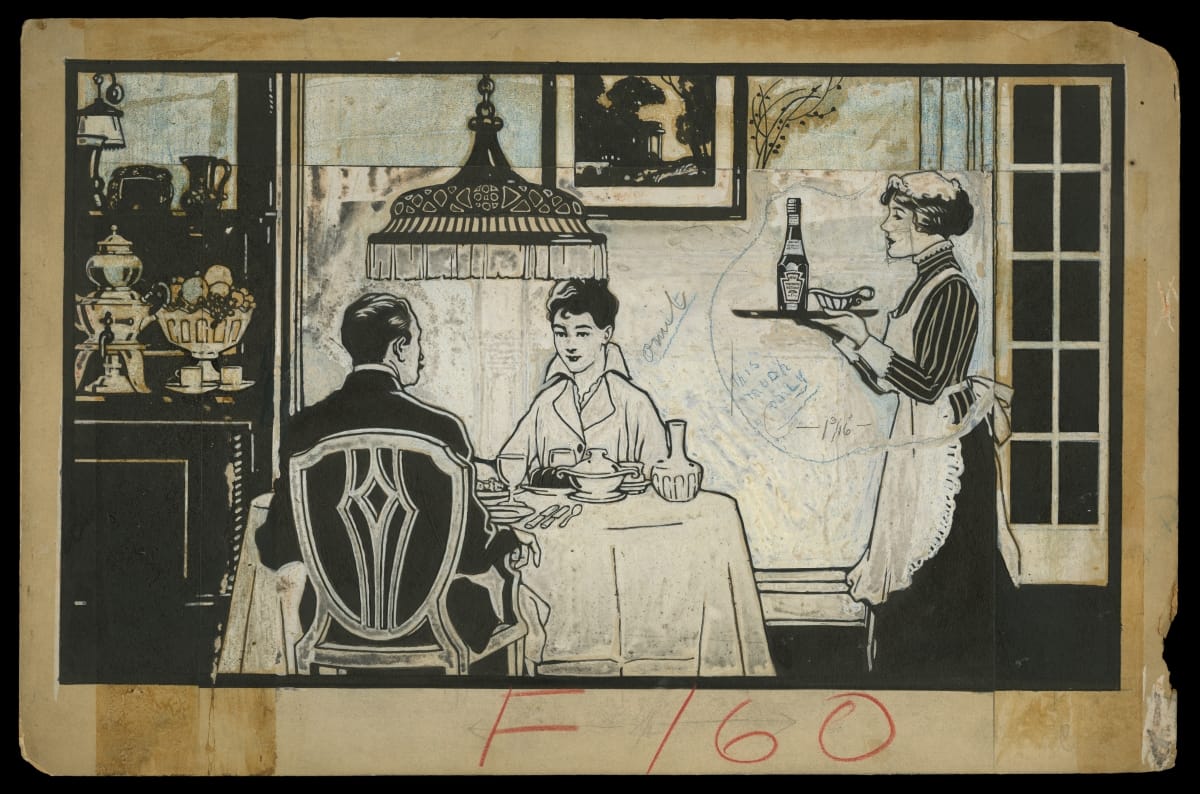
- Illustration for Heinz Product Advertising, circa 1925 - The H.J. Heinz Company employed ambitious and comprehensive advertising strategies to meet consumers at home, in stores, and everywhere in between. Product marketing strongly targeted housewives and women, assuring them that Heinz products were superior. These advertisements, like the one seen here, typically featured a woman purchasing, preparing, cooking, or serving Heinz products to their families.
- circa 1925
- Collections - Artifact
Illustration for Heinz Product Advertising, circa 1925
The H.J. Heinz Company employed ambitious and comprehensive advertising strategies to meet consumers at home, in stores, and everywhere in between. Product marketing strongly targeted housewives and women, assuring them that Heinz products were superior. These advertisements, like the one seen here, typically featured a woman purchasing, preparing, cooking, or serving Heinz products to their families.
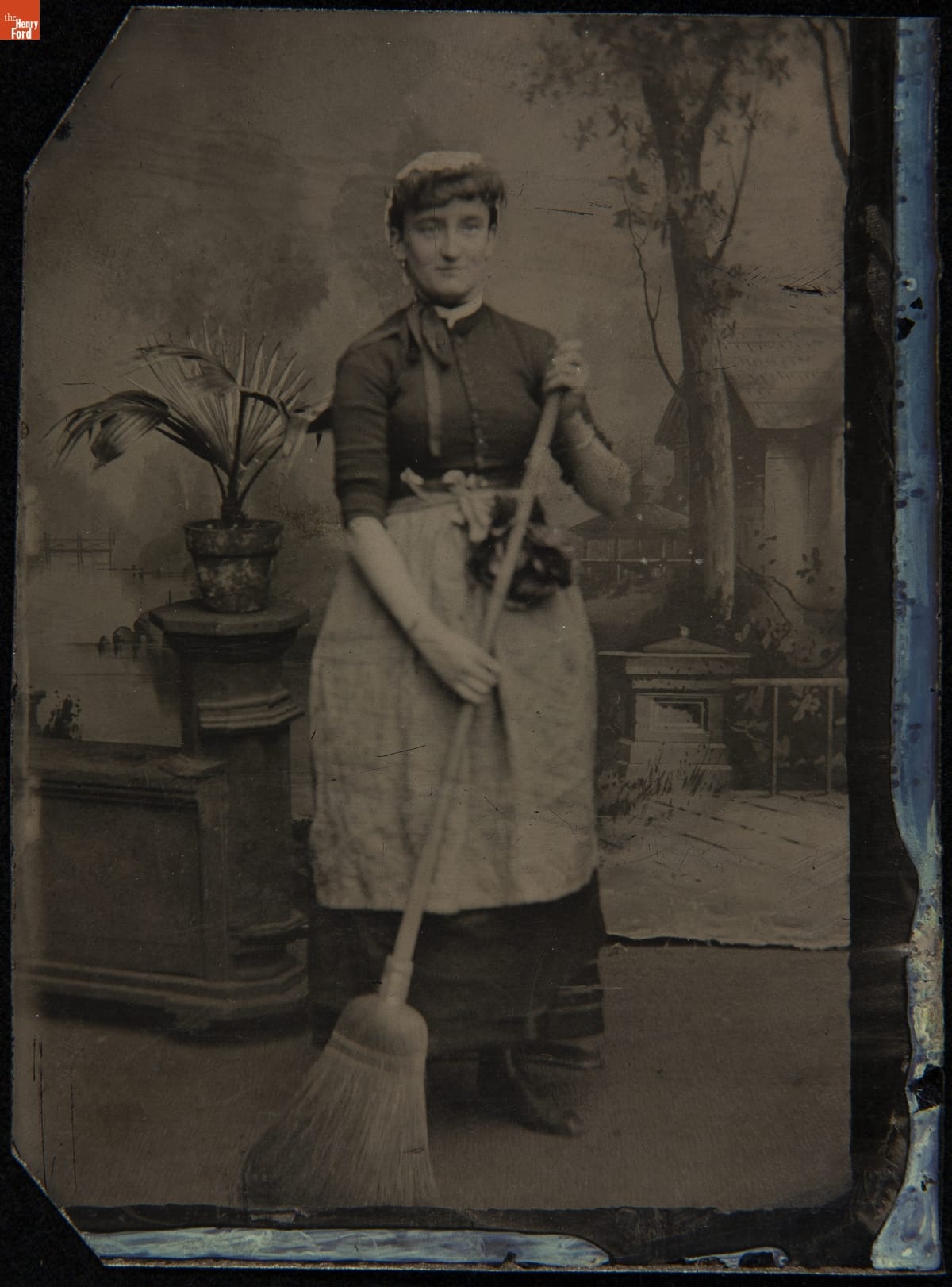
- Housekeeper in an Apron and Cap Holding a Broom, circa 1875 - Tintypes, the popular "instant photographs" of the 19th century, could be produced in a matter of minutes at a price most people could afford. Tintypes democratized photography. Beginning in the mid-1850s, they gave more people than ever before the chance to have a real likeness of themselves--capturing unique glimpses of how everyday Americans looked and lived.
- circa 1875
- Collections - Artifact
Housekeeper in an Apron and Cap Holding a Broom, circa 1875
Tintypes, the popular "instant photographs" of the 19th century, could be produced in a matter of minutes at a price most people could afford. Tintypes democratized photography. Beginning in the mid-1850s, they gave more people than ever before the chance to have a real likeness of themselves--capturing unique glimpses of how everyday Americans looked and lived.
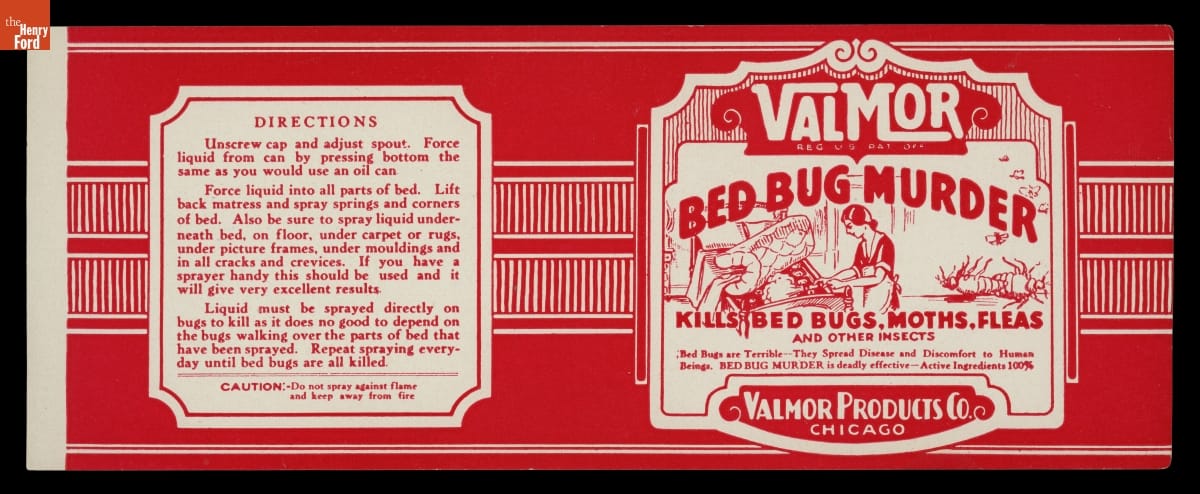
- Product Label for Valmor Bed Bug Murder, 1926-1946 - Valmor Products Company, founded in the mid-1920s, sold beauty products to Black Americans. The company's product packaging was designed by Charles Dawson, a successful Black commercial artist whose illustrations of attractive modern Black Americans contributed to a burgeoning culture of positive Black identity. But the company's legacy is complicated--many of its products pushed a white assimilatory ideal, promising effects like skin lightening.
- 1926-1946
- Collections - Artifact
Product Label for Valmor Bed Bug Murder, 1926-1946
Valmor Products Company, founded in the mid-1920s, sold beauty products to Black Americans. The company's product packaging was designed by Charles Dawson, a successful Black commercial artist whose illustrations of attractive modern Black Americans contributed to a burgeoning culture of positive Black identity. But the company's legacy is complicated--many of its products pushed a white assimilatory ideal, promising effects like skin lightening.
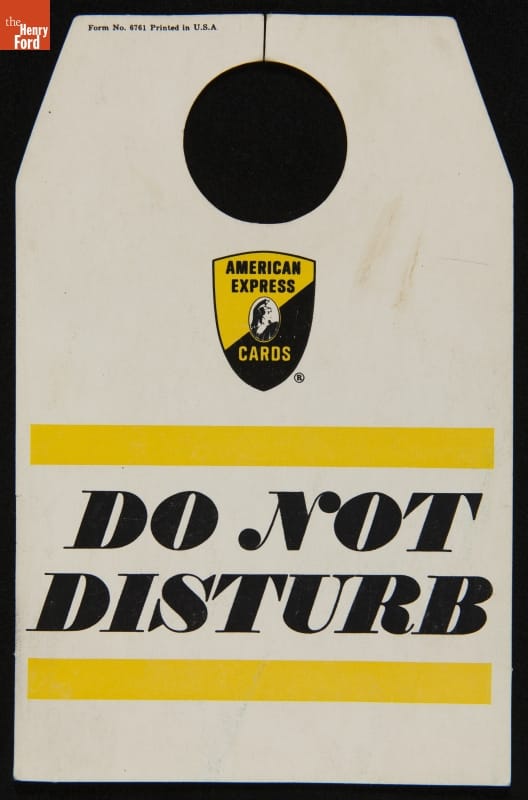
- Sign, "Do Not Disturb," 1965-1970 - Like today, proprietors of mid-20th century hotels, motels and inns provided "Do Not Disturb" signs for weary travelers who wanted a restful stay. Guests placed the sign outside on their door to alert staff to be quiet and not enter. This sign also allowed guests to request maid service; they just flipped the sign over.
- 1965-1970
- Collections - Artifact
Sign, "Do Not Disturb," 1965-1970
Like today, proprietors of mid-20th century hotels, motels and inns provided "Do Not Disturb" signs for weary travelers who wanted a restful stay. Guests placed the sign outside on their door to alert staff to be quiet and not enter. This sign also allowed guests to request maid service; they just flipped the sign over.
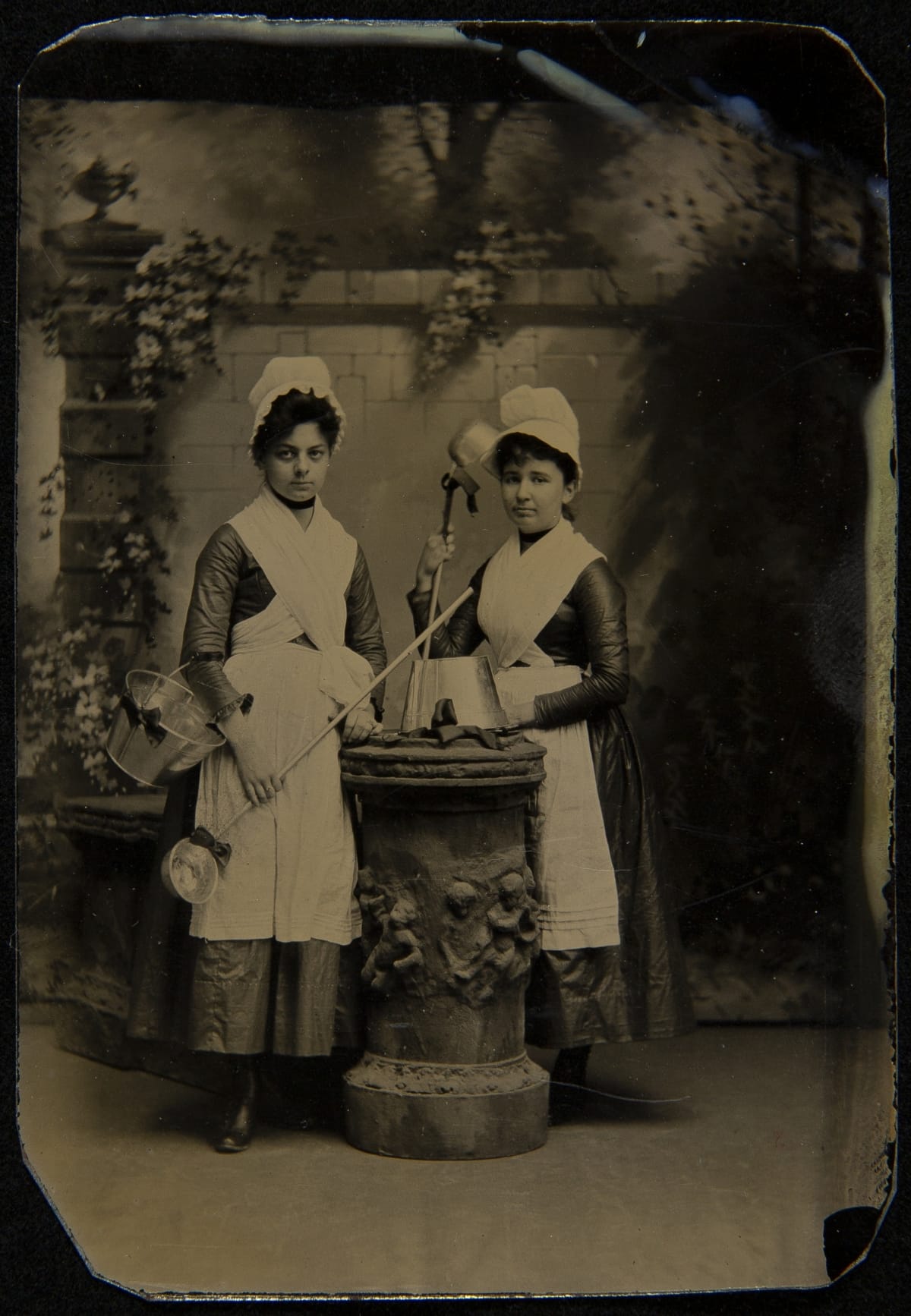
- Maids, 1880-1890 - Tintypes, the popular "instant photographs" of the 19th century, could be produced in a matter of minutes at a price most people could afford. Tintypes democratized photography. Beginning in the mid-1850s, they gave more people than ever before the chance to have a real likeness of themselves--capturing unique glimpses of how everyday Americans looked and lived.
- 1880-1890
- Collections - Artifact
Maids, 1880-1890
Tintypes, the popular "instant photographs" of the 19th century, could be produced in a matter of minutes at a price most people could afford. Tintypes democratized photography. Beginning in the mid-1850s, they gave more people than ever before the chance to have a real likeness of themselves--capturing unique glimpses of how everyday Americans looked and lived.
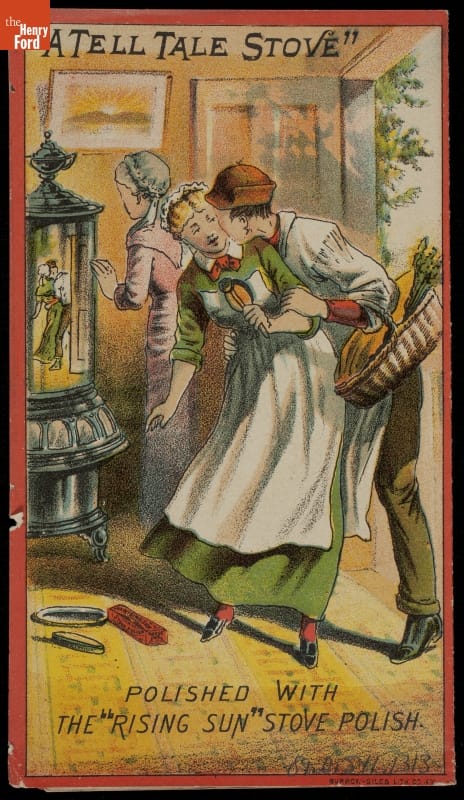
- Trade Card for Rising Sun Stove Polish, Morse Bros., 1870-1900 - In the last third of the nineteenth century, an unprecedented variety of consumer goods and services flooded the American market. Advertisers, armed with new methods of color printing, bombarded potential customers with trade cards. Americans enjoyed and often saved the vibrant little advertisements found in product packages or distributed by local merchants. Many survive as historical records of commercialism in the United States.
- 1870-1900
- Collections - Artifact
Trade Card for Rising Sun Stove Polish, Morse Bros., 1870-1900
In the last third of the nineteenth century, an unprecedented variety of consumer goods and services flooded the American market. Advertisers, armed with new methods of color printing, bombarded potential customers with trade cards. Americans enjoyed and often saved the vibrant little advertisements found in product packages or distributed by local merchants. Many survive as historical records of commercialism in the United States.