
Search
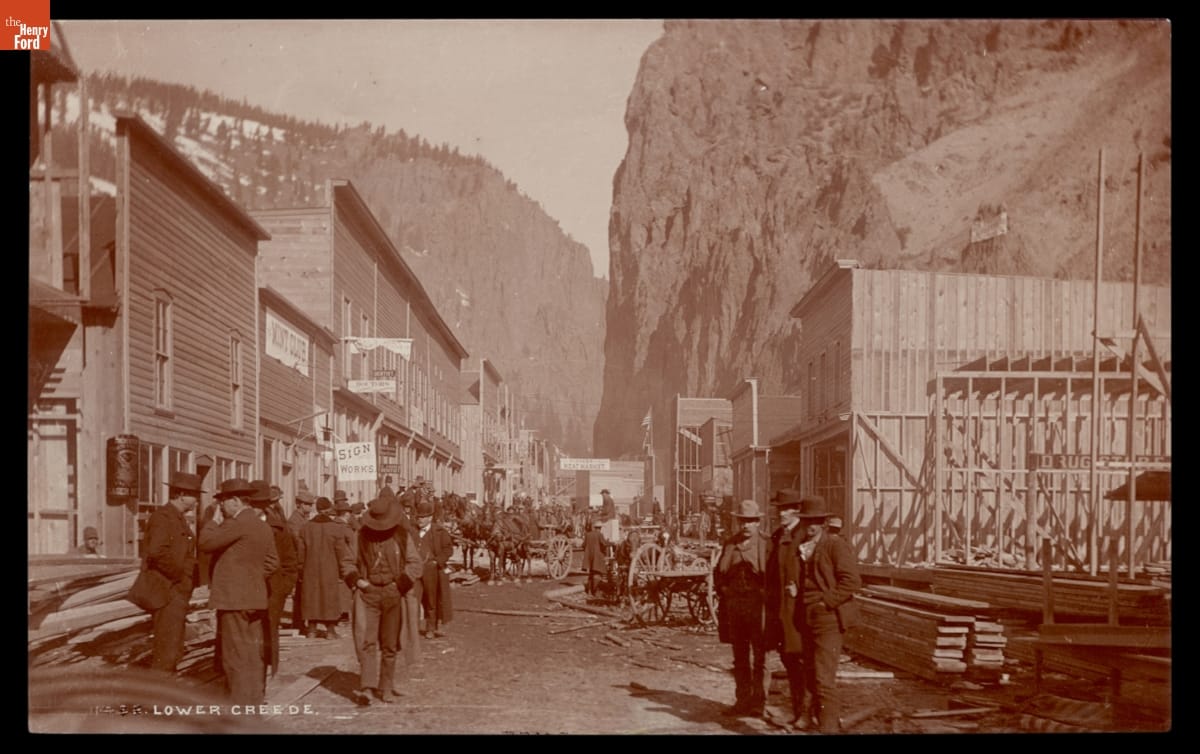
- Main Street of Creede, Colorado, 1880-1885 - From 1895 to 1924, the Detroit Publishing Company was one of the major image publishers in the world. The company's wide-ranging stock of original photographs documented life and landscapes from across the nation and around the globe. From the tens of thousands of negatives, the company created prints, postcards, lantern slides, panoramas, and other merchandise for sale to educators, businessmen, advertisers, homeowners and travelers.
- 1880-1885
- Collections - Artifact
Main Street of Creede, Colorado, 1880-1885
From 1895 to 1924, the Detroit Publishing Company was one of the major image publishers in the world. The company's wide-ranging stock of original photographs documented life and landscapes from across the nation and around the globe. From the tens of thousands of negatives, the company created prints, postcards, lantern slides, panoramas, and other merchandise for sale to educators, businessmen, advertisers, homeowners and travelers.
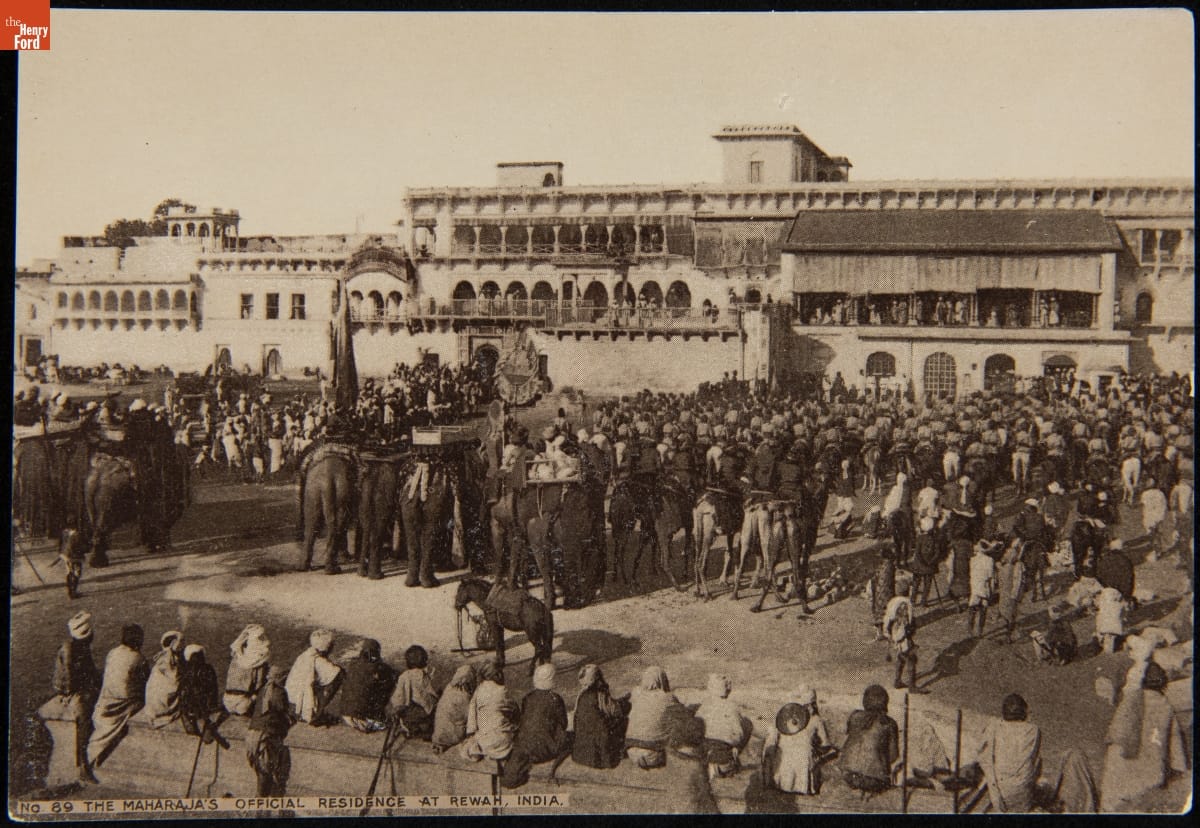
- Trade Card for C.I. Hood & Co. with Hood's Photos of the World, "Maharaja's Official Residence at Rewah, India," 1890-1910 - In the late 19th century, trade cards were a major means of advertising goods and services. Patent medicine producer, C.I. Hood & Co., had its own advertising department, creating cookbooks, calendars, and, most abundantly, trade cards. The trade card series, "Hood's Photos of the World," became popular among consumers, as it offered views of far-away places, providing a window to the broader world.
- 1890-1910
- Collections - Artifact
Trade Card for C.I. Hood & Co. with Hood's Photos of the World, "Maharaja's Official Residence at Rewah, India," 1890-1910
In the late 19th century, trade cards were a major means of advertising goods and services. Patent medicine producer, C.I. Hood & Co., had its own advertising department, creating cookbooks, calendars, and, most abundantly, trade cards. The trade card series, "Hood's Photos of the World," became popular among consumers, as it offered views of far-away places, providing a window to the broader world.
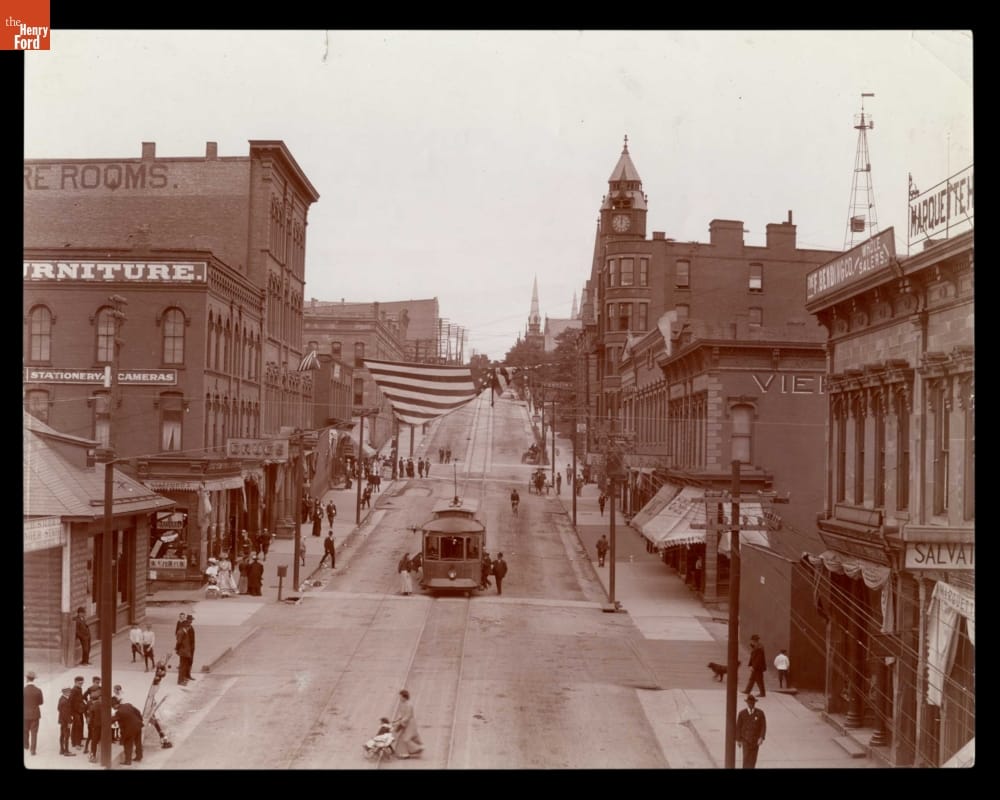
- Front Street, Marquette, Michigan, circa 1909 - From 1895 to 1924, the Detroit Publishing Company was one of the major image publishers in the world. The company's wide-ranging stock of original photographs documented life and landscapes from across the nation and around the globe. From the tens of thousands of negatives, the company created prints, postcards, lantern slides, panoramas, and other merchandise for sale to educators, businessmen, advertisers, homeowners and travelers.
- circa 1909
- Collections - Artifact
Front Street, Marquette, Michigan, circa 1909
From 1895 to 1924, the Detroit Publishing Company was one of the major image publishers in the world. The company's wide-ranging stock of original photographs documented life and landscapes from across the nation and around the globe. From the tens of thousands of negatives, the company created prints, postcards, lantern slides, panoramas, and other merchandise for sale to educators, businessmen, advertisers, homeowners and travelers.
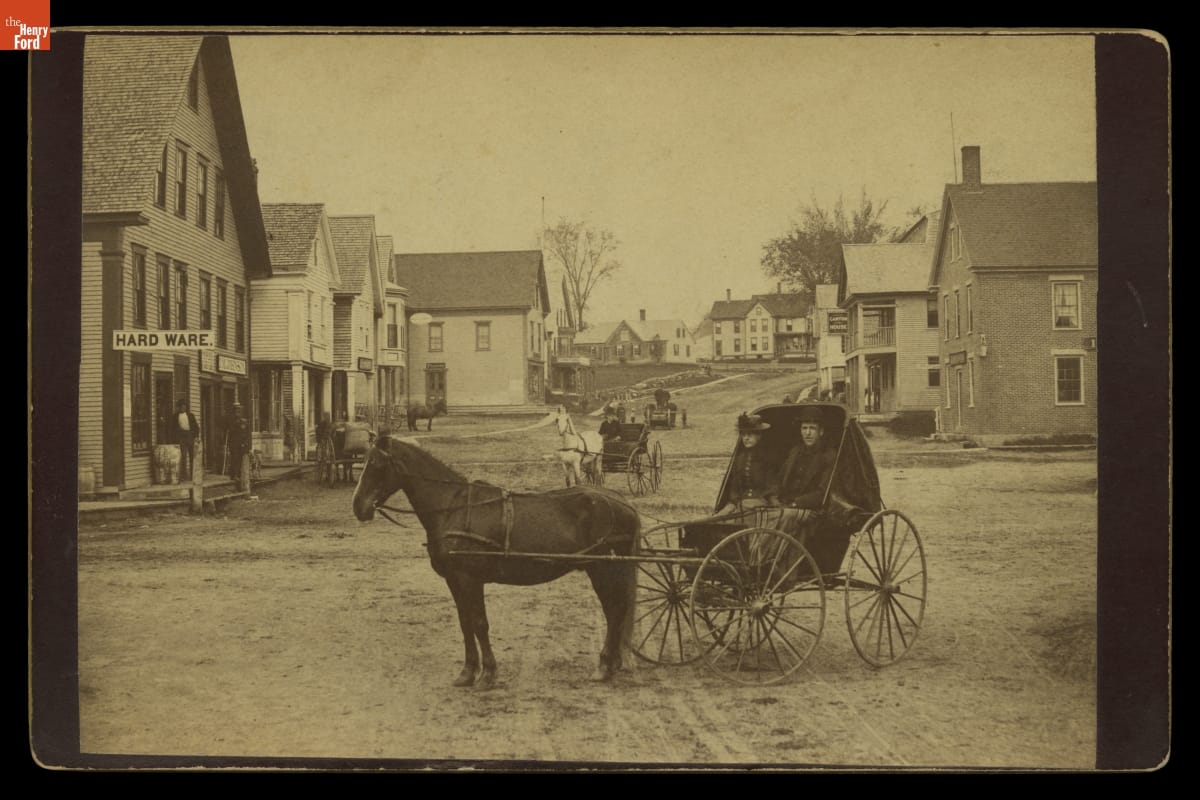
- A Couple in a Buggy on a Town Street, circa 1875 - Factory-built buggies made the pleasures of carriage ownership affordable for a new group of people. Whether in town or on the farm, people loved these inexpensive, lightweight vehicles.
- circa 1875
- Collections - Artifact
A Couple in a Buggy on a Town Street, circa 1875
Factory-built buggies made the pleasures of carriage ownership affordable for a new group of people. Whether in town or on the farm, people loved these inexpensive, lightweight vehicles.
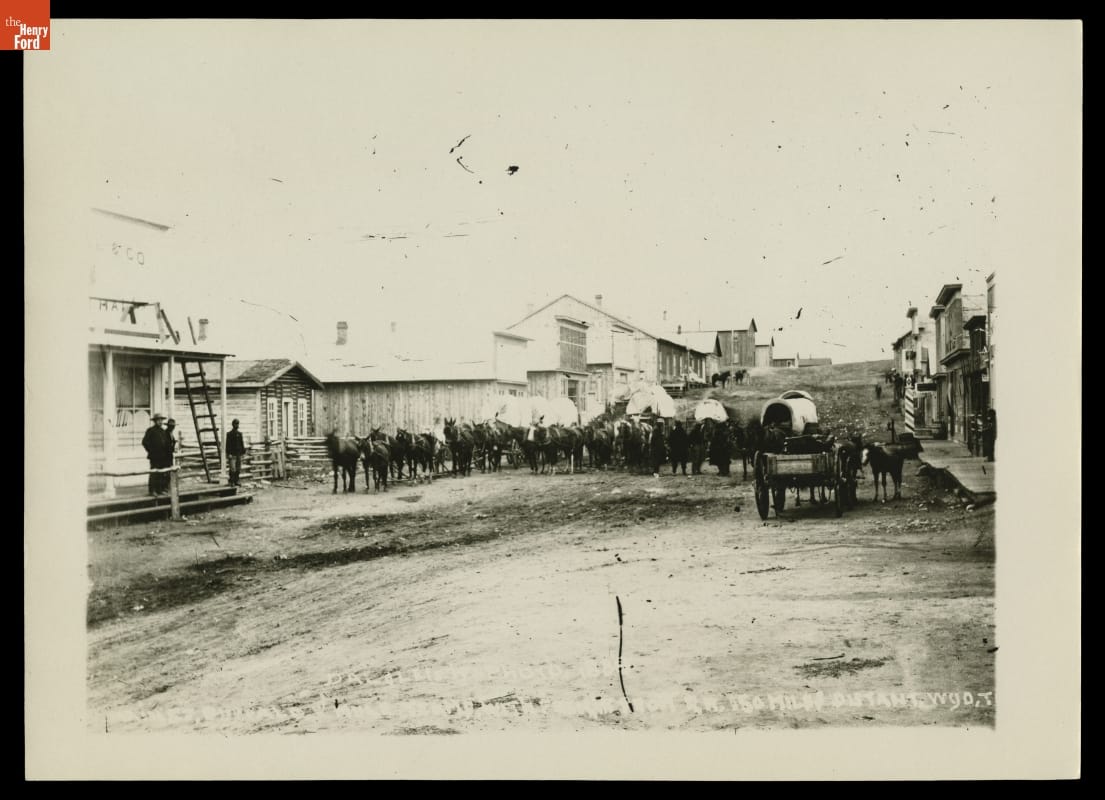
- Mule Teams and Wagons on Main Street, Buffalo, Wyoming Territory, 1885 - In the 1880s, towns in the western United States that were isolated from river and rail transportation networks relied on freight haulers to supply needed goods. Drivers navigated heavy, product-laden wagons hitched to teams of mules or oxen over mountain passes and across lonely, open expanses to deliver their cargo. This image show wagons loaded with goods on Main Street in Buffalo, Wyoming.
- 1885
- Collections - Artifact
Mule Teams and Wagons on Main Street, Buffalo, Wyoming Territory, 1885
In the 1880s, towns in the western United States that were isolated from river and rail transportation networks relied on freight haulers to supply needed goods. Drivers navigated heavy, product-laden wagons hitched to teams of mules or oxen over mountain passes and across lonely, open expanses to deliver their cargo. This image show wagons loaded with goods on Main Street in Buffalo, Wyoming.
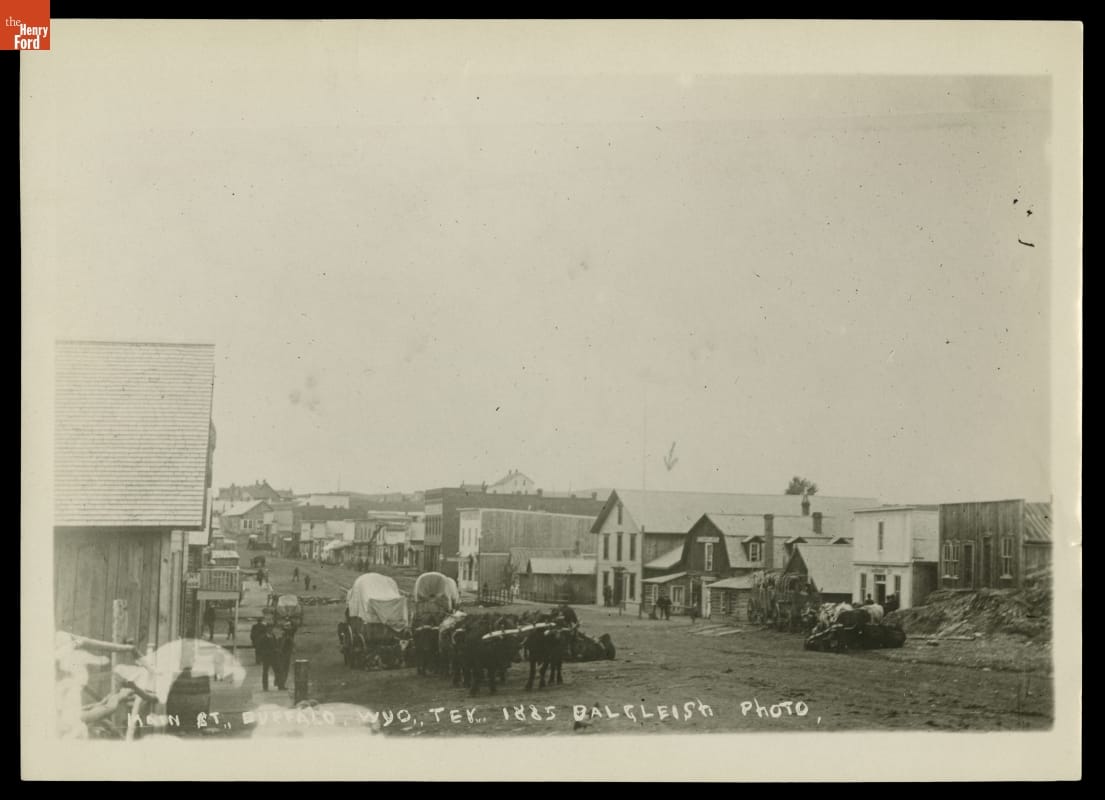
- Main Street, Buffalo, Wyoming Territory, 1885 - In the 1880s, towns in the western United States that were isolated from river and rail transportation networks relied on freight haulers to supply needed goods. Drivers navigated heavy, product-laden wagons hitched to teams of mules or oxen over mountain passes and across lonely, open expanses to deliver their cargo. This image show wagons loaded with goods on Main Street in Buffalo, Wyoming.
- 1885
- Collections - Artifact
Main Street, Buffalo, Wyoming Territory, 1885
In the 1880s, towns in the western United States that were isolated from river and rail transportation networks relied on freight haulers to supply needed goods. Drivers navigated heavy, product-laden wagons hitched to teams of mules or oxen over mountain passes and across lonely, open expanses to deliver their cargo. This image show wagons loaded with goods on Main Street in Buffalo, Wyoming.
- Views of Clinton, Michigan, Including Eagle Tavern, circa 1915 - These scenes from Clinton, Michigan, include the tavern (upper left) that was moved, restored, and renamed Clinton Inn in Greenfield Village. Built 1831-2, it was originally a stagecoach stop on the Detroit-to-Chicago road. In 1927, Henry Ford purchased the building from resident Ella Smith -- daughter of Walter Smith, who had run the hostelry as Smith's Hotel between 1868 and 1896.

- circa 1915
- Collections - Artifact
Views of Clinton, Michigan, Including Eagle Tavern, circa 1915
These scenes from Clinton, Michigan, include the tavern (upper left) that was moved, restored, and renamed Clinton Inn in Greenfield Village. Built 1831-2, it was originally a stagecoach stop on the Detroit-to-Chicago road. In 1927, Henry Ford purchased the building from resident Ella Smith -- daughter of Walter Smith, who had run the hostelry as Smith's Hotel between 1868 and 1896.
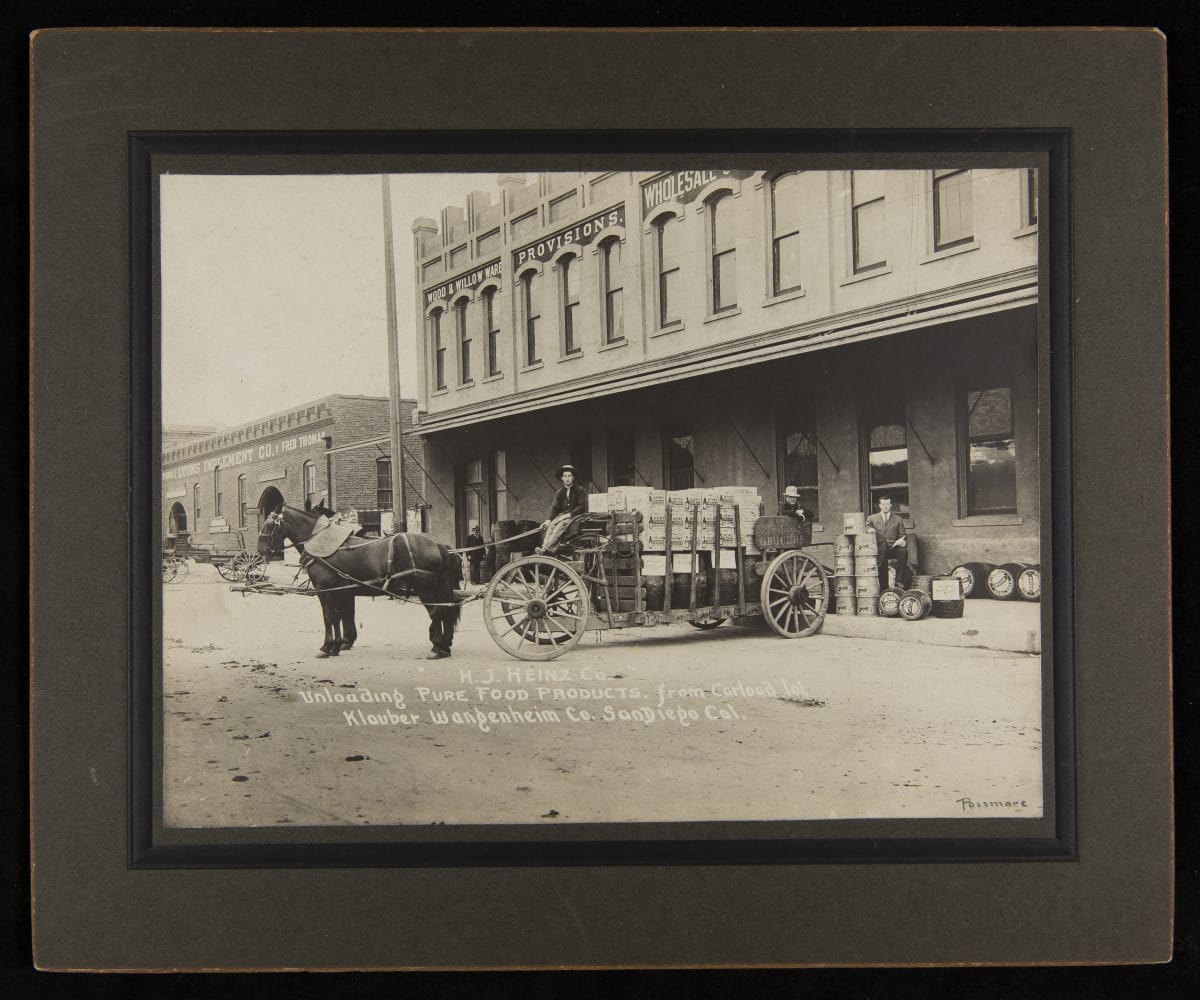
- Unloading Heinz "Pure Food Products" from Wagon, Klauber Wangenheim Co., San Diego, California, circa 1908 - The H.J. Heinz Company had many transportation methods to transport its "57 Varieties." Cross-country shipments between factories were made by rail while local deliveries were made by teams of horses and later by automobile. This photograph shows a Heinz delivery wagon being unloaded in San Diego, California, in 1908.
- circa 1908
- Collections - Artifact
Unloading Heinz "Pure Food Products" from Wagon, Klauber Wangenheim Co., San Diego, California, circa 1908
The H.J. Heinz Company had many transportation methods to transport its "57 Varieties." Cross-country shipments between factories were made by rail while local deliveries were made by teams of horses and later by automobile. This photograph shows a Heinz delivery wagon being unloaded in San Diego, California, in 1908.