
Search
- Marble Used by Edsel Ford, circa 1900 - Children have played with marbles for generations. This glass marble belonged to Edsel Ford, the only child of Henry and Clara Ford. Born in 1893, Edsel would have played with this toy at a time when his father was trying to establish a successful company and working to create his ideal automobile.
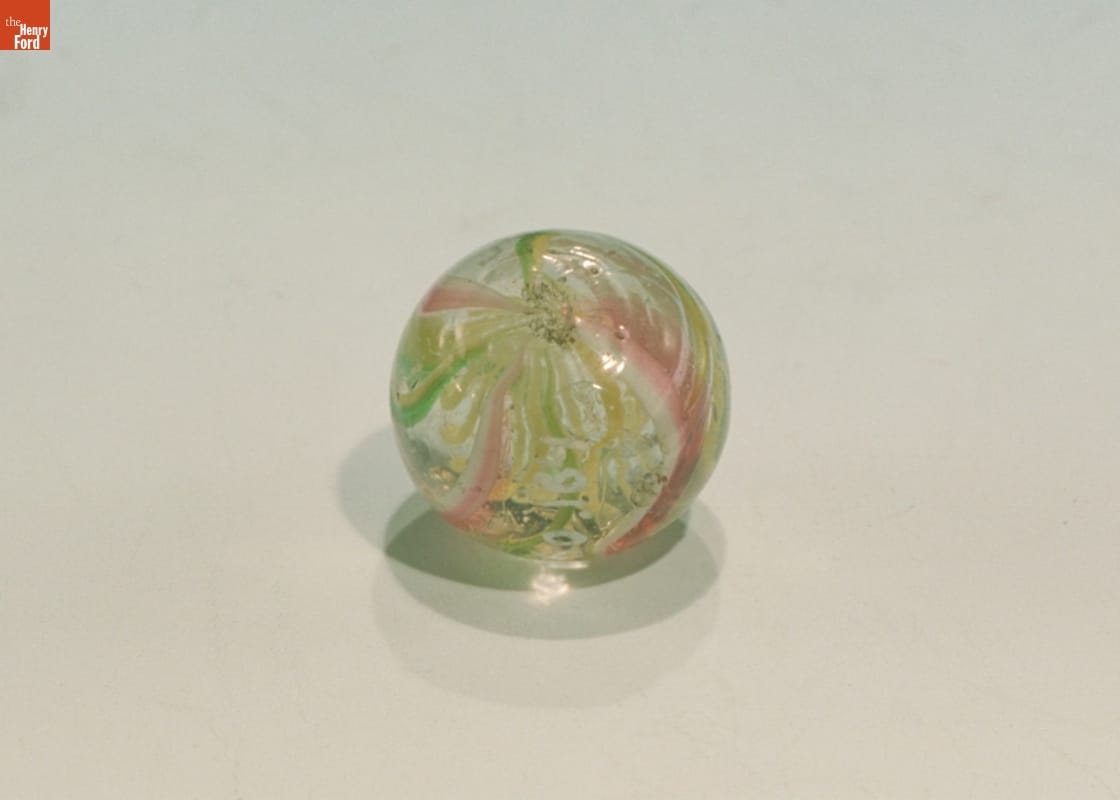
- circa 1900
- Collections - Artifact
Marble Used by Edsel Ford, circa 1900
Children have played with marbles for generations. This glass marble belonged to Edsel Ford, the only child of Henry and Clara Ford. Born in 1893, Edsel would have played with this toy at a time when his father was trying to establish a successful company and working to create his ideal automobile.
- "Carpet Ball" Marble, 1800-1880 - This 19th-century carpet ball was used to play an indoor game modeled after Lawn Bowls. Rules usually involved a smaller pottery ball placed at one end of a carpet. Players tried to roll larger balls, like this one, as close as possible to win points. In the 19th and early 20th centuries glazed pottery balls were embellished with colorful stripes and sponge-patterned decoration.
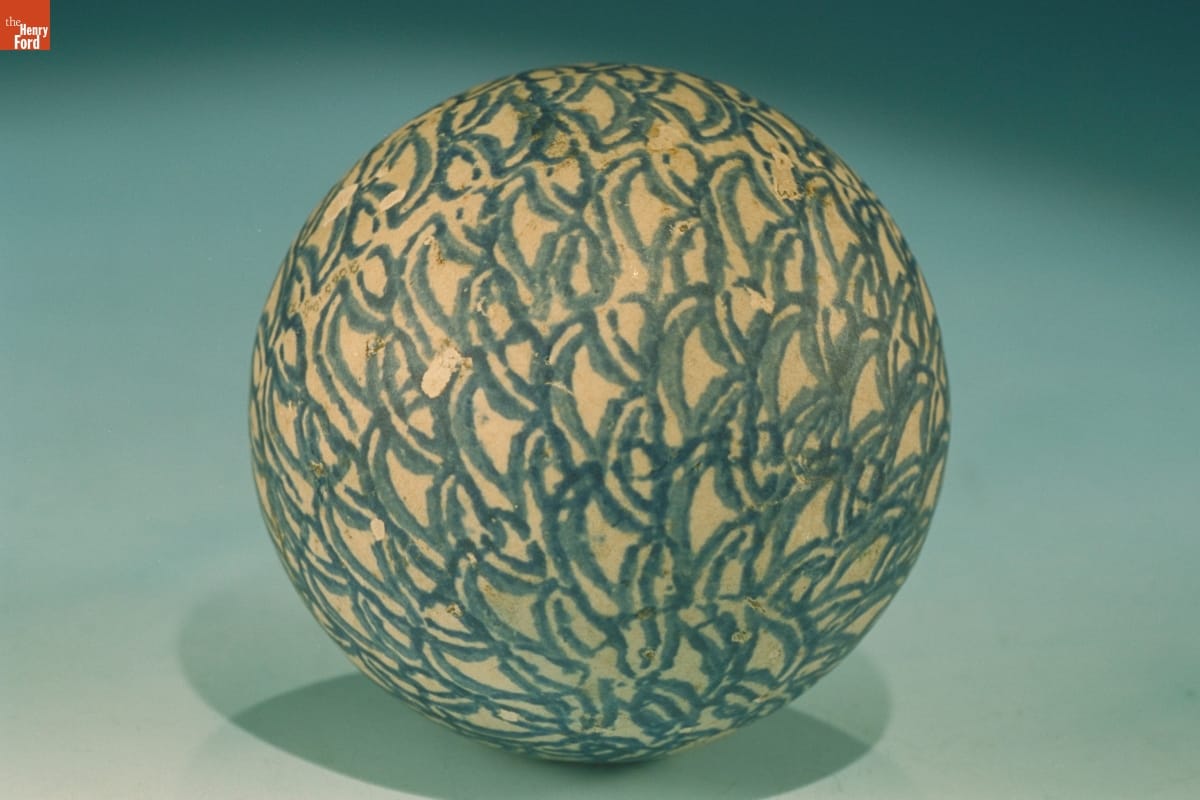
- 1800-1880
- Collections - Artifact
"Carpet Ball" Marble, 1800-1880
This 19th-century carpet ball was used to play an indoor game modeled after Lawn Bowls. Rules usually involved a smaller pottery ball placed at one end of a carpet. Players tried to roll larger balls, like this one, as close as possible to win points. In the 19th and early 20th centuries glazed pottery balls were embellished with colorful stripes and sponge-patterned decoration.
- Fox and Geese Game, 1870-1890 - This marble game poses one fox against 13 geese. The geese move one space at a time, with the goal of surrounding the fox. The fox can capture geese by jumping them one at a time, with the goal of removing enough so he cannot be surrounded.
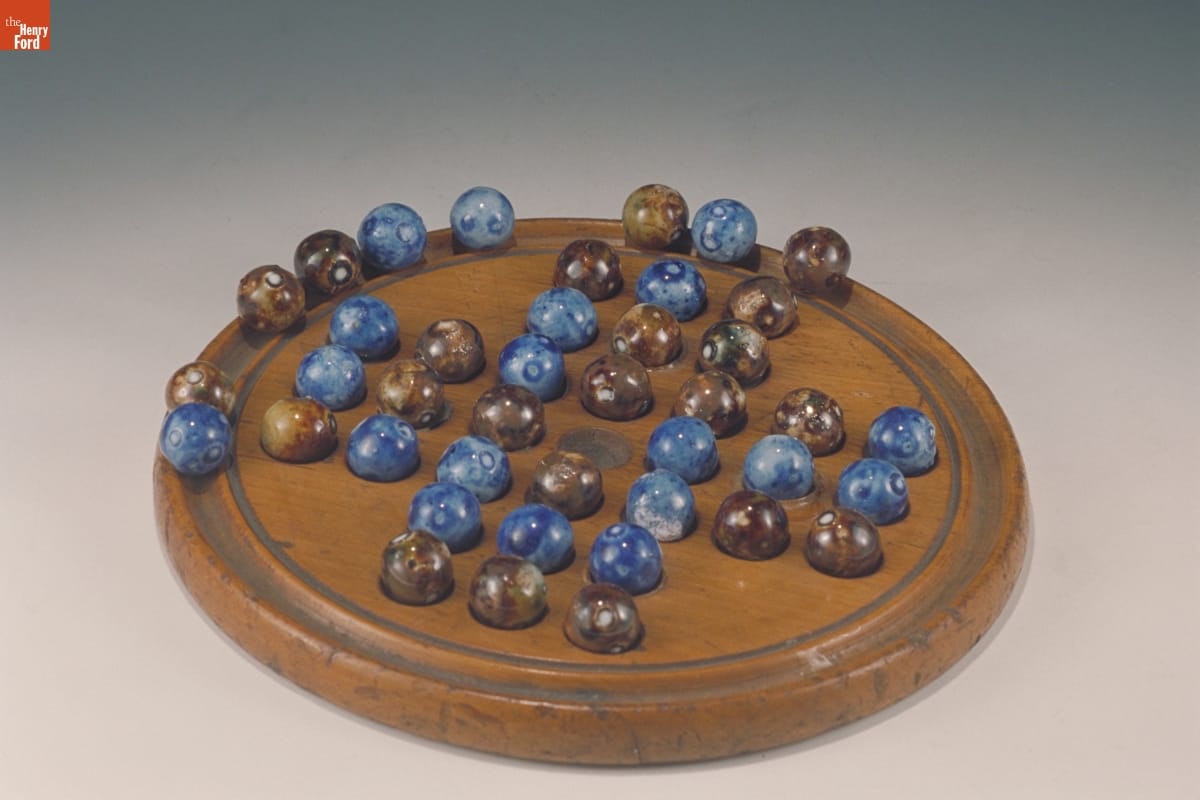
- 1870-1890
- Collections - Artifact
Fox and Geese Game, 1870-1890
This marble game poses one fox against 13 geese. The geese move one space at a time, with the goal of surrounding the fox. The fox can capture geese by jumping them one at a time, with the goal of removing enough so he cannot be surrounded.
- School Reward of Merit Given to James Grattan by His Teacher, Miss Carman, 1850-1859 - During the nineteenth-century, teachers recognized students with paper "rewards of merit." These small tokens commended a student's excellent work, perfect attendance, good behavior or other noteworthy accomplishment. Some contained simple handwritten sentiments from the teacher to the pupil. Many were printed and colorful, with space available to write in the student's name as well as their own.
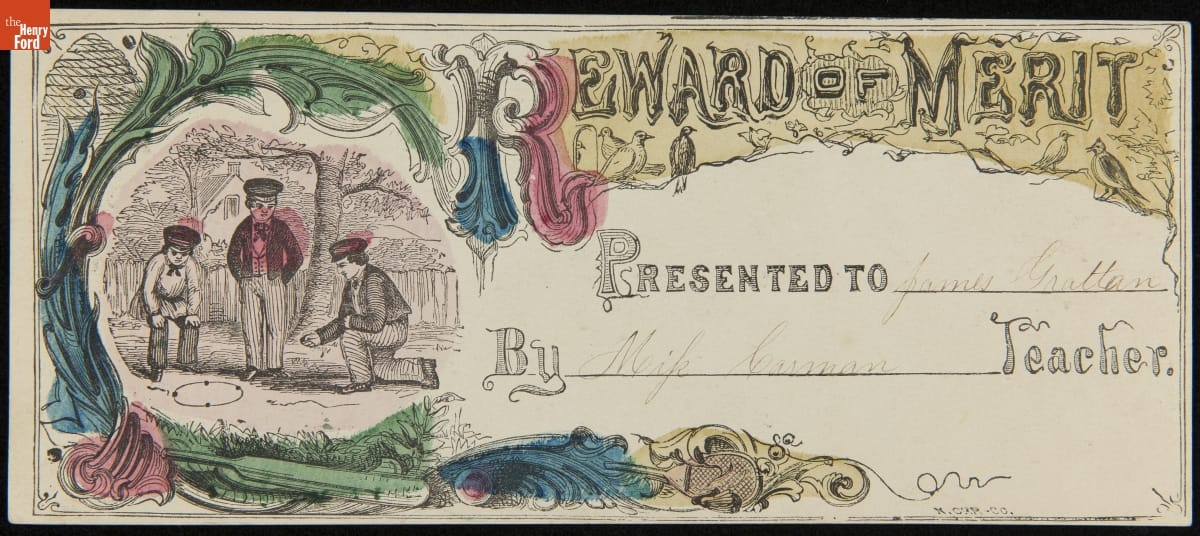
- circa 1870
- Collections - Artifact
School Reward of Merit Given to James Grattan by His Teacher, Miss Carman, 1850-1859
During the nineteenth-century, teachers recognized students with paper "rewards of merit." These small tokens commended a student's excellent work, perfect attendance, good behavior or other noteworthy accomplishment. Some contained simple handwritten sentiments from the teacher to the pupil. Many were printed and colorful, with space available to write in the student's name as well as their own.
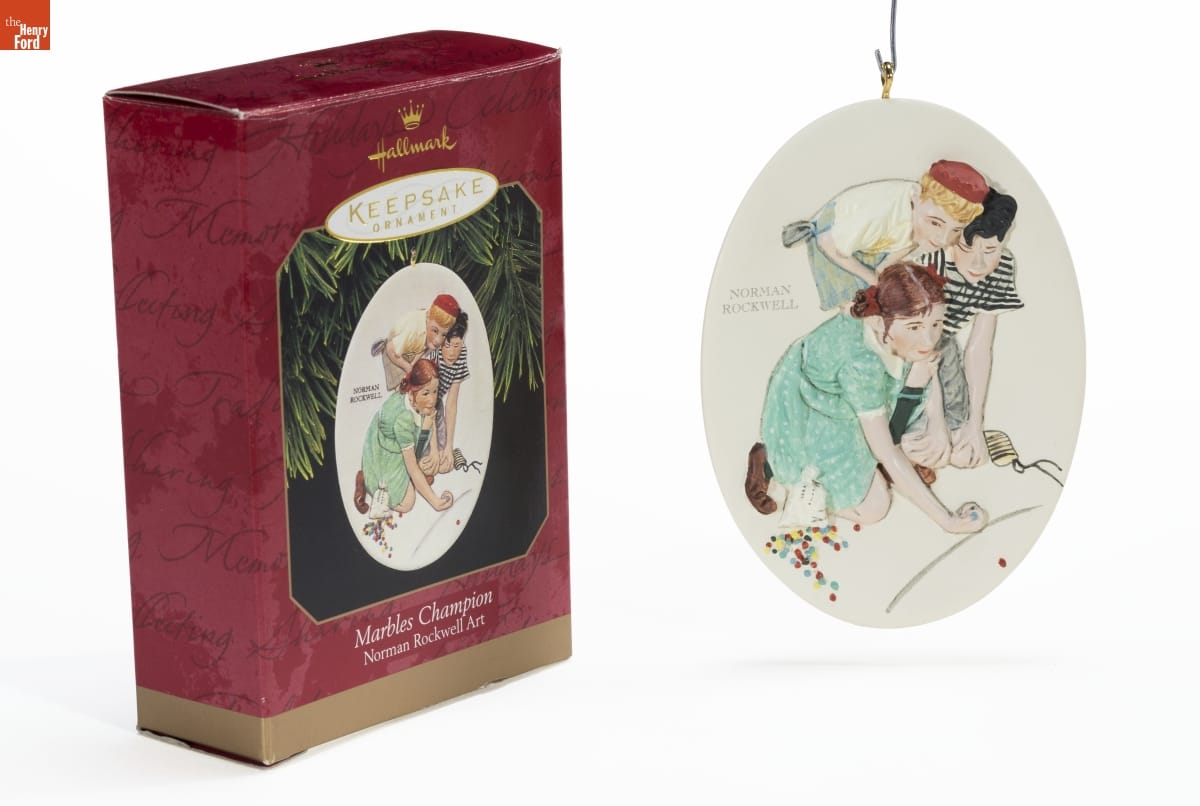
- Hallmark "Norman Rockwell: Marbles Champion" Christmas Ornament, 1997 - Already known for greeting cards, Hallmark introduced a line of Christmas ornaments in 1973. The company's annual release of an increasing array of ornaments revolutionized Christmas decorating, appealing to customers' interest in marking memories and milestones as well as expressing one's personality and unique tastes.
- 1997
- Collections - Artifact
Hallmark "Norman Rockwell: Marbles Champion" Christmas Ornament, 1997
Already known for greeting cards, Hallmark introduced a line of Christmas ornaments in 1973. The company's annual release of an increasing array of ornaments revolutionized Christmas decorating, appealing to customers' interest in marking memories and milestones as well as expressing one's personality and unique tastes.
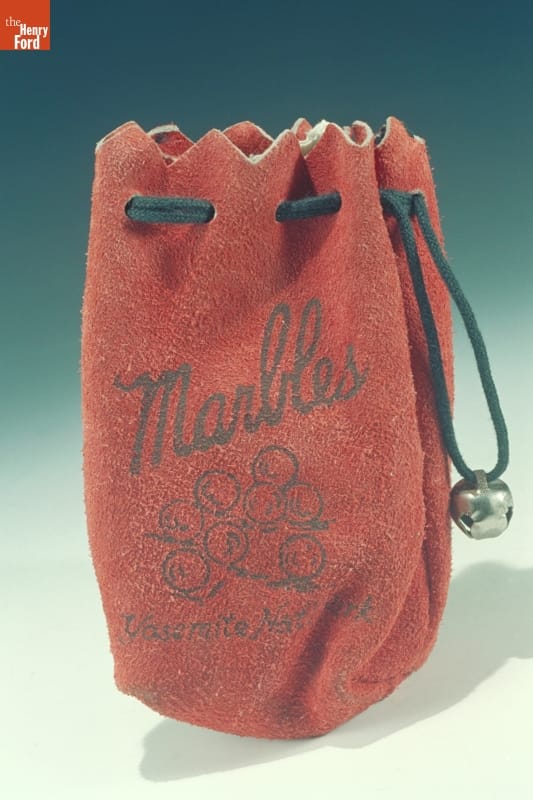
- Marbles Game From Yosemite National Park, 1950-1960 - Children have played marble games for generations. Rules and objectives vary, but one of the most well-known marbles game requires a player to knock other players' marbles out of a ring. Players decide either to play "for keeps" or "for fair" (the marbles are returned owners.) This bag of marbles was sold as a souvenir at Yosemite National Park.
- 1950-1960
- Collections - Artifact
Marbles Game From Yosemite National Park, 1950-1960
Children have played marble games for generations. Rules and objectives vary, but one of the most well-known marbles game requires a player to knock other players' marbles out of a ring. Players decide either to play "for keeps" or "for fair" (the marbles are returned owners.) This bag of marbles was sold as a souvenir at Yosemite National Park.
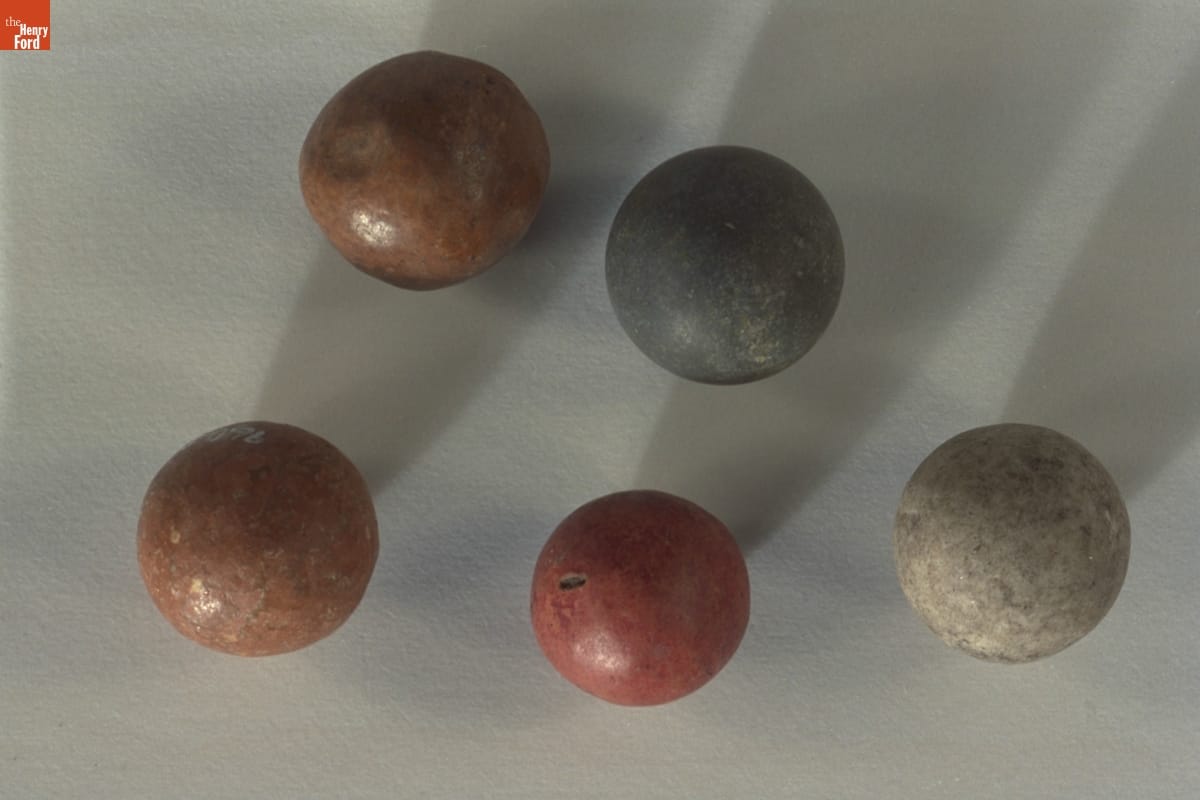
- Marbles, 1800-1900 - Marbles have been a popular toy for thousands of years. They have been used to play hundreds of different games. Marbles also have been made from various materials - glass, stone, ceramic, metal and plastic. These marbles date from the 1800s and are made of clay.
- 1800-1900
- Collections - Artifact
Marbles, 1800-1900
Marbles have been a popular toy for thousands of years. They have been used to play hundreds of different games. Marbles also have been made from various materials - glass, stone, ceramic, metal and plastic. These marbles date from the 1800s and are made of clay.
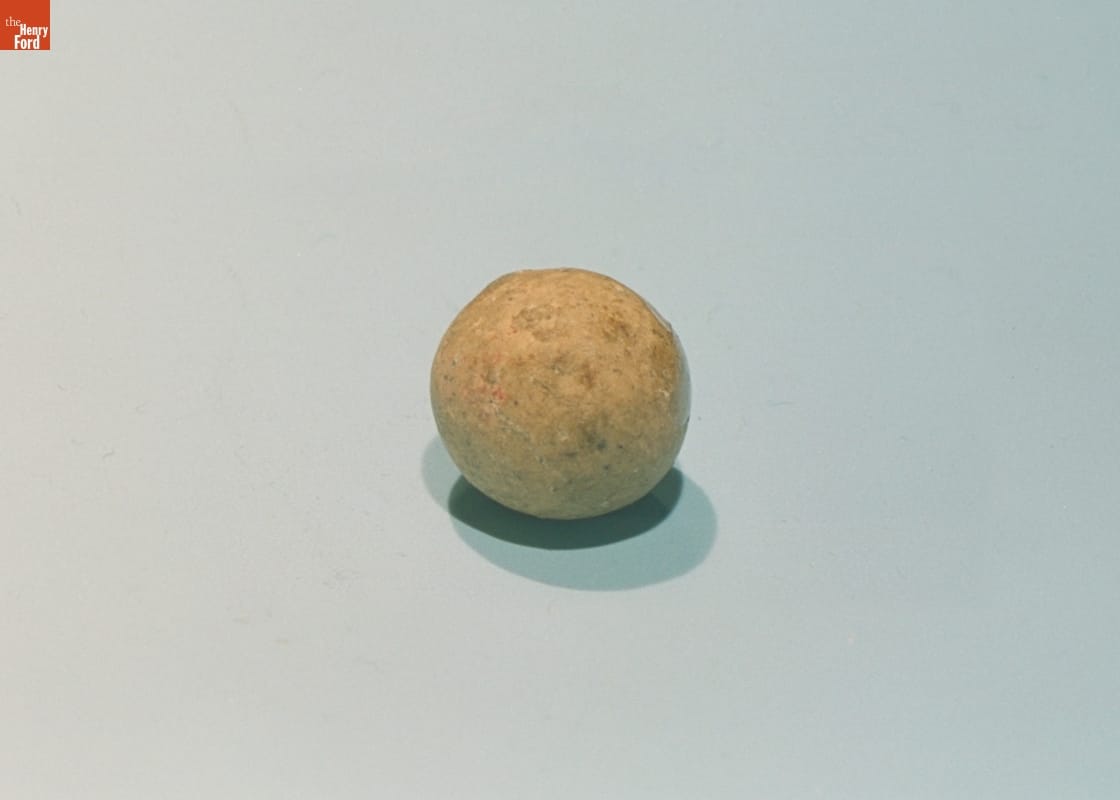
- Marble, 1850-1900 - Children have played marble games for generations. Rules and objectives vary, but one of the most well-known marbles game requires a player to knock other players' marbles out of a ring. Players decide either to play "for keeps" or "for fair" (the marbles are returned owners.) This marble dates from the mid to late 19th century and is made of stone.
- 1850-1900
- Collections - Artifact
Marble, 1850-1900
Children have played marble games for generations. Rules and objectives vary, but one of the most well-known marbles game requires a player to knock other players' marbles out of a ring. Players decide either to play "for keeps" or "for fair" (the marbles are returned owners.) This marble dates from the mid to late 19th century and is made of stone.