
Search
- Assembly of Marine Compound Steam Engines, Detroit Shipbuilding Company, Wyandotte, Michigan, 1901 - From 1895 to 1924, the Detroit Publishing Company was one of the major image publishers in the world. The company's wide-ranging stock of original photographs documented life and landscapes from across the nation and around the globe. From the tens of thousands of negatives, the company created prints, postcards, lantern slides, panoramas, and other merchandise for sale to educators, businessmen, advertisers, homeowners and travelers.

- 1901
- Collections - Artifact
Assembly of Marine Compound Steam Engines, Detroit Shipbuilding Company, Wyandotte, Michigan, 1901
From 1895 to 1924, the Detroit Publishing Company was one of the major image publishers in the world. The company's wide-ranging stock of original photographs documented life and landscapes from across the nation and around the globe. From the tens of thousands of negatives, the company created prints, postcards, lantern slides, panoramas, and other merchandise for sale to educators, businessmen, advertisers, homeowners and travelers.
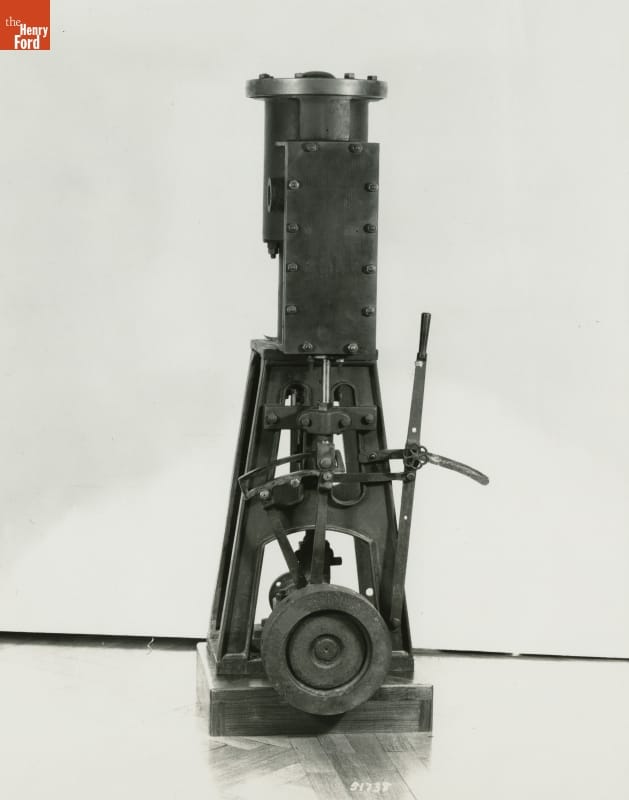
- Marine Compound Steam Engine, circa 1890 - Compound engines use steam twice in different cylinders. This particular marine engine is unusual in having its low-pressure cylinder mounted above its high-pressure cylinder. Generally, marine engines inverted that layout with the heavier low-pressure unit at bottom. More weight at top could create stability problems on a ship. This engine produced about 12 horsepower at speeds no greater than 100 r.p.m.
- circa 1890
- Collections - Artifact
Marine Compound Steam Engine, circa 1890
Compound engines use steam twice in different cylinders. This particular marine engine is unusual in having its low-pressure cylinder mounted above its high-pressure cylinder. Generally, marine engines inverted that layout with the heavier low-pressure unit at bottom. More weight at top could create stability problems on a ship. This engine produced about 12 horsepower at speeds no greater than 100 r.p.m.
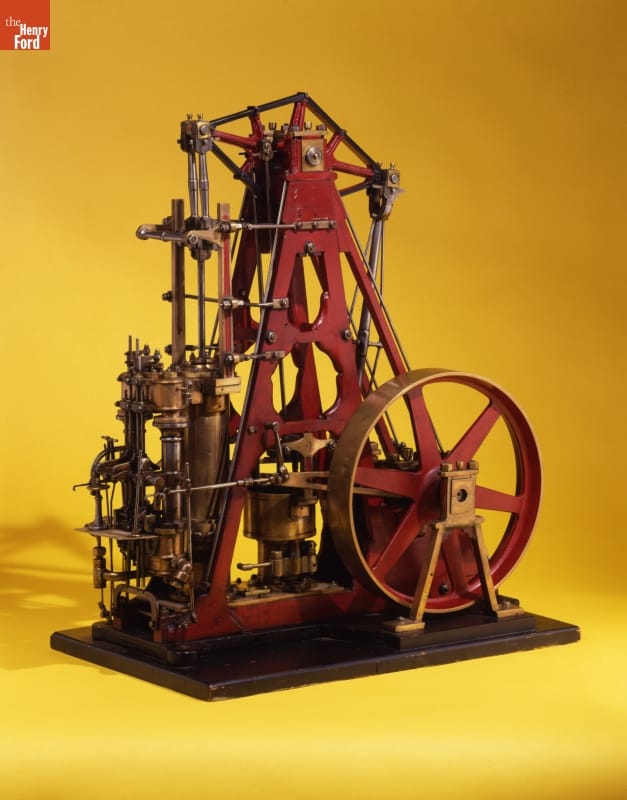
- Model of an American Marine Beam Engine, 1887 - This model made by Max Zwickel of Jersey City, New Jersey, in 1887 represents a typical walking-beam engine used on Hudson River steamboats of that time. "Walking beam" refers to the prominent diamond-shaped rocker arm on top that helped convert the up-and-down motion of the piston into the rotary motion of the flywheel. It took Zwickel five years to complete the model.
- 1887
- Collections - Artifact
Model of an American Marine Beam Engine, 1887
This model made by Max Zwickel of Jersey City, New Jersey, in 1887 represents a typical walking-beam engine used on Hudson River steamboats of that time. "Walking beam" refers to the prominent diamond-shaped rocker arm on top that helped convert the up-and-down motion of the piston into the rotary motion of the flywheel. It took Zwickel five years to complete the model.
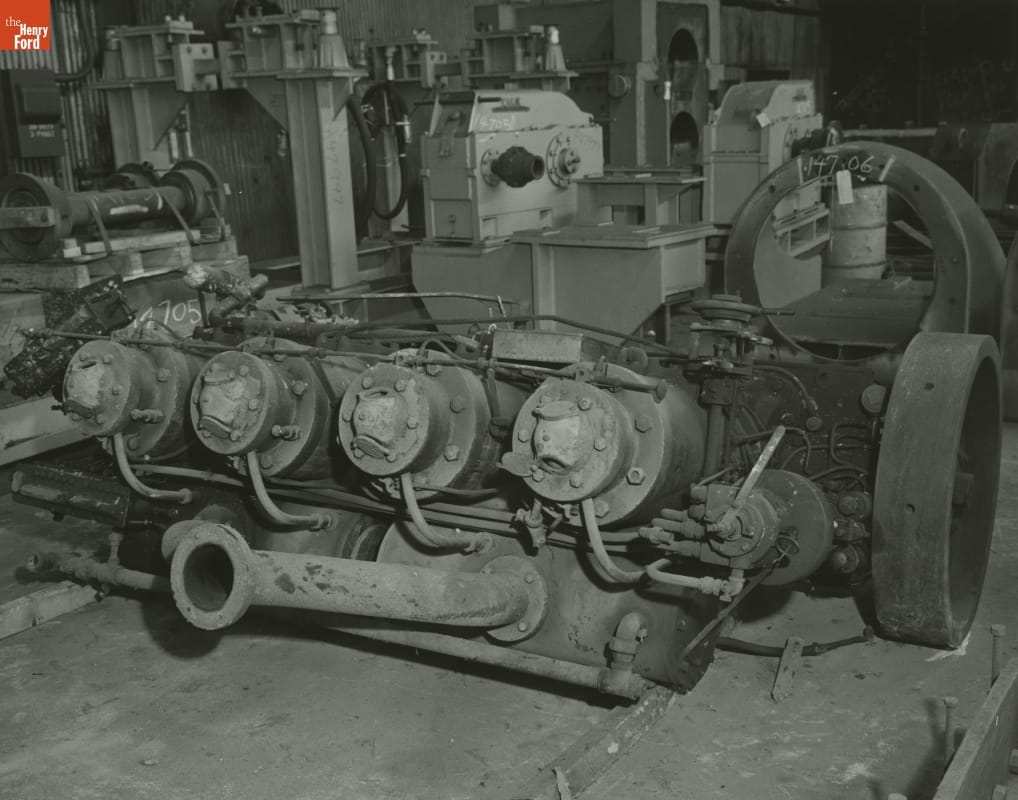
- Kahlenberg 4-Cylinder Marine Diesel Engine, 1927 - Kahlenberg of Two Rivers, Wisconsin, built steam and gasoline marine engines before focusing on hot-bulb semi-diesel engines in the 1920s. This early four-cylinder example was purchased by United Fisheries of Sandusky, Ohio, in 1929 and likely used in a small commercial fishing tug. These engines were more efficient and reliable than steam power and were widely adopted on the Great Lakes.
- 1927
- Collections - Artifact
Kahlenberg 4-Cylinder Marine Diesel Engine, 1927
Kahlenberg of Two Rivers, Wisconsin, built steam and gasoline marine engines before focusing on hot-bulb semi-diesel engines in the 1920s. This early four-cylinder example was purchased by United Fisheries of Sandusky, Ohio, in 1929 and likely used in a small commercial fishing tug. These engines were more efficient and reliable than steam power and were widely adopted on the Great Lakes.
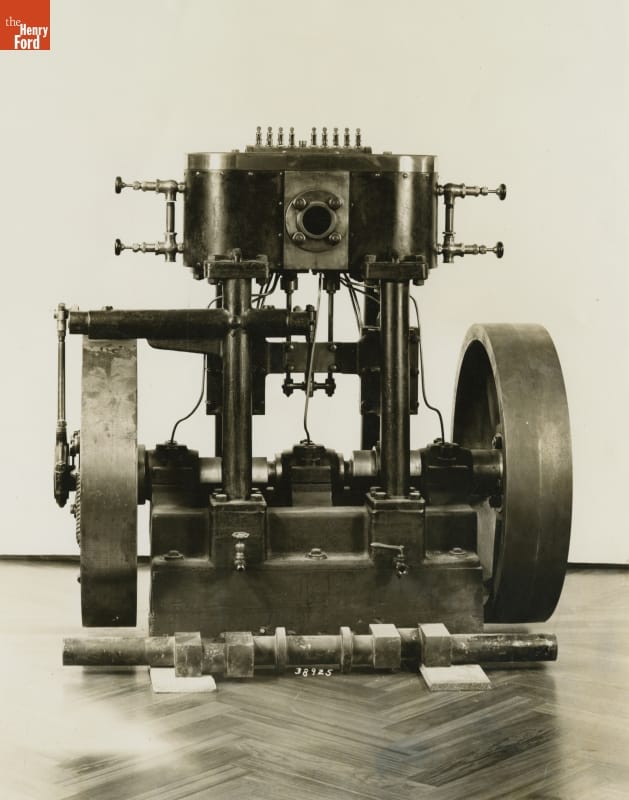
- Armington & Sims 2-cylinder Vertical Marine Steam Engine, 1896 - This ten-horsepower vertical steam engine was likely among the last manufactured by Armington & Sims of New England before the company's bankruptcy. Advanced for its time, the engine's oversquare five-inch bore and three-inch stroke allowed it to operate at speeds up to 400 r.p.m. Reportedly, the engine was built for a yacht that was never completed.
- 1896
- Collections - Artifact
Armington & Sims 2-cylinder Vertical Marine Steam Engine, 1896
This ten-horsepower vertical steam engine was likely among the last manufactured by Armington & Sims of New England before the company's bankruptcy. Advanced for its time, the engine's oversquare five-inch bore and three-inch stroke allowed it to operate at speeds up to 400 r.p.m. Reportedly, the engine was built for a yacht that was never completed.
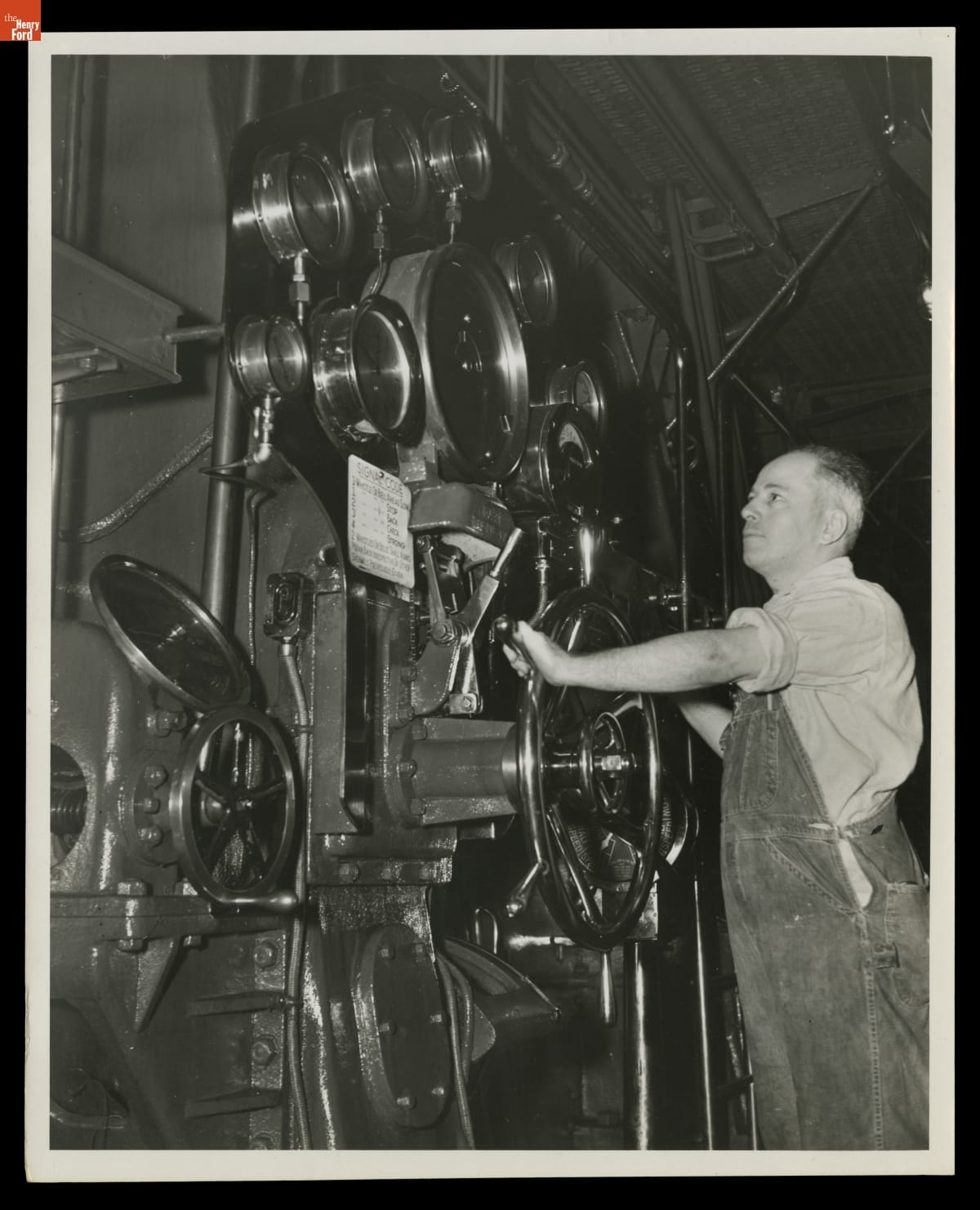
- Engineer aboard the Ford Motor Company Ship "Benson Ford," April 1945 - Henry Ford had two freighters built in 1924 and named them after his grandsons, Henry Ford II and Benson Ford. The ships traveled the Great Lakes, transporting raw materials and finished products to and from Ford's Rouge manufacturing complex. In its early years, the <em>Benson Ford</em> carried a crew of 36 -- officers, engineers, oilers, sailors, cooks, and other specialists.
- April 14, 1945
- Collections - Artifact
Engineer aboard the Ford Motor Company Ship "Benson Ford," April 1945
Henry Ford had two freighters built in 1924 and named them after his grandsons, Henry Ford II and Benson Ford. The ships traveled the Great Lakes, transporting raw materials and finished products to and from Ford's Rouge manufacturing complex. In its early years, the Benson Ford carried a crew of 36 -- officers, engineers, oilers, sailors, cooks, and other specialists.
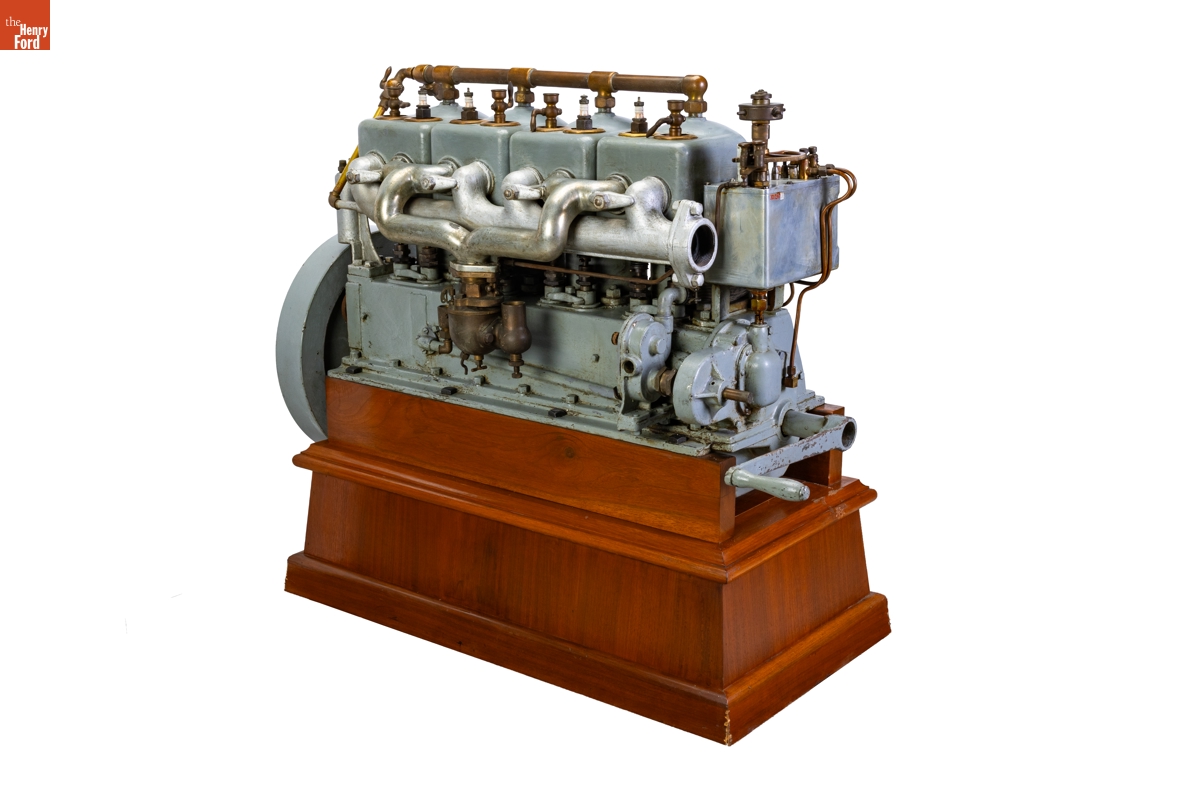
- Scripps Marine Engine, circa 1908 - Based in Detroit, Scripps Motor Company manufactured marine engines throughout the first half of the 20th century. Its models ranged from two- and four-cylinder units like this one to large 12-cylinder engines capable of powering luxury yachts. Scripps was one of several Michigan-based marine engine companies that helped make the Great Lakes State a center of the boat-building industry.
- circa 1908
- Collections - Artifact
Scripps Marine Engine, circa 1908
Based in Detroit, Scripps Motor Company manufactured marine engines throughout the first half of the 20th century. Its models ranged from two- and four-cylinder units like this one to large 12-cylinder engines capable of powering luxury yachts. Scripps was one of several Michigan-based marine engine companies that helped make the Great Lakes State a center of the boat-building industry.
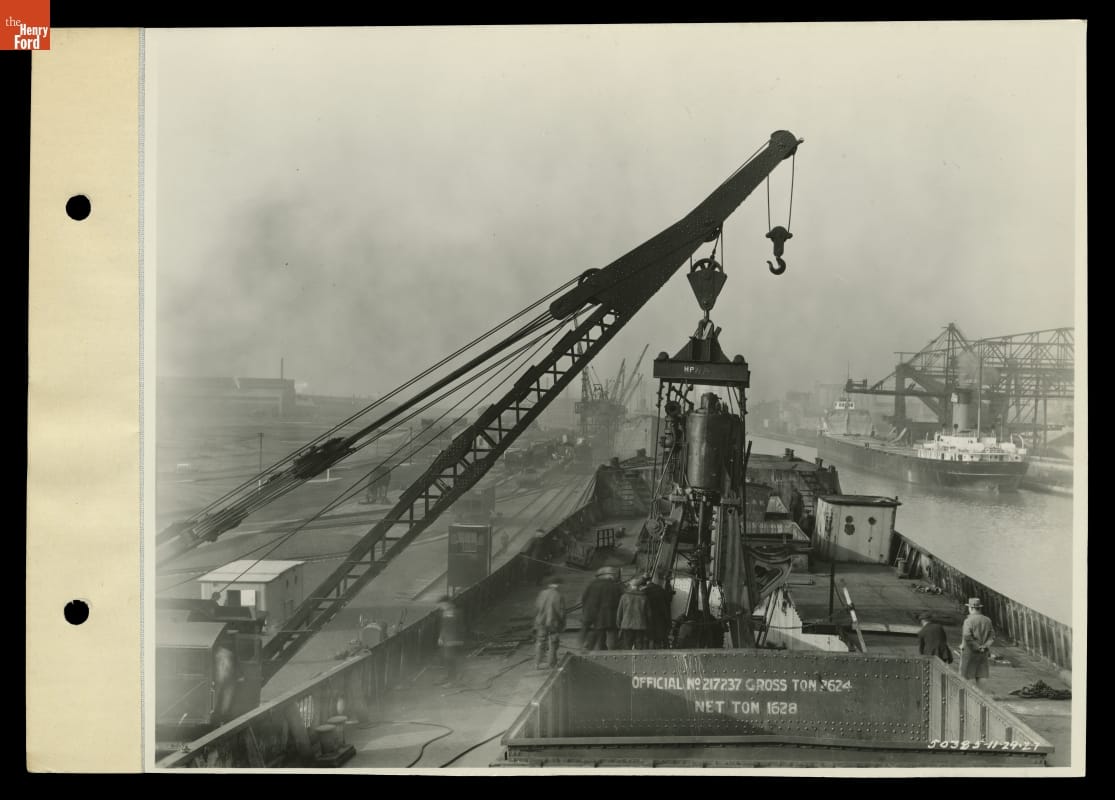
- Removing Engine from Salvage Ship at Ford Motor Company Rouge Plant Shipyard, 1927 - Completed in 1928 along the newly dredged River Rouge, Ford Motor Company's Rouge Plant quickly became an icon of modern industrial productivity. The factory's ship salvaging project exemplified Henry Ford's vision of efficiency at the plant. Workers disassembled surplus vessels, saving hardware and reconditioning functional machinery. Then, in the Rouge's production foundry, they melted down remaining scraps into reusable steel.
- November 29, 1927
- Collections - Artifact
Removing Engine from Salvage Ship at Ford Motor Company Rouge Plant Shipyard, 1927
Completed in 1928 along the newly dredged River Rouge, Ford Motor Company's Rouge Plant quickly became an icon of modern industrial productivity. The factory's ship salvaging project exemplified Henry Ford's vision of efficiency at the plant. Workers disassembled surplus vessels, saving hardware and reconditioning functional machinery. Then, in the Rouge's production foundry, they melted down remaining scraps into reusable steel.
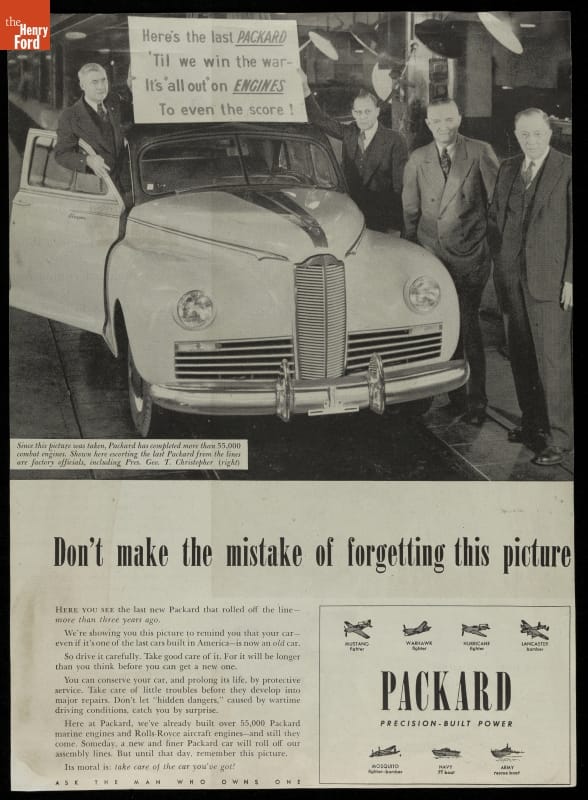
- "Don't Make the Mistake of Forgetting This Picture" Packard Motor Company Advertisement, 1945 - World War II paused all production of civilian automobiles in 1942. Packard published this ad in 1945, reminding readers that <EM>every</EM> car in the United States was an "old" car at the time. Drivers were advised to take good care of their vehicles until peace returned. Packard built engines for military boats and airplanes during the war.
- 1945
- Collections - Artifact
"Don't Make the Mistake of Forgetting This Picture" Packard Motor Company Advertisement, 1945
World War II paused all production of civilian automobiles in 1942. Packard published this ad in 1945, reminding readers that every car in the United States was an "old" car at the time. Drivers were advised to take good care of their vehicles until peace returned. Packard built engines for military boats and airplanes during the war.
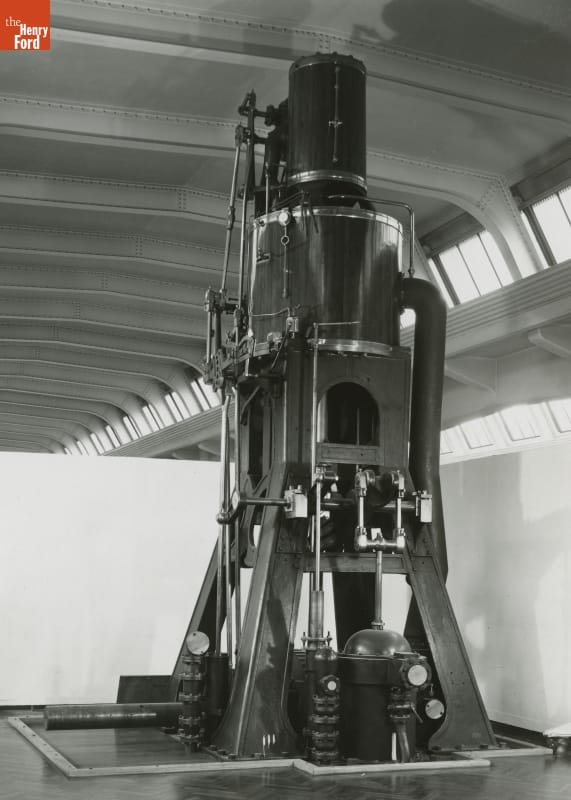
- Steeple Compound Marine Steam Engine, 1875 - The most important uses of steam power outside of factories were in steamboats and railroads. This huge engine was used on two different Great Lakes cargo ships, the <i>Portage</i> and the <i>Roumania</i>, during its 50 years of operation. The "steeple" name came from the engine's vertical layout, which saved space and allowed more room for cargo on a ship.
- 1875
- Collections - Artifact
Steeple Compound Marine Steam Engine, 1875
The most important uses of steam power outside of factories were in steamboats and railroads. This huge engine was used on two different Great Lakes cargo ships, the Portage and the Roumania, during its 50 years of operation. The "steeple" name came from the engine's vertical layout, which saved space and allowed more room for cargo on a ship.