
Search
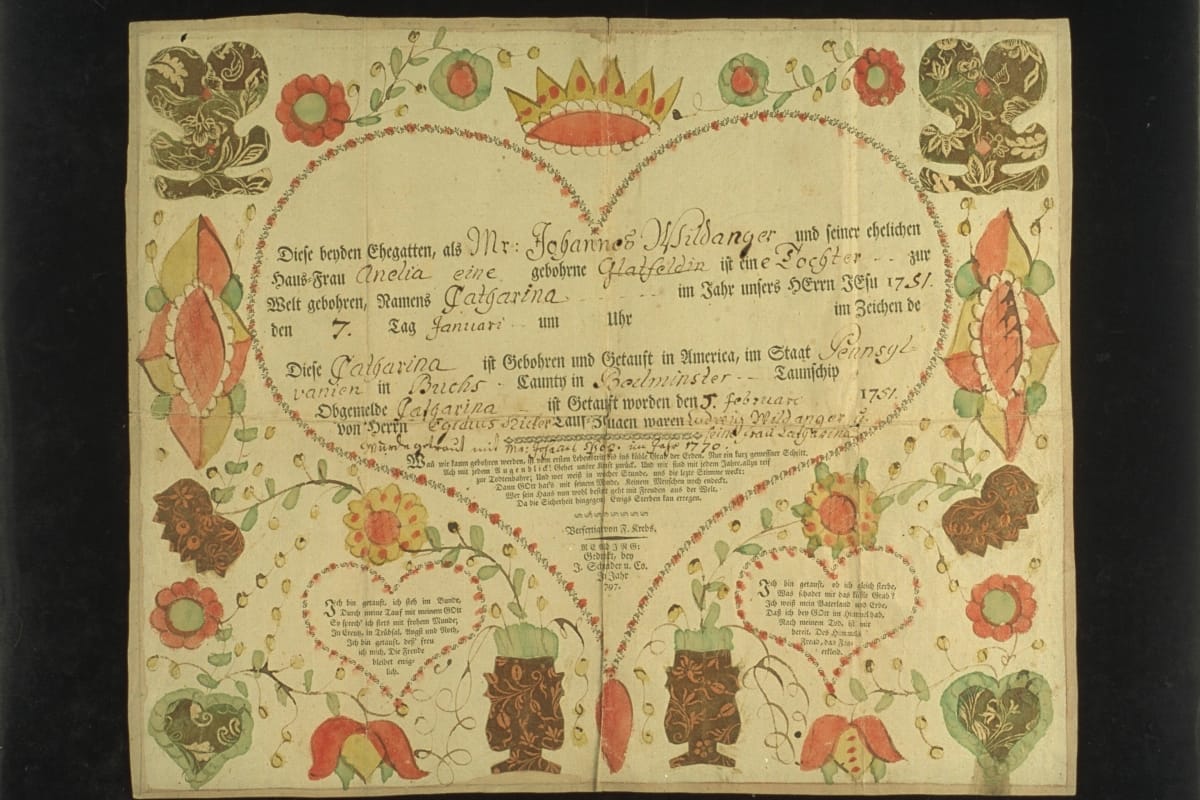
- Birth and Baptismal Certificate for Catharina Wildanger, 1797 - Early German immigrants created decorative keepsakes to commemorate important family events. These documents, known as Fraktur, usually incorporated intricate lettering, elaborate borders and colorful drawings of birds, flowers, hearts or other stylized figures. By the late 1700s, some Fraktur had printed elements. This Fraktur commemorates the birth and baptism of Catharina Wildanger from Bucks County, Pennsylvania, in 1751.
- January 07, 1751
- Collections - Artifact
Birth and Baptismal Certificate for Catharina Wildanger, 1797
Early German immigrants created decorative keepsakes to commemorate important family events. These documents, known as Fraktur, usually incorporated intricate lettering, elaborate borders and colorful drawings of birds, flowers, hearts or other stylized figures. By the late 1700s, some Fraktur had printed elements. This Fraktur commemorates the birth and baptism of Catharina Wildanger from Bucks County, Pennsylvania, in 1751.
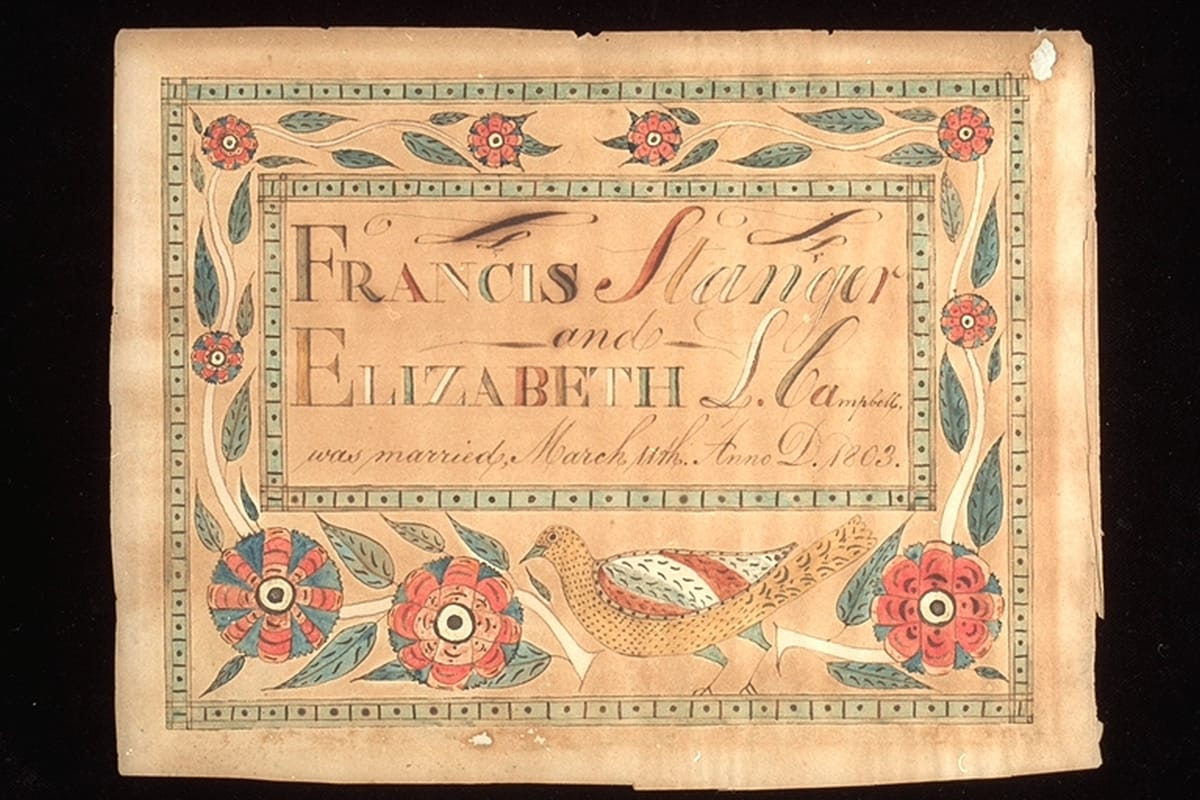
- Marriage Certificate for Francis Stanger and Elizabeth L. Campbell, circa 1804 -
- circa 1804
- Collections - Artifact
Marriage Certificate for Francis Stanger and Elizabeth L. Campbell, circa 1804
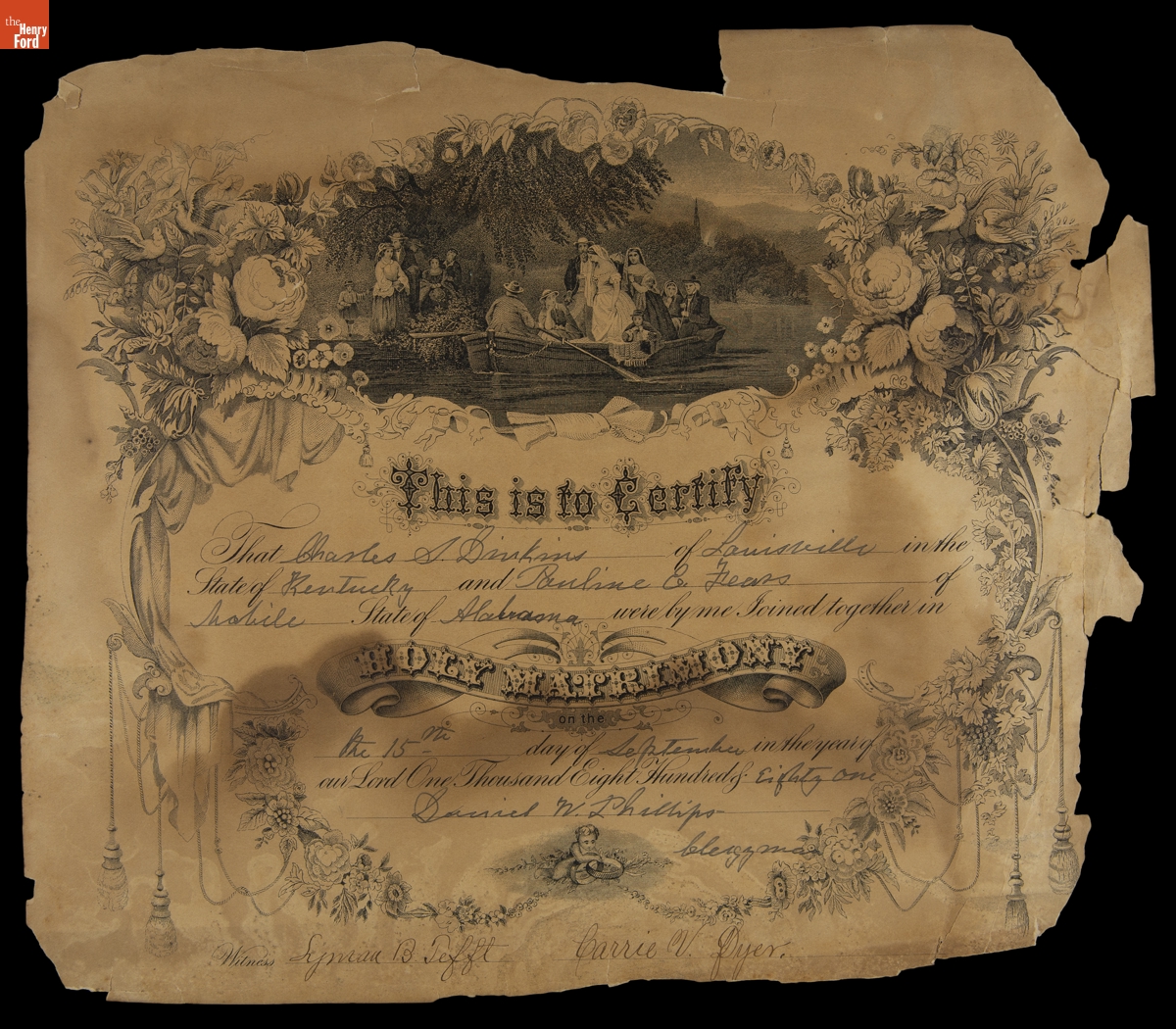
- Marriage Certificate for Charles Spencer Dinkins and Pauline E. Fears, Mobile, Alabama, September 15, 1881 -
- September 15, 1881
- Collections - Artifact
Marriage Certificate for Charles Spencer Dinkins and Pauline E. Fears, Mobile, Alabama, September 15, 1881
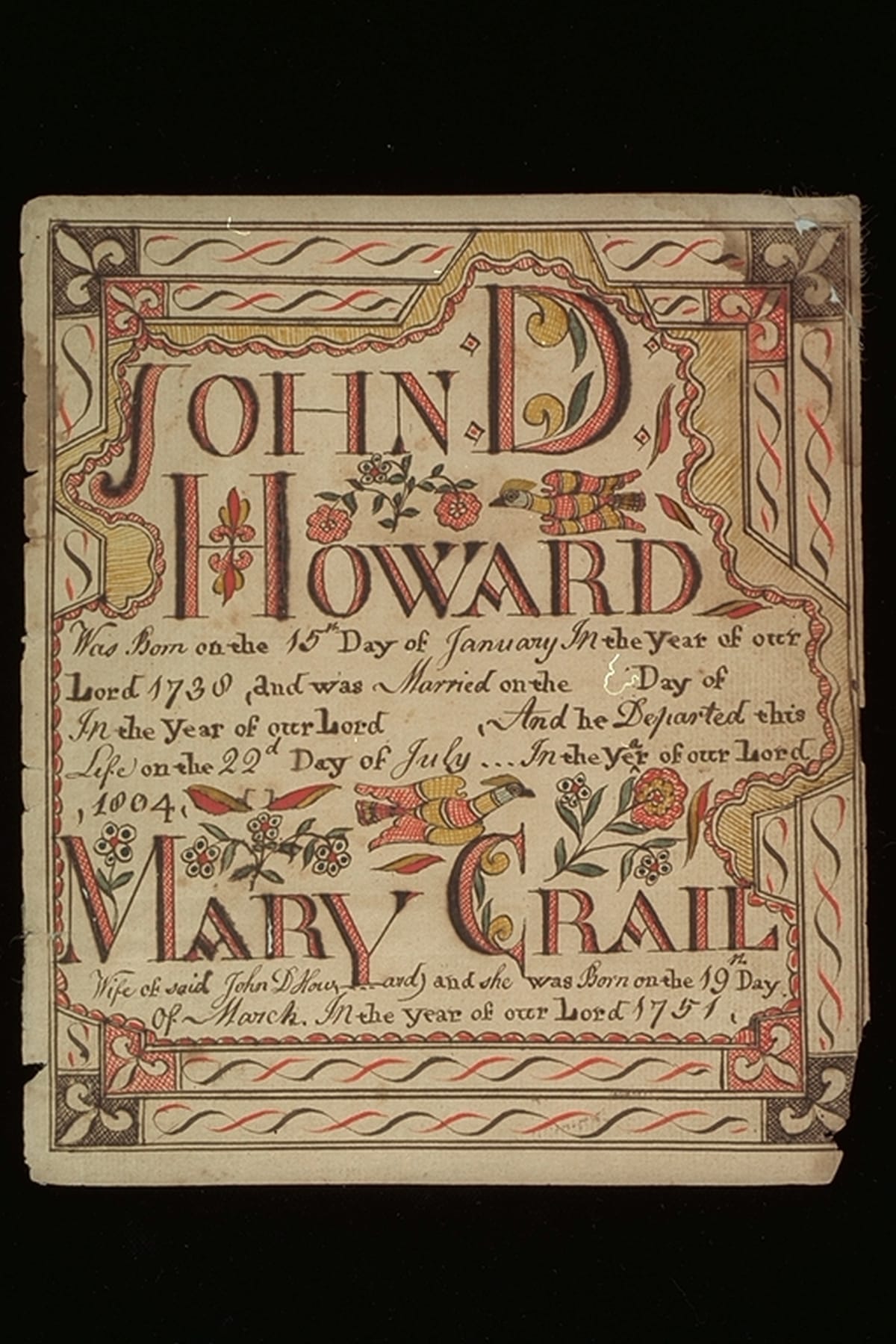
- Birth, Marriage, and Death Certificate for John D. Howard, circa 1820 - Early European inhabitants in the Valley of Virginia created decorative documents to commemorate important family events. Most of these keepsakes, known as Fraktur, were created by and for German immigrants. Others show influences from the English, Irish or Scot-Irish settlers. This design suggests similarities with German Fraktur, but differs in format, language and imagery -- a blending of art and traditions between the Valley's ethnic populations.
- circa 1820
- Collections - Artifact
Birth, Marriage, and Death Certificate for John D. Howard, circa 1820
Early European inhabitants in the Valley of Virginia created decorative documents to commemorate important family events. Most of these keepsakes, known as Fraktur, were created by and for German immigrants. Others show influences from the English, Irish or Scot-Irish settlers. This design suggests similarities with German Fraktur, but differs in format, language and imagery -- a blending of art and traditions between the Valley's ethnic populations.
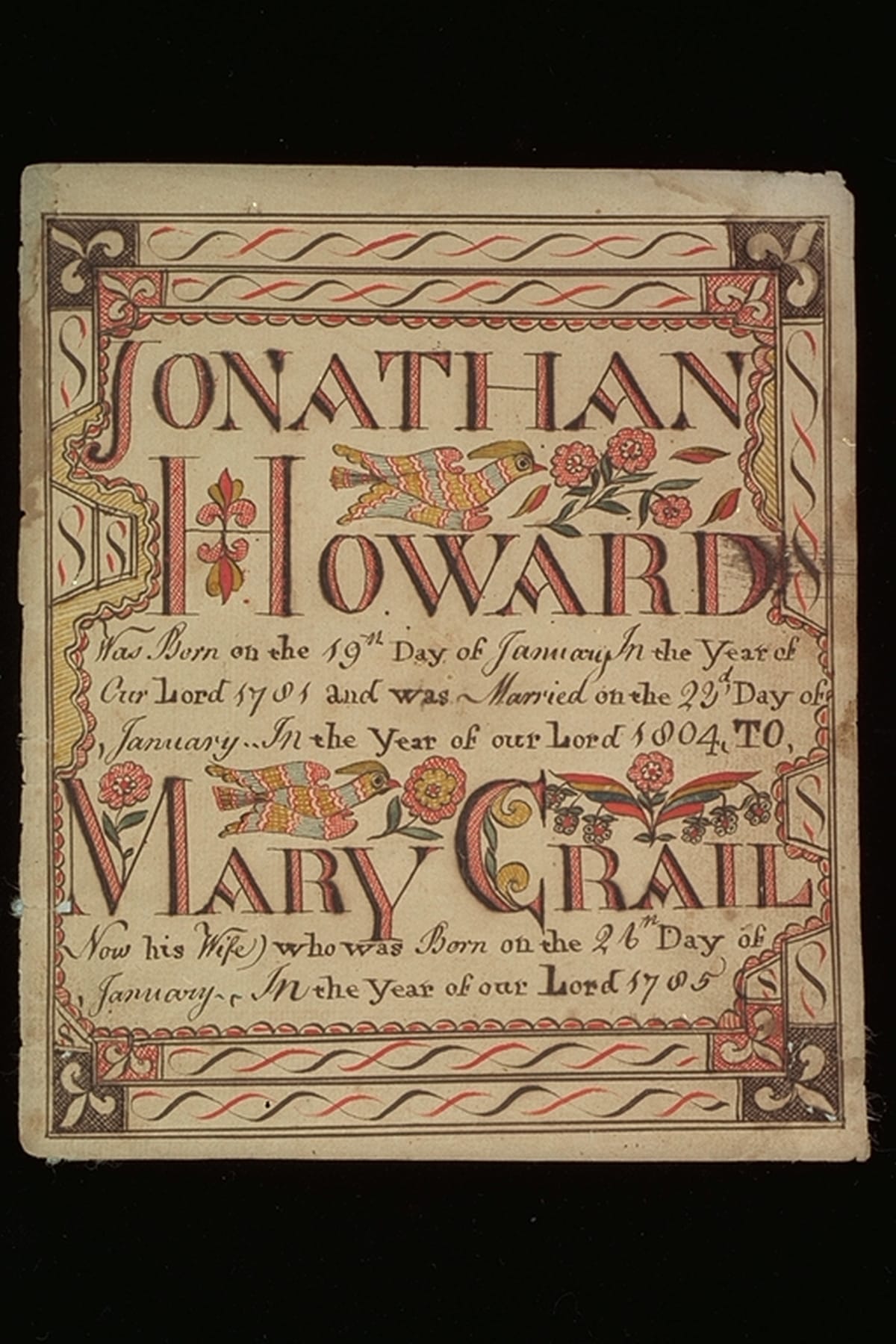
- Birth and Marriage Certificate for Jonathan Howard, circa 1820 - Early European inhabitants in the Valley of Virginia created decorative documents to commemorate important family events. Most of these keepsakes, known as Fraktur, were created by and for German immigrants. Others show influences from the English, Irish or Scot-Irish settlers. This design suggests similarities with German Fraktur, but differs in format, language and imagery -- a blending of art and traditions between the Valley's ethnic populations.
- circa 1820
- Collections - Artifact
Birth and Marriage Certificate for Jonathan Howard, circa 1820
Early European inhabitants in the Valley of Virginia created decorative documents to commemorate important family events. Most of these keepsakes, known as Fraktur, were created by and for German immigrants. Others show influences from the English, Irish or Scot-Irish settlers. This design suggests similarities with German Fraktur, but differs in format, language and imagery -- a blending of art and traditions between the Valley's ethnic populations.
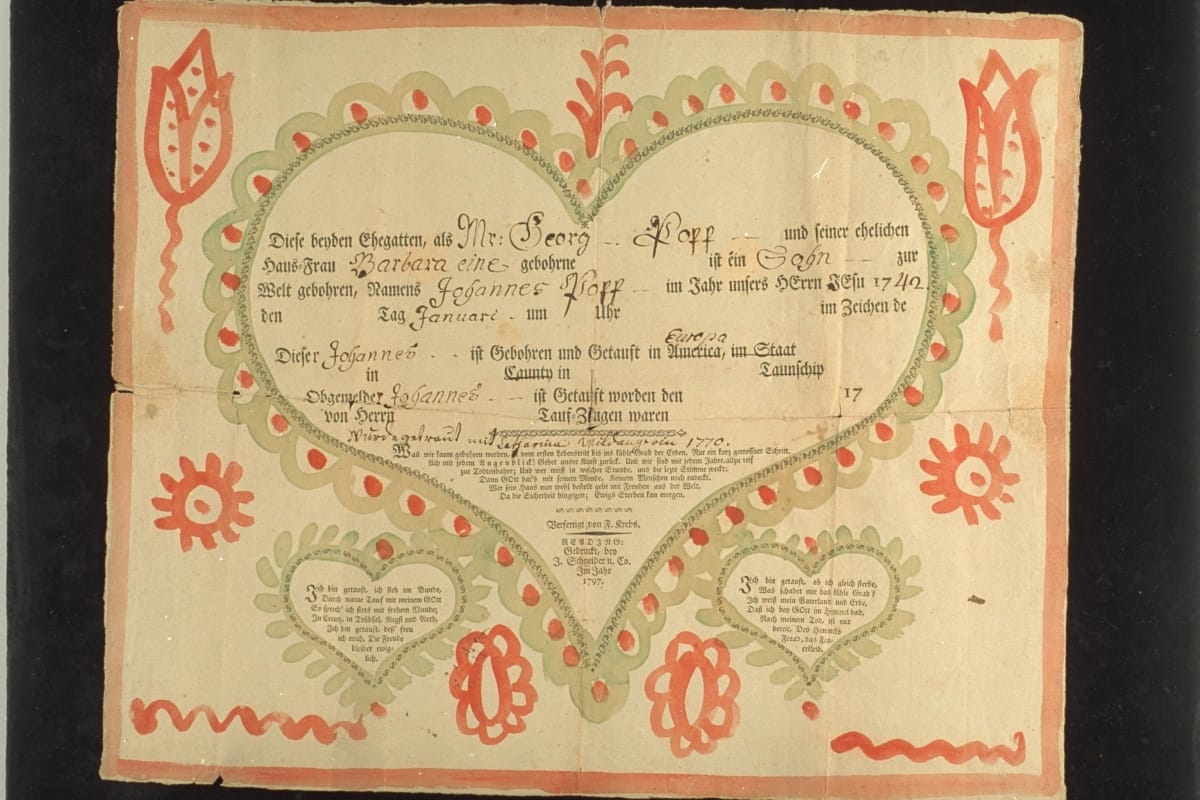
- Birth and Baptismal Certificate for Johannes Popp, 1797 - Early German immigrants created decorative keepsakes to commemorate important family events. These documents, known as Fraktur, usually incorporated intricate lettering, elaborate borders and colorful drawings of birds, flowers, hearts or other stylized figures. By the late 1700s, some Fraktur had printed elements. Johannes Popp was born and baptized in Europe in 1742. This Fraktur was created many years later after he immigrated to Pennsylvania.
- January 01, 1742
- Collections - Artifact
Birth and Baptismal Certificate for Johannes Popp, 1797
Early German immigrants created decorative keepsakes to commemorate important family events. These documents, known as Fraktur, usually incorporated intricate lettering, elaborate borders and colorful drawings of birds, flowers, hearts or other stylized figures. By the late 1700s, some Fraktur had printed elements. Johannes Popp was born and baptized in Europe in 1742. This Fraktur was created many years later after he immigrated to Pennsylvania.
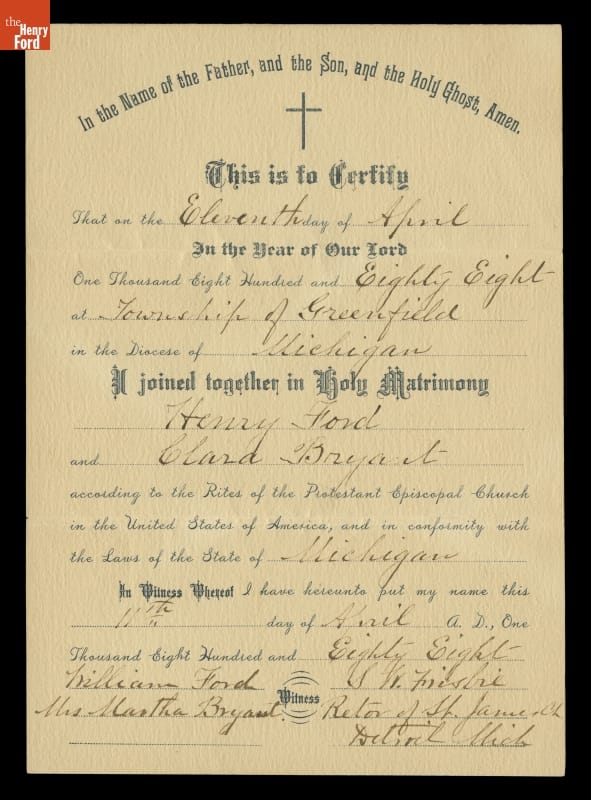
- Marriage Certificate for Henry Ford and Clara Bryant, April 11, 1888 - Henry Ford courted Clara Bryant from 1885-1888 before Clara's mother granted her daughter permission to marry. The ceremony was conducted by the Reverend Samuel W. Frisbie, for a $10 fee. Henry wore a blue suit and Clara a dress she made for the occasion. They were wed in the old-fashioned bay window in the home of Clara's parents, Melvin and Martha Bryant.
- April 11, 1888
- Collections - Artifact
Marriage Certificate for Henry Ford and Clara Bryant, April 11, 1888
Henry Ford courted Clara Bryant from 1885-1888 before Clara's mother granted her daughter permission to marry. The ceremony was conducted by the Reverend Samuel W. Frisbie, for a $10 fee. Henry wore a blue suit and Clara a dress she made for the occasion. They were wed in the old-fashioned bay window in the home of Clara's parents, Melvin and Martha Bryant.
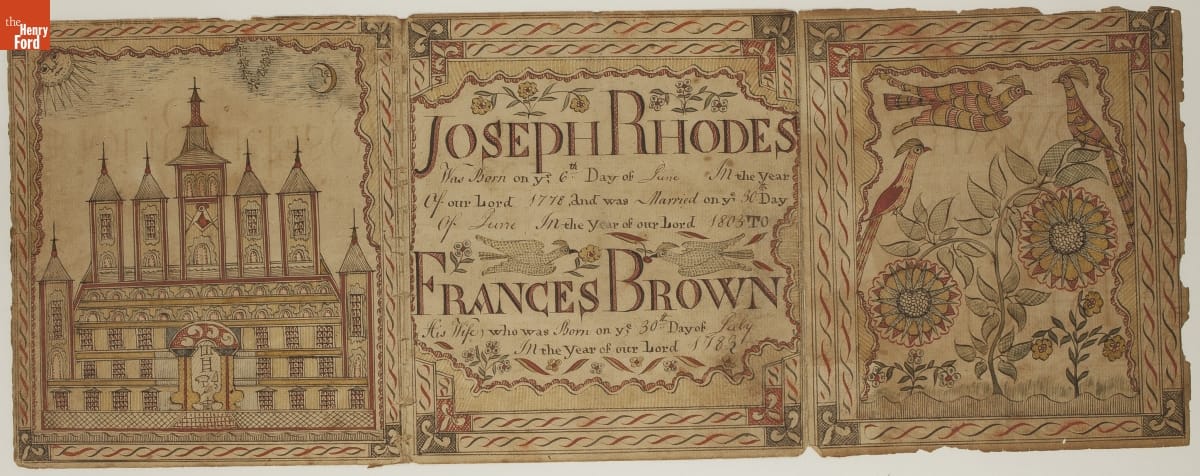
- Marriage Certificate for Joseph Rhodes and Frances Brown, circa 1803 - Early European inhabitants in the Valley of Virginia created decorative documents to commemorate important family events. Most of these keepsakes, known as Fraktur, were created by and for German immigrants. Others show influences from the English, Irish or Scot-Irish settlers. This design suggests similarities with German Fraktur, but differs in format, language and imagery -- a blending of art and traditions between the Valley's ethnic populations.
- circa 1803
- Collections - Artifact
Marriage Certificate for Joseph Rhodes and Frances Brown, circa 1803
Early European inhabitants in the Valley of Virginia created decorative documents to commemorate important family events. Most of these keepsakes, known as Fraktur, were created by and for German immigrants. Others show influences from the English, Irish or Scot-Irish settlers. This design suggests similarities with German Fraktur, but differs in format, language and imagery -- a blending of art and traditions between the Valley's ethnic populations.