
Search
- Patent Model of Match Safe, 1877 - From 1790 to 1880, the U.S. Patent Office required applicants to submit a miniature model along with diagrams and written descriptions detailing the operation of their invention. Patent models could be no larger than 12" by 12" by 12". Though they were usually not operational, these models helped explain an inventor's idea and protect it from competitors.
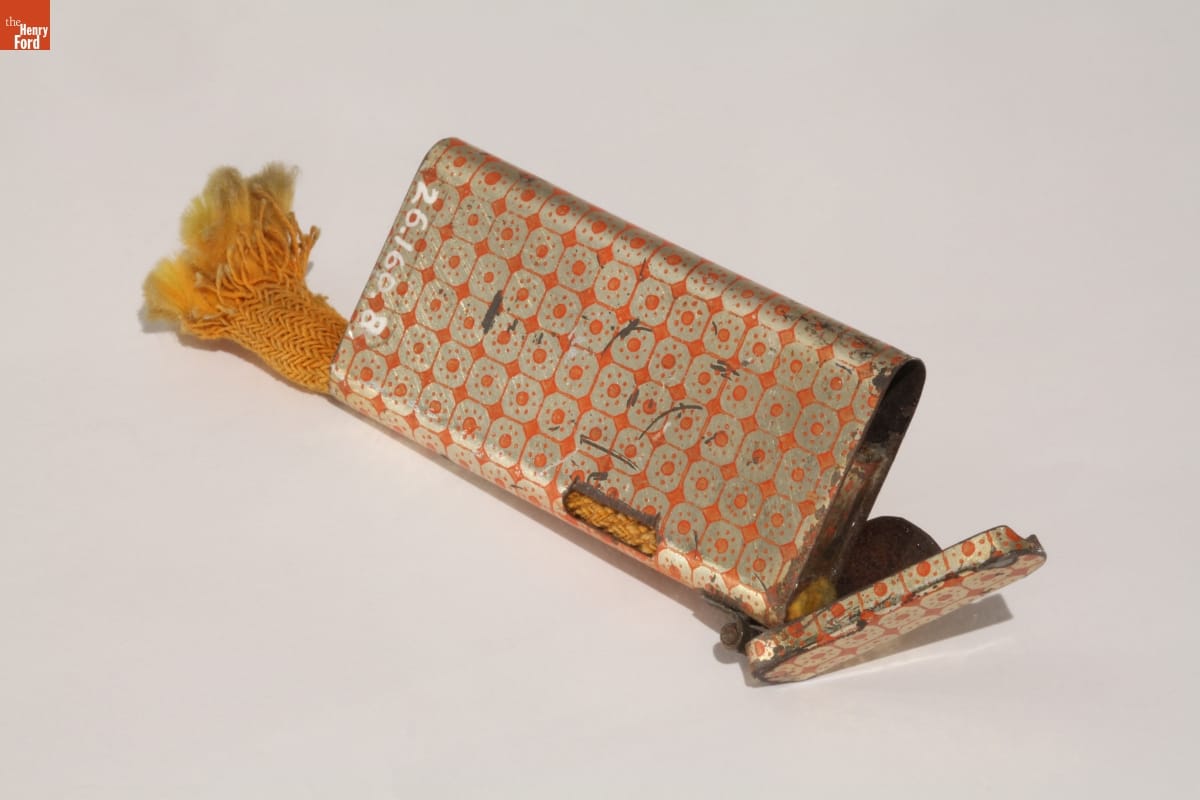
- July 17, 1877
- Collections - Artifact
Patent Model of Match Safe, 1877
From 1790 to 1880, the U.S. Patent Office required applicants to submit a miniature model along with diagrams and written descriptions detailing the operation of their invention. Patent models could be no larger than 12" by 12" by 12". Though they were usually not operational, these models helped explain an inventor's idea and protect it from competitors.
- Printing Plate with Image of Lighting Accessories -
- Collections - Artifact
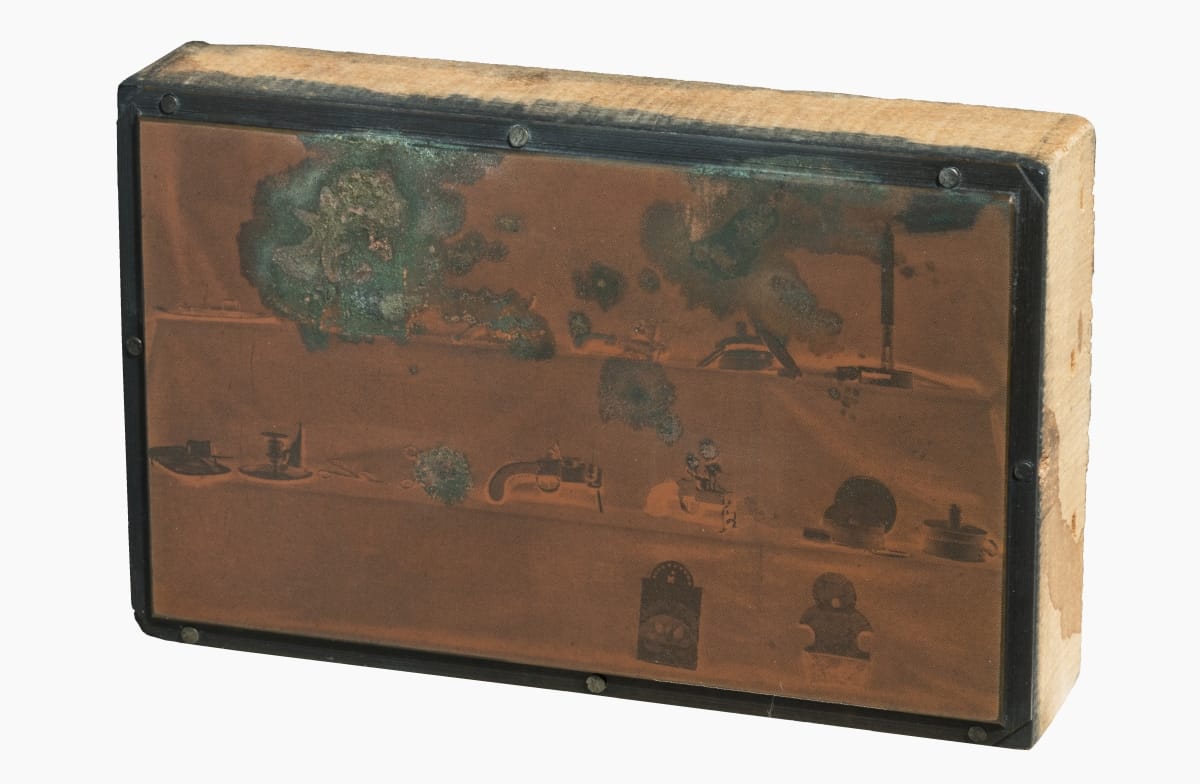
Printing Plate with Image of Lighting Accessories
- Match Safe, 1870-1890 -
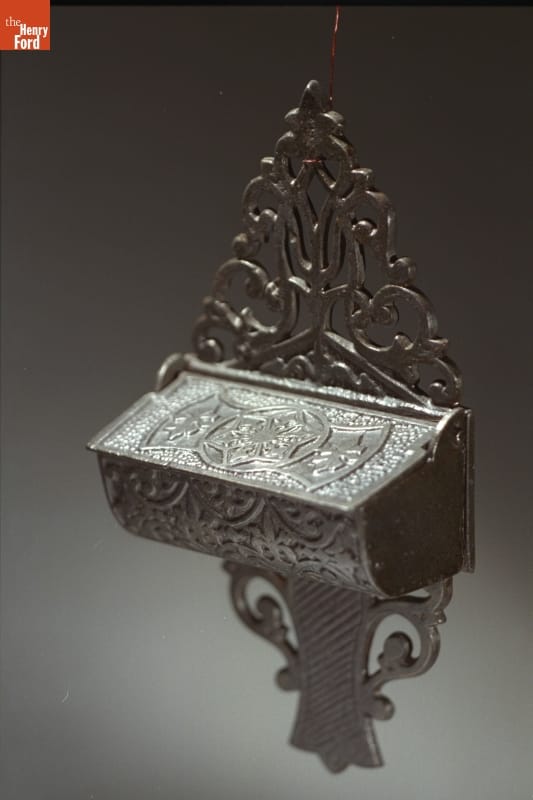
- 1870-1890
- Collections - Artifact
Match Safe, 1870-1890
- Match Safe, 1850-1900 - Tin-plated iron, commonly called "tin," was the dominant material for utilitarian items in 19th-century America. It was lightweight, inexpensive, easy to clean, non-toxic, and durable. Tinware also resisted corrosion and had a pleasing silvery appearance that could be enhanced through decoration. Middle-class Americans happily purchased tinware in place of goods made from earlier materials, like wood or pottery.
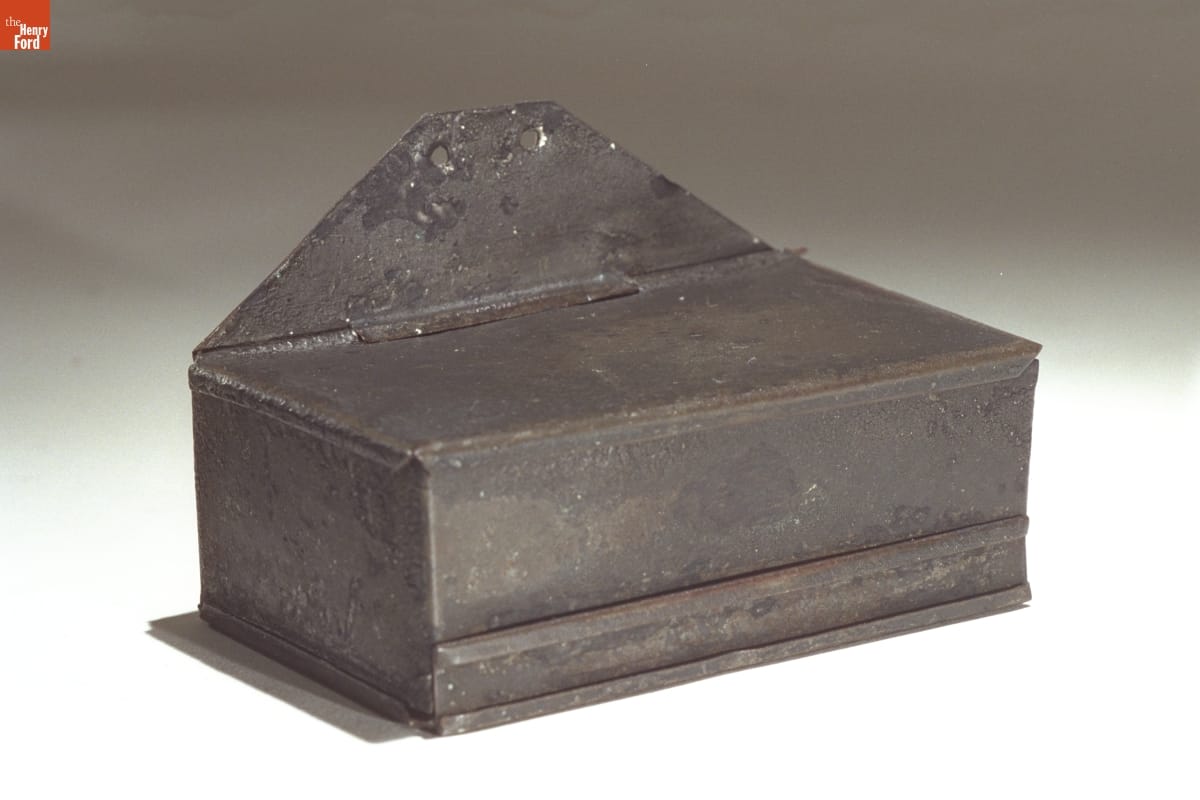
- 1850-1900
- Collections - Artifact
Match Safe, 1850-1900
Tin-plated iron, commonly called "tin," was the dominant material for utilitarian items in 19th-century America. It was lightweight, inexpensive, easy to clean, non-toxic, and durable. Tinware also resisted corrosion and had a pleasing silvery appearance that could be enhanced through decoration. Middle-class Americans happily purchased tinware in place of goods made from earlier materials, like wood or pottery.