
Search
- 1985 Mazda Wankel Rotary Engine - German engineer Felix Wankel conceived the rotary engine as a simpler, lighter, more compact alternative to the traditional piston engine. Various companies tried rotaries, but Mazda was the most successful, with rotary-engine cars dominating its U.S. sales from 1970 through 1972. Owners appreciated the smooth power delivery but not the poor fuel economy. When gas prices rose, Mazda reserved the Wankel rotary for high-performance sports cars.
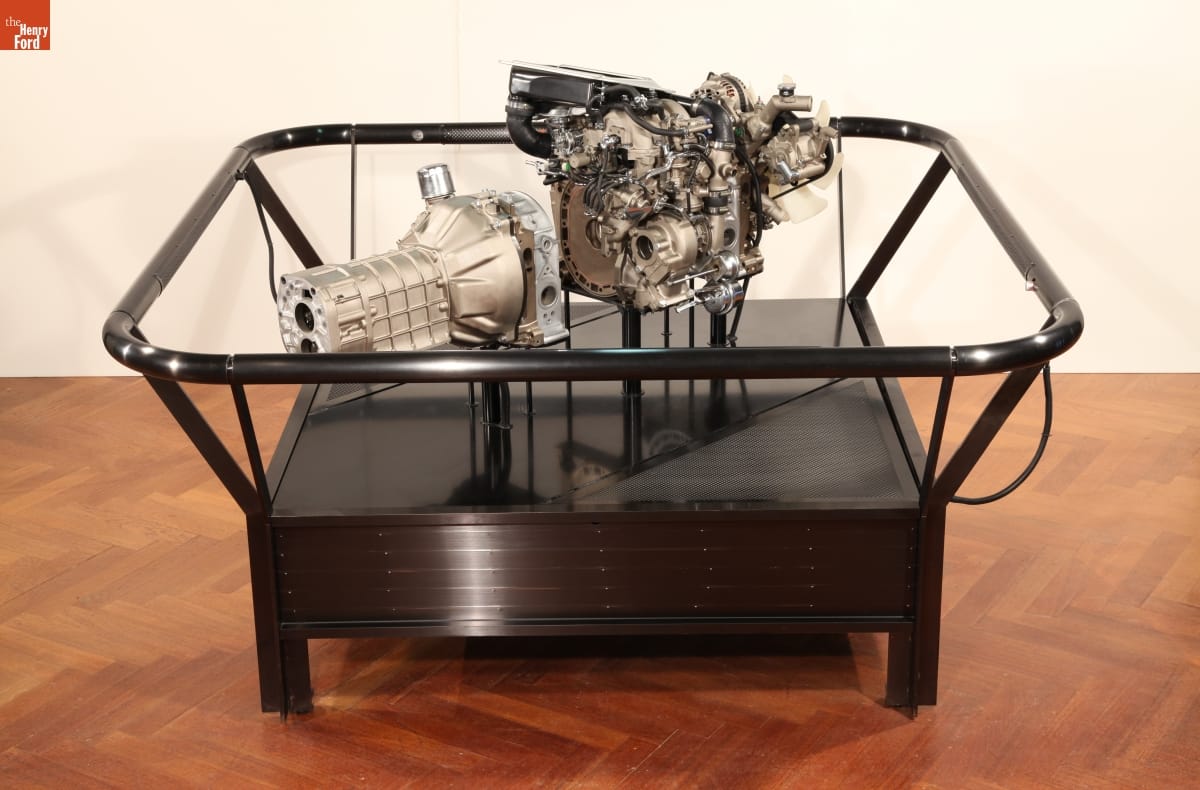
- 1985
- Collections - Artifact
1985 Mazda Wankel Rotary Engine
German engineer Felix Wankel conceived the rotary engine as a simpler, lighter, more compact alternative to the traditional piston engine. Various companies tried rotaries, but Mazda was the most successful, with rotary-engine cars dominating its U.S. sales from 1970 through 1972. Owners appreciated the smooth power delivery but not the poor fuel economy. When gas prices rose, Mazda reserved the Wankel rotary for high-performance sports cars.
- 1987 Mazda Advertisement, "Introducing the New Mazda RX-7 Turbo" - Mazda built its RX-7 sports car across three generations from 1978-2002. Each version featured a Wankel rotary engine. Instead of conventional reciprocating pistons, the rotary power plant used an eccentric rotor to convert internal combustion power into motion. Though compact and lightweight, rotary engines tended to be less fuel efficient. Available turbochargers boosted the RX-7's horsepower.
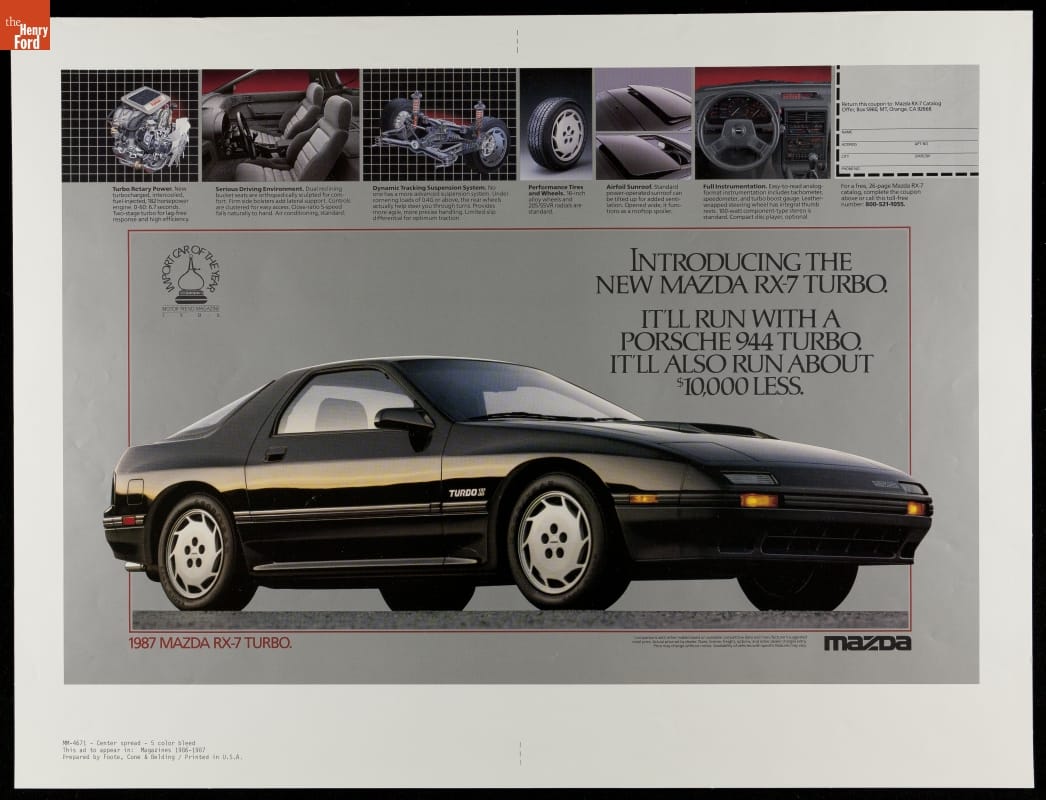
- 1987
- Collections - Artifact
1987 Mazda Advertisement, "Introducing the New Mazda RX-7 Turbo"
Mazda built its RX-7 sports car across three generations from 1978-2002. Each version featured a Wankel rotary engine. Instead of conventional reciprocating pistons, the rotary power plant used an eccentric rotor to convert internal combustion power into motion. Though compact and lightweight, rotary engines tended to be less fuel efficient. Available turbochargers boosted the RX-7's horsepower.