
Search
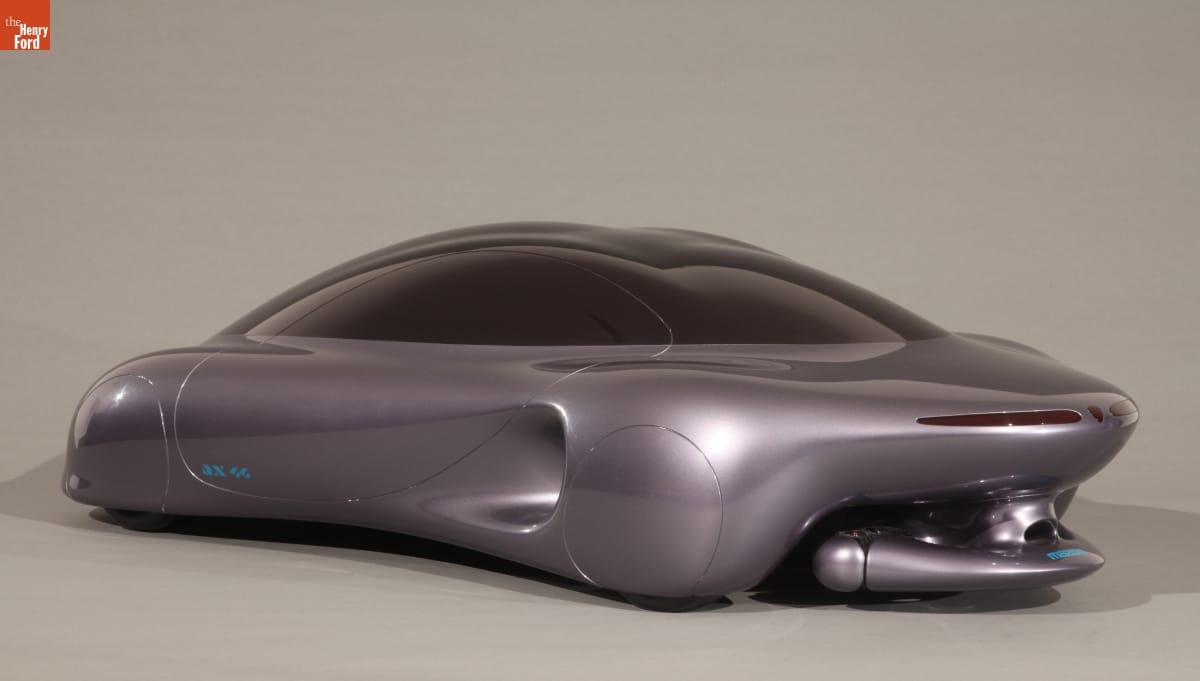
- Mazda RX-44 Scale Model, 1987 - Some design elements in this one-fifth-scale concept model of the Mazda RX-44 echo the company's rotary engine. The four bubbles on the roof are a visual reference to four engine rotors and four passengers, thus the name Mazda RX-44.
- 1987
- Collections - Artifact
Mazda RX-44 Scale Model, 1987
Some design elements in this one-fifth-scale concept model of the Mazda RX-44 echo the company's rotary engine. The four bubbles on the roof are a visual reference to four engine rotors and four passengers, thus the name Mazda RX-44.
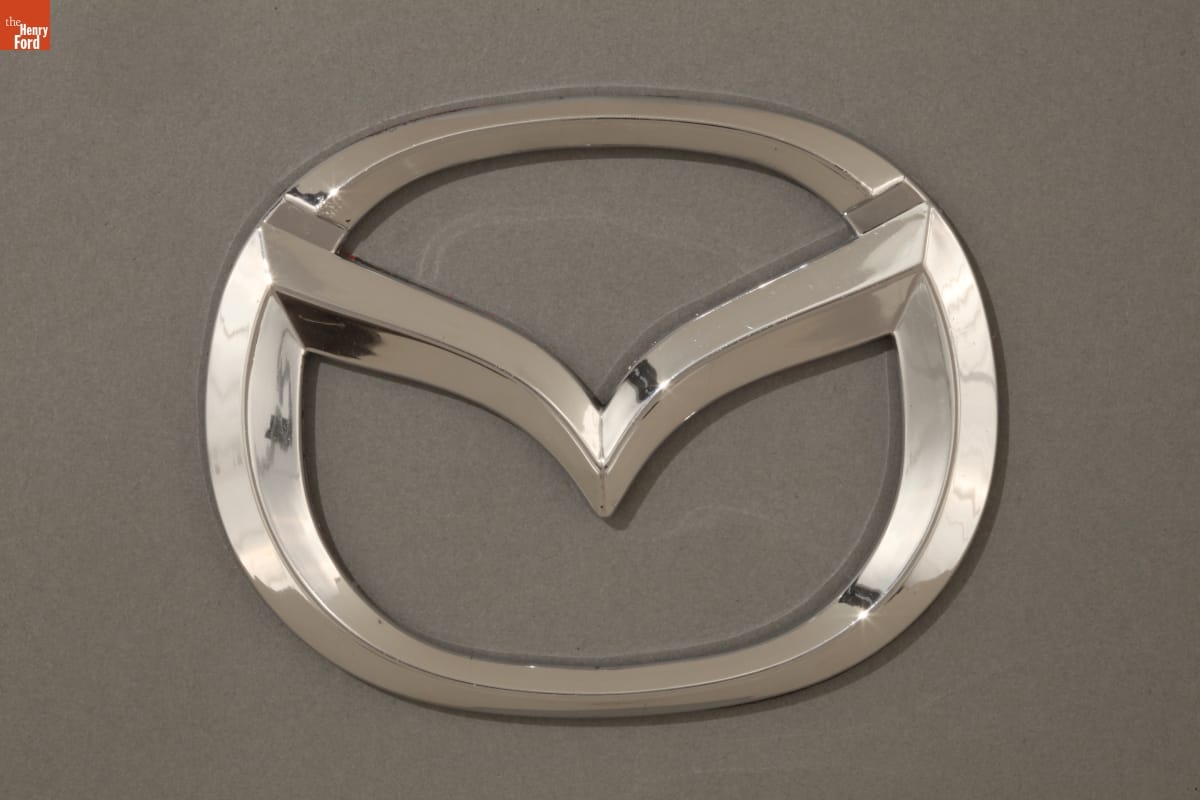
- Mazda Emblem, 2000-2011 - An automobile manufacturer's badge is fundamental to the company's brand identity -- just as the maker's name is often important to <EM>our</EM> identity as consumers and drivers. Early automobile badges tended to be small and often discreetly located; today they have evolved into enlarged, prominently placed, and frequently symmetrical logos -- easy to recognize, even at a glance in a rear-view mirror.
- 2000-2011
- Collections - Artifact
Mazda Emblem, 2000-2011
An automobile manufacturer's badge is fundamental to the company's brand identity -- just as the maker's name is often important to our identity as consumers and drivers. Early automobile badges tended to be small and often discreetly located; today they have evolved into enlarged, prominently placed, and frequently symmetrical logos -- easy to recognize, even at a glance in a rear-view mirror.
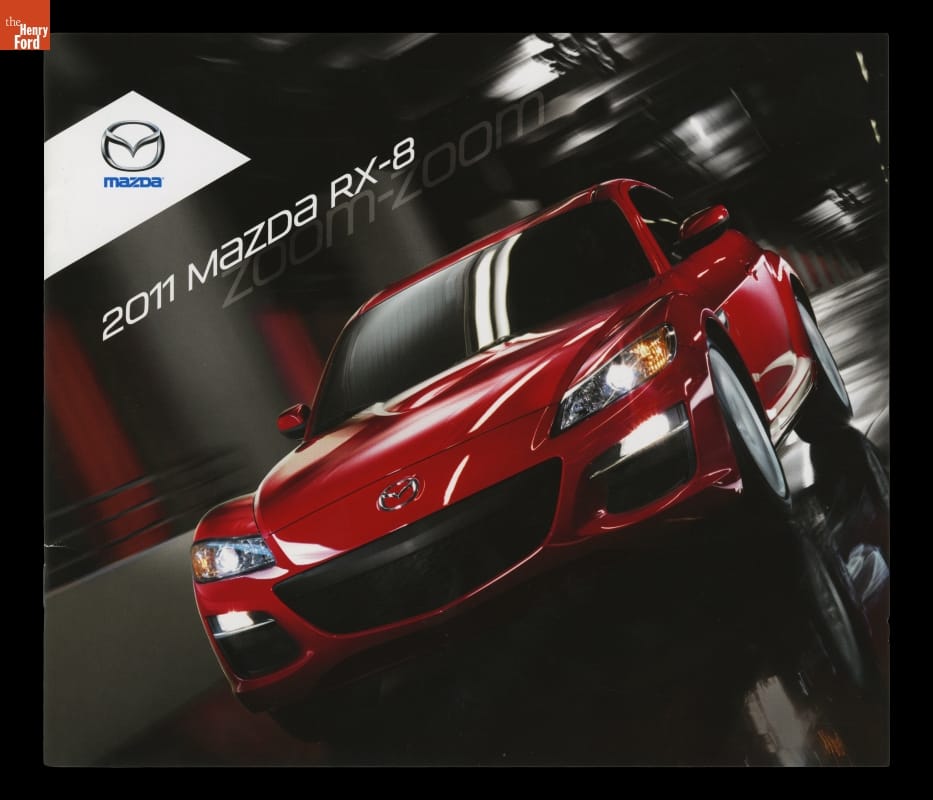
- Sales Brochure, "2011 Mazda RX-8" - This sales brochure for the 2011 Mazda RX-8 emphasized the mechanical simplicity of the engine. Mazda produced this car with a high-performance rotary engine, and marketed it with the tag line: "No cylinder. No pistons, No valves. And no equal."
- 2011
- Collections - Artifact
Sales Brochure, "2011 Mazda RX-8"
This sales brochure for the 2011 Mazda RX-8 emphasized the mechanical simplicity of the engine. Mazda produced this car with a high-performance rotary engine, and marketed it with the tag line: "No cylinder. No pistons, No valves. And no equal."
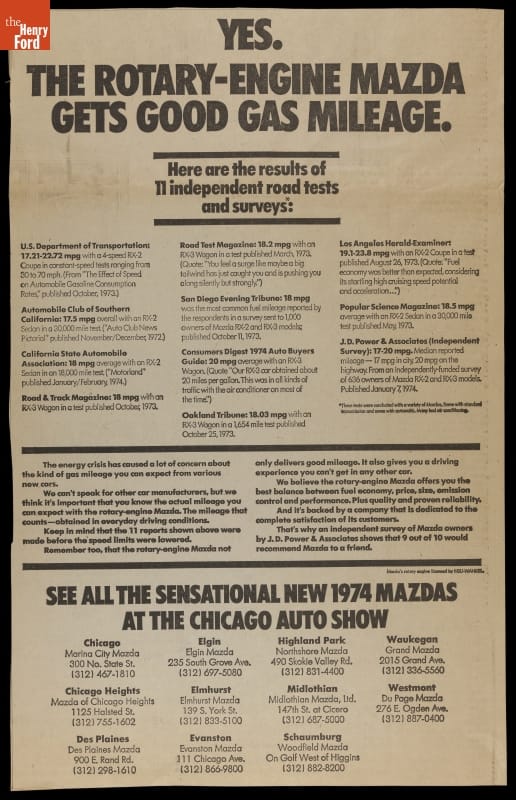
- 1974 Mazda Ad, "Yes. The Rotary-Engine Mazda Gets Good Gas Mileage" - Mazda introduced its first production rotary engine, based on a design by German engineer Felix Wankel, in Japan in 1967. Instead of conventional reciprocating pistons, the rotary power plant used an eccentric rotor to convert internal combustion power into motion. Mazda brought its rotary engine to the American market for 1974. Though compact and lightweight, rotary engines tended to be less fuel efficient.
- February 24, 1974
- Collections - Artifact
1974 Mazda Ad, "Yes. The Rotary-Engine Mazda Gets Good Gas Mileage"
Mazda introduced its first production rotary engine, based on a design by German engineer Felix Wankel, in Japan in 1967. Instead of conventional reciprocating pistons, the rotary power plant used an eccentric rotor to convert internal combustion power into motion. Mazda brought its rotary engine to the American market for 1974. Though compact and lightweight, rotary engines tended to be less fuel efficient.
- 1973 Mazda Ad, "Introducing the Only Rotary Engine Car in America, Mazda" - Mazda introduced its first production rotary engine, based on a design by German engineer Felix Wankel, in Japan in 1967. Instead of conventional reciprocating pistons, the rotary power plant used an eccentric rotor to convert internal combustion power into motion. Mazda brought its rotary engine to the American market for 1974. Though compact and lightweight, rotary engines tended to be less fuel efficient.
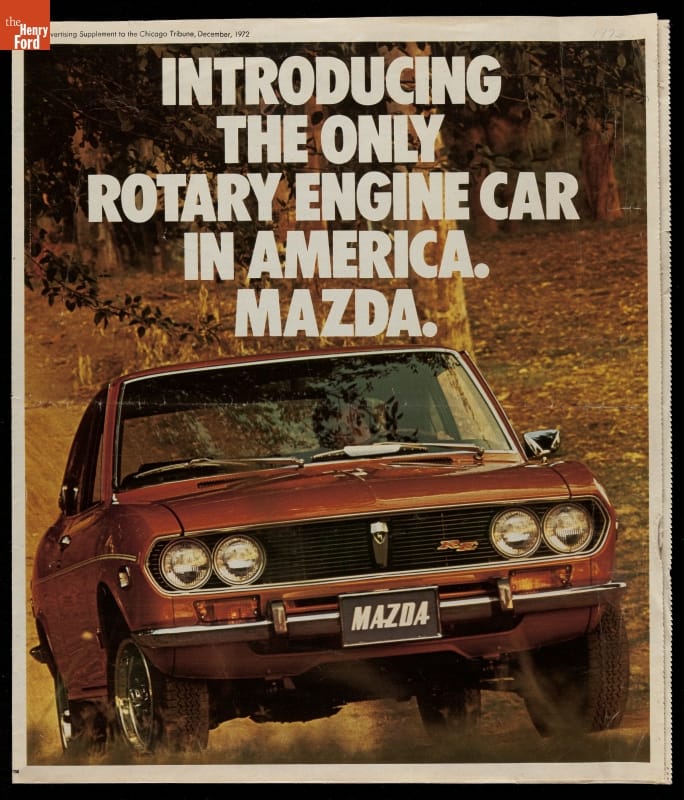
- December 01, 1972
- Collections - Artifact
1973 Mazda Ad, "Introducing the Only Rotary Engine Car in America, Mazda"
Mazda introduced its first production rotary engine, based on a design by German engineer Felix Wankel, in Japan in 1967. Instead of conventional reciprocating pistons, the rotary power plant used an eccentric rotor to convert internal combustion power into motion. Mazda brought its rotary engine to the American market for 1974. Though compact and lightweight, rotary engines tended to be less fuel efficient.