
Search
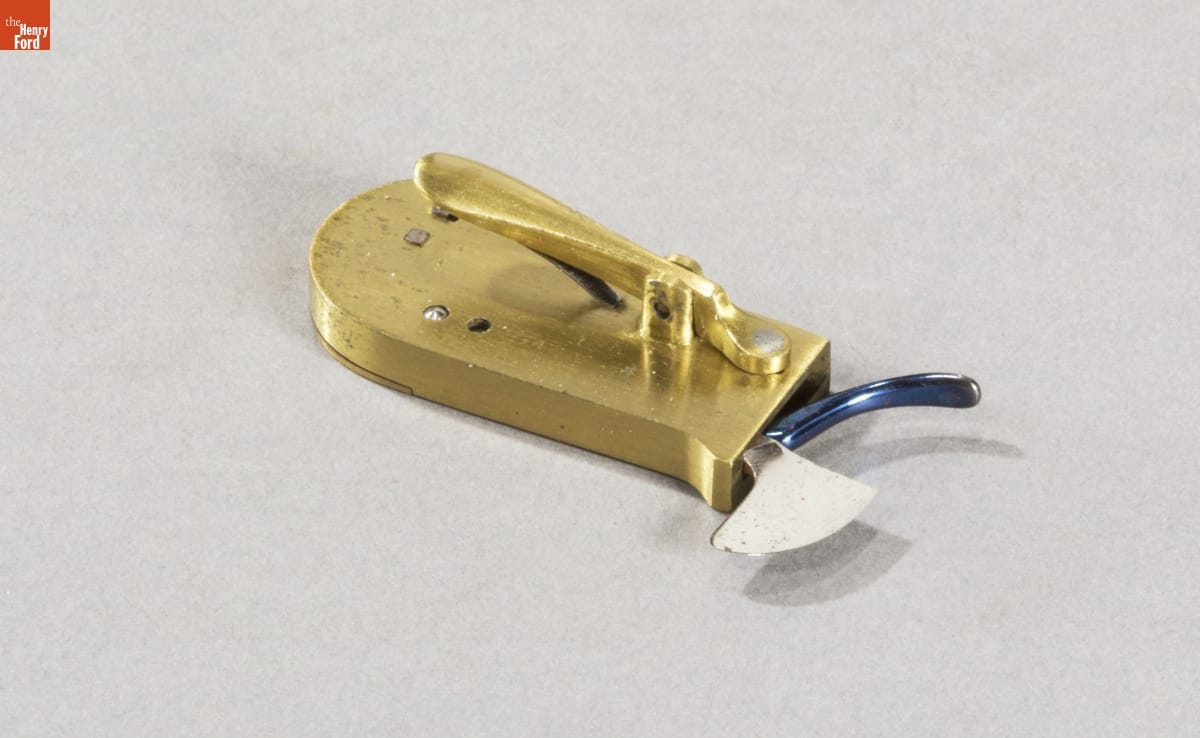
- Spring Lancet with Case, 1800-1860 - For centuries, doctors believed removing a person's excess or impure blood could heal certain diseases. A spring lancet was a popular bloodletting instrument used in the 18th and 19th centuries. Its sharp, spring-activated blade quickly punctured a vein allowing blood to flow. By the late 1800s, most physicians, armed with greater medical knowledge or a belief in milder therapeutic remedies, had abandoned the practice of bloodletting.
- 1800-1860
- Collections - Artifact
Spring Lancet with Case, 1800-1860
For centuries, doctors believed removing a person's excess or impure blood could heal certain diseases. A spring lancet was a popular bloodletting instrument used in the 18th and 19th centuries. Its sharp, spring-activated blade quickly punctured a vein allowing blood to flow. By the late 1800s, most physicians, armed with greater medical knowledge or a belief in milder therapeutic remedies, had abandoned the practice of bloodletting.
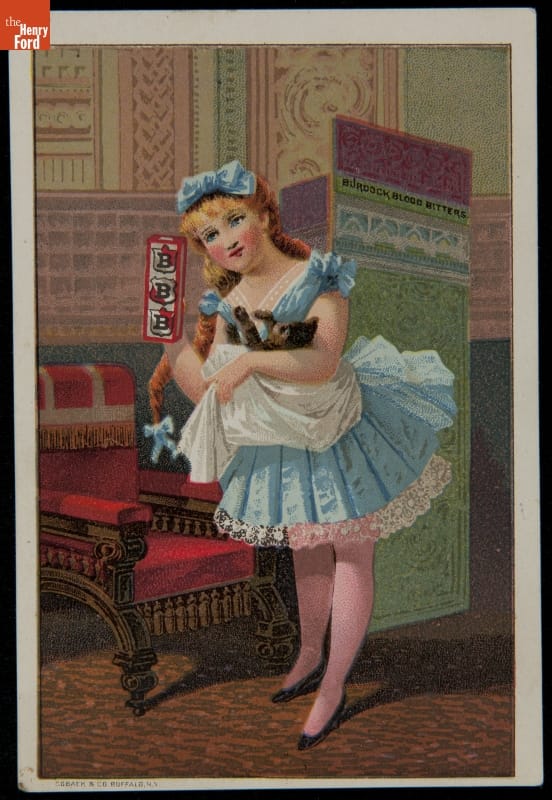
- Trade Card for Burdock Blood Bitters, Foster, Milburn & Co., circa 1885 - In the last third of the nineteenth century, an unprecedented variety of consumer goods and services flooded the American market. Advertisers, armed with new methods of color printing, bombarded potential customers with trade cards. Americans enjoyed and often saved the vibrant little advertisements found in product packages or distributed by local merchants. Many survive as historical records of commercialism in the United States.
- circa 1885
- Collections - Artifact
Trade Card for Burdock Blood Bitters, Foster, Milburn & Co., circa 1885
In the last third of the nineteenth century, an unprecedented variety of consumer goods and services flooded the American market. Advertisers, armed with new methods of color printing, bombarded potential customers with trade cards. Americans enjoyed and often saved the vibrant little advertisements found in product packages or distributed by local merchants. Many survive as historical records of commercialism in the United States.
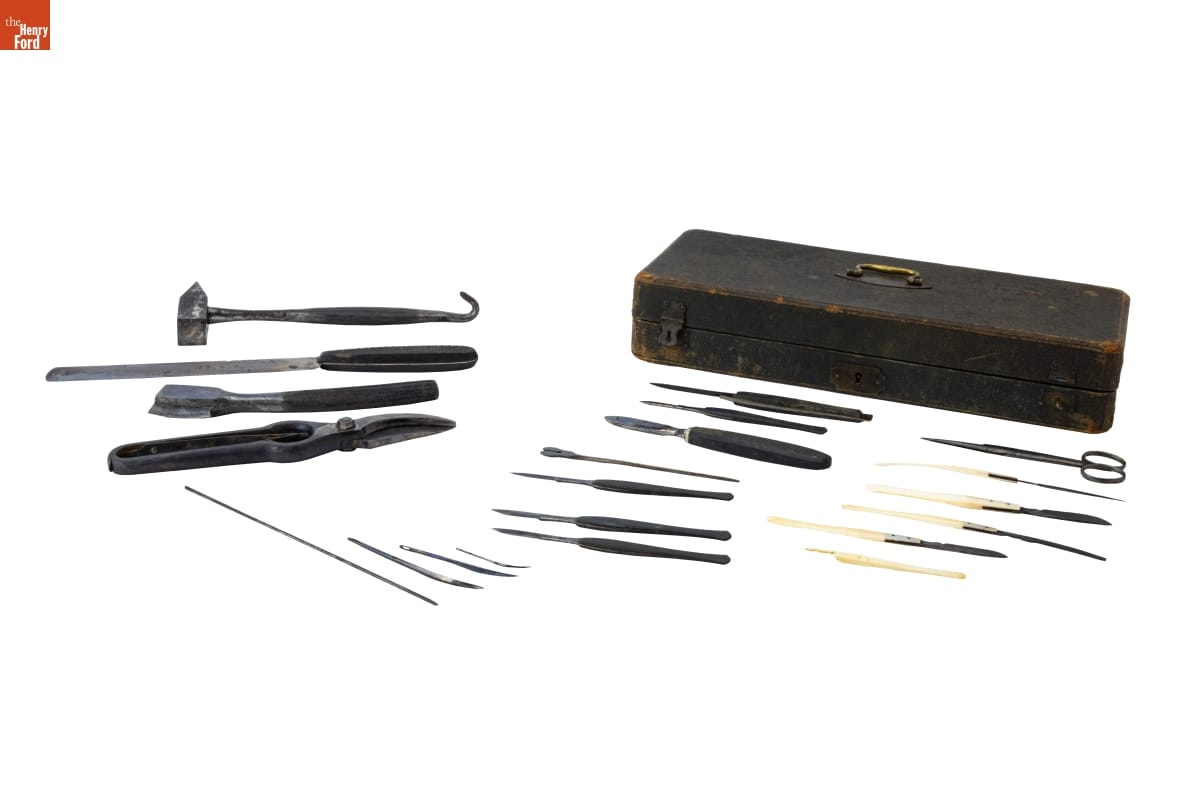
- Medical Kit -
- Collections - Artifact
Medical Kit
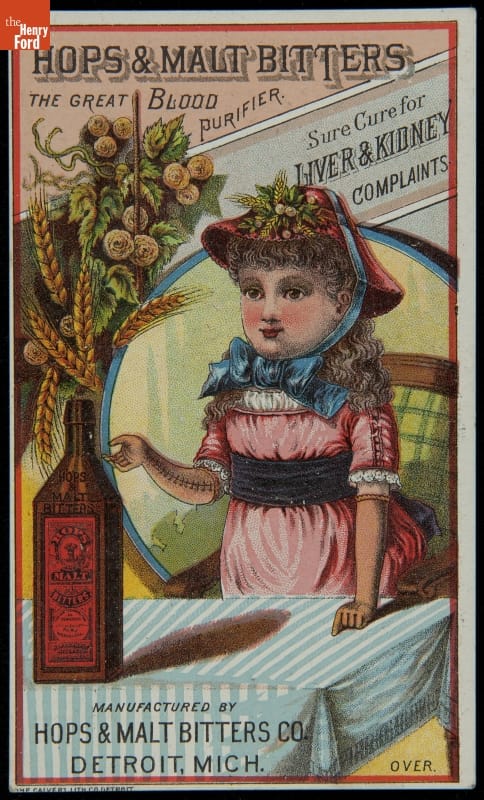
- Trade Card for Hops & Malt Bitters, The Great Blood Purifier, 1875-1885 - In the last third of the nineteenth century, an unprecedented variety of consumer goods and services flooded the American market. Advertisers, armed with new methods of color printing, bombarded potential customers with trade cards. Americans enjoyed and often saved the vibrant little advertisements found in product packages or distributed by local merchants. Many survive as historical records of commercialism in the United States.
- 1875-1885
- Collections - Artifact
Trade Card for Hops & Malt Bitters, The Great Blood Purifier, 1875-1885
In the last third of the nineteenth century, an unprecedented variety of consumer goods and services flooded the American market. Advertisers, armed with new methods of color printing, bombarded potential customers with trade cards. Americans enjoyed and often saved the vibrant little advertisements found in product packages or distributed by local merchants. Many survive as historical records of commercialism in the United States.
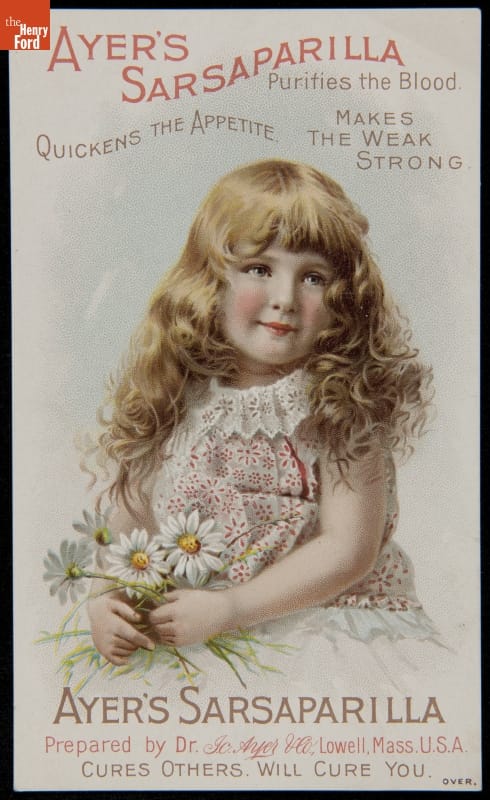
- Trade Card for Ayer's Sarsaparilla, circa 1885 - In the last third of the nineteenth century, an unprecedented variety of consumer goods and services flooded the American market. Advertisers, armed with new methods of color printing, bombarded potential customers with trade cards. Americans enjoyed and often saved the vibrant little advertisements found in product packages or distributed by local merchants. Many survive as historical records of commercialism in the United States.
- circa 1885
- Collections - Artifact
Trade Card for Ayer's Sarsaparilla, circa 1885
In the last third of the nineteenth century, an unprecedented variety of consumer goods and services flooded the American market. Advertisers, armed with new methods of color printing, bombarded potential customers with trade cards. Americans enjoyed and often saved the vibrant little advertisements found in product packages or distributed by local merchants. Many survive as historical records of commercialism in the United States.
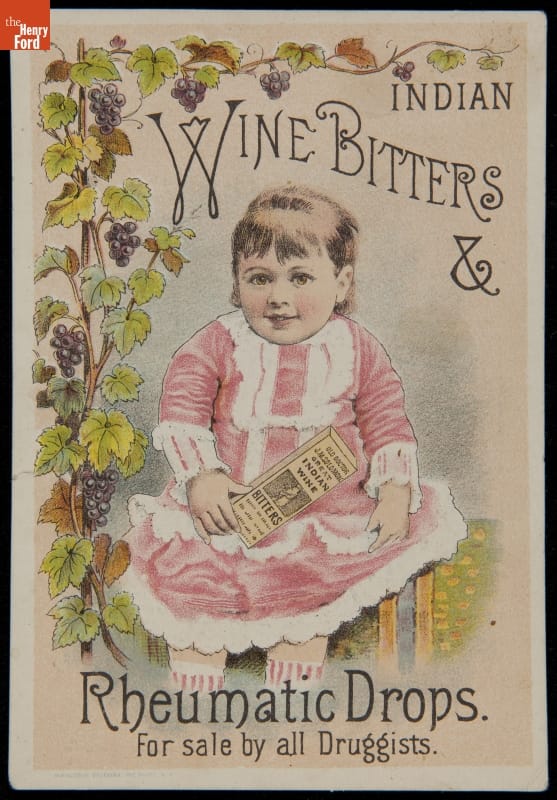
- Trade Card for Old Dr. Solomon's Indian Wine Bitters & Rheumatic Drops, 1880-1900 - In the last third of the nineteenth century, an unprecedented variety of consumer goods and services flooded the American market. Advertisers, armed with new methods of color printing, bombarded potential customers with trade cards. Americans enjoyed and often saved the vibrant little advertisements found in product packages or distributed by local merchants. Many survive as historical records of commercialism in the United States.
- 1880-1900
- Collections - Artifact
Trade Card for Old Dr. Solomon's Indian Wine Bitters & Rheumatic Drops, 1880-1900
In the last third of the nineteenth century, an unprecedented variety of consumer goods and services flooded the American market. Advertisers, armed with new methods of color printing, bombarded potential customers with trade cards. Americans enjoyed and often saved the vibrant little advertisements found in product packages or distributed by local merchants. Many survive as historical records of commercialism in the United States.
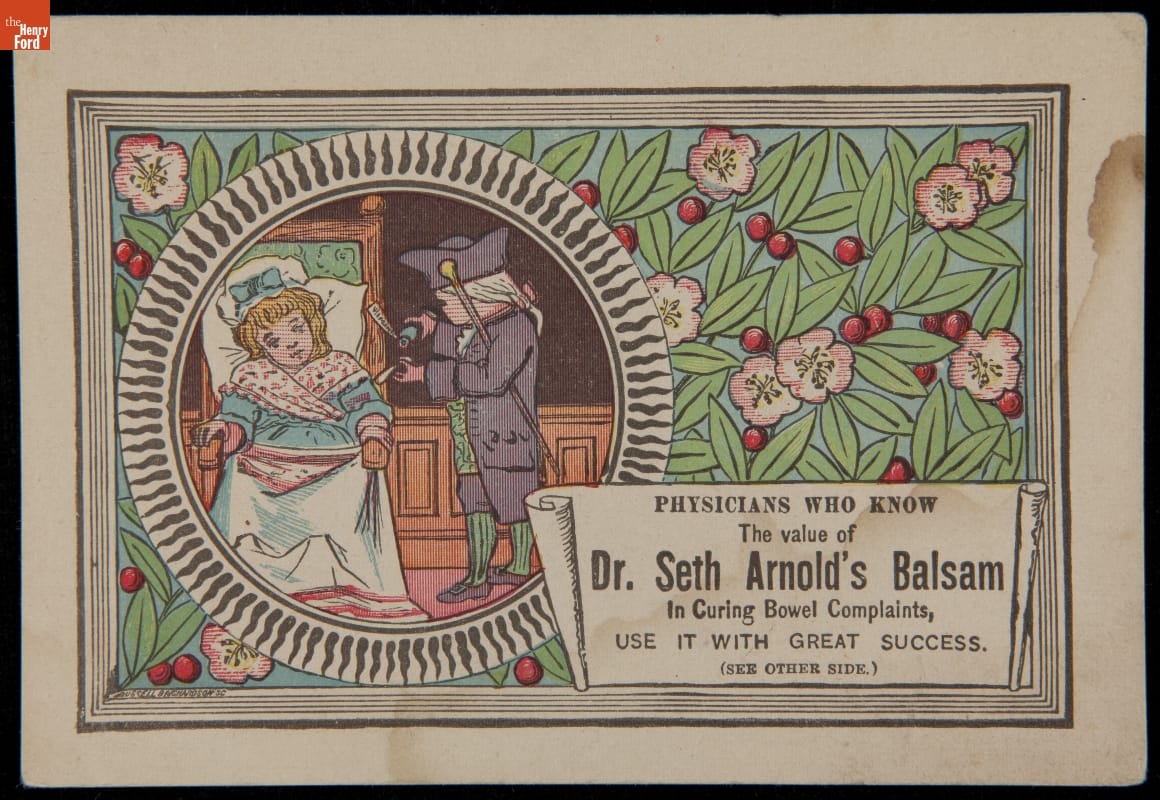
- Trade Card for Dr. Seth Arnold's Balsam, circa 1882 - In the last third of the nineteenth century, an unprecedented variety of consumer goods and services flooded the American market. Advertisers, armed with new methods of color printing, bombarded potential customers with trade cards. Americans enjoyed and often saved the vibrant little advertisements found in product packages or distributed by local merchants. Many survive as historical records of commercialism in the United States.
- circa 1882
- Collections - Artifact
Trade Card for Dr. Seth Arnold's Balsam, circa 1882
In the last third of the nineteenth century, an unprecedented variety of consumer goods and services flooded the American market. Advertisers, armed with new methods of color printing, bombarded potential customers with trade cards. Americans enjoyed and often saved the vibrant little advertisements found in product packages or distributed by local merchants. Many survive as historical records of commercialism in the United States.
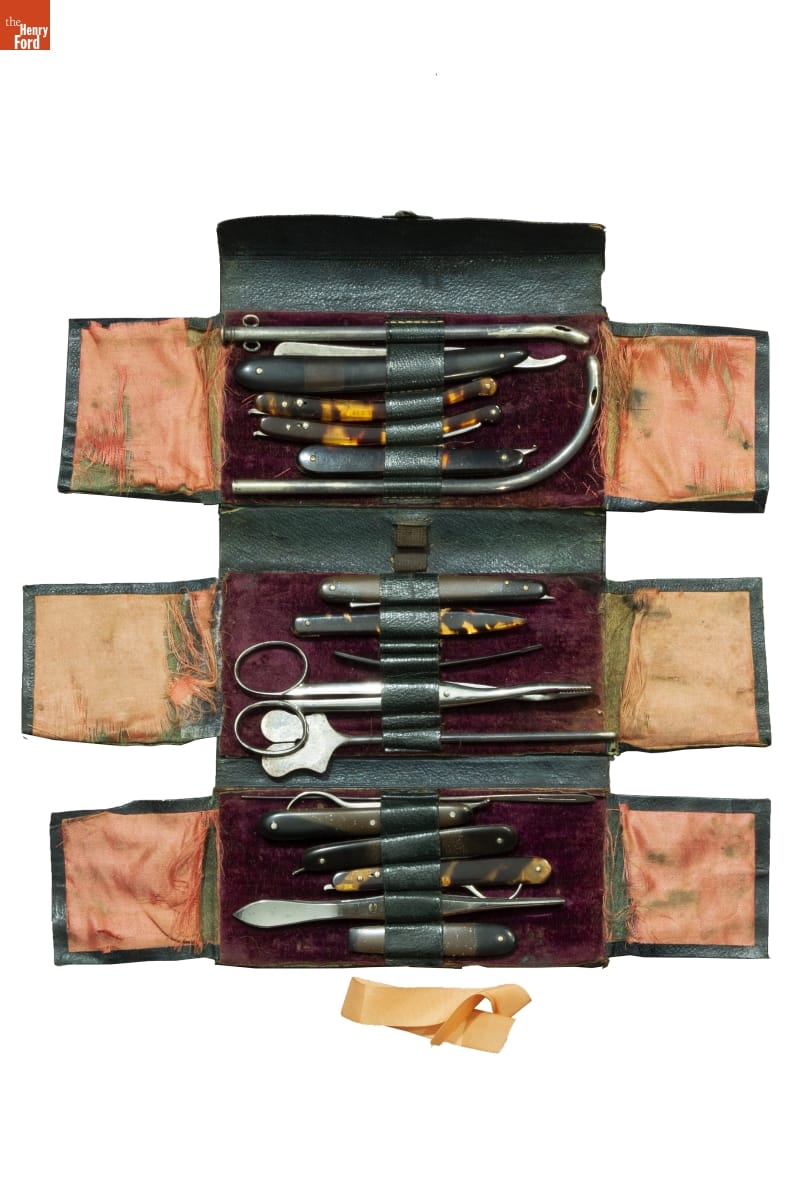
- Set of Surgical Instruments, circa 1860 -
- circa 1860
- Collections - Artifact
Set of Surgical Instruments, circa 1860
- Kidder Medical Induction Coil, 1880-1890 -
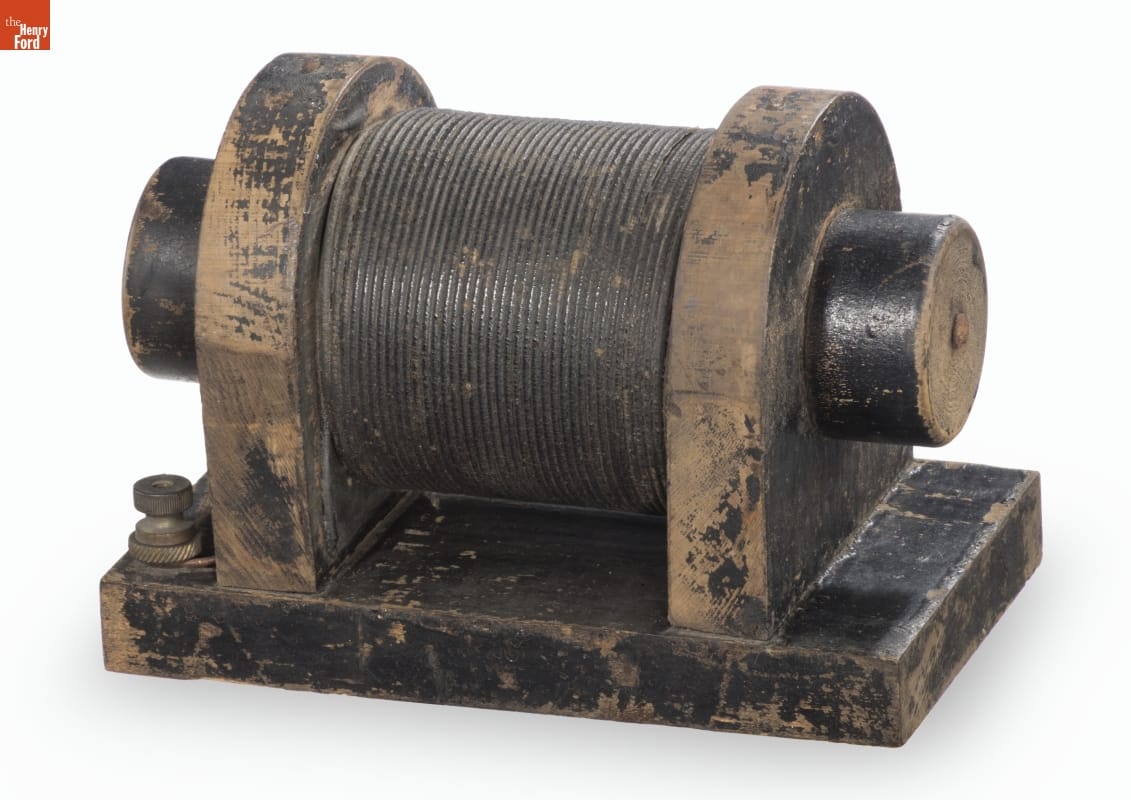
- 1880-1900
- Collections - Artifact
Kidder Medical Induction Coil, 1880-1890
- Wappler Electric Manufacturing Company Electro-Medical Apparatus and Pump, 1911-1916 -
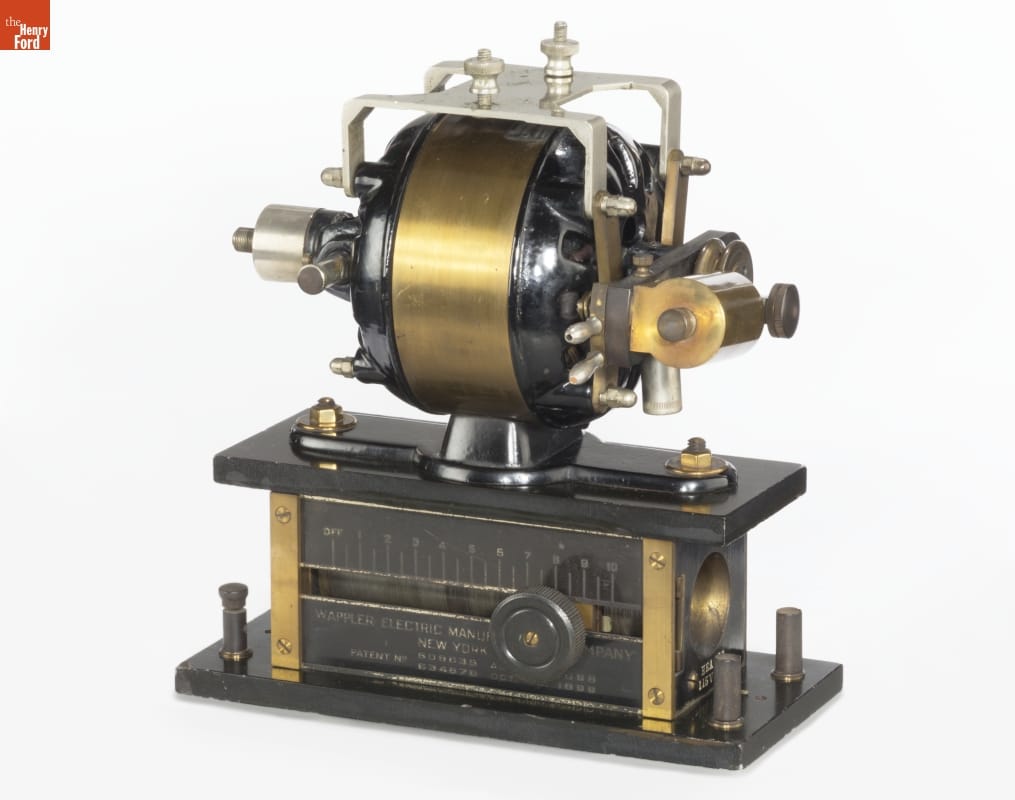
- 1911-1916
- Collections - Artifact
Wappler Electric Manufacturing Company Electro-Medical Apparatus and Pump, 1911-1916