
Search
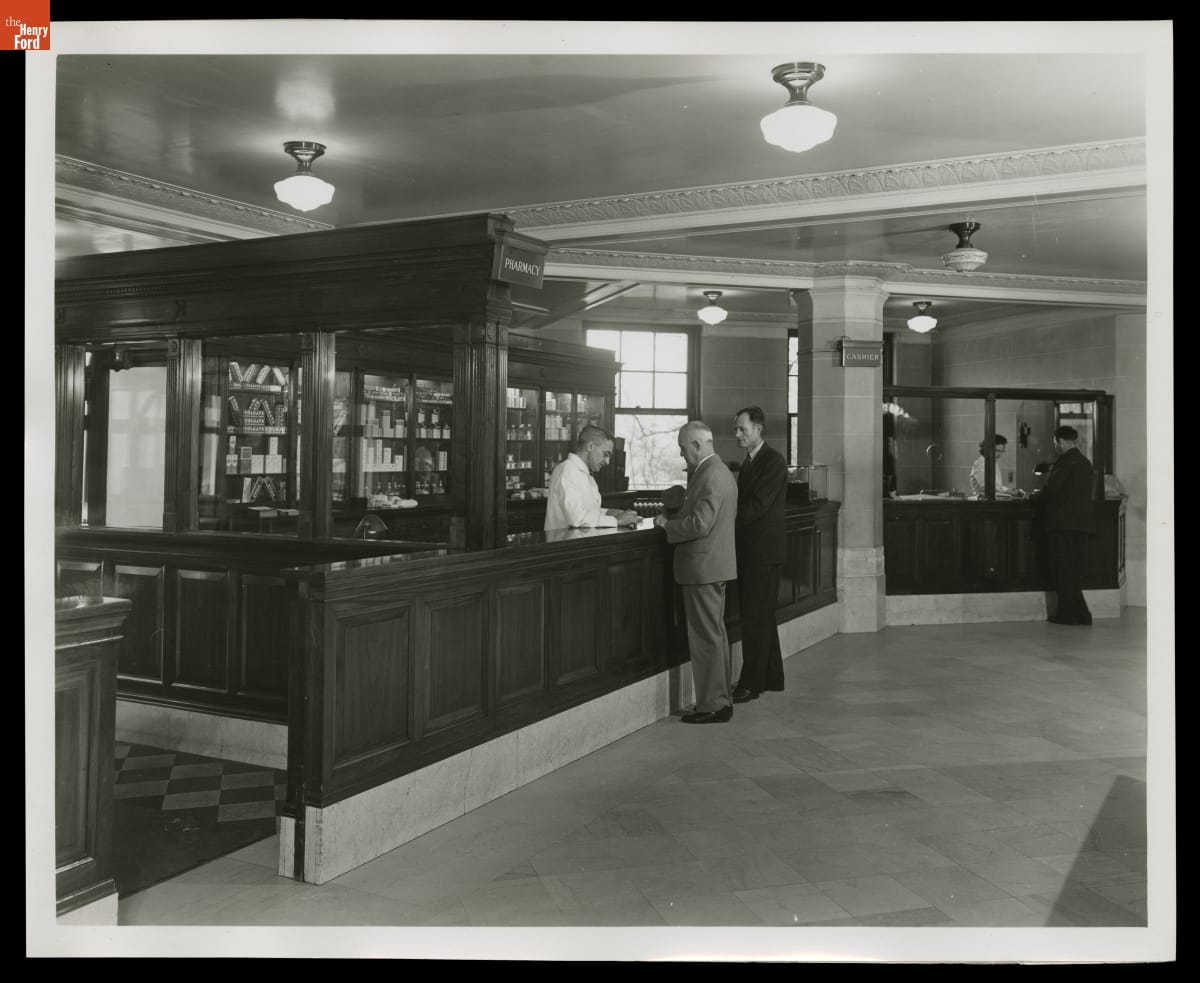
- Pharmacy Counter at Henry Ford Hospital, Detroit, Michigan, November 1946 - In 1915, Henry Ford funded a new hospital for Detroit. Designed and built in consultation with leading medical experts, Henry Ford Hospital employed salaried doctors and charged low, fixed fees to patients. By Mr. Ford's death in 1947, some 1,600 people were on the hospital's staff and more than $16.5 million had been invested in the facility.
- November 06, 1946
- Collections - Artifact
Pharmacy Counter at Henry Ford Hospital, Detroit, Michigan, November 1946
In 1915, Henry Ford funded a new hospital for Detroit. Designed and built in consultation with leading medical experts, Henry Ford Hospital employed salaried doctors and charged low, fixed fees to patients. By Mr. Ford's death in 1947, some 1,600 people were on the hospital's staff and more than $16.5 million had been invested in the facility.
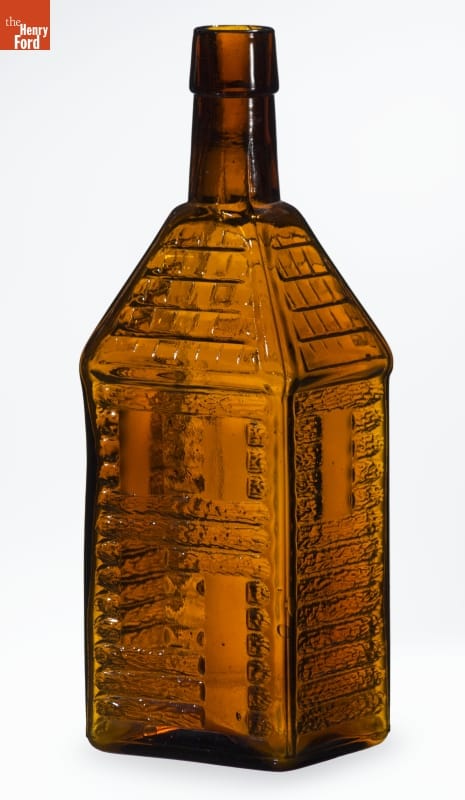
- Holtzerman's Patent Stomach Bitters, 1862-1890 - Bitters is an herb-infused alcoholic mixture. Named for its bitter taste, the liquid was originally developed as a medicinal tonic to help soothe stomach complaints or other digestive disorders. During the late 19th and early 20th centuries, patent-medicine dealers bottled and sold the elixir. Americans purchased bitters in simple mold-blown bottles or ones shaped like drums, barrels, or cabins.
- 1862-1890
- Collections - Artifact
Holtzerman's Patent Stomach Bitters, 1862-1890
Bitters is an herb-infused alcoholic mixture. Named for its bitter taste, the liquid was originally developed as a medicinal tonic to help soothe stomach complaints or other digestive disorders. During the late 19th and early 20th centuries, patent-medicine dealers bottled and sold the elixir. Americans purchased bitters in simple mold-blown bottles or ones shaped like drums, barrels, or cabins.
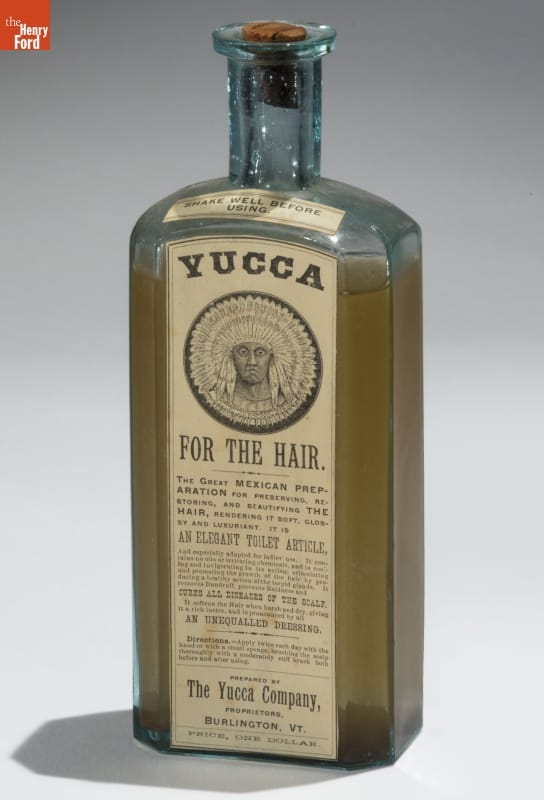
- Yucca for the Hair and Scalp, 1890-1901 - People have sought a cure for hair loss for thousands of years. In the late nineteenth-century, the makers of "Yucca for the Hair" marketed their concoction as a cure for baldness, dandruff, and other diseases of the scalp. The proprietors of this patent medicine claimed the plant-based extract invigorated the scalp, promoted hair growth and rendered hair "soft, glossy and luxuriant."
- 1890-1901
- Collections - Artifact
Yucca for the Hair and Scalp, 1890-1901
People have sought a cure for hair loss for thousands of years. In the late nineteenth-century, the makers of "Yucca for the Hair" marketed their concoction as a cure for baldness, dandruff, and other diseases of the scalp. The proprietors of this patent medicine claimed the plant-based extract invigorated the scalp, promoted hair growth and rendered hair "soft, glossy and luxuriant."
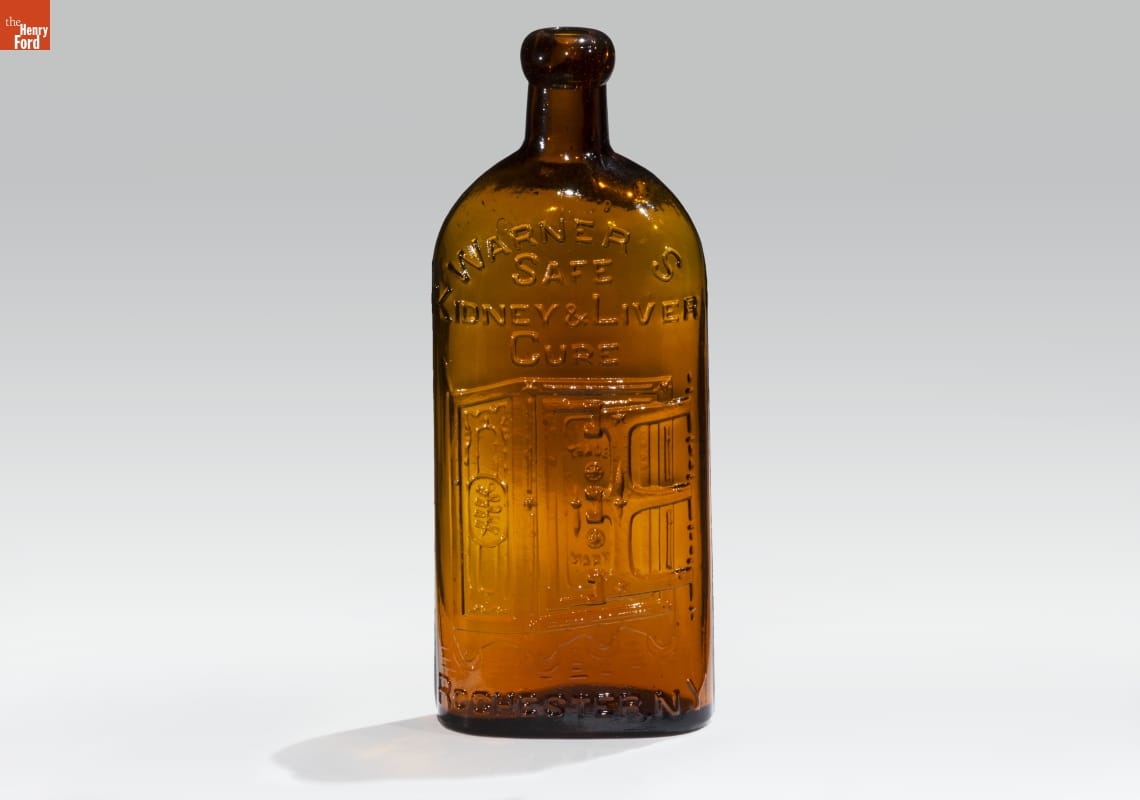
- Warner's Safe Kidney & Liver Cure, 1879-1900 - Hulbert Harrington Warner, a wealthy New York fire- and burglar-proof safe manufacturer, purchased a medicinal formula from a local doctor and created a multi-million-dollar patent medicine business in the late 1800s. Warner bottled his "cures" and sold them worldwide. The safe on the front of this bottle referenced Warner's previous business enterprise and alluded to the product's perceived safety.
- 1879-1900
- Collections - Artifact
Warner's Safe Kidney & Liver Cure, 1879-1900
Hulbert Harrington Warner, a wealthy New York fire- and burglar-proof safe manufacturer, purchased a medicinal formula from a local doctor and created a multi-million-dollar patent medicine business in the late 1800s. Warner bottled his "cures" and sold them worldwide. The safe on the front of this bottle referenced Warner's previous business enterprise and alluded to the product's perceived safety.
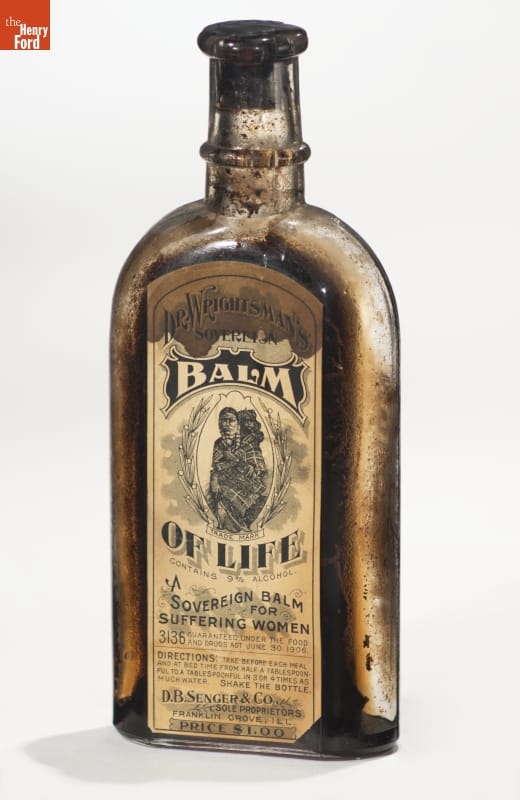
- D.B. Senger Patent Medicine Bottle, "Dr. Wrightsman's Sovereign Balm of Life," 1907-1920 -
- 1907-1920
- Collections - Artifact
D.B. Senger Patent Medicine Bottle, "Dr. Wrightsman's Sovereign Balm of Life," 1907-1920
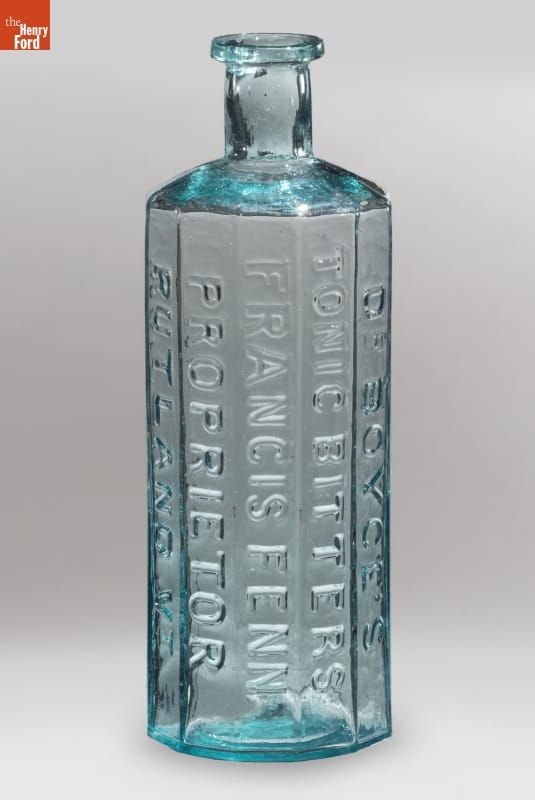
- Dr. Boyce's Tonic Bitters, 1850-1883 - Bitters is an herb-infused alcoholic mixture. Named for its bitter taste, the liquid was originally developed as a medicinal tonic to help soothe stomach complaints or other digestive disorders. During the late 19th and early 20th centuries, patent-medicine dealers bottled and sold the elixir. Americans purchased bitters in simple mold-blown bottles or ones shaped like drums, barrels, or cabins.
- 1850-1883
- Collections - Artifact
Dr. Boyce's Tonic Bitters, 1850-1883
Bitters is an herb-infused alcoholic mixture. Named for its bitter taste, the liquid was originally developed as a medicinal tonic to help soothe stomach complaints or other digestive disorders. During the late 19th and early 20th centuries, patent-medicine dealers bottled and sold the elixir. Americans purchased bitters in simple mold-blown bottles or ones shaped like drums, barrels, or cabins.
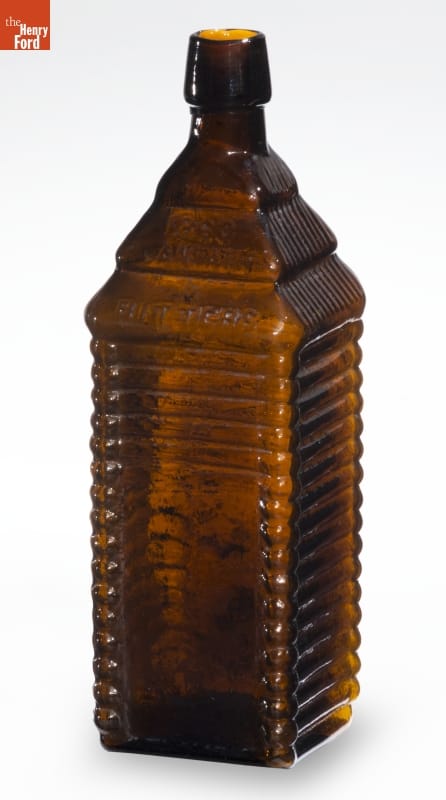
- Drake's Plantation Bitters, 1862-1890 - Bitters is an herb-infused alcoholic mixture. Named for its bitter taste, the liquid was originally developed as a medicinal tonic to help soothe stomach complaints or other digestive disorders. During the late 19th and early 20th centuries, patent-medicine dealers bottled and sold the elixir. Americans purchased bitters in simple mold-blown bottles or ones shaped like drums, barrels, or cabins.
- 1862-1890
- Collections - Artifact
Drake's Plantation Bitters, 1862-1890
Bitters is an herb-infused alcoholic mixture. Named for its bitter taste, the liquid was originally developed as a medicinal tonic to help soothe stomach complaints or other digestive disorders. During the late 19th and early 20th centuries, patent-medicine dealers bottled and sold the elixir. Americans purchased bitters in simple mold-blown bottles or ones shaped like drums, barrels, or cabins.
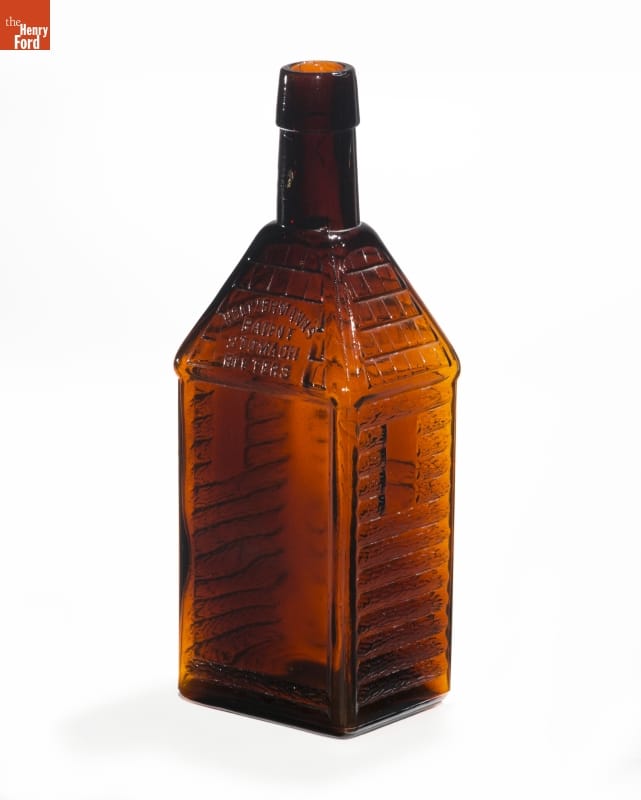
- Holtzerman's Patent Stomach Bitters, 1862-1890 - Bitters is an herb-infused alcoholic mixture. Named for its bitter taste, the liquid was originally developed as a medicinal tonic to help soothe stomach complaints or other digestive disorders. During the late 19th and early 20th centuries, patent-medicine dealers bottled and sold the elixir. Americans purchased bitters in simple mold-blown bottles or ones shaped like drums, barrels, or cabins.
- 1862-1890
- Collections - Artifact
Holtzerman's Patent Stomach Bitters, 1862-1890
Bitters is an herb-infused alcoholic mixture. Named for its bitter taste, the liquid was originally developed as a medicinal tonic to help soothe stomach complaints or other digestive disorders. During the late 19th and early 20th centuries, patent-medicine dealers bottled and sold the elixir. Americans purchased bitters in simple mold-blown bottles or ones shaped like drums, barrels, or cabins.
- Medicine Bottle, 1865-1890 -
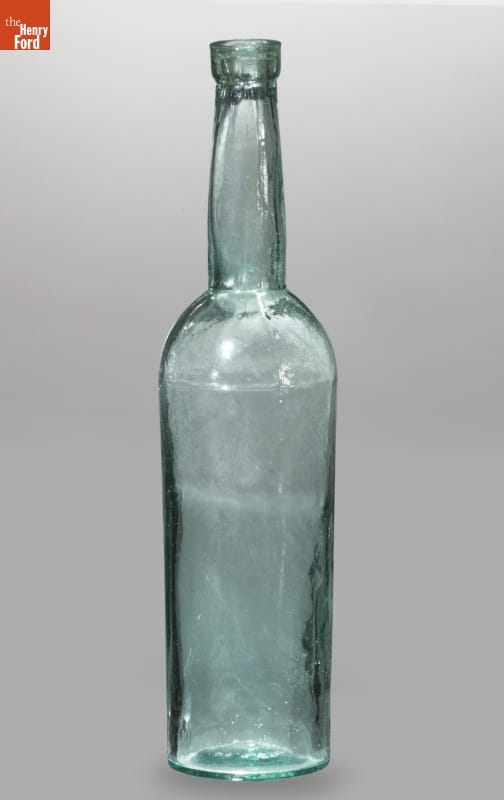
- 1865-1890
- Collections - Artifact
Medicine Bottle, 1865-1890
- Medicine Bottle, 1830-1850 -
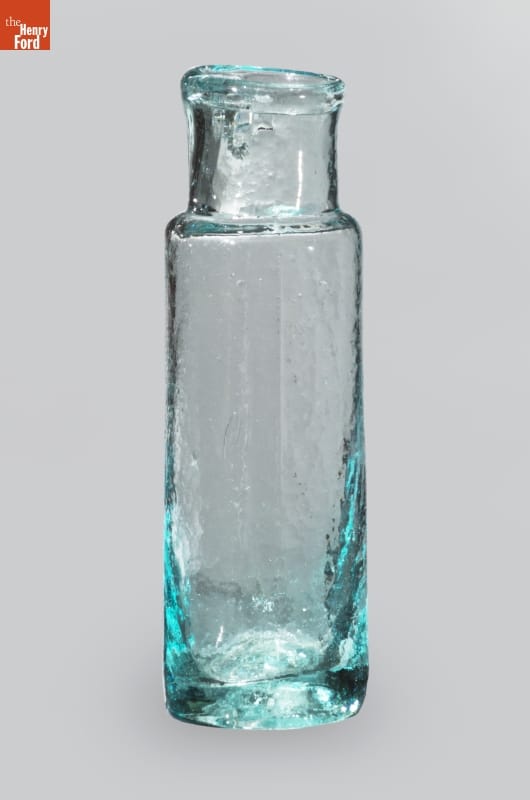
- 1830-1850
- Collections - Artifact
Medicine Bottle, 1830-1850