
Search
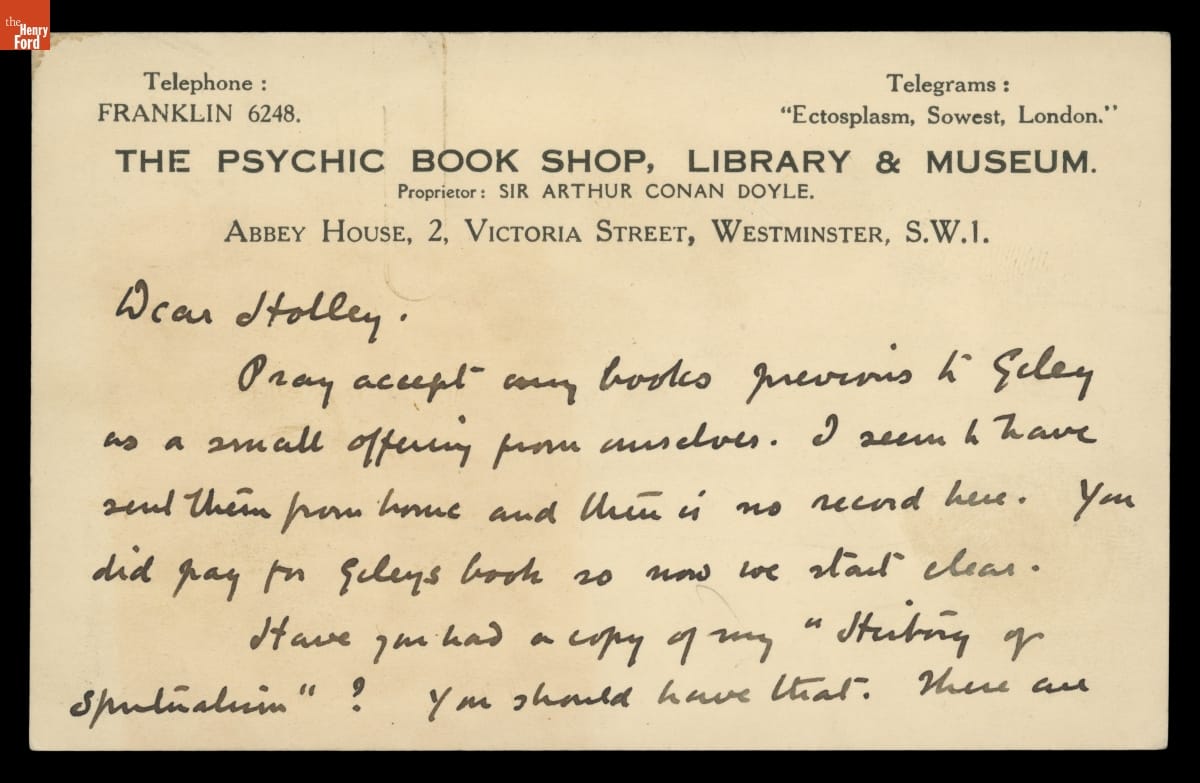
- Letter from Arthur Conan Doyle to George M. Holley, 1927-1928 - George Holley, founder of Holley Motor Company, and Sir Arthur Conan Doyle, famed author, became acquainted after Holley attended one of Doyle's lectures in Detroit. From 1923 to 1929, the two maintained a robust correspondence. Spiritualism was a frequent topic as they traded recommendations of mediums, bemoaned skeptics like Harry Houdini, and discussed the state of belief on both sides of the Atlantic.
- 1927-1928
- Collections - Artifact
Letter from Arthur Conan Doyle to George M. Holley, 1927-1928
George Holley, founder of Holley Motor Company, and Sir Arthur Conan Doyle, famed author, became acquainted after Holley attended one of Doyle's lectures in Detroit. From 1923 to 1929, the two maintained a robust correspondence. Spiritualism was a frequent topic as they traded recommendations of mediums, bemoaned skeptics like Harry Houdini, and discussed the state of belief on both sides of the Atlantic.
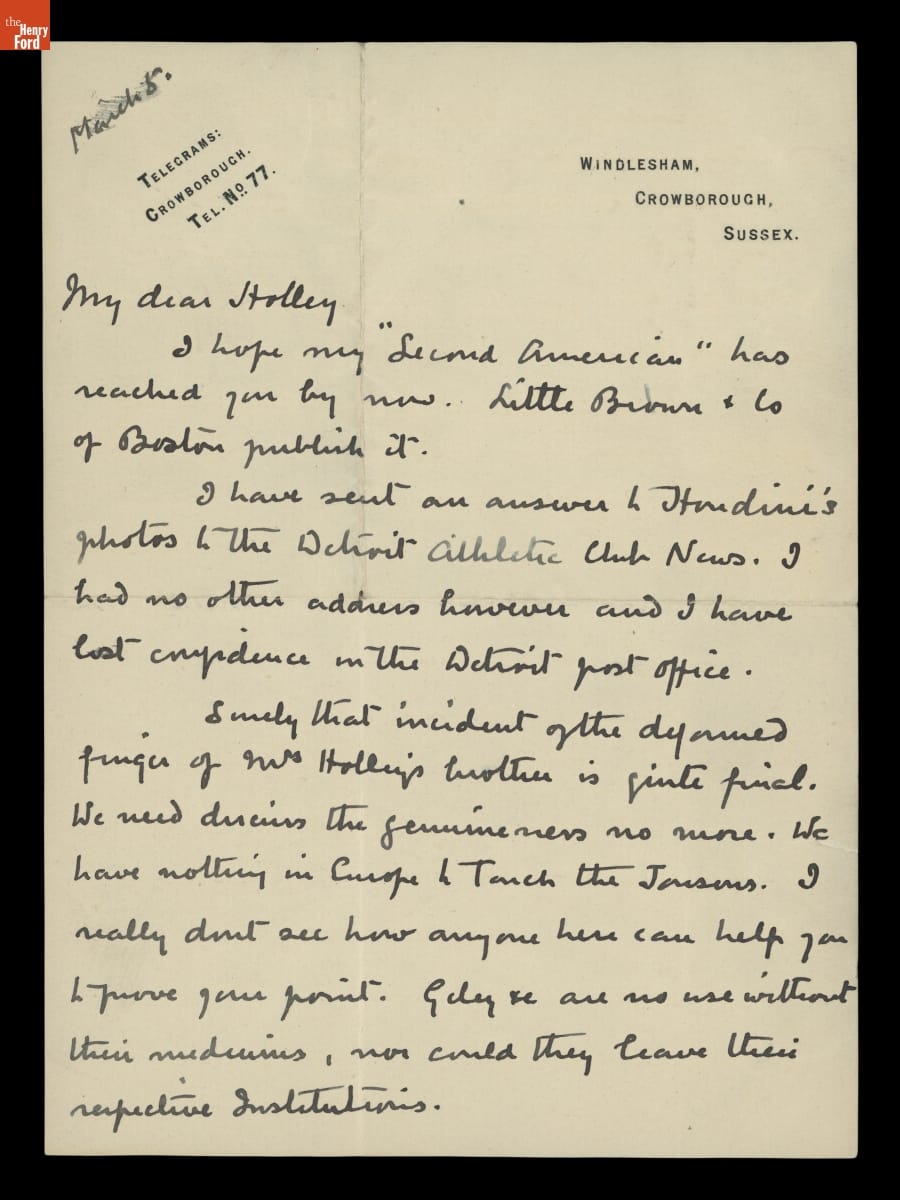
- Letter from Arthur Conan Doyle to George M. Holley, March 5, 1924 - George Holley, founder of Holley Motor Company, and Sir Arthur Conan Doyle, famed author, became acquainted after Holley attended one of Doyle's lectures in Detroit. From 1923 to 1929, the two maintained a robust correspondence. Spiritualism was a frequent topic as they traded recommendations of mediums, bemoaned skeptics like Harry Houdini, and discussed the state of belief on both sides of the Atlantic.
- March 05, 1924
- Collections - Artifact
Letter from Arthur Conan Doyle to George M. Holley, March 5, 1924
George Holley, founder of Holley Motor Company, and Sir Arthur Conan Doyle, famed author, became acquainted after Holley attended one of Doyle's lectures in Detroit. From 1923 to 1929, the two maintained a robust correspondence. Spiritualism was a frequent topic as they traded recommendations of mediums, bemoaned skeptics like Harry Houdini, and discussed the state of belief on both sides of the Atlantic.
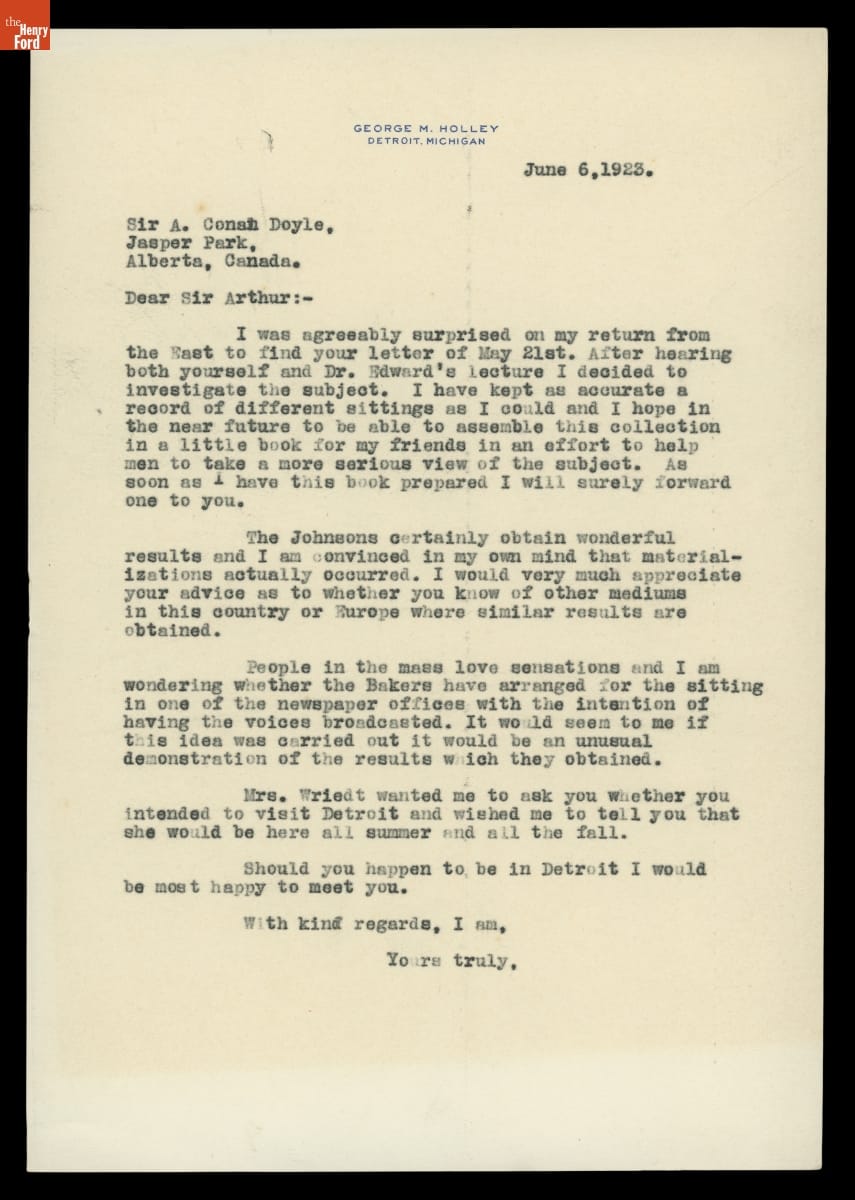
- Letter from George M. Holley to Arthur Conan Doyle, June 6, 1923 - George Holley, founder of Holley Motor Company, and Sir Arthur Conan Doyle, famed author, became acquainted after Holley attended one of Doyle's lectures in Detroit. From 1923 to 1929, the two maintained a robust correspondence. Spiritualism was a frequent topic as they traded recommendations of mediums, bemoaned skeptics like Harry Houdini, and discussed the state of belief on both sides of the Atlantic.
- June 06, 1923
- Collections - Artifact
Letter from George M. Holley to Arthur Conan Doyle, June 6, 1923
George Holley, founder of Holley Motor Company, and Sir Arthur Conan Doyle, famed author, became acquainted after Holley attended one of Doyle's lectures in Detroit. From 1923 to 1929, the two maintained a robust correspondence. Spiritualism was a frequent topic as they traded recommendations of mediums, bemoaned skeptics like Harry Houdini, and discussed the state of belief on both sides of the Atlantic.
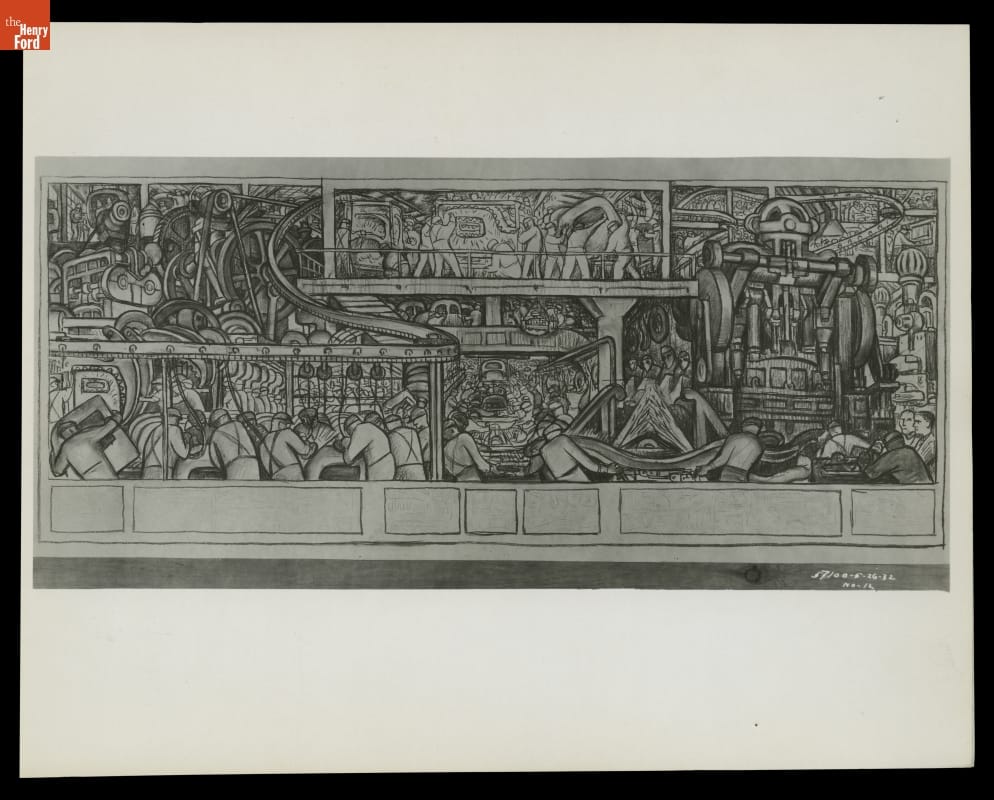
- Diego Rivera Drawing for "Detroit Industry" Fresco Cycle at Detroit Institute of Arts, 1932 - In 1932, the Detroit Institute of Arts commissioned Mexican artist Diego Rivera to paint murals depicting the city's industrial activities. Rivera spent eight months creating 27 frescoes in the institute's interior courtyard. Much of <em>Detroit Industry</em> was inspired by Ford Motor Company's Rouge plant, but the murals also portrayed Detroit's medical, pharmaceutical, and chemical industries. Edsel Ford sponsored Rivera's work.
- 1932
- Collections - Artifact
Diego Rivera Drawing for "Detroit Industry" Fresco Cycle at Detroit Institute of Arts, 1932
In 1932, the Detroit Institute of Arts commissioned Mexican artist Diego Rivera to paint murals depicting the city's industrial activities. Rivera spent eight months creating 27 frescoes in the institute's interior courtyard. Much of Detroit Industry was inspired by Ford Motor Company's Rouge plant, but the murals also portrayed Detroit's medical, pharmaceutical, and chemical industries. Edsel Ford sponsored Rivera's work.
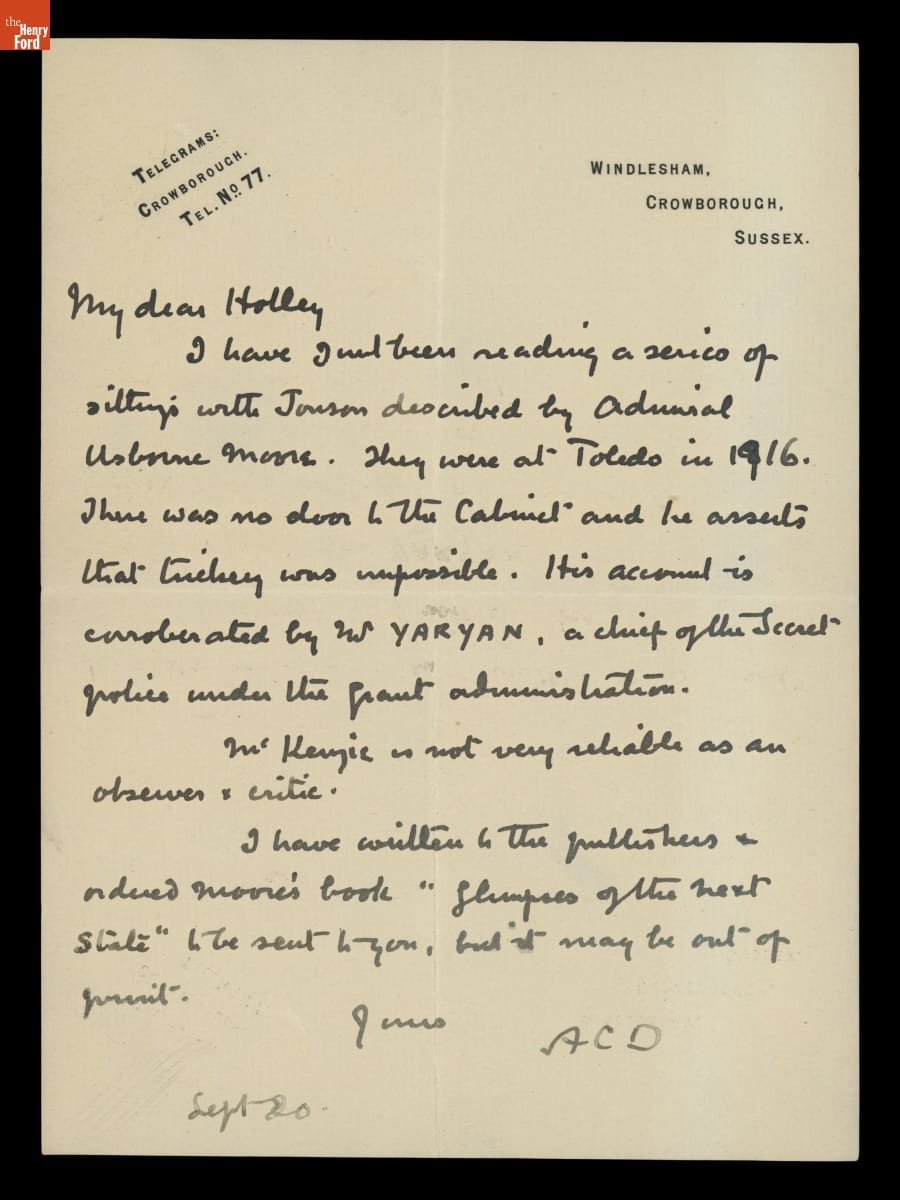
- Letter from Arthur Conan Doyle to George M. Holley, September 20 - George Holley, founder of Holley Motor Company, and Sir Arthur Conan Doyle, famed author, became acquainted after Holley attended one of Doyle's lectures in Detroit. From 1923 to 1929, the two maintained a robust correspondence. Spiritualism was a frequent topic as they traded recommendations of mediums, bemoaned skeptics like Harry Houdini, and discussed the state of belief on both sides of the Atlantic.
- Collections - Artifact
Letter from Arthur Conan Doyle to George M. Holley, September 20
George Holley, founder of Holley Motor Company, and Sir Arthur Conan Doyle, famed author, became acquainted after Holley attended one of Doyle's lectures in Detroit. From 1923 to 1929, the two maintained a robust correspondence. Spiritualism was a frequent topic as they traded recommendations of mediums, bemoaned skeptics like Harry Houdini, and discussed the state of belief on both sides of the Atlantic.
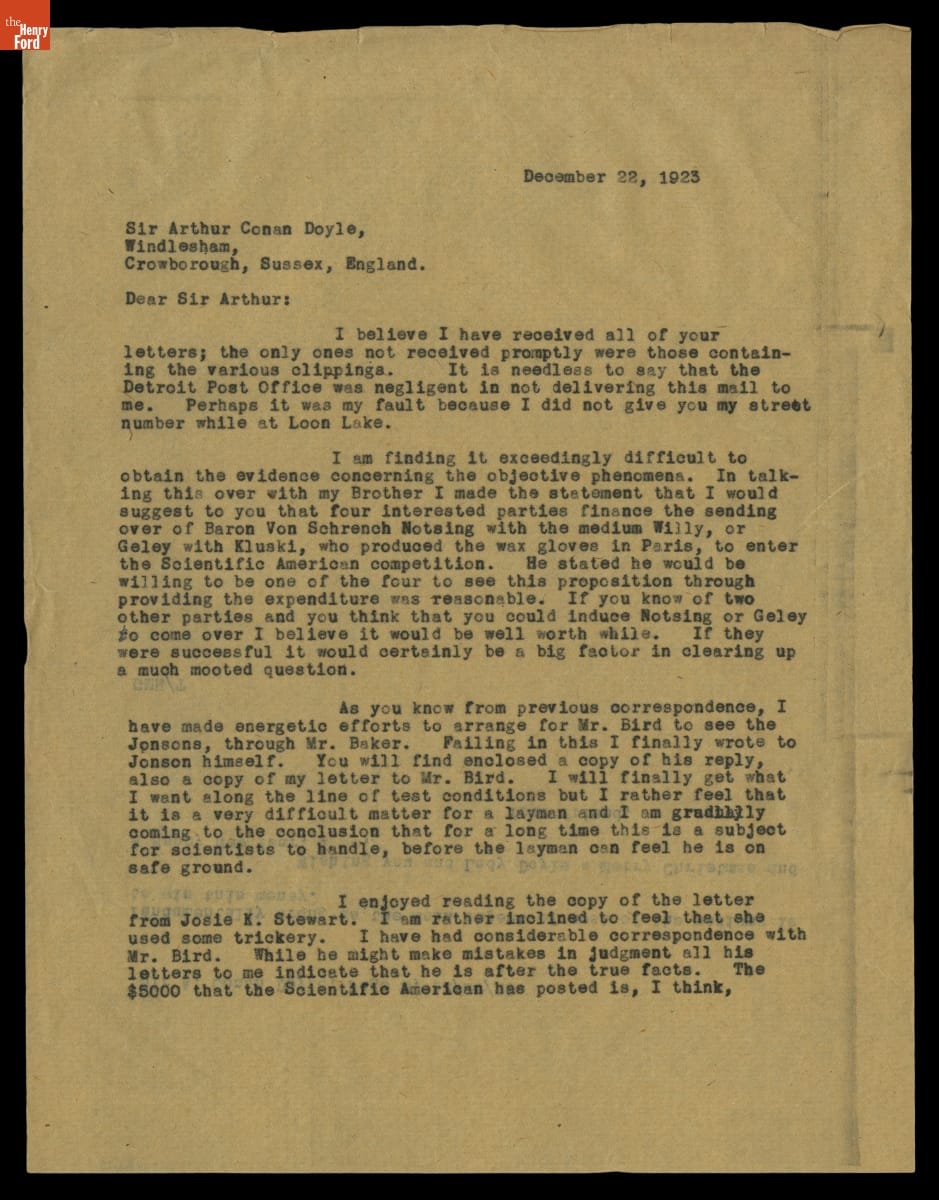
- Letter from George M. Holley to Arthur Conan Doyle, December 22, 1923 - George Holley, founder of Holley Motor Company, and Sir Arthur Conan Doyle, famed author, became acquainted after Holley attended one of Doyle's lectures in Detroit. From 1923 to 1929, the two maintained a robust correspondence. Spiritualism was a frequent topic as they traded recommendations of mediums, bemoaned skeptics like Harry Houdini, and discussed the state of belief on both sides of the Atlantic.
- December 22, 1923
- Collections - Artifact
Letter from George M. Holley to Arthur Conan Doyle, December 22, 1923
George Holley, founder of Holley Motor Company, and Sir Arthur Conan Doyle, famed author, became acquainted after Holley attended one of Doyle's lectures in Detroit. From 1923 to 1929, the two maintained a robust correspondence. Spiritualism was a frequent topic as they traded recommendations of mediums, bemoaned skeptics like Harry Houdini, and discussed the state of belief on both sides of the Atlantic.
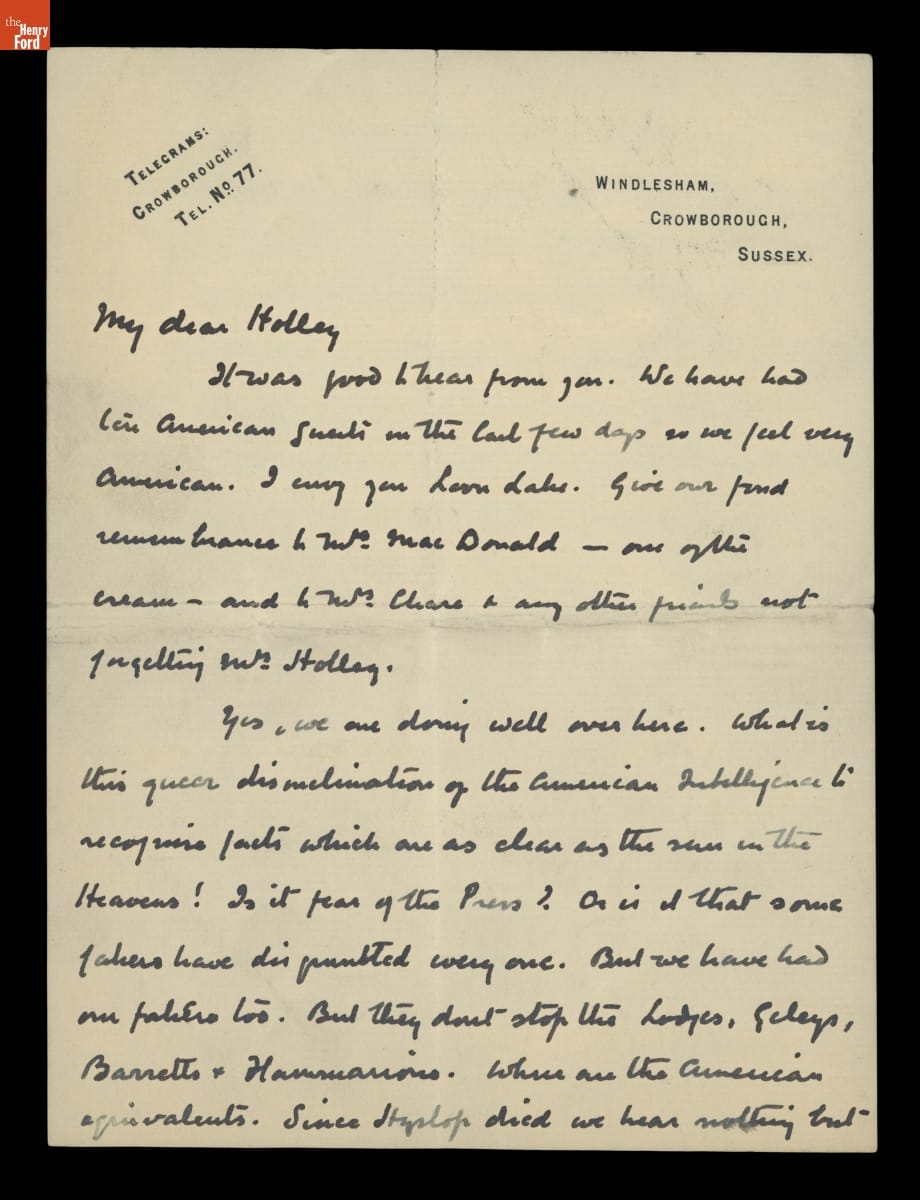
- Letter from Arthur Conan Doyle to George M. Holley, July 27, 1925 - George Holley, founder of Holley Motor Company, and Sir Arthur Conan Doyle, famed author, became acquainted after Holley attended one of Doyle's lectures in Detroit. From 1923 to 1929, the two maintained a robust correspondence. Spiritualism was a frequent topic as they traded recommendations of mediums, bemoaned skeptics like Harry Houdini, and discussed the state of belief on both sides of the Atlantic.
- July 27, 1925
- Collections - Artifact
Letter from Arthur Conan Doyle to George M. Holley, July 27, 1925
George Holley, founder of Holley Motor Company, and Sir Arthur Conan Doyle, famed author, became acquainted after Holley attended one of Doyle's lectures in Detroit. From 1923 to 1929, the two maintained a robust correspondence. Spiritualism was a frequent topic as they traded recommendations of mediums, bemoaned skeptics like Harry Houdini, and discussed the state of belief on both sides of the Atlantic.
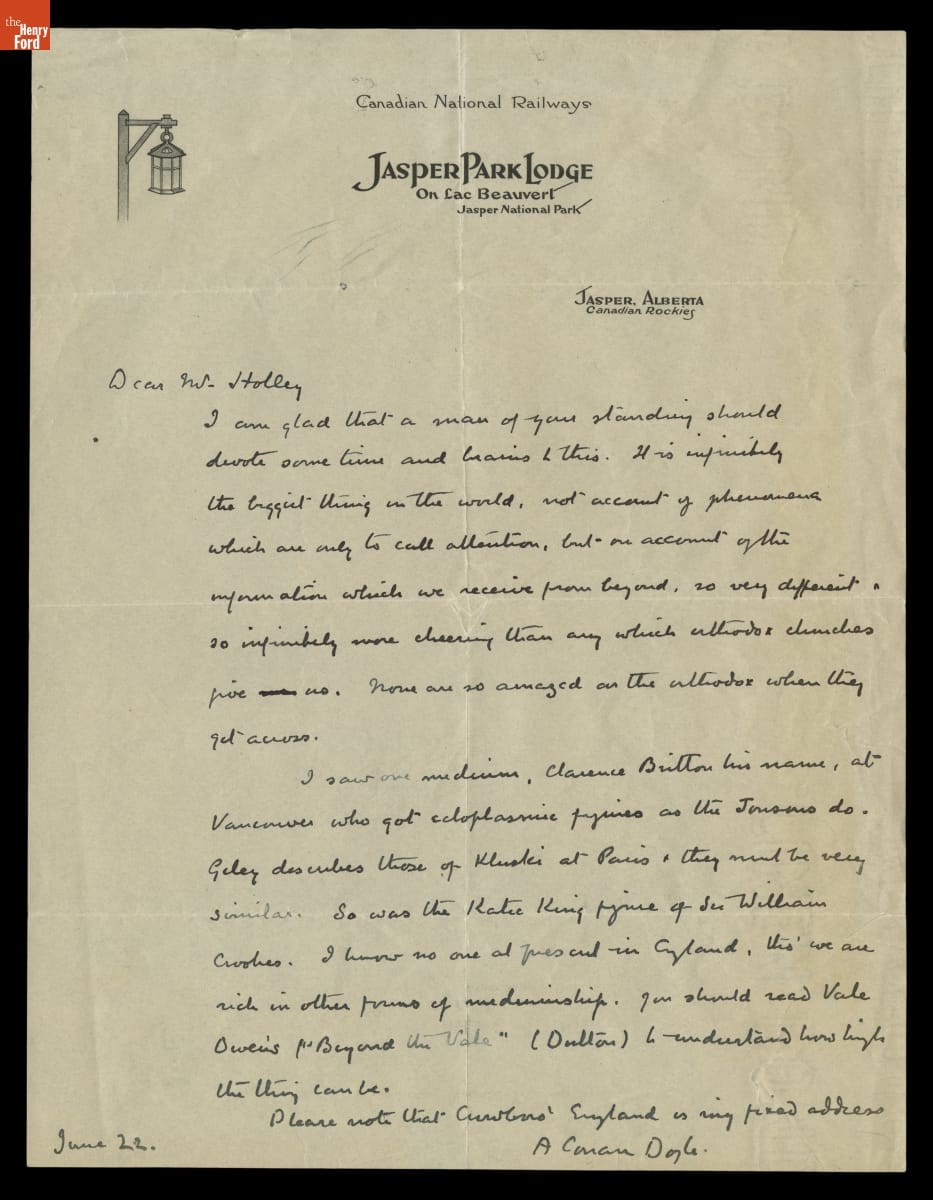
- Letter from Arthur Conan Doyle to George M. Holley, June 22, 1923 - George Holley, founder of Holley Motor Company, and Sir Arthur Conan Doyle, famed author, became acquainted after Holley attended one of Doyle's lectures in Detroit. From 1923 to 1929, the two maintained a robust correspondence. Spiritualism was a frequent topic as they traded recommendations of mediums, bemoaned skeptics like Harry Houdini, and discussed the state of belief on both sides of the Atlantic.
- June 22, 1923
- Collections - Artifact
Letter from Arthur Conan Doyle to George M. Holley, June 22, 1923
George Holley, founder of Holley Motor Company, and Sir Arthur Conan Doyle, famed author, became acquainted after Holley attended one of Doyle's lectures in Detroit. From 1923 to 1929, the two maintained a robust correspondence. Spiritualism was a frequent topic as they traded recommendations of mediums, bemoaned skeptics like Harry Houdini, and discussed the state of belief on both sides of the Atlantic.
- Letter from F.W. Pawlowski to Milton J. Thompson, May 2, 1929 -
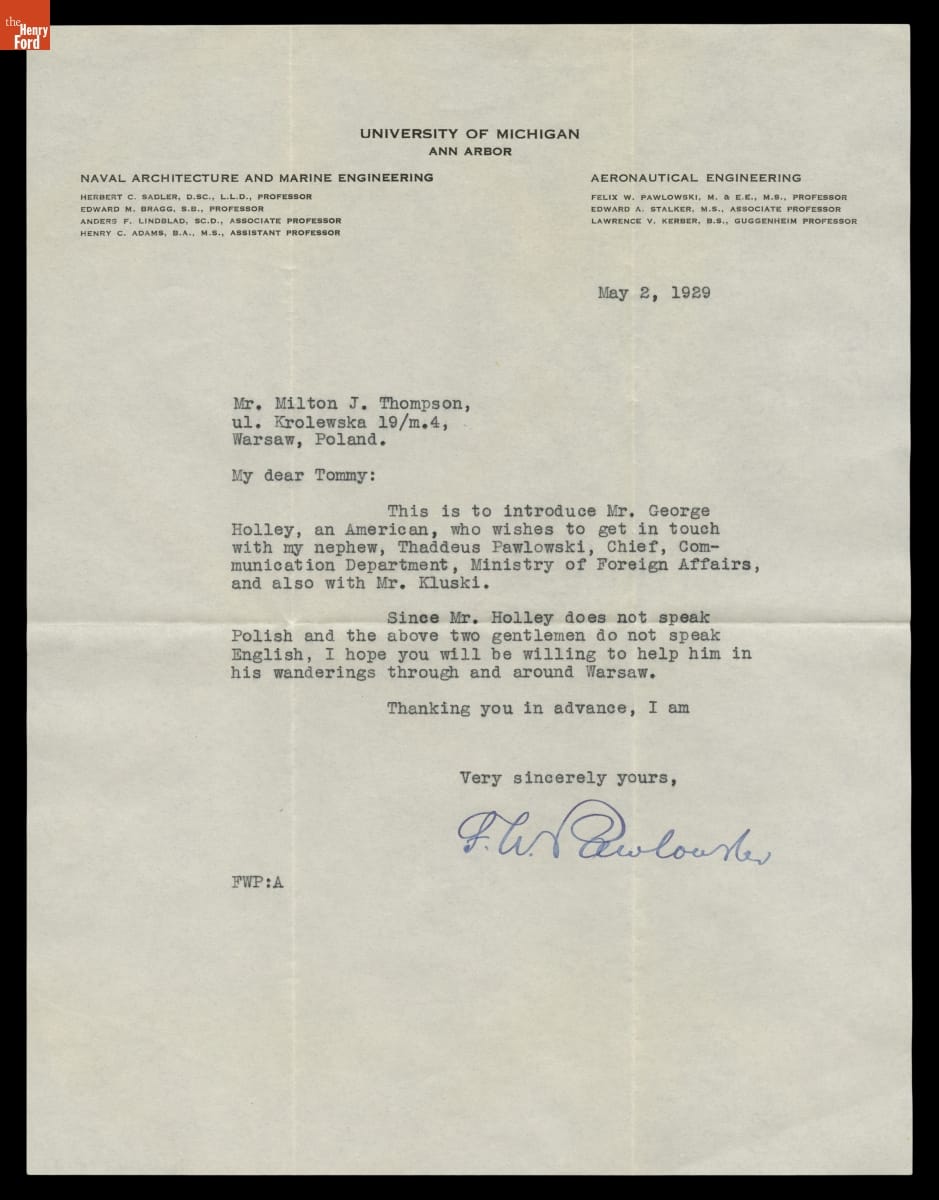
- May 02, 1929
- Collections - Artifact
Letter from F.W. Pawlowski to Milton J. Thompson, May 2, 1929
- "Spiritualism: Some Straight Questions and Direct Answers," 1922 -
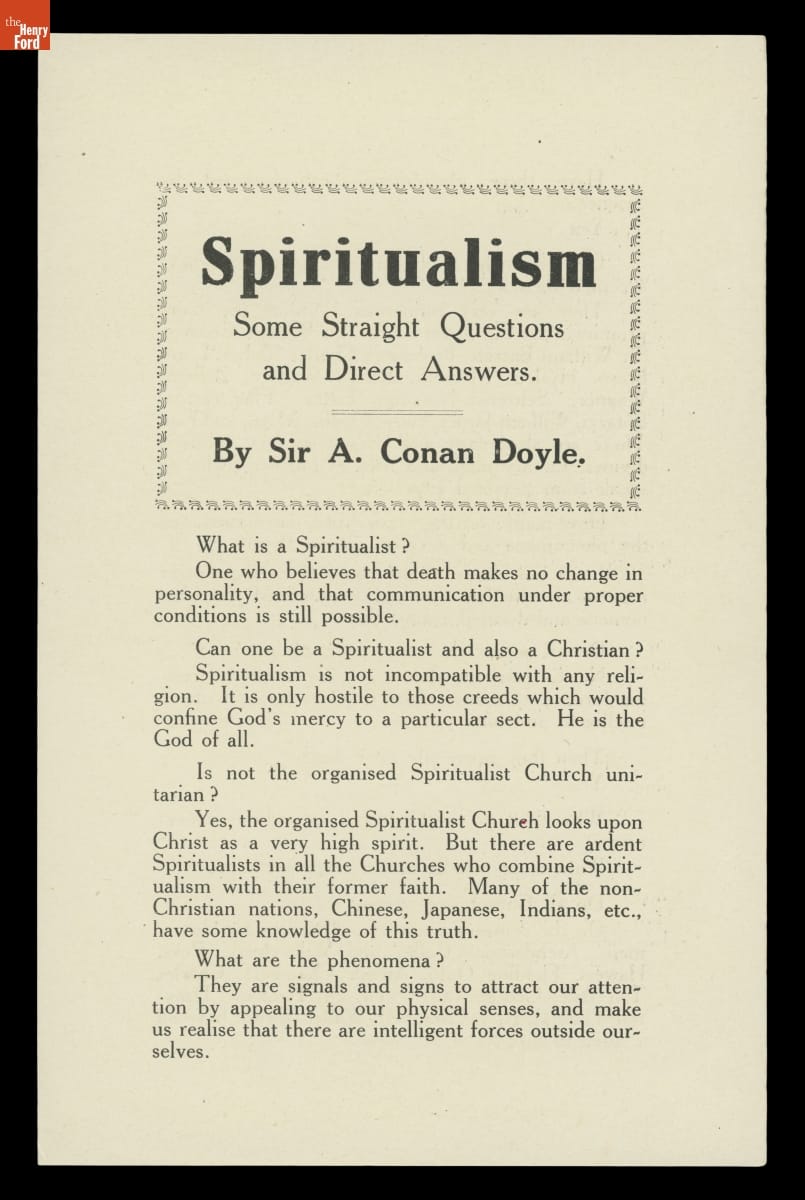
- 1922
- Collections - Artifact
"Spiritualism: Some Straight Questions and Direct Answers," 1922