
Search
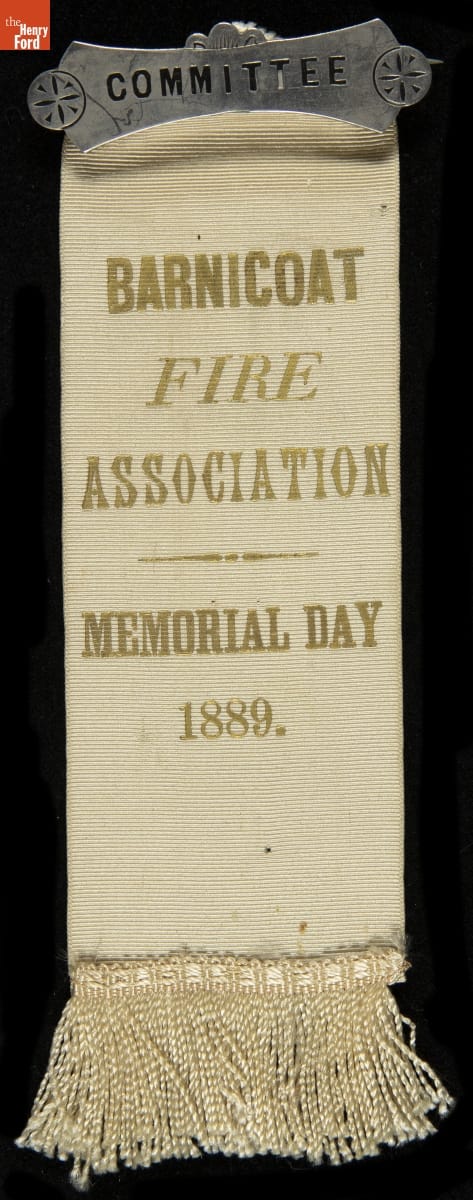
- Barnicoat Fire Association Memorial Day Ribbon, 1889 - Memorial Day began soon after the Civil War as a time to remember U.S. military service members who sacrificed their lives for their country. The idea spread to community service organizations--like local fire associations--who observed memorial days to honor fallen members. Dates for these memorial days were usually set to avoid conflicting with the national observance.
- 1889
- Collections - Artifact
Barnicoat Fire Association Memorial Day Ribbon, 1889
Memorial Day began soon after the Civil War as a time to remember U.S. military service members who sacrificed their lives for their country. The idea spread to community service organizations--like local fire associations--who observed memorial days to honor fallen members. Dates for these memorial days were usually set to avoid conflicting with the national observance.
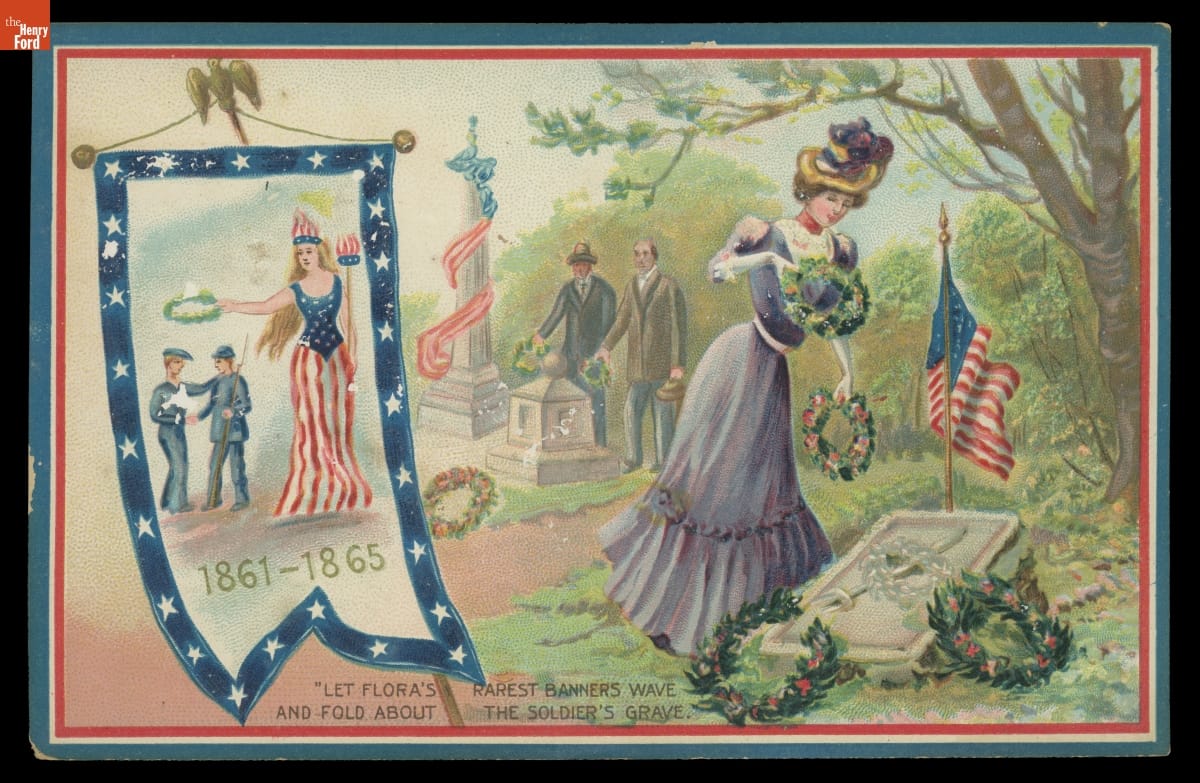
- Decoration Day Postcard, "Let Flora's Rarest Banners Wave and Fold about the Soldier's Grave," 1908 - Beginning in 1868, May 30 was proclaimed "Decoration Day" as a day for mourners to honor the Civil War dead by decorating their graves with flowers. After World War I, the observance became better known as Memorial Day, and it broadened to honor the dead of all America's wars. Memorial Day was declared a national holiday in 1971.
- 1905
- Collections - Artifact
Decoration Day Postcard, "Let Flora's Rarest Banners Wave and Fold about the Soldier's Grave," 1908
Beginning in 1868, May 30 was proclaimed "Decoration Day" as a day for mourners to honor the Civil War dead by decorating their graves with flowers. After World War I, the observance became better known as Memorial Day, and it broadened to honor the dead of all America's wars. Memorial Day was declared a national holiday in 1971.
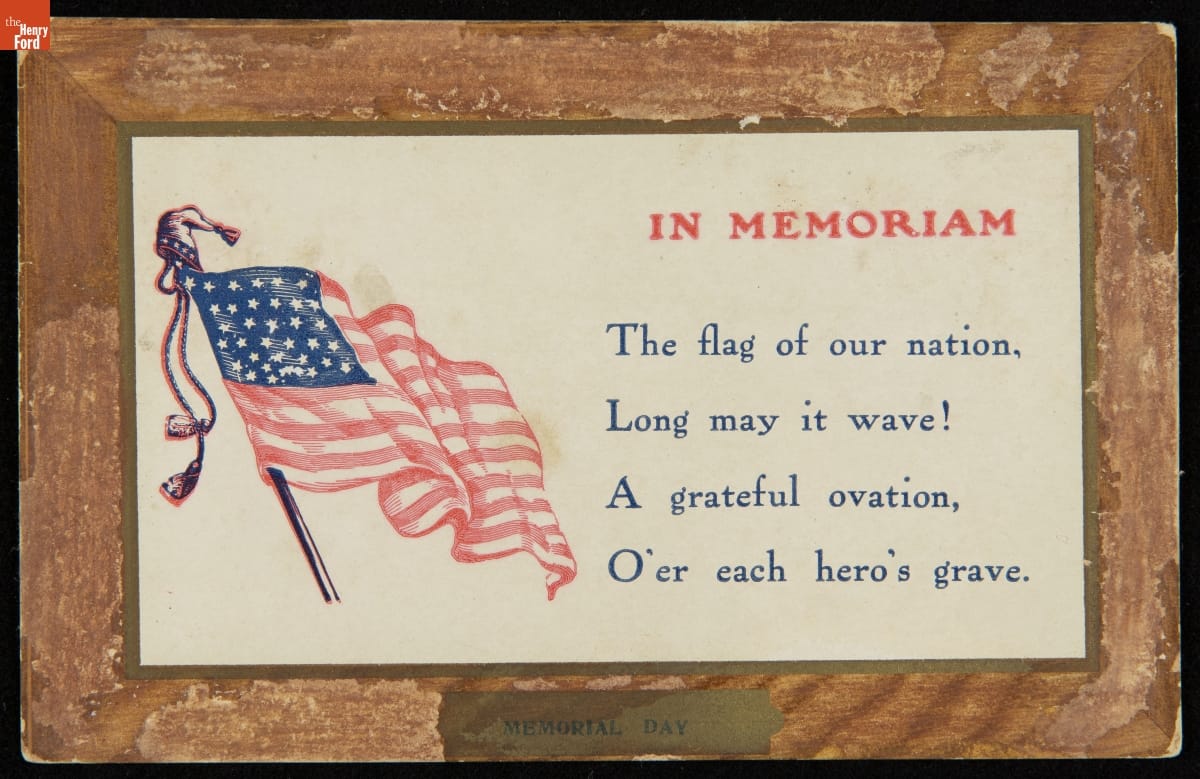
- "In Memoriam, The flag of our nation, Long may it wave! A grateful ovation, O'er each hero's grave." circa 1906 - Beginning in 1868, May 30 was proclaimed "Decoration Day" as a day for mourners to honor the Civil War dead by decorating their graves with flowers. After World War I, the observance became better known as Memorial Day, and it broadened to honor the dead of all America's wars. Memorial Day was declared a national holiday in 1971.
- circa 1906
- Collections - Artifact
"In Memoriam, The flag of our nation, Long may it wave! A grateful ovation, O'er each hero's grave." circa 1906
Beginning in 1868, May 30 was proclaimed "Decoration Day" as a day for mourners to honor the Civil War dead by decorating their graves with flowers. After World War I, the observance became better known as Memorial Day, and it broadened to honor the dead of all America's wars. Memorial Day was declared a national holiday in 1971.
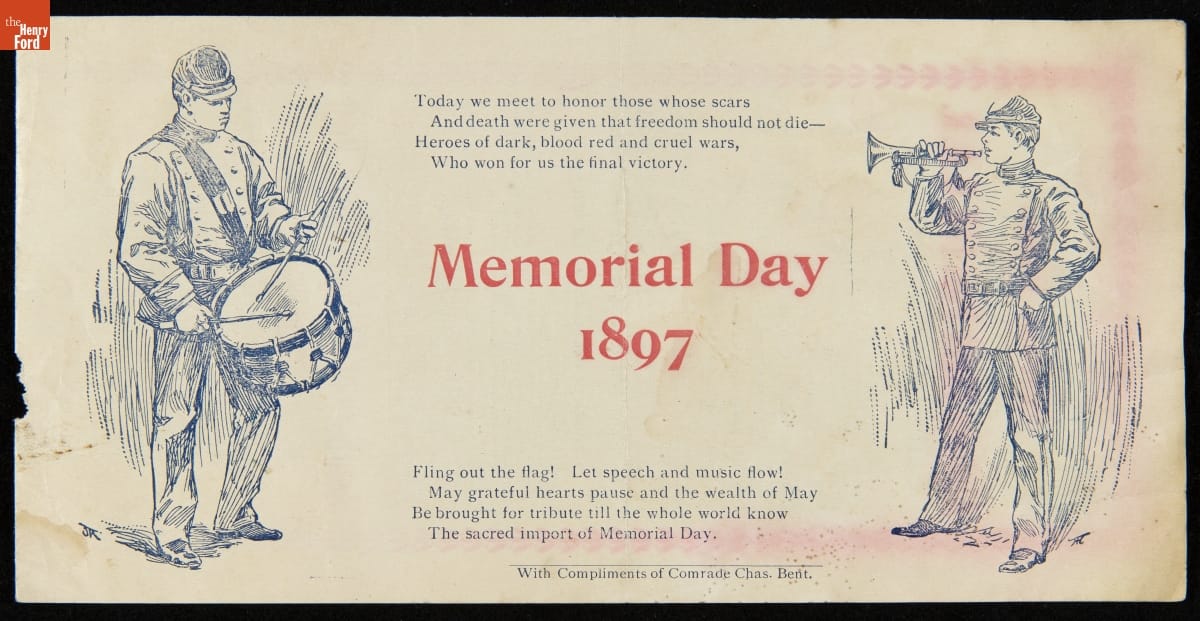
- Program, "Memorial Day Exercises by the Alpheus Clark Post 118 of the Grand Army of the Republic," May 29, 1897 - This 1897 pamphlet details the schedule for a Memorial Day service organized by an Illinois post of the G.A.R. (an organization for Union Civil War veterans). Veterans traveled from the Grand Army Hall to the cemetery, where they decorated the graves of fallen Civil War soldiers. Prayers, speeches, music, and a formal reading of names ended the solemn graveside services.
- May 29, 1897
- Collections - Artifact
Program, "Memorial Day Exercises by the Alpheus Clark Post 118 of the Grand Army of the Republic," May 29, 1897
This 1897 pamphlet details the schedule for a Memorial Day service organized by an Illinois post of the G.A.R. (an organization for Union Civil War veterans). Veterans traveled from the Grand Army Hall to the cemetery, where they decorated the graves of fallen Civil War soldiers. Prayers, speeches, music, and a formal reading of names ended the solemn graveside services.
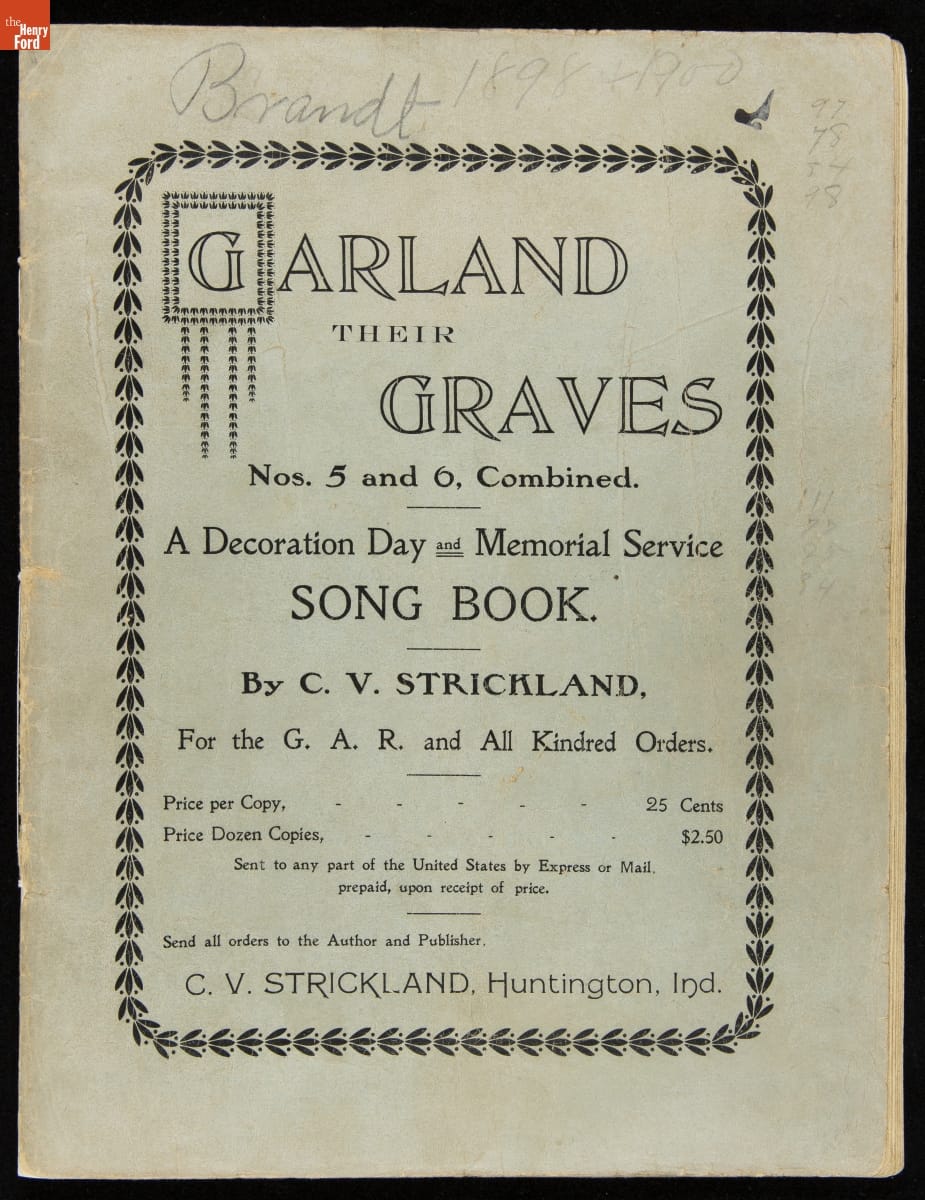
- Garland Their Graves: A Decoration Day and Memorial Service Song Book, for the G.A.R. and Kindred Orders, 1900 -
- 1900
- Collections - Artifact
Garland Their Graves: A Decoration Day and Memorial Service Song Book, for the G.A.R. and Kindred Orders, 1900
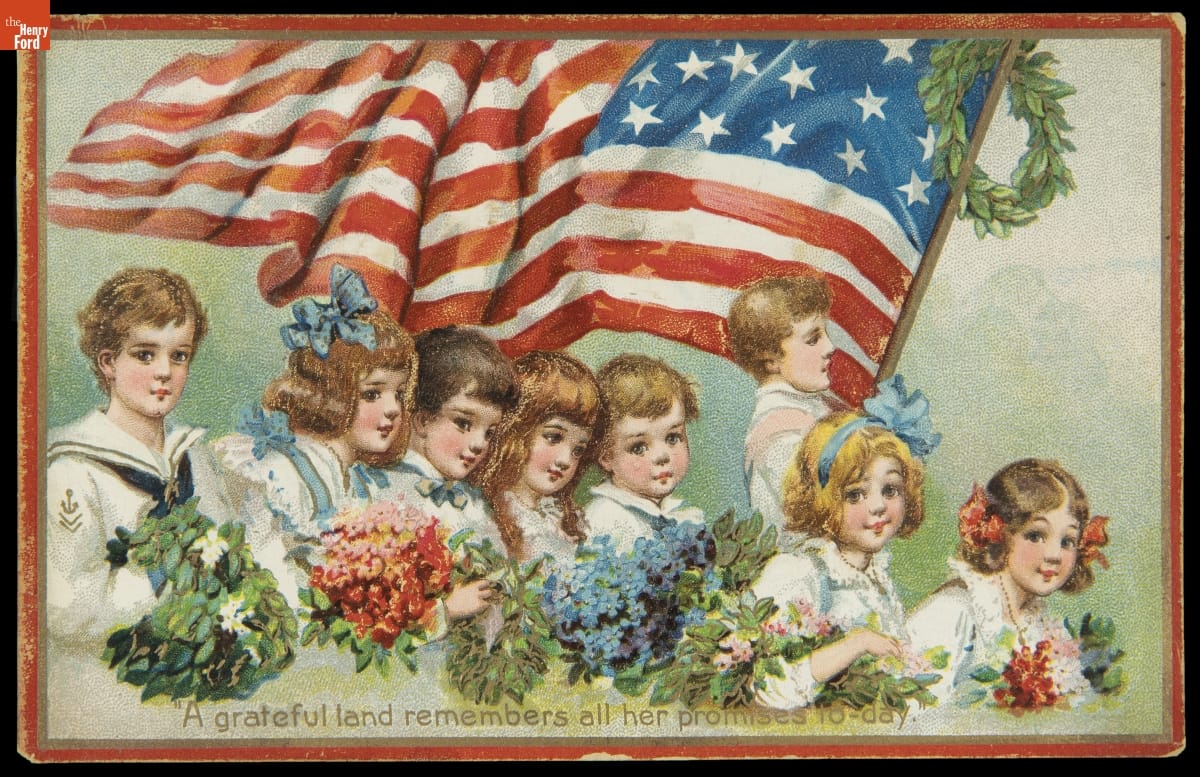
- Postcard, "A Grateful Land Remembers All Her Promises Today," 1908 - Beginning in 1868, May 30 was proclaimed "Decoration Day" as a day for mourners to honor the Civil War dead by decorating their graves with flowers. After World War I, the observance became better known as Memorial Day, and it broadened to honor the dead of all America's wars. Memorial Day was declared a national holiday in 1971.
- circa 1910
- Collections - Artifact
Postcard, "A Grateful Land Remembers All Her Promises Today," 1908
Beginning in 1868, May 30 was proclaimed "Decoration Day" as a day for mourners to honor the Civil War dead by decorating their graves with flowers. After World War I, the observance became better known as Memorial Day, and it broadened to honor the dead of all America's wars. Memorial Day was declared a national holiday in 1971.
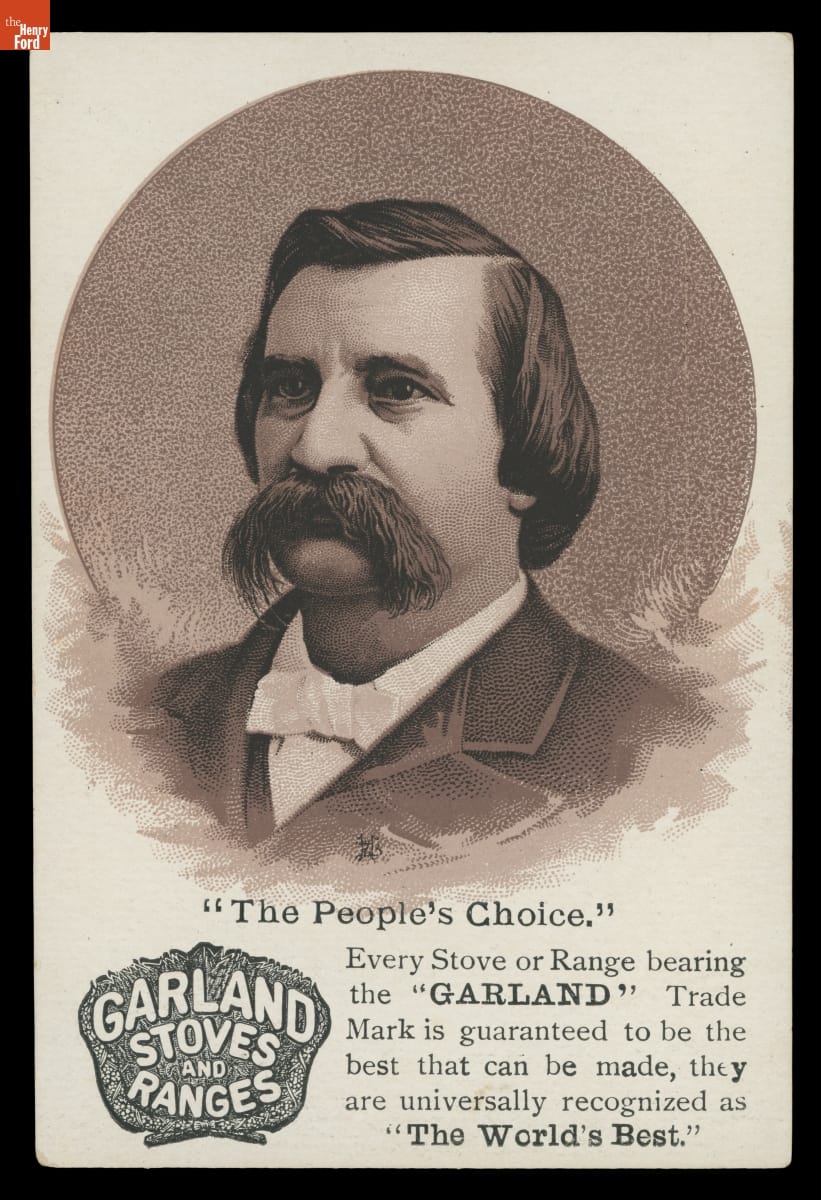
- Trade Card for Garland Stoves and Ranges, "The People's Choice," 1884 -
- 1884
- Collections - Artifact
Trade Card for Garland Stoves and Ranges, "The People's Choice," 1884
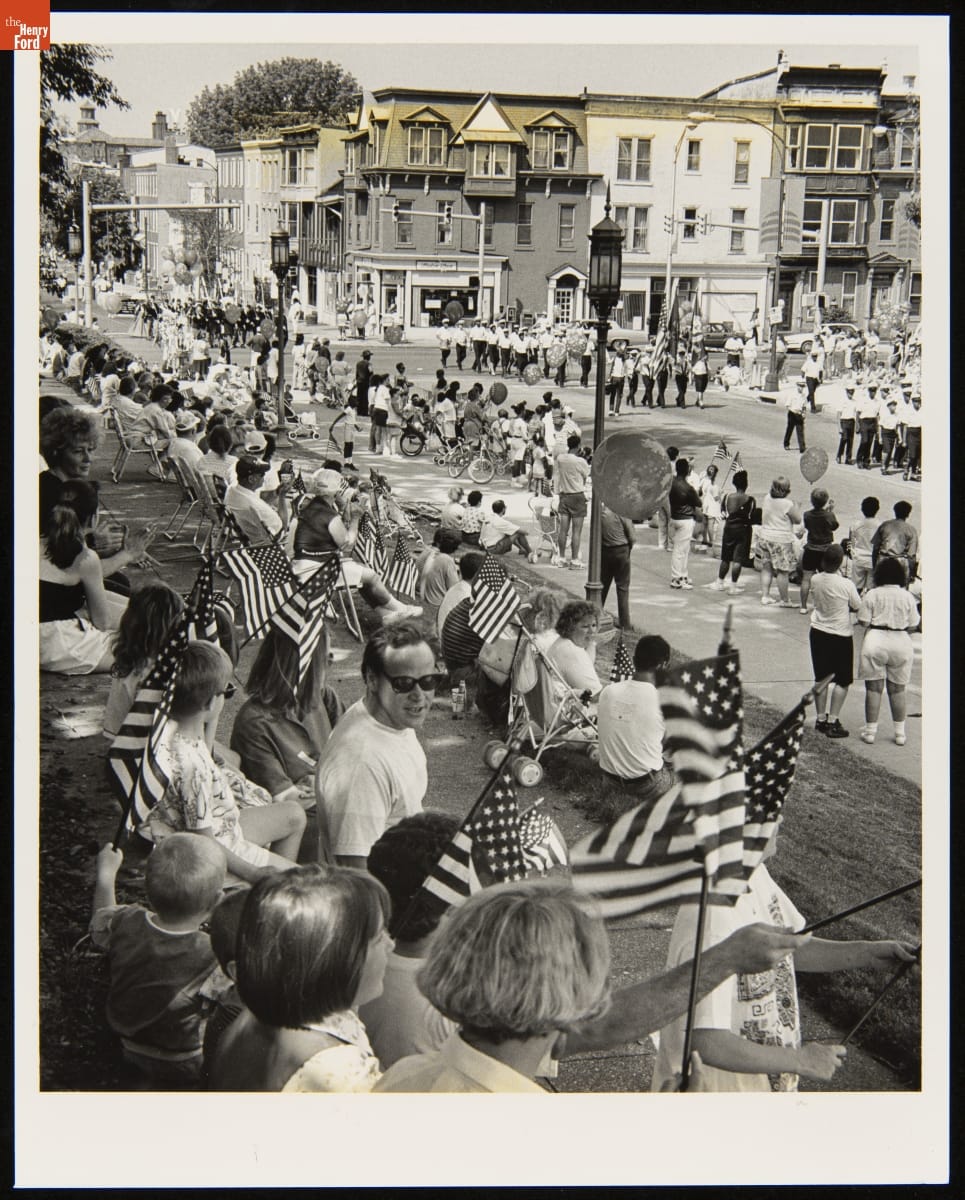
- Crowd on North St. Watching Memorial Day Parade, May 23, 1992 -
- May 23, 1992
- Collections - Artifact
Crowd on North St. Watching Memorial Day Parade, May 23, 1992
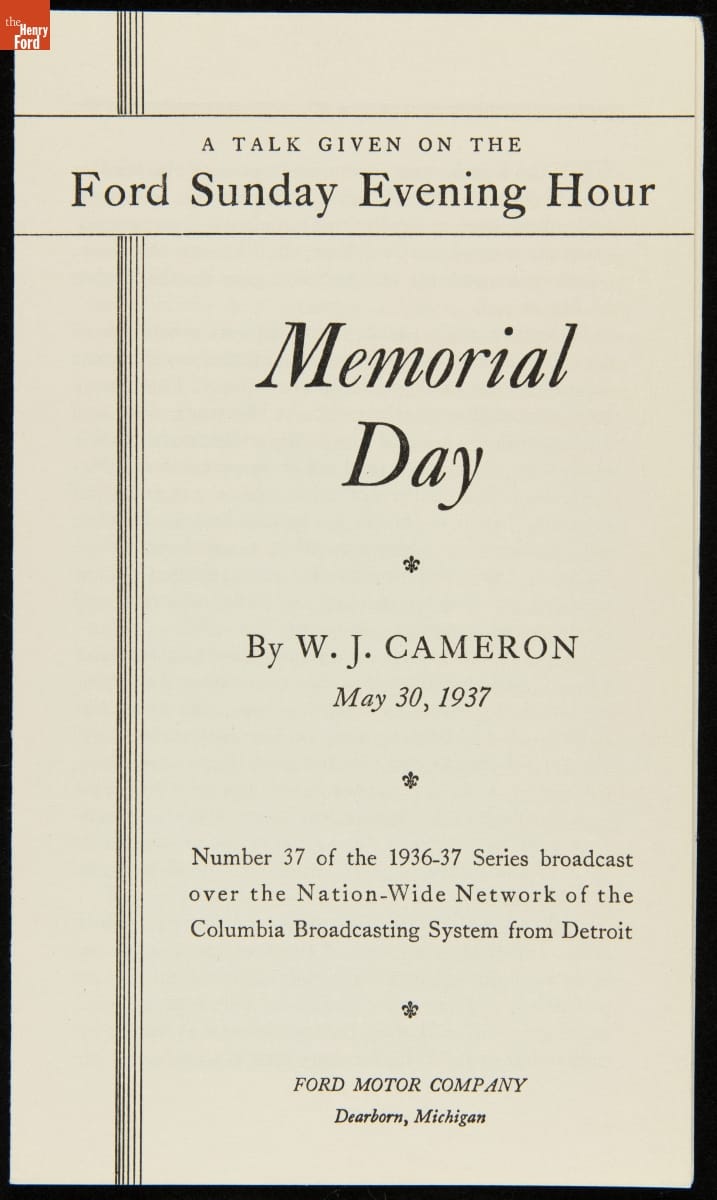
- A Talk Given on the Ford Sunday Evening Hour, "Memorial Day," May 30, 1937 - Launched in 1934, the <em>Ford Sunday Evening Hour</em> radio program featured classical music, guest soloists and conductors, and a weekly talk during intermission. Henry Ford asked his friend and advisor William J. Cameron to write and deliver these messages. Cameron, who composed the anti-Semitic articles for <em>The Dearborn Independent</em>, now peddled softer populist views--avoiding extremes and any direct attacks on politicians, ethnic groups, or Wall Street financiers.
- May 30, 1937
- Collections - Artifact
A Talk Given on the Ford Sunday Evening Hour, "Memorial Day," May 30, 1937
Launched in 1934, the Ford Sunday Evening Hour radio program featured classical music, guest soloists and conductors, and a weekly talk during intermission. Henry Ford asked his friend and advisor William J. Cameron to write and deliver these messages. Cameron, who composed the anti-Semitic articles for The Dearborn Independent, now peddled softer populist views--avoiding extremes and any direct attacks on politicians, ethnic groups, or Wall Street financiers.
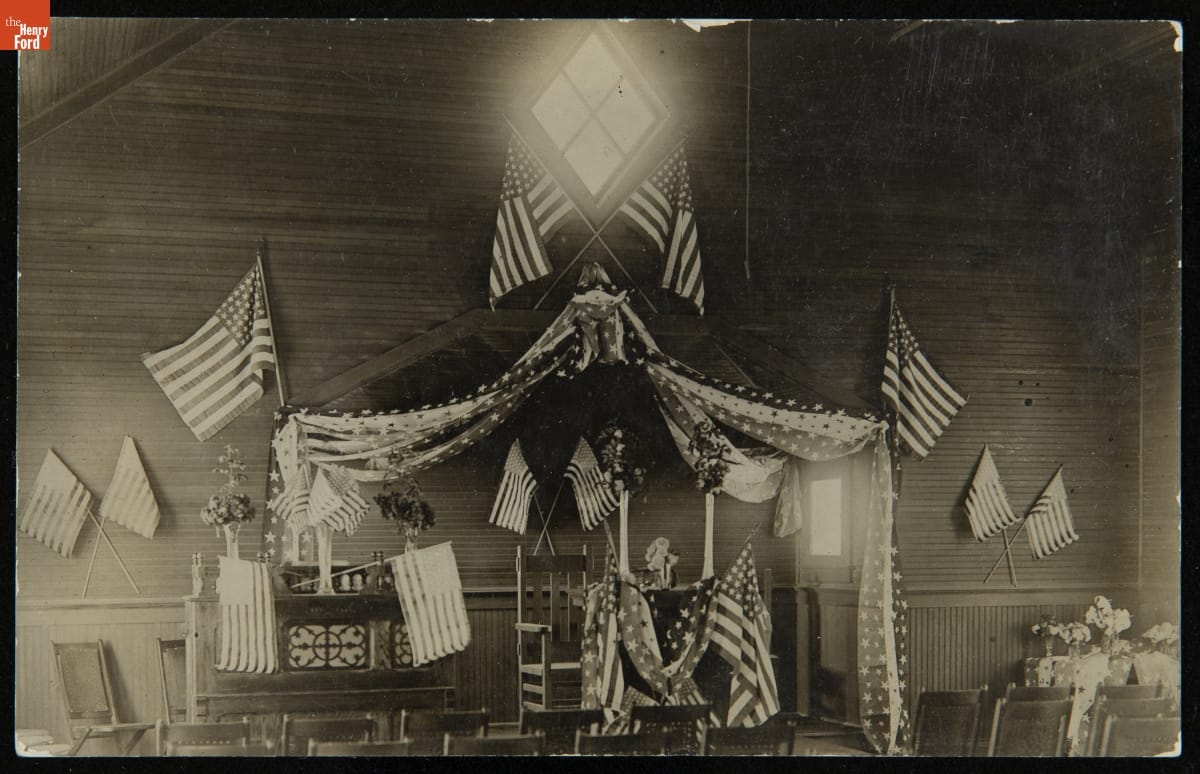
- Memorial Day Decorations in a White Bluffs, Washington Church, June 24, 1910 - Beginning in 1868, May 30 was adopted as "Decoration Day," a time to honor the Civil War dead by decorating their graves with flowers. Over the years, Americans gathered at churches, fraternal organization halls, and cemeteries to observe the holiday--today, better known as Memorial Day. This postcard from 1910 shows a church in White Bluffs, Washington, decorated for the holiday.
- June 24, 1910
- Collections - Artifact
Memorial Day Decorations in a White Bluffs, Washington Church, June 24, 1910
Beginning in 1868, May 30 was adopted as "Decoration Day," a time to honor the Civil War dead by decorating their graves with flowers. Over the years, Americans gathered at churches, fraternal organization halls, and cemeteries to observe the holiday--today, better known as Memorial Day. This postcard from 1910 shows a church in White Bluffs, Washington, decorated for the holiday.