
Search
- Clip-On Bow Tie, Worn by John "Jack" Krygier to His Wedding at the Martha-Mary Chapel in 1973 -
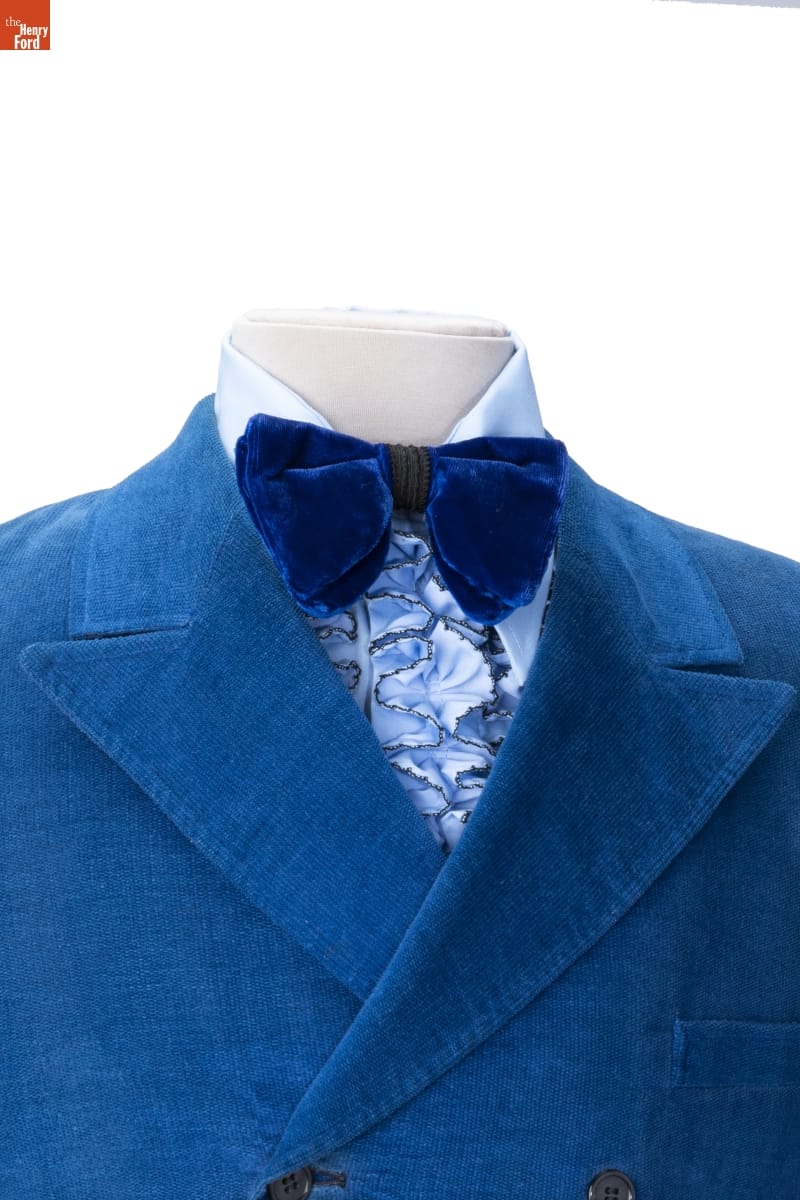
- 1973
- Collections - Artifact
Clip-On Bow Tie, Worn by John "Jack" Krygier to His Wedding at the Martha-Mary Chapel in 1973
- Tuxedo, Worn by John "Jack" Krygier to His Wedding at the Martha-Mary Chapel in 1973 -
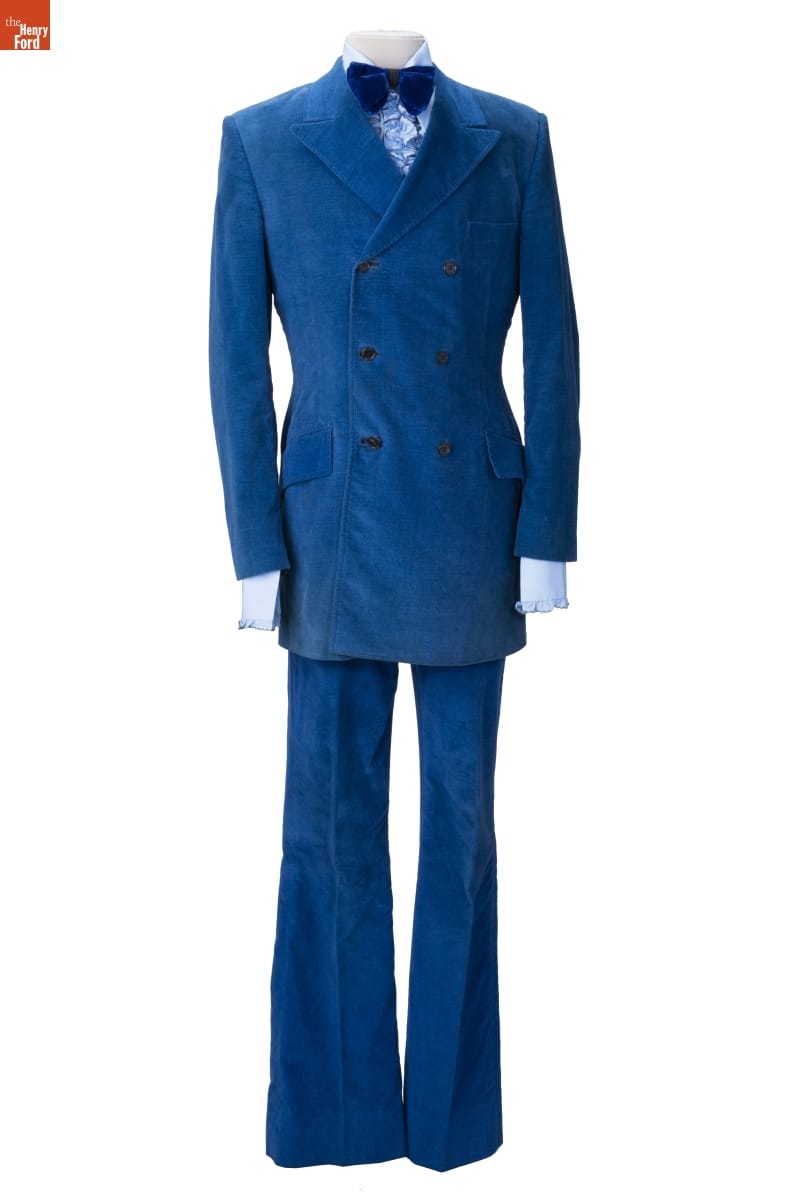
- 1973
- Collections - Artifact
Tuxedo, Worn by John "Jack" Krygier to His Wedding at the Martha-Mary Chapel in 1973
- 18th Century Style Vest, Made for Henry Ford - Henry Ford likely purchased this "18th century" style vest to wear at old-fashioned dancing parties. Ford likely only donned the costume for special occasions--not his weekly dances. The garment's maker, the Eaves Costume Company of New York, designed and rented costumes for a variety of plays and musical revues. They also provided costumes for masquerades and balls attended by wealthy socialites.
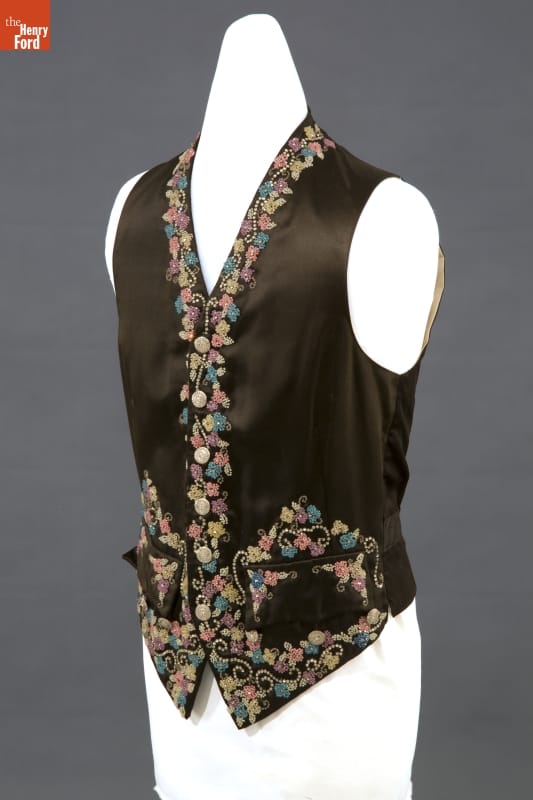
- 1925-1935
- Collections - Artifact
18th Century Style Vest, Made for Henry Ford
Henry Ford likely purchased this "18th century" style vest to wear at old-fashioned dancing parties. Ford likely only donned the costume for special occasions--not his weekly dances. The garment's maker, the Eaves Costume Company of New York, designed and rented costumes for a variety of plays and musical revues. They also provided costumes for masquerades and balls attended by wealthy socialites.
- Trousers, 1810-1820 - American men began to replace knee-length breeches with long trousers for some activities in the early 1800s. This lightweight, open-legged pair would have been much cooler and provided more ease of movement than traditional breeches.
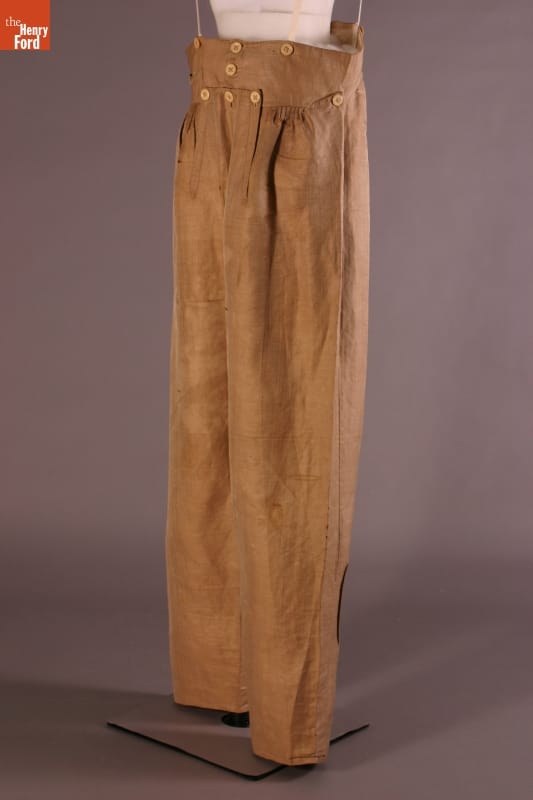
- 1810-1820
- Collections - Artifact
Trousers, 1810-1820
American men began to replace knee-length breeches with long trousers for some activities in the early 1800s. This lightweight, open-legged pair would have been much cooler and provided more ease of movement than traditional breeches.
- Trousers, 1780-1830 -
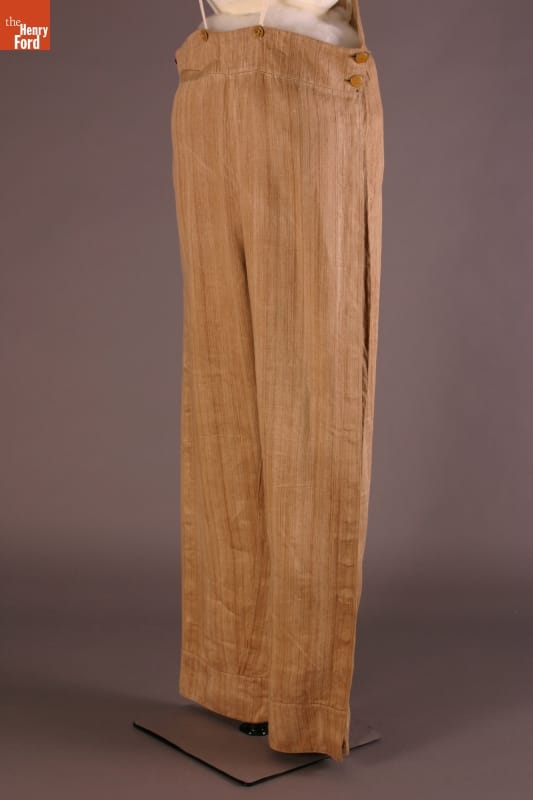
- 1780-1830
- Collections - Artifact
Trousers, 1780-1830
- Trousers, 1820-1850 -
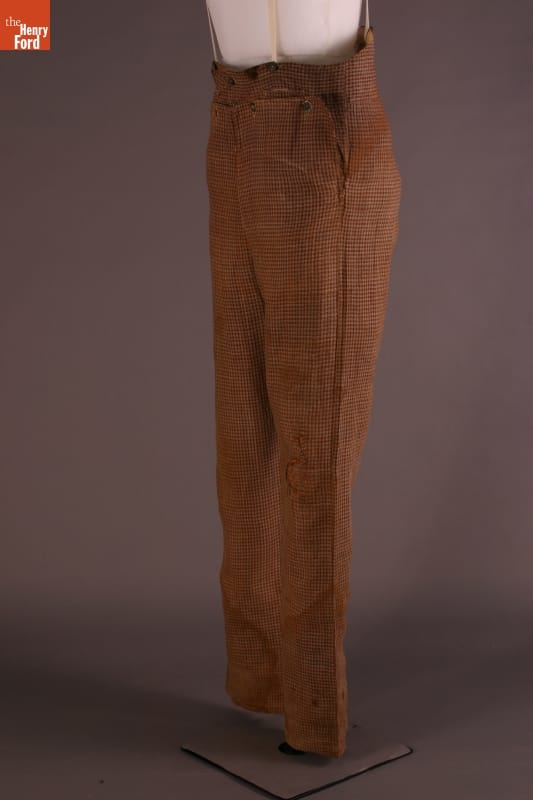
- 1820-1850
- Collections - Artifact
Trousers, 1820-1850
- Suit, Worn by Maximillian Von Mach at His Wedding to Mary Ann Sink, 1886 -
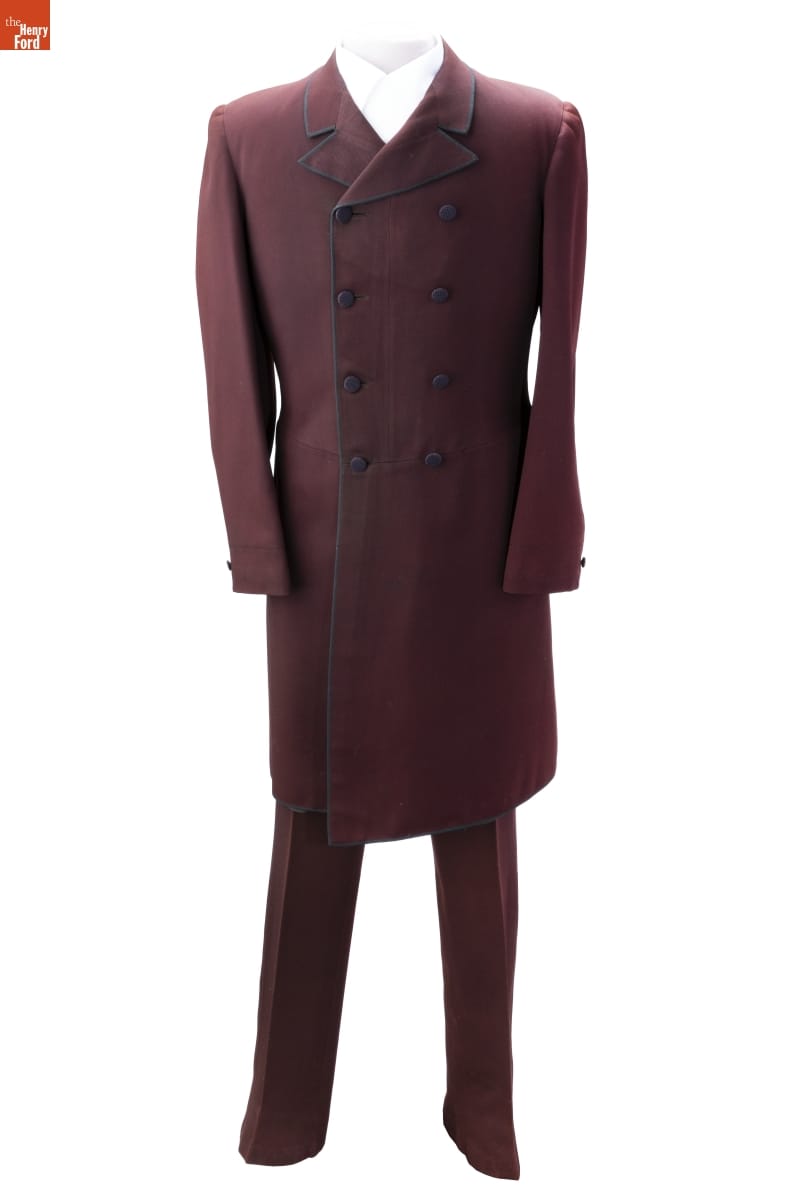
- 1886
- Collections - Artifact
Suit, Worn by Maximillian Von Mach at His Wedding to Mary Ann Sink, 1886
- Fedora, Worn by Henry Ford, circa 1936 -
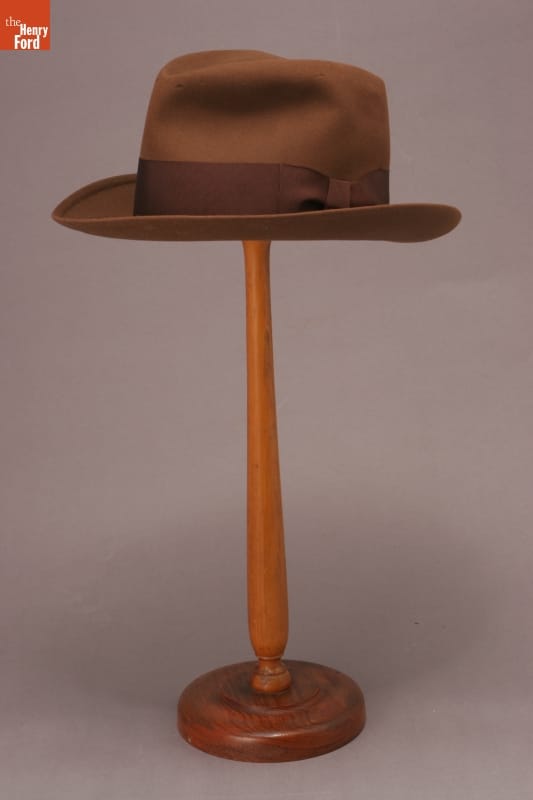
- circa 1936
- Collections - Artifact
Fedora, Worn by Henry Ford, circa 1936
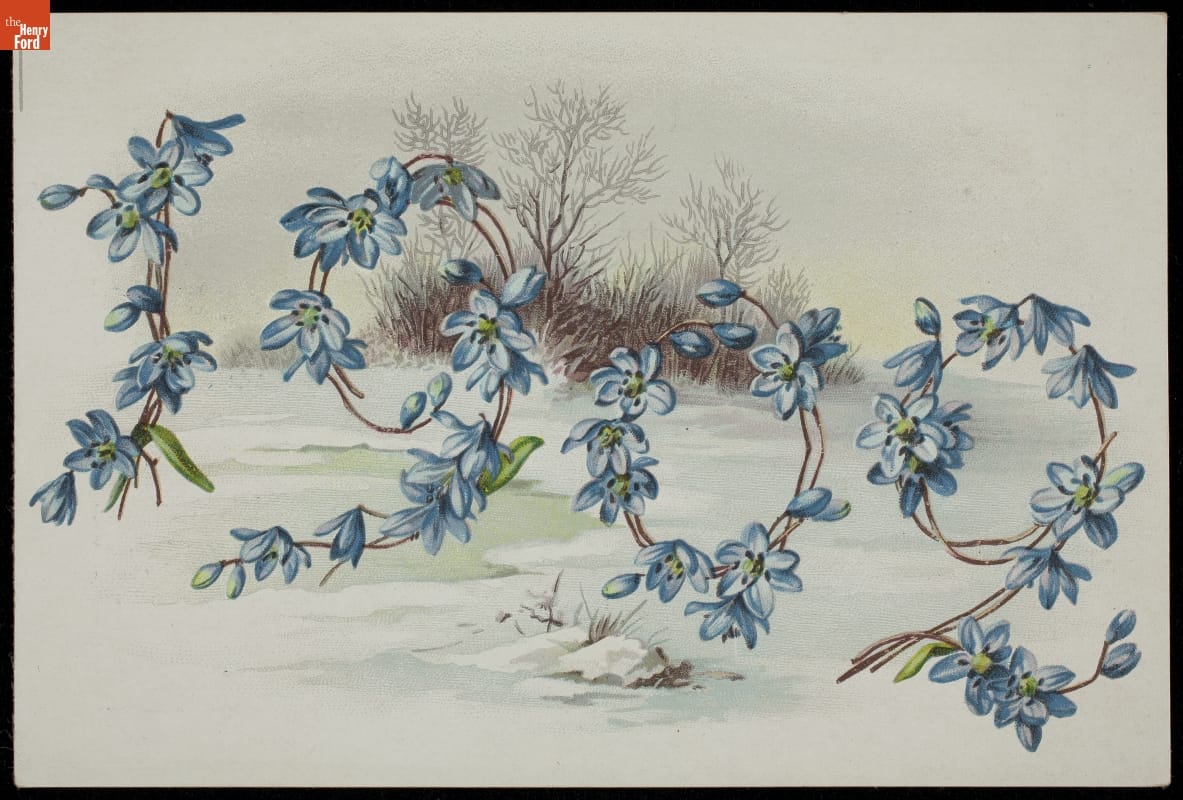
- Trade Card for Spring and Summer Clothing, Star Clothing Cooperative Co., 1902 - As color printing gained momentum in the late 19th century, trade cards became a major means of advertising goods and services. Americans enjoyed and often saved the little advertisements found in product packages or distributed by local merchants. This trade card advertises the Star Clothing Cooperative in Grand Rapids, Michigan.
- 1902
- Collections - Artifact
Trade Card for Spring and Summer Clothing, Star Clothing Cooperative Co., 1902
As color printing gained momentum in the late 19th century, trade cards became a major means of advertising goods and services. Americans enjoyed and often saved the little advertisements found in product packages or distributed by local merchants. This trade card advertises the Star Clothing Cooperative in Grand Rapids, Michigan.
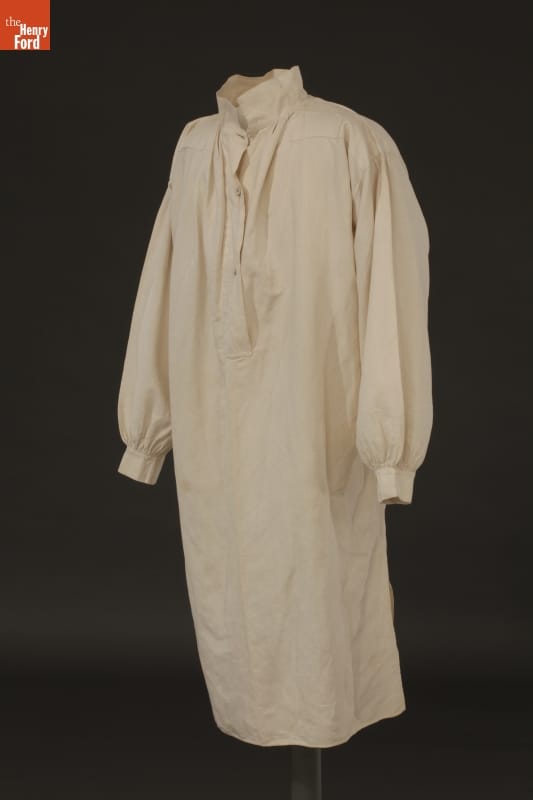
- Men's Shirt, 1800-1820 - Inspired by French fashion, men of early nineteenth-century America padded their chests with layers of clothing. A shirt like this -- worn with a puffy neckband called a cravat, at least one waistcoat, or vest, and an overcoat with a very high, stiff collar -- contributed to the stylish large-chested appearance.
- 1800-1820
- Collections - Artifact
Men's Shirt, 1800-1820
Inspired by French fashion, men of early nineteenth-century America padded their chests with layers of clothing. A shirt like this -- worn with a puffy neckband called a cravat, at least one waistcoat, or vest, and an overcoat with a very high, stiff collar -- contributed to the stylish large-chested appearance.