
Search
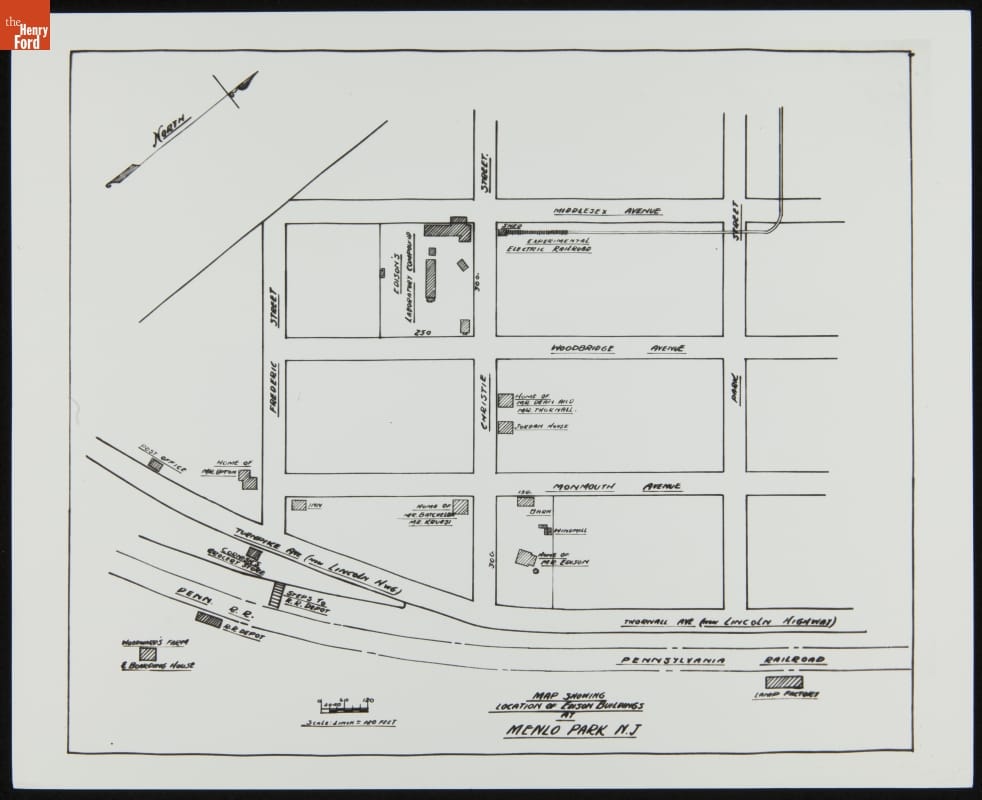
- "Map Showing Location of Edison Buildings at Menlo Park, N.J.," circa 1880 -
- circa 1880
- Collections - Artifact
"Map Showing Location of Edison Buildings at Menlo Park, N.J.," circa 1880
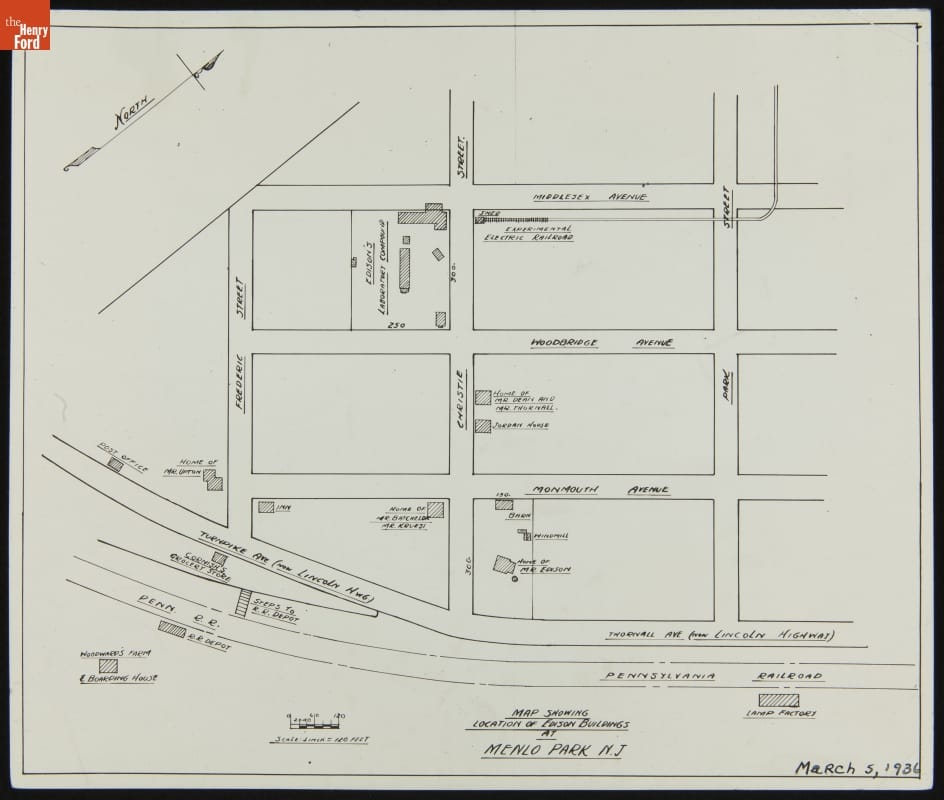
- "Map Showing Location of Edison Buildings at Menlo Park, N.J.," circa 1880 -
- circa 1880
- Collections - Artifact
"Map Showing Location of Edison Buildings at Menlo Park, N.J.," circa 1880
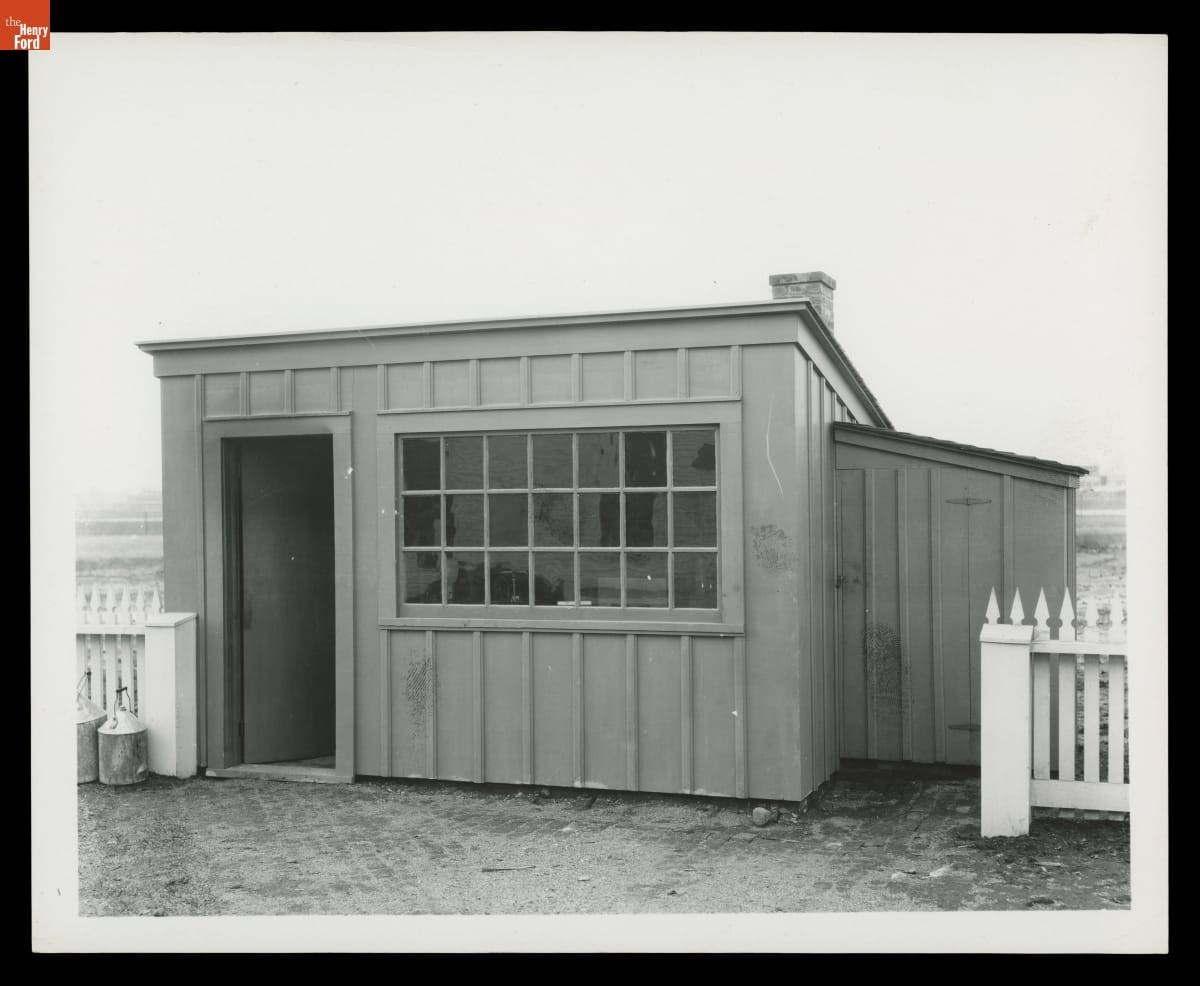
- Menlo Park Carbon Shed in Greenfield Village, October 1929 -
- October 27, 1929
- Collections - Artifact
Menlo Park Carbon Shed in Greenfield Village, October 1929
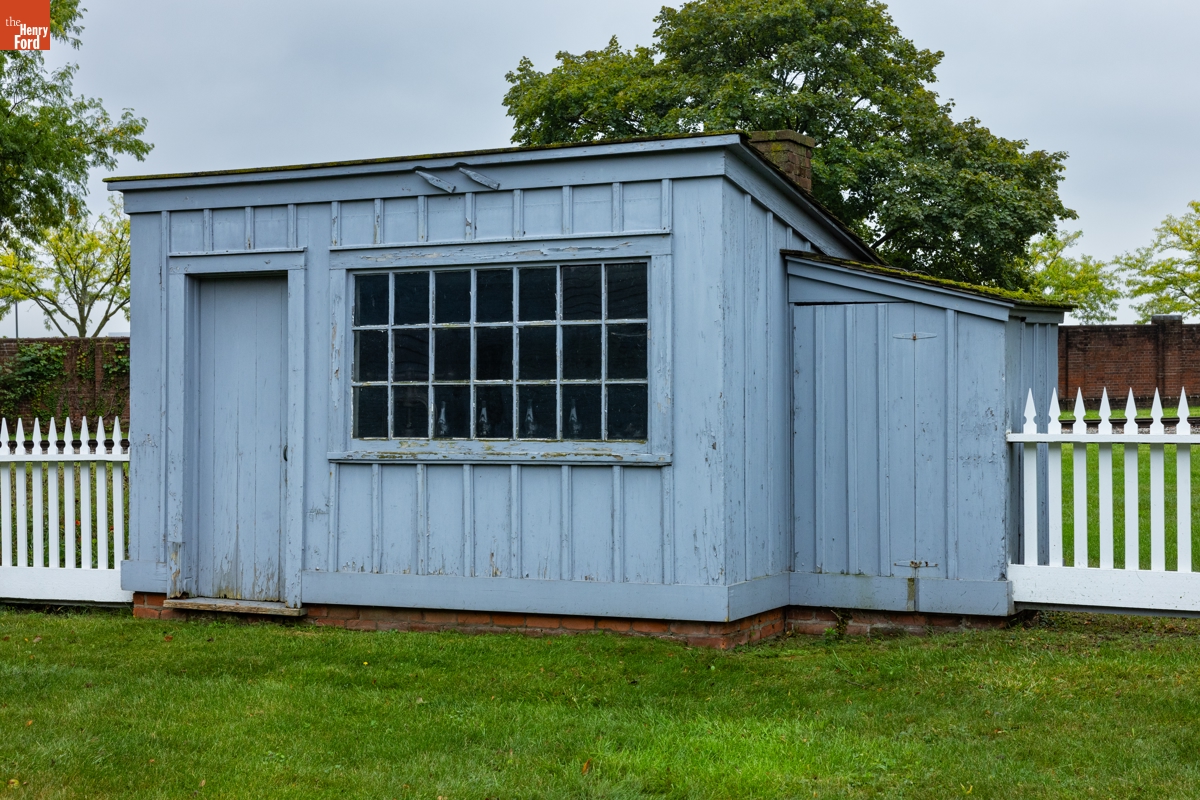
- Menlo Park Carbon Shed - Edison's invention of the carbon telephone transmitter in 1877 is what made the telephone commercially practical. This small wooden shed housed a battery of kerosene lamps, kept lit and set to produce carbon soot. The soot was collected and compressed into carbon tablets for telephone transmitters. Edison also used the carbon produced in this shed for various other experiments.
- circa 1879
- Collections - Artifact
Menlo Park Carbon Shed
Edison's invention of the carbon telephone transmitter in 1877 is what made the telephone commercially practical. This small wooden shed housed a battery of kerosene lamps, kept lit and set to produce carbon soot. The soot was collected and compressed into carbon tablets for telephone transmitters. Edison also used the carbon produced in this shed for various other experiments.
- Menlo Park Carbon Shed in Greenfield Village, circa 1934 - Irving Bacon, a Ford Motor Company employee and Henry Ford's personal artist, created pen-and-ink drawings to illustrate guidebooks for the Edison Institute Museum and Greenfield Village (now The Henry Ford) when they officially opened to the public in 1933. An illustrated souvenir guidebook helped visitors navigate the exhibits and grounds. Ford also used these drawings in other company publications.
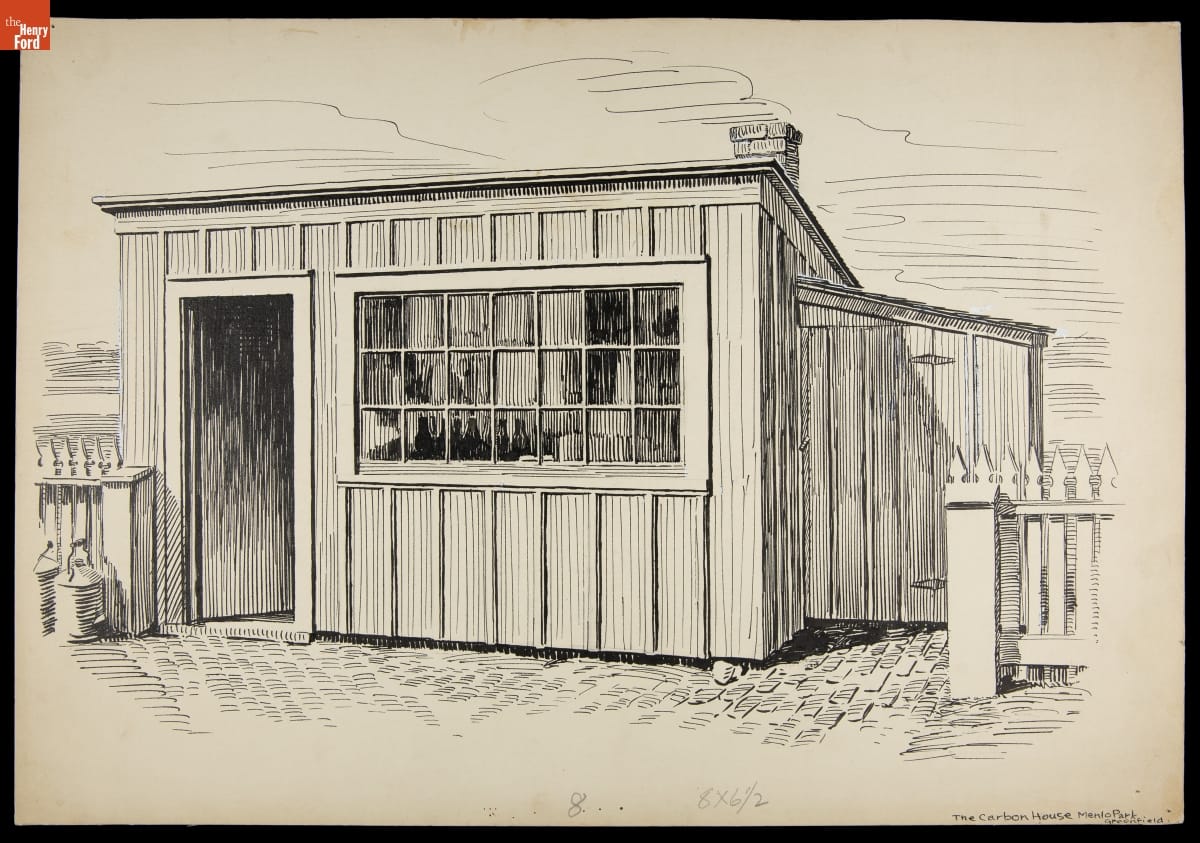
- circa 1934
- Collections - Artifact
Menlo Park Carbon Shed in Greenfield Village, circa 1934
Irving Bacon, a Ford Motor Company employee and Henry Ford's personal artist, created pen-and-ink drawings to illustrate guidebooks for the Edison Institute Museum and Greenfield Village (now The Henry Ford) when they officially opened to the public in 1933. An illustrated souvenir guidebook helped visitors navigate the exhibits and grounds. Ford also used these drawings in other company publications.