
Search
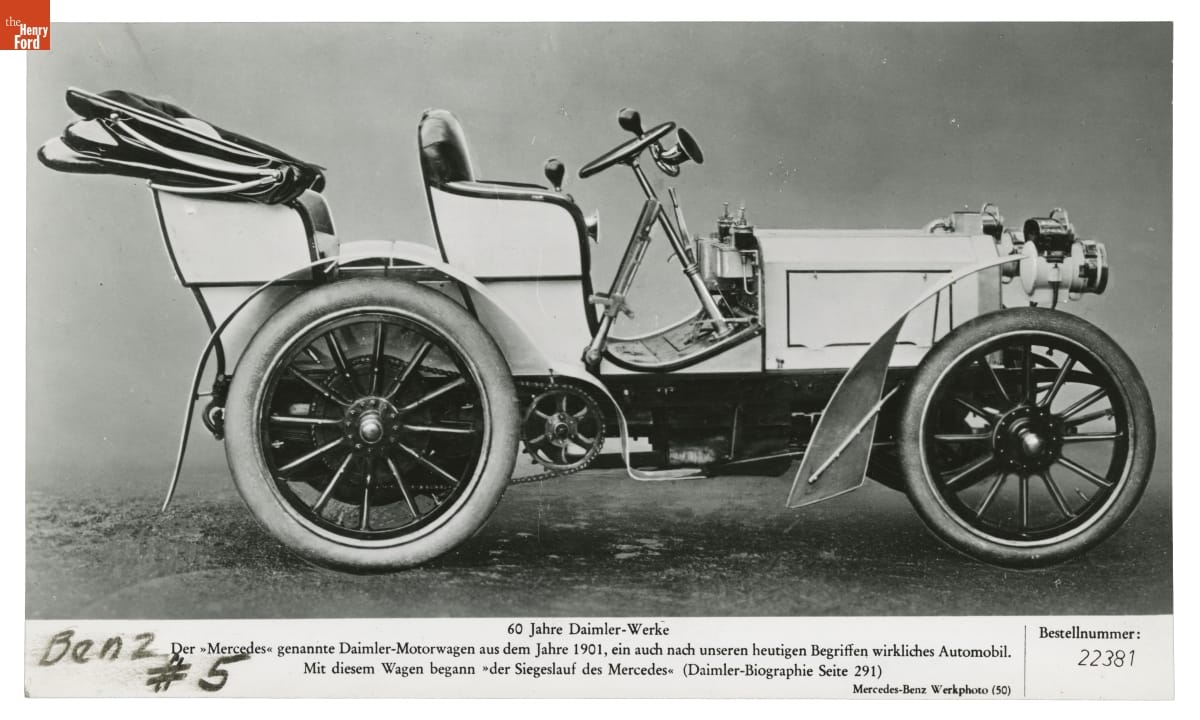
- 1901 Mercedes-Benz Number 5, circa 1955 - The 1901 Mercedes, built by the German firm Daimler, was one of the first automobiles with the engine up front rather than under the seat. That gave more room for bigger engines and also allowed the chassis to be lowered for easier entry and better road holding. It set the pattern for future cars.
- 1901
- Collections - Artifact
1901 Mercedes-Benz Number 5, circa 1955
The 1901 Mercedes, built by the German firm Daimler, was one of the first automobiles with the engine up front rather than under the seat. That gave more room for bigger engines and also allowed the chassis to be lowered for easier entry and better road holding. It set the pattern for future cars.
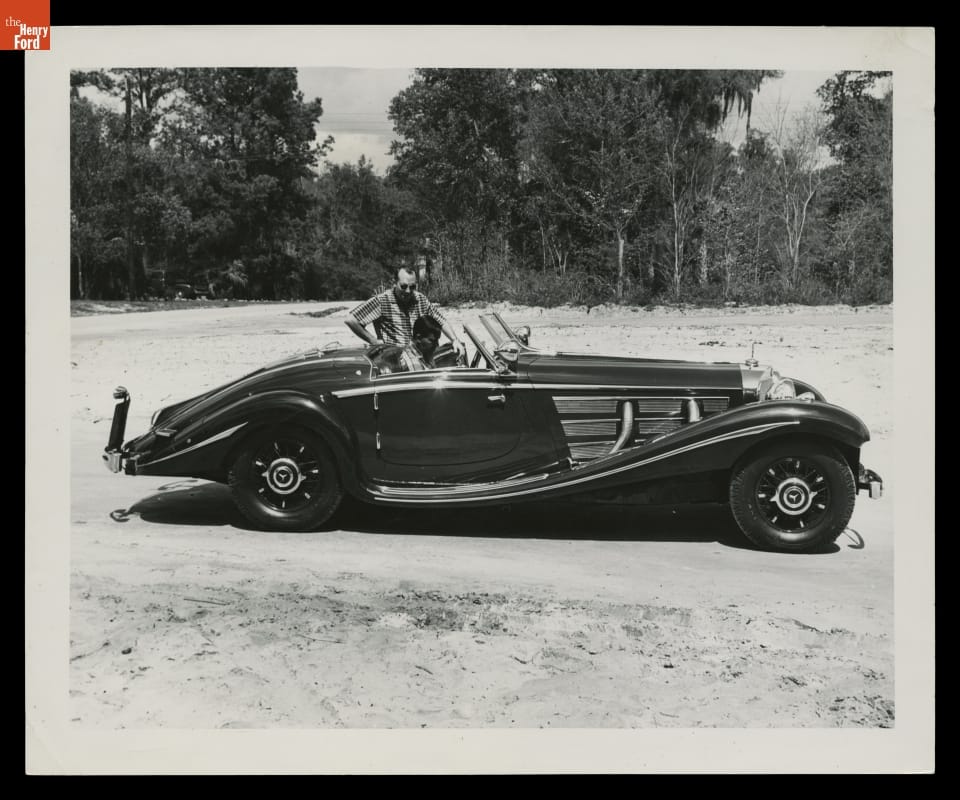
- 1937 Mercedes-Benz 540K Once Owned by Mohammed Zahir Shah of Afghanistan, in Silver Springs, Florida, 1955 - Germany's Mercedez-Benz built its 540K grand touring car from 1936-1940. The "K" stood for the German word "Kompressor" -- a reference to the engine's supercharger. The 5.4-liter, 8-cylinder engine produced up to 180 horsepower and could move the car at speeds over 110 miles per hour. This 540K once belonged to Mohammed Zahir Shah, King of Afghanistan from 1933-1973.
- June 11, 1955
- Collections - Artifact
1937 Mercedes-Benz 540K Once Owned by Mohammed Zahir Shah of Afghanistan, in Silver Springs, Florida, 1955
Germany's Mercedez-Benz built its 540K grand touring car from 1936-1940. The "K" stood for the German word "Kompressor" -- a reference to the engine's supercharger. The 5.4-liter, 8-cylinder engine produced up to 180 horsepower and could move the car at speeds over 110 miles per hour. This 540K once belonged to Mohammed Zahir Shah, King of Afghanistan from 1933-1973.
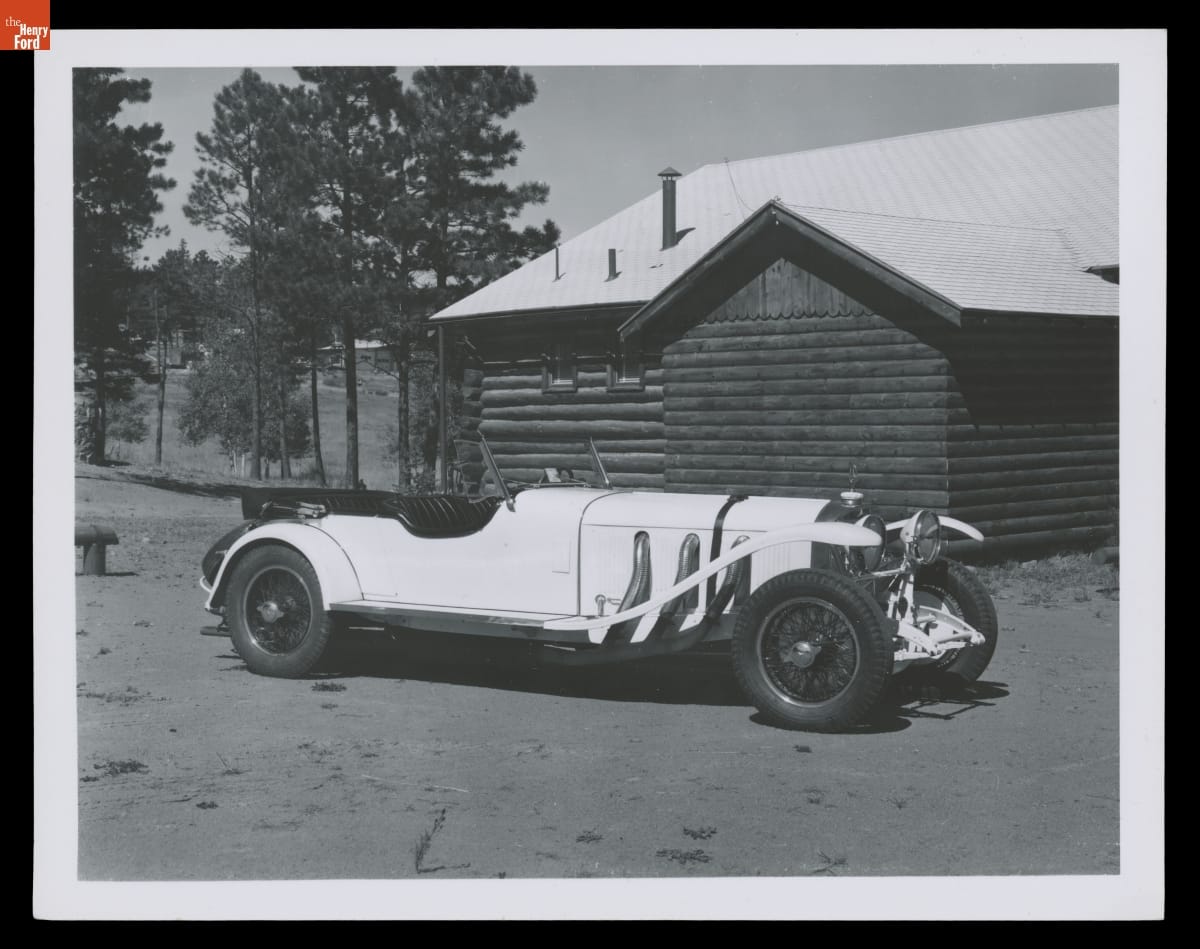
- 1927 or 1928 Mercedes Benz S-Type Sportwagen at Glidden Tour, Long Island, New York, September 1964 - The original Glidden Tours, sponsored by AAA from 1904-1913, promoted both automobiles and road improvements. AAA and the Veteran Motor Car Club of America revived the annual tours in 1946 for owners of vintage automobiles. This time, the focus was more on pleasure than promotion. Participants often dressed in period costume, and they staged impromptu car shows along the way.
- September 22, 1964
- Collections - Artifact
1927 or 1928 Mercedes Benz S-Type Sportwagen at Glidden Tour, Long Island, New York, September 1964
The original Glidden Tours, sponsored by AAA from 1904-1913, promoted both automobiles and road improvements. AAA and the Veteran Motor Car Club of America revived the annual tours in 1946 for owners of vintage automobiles. This time, the focus was more on pleasure than promotion. Participants often dressed in period costume, and they staged impromptu car shows along the way.
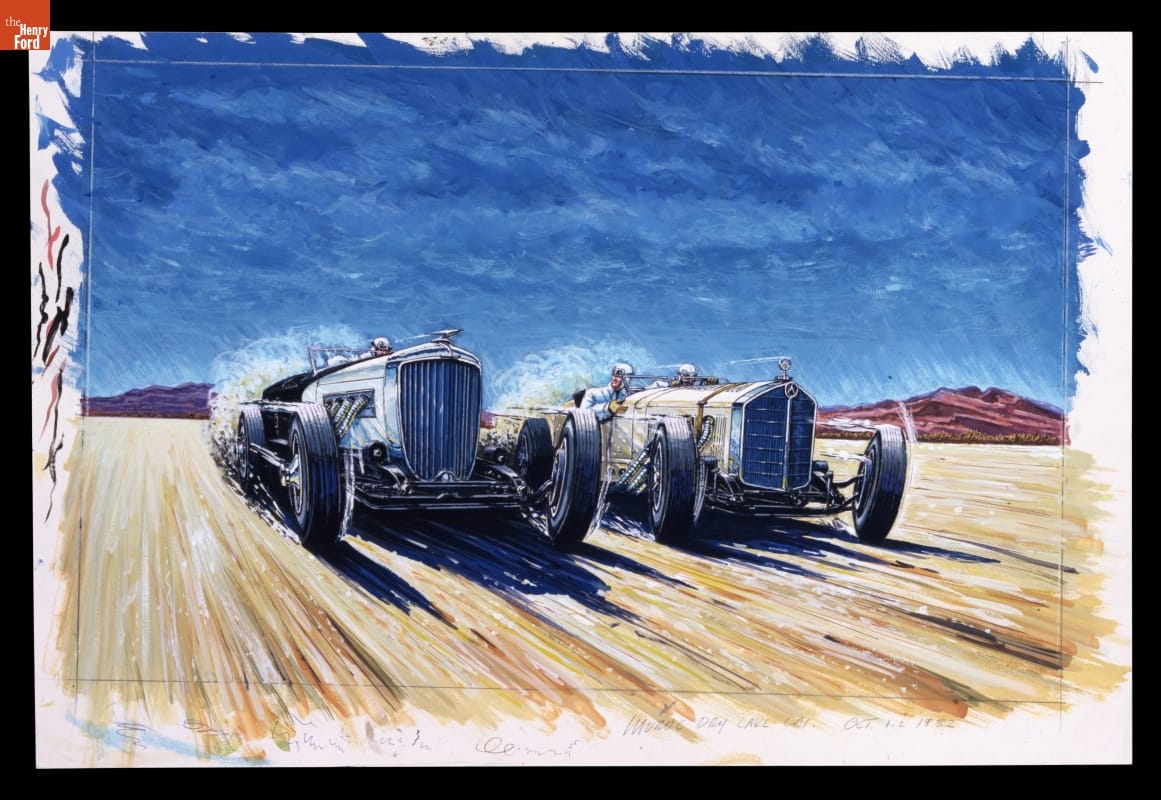
- 1932 Muroc Dry Lake, California, Race, Painted by William L. Mitchell 1977-1987 - Bill Mitchell, head of design at General Motors from 1958 to 1977, painted this scene following his retirement. It shows a 1932 race on Muroc (now Rogers) Dry Lake. The lakebed, located in southern California's Mojave Desert, was used for racing and land speed runs into the 1930s, when it became a part of Edwards Air Force Base.
- 1932
- Collections - Artifact
1932 Muroc Dry Lake, California, Race, Painted by William L. Mitchell 1977-1987
Bill Mitchell, head of design at General Motors from 1958 to 1977, painted this scene following his retirement. It shows a 1932 race on Muroc (now Rogers) Dry Lake. The lakebed, located in southern California's Mojave Desert, was used for racing and land speed runs into the 1930s, when it became a part of Edwards Air Force Base.
- Circa 1936 Mercedes-Benz Car on Exhibit - The Mercedes-Benz brand was inaugurated in 1926. The German nameplate traces its roots to Karl Benz's 1885 Patent-Motorwagen, which is generally regarded as the first self-propelled vehicle designed around an internal combustion engine. Mercedes-Benz was -- and still is -- best known for its luxury cars, but the marque also built commercial trucks and buses.
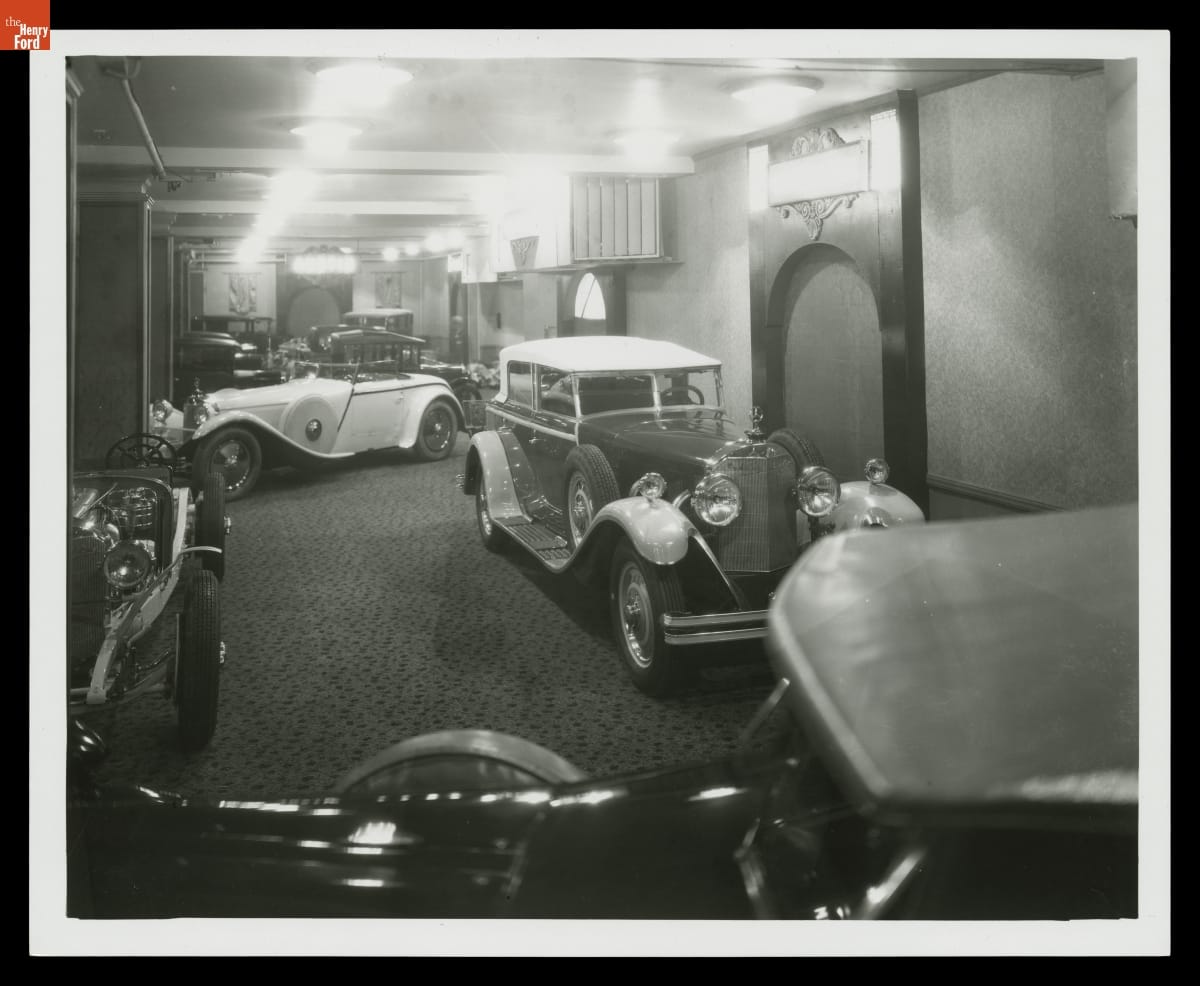
- October 01, 1978
- Collections - Artifact
Circa 1936 Mercedes-Benz Car on Exhibit
The Mercedes-Benz brand was inaugurated in 1926. The German nameplate traces its roots to Karl Benz's 1885 Patent-Motorwagen, which is generally regarded as the first self-propelled vehicle designed around an internal combustion engine. Mercedes-Benz was -- and still is -- best known for its luxury cars, but the marque also built commercial trucks and buses.
- Scale Model of a 1954-1955 Mercedes Benz Grand Prix Rennwagen - Mercedes-Benz competed in the 1954 and 1955 Formula One seasons with the W196 race car. With drivers Juan Manuel Fangio and Stirling Moss, the car won 9 of the 12 races it entered and helped Fangio earn the World Drivers' Championship in both seasons. Mercedes-Benz built the W196 in both closed- and open-wheel forms. This model represents the closed-wheel version.
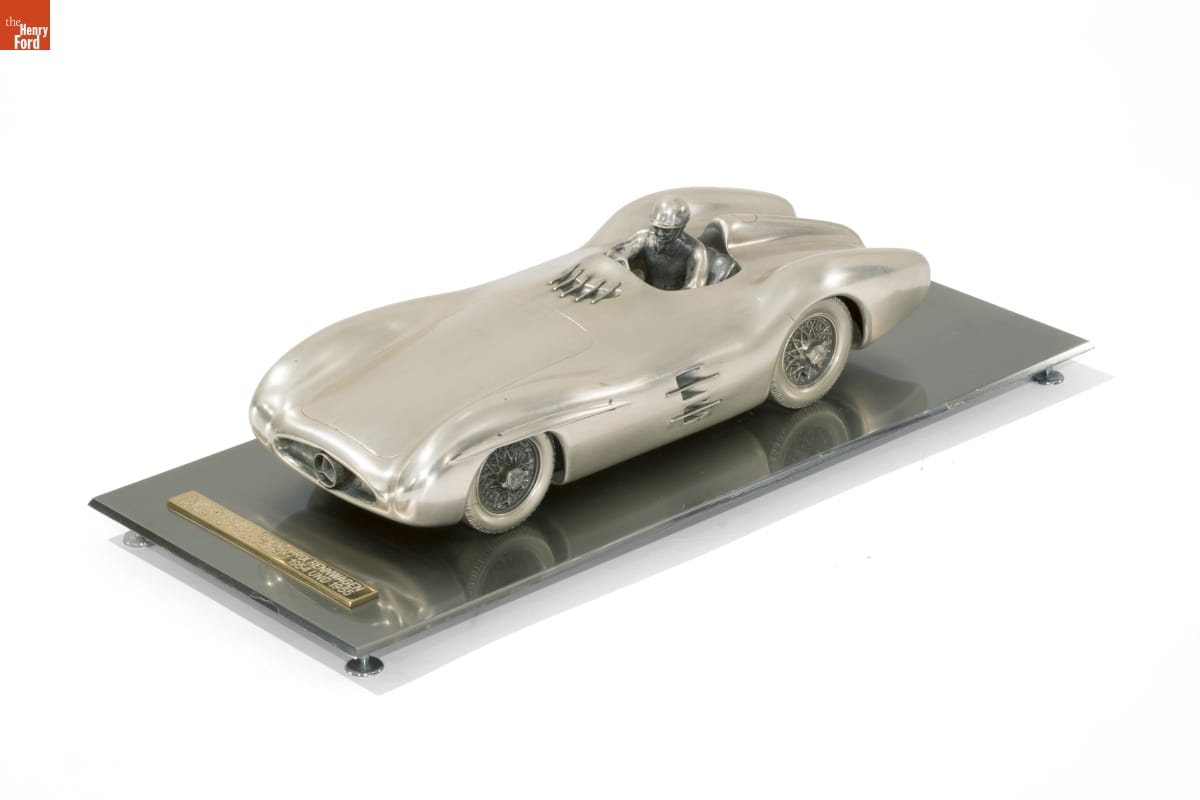
- 1954-1955
- Collections - Artifact
Scale Model of a 1954-1955 Mercedes Benz Grand Prix Rennwagen
Mercedes-Benz competed in the 1954 and 1955 Formula One seasons with the W196 race car. With drivers Juan Manuel Fangio and Stirling Moss, the car won 9 of the 12 races it entered and helped Fangio earn the World Drivers' Championship in both seasons. Mercedes-Benz built the W196 in both closed- and open-wheel forms. This model represents the closed-wheel version.
- 1927 Mercedes Automobile in Henry Ford Museum, 1940 - Germany's Daimler Motors built its Mercedes 24/100/140 PS model from 1924 to 1929. The car's 6.24-liter, six-cylinder engine produced up to 138 horsepower with its supercharger engaged. The top speed was better than 70 miles per hour. After Daimler merged with Benz & Company in 1926, the car was rebranded as the Type 630.
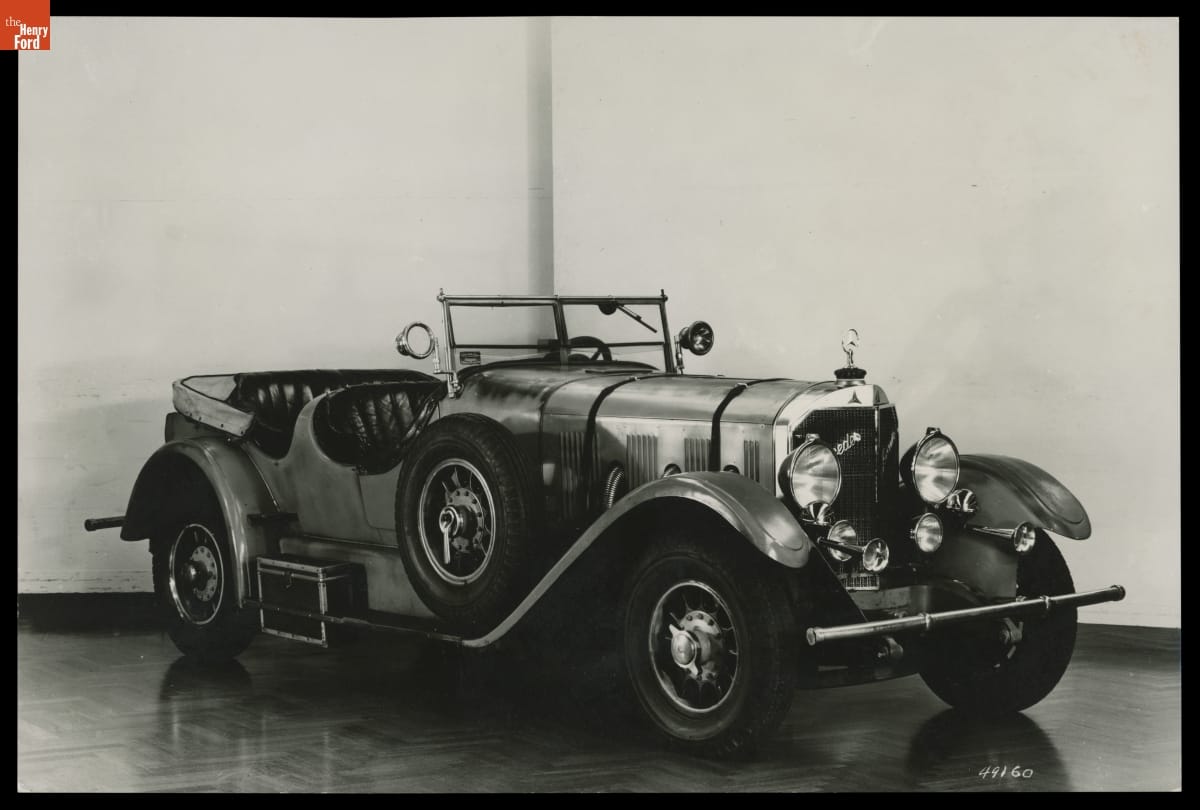
- November 06, 1940
- Collections - Artifact
1927 Mercedes Automobile in Henry Ford Museum, 1940
Germany's Daimler Motors built its Mercedes 24/100/140 PS model from 1924 to 1929. The car's 6.24-liter, six-cylinder engine produced up to 138 horsepower with its supercharger engaged. The top speed was better than 70 miles per hour. After Daimler merged with Benz & Company in 1926, the car was rebranded as the Type 630.
- Mercedes Automobile, circa 1927 - Daimler-Benz of Germany introduced its Mercedes Model S in 1927. The high-performance sports car featured a six-cylinder, 6.78-liter engine that produced up to 180 horsepower with its supercharger engaged. Model S cars earned a 1-2-3 finish at the 1927 German Grand Prix, where Otto Merz took the checkered flag with an average speed of 63.75 miles per hour.
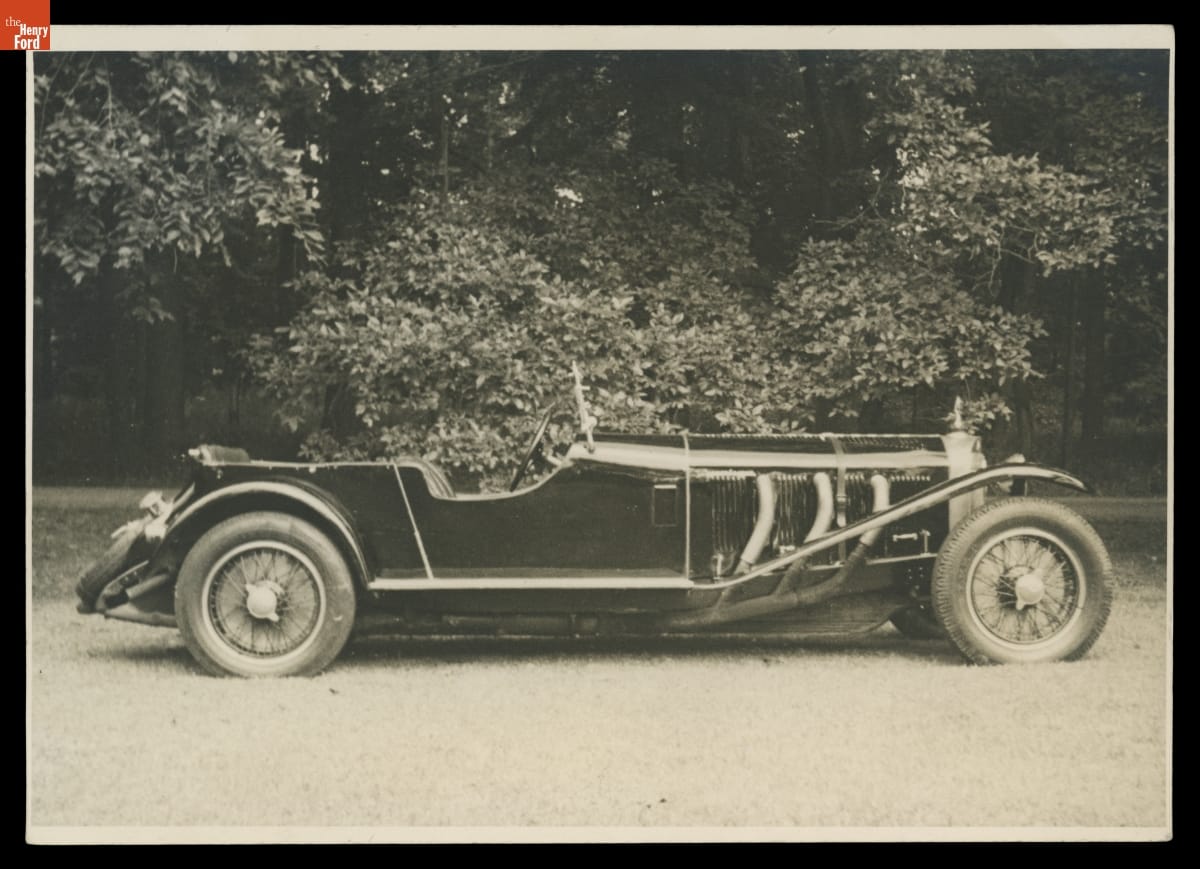
- circa 1927
- Collections - Artifact
Mercedes Automobile, circa 1927
Daimler-Benz of Germany introduced its Mercedes Model S in 1927. The high-performance sports car featured a six-cylinder, 6.78-liter engine that produced up to 180 horsepower with its supercharger engaged. Model S cars earned a 1-2-3 finish at the 1927 German Grand Prix, where Otto Merz took the checkered flag with an average speed of 63.75 miles per hour.
- Glow Plug, 1975-1985 - Diesel engines use highly compressed hot air to ignite fuel. In cold weather, this compression process may not heat the air sufficiently to ignite the fuel and start the engine. A glow plug helps raise the combustion chamber's air temperature. The glow plug seen here is from a 1980s Mercedes.
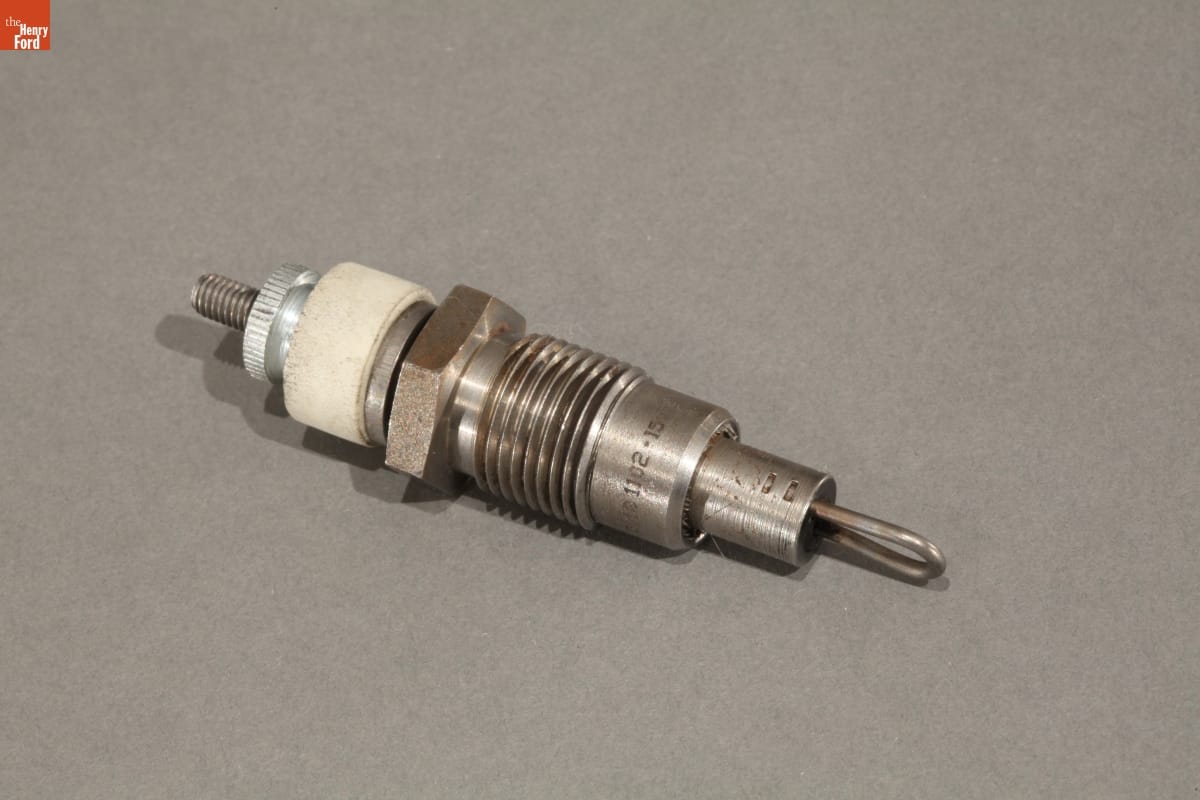
- 1975-1985
- Collections - Artifact
Glow Plug, 1975-1985
Diesel engines use highly compressed hot air to ignite fuel. In cold weather, this compression process may not heat the air sufficiently to ignite the fuel and start the engine. A glow plug helps raise the combustion chamber's air temperature. The glow plug seen here is from a 1980s Mercedes.
- Glow Plug, 1975-1985 - Diesel engines use highly compressed hot air to ignite fuel. In cold weather, this compression process may not heat the air sufficiently to ignite the fuel and start the engine. A glow plug helps raise the combustion chamber's air temperature. The glow plug seen here is from a 1980s Mercedes.
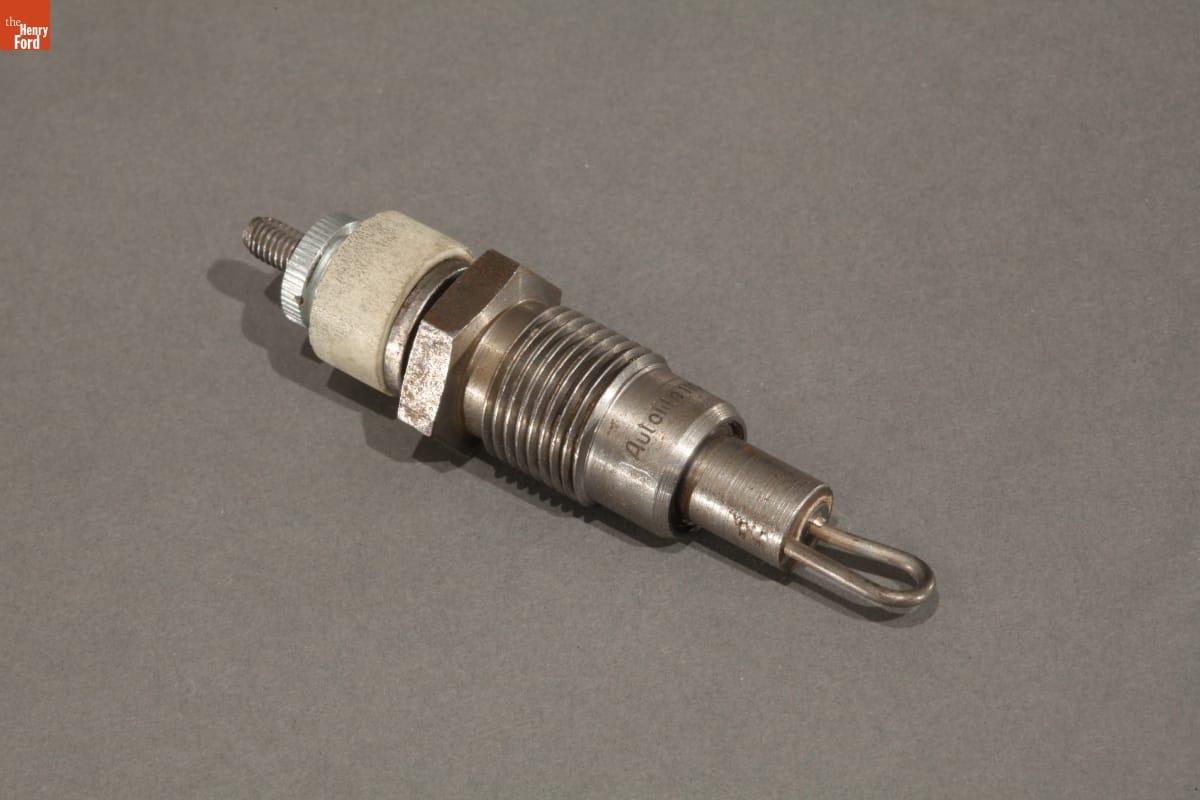
- 1975-1985
- Collections - Artifact
Glow Plug, 1975-1985
Diesel engines use highly compressed hot air to ignite fuel. In cold weather, this compression process may not heat the air sufficiently to ignite the fuel and start the engine. A glow plug helps raise the combustion chamber's air temperature. The glow plug seen here is from a 1980s Mercedes.