
Search
- "Chinese Merchants. Chinatown, S.F., Cal." -
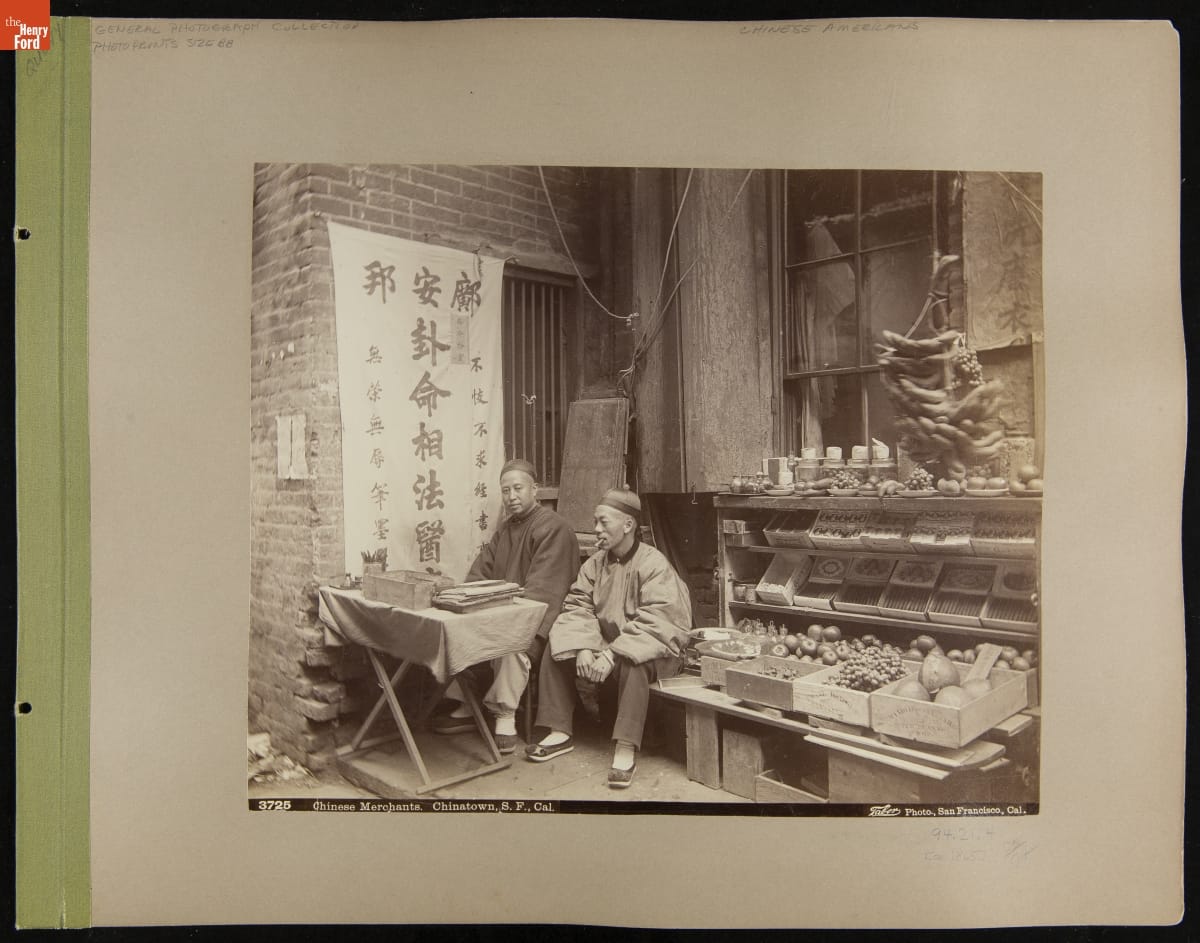
- circa 1865
- Collections - Artifact
"Chinese Merchants. Chinatown, S.F., Cal."
- Hot Dog Vendor at Grand and Havemeyer Streets, Brooklyn, New York, 1935 -
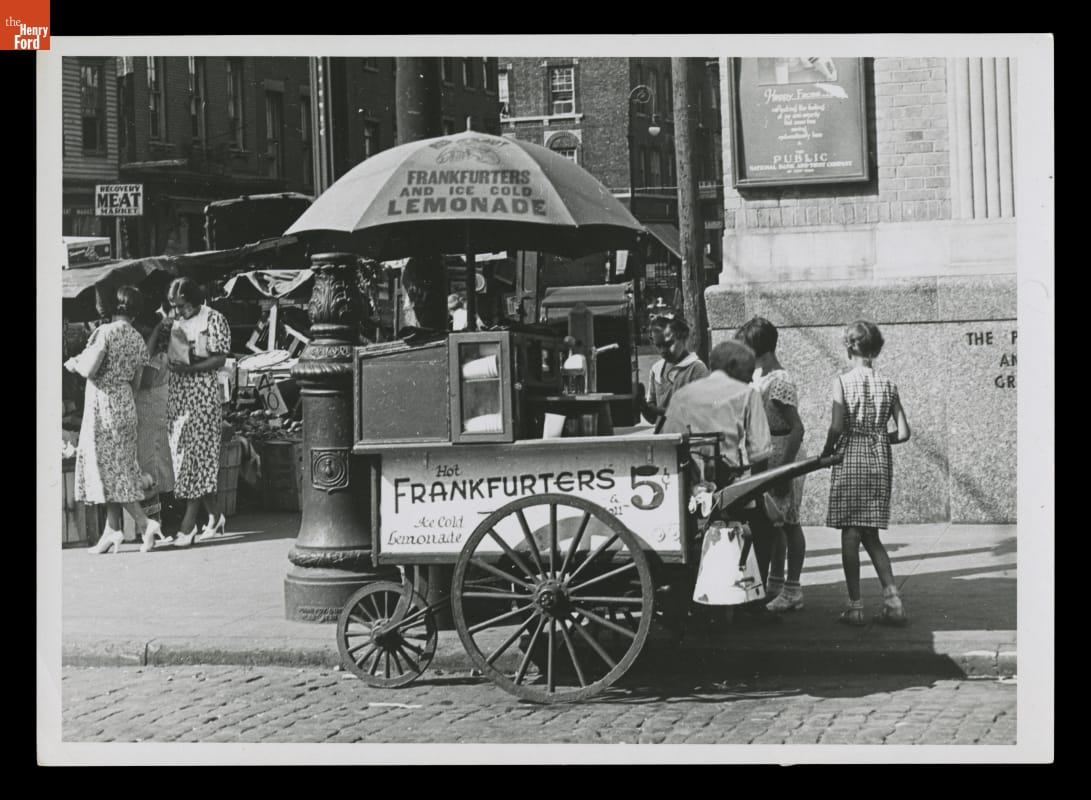
- 1935
- Collections - Artifact
Hot Dog Vendor at Grand and Havemeyer Streets, Brooklyn, New York, 1935
- Insulator, Used by U. S. Merchant Marines, 1915 -
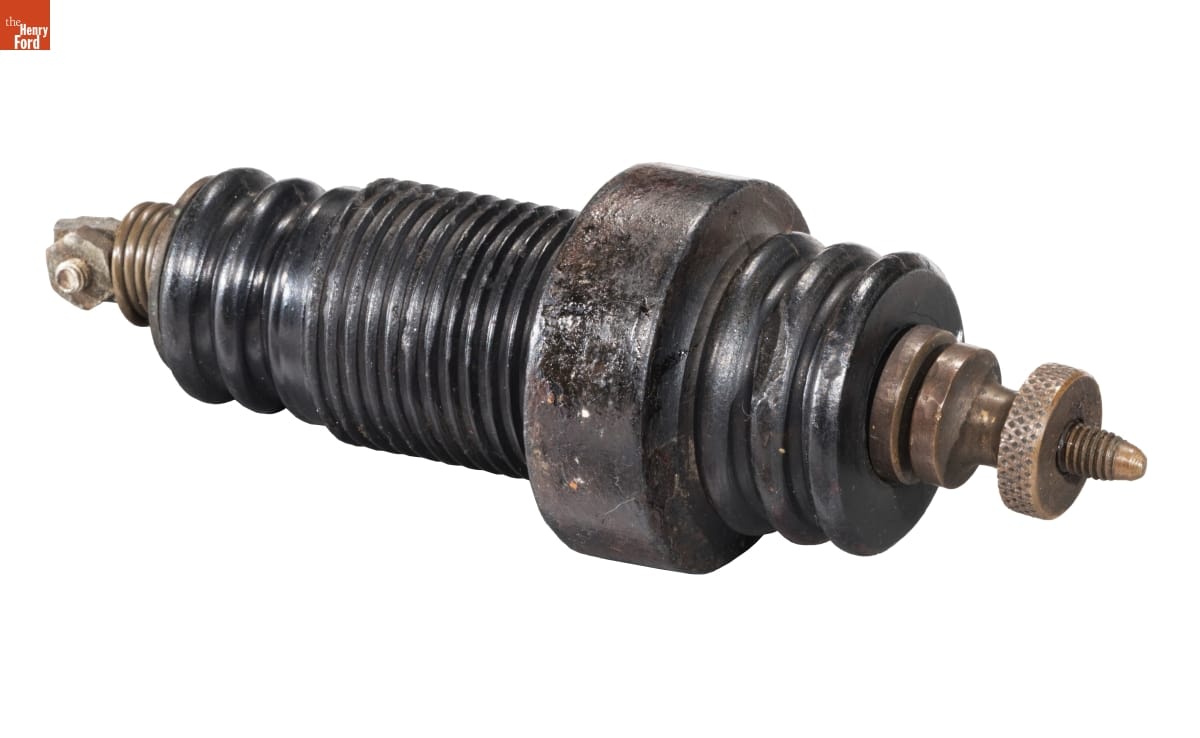
- 1915
- Collections - Artifact
Insulator, Used by U. S. Merchant Marines, 1915
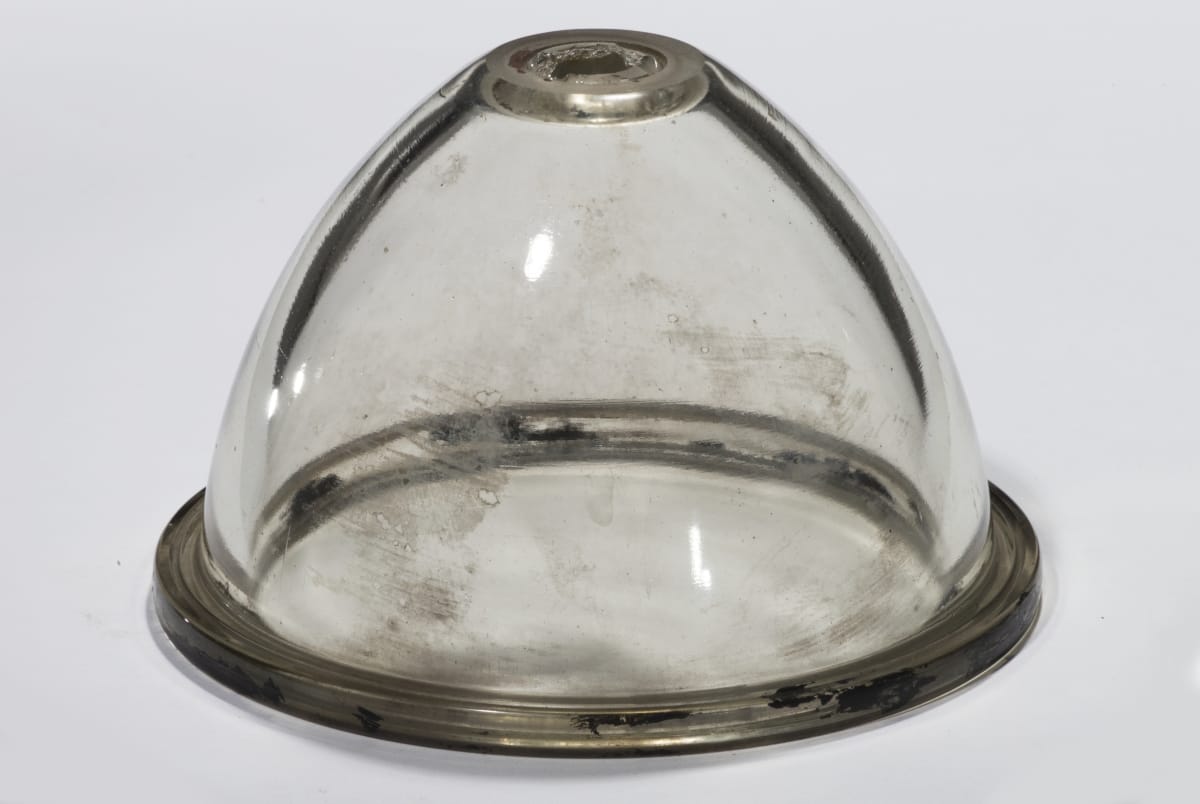
- Pyrex Entering Insulator - Insulators--made of poor electrical conductors such as glass, ceramic, plastic, or composite materials--help make electric power and communication transmission lines safe. They isolate wires from utility poles, transmission towers, and buildings--structures that are made of conductive materials that could cause signal degradation, power loss, fire, or pose a shock hazard if the lines touched them.
- Collections - Artifact
Pyrex Entering Insulator
Insulators--made of poor electrical conductors such as glass, ceramic, plastic, or composite materials--help make electric power and communication transmission lines safe. They isolate wires from utility poles, transmission towers, and buildings--structures that are made of conductive materials that could cause signal degradation, power loss, fire, or pose a shock hazard if the lines touched them.
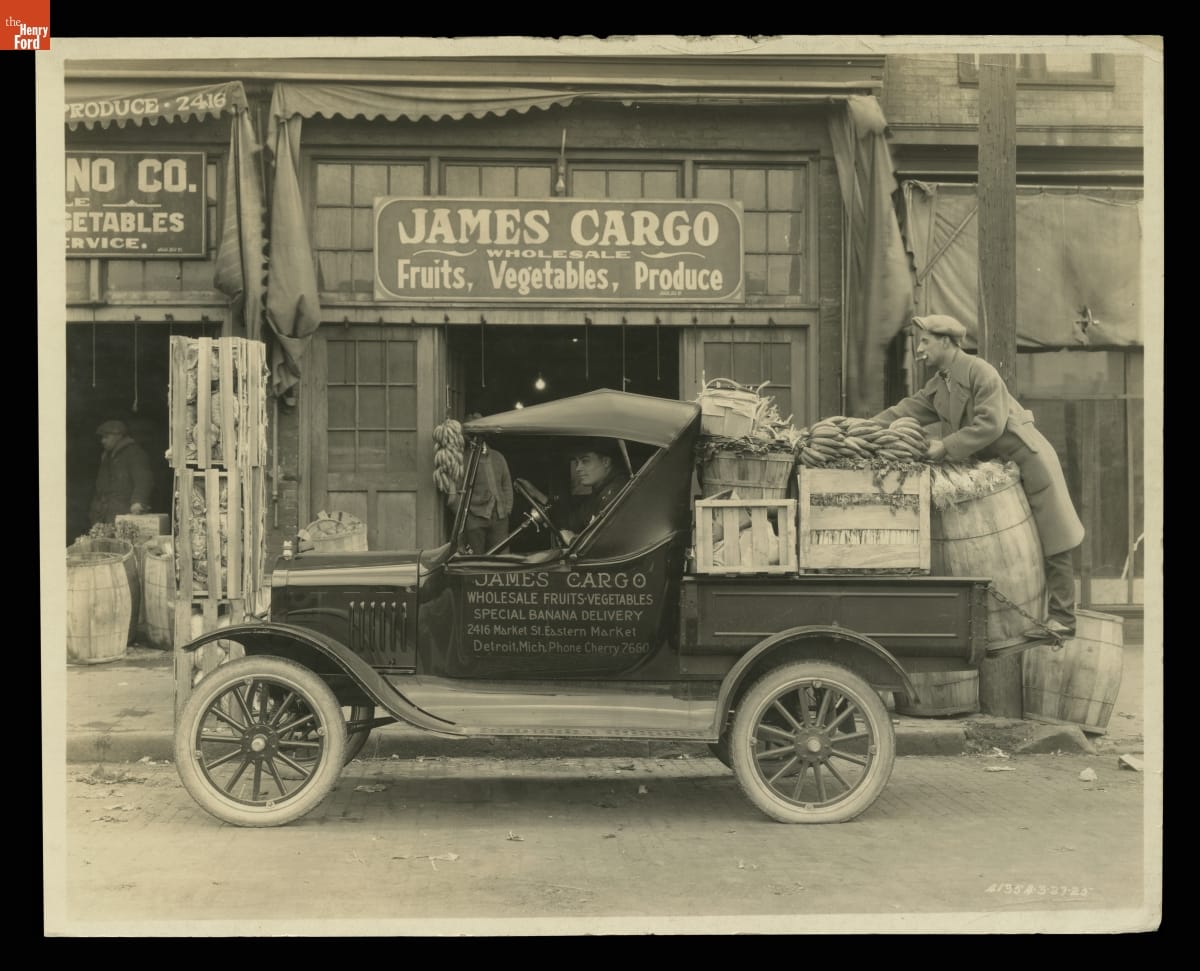
- Ford Model T Pickup Used by James Cargo, Wholesale Fruit and Vegetable Dealer, Eastern Market, Detroit, Michigan, March 1925 - For years, buyers needing a light-duty truck had modified Ford's two-seat Model T roadster by removing the rear deck and replacing it with a truck bed. Ford noticed the trend and introduced a factory-built Model T pickup in 1925. It featured a steel bed 56 inches long by 40-3/4 inches wide. Ford sold nearly 33,800 units that first year.
- March 27, 1925
- Collections - Artifact
Ford Model T Pickup Used by James Cargo, Wholesale Fruit and Vegetable Dealer, Eastern Market, Detroit, Michigan, March 1925
For years, buyers needing a light-duty truck had modified Ford's two-seat Model T roadster by removing the rear deck and replacing it with a truck bed. Ford noticed the trend and introduced a factory-built Model T pickup in 1925. It featured a steel bed 56 inches long by 40-3/4 inches wide. Ford sold nearly 33,800 units that first year.
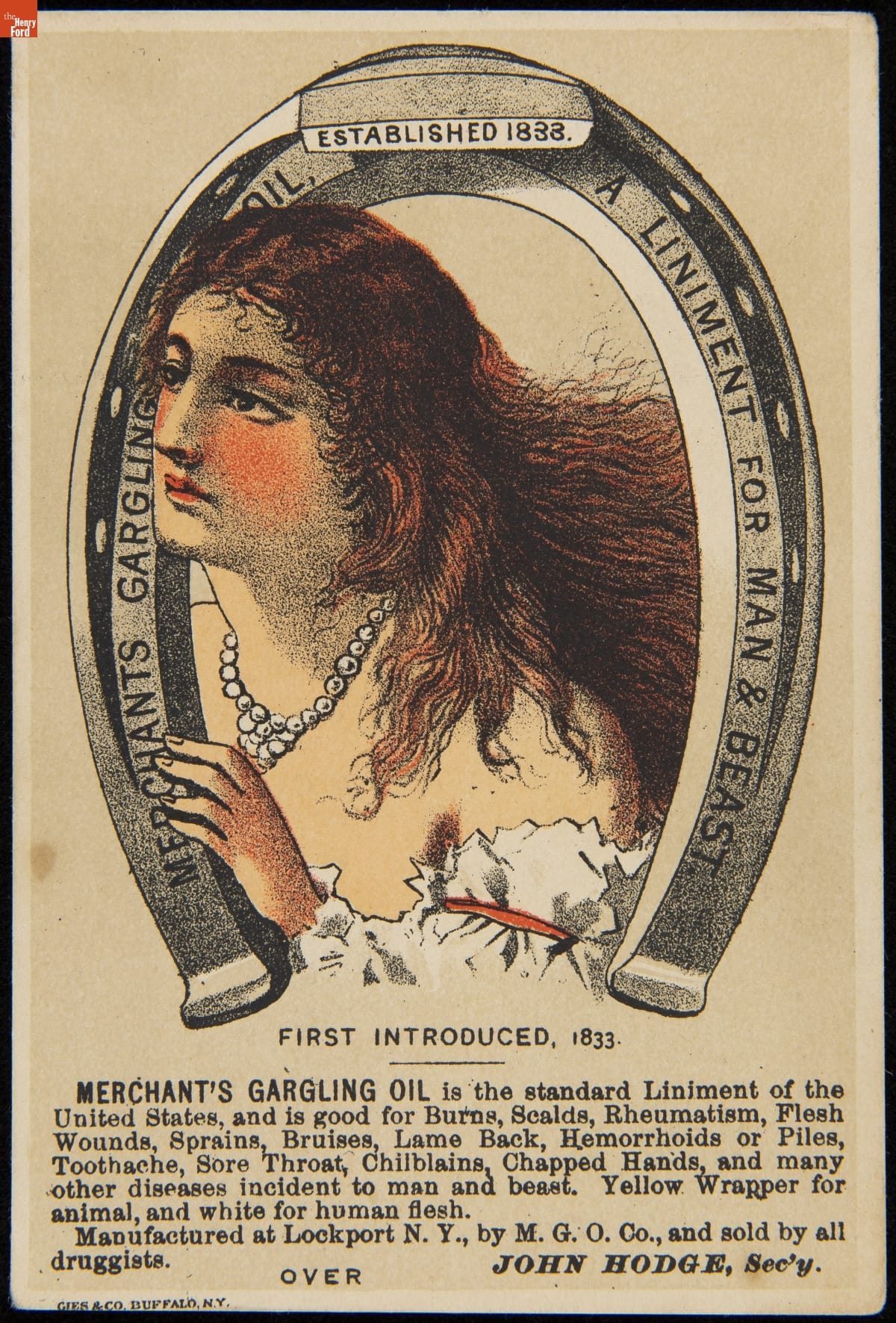
- Trade Card for Merchant's Gargling Oil, Merchant's Gargling Oil Company, circa 1880 - Dr. George Merchant founded the Merchant's Gargling Oil Company in 1833 in Lockport, New York. The company claimed the liniment (not really for "gargling") eased a variety of aches and pains common to "man and beast"--it bottled one version for humans and another for animals. In the late 1800s, the company used almanacs, songbooks, and trade cards to advertise its product.
- circa 1880
- Collections - Artifact
Trade Card for Merchant's Gargling Oil, Merchant's Gargling Oil Company, circa 1880
Dr. George Merchant founded the Merchant's Gargling Oil Company in 1833 in Lockport, New York. The company claimed the liniment (not really for "gargling") eased a variety of aches and pains common to "man and beast"--it bottled one version for humans and another for animals. In the late 1800s, the company used almanacs, songbooks, and trade cards to advertise its product.
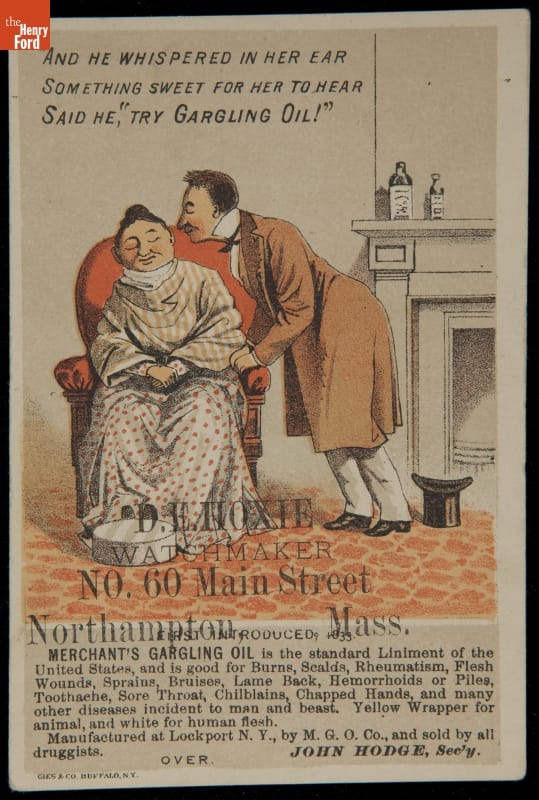
- Trade Card for Merchant's Gargling Oil and Watchmaker D.E. Hoxie, 1870-1900 - Dr. George Merchant founded the Merchant's Gargling Oil Company in 1833 in Lockport, New York. The company claimed the liniment (not really for "gargling") eased a variety of aches and pains common to "man and beast"--it bottled one version for humans and another for animals. In the late 1800s, the company used almanacs, songbooks, and trade cards to advertise its product.
- 1870-1900
- Collections - Artifact
Trade Card for Merchant's Gargling Oil and Watchmaker D.E. Hoxie, 1870-1900
Dr. George Merchant founded the Merchant's Gargling Oil Company in 1833 in Lockport, New York. The company claimed the liniment (not really for "gargling") eased a variety of aches and pains common to "man and beast"--it bottled one version for humans and another for animals. In the late 1800s, the company used almanacs, songbooks, and trade cards to advertise its product.
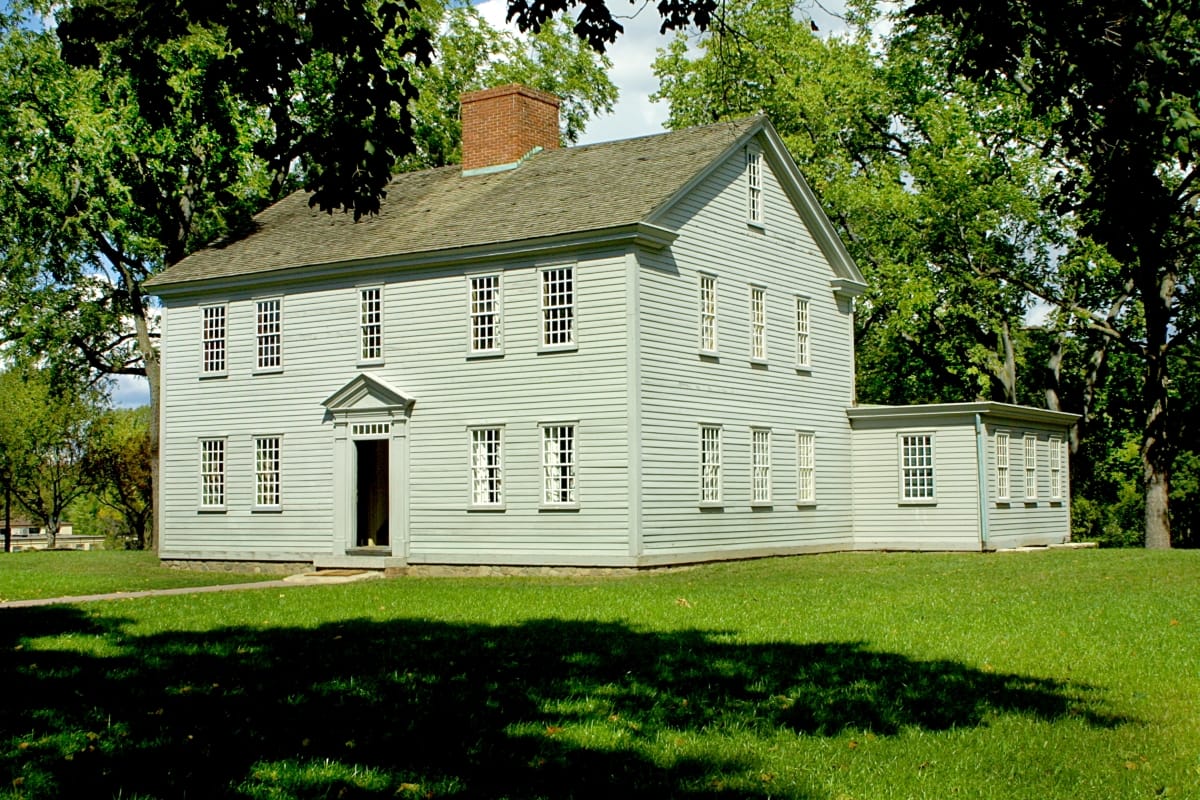
- Giddings Family Home - John Giddings was a merchant who earned a good living in the West Indies trade. Giddings lived here with his wife and five children. He built this grand house in 1751 in Exeter, New Hampshire. Its plan was typical of upscale New England houses of its time, with a multi-purpose hall and parlor on the first floor and two bedrooms above.
- circa 1750
- Collections - Artifact
Giddings Family Home
John Giddings was a merchant who earned a good living in the West Indies trade. Giddings lived here with his wife and five children. He built this grand house in 1751 in Exeter, New Hampshire. Its plan was typical of upscale New England houses of its time, with a multi-purpose hall and parlor on the first floor and two bedrooms above.
- Trade Card for Merchant's Gargling Oil, Merchant's Gargling Oil Company, circa 1880 - Dr. George Merchant founded the Merchant's Gargling Oil Company in 1833 in Lockport, New York. The company claimed the liniment (not really for "gargling") eased a variety of aches and pains common to "man and beast"--it bottled one version for humans and another for animals. In the late 1800s, the company used almanacs, songbooks, and trade cards to advertise its product.
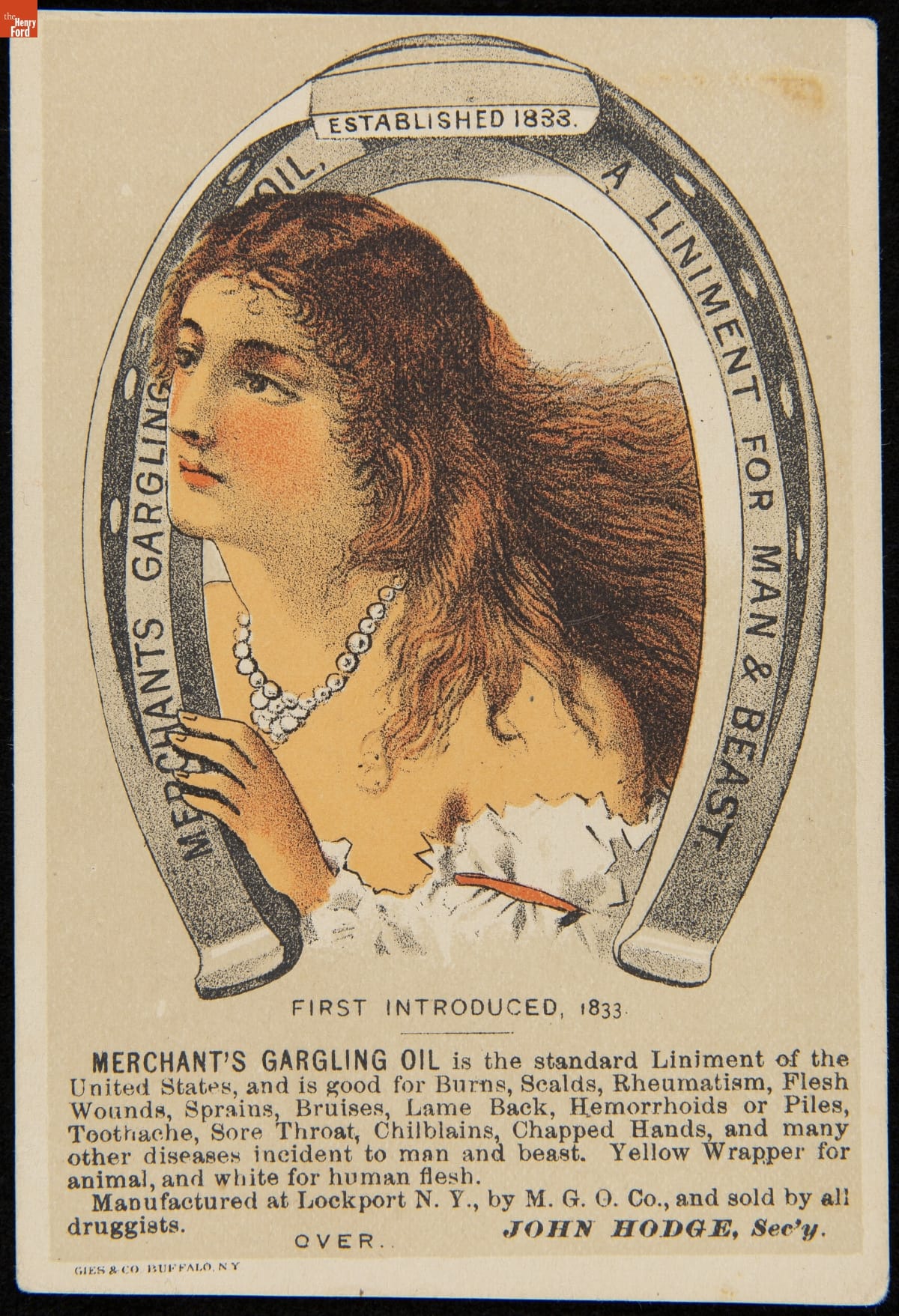
- circa 1880
- Collections - Artifact
Trade Card for Merchant's Gargling Oil, Merchant's Gargling Oil Company, circa 1880
Dr. George Merchant founded the Merchant's Gargling Oil Company in 1833 in Lockport, New York. The company claimed the liniment (not really for "gargling") eased a variety of aches and pains common to "man and beast"--it bottled one version for humans and another for animals. In the late 1800s, the company used almanacs, songbooks, and trade cards to advertise its product.
- Trade Card for Merchant's Gargling Oil, Merchant's Gargling Oil Company, circa 1880 - Dr. George Merchant founded the Merchant's Gargling Oil Company in 1833 in Lockport, New York. The company claimed the liniment (not really for "gargling") eased a variety of aches and pains common to "man and beast"--it bottled one version for humans and another for animals. In the late 1800s, the company used almanacs, songbooks, and trade cards to advertise its product.
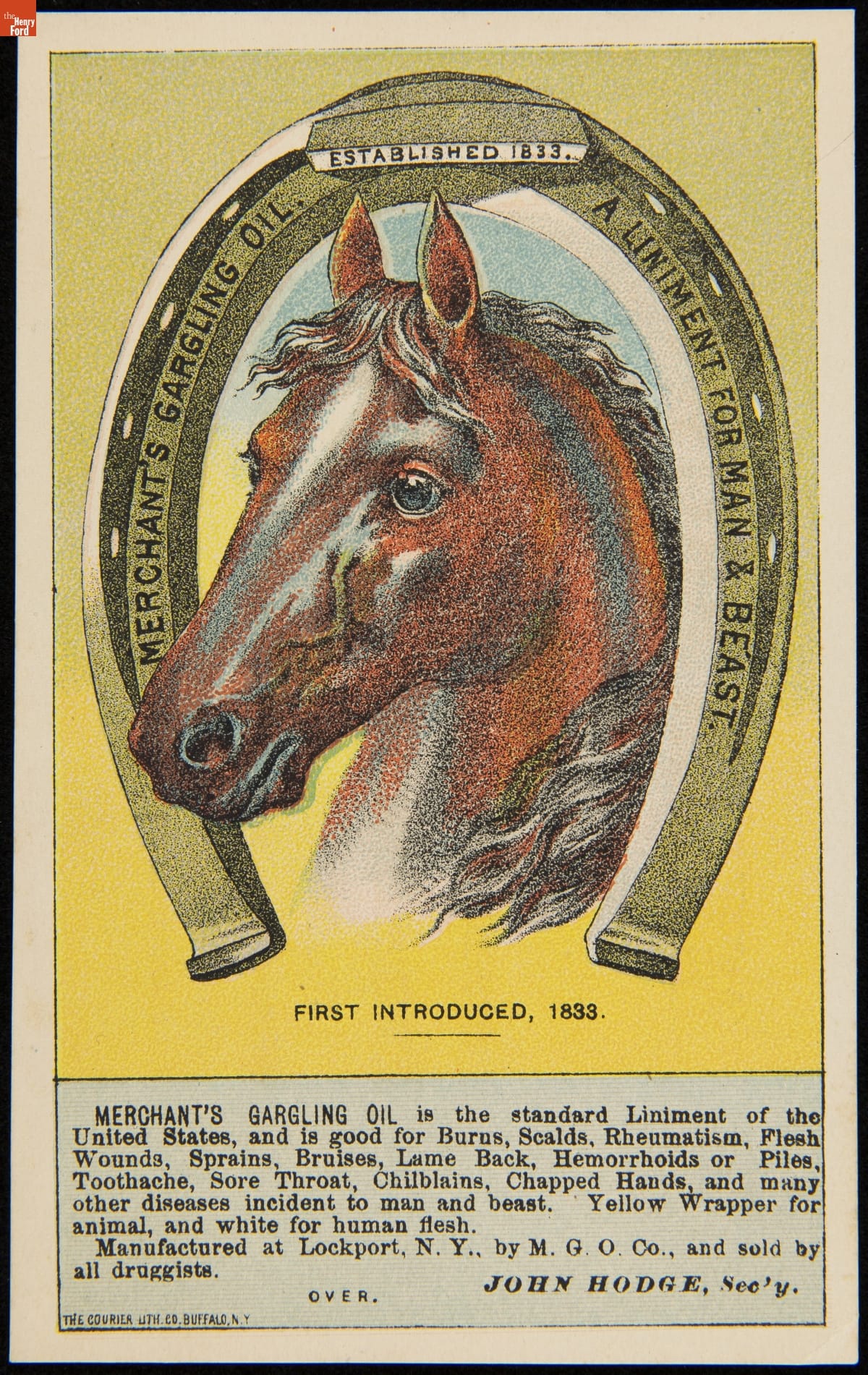
- circa 1880
- Collections - Artifact
Trade Card for Merchant's Gargling Oil, Merchant's Gargling Oil Company, circa 1880
Dr. George Merchant founded the Merchant's Gargling Oil Company in 1833 in Lockport, New York. The company claimed the liniment (not really for "gargling") eased a variety of aches and pains common to "man and beast"--it bottled one version for humans and another for animals. In the late 1800s, the company used almanacs, songbooks, and trade cards to advertise its product.