
Search
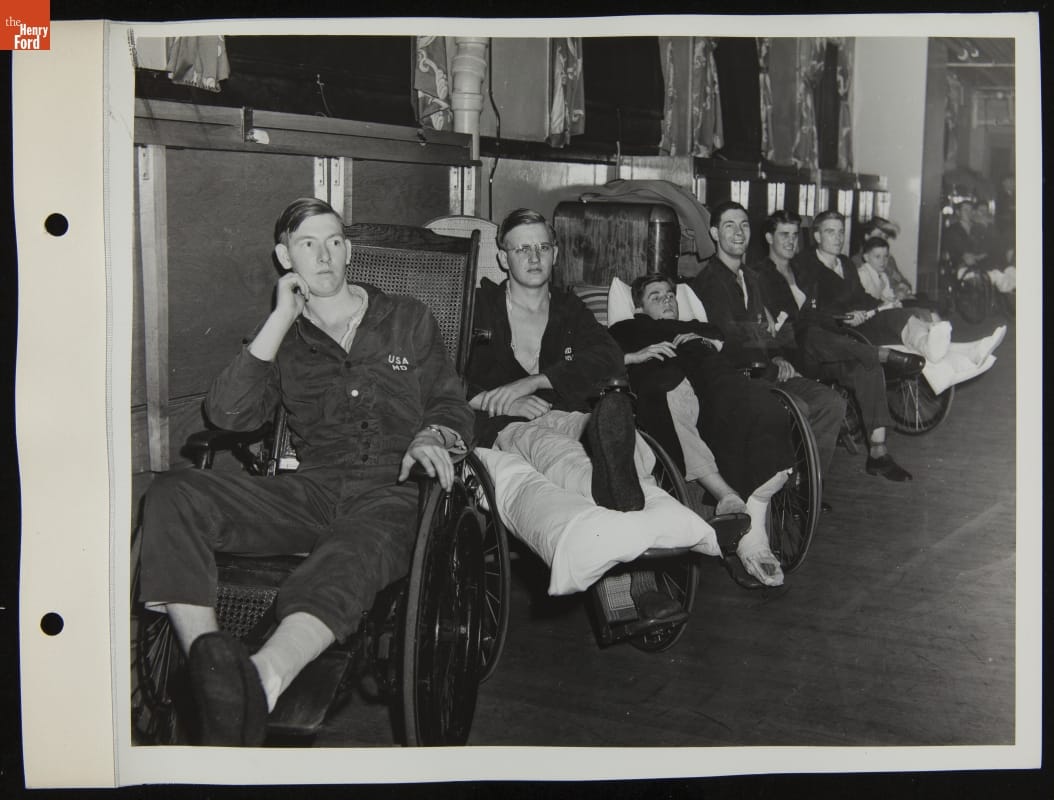
- Patients at Percy Jones Hospital, Ford Legion Day, Battle Creek, Michigan, April 1944 - In August 1942, the United States Army purchased the former main building of John Harvey Kellogg's Battle Creek, Michigan, sanitarium. It was remodeled and rededicated as Percy Jones Army Hospital. By the end of World War II, the hospital and its associated facilities were the Army's largest medical installation. Reactivated during the Korean War, Percy Jones closed permanently in 1954.
- April 09, 1944
- Collections - Artifact
Patients at Percy Jones Hospital, Ford Legion Day, Battle Creek, Michigan, April 1944
In August 1942, the United States Army purchased the former main building of John Harvey Kellogg's Battle Creek, Michigan, sanitarium. It was remodeled and rededicated as Percy Jones Army Hospital. By the end of World War II, the hospital and its associated facilities were the Army's largest medical installation. Reactivated during the Korean War, Percy Jones closed permanently in 1954.
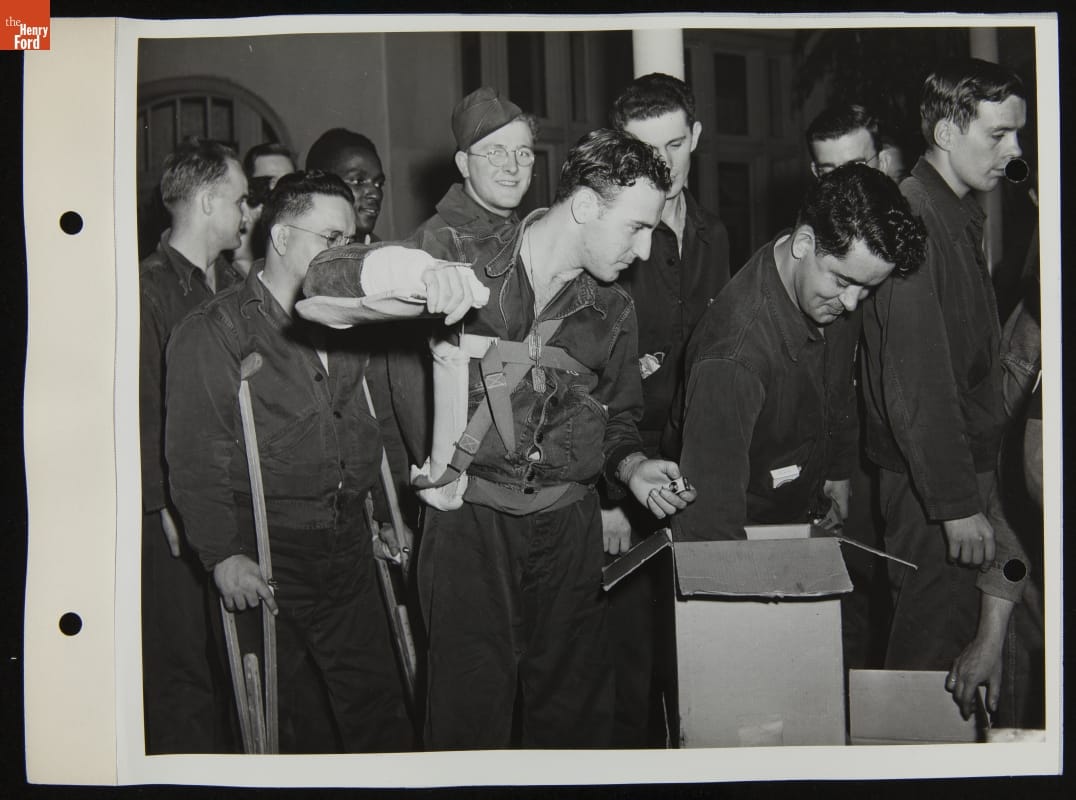
- Patients at Percy Jones Hospital Opening Packages on Ford Legion Day, Battle Creek, Michigan, April 1944 - In August 1942, the United States Army purchased the former main building of John Harvey Kellogg's Battle Creek, Michigan, sanitarium. It was remodeled and rededicated as Percy Jones Army Hospital. By the end of World War II, the hospital and its associated facilities were the Army's largest medical installation. Reactivated during the Korean War, Percy Jones closed permanently in 1954.
- April 09, 1944
- Collections - Artifact
Patients at Percy Jones Hospital Opening Packages on Ford Legion Day, Battle Creek, Michigan, April 1944
In August 1942, the United States Army purchased the former main building of John Harvey Kellogg's Battle Creek, Michigan, sanitarium. It was remodeled and rededicated as Percy Jones Army Hospital. By the end of World War II, the hospital and its associated facilities were the Army's largest medical installation. Reactivated during the Korean War, Percy Jones closed permanently in 1954.
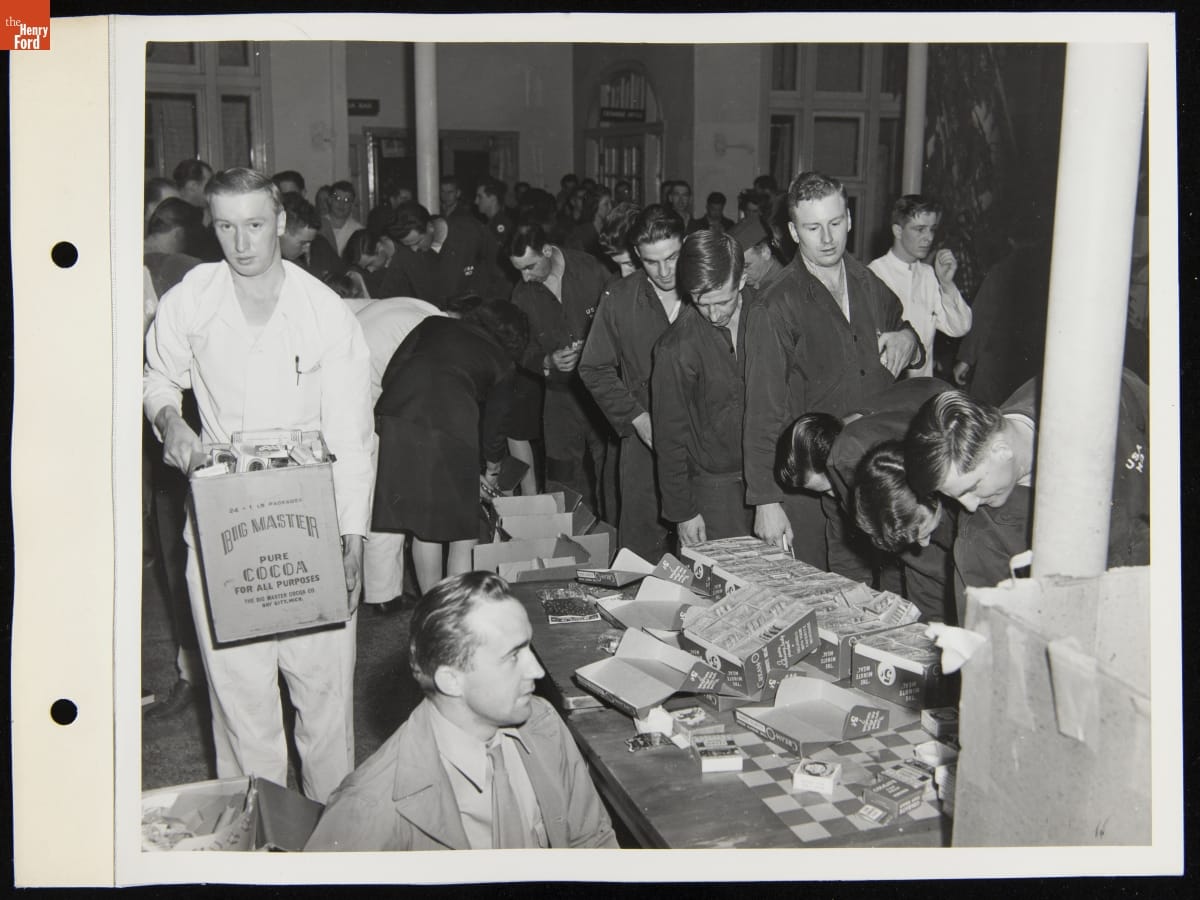
- Candy Giveaway for Soldiers at Percy Jones Hospital, Battle Creek, Michigan, April 1944 - In August 1942, the United States Army purchased the former main building of John Harvey Kellogg's Battle Creek, Michigan, sanitarium. It was remodeled and rededicated as Percy Jones Army Hospital. By the end of World War II, the hospital and its associated facilities were the Army's largest medical installation. Reactivated during the Korean War, Percy Jones closed permanently in 1954.
- April 09, 1944
- Collections - Artifact
Candy Giveaway for Soldiers at Percy Jones Hospital, Battle Creek, Michigan, April 1944
In August 1942, the United States Army purchased the former main building of John Harvey Kellogg's Battle Creek, Michigan, sanitarium. It was remodeled and rededicated as Percy Jones Army Hospital. By the end of World War II, the hospital and its associated facilities were the Army's largest medical installation. Reactivated during the Korean War, Percy Jones closed permanently in 1954.
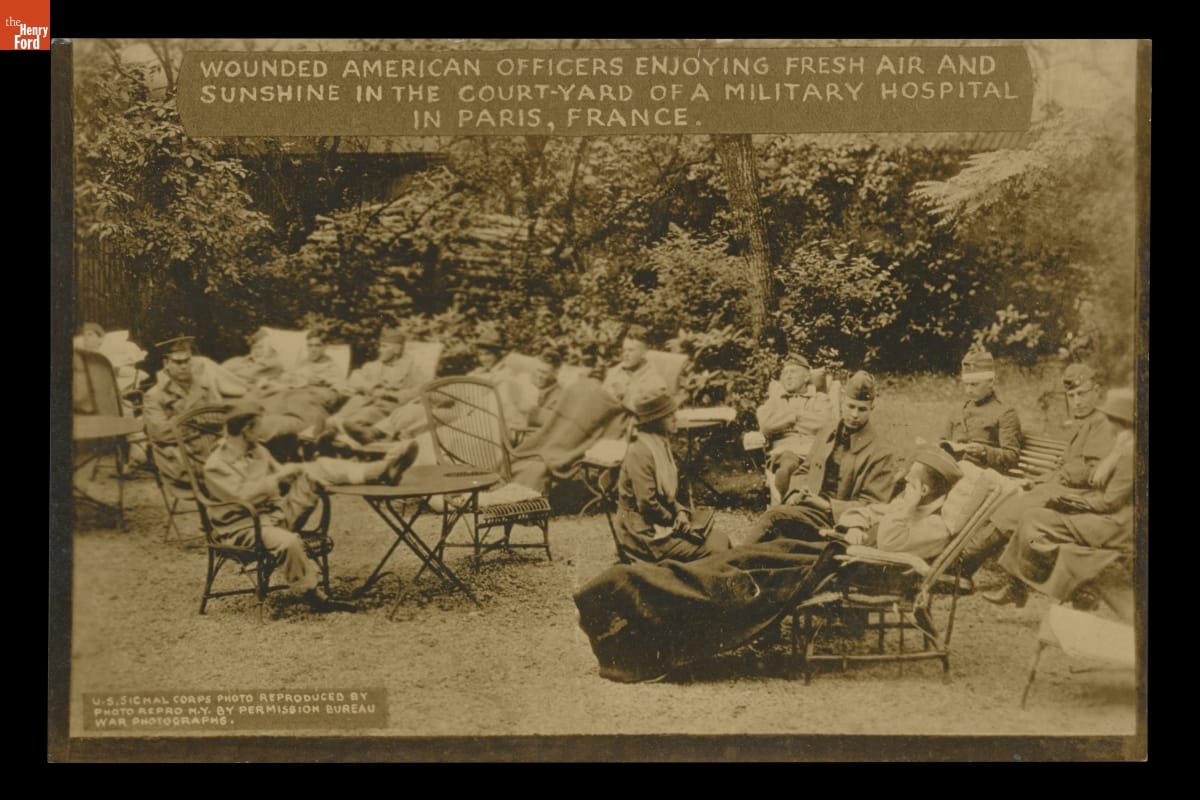
- "Wounded American Officers Enjoying Fresh Air and Sunshine...," 1918 - Andrew Purnell Jr. (1898-1975) was born in Selma, Alabama. He joined the all-Black 303rd Stevedore Regiment (with later unit designations) in December 1917. Private Purnell was stationed in Bordeaux, France. He returned to the U.S. in 1919, married, and worked as a railroad freight handler. Like many service members, Purnell kept cards, letters, photographs, and souvenirs from his time in the military.
- October 01, 1918
- Collections - Artifact
"Wounded American Officers Enjoying Fresh Air and Sunshine...," 1918
Andrew Purnell Jr. (1898-1975) was born in Selma, Alabama. He joined the all-Black 303rd Stevedore Regiment (with later unit designations) in December 1917. Private Purnell was stationed in Bordeaux, France. He returned to the U.S. in 1919, married, and worked as a railroad freight handler. Like many service members, Purnell kept cards, letters, photographs, and souvenirs from his time in the military.
- Assembly of Patients at Percy Jones Hospital on Ford Legion Day, April 1944 - In August 1942, the United States Army purchased the former main building of John Harvey Kellogg's Battle Creek, Michigan, sanitarium. It was remodeled and rededicated as Percy Jones Army Hospital. By the end of World War II, the hospital and its associated facilities were the Army's largest medical installation. Reactivated during the Korean War, Percy Jones closed permanently in 1954.
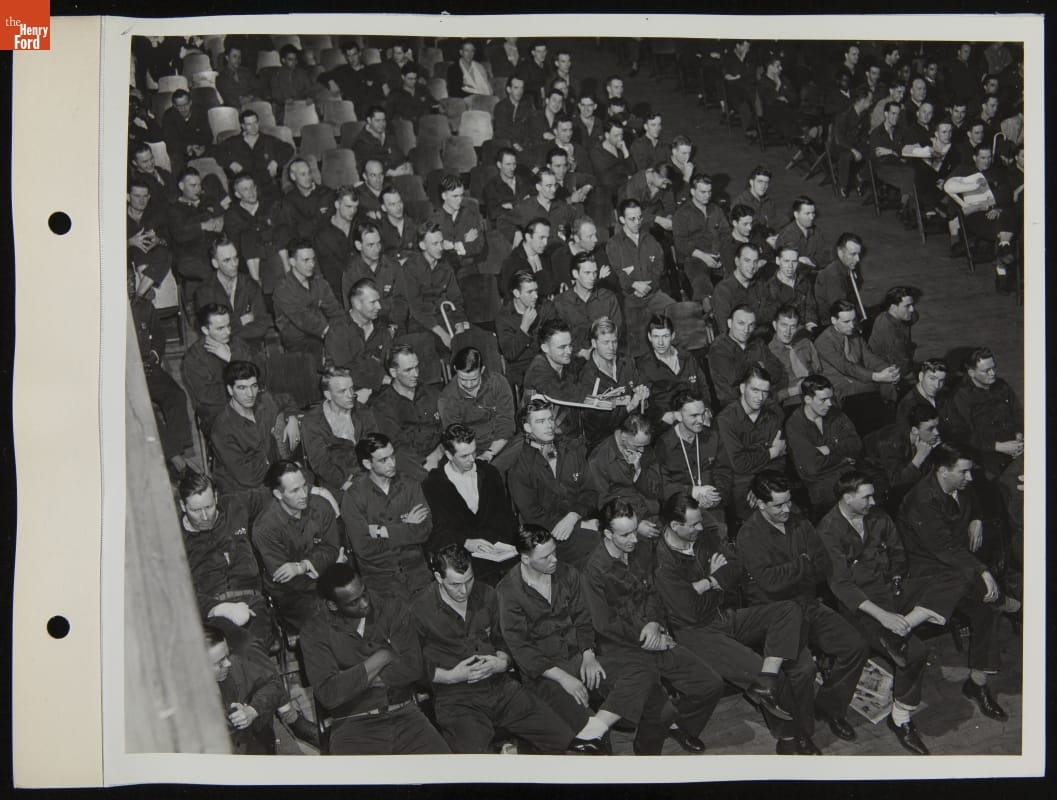
- April 09, 1944
- Collections - Artifact
Assembly of Patients at Percy Jones Hospital on Ford Legion Day, April 1944
In August 1942, the United States Army purchased the former main building of John Harvey Kellogg's Battle Creek, Michigan, sanitarium. It was remodeled and rededicated as Percy Jones Army Hospital. By the end of World War II, the hospital and its associated facilities were the Army's largest medical installation. Reactivated during the Korean War, Percy Jones closed permanently in 1954.
- Band Entertaining Soldiers at Percy Jones Hospital, Battle Creek, Michigan, April 1944 - In August 1942, the United States Army purchased the former main building of John Harvey Kellogg's Battle Creek, Michigan, sanitarium. It was remodeled and rededicated as Percy Jones Army Hospital. By the end of World War II, the hospital and its associated facilities were the Army's largest medical installation. Reactivated during the Korean War, Percy Jones closed permanently in 1954.
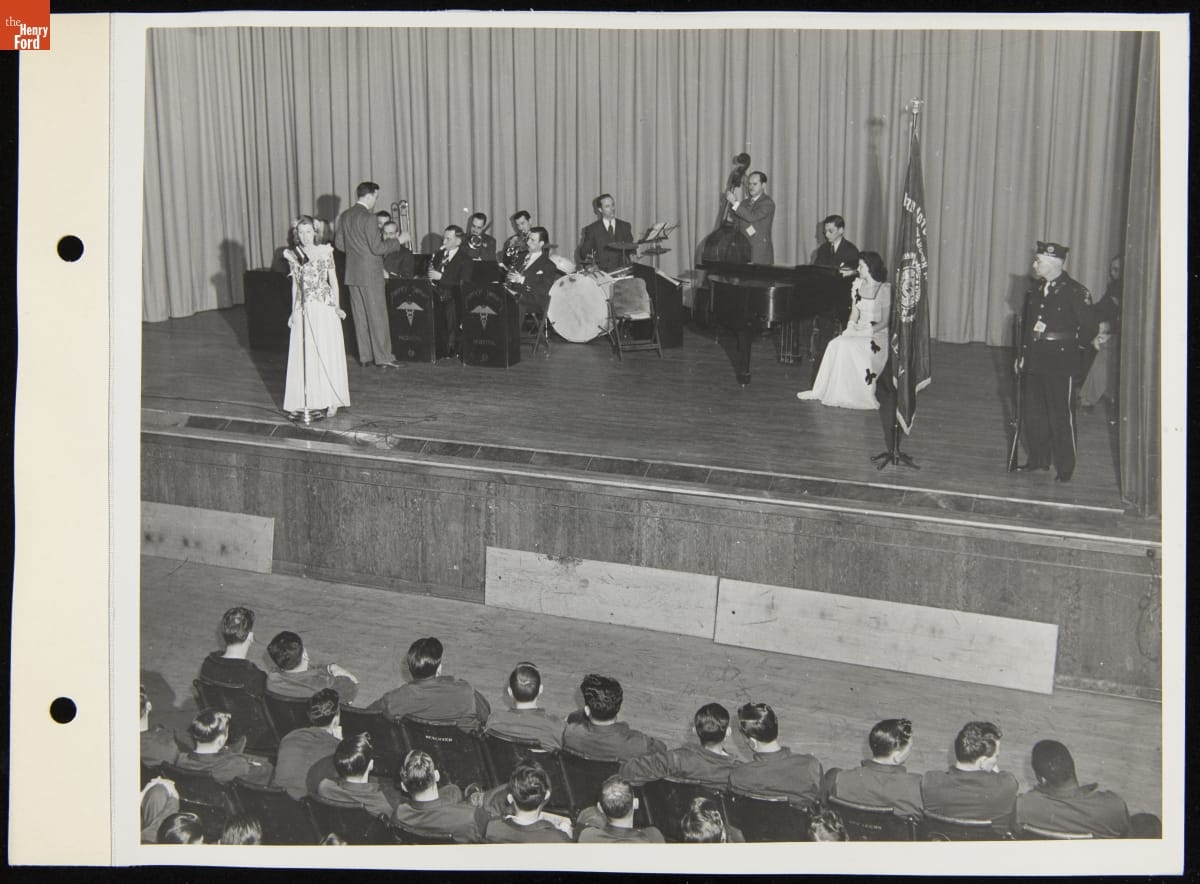
- April 09, 1944
- Collections - Artifact
Band Entertaining Soldiers at Percy Jones Hospital, Battle Creek, Michigan, April 1944
In August 1942, the United States Army purchased the former main building of John Harvey Kellogg's Battle Creek, Michigan, sanitarium. It was remodeled and rededicated as Percy Jones Army Hospital. By the end of World War II, the hospital and its associated facilities were the Army's largest medical installation. Reactivated during the Korean War, Percy Jones closed permanently in 1954.
- Pocket Diary of John M. Nash, 1863 - John Nash, a private in the 34th Indiana Infantry, was convalescing in a hospital in Tennessee in 1862 when he received this diary. It was a Christmas gift from his father. Throughout 1863, Nash jotted down notes about his time in the hospital, his return to civilian life, and his reenlistment. Nash died in July 1865, serving his country. His diary survives, a simple record of an average Union soldier.
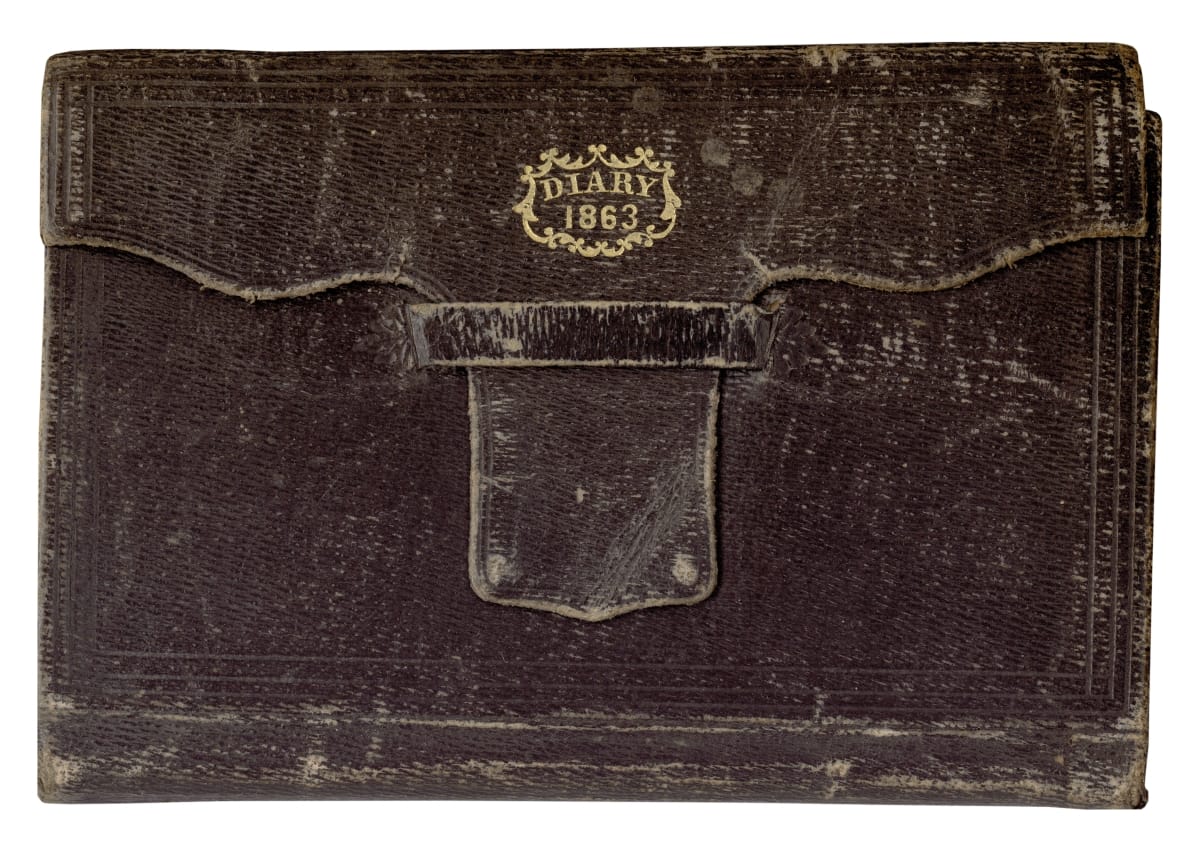
- 01 January 1863-31 December 1863
- Collections - Artifact
Pocket Diary of John M. Nash, 1863
John Nash, a private in the 34th Indiana Infantry, was convalescing in a hospital in Tennessee in 1862 when he received this diary. It was a Christmas gift from his father. Throughout 1863, Nash jotted down notes about his time in the hospital, his return to civilian life, and his reenlistment. Nash died in July 1865, serving his country. His diary survives, a simple record of an average Union soldier.