
Search
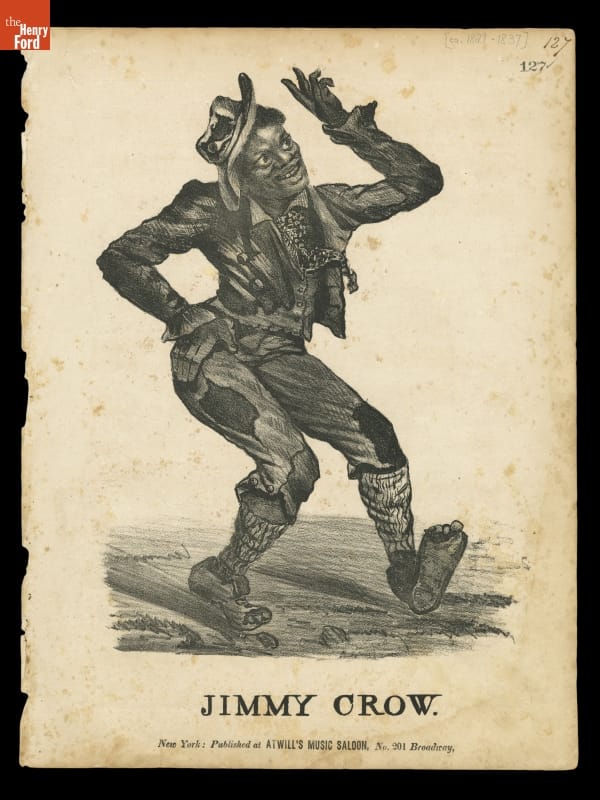
- Music Sheet, "Jimmy Crow," 1834-1837 - This sheet music includes the music and lyrics for a minstrel show and the image of a blackface character. Minstrel shows generally featured white actors wearing black makeup (known as blackface) who portrayed racist stereotypes of African Americans through singing and dancing. American audiences considered these shows comical and attended minstrel shows for over a century, from the live theater of the early 1800s to the films of the early-20th century. They even appeared in mid-20th century children's cartoons. The lyrics on this sheet are attributed to Thomas Dartmouth Rice (1808-1860), who introduced the character "Jim Crow", a stereotypical African American, in 1832. The cover image may also depict Rice, an American singer, dancer, and composer, one of the first well-known blackface performers. The "Jimmy Crow" song made Rice internationally famous. The song's popularity first brought the term into the American language as derogatory slang referring to African Americans. "Jim Crow" eventually referred to the two separate societies - one black, one white - followed throughout the United States. This system was formalized in the South by state laws passed in the late-19th century. Blacks and whites could not sit in the same waiting rooms, use the same bathrooms or eat in the same restaurants, for example. Not until the Civil Rights movement of the 1950s and 1960s was segregation outlawed.
- 1834-1837
- Collections - Artifact
Music Sheet, "Jimmy Crow," 1834-1837
This sheet music includes the music and lyrics for a minstrel show and the image of a blackface character. Minstrel shows generally featured white actors wearing black makeup (known as blackface) who portrayed racist stereotypes of African Americans through singing and dancing. American audiences considered these shows comical and attended minstrel shows for over a century, from the live theater of the early 1800s to the films of the early-20th century. They even appeared in mid-20th century children's cartoons. The lyrics on this sheet are attributed to Thomas Dartmouth Rice (1808-1860), who introduced the character "Jim Crow", a stereotypical African American, in 1832. The cover image may also depict Rice, an American singer, dancer, and composer, one of the first well-known blackface performers. The "Jimmy Crow" song made Rice internationally famous. The song's popularity first brought the term into the American language as derogatory slang referring to African Americans. "Jim Crow" eventually referred to the two separate societies - one black, one white - followed throughout the United States. This system was formalized in the South by state laws passed in the late-19th century. Blacks and whites could not sit in the same waiting rooms, use the same bathrooms or eat in the same restaurants, for example. Not until the Civil Rights movement of the 1950s and 1960s was segregation outlawed.
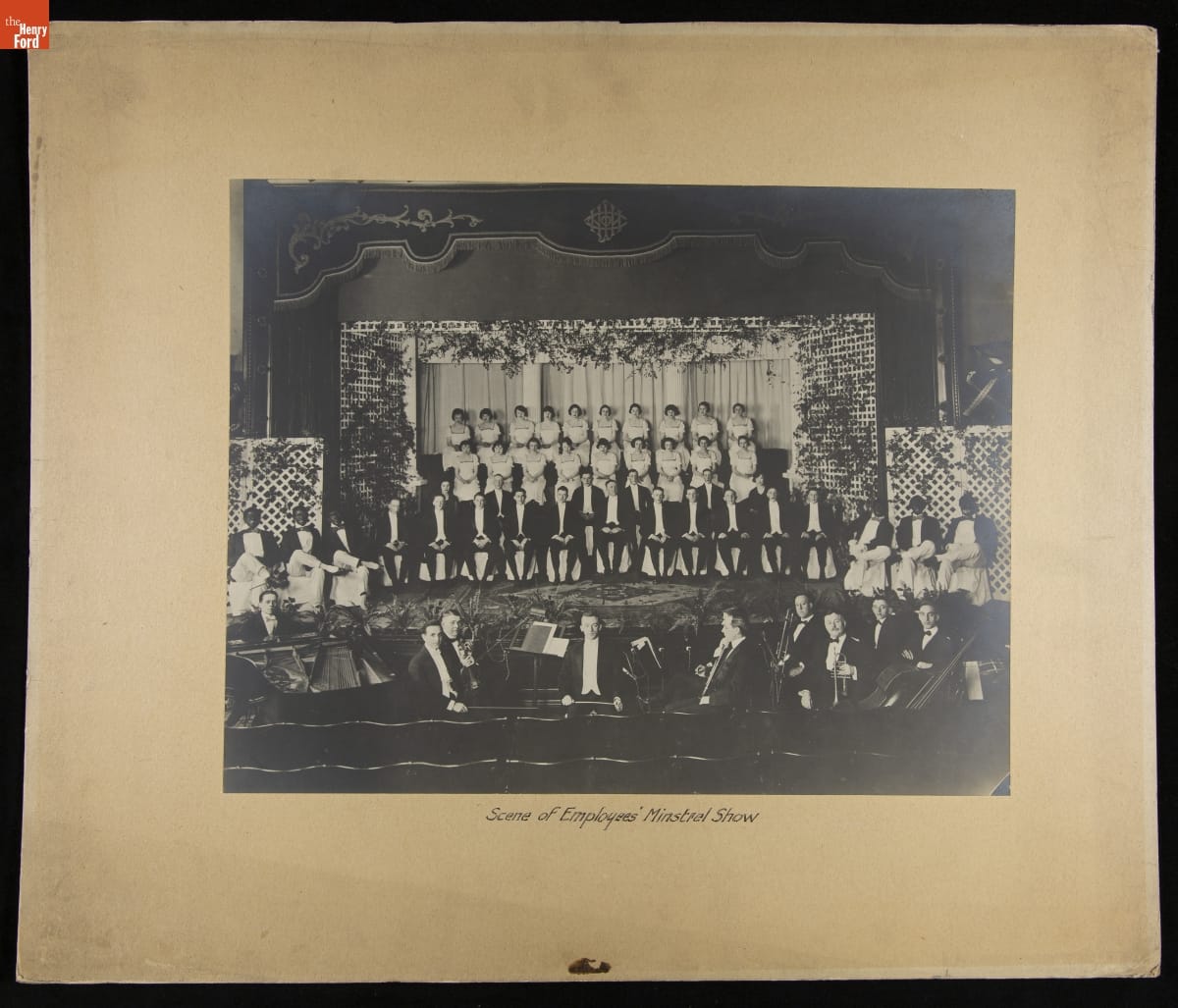
- Heinz Employees' Minstrel Show at Main Plant in Pittsburgh, Pennsylvania - Minstrel shows originated in the decades immediately before the Civil War. Performers blackened their faces to portray African Americans for white audiences. These shows entertained but contained a mixture of racial stereotypes which denigrated African Americans: portraying blacks as inferior, subjecting them to ridicule, and confining them to a preconceived place below white society. Minstrel shows remained popular well into the 20th century.
- Collections - Artifact
Heinz Employees' Minstrel Show at Main Plant in Pittsburgh, Pennsylvania
Minstrel shows originated in the decades immediately before the Civil War. Performers blackened their faces to portray African Americans for white audiences. These shows entertained but contained a mixture of racial stereotypes which denigrated African Americans: portraying blacks as inferior, subjecting them to ridicule, and confining them to a preconceived place below white society. Minstrel shows remained popular well into the 20th century.
- Photograph Album of Heinz Company, Heinz Family, and Employee Conventions, 1880-1940 - Company photograph albums are often reminders of the company's history, significant moments in time, and the employees who worked there. This album, compiled by the H.J. Heinz Company, includes photographs of parades, employee picnics and conventions, and family photographs.
- 1880-1940
- Collections - Artifact
Photograph Album of Heinz Company, Heinz Family, and Employee Conventions, 1880-1940
Company photograph albums are often reminders of the company's history, significant moments in time, and the employees who worked there. This album, compiled by the H.J. Heinz Company, includes photographs of parades, employee picnics and conventions, and family photographs.
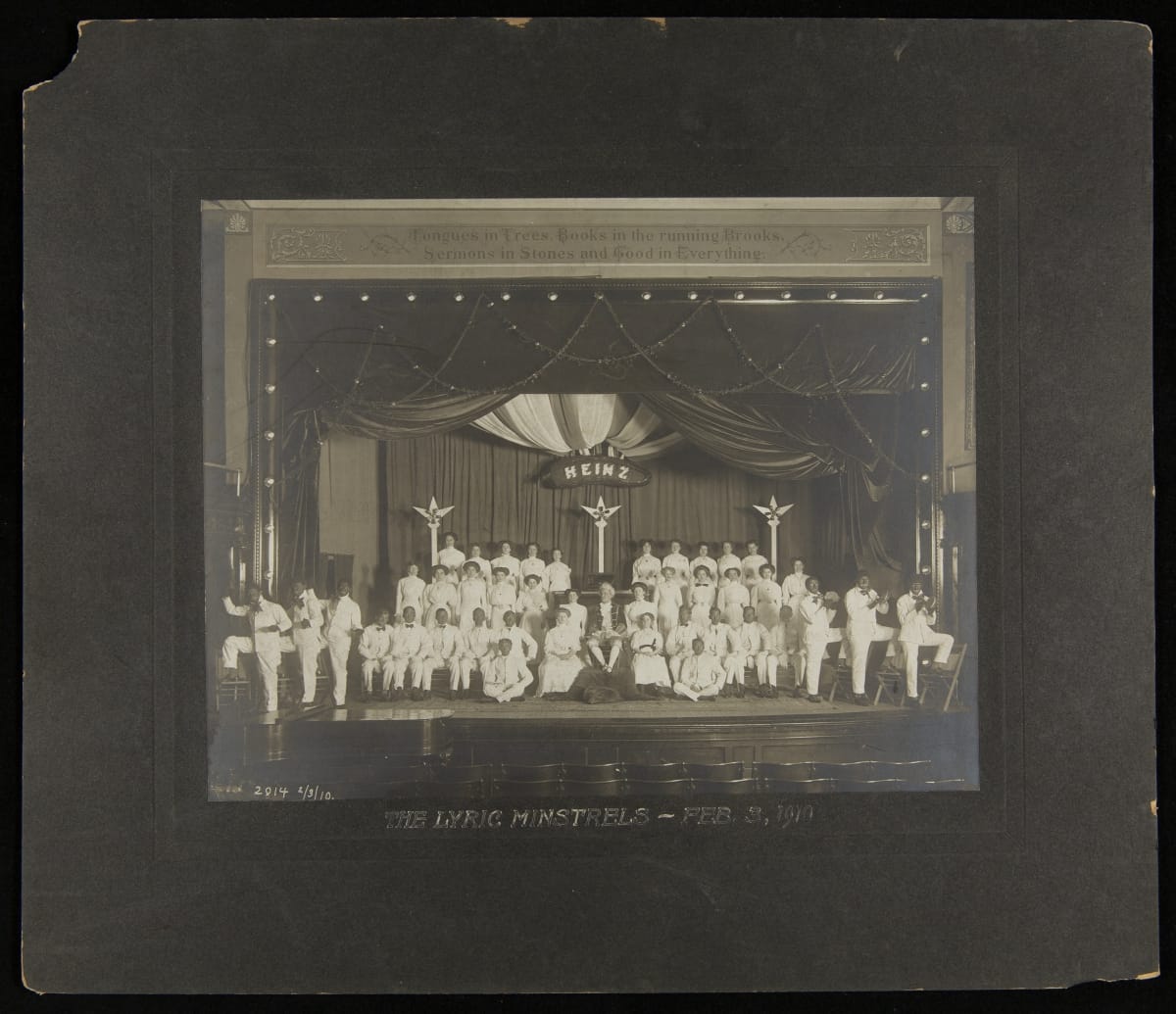
- "The Lyric Minstrels" at Heinz Company Auditorium, Main Plant, Pittsburgh, Pennsylvania, February 3, 1910 - Minstrel shows originated in the decades immediately before the Civil War. Performers blackened their faces to portray African Americans for white audiences. These shows entertained but contained a mixture of racial stereotypes which denigrated African Americans: portraying blacks as inferior, subjecting them to ridicule, and confining them to a preconceived place below white society. Minstrel shows remained popular well into the 20th century.
- February 03, 1910
- Collections - Artifact
"The Lyric Minstrels" at Heinz Company Auditorium, Main Plant, Pittsburgh, Pennsylvania, February 3, 1910
Minstrel shows originated in the decades immediately before the Civil War. Performers blackened their faces to portray African Americans for white audiences. These shows entertained but contained a mixture of racial stereotypes which denigrated African Americans: portraying blacks as inferior, subjecting them to ridicule, and confining them to a preconceived place below white society. Minstrel shows remained popular well into the 20th century.