
Search
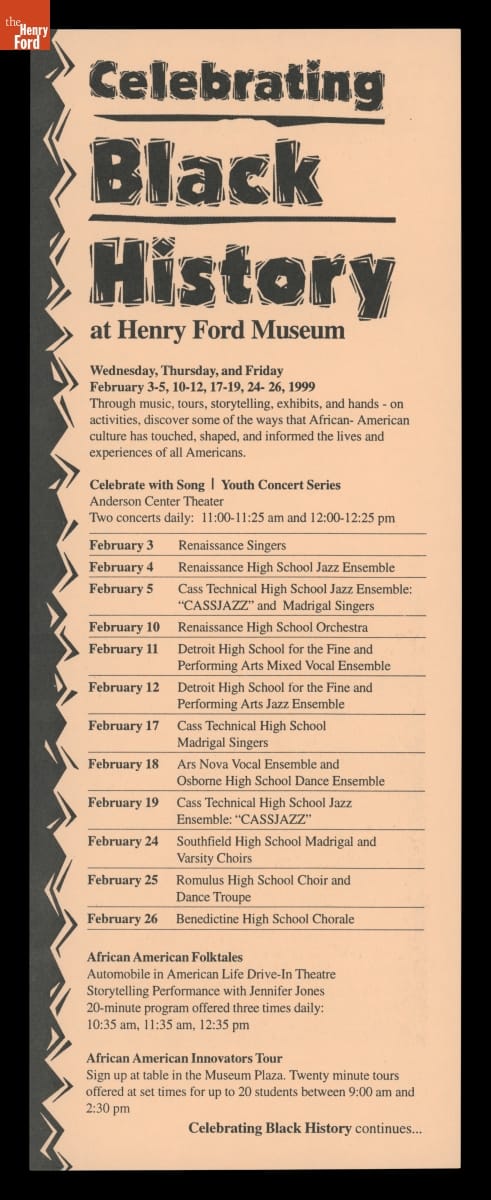
- Brochure, "Celebrating Black History," Henry Ford Museum, February 1999 -
- 03 February 1999 - 26 February 1999
- Collections - Artifact
Brochure, "Celebrating Black History," Henry Ford Museum, February 1999
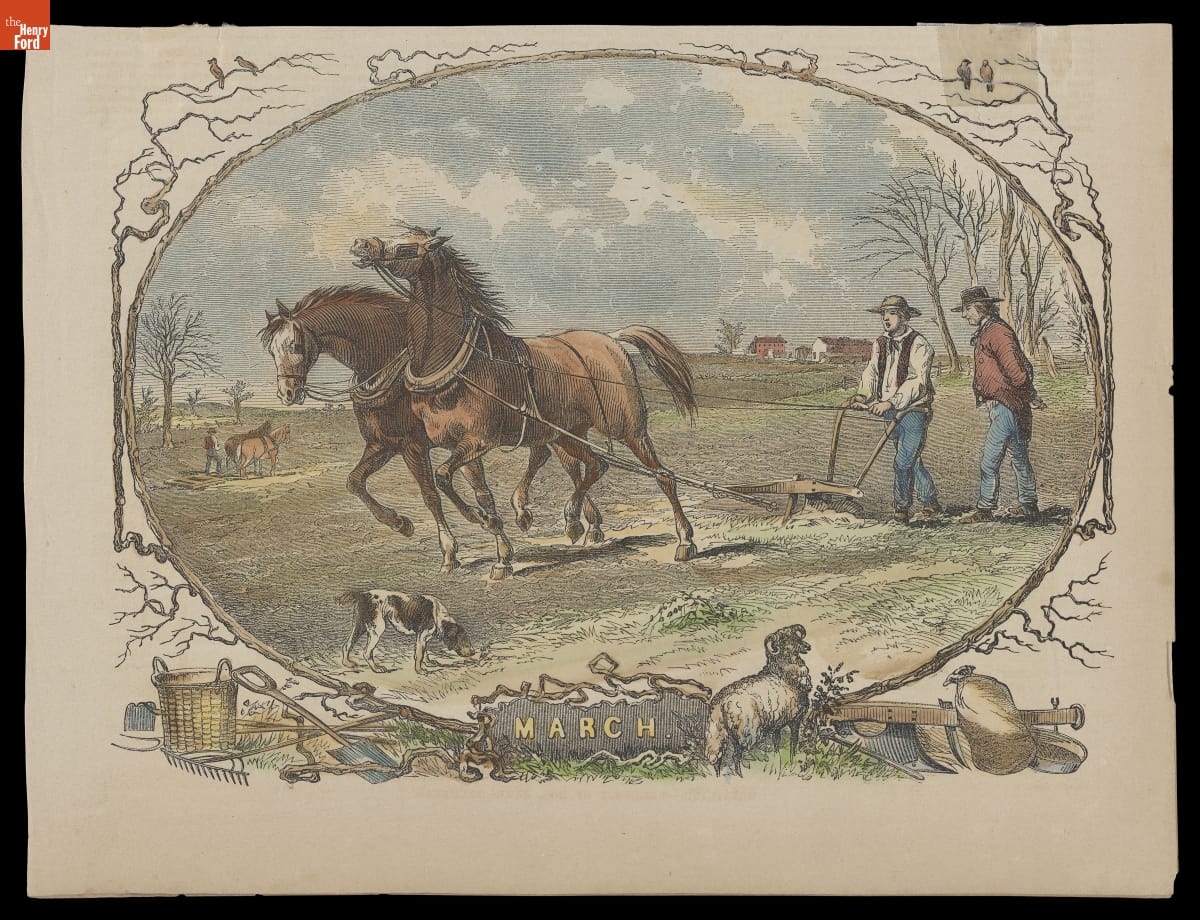
- Wood Engraving, "March," 1854 - A mid-19th-century American farm was full of activity all year. This 1854 engraving depicts a farmer preparing the land for spring planting. Farmers used plows to break up the soil before sowing seeds. Horses -- a key power source on many farms at this time -- pulled the equipment that cleared the land and plowed the fields.
- April 01, 1854
- Collections - Artifact
Wood Engraving, "March," 1854
A mid-19th-century American farm was full of activity all year. This 1854 engraving depicts a farmer preparing the land for spring planting. Farmers used plows to break up the soil before sowing seeds. Horses -- a key power source on many farms at this time -- pulled the equipment that cleared the land and plowed the fields.
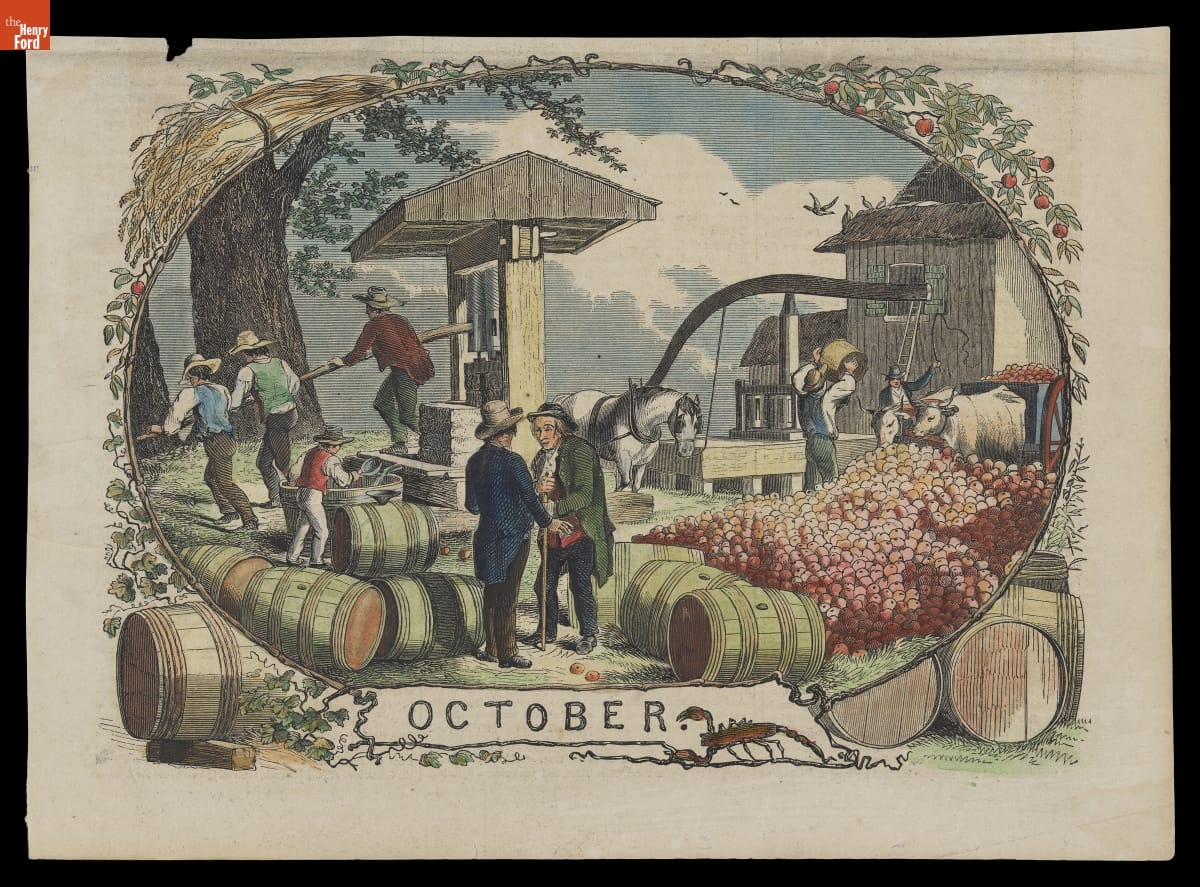
- Wood Engraving, "October," 1854 - Apple cider has long been synonymous with autumn. This 1854 print shows a bountiful apple harvest and cider making. In the background, the horse-powered crusher grinds apples into a pomace. In the foreground, men press the cider from the pomace. While we are more familiar with sweet cider, most cider at that time was hard cider-- fermented to prevent spoilage.
- October 01, 1854
- Collections - Artifact
Wood Engraving, "October," 1854
Apple cider has long been synonymous with autumn. This 1854 print shows a bountiful apple harvest and cider making. In the background, the horse-powered crusher grinds apples into a pomace. In the foreground, men press the cider from the pomace. While we are more familiar with sweet cider, most cider at that time was hard cider-- fermented to prevent spoilage.
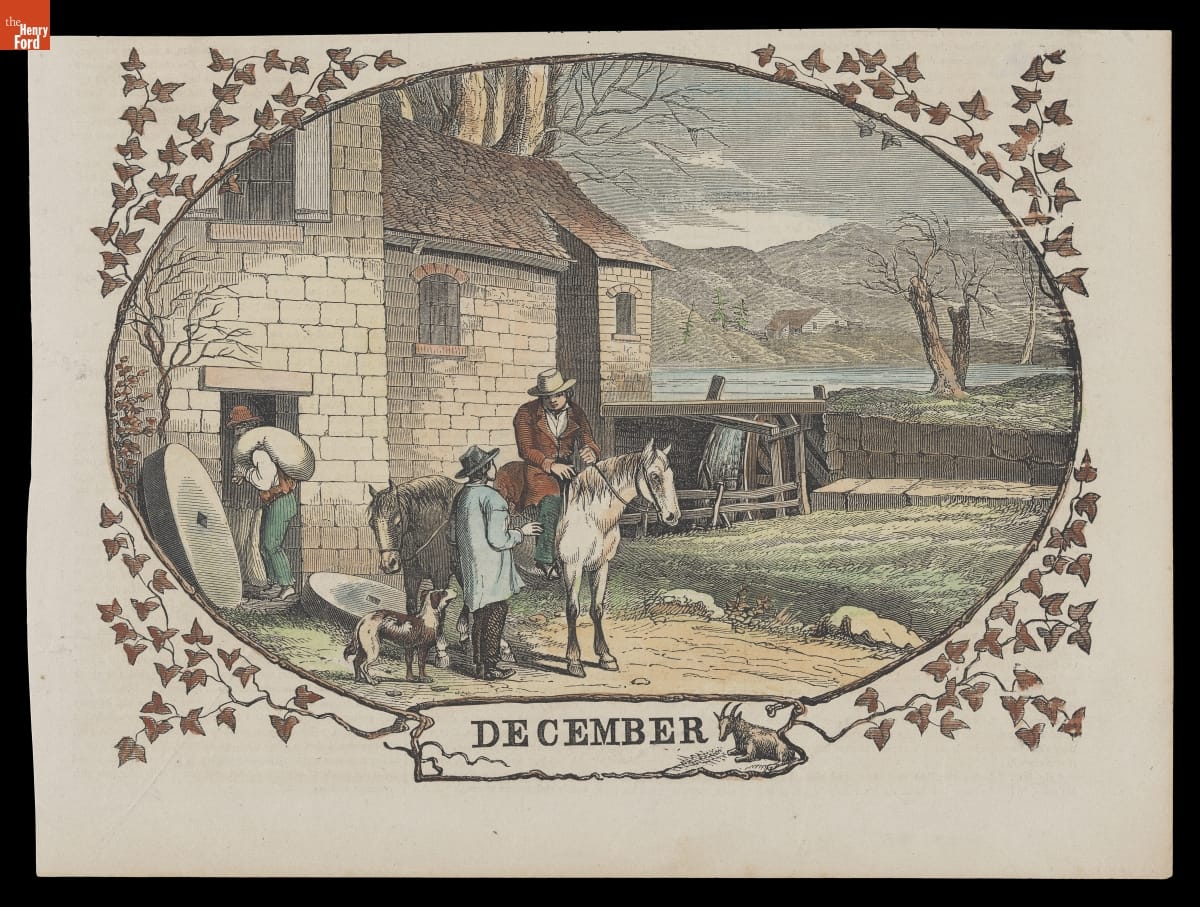
- Wood Engraving, "December," 1854 - This hand-colored wood engraving depicts farm life in the mid-19th century. Farmers headed to a local mill after harvesting corn, wheat or other grain crops. Here the grain was ground into flour. Farmers kept some of the flour for the family's use, the rest was sold for extra cash and to pay the miller.
- December 02, 1854
- Collections - Artifact
Wood Engraving, "December," 1854
This hand-colored wood engraving depicts farm life in the mid-19th century. Farmers headed to a local mill after harvesting corn, wheat or other grain crops. Here the grain was ground into flour. Farmers kept some of the flour for the family's use, the rest was sold for extra cash and to pay the miller.
- Recipe Booklet, "Knox Gelatine Co. Special Dishes for February," circa 1935 -
- circa 1935
- Collections - Artifact
Recipe Booklet, "Knox Gelatine Co. Special Dishes for February," circa 1935
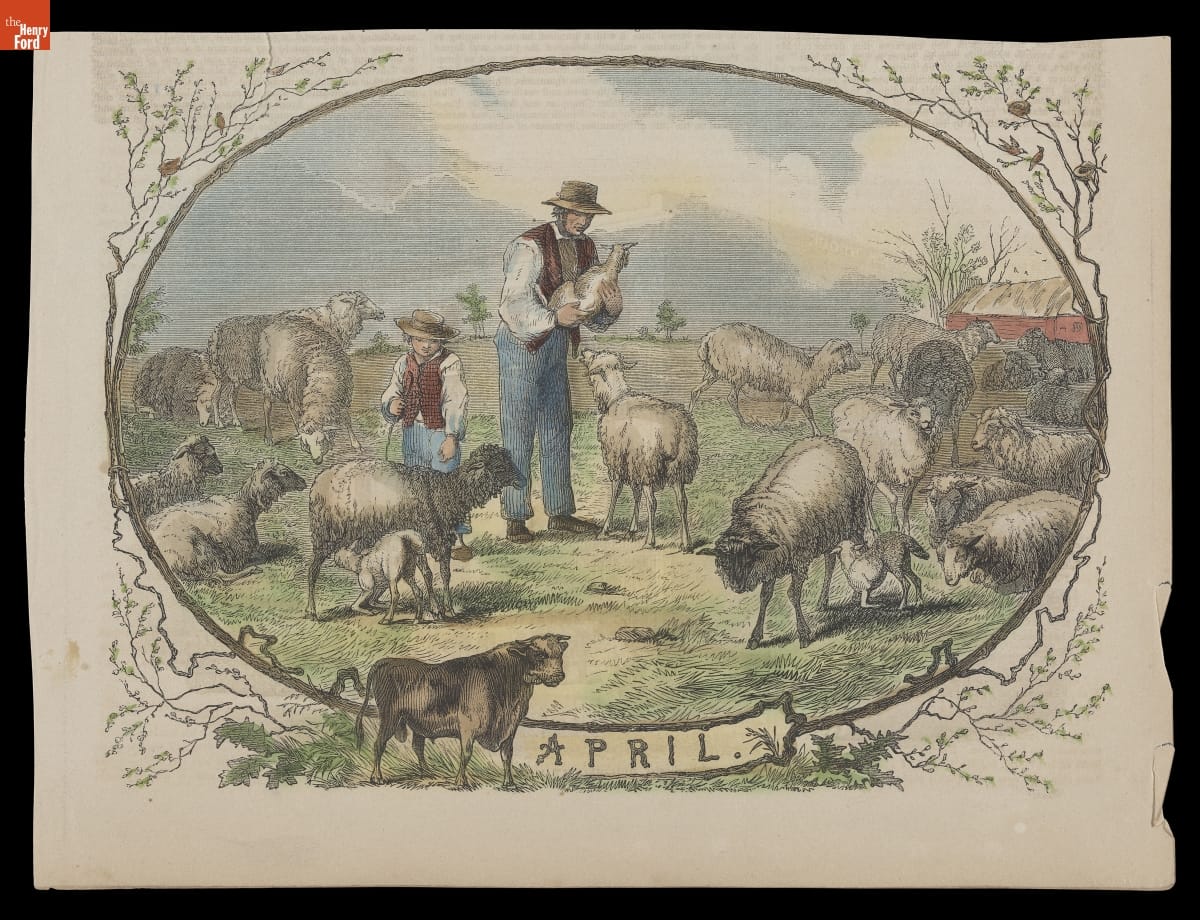
- Wood Engraving, "April," 1854 - A mid-19th-century American farm was full of activity all year. This 1854 engraving depicts a farmer caring for his spring-time flock. Sheep had to have pastures with enough space for grazing. They also need one that was free from predators -- especially during the time when lambs are born.
- April 22, 1854
- Collections - Artifact
Wood Engraving, "April," 1854
A mid-19th-century American farm was full of activity all year. This 1854 engraving depicts a farmer caring for his spring-time flock. Sheep had to have pastures with enough space for grazing. They also need one that was free from predators -- especially during the time when lambs are born.
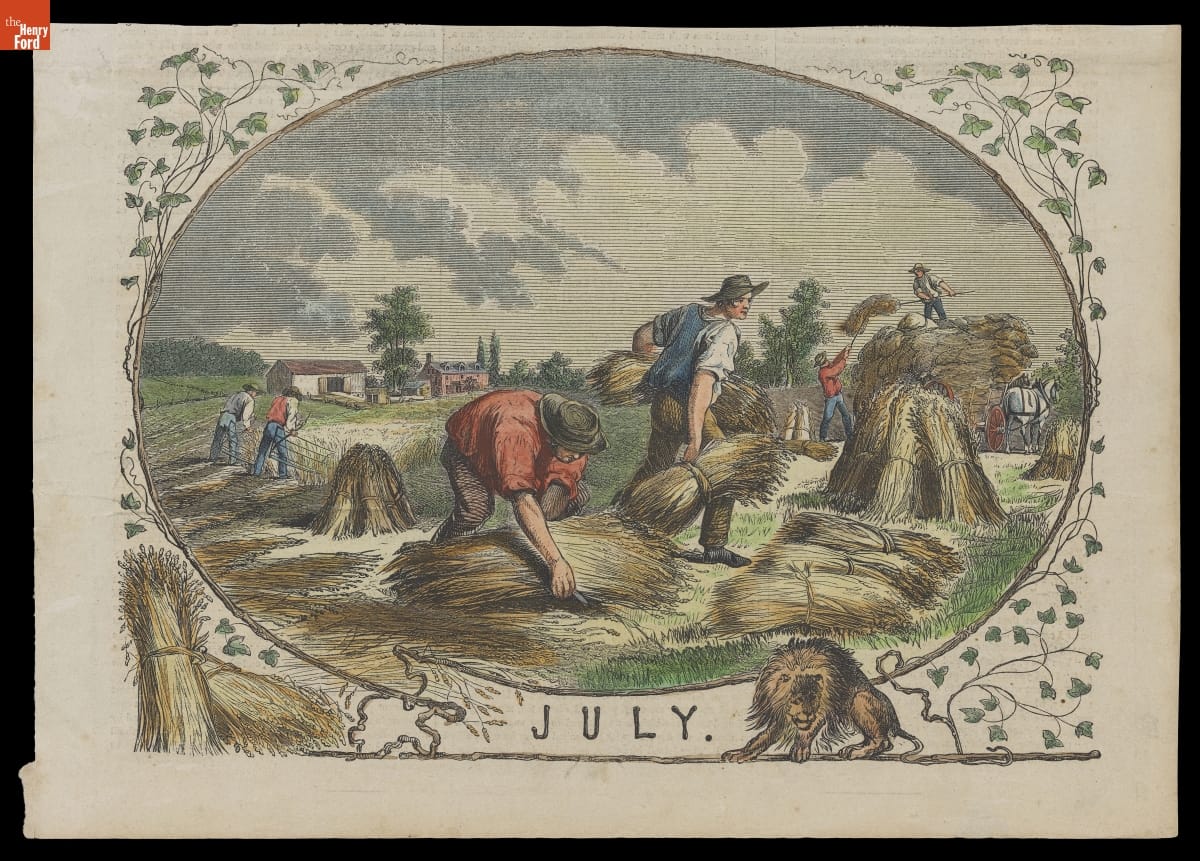
- Wood Engraving, "July," 1854 - Farming is a year round occupation and work is usually defined by season. This 1854 engraving depicts the harvesting of ripened summer grains. Workers used grain cradles to cut the plant, while others followed and bundled them and stacked them into shocks to dry. Later, farmers transported the bundled crop to barns where they separate the valuable grain from the chaff -- the straw and other inedible material.
- July 15, 1854
- Collections - Artifact
Wood Engraving, "July," 1854
Farming is a year round occupation and work is usually defined by season. This 1854 engraving depicts the harvesting of ripened summer grains. Workers used grain cradles to cut the plant, while others followed and bundled them and stacked them into shocks to dry. Later, farmers transported the bundled crop to barns where they separate the valuable grain from the chaff -- the straw and other inedible material.
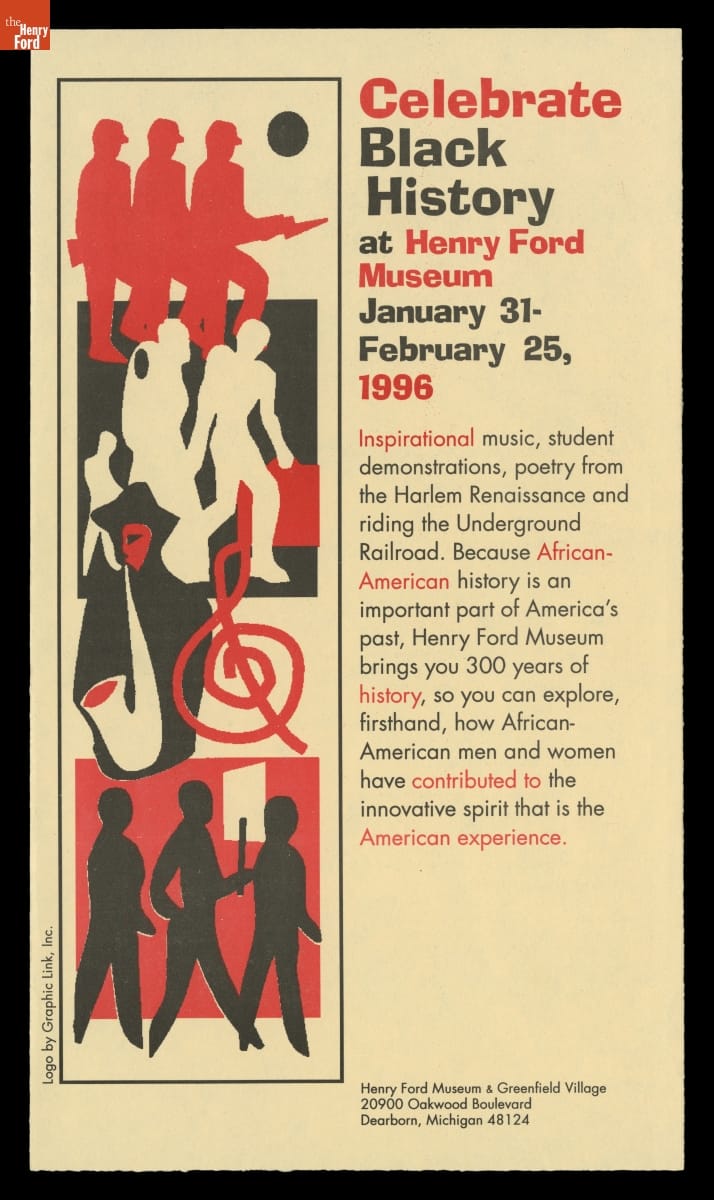
- Brochure, "Celebrate Black History at Henry Ford Museum," January-February 1996 -
- 31 January 1996 - 25 February 1996
- Collections - Artifact
Brochure, "Celebrate Black History at Henry Ford Museum," January-February 1996
- Quilt, circa 1905 -
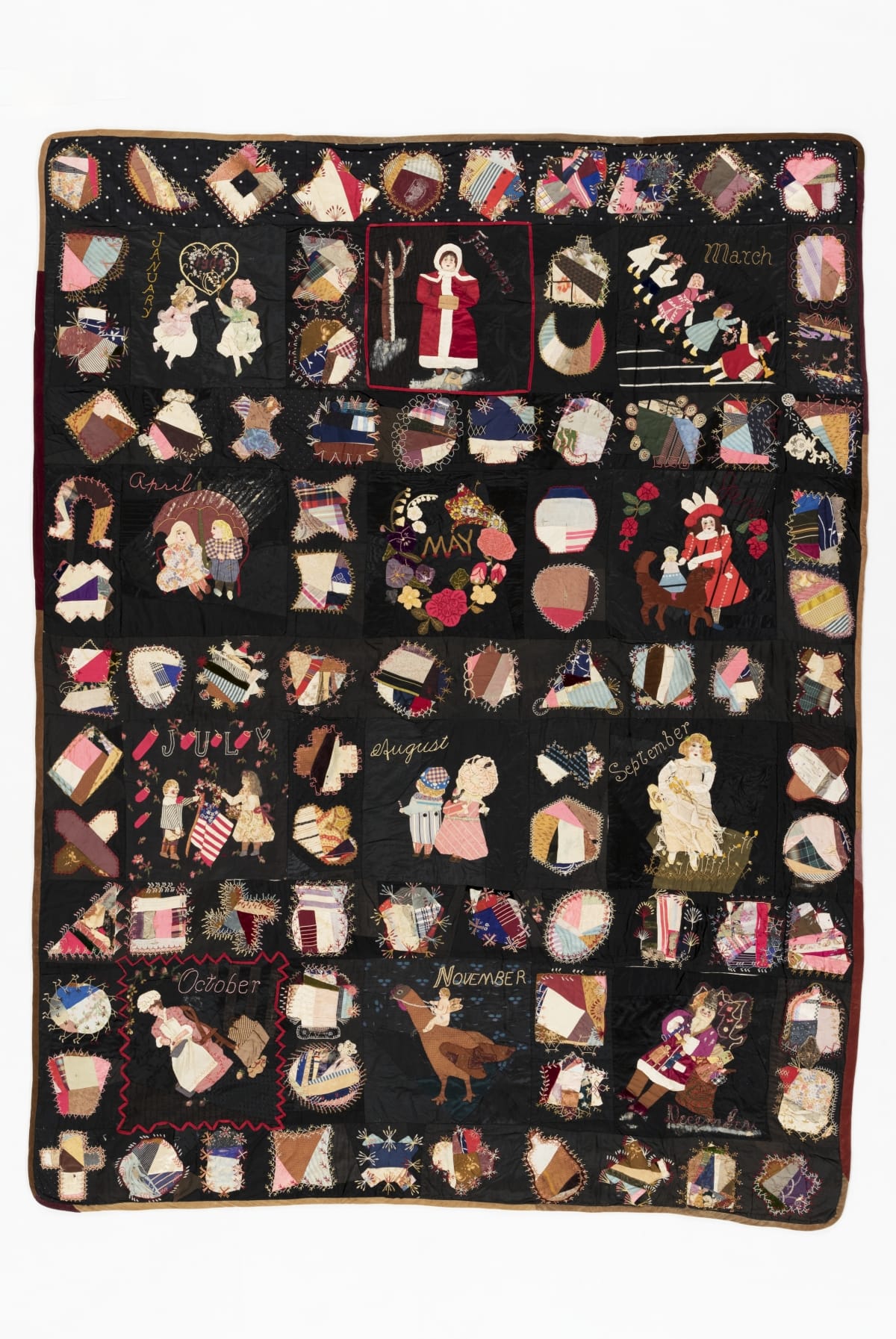
- circa 1905
- Collections - Artifact
Quilt, circa 1905
- Brochure, "Celebrating Black History Month," Henry Ford Museum & Greenfield Village, February-March 1998 -
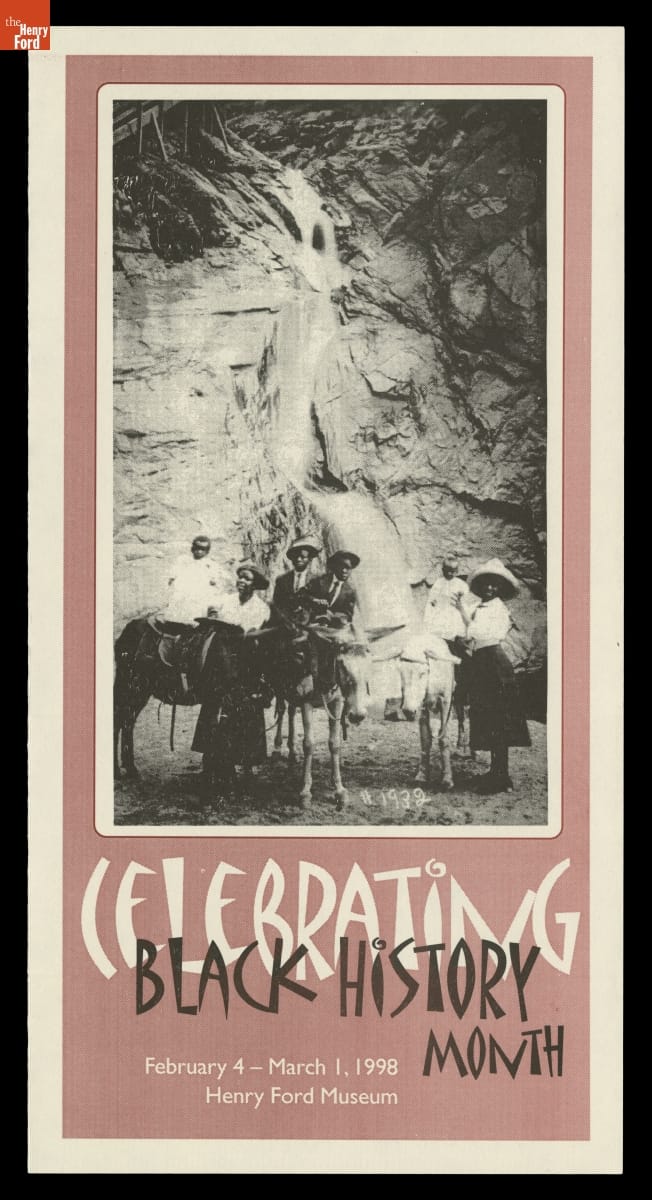
- 04 February 1998 - 01 March 1998
- Collections - Artifact
Brochure, "Celebrating Black History Month," Henry Ford Museum & Greenfield Village, February-March 1998