
Search
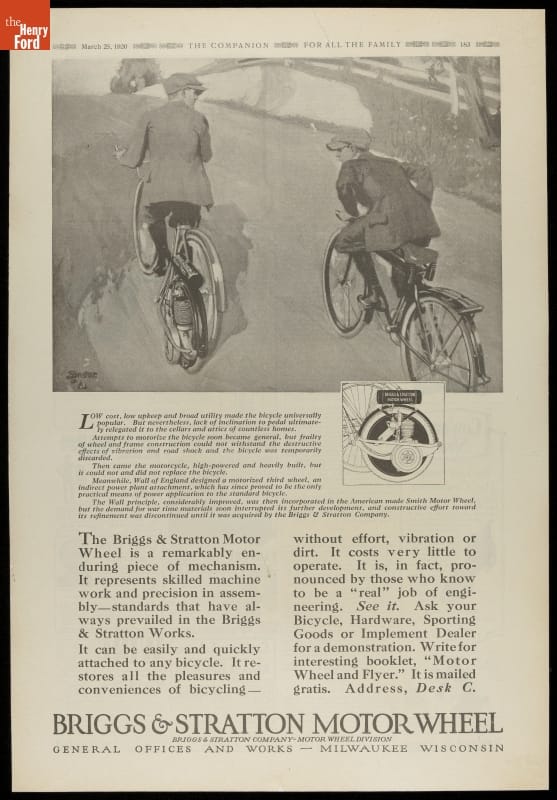
- Briggs & Stratton Motor Wheel Advertisement, 1920 - Around 1920, if a cyclist was tired of pedaling or his bicycle had been relegated to storage, the Briggs & Stratton Company of Milwaukee, Wisconsin, provided another option. The Motor Wheel, a four-stroke, single-cylinder gasoline engine, could attach to a bicycle and propel it down the road. The company produced the Motor Wheel from 1919 to 1924.
- March 25, 1920
- Collections - Artifact
Briggs & Stratton Motor Wheel Advertisement, 1920
Around 1920, if a cyclist was tired of pedaling or his bicycle had been relegated to storage, the Briggs & Stratton Company of Milwaukee, Wisconsin, provided another option. The Motor Wheel, a four-stroke, single-cylinder gasoline engine, could attach to a bicycle and propel it down the road. The company produced the Motor Wheel from 1919 to 1924.
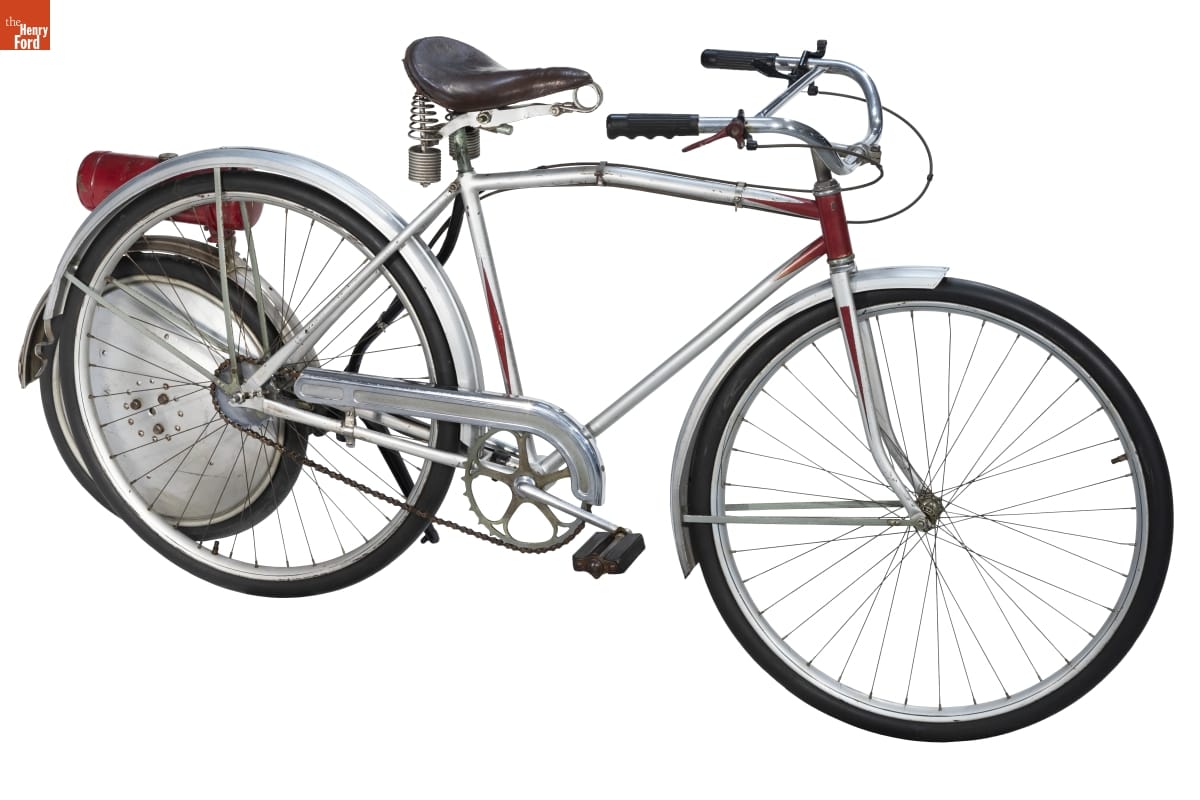
- Briggs & Stratton Motorized Bicycle, 1920-1930 - In the 1910s and 1920s cyclists could travel without pedaling. The Motor Wheel, a wheel fitted with a four-stroke, single-cylinder gasoline engine, could attach to a bicycle and propel it down the road. Briggs & Stratton Company of Milwaukee, Wisconsin, built this version. The company purchased the rights to produce the device in 1919 and continued production until 1924.
- 1920-1930
- Collections - Artifact
Briggs & Stratton Motorized Bicycle, 1920-1930
In the 1910s and 1920s cyclists could travel without pedaling. The Motor Wheel, a wheel fitted with a four-stroke, single-cylinder gasoline engine, could attach to a bicycle and propel it down the road. Briggs & Stratton Company of Milwaukee, Wisconsin, built this version. The company purchased the rights to produce the device in 1919 and continued production until 1924.
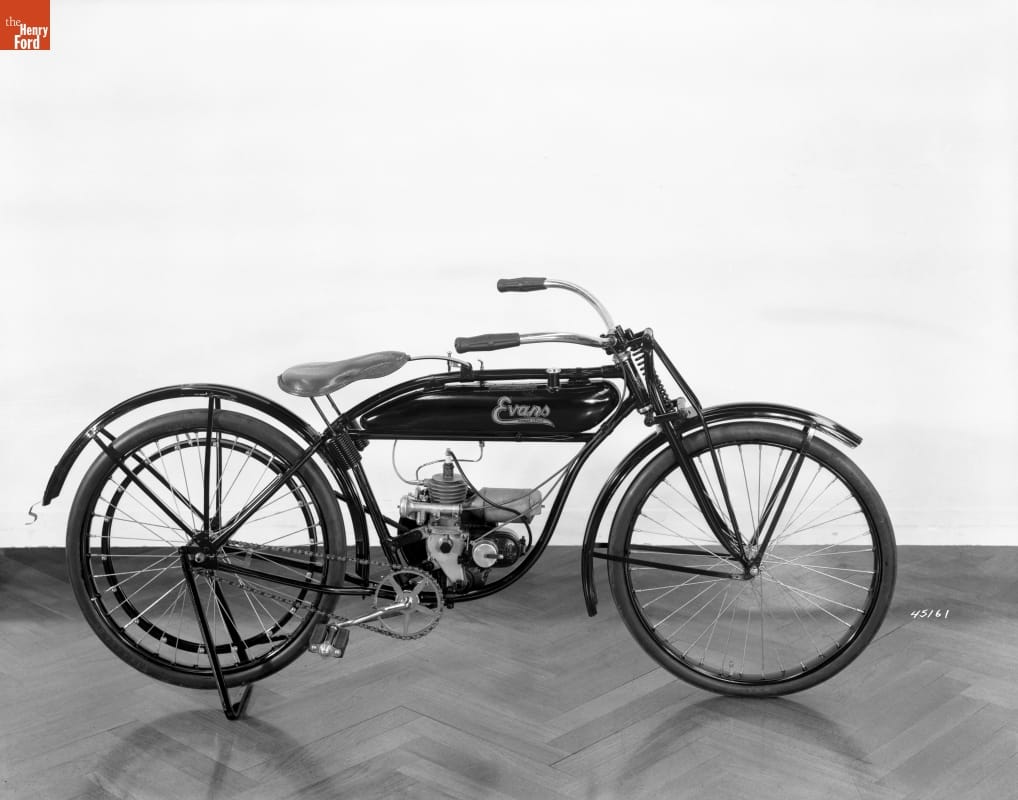
- Evans Power Cycle, circa 1923 - As its name suggests, the Evans Power Cycle was more a motorized bicycle than a true motorcycle. Built by the Cyclemotor Corporation of Rochester, New York, the Evans cycle featured a simple two-stroke engine connected to the rear wheel via a belt drive. In addition to complete cycles, Cyclemotor also made engine kits that could be mounted on standard bicycles.
- circa 1923
- Collections - Artifact
Evans Power Cycle, circa 1923
As its name suggests, the Evans Power Cycle was more a motorized bicycle than a true motorcycle. Built by the Cyclemotor Corporation of Rochester, New York, the Evans cycle featured a simple two-stroke engine connected to the rear wheel via a belt drive. In addition to complete cycles, Cyclemotor also made engine kits that could be mounted on standard bicycles.