
Search
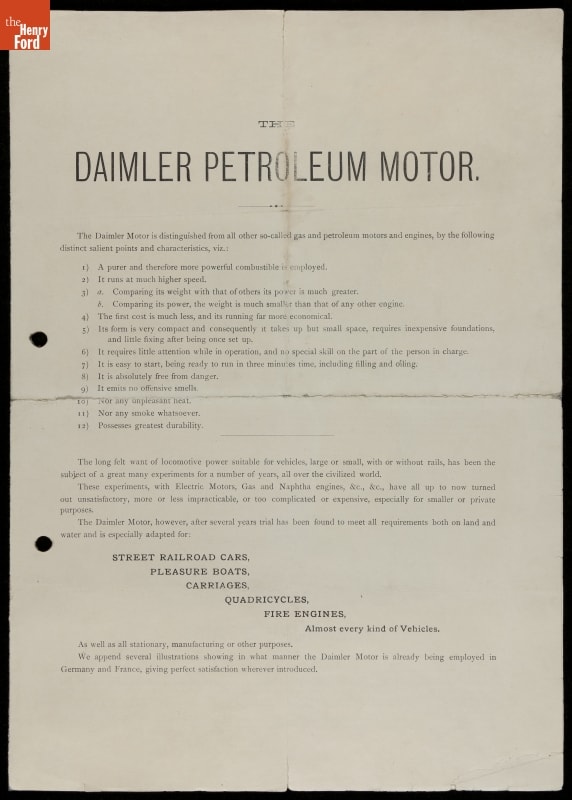
- Sales Brochure, "The Daimler Petroleum Motor," circa 1895 - German engineer Gottlieb Daimler developed small, high-speed engines in the 1880s. Daimler built the world's first internal combustion motorcycle in 1885, and he built an automobile the following year. With Wilhelm Maybach, Daimler formed Daimler Motors Corporation in 1890 to manufacture engines. The company began producing automobiles in 1892. Daimler Motors merged with Benz & Company in 1926.
- circa 1895
- Collections - Artifact
Sales Brochure, "The Daimler Petroleum Motor," circa 1895
German engineer Gottlieb Daimler developed small, high-speed engines in the 1880s. Daimler built the world's first internal combustion motorcycle in 1885, and he built an automobile the following year. With Wilhelm Maybach, Daimler formed Daimler Motors Corporation in 1890 to manufacture engines. The company began producing automobiles in 1892. Daimler Motors merged with Benz & Company in 1926.
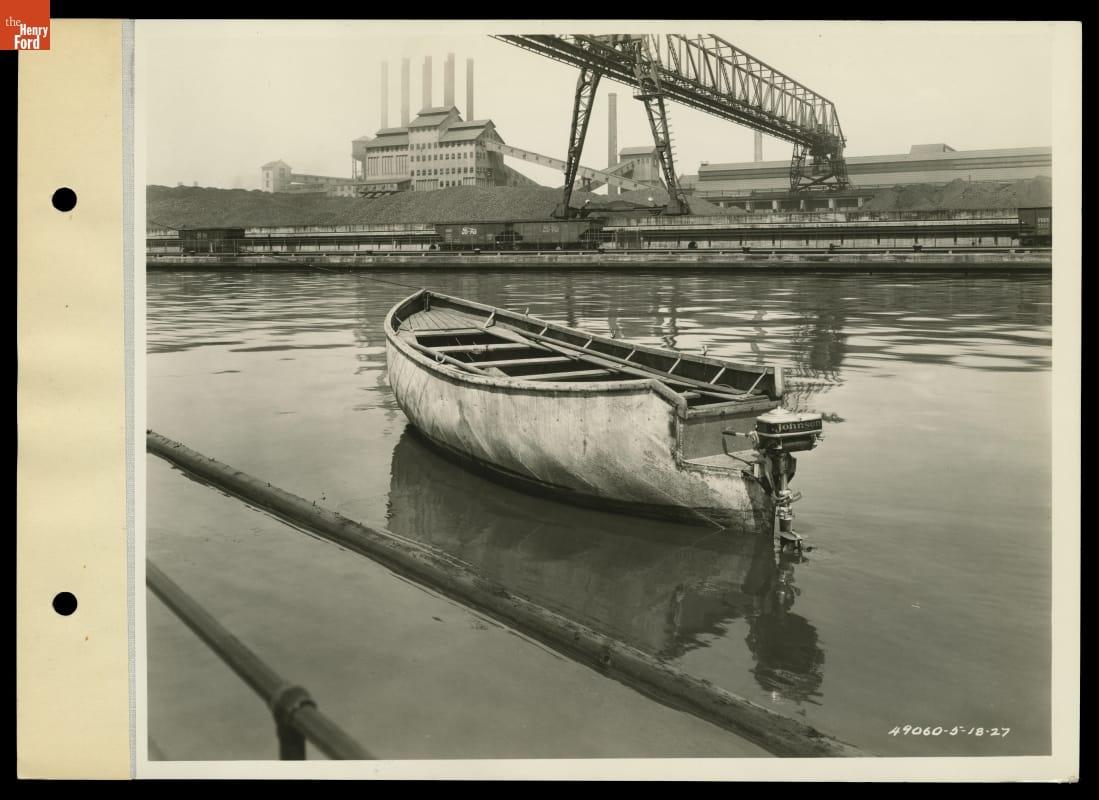
- Salvage Department Motorboat at Ford Motor Company Rouge Plant Shipyard, Dearborn, Michigan, 1927 - Completed in 1928 along the newly dredged River Rouge, Ford Motor Company's Rouge Plant quickly became an icon of modern industrial productivity. The factory's ship salvaging project exemplified Henry Ford's vision of efficiency at the plant. Workers disassembled surplus vessels, saving hardware and reconditioning functional machinery. Then, in the Rouge's production foundry, they melted down remaining scraps into reusable steel.
- May 18, 1927
- Collections - Artifact
Salvage Department Motorboat at Ford Motor Company Rouge Plant Shipyard, Dearborn, Michigan, 1927
Completed in 1928 along the newly dredged River Rouge, Ford Motor Company's Rouge Plant quickly became an icon of modern industrial productivity. The factory's ship salvaging project exemplified Henry Ford's vision of efficiency at the plant. Workers disassembled surplus vessels, saving hardware and reconditioning functional machinery. Then, in the Rouge's production foundry, they melted down remaining scraps into reusable steel.
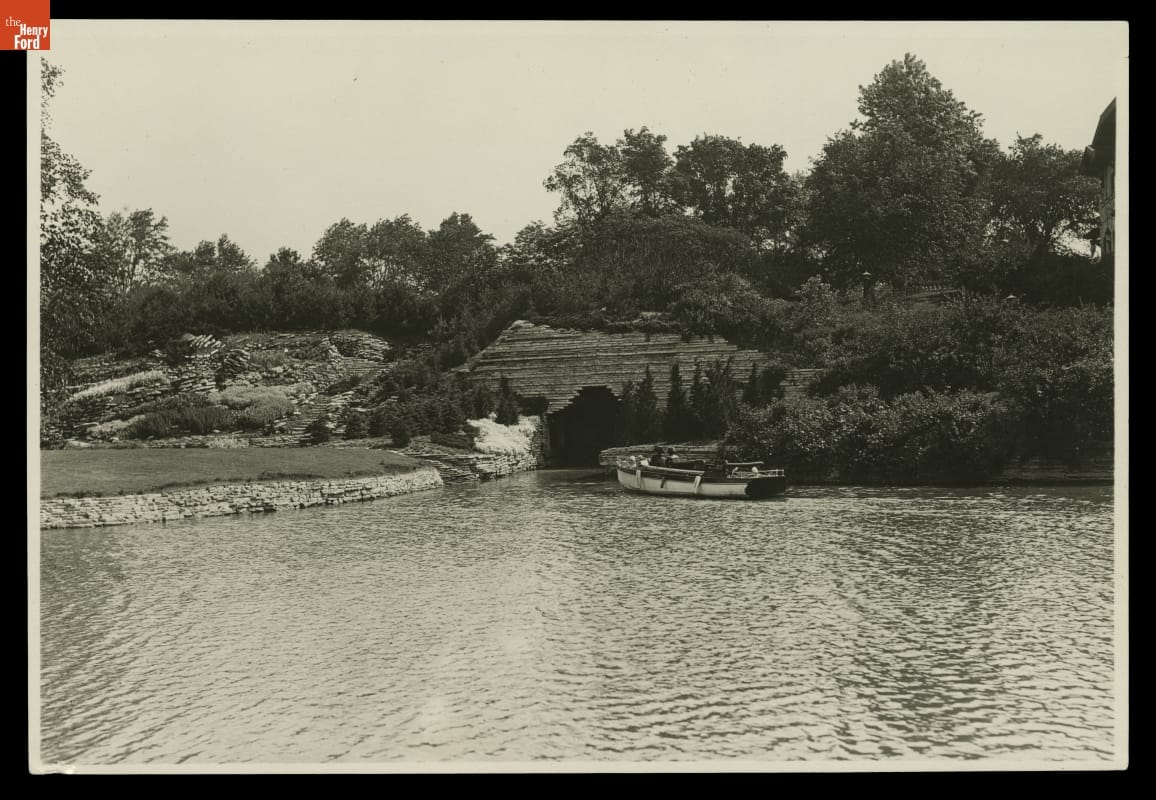
- Clara Ford Piloting the "Callie B" in the Rouge River at Fair Lane Estate, Dearborn, Michigan, circa 1925 - Clara Ford pilots her electric boat, <EM>Callie B.</EM>, on the Rouge River in Dearborn, Michigan. Callie was the affectionate nickname given by Henry Ford to his wife. Mrs. Ford kept her mahogany boat in an underground boathouse next to the couple's residence at Fair Lane Estate.
- 1920-1929
- Collections - Artifact
Clara Ford Piloting the "Callie B" in the Rouge River at Fair Lane Estate, Dearborn, Michigan, circa 1925
Clara Ford pilots her electric boat, Callie B., on the Rouge River in Dearborn, Michigan. Callie was the affectionate nickname given by Henry Ford to his wife. Mrs. Ford kept her mahogany boat in an underground boathouse next to the couple's residence at Fair Lane Estate.
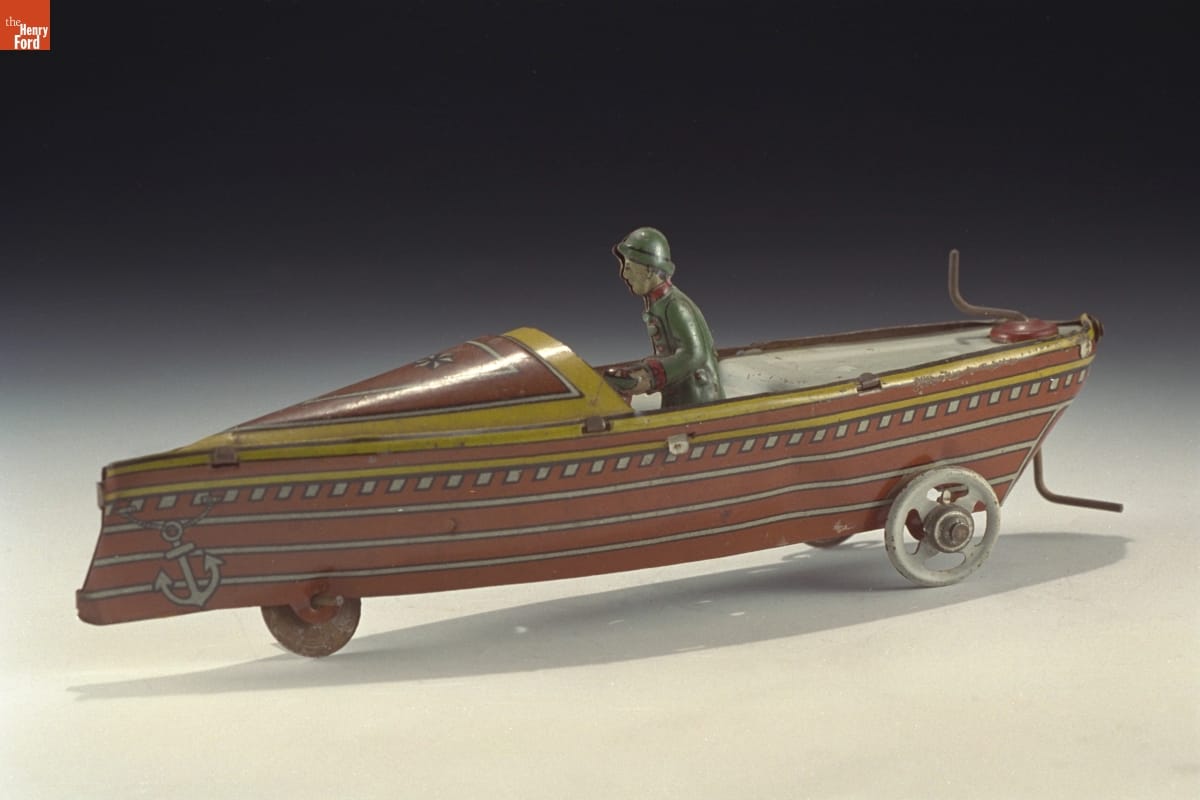
- Toy Motorboat, 1890-1920 - Toy companies began making small, inexpensive, yet colorful, tin toys in the late 19th century. Over the years, toymakers stamped tin into shapes of animals, planes, trains, soldiers and even this motorboat. Children could purchase these low-priced toys from shopkeepers or street vendors. These mass-produced toys -- though not meant to last -- provided fun for just a few pennies.
- 1890-1920
- Collections - Artifact
Toy Motorboat, 1890-1920
Toy companies began making small, inexpensive, yet colorful, tin toys in the late 19th century. Over the years, toymakers stamped tin into shapes of animals, planes, trains, soldiers and even this motorboat. Children could purchase these low-priced toys from shopkeepers or street vendors. These mass-produced toys -- though not meant to last -- provided fun for just a few pennies.
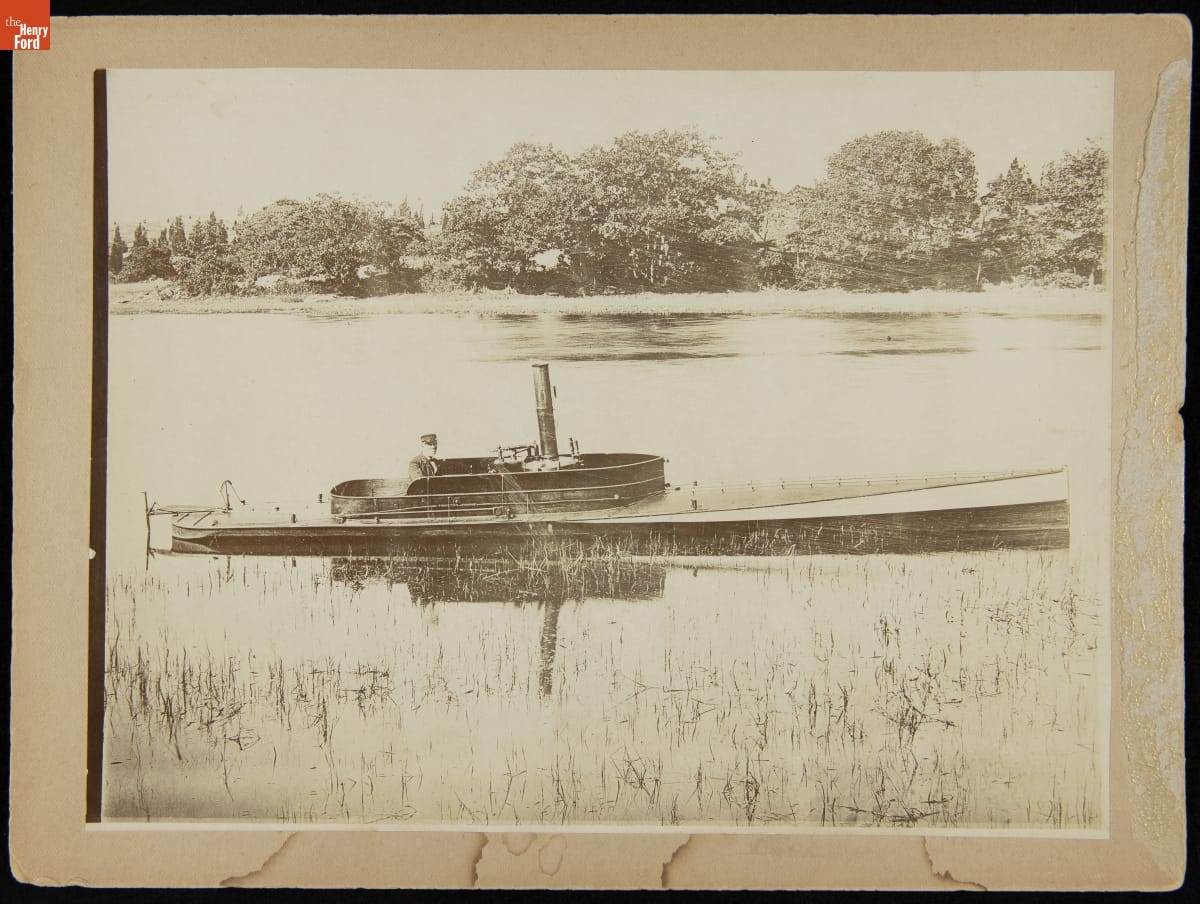
- Sylvester H. Roper in a Speed Boat, circa 1885 - Massachusetts machinist Sylvester Roper built several steam-powered carriages and motorcycles years before automobiles -- as we know them -- appeared. Roper never produced his vehicles commercially. Instead, they were exhibited at circuses and fairs, where crowds marveled at the self-propelled contraptions. Steamboats and steam locomotives were common, but steam-powered carriages were genuine novelties.
- circa 1885
- Collections - Artifact
Sylvester H. Roper in a Speed Boat, circa 1885
Massachusetts machinist Sylvester Roper built several steam-powered carriages and motorcycles years before automobiles -- as we know them -- appeared. Roper never produced his vehicles commercially. Instead, they were exhibited at circuses and fairs, where crowds marveled at the self-propelled contraptions. Steamboats and steam locomotives were common, but steam-powered carriages were genuine novelties.
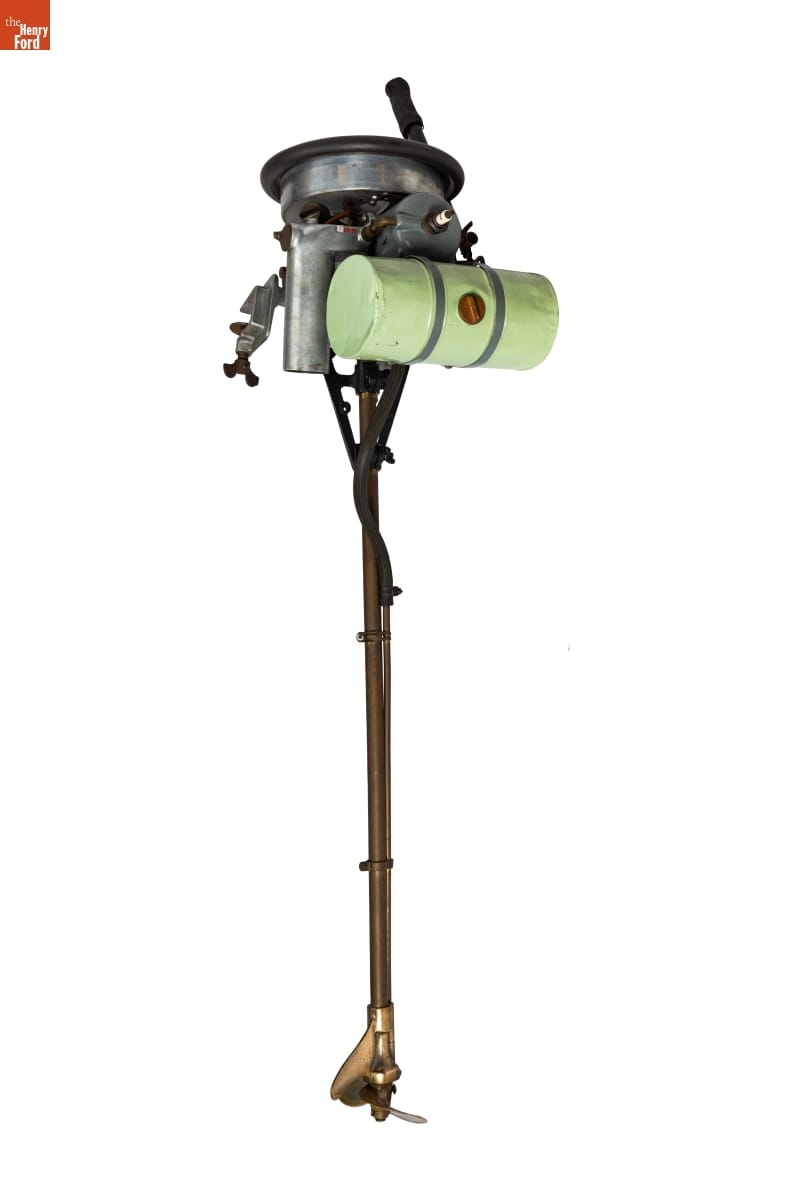
- Caille Liberty Drive Outboard Motor, circa 1915 - Detroit-based brothers A. Arthur and Adolph Callie were successful manufacturers of coin-operated machines before they formed Callie Perfection Motor Company to build marine engines. Callie offered its Liberty Drive outboard boat motors in one- and two-cylinder versions. The simple, direct-drive units performed well in shallow or weedy waters, but they were difficult to steer when operated at full power.
- circa 1915
- Collections - Artifact
Caille Liberty Drive Outboard Motor, circa 1915
Detroit-based brothers A. Arthur and Adolph Callie were successful manufacturers of coin-operated machines before they formed Callie Perfection Motor Company to build marine engines. Callie offered its Liberty Drive outboard boat motors in one- and two-cylinder versions. The simple, direct-drive units performed well in shallow or weedy waters, but they were difficult to steer when operated at full power.
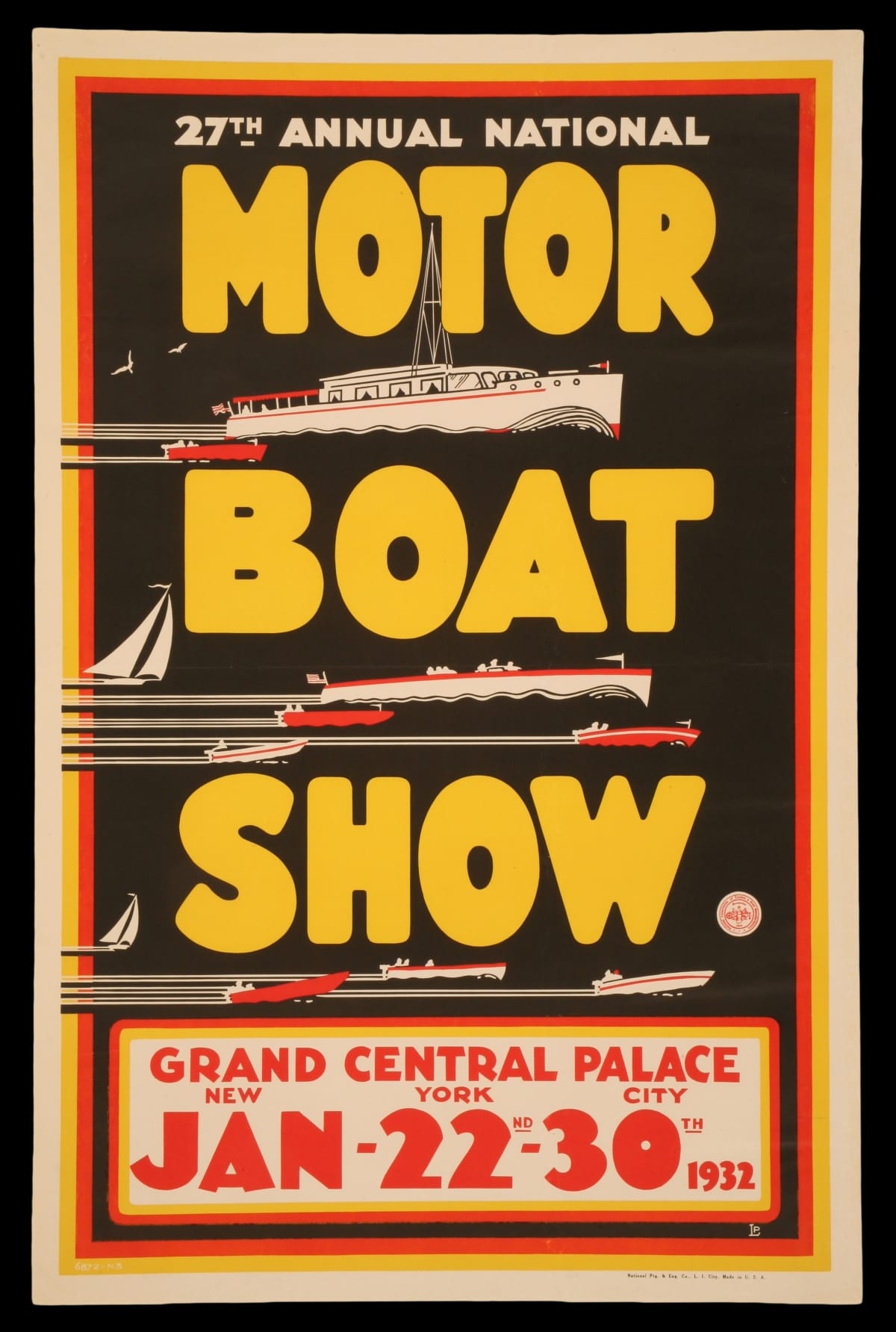
- Advertising Poster, "27th Annual National Motor Boat Show," 1932 -
- 22 January 1932 - 30 January 1932
- Collections - Artifact
Advertising Poster, "27th Annual National Motor Boat Show," 1932
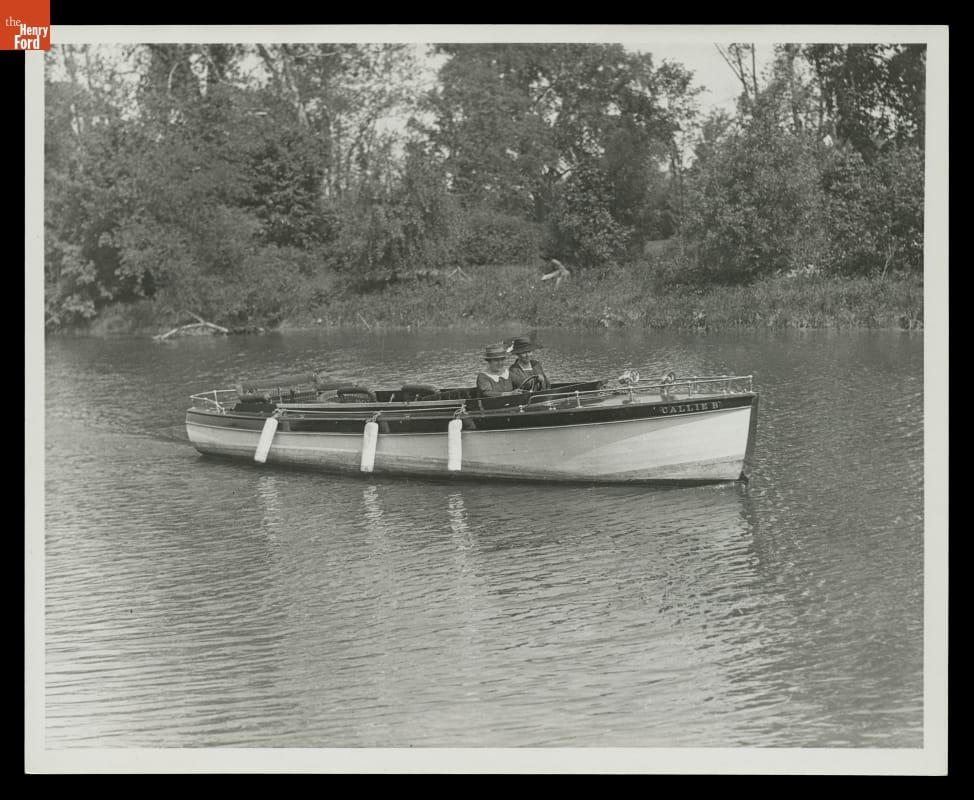
- Clara Ford Driving her Boat "Callie B.," June 5, 1923 - Clara Ford pilots her electric boat, <EM>Callie B.</EM>, on the Rouge River in Dearborn, Michigan. Callie was the affectionate nickname given by Henry Ford to his wife. Mrs. Ford kept her mahogany boat in an underground boathouse next to the couple's residence at Fair Lane Estate.
- June 05, 1923
- Collections - Artifact
Clara Ford Driving her Boat "Callie B.," June 5, 1923
Clara Ford pilots her electric boat, Callie B., on the Rouge River in Dearborn, Michigan. Callie was the affectionate nickname given by Henry Ford to his wife. Mrs. Ford kept her mahogany boat in an underground boathouse next to the couple's residence at Fair Lane Estate.
- Motorboat, Painting by Virgil M. Exner, circa 1962 - Virgil Exner's long career in design included time with General Motors, Raymond Loewy Associates, Studebaker, and Chrysler -- where he headed design from 1953 to 1961. After retiring from Chrysler, Exner partnered with his son Virgil Exner, Jr., and Robert Hobbs to form Exner-Hobbs Associates. Their firm created several designs for boatbuilder Buehler Turbocraft, and some went into production.
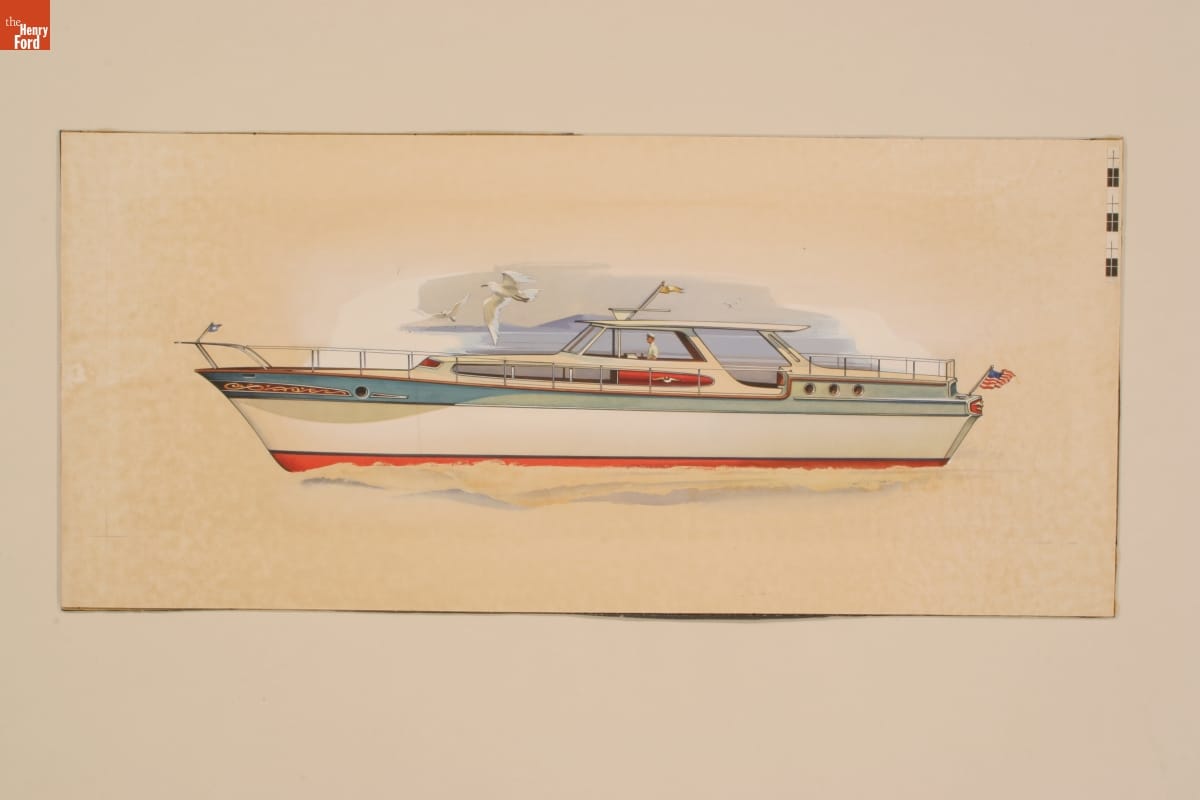
- circa 1962
- Collections - Artifact
Motorboat, Painting by Virgil M. Exner, circa 1962
Virgil Exner's long career in design included time with General Motors, Raymond Loewy Associates, Studebaker, and Chrysler -- where he headed design from 1953 to 1961. After retiring from Chrysler, Exner partnered with his son Virgil Exner, Jr., and Robert Hobbs to form Exner-Hobbs Associates. Their firm created several designs for boatbuilder Buehler Turbocraft, and some went into production.