
Search
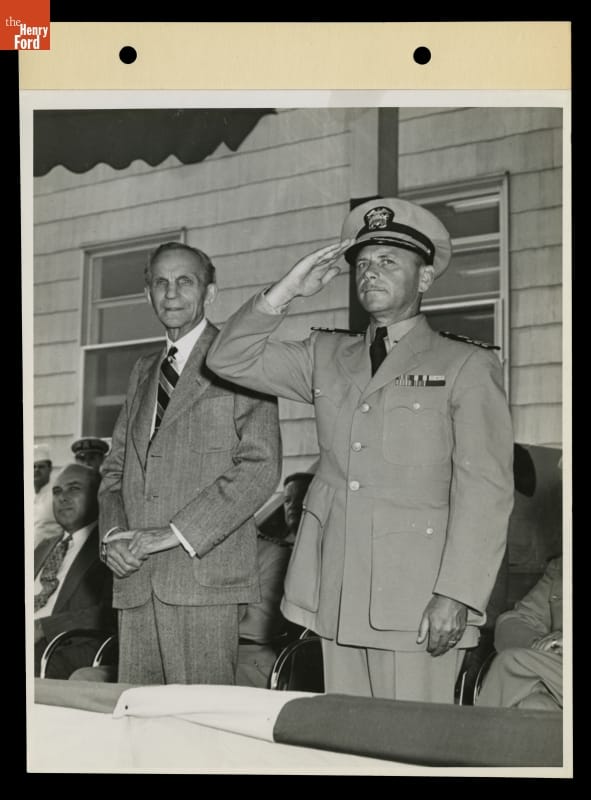
- Henry Ford on His 80th Birthday, U. S. Naval Training School at the Ford Rouge Plant, July 1943 - Personnel at the United States Naval Training School in Dearborn, Michigan, invited Henry Ford to celebrate his 80th birthday at the base. Ford was feted with gifts, a military drill, and a large cake modeled after the school buildings. The school -- built on land at Ford's Rouge Plant and leased to the Navy -- trained thousands of recruits in various skilled trades during World War II.
- July 28, 1943
- Collections - Artifact
Henry Ford on His 80th Birthday, U. S. Naval Training School at the Ford Rouge Plant, July 1943
Personnel at the United States Naval Training School in Dearborn, Michigan, invited Henry Ford to celebrate his 80th birthday at the base. Ford was feted with gifts, a military drill, and a large cake modeled after the school buildings. The school -- built on land at Ford's Rouge Plant and leased to the Navy -- trained thousands of recruits in various skilled trades during World War II.
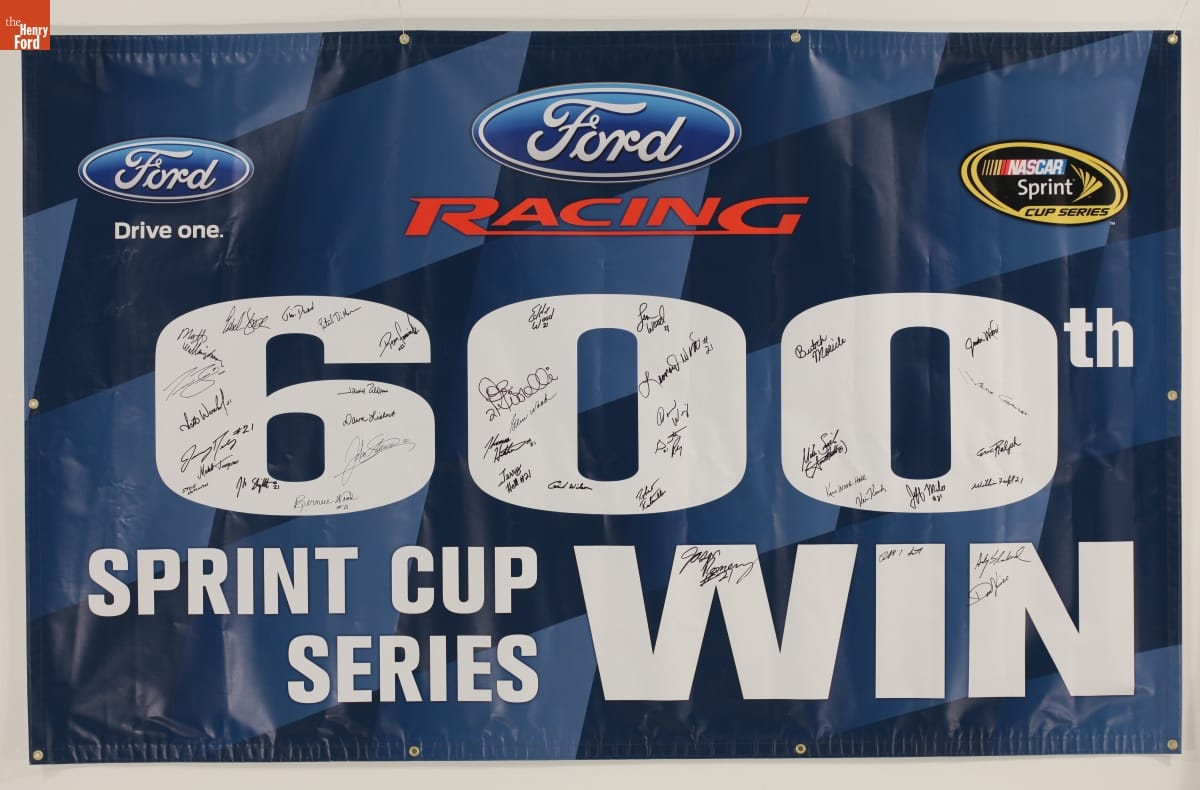
- Banner Commemorating Ford Motor Company's 600th NASCAR Win, 2011 - This banner commemorates Ford Motor Company's 600th NASCAR Cup Series win, earned when Trevor Bayne drove the #21 Ford Fusion to victory at the 2011 Daytona 500. Bayne's team, Wood Brothers Racing, is NASCAR's oldest and has used Ford cars exclusively since forming in 1950. Bayne, Wood Brothers team members, and Ford representatives all signed the banner.
- February 20, 2011
- Collections - Artifact
Banner Commemorating Ford Motor Company's 600th NASCAR Win, 2011
This banner commemorates Ford Motor Company's 600th NASCAR Cup Series win, earned when Trevor Bayne drove the #21 Ford Fusion to victory at the 2011 Daytona 500. Bayne's team, Wood Brothers Racing, is NASCAR's oldest and has used Ford cars exclusively since forming in 1950. Bayne, Wood Brothers team members, and Ford representatives all signed the banner.
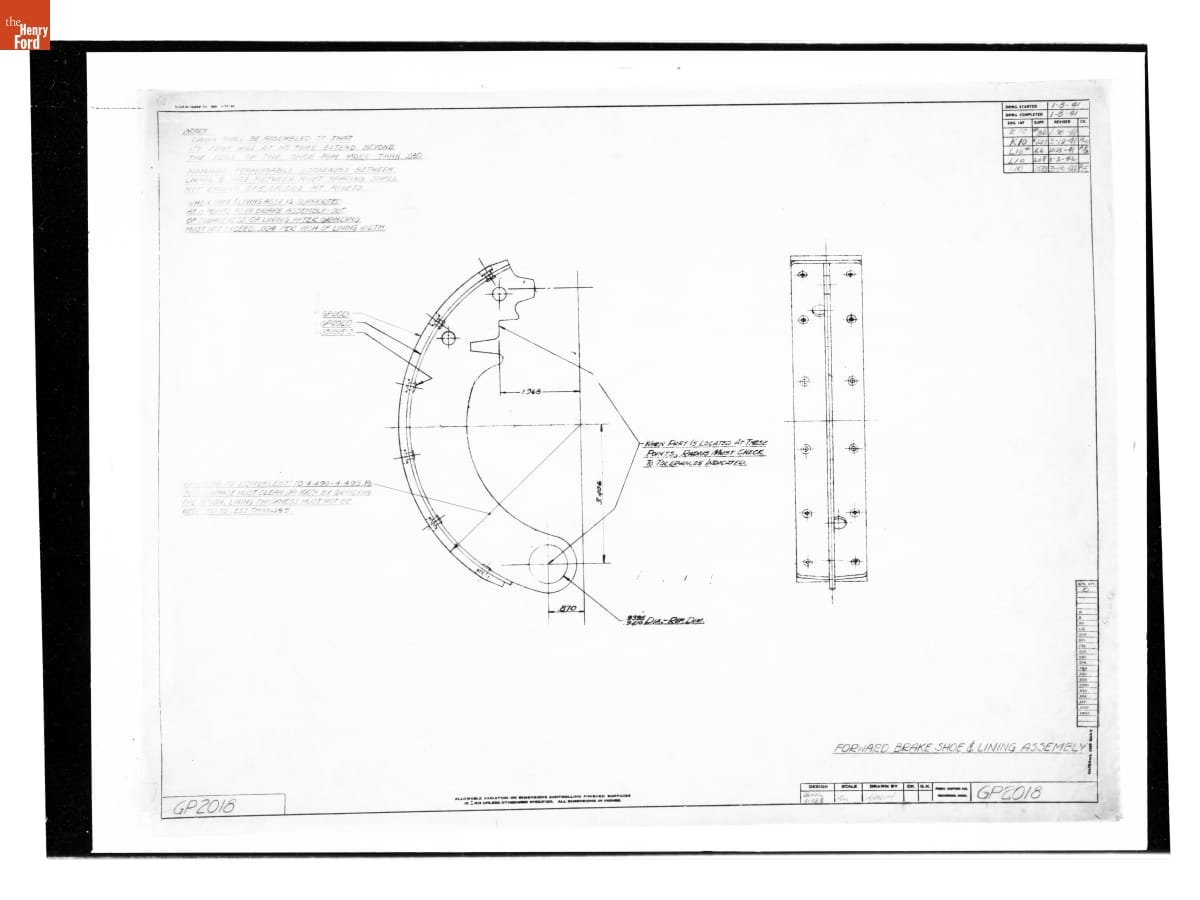
- Drawing, "Forward Brake Shoe & Lining Assembly," Ford GP, March 16, 1944 - The Ford Motor Company created over a million parts drawings from 1903 to 1957. Many of these drawings specify engineering requirements for the components of Ford-made vehicles--including automobiles, trucks, tractors, military vehicles and Tri-motor airplanes. Others document assembly components, stages of casting and forging, or experimental designs. Beginning in the 1940s, Ford transferred the drawings to microfilm.
- March 16, 1944
- Collections - Artifact
Drawing, "Forward Brake Shoe & Lining Assembly," Ford GP, March 16, 1944
The Ford Motor Company created over a million parts drawings from 1903 to 1957. Many of these drawings specify engineering requirements for the components of Ford-made vehicles--including automobiles, trucks, tractors, military vehicles and Tri-motor airplanes. Others document assembly components, stages of casting and forging, or experimental designs. Beginning in the 1940s, Ford transferred the drawings to microfilm.
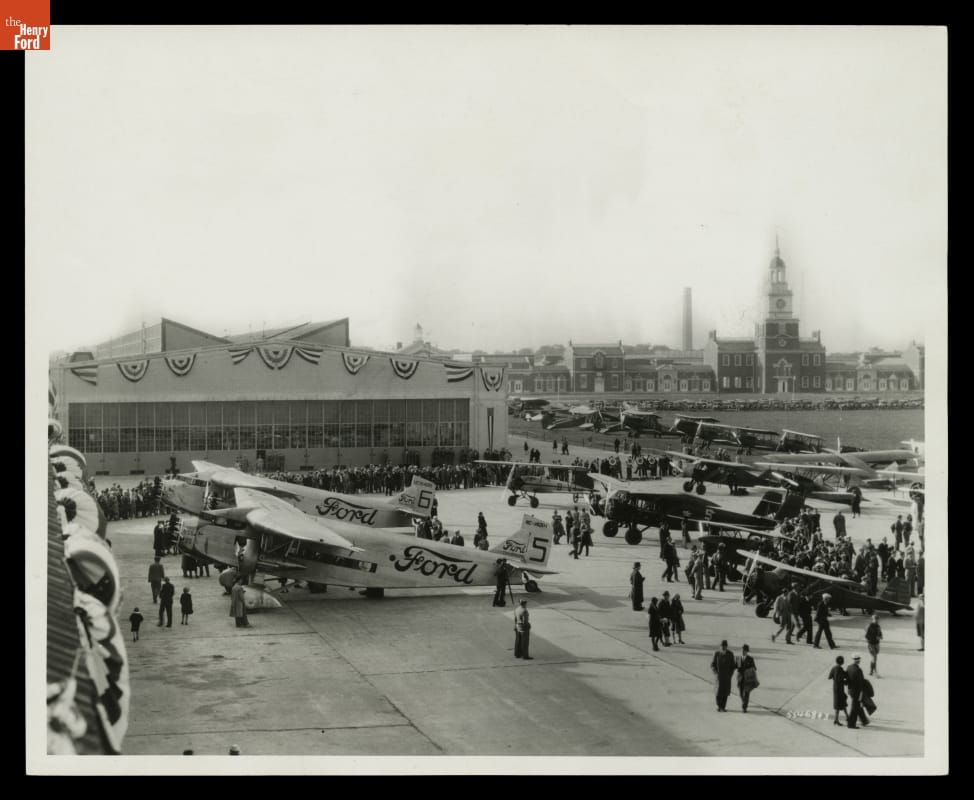
- Ford Reliability Tour at Ford Airport, Dearborn, Michigan, 1930 - From 1925-1931, Ford Motor Company sponsored annual air tours to promote reliability and safety in commercial aircraft. Pilots flew to pre-determined cities, and their airplanes were rated on the ability to take off and land quickly and maintain consistent speeds. The 1930 tour included 18 entries and visited 29 cities in the United States and Canada.
- September 27, 1930
- Collections - Artifact
Ford Reliability Tour at Ford Airport, Dearborn, Michigan, 1930
From 1925-1931, Ford Motor Company sponsored annual air tours to promote reliability and safety in commercial aircraft. Pilots flew to pre-determined cities, and their airplanes were rated on the ability to take off and land quickly and maintain consistent speeds. The 1930 tour included 18 entries and visited 29 cities in the United States and Canada.
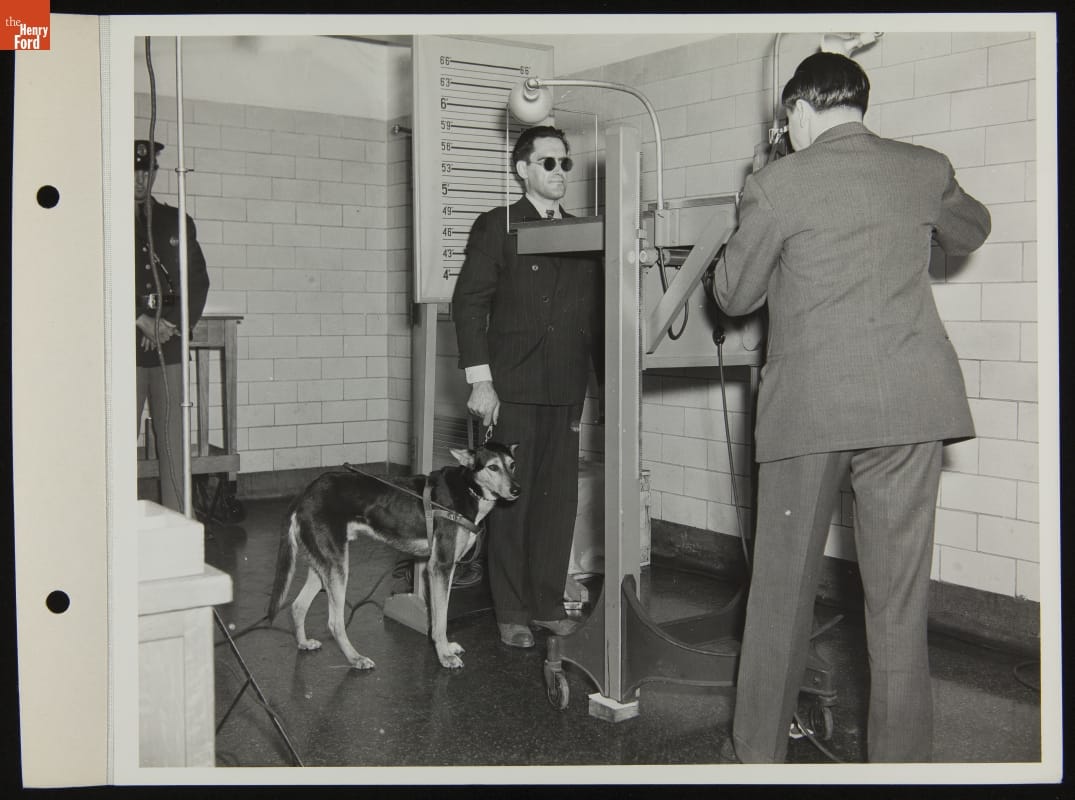
- Ford Employee Sylvester Rypkowski with Service Dog "Blackie," Being Photographed for ID Badge, October 1942 - Henry Ford believed in providing equal employment opportunities to people with disabilities -- a practice he began in the early years of his company. During World War II, Ford employed thousands of workers with disabilities. In October 1942, Ford Motor Company photographed Sylvester Rypkowski and his service dog, Blackie, as they became members of the Rouge plant's workforce.
- October 05, 1942
- Collections - Artifact
Ford Employee Sylvester Rypkowski with Service Dog "Blackie," Being Photographed for ID Badge, October 1942
Henry Ford believed in providing equal employment opportunities to people with disabilities -- a practice he began in the early years of his company. During World War II, Ford employed thousands of workers with disabilities. In October 1942, Ford Motor Company photographed Sylvester Rypkowski and his service dog, Blackie, as they became members of the Rouge plant's workforce.
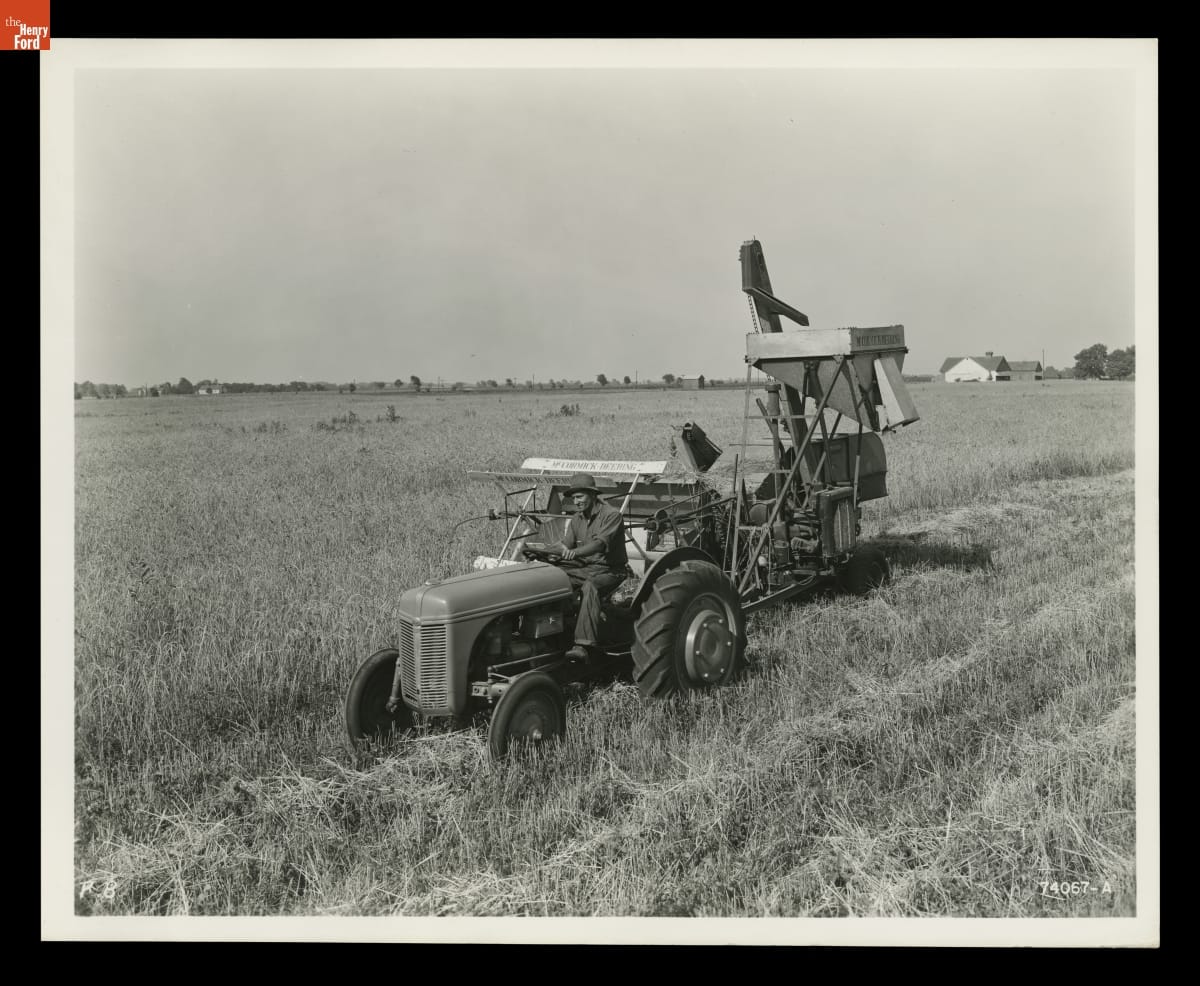
- Man Harvesting Wheat Using a Ford-Ferguson Tractor with Combine Attached, Indiana, August 1940 - Ford Motor Company introduced the 9N tractor in 1939. It featured the "Ferguson System:" a 3-point hydraulic hitch-and-lift system invented by Irishman Harry Ferguson. Ferguson's revolutionary hitch kept agricultural implements, like the combine seen here, in line with the tractor. It also provided stability. By 1940, nearly 8 percent of tractors sold in the U.S. were 9Ns.
- August 05, 1940
- Collections - Artifact
Man Harvesting Wheat Using a Ford-Ferguson Tractor with Combine Attached, Indiana, August 1940
Ford Motor Company introduced the 9N tractor in 1939. It featured the "Ferguson System:" a 3-point hydraulic hitch-and-lift system invented by Irishman Harry Ferguson. Ferguson's revolutionary hitch kept agricultural implements, like the combine seen here, in line with the tractor. It also provided stability. By 1940, nearly 8 percent of tractors sold in the U.S. were 9Ns.
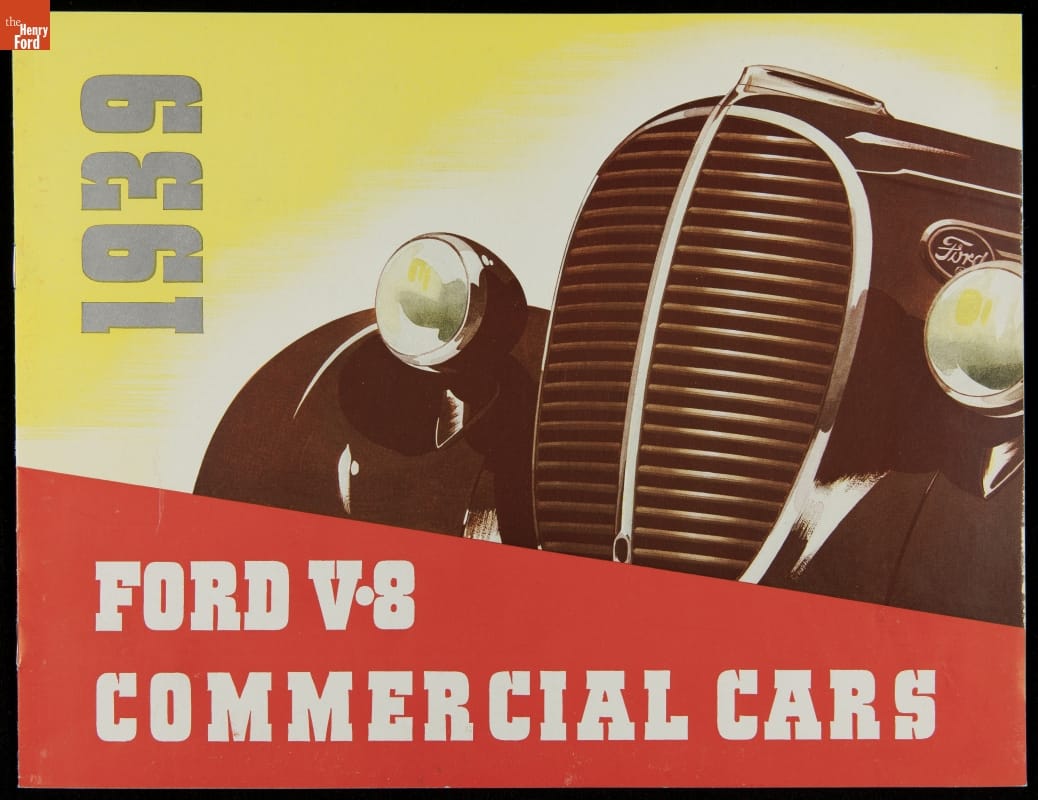
- Sales Brochure, "1939 Ford V-8 Commercial Cars" - Ford Motor Company's truck lineup for 1939 included pickups, panel trucks, stake body and platform models, and sedan delivery vehicles. Larger commercial models were available in dump truck and cab-over-engine configurations. Power came from V-8 engines available with displacements of 136 or 221 cubic inches.
- 1939
- Collections - Artifact
Sales Brochure, "1939 Ford V-8 Commercial Cars"
Ford Motor Company's truck lineup for 1939 included pickups, panel trucks, stake body and platform models, and sedan delivery vehicles. Larger commercial models were available in dump truck and cab-over-engine configurations. Power came from V-8 engines available with displacements of 136 or 221 cubic inches.
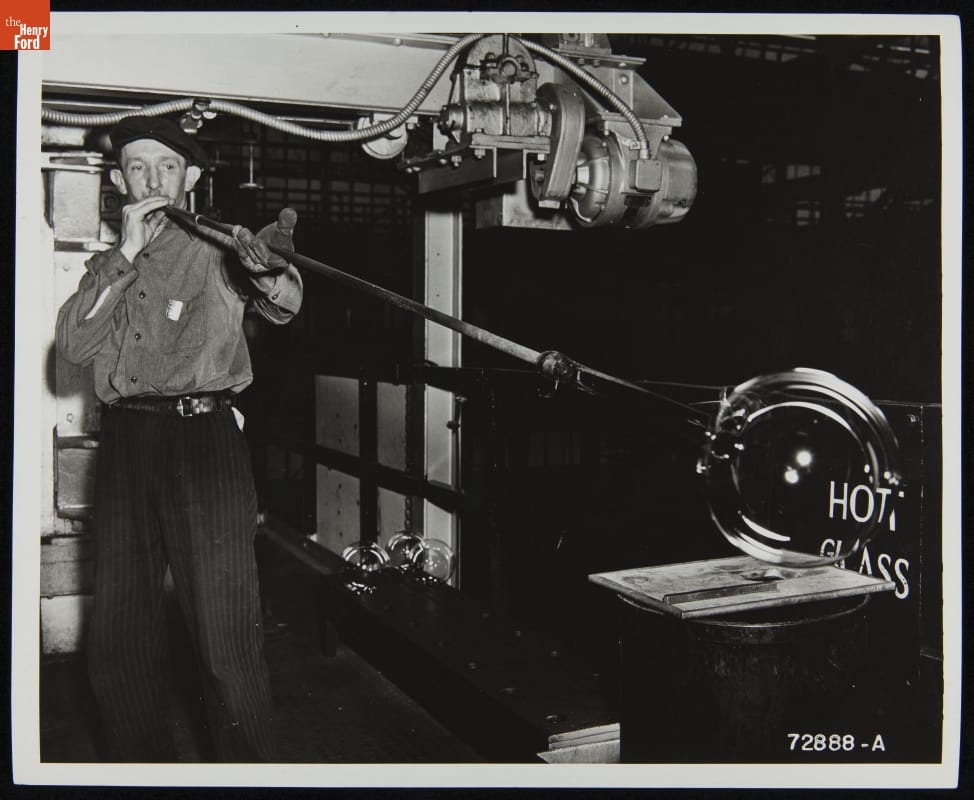
- Testing Batches of Glass at the Ford Rouge Glass Plant, 1940 - Unsatisfied with glass from outside suppliers, Ford Motor Company established its own glass plant at the Rouge in 1923. Furnaces produced molten glass, while overhead grinders and polishers worked the material to a perfectly smooth and clear finish. Two other Ford glass plants, in Pennsylvania and Minnesota, combined with the Rouge to manufacture 20 million feet of glass each year.
- January 03, 1940
- Collections - Artifact
Testing Batches of Glass at the Ford Rouge Glass Plant, 1940
Unsatisfied with glass from outside suppliers, Ford Motor Company established its own glass plant at the Rouge in 1923. Furnaces produced molten glass, while overhead grinders and polishers worked the material to a perfectly smooth and clear finish. Two other Ford glass plants, in Pennsylvania and Minnesota, combined with the Rouge to manufacture 20 million feet of glass each year.
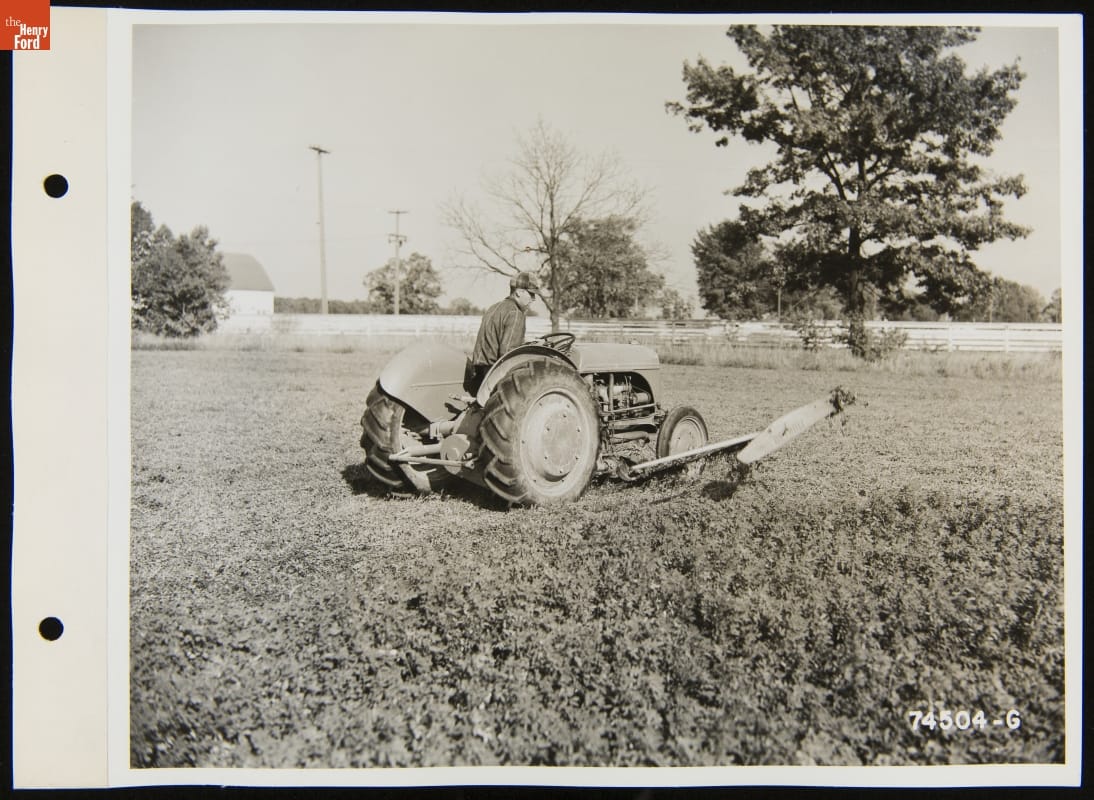
- Ford-Ferguson 9N Tractor Plowing and Mowing, October 9, 1940 -
- October 09, 1940
- Collections - Artifact
Ford-Ferguson 9N Tractor Plowing and Mowing, October 9, 1940
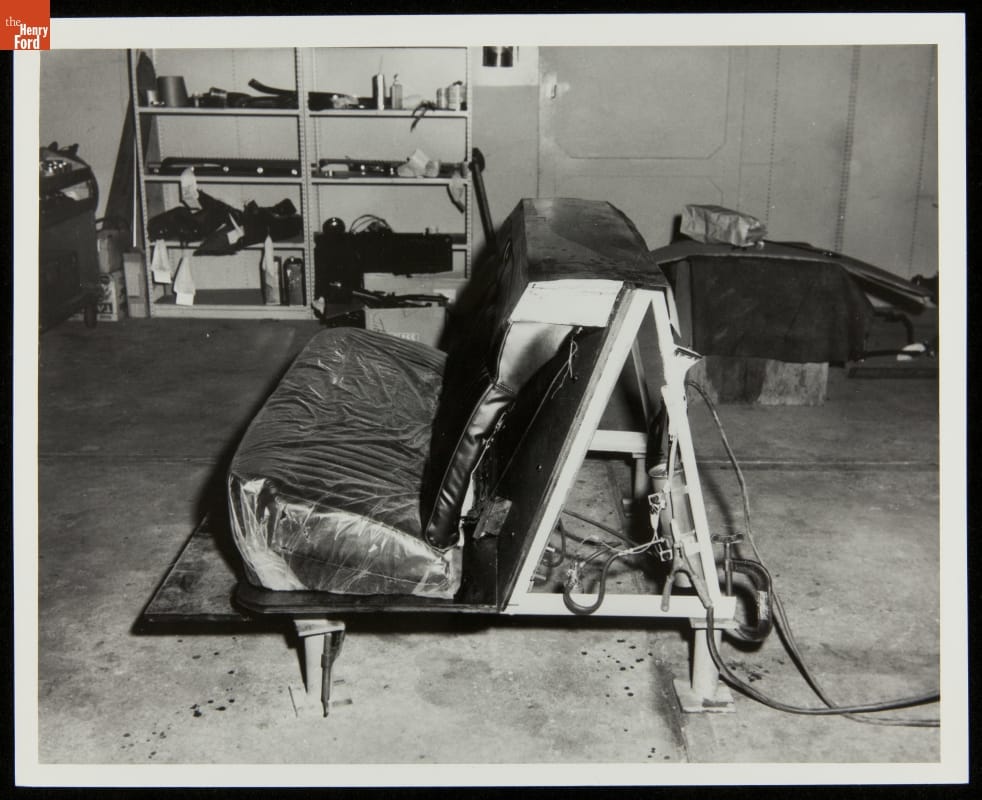
- Lincoln Continental Presidential Limousine Customization, Testing Adjustable Hydraulic Seat, 1961 - The Hess & Eisenhardt Company of Cincinnati, Ohio, transformed a stock 1961 Lincoln Continental convertible into the presidential limousine. Among the special modifications was a hydraulic lift installed on the rear seat. At the touch of a button, the president could raise the seat 10-1/2 inches to make himself and his passengers more visible to crowds watching the limousine pass.
- 1961
- Collections - Artifact
Lincoln Continental Presidential Limousine Customization, Testing Adjustable Hydraulic Seat, 1961
The Hess & Eisenhardt Company of Cincinnati, Ohio, transformed a stock 1961 Lincoln Continental convertible into the presidential limousine. Among the special modifications was a hydraulic lift installed on the rear seat. At the touch of a button, the president could raise the seat 10-1/2 inches to make himself and his passengers more visible to crowds watching the limousine pass.