
Search
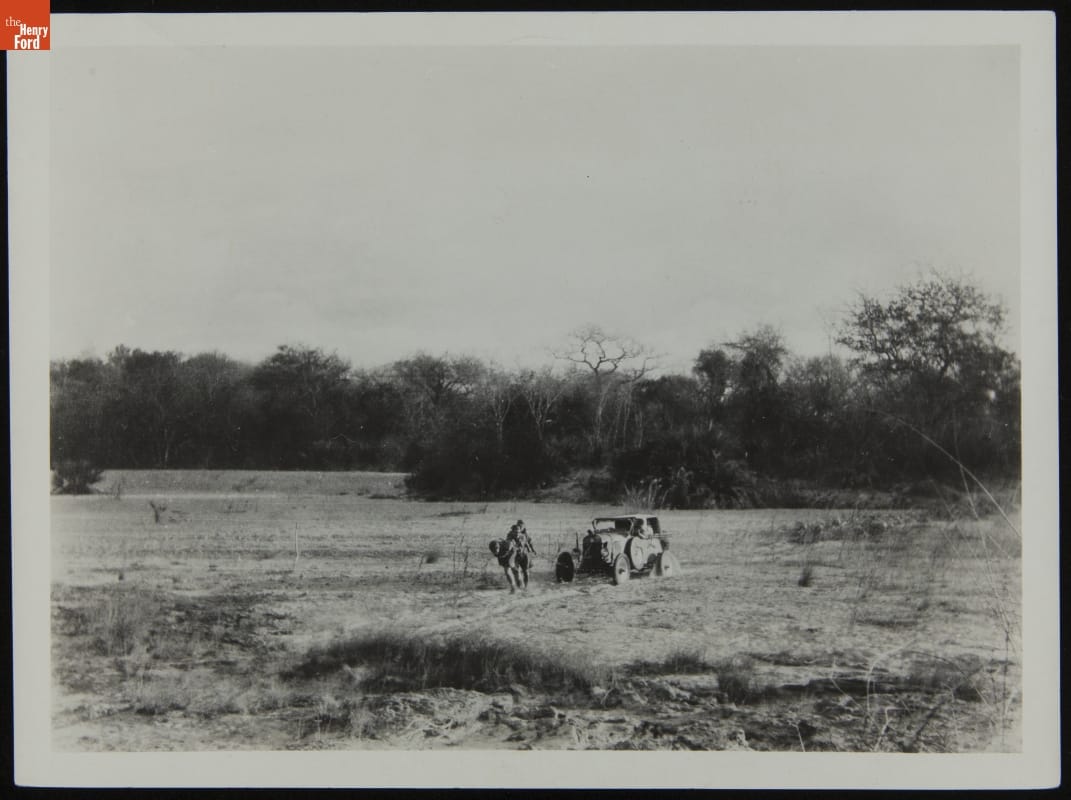
- Aloha Wanderwell Driving Car between Limpopo River and Sabe River, Mozambique, 1927 - Aloha Wanderwell Baker, born Idris Galcia Hall, was adventurous. In 1922, at the age of 16, she answered an ad to join the globe-trekking Captain Walter Wanderwell on his travels. Aloha crisscrossed Europe, journeyed across Africa and Asia, and then sailed for America and more adventures. Along the way, she became known as "the world's most traveled girl."
- 1927
- Collections - Artifact
Aloha Wanderwell Driving Car between Limpopo River and Sabe River, Mozambique, 1927
Aloha Wanderwell Baker, born Idris Galcia Hall, was adventurous. In 1922, at the age of 16, she answered an ad to join the globe-trekking Captain Walter Wanderwell on his travels. Aloha crisscrossed Europe, journeyed across Africa and Asia, and then sailed for America and more adventures. Along the way, she became known as "the world's most traveled girl."
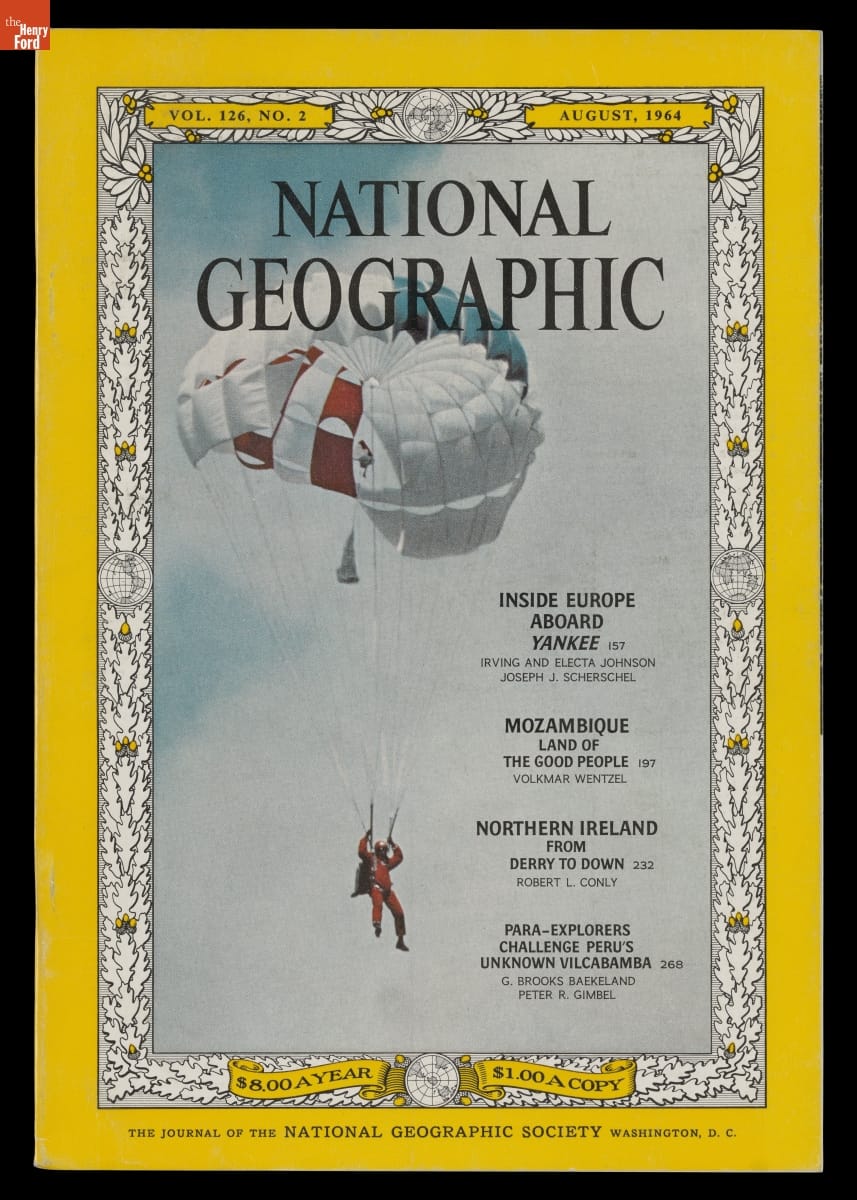
- "National Geographic," Vol. 126, No. 2, August 1964 - The National Geographic Society published the first issue of its magazine in the fall of 1888, within a year of its founding. <i>National Geographic</i>, initially a scholarly magazine for the Society's members, would not include a photograph in its pages until 1905; its distinctive yellow border would not appear until 1910. By 2024, more than one-and-a-half million subscribers received a digital or print version.
- August 01, 1964
- Collections - Artifact
"National Geographic," Vol. 126, No. 2, August 1964
The National Geographic Society published the first issue of its magazine in the fall of 1888, within a year of its founding. National Geographic, initially a scholarly magazine for the Society's members, would not include a photograph in its pages until 1905; its distinctive yellow border would not appear until 1910. By 2024, more than one-and-a-half million subscribers received a digital or print version.
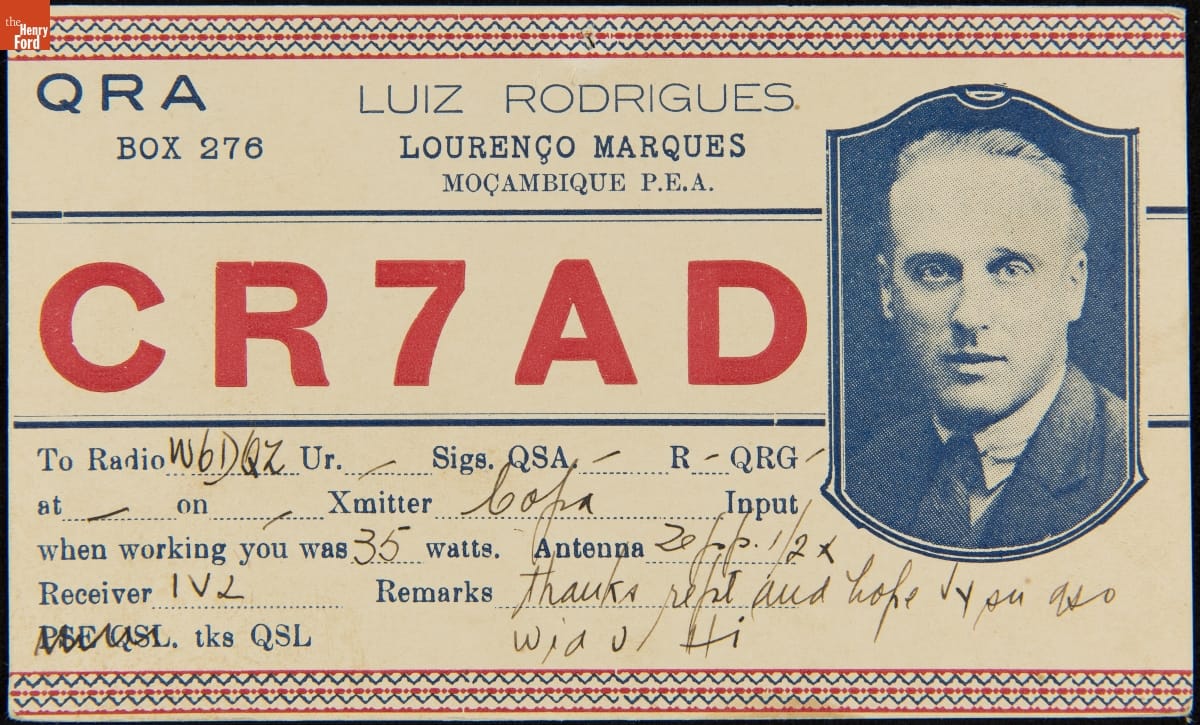
- QSL Card from CR7AD (Luiz Rodrigues, Mocambique, Portuguese East Africa) to W6DQZ (Hamid Durmisevich, Los Angeles, California), 1929-1975 - It was customary for ham radio operators (hams) to exchange these "QSL cards" with one another through the mail after their first conversation. Long-time hams amassed collections of thousands of cards, some from far-flung places. There is a story embedded in each example: the ham's call sign dominates the design, with additional details about location, reception reports, and weather conditions.
- 1929-1975
- Collections - Artifact
QSL Card from CR7AD (Luiz Rodrigues, Mocambique, Portuguese East Africa) to W6DQZ (Hamid Durmisevich, Los Angeles, California), 1929-1975
It was customary for ham radio operators (hams) to exchange these "QSL cards" with one another through the mail after their first conversation. Long-time hams amassed collections of thousands of cards, some from far-flung places. There is a story embedded in each example: the ham's call sign dominates the design, with additional details about location, reception reports, and weather conditions.