
Search
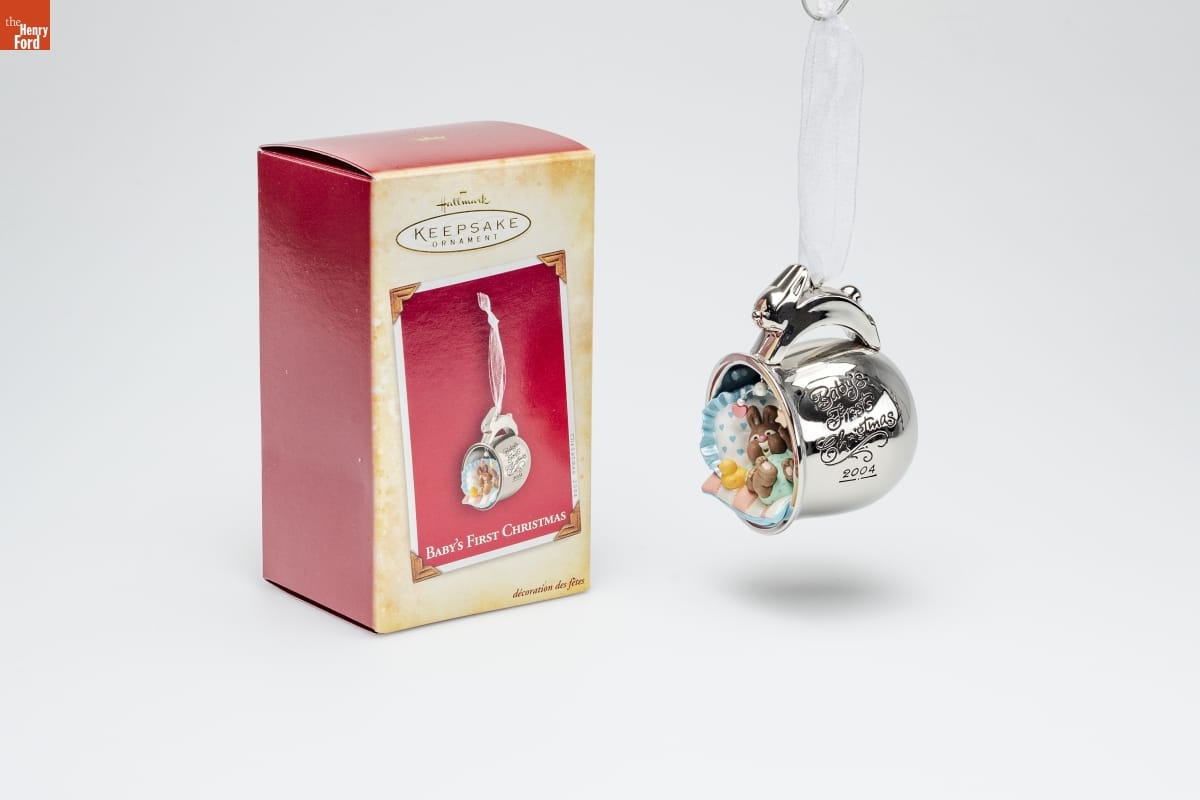
- Hallmark "Baby's First Christmas" Christmas Ornament, 2004 - Already known for greeting cards, Hallmark introduced a line of Christmas ornaments in 1973. The company's annual release of an increasing array of ornaments appealed to customers' interest in marking memories and milestones as well as expressing one's personality and unique tastes. Purchasing an ornament like this one would bring back happy family memories of that event year after year.
- 2004
- Collections - Artifact
Hallmark "Baby's First Christmas" Christmas Ornament, 2004
Already known for greeting cards, Hallmark introduced a line of Christmas ornaments in 1973. The company's annual release of an increasing array of ornaments appealed to customers' interest in marking memories and milestones as well as expressing one's personality and unique tastes. Purchasing an ornament like this one would bring back happy family memories of that event year after year.
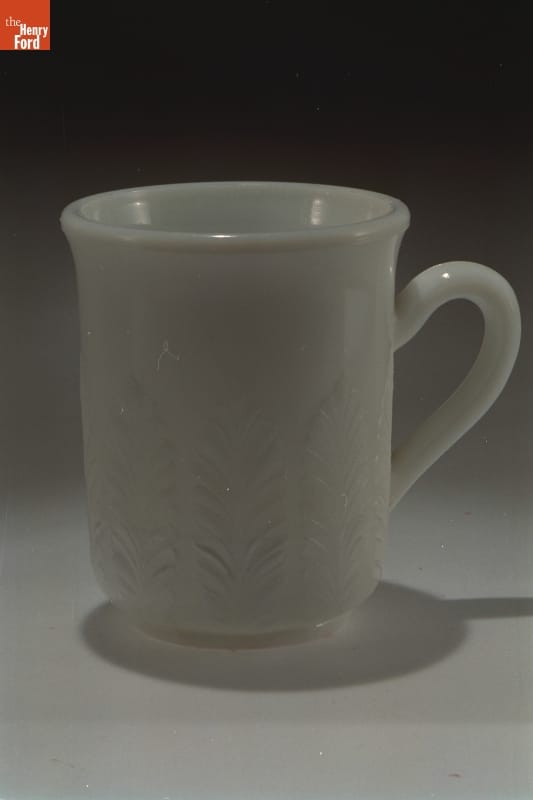
- Mug, 1878-1890 - Nineteenth-century American glassmakers experimented with new methods to create products for a growing consumer market. In the 1820s, pressing glass into metal molds by machine was perfected, and by the mid-1800s, manufacturers were creating a variety of inexpensive pressed glass housewares. America's middle-class consumers could now decorate their homes with attractive glass bowls, creamers, dishes, plates, vases, and other tableware.
- 1875-1890
- Collections - Artifact
Mug, 1878-1890
Nineteenth-century American glassmakers experimented with new methods to create products for a growing consumer market. In the 1820s, pressing glass into metal molds by machine was perfected, and by the mid-1800s, manufacturers were creating a variety of inexpensive pressed glass housewares. America's middle-class consumers could now decorate their homes with attractive glass bowls, creamers, dishes, plates, vases, and other tableware.
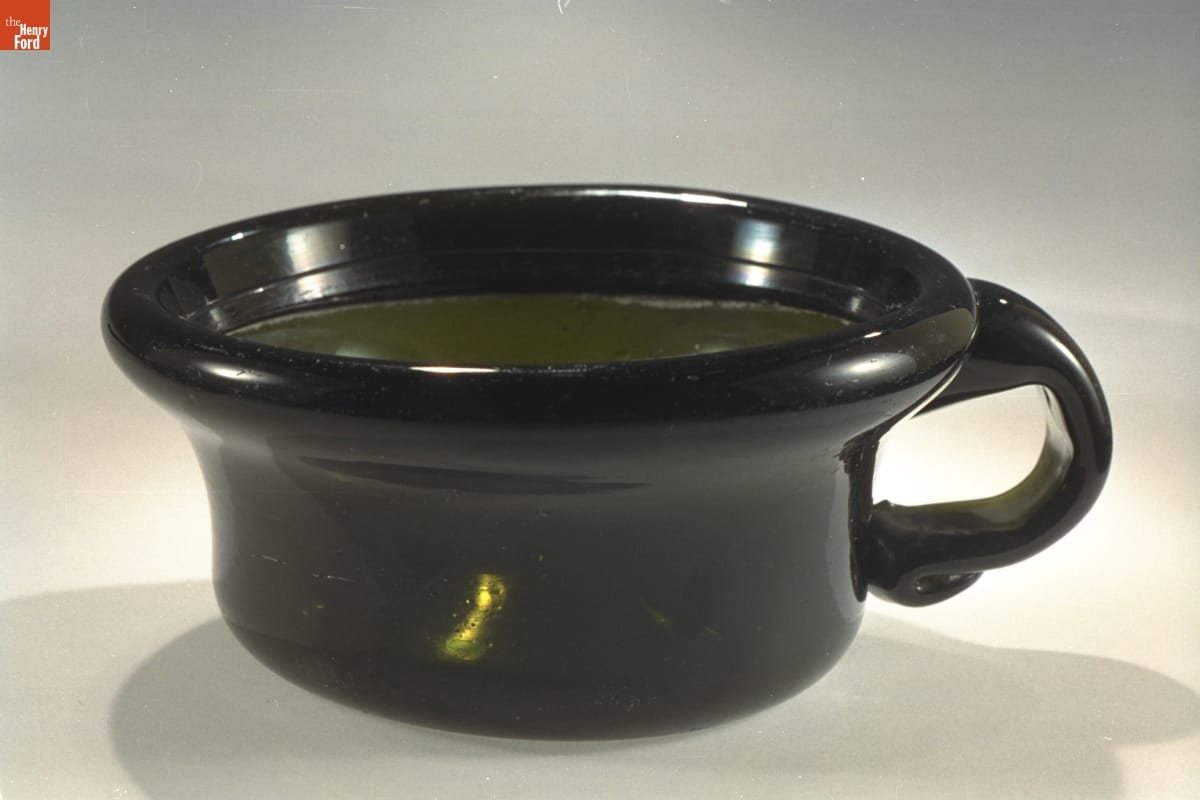
- Mug, 1844-1865 - American glass factories made a variety of glass products for the early-nineteenth-century consumer. Glassblowers turned out bottles, flasks, tableware and other household items. Earlier products were affordable only to the well-to-do. But by the second quarter of the 19th century, a growing number of manufacturers made reasonably priced blown-glass items available to the expanding middle class.
- 1844-1865
- Collections - Artifact
Mug, 1844-1865
American glass factories made a variety of glass products for the early-nineteenth-century consumer. Glassblowers turned out bottles, flasks, tableware and other household items. Earlier products were affordable only to the well-to-do. But by the second quarter of the 19th century, a growing number of manufacturers made reasonably priced blown-glass items available to the expanding middle class.
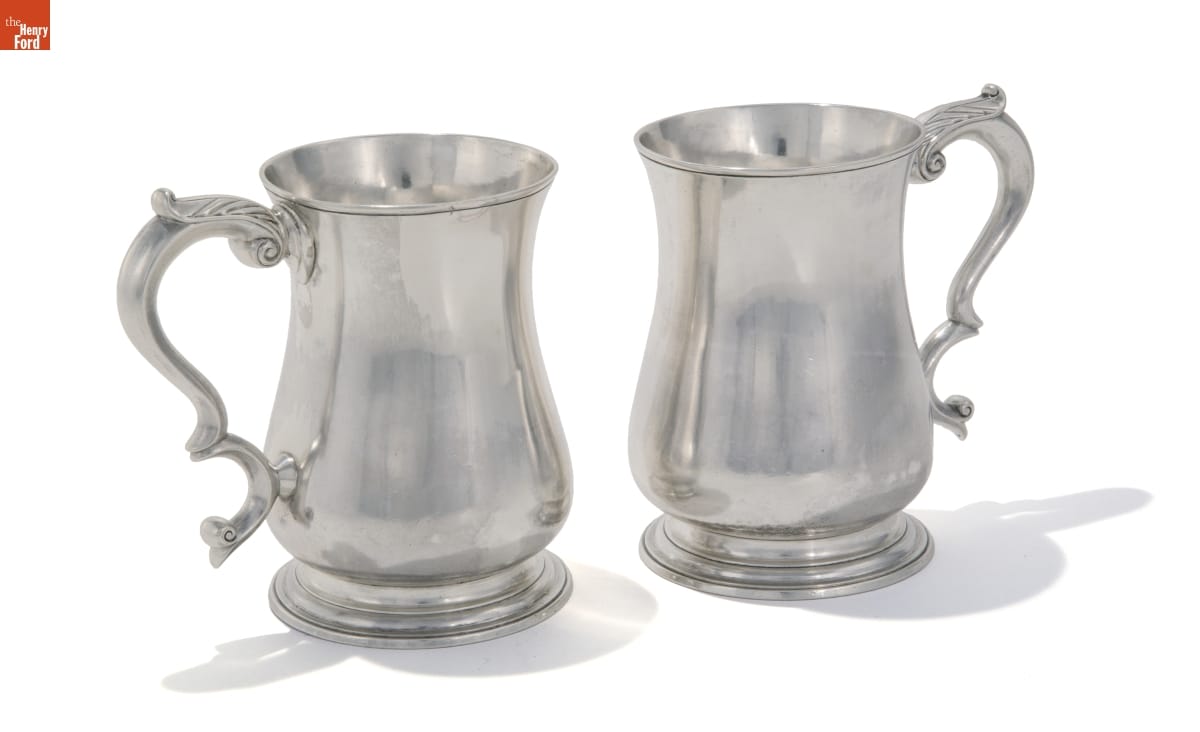
- Pair of Canns, 1780-1789 -
- 1780-1789
- Collections - Artifact
Pair of Canns, 1780-1789
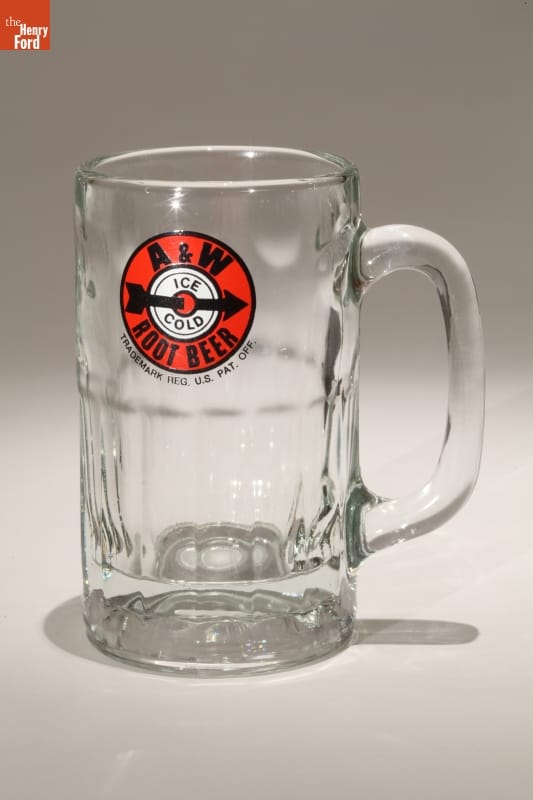
- A & W Mug, 1950-1960 - In 1919, Roy W. Allen ran a small walk-up root beer stand in California, when he partnered with his employee Frank Wright. The partners opened three subsequent root beer stands, then franchised their concept nationwide. Glass handled mugs, simulating beer mugs, became a recognizable symbol of A & W's uniquely flavorful root beer.
- 1950-1960
- Collections - Artifact
A & W Mug, 1950-1960
In 1919, Roy W. Allen ran a small walk-up root beer stand in California, when he partnered with his employee Frank Wright. The partners opened three subsequent root beer stands, then franchised their concept nationwide. Glass handled mugs, simulating beer mugs, became a recognizable symbol of A & W's uniquely flavorful root beer.
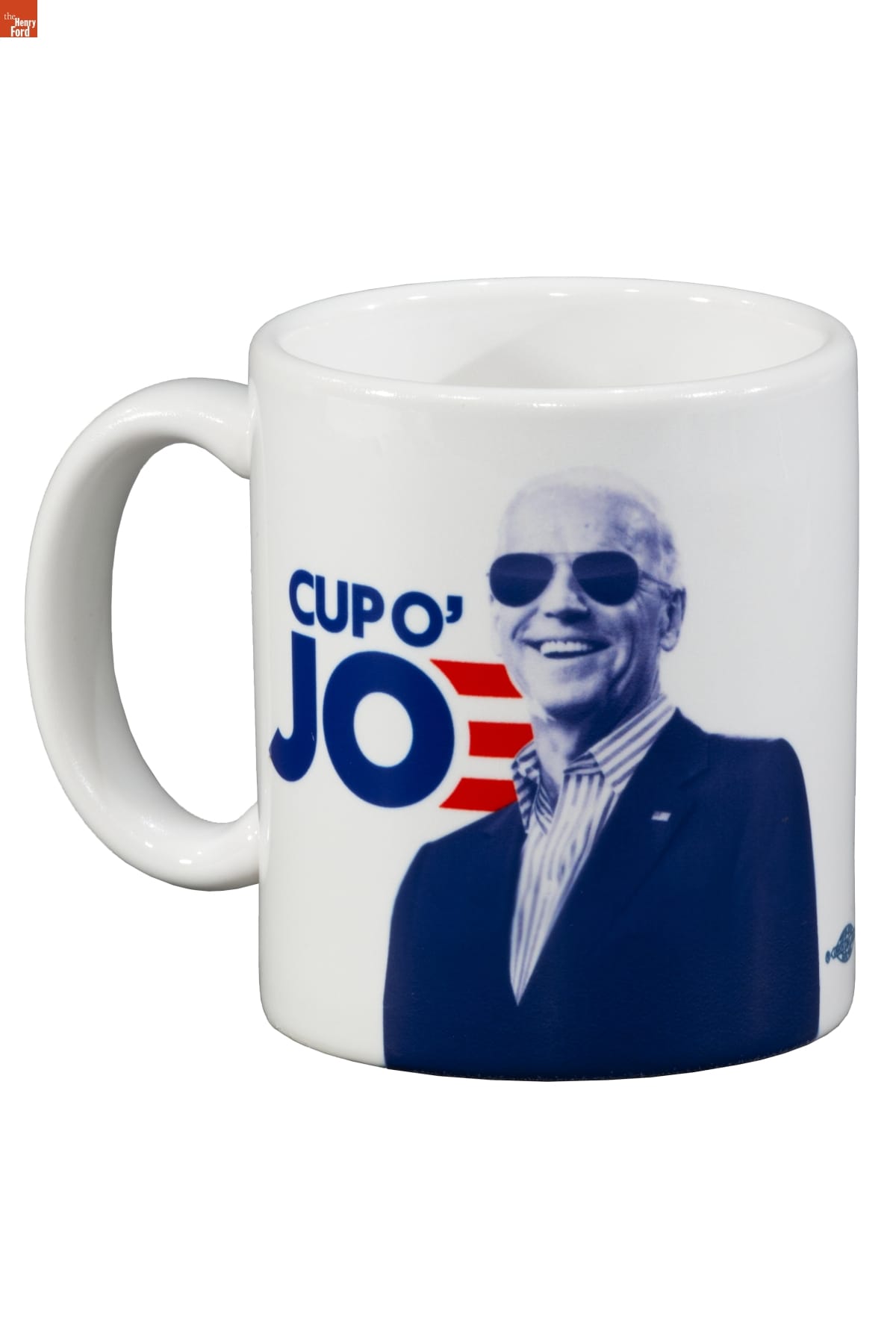
- "Cup O' Joe" Biden Campaign Mug, 2020 - Joe Biden's aviator sunglasses became a common graphic on both official and unofficial campaign merchandise, reflecting a more casual, "everyman" view of the presidential hopeful. The official campaign produced this mug, choosing to play off his name and featuring the "Joe" logo used on other merchandise.
- 2020
- Collections - Artifact
"Cup O' Joe" Biden Campaign Mug, 2020
Joe Biden's aviator sunglasses became a common graphic on both official and unofficial campaign merchandise, reflecting a more casual, "everyman" view of the presidential hopeful. The official campaign produced this mug, choosing to play off his name and featuring the "Joe" logo used on other merchandise.
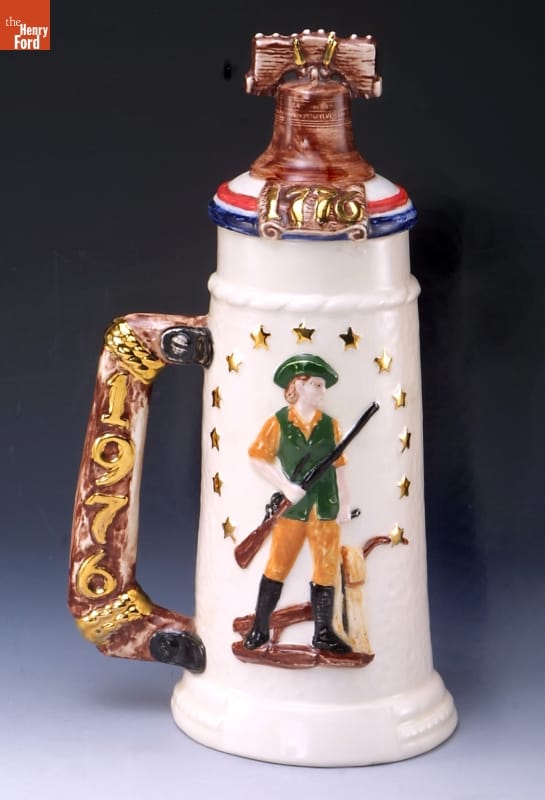
- American Revolution Bicentennial Stein, 1976 - Across the nation in 1976, innumerable events - from parades and fireworks displays to television programs and sporting events - marked the 200th anniversary of the Declaration of Independence. Many Americans celebrated enthusiastically, donning red, white, and blue and purchasing commemorative souvenirs like this stein with hand-painted patriotic imagery.
- 1976
- Collections - Artifact
American Revolution Bicentennial Stein, 1976
Across the nation in 1976, innumerable events - from parades and fireworks displays to television programs and sporting events - marked the 200th anniversary of the Declaration of Independence. Many Americans celebrated enthusiastically, donning red, white, and blue and purchasing commemorative souvenirs like this stein with hand-painted patriotic imagery.
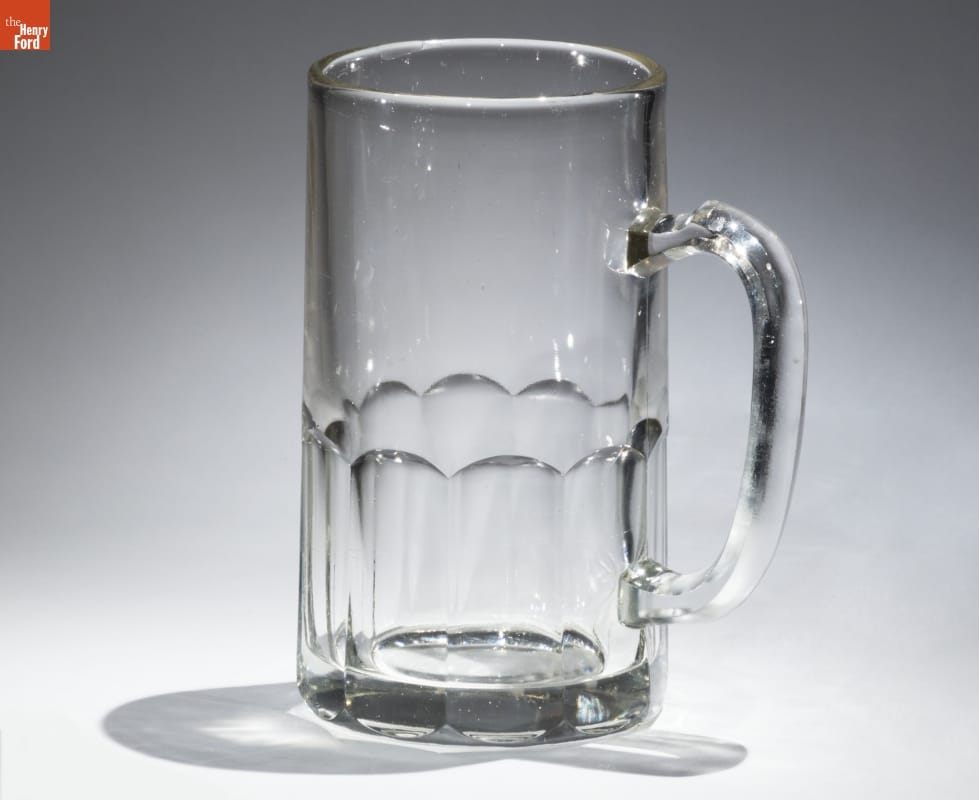
- Mug, 1920-1960 -
- 1920-1960
- Collections - Artifact
Mug, 1920-1960
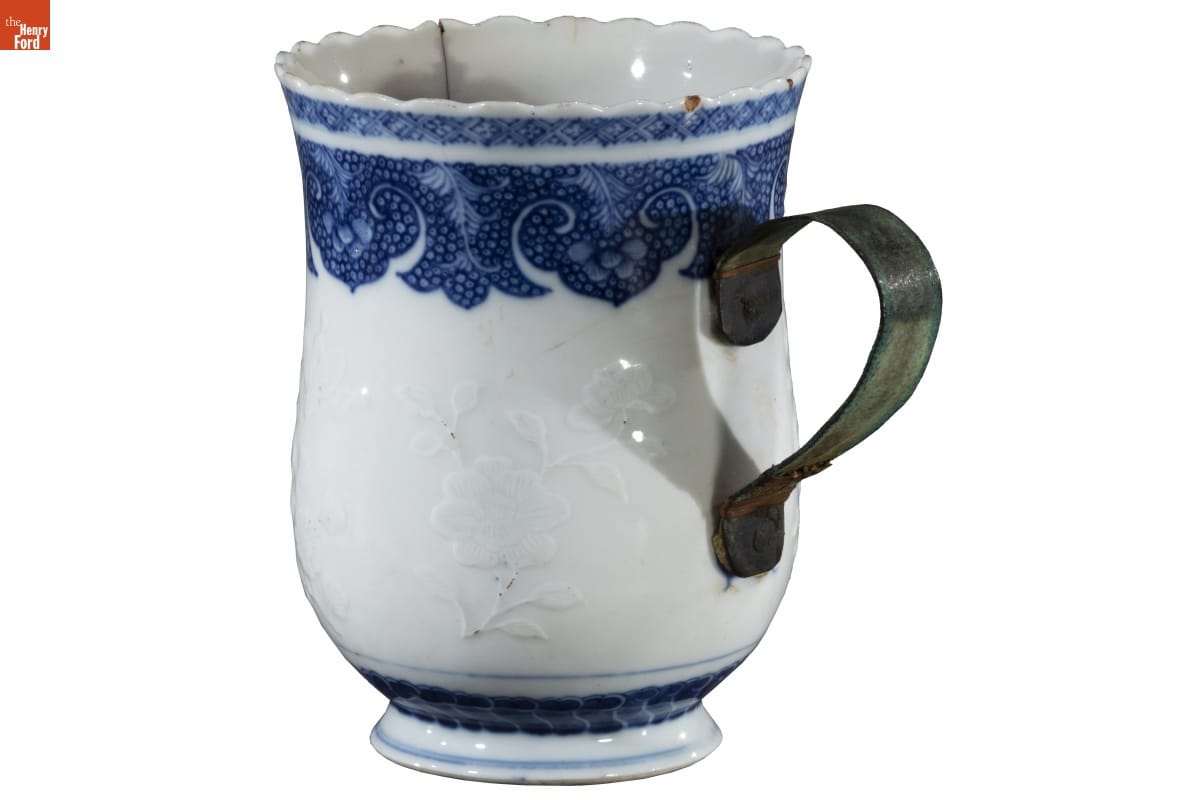
- Mug, 1850-1900 -
- 1850-1900
- Collections - Artifact
Mug, 1850-1900
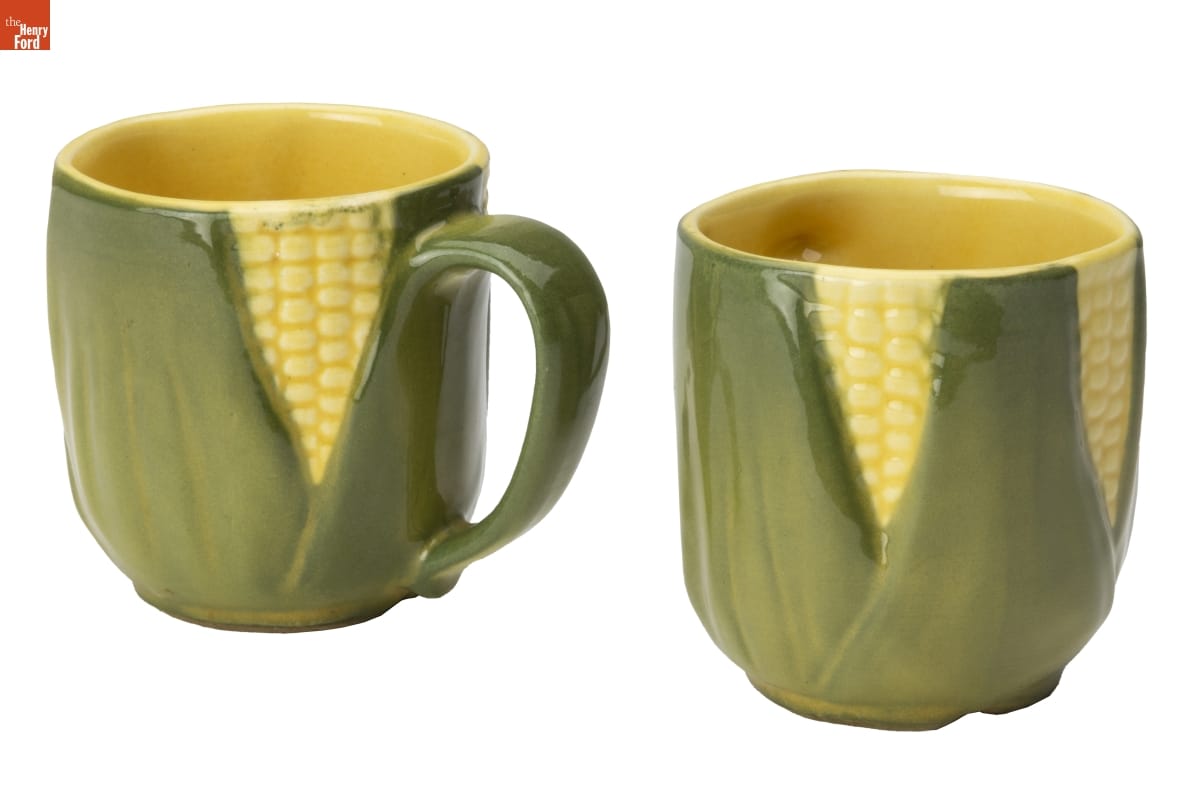
- "Corn King" Mugs, circa 1950 - Shawnee Pottery opened in 1937 and produced fanciful household items and dinnerware. The Zanesville, Ohio, company introduced its Corn King line, featuring plates, mugs, teapots, and salt and pepper sets molded to resemble ears of corn in 1946. The items were originally premium giveaways. The company made the popular corn-shaped dinnerware under the Corn King or Corn Queen name until Shawnee closed in 1961.
- circa 1950
- Collections - Artifact
"Corn King" Mugs, circa 1950
Shawnee Pottery opened in 1937 and produced fanciful household items and dinnerware. The Zanesville, Ohio, company introduced its Corn King line, featuring plates, mugs, teapots, and salt and pepper sets molded to resemble ears of corn in 1946. The items were originally premium giveaways. The company made the popular corn-shaped dinnerware under the Corn King or Corn Queen name until Shawnee closed in 1961.