
Search
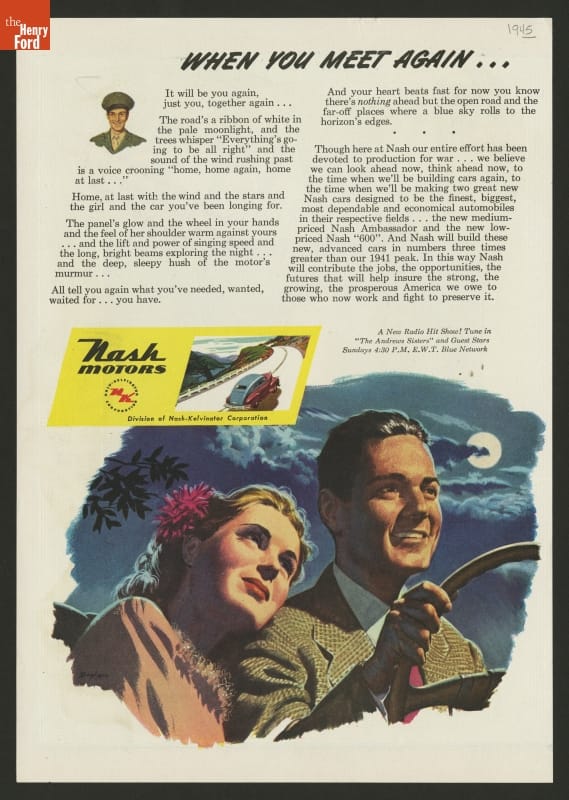
- 1945 Nash Motors Ad, "When You Meet Again" - Even before World War II veterans returned home, car companies encouraged them to dream about the future -- a future that included an automobile. This Nash Motors ad depicts that veteran, "Home, at last with the wind and the stars and the girl and the car [he has] been longing for."
- April 30, 1945
- Collections - Artifact
1945 Nash Motors Ad, "When You Meet Again"
Even before World War II veterans returned home, car companies encouraged them to dream about the future -- a future that included an automobile. This Nash Motors ad depicts that veteran, "Home, at last with the wind and the stars and the girl and the car [he has] been longing for."
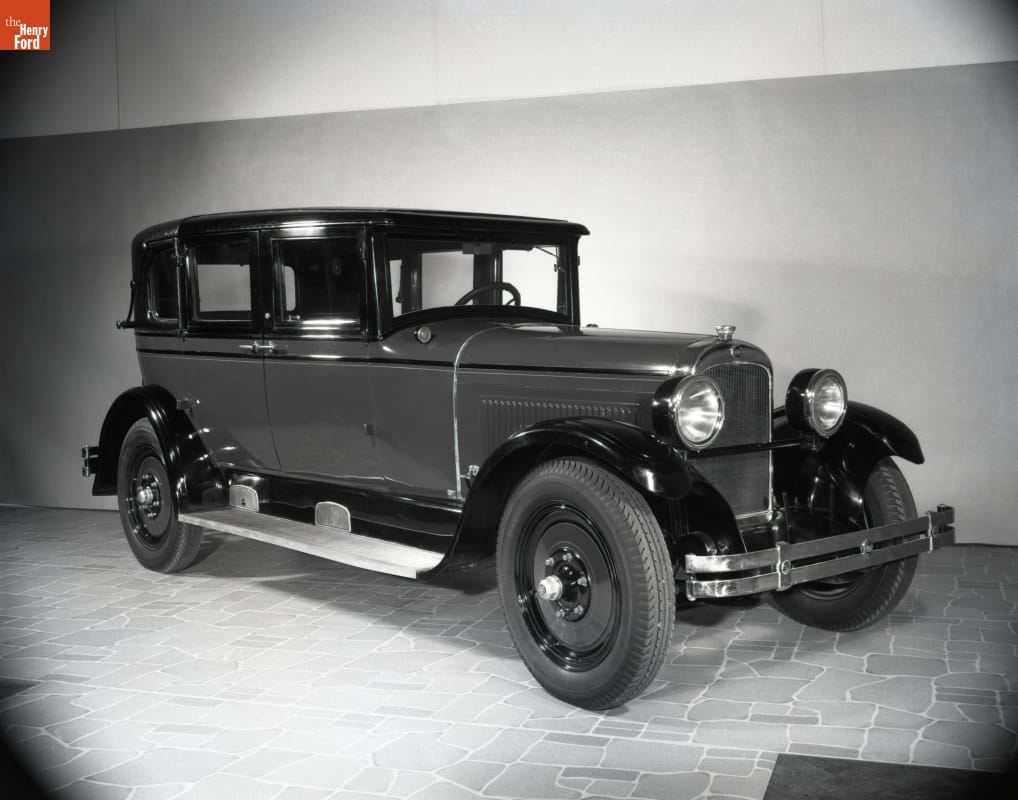
- 1926 Nash Sedan - Nash Motors Company was established in Kenosha, Wisconsin, in 1916 and developed a line of successful cars and trucks. They were quality vehicles distinguished by a number of innovations over the years. This 1926 Model 264 Advanced Six sedan includes a floor-mounted heating vent in the rear compartment. Nash merged with Hudson to form American Motors Corporation in 1954.
- 1926
- Collections - Artifact
1926 Nash Sedan
Nash Motors Company was established in Kenosha, Wisconsin, in 1916 and developed a line of successful cars and trucks. They were quality vehicles distinguished by a number of innovations over the years. This 1926 Model 264 Advanced Six sedan includes a floor-mounted heating vent in the rear compartment. Nash merged with Hudson to form American Motors Corporation in 1954.
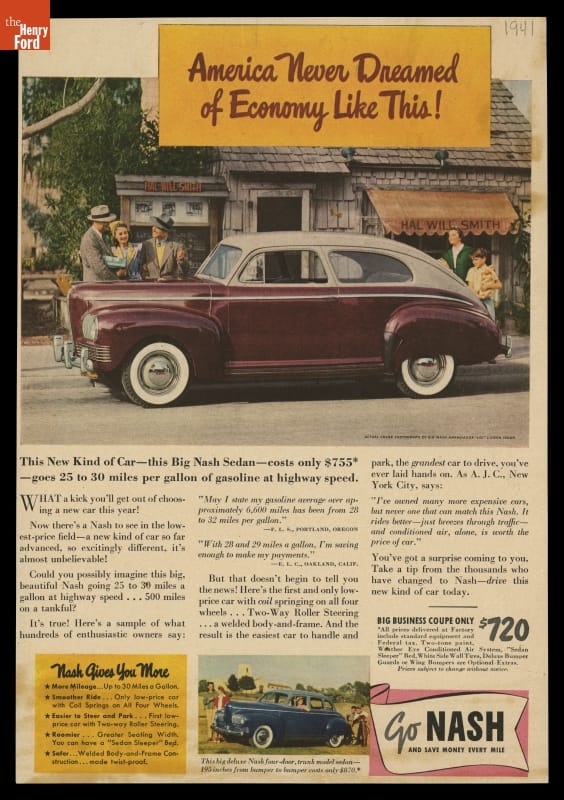
- 1941 Nash Sedan Advertisement, "American Never Dreamed of Economy Like This!" - The automobile is a paradox -- a practical tool that plays host to both human needs and fantasies. Like car consumers, automotive ads seem to land somewhere between fantasy and reality, emotions and rationality. Many ads incorporate apparent opposites: fantasy can sell practicality, and vice versa. Sometimes the car has disappeared completely -- an emotional appeal prompts us to complete the ad.
- May 19, 1941
- Collections - Artifact
1941 Nash Sedan Advertisement, "American Never Dreamed of Economy Like This!"
The automobile is a paradox -- a practical tool that plays host to both human needs and fantasies. Like car consumers, automotive ads seem to land somewhere between fantasy and reality, emotions and rationality. Many ads incorporate apparent opposites: fantasy can sell practicality, and vice versa. Sometimes the car has disappeared completely -- an emotional appeal prompts us to complete the ad.
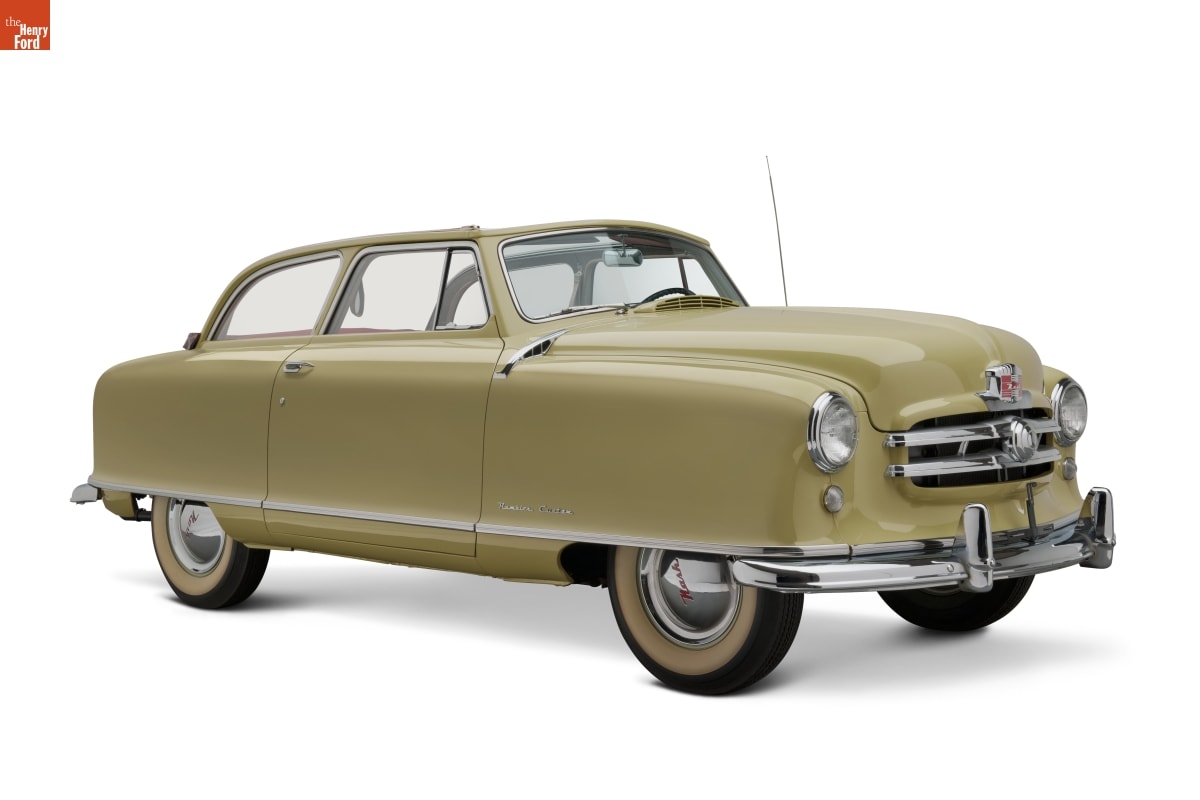
- 1950 Nash Rambler Convertible - This 1950 Nash Rambler convertible was an attempt to market a small automobile to the American public. Other independent automobile manufacturers had produced small vehicles, but none to the success of the Rambler. The compact Rambler was attractive, well equipped, and sensibly priced. But in the 1950s, big cars ruled. Only by 1960 did the larger "Big Three" auto companies produce an "in-between-sized" car.
- 1950
- Collections - Artifact
1950 Nash Rambler Convertible
This 1950 Nash Rambler convertible was an attempt to market a small automobile to the American public. Other independent automobile manufacturers had produced small vehicles, but none to the success of the Rambler. The compact Rambler was attractive, well equipped, and sensibly priced. But in the 1950s, big cars ruled. Only by 1960 did the larger "Big Three" auto companies produce an "in-between-sized" car.
- Nash Motors Key Chain, circa 1925 - In 1916, Charles W. Nash founded Nash Motors Company in Kenosha, Wisconsin, focusing on mid-priced vehicles. The company absorbed several Wisconsin-based automobile firms in the 1920s and later merged with refrigerator manufacturer Kelvinator. Nash-Kelvinator Corporation merged with Hudson Motor Car Company to create American Motors Company in 1954. The Nash brand was phased out in 1957.
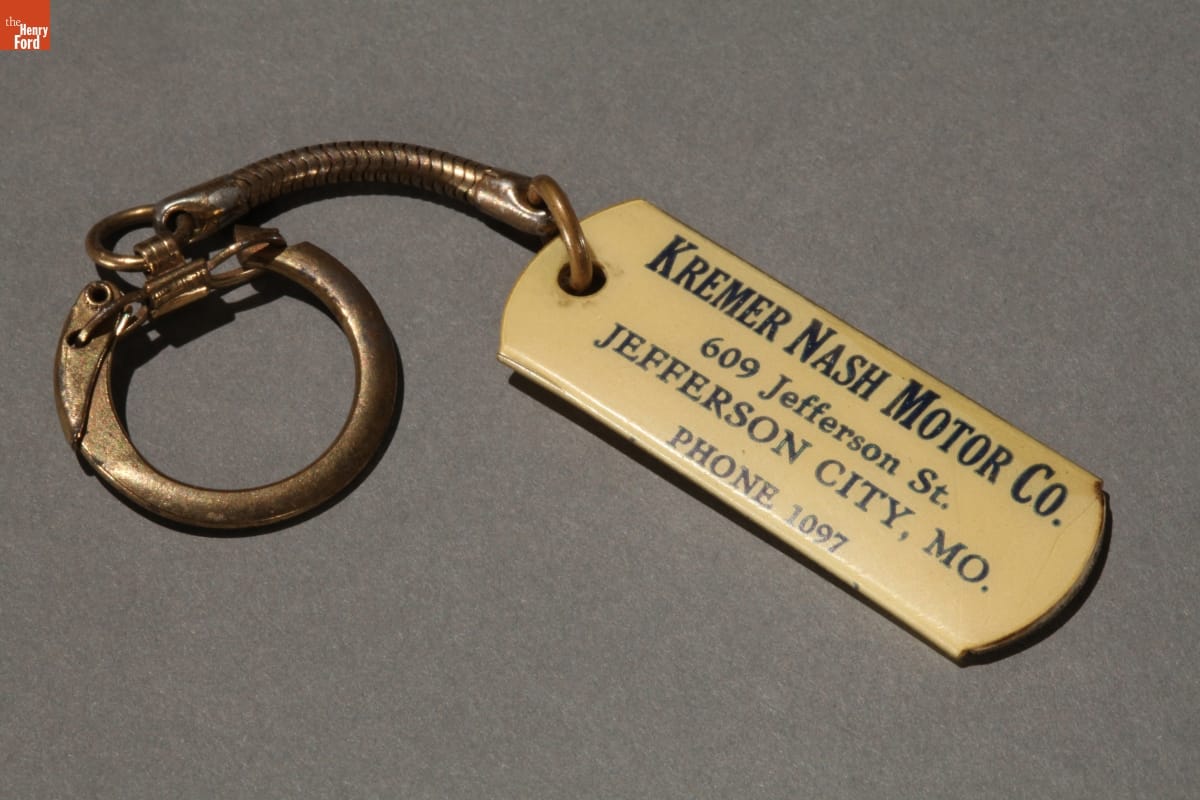
- circa 1925
- Collections - Artifact
Nash Motors Key Chain, circa 1925
In 1916, Charles W. Nash founded Nash Motors Company in Kenosha, Wisconsin, focusing on mid-priced vehicles. The company absorbed several Wisconsin-based automobile firms in the 1920s and later merged with refrigerator manufacturer Kelvinator. Nash-Kelvinator Corporation merged with Hudson Motor Car Company to create American Motors Company in 1954. The Nash brand was phased out in 1957.
- Nash Radiator Emblem, circa 1920 - In 1916, Charles W. Nash founded Nash Motors Company in Kenosha, Wisconsin, focusing on mid-priced vehicles. The company absorbed several Wisconsin-based automobile firms in the 1920s and later merged with refrigerator manufacturer Kelvinator. Nash-Kelvinator Corporation merged with Hudson Motor Car Company to create American Motors Company in 1954. The Nash brand was phased out in 1957.
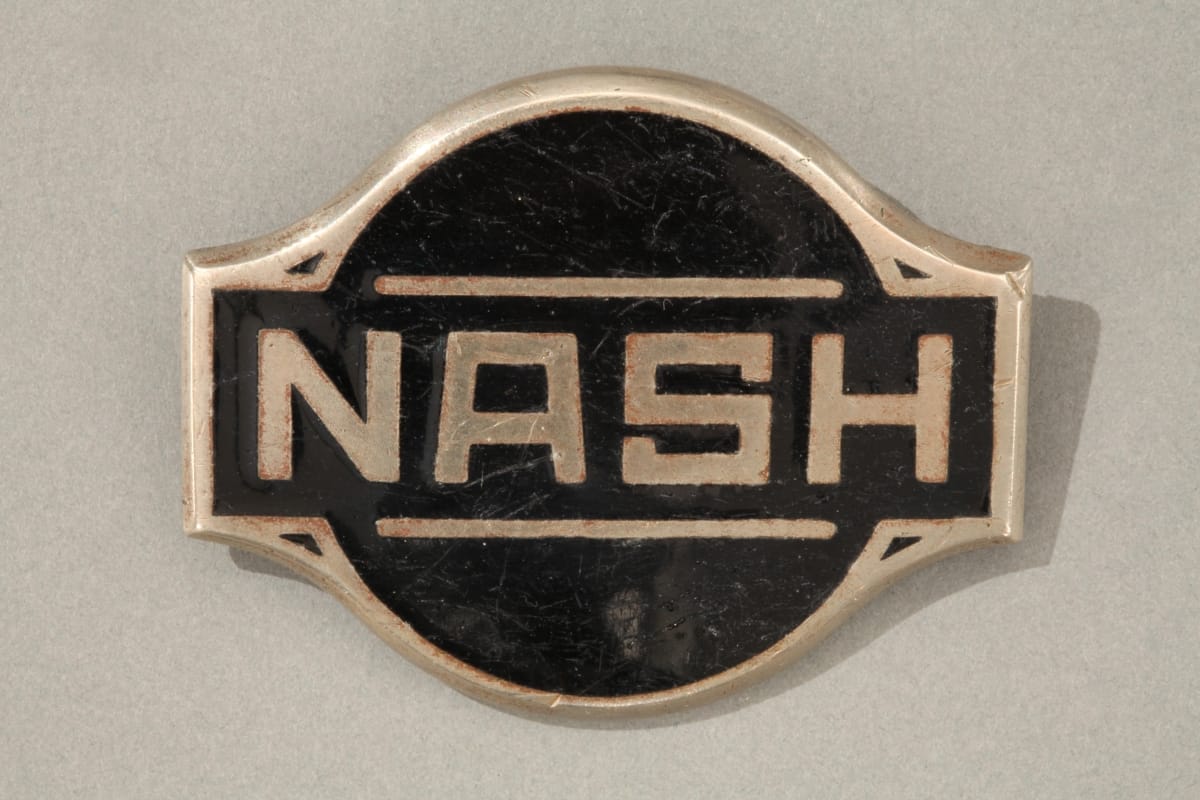
- 1915-1925
- Collections - Artifact
Nash Radiator Emblem, circa 1920
In 1916, Charles W. Nash founded Nash Motors Company in Kenosha, Wisconsin, focusing on mid-priced vehicles. The company absorbed several Wisconsin-based automobile firms in the 1920s and later merged with refrigerator manufacturer Kelvinator. Nash-Kelvinator Corporation merged with Hudson Motor Car Company to create American Motors Company in 1954. The Nash brand was phased out in 1957.
- A New Kind of Car... To Save You Money Every Mile, September 28, 1940 - In 1916, Charles W. Nash founded Nash Motors Company in Kenosha, Wisconsin, focusing on mid-priced vehicles. The company absorbed several Wisconsin-based automobile firms in the 1920s and later merged with refrigerator manufacturer Kelvinator. Nash-Kelvinator Corporation merged with Hudson Motor Car Company to create American Motors Company in 1954. The Nash brand was phased out in 1957.
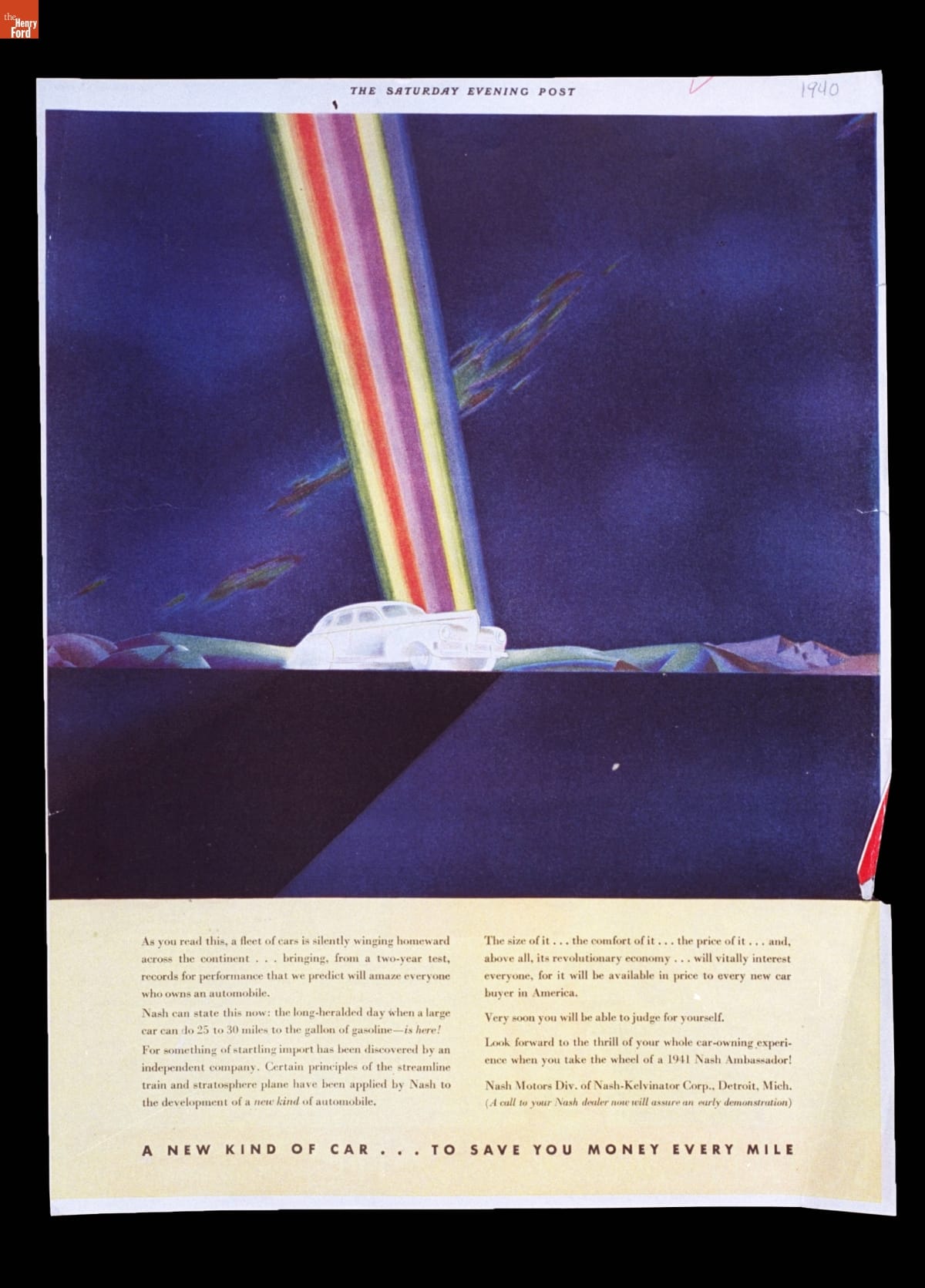
- September 28, 1940
- Collections - Artifact
A New Kind of Car... To Save You Money Every Mile, September 28, 1940
In 1916, Charles W. Nash founded Nash Motors Company in Kenosha, Wisconsin, focusing on mid-priced vehicles. The company absorbed several Wisconsin-based automobile firms in the 1920s and later merged with refrigerator manufacturer Kelvinator. Nash-Kelvinator Corporation merged with Hudson Motor Car Company to create American Motors Company in 1954. The Nash brand was phased out in 1957.
- That Rumor about Nash Was True! A New Kind of Car is Here!, October 14, 1940 - In 1916, Charles W. Nash founded Nash Motors Company in Kenosha, Wisconsin, focusing on mid-priced vehicles. The company absorbed several Wisconsin-based automobile firms in the 1920s and later merged with refrigerator manufacturer Kelvinator. Nash-Kelvinator Corporation merged with Hudson Motor Car Company to create American Motors Company in 1954. The Nash brand was phased out in 1957.
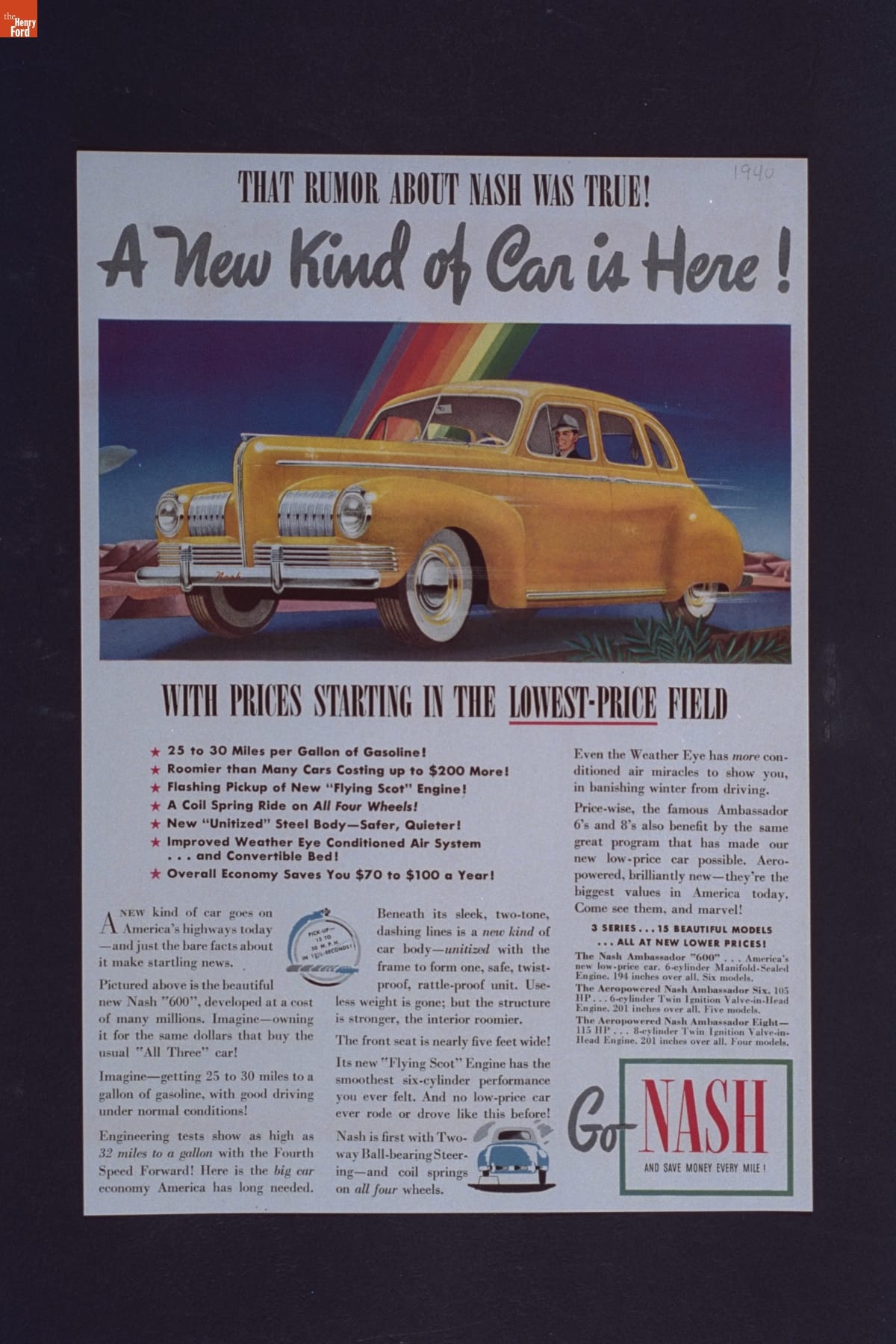
- October 14, 1940
- Collections - Artifact
That Rumor about Nash Was True! A New Kind of Car is Here!, October 14, 1940
In 1916, Charles W. Nash founded Nash Motors Company in Kenosha, Wisconsin, focusing on mid-priced vehicles. The company absorbed several Wisconsin-based automobile firms in the 1920s and later merged with refrigerator manufacturer Kelvinator. Nash-Kelvinator Corporation merged with Hudson Motor Car Company to create American Motors Company in 1954. The Nash brand was phased out in 1957.
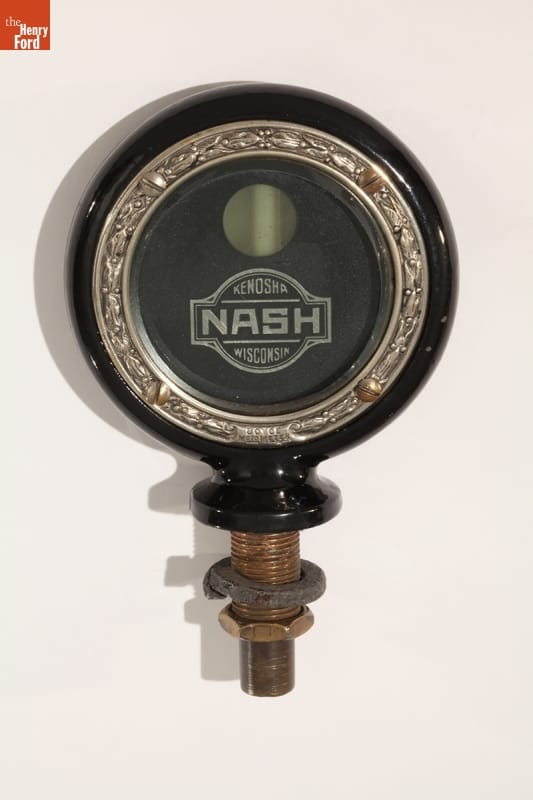
- Nash Motometer, circa 1925 - Automobiles often came without temperature gauges before the early 1930s, so enterprising manufacturers sold aftermarket motometers. Mounted on a car's radiator, these devices measured and displayed coolant water vapor temperature, notifying drivers if their automobiles were in danger of overheating. Moto-Meter Co. Inc. dominated the American market, producing the popular Boyce motometer and others featuring an automotive manufacturer's name or logo.
- circa 1925
- Collections - Artifact
Nash Motometer, circa 1925
Automobiles often came without temperature gauges before the early 1930s, so enterprising manufacturers sold aftermarket motometers. Mounted on a car's radiator, these devices measured and displayed coolant water vapor temperature, notifying drivers if their automobiles were in danger of overheating. Moto-Meter Co. Inc. dominated the American market, producing the popular Boyce motometer and others featuring an automotive manufacturer's name or logo.
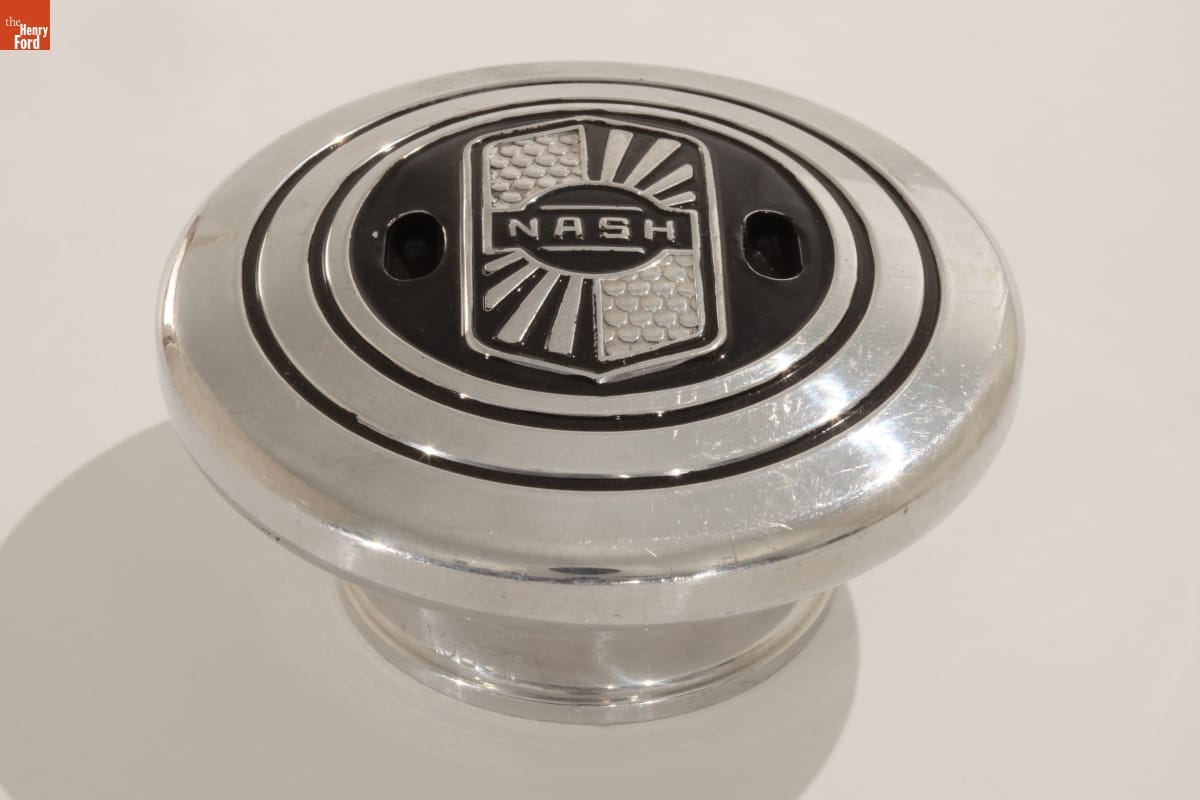
- Nash Hubcap, 1925-1930 - Early automobile wheels had a central hub with a greased wheel bearing. Hub caps kept grease in and dust out. As wheels evolved and hubcaps became functionally unnecessary, they remained important to both manufacturers -- who branded wheel covers with maker names or logos -- and consumers -- who identified with hubcaps as statements about their cars and themselves.
- 1925-1930
- Collections - Artifact
Nash Hubcap, 1925-1930
Early automobile wheels had a central hub with a greased wheel bearing. Hub caps kept grease in and dust out. As wheels evolved and hubcaps became functionally unnecessary, they remained important to both manufacturers -- who branded wheel covers with maker names or logos -- and consumers -- who identified with hubcaps as statements about their cars and themselves.