
Search
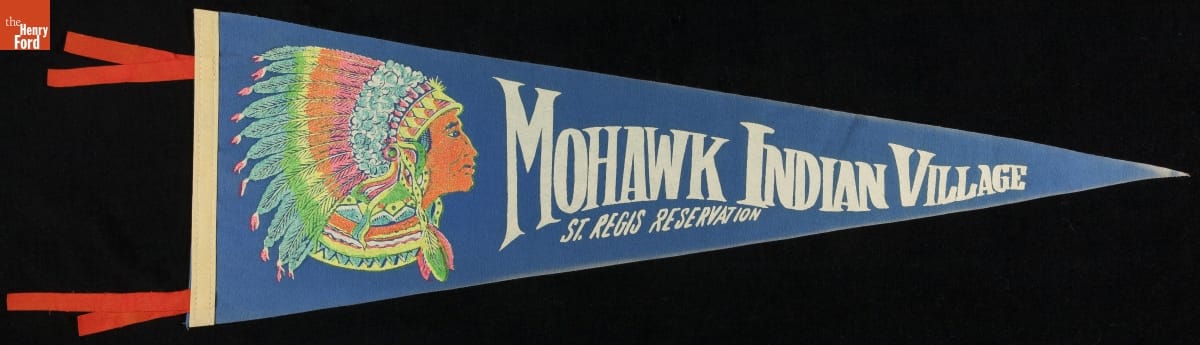
- Pennant, "Mohawk Indian Village, St. Regis Reservation," 1940-1965 - Souvenirs provide tangible proof of a tourist's travels. They also expose the prejudices of the time. This mid-20th century pennant uses a stereotyped image of a Native American. In addition to being culturally incorrect -- feathered headdresses were used by only a small number of Plains tribes -- images like this simply reinforced the discriminatory biases held by many non-Native Americans, purchasers of these souvenirs.
- 1940-1965
- Collections - Artifact
Pennant, "Mohawk Indian Village, St. Regis Reservation," 1940-1965
Souvenirs provide tangible proof of a tourist's travels. They also expose the prejudices of the time. This mid-20th century pennant uses a stereotyped image of a Native American. In addition to being culturally incorrect -- feathered headdresses were used by only a small number of Plains tribes -- images like this simply reinforced the discriminatory biases held by many non-Native Americans, purchasers of these souvenirs.
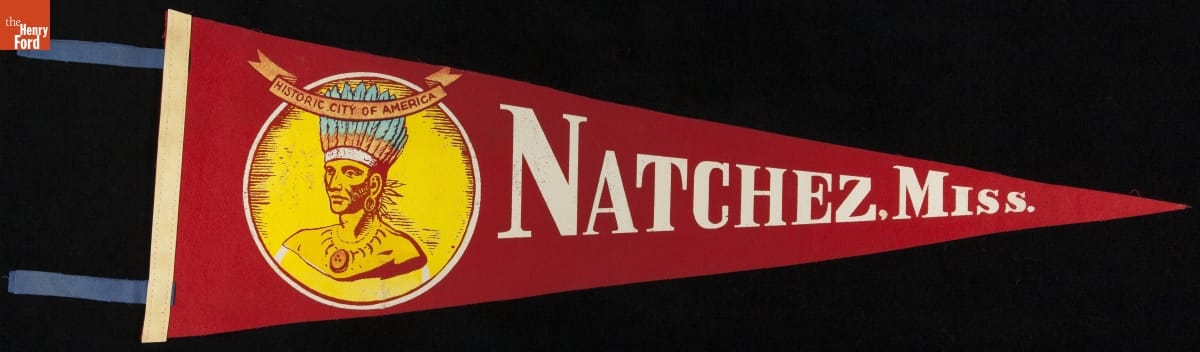
- Pennant, "Natchez, Miss.," 1940-1965 - Tourists purchase simple, inexpensive souvenirs as proof of their travels. These mementos transport vacationers back to the places they visited and the things they did. In the mid-20th century, felt pennants were trendy. The image of a Native American is used to promote Natchez, Mississippi, as the "Historic City of America." Native peoples created permanent settlement around Natchez centuries before Europeans landed on America's shores.
- 1940-1965
- Collections - Artifact
Pennant, "Natchez, Miss.," 1940-1965
Tourists purchase simple, inexpensive souvenirs as proof of their travels. These mementos transport vacationers back to the places they visited and the things they did. In the mid-20th century, felt pennants were trendy. The image of a Native American is used to promote Natchez, Mississippi, as the "Historic City of America." Native peoples created permanent settlement around Natchez centuries before Europeans landed on America's shores.