
Search
- Goblet, 1865-1900 - Nineteenth-century American glassmakers experimented with new methods to create products for a growing consumer market. In the 1820s, pressing glass into metal molds by machine was perfected, and by the mid-1800s, manufacturers were creating a variety of inexpensive pressed glass housewares. America's middle-class consumers could now decorate their homes with attractive glass bowls, creamers, dishes, plates, vases, and other tableware.
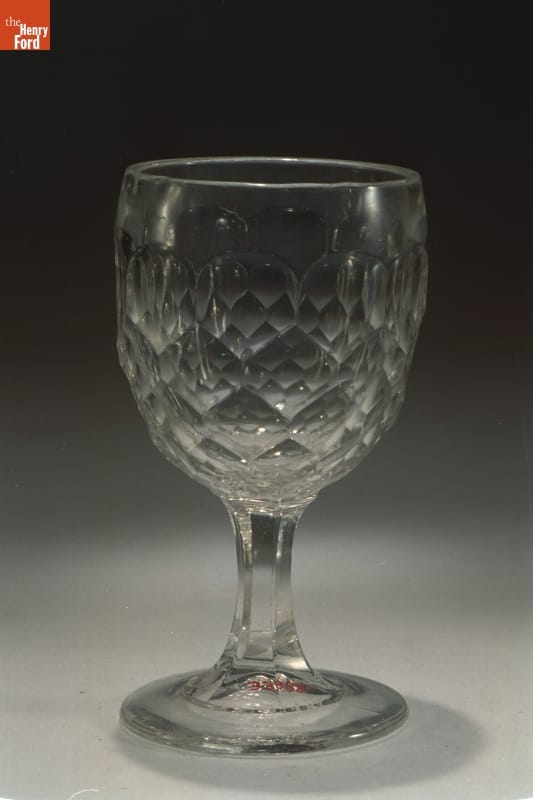
- 1865-1890
- Collections - Artifact
Goblet, 1865-1900
Nineteenth-century American glassmakers experimented with new methods to create products for a growing consumer market. In the 1820s, pressing glass into metal molds by machine was perfected, and by the mid-1800s, manufacturers were creating a variety of inexpensive pressed glass housewares. America's middle-class consumers could now decorate their homes with attractive glass bowls, creamers, dishes, plates, vases, and other tableware.
- Goblet, 1865-1900 - Nineteenth-century American glassmakers experimented with new methods to create products for a growing consumer market. In the 1820s, pressing glass into metal molds by machine was perfected, and by the mid-1800s, manufacturers were creating a variety of inexpensive pressed glass housewares. America's middle-class consumers could now decorate their homes with attractive glass bowls, creamers, dishes, plates, vases, and other tableware.
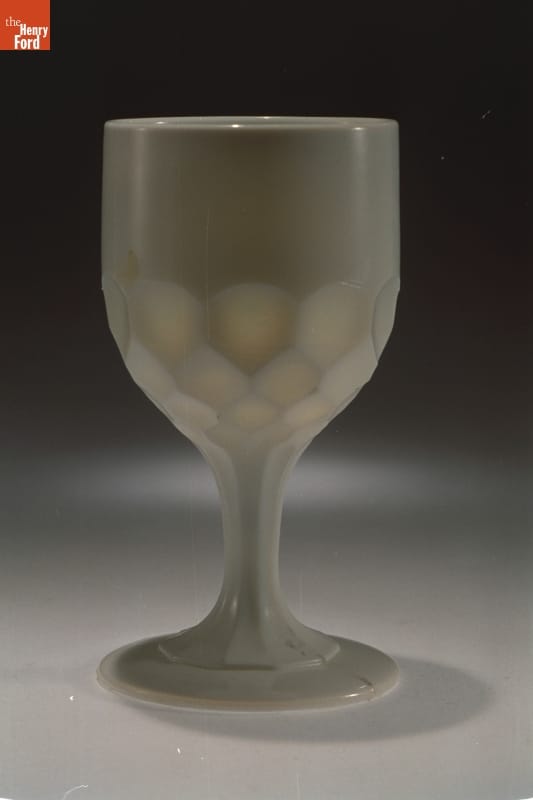
- 1865-1900
- Collections - Artifact
Goblet, 1865-1900
Nineteenth-century American glassmakers experimented with new methods to create products for a growing consumer market. In the 1820s, pressing glass into metal molds by machine was perfected, and by the mid-1800s, manufacturers were creating a variety of inexpensive pressed glass housewares. America's middle-class consumers could now decorate their homes with attractive glass bowls, creamers, dishes, plates, vases, and other tableware.
- Wine Glass, 1865-1890 - Nineteenth-century American glassmakers experimented with new methods to create products for a growing consumer market. In the 1820s, pressing glass into metal molds by machine was perfected, and by the mid-1800s, manufacturers were creating a variety of inexpensive pressed glass housewares. America's middle-class consumers could now decorate their homes with attractive glass bowls, creamers, dishes, plates, vases, and other tableware.
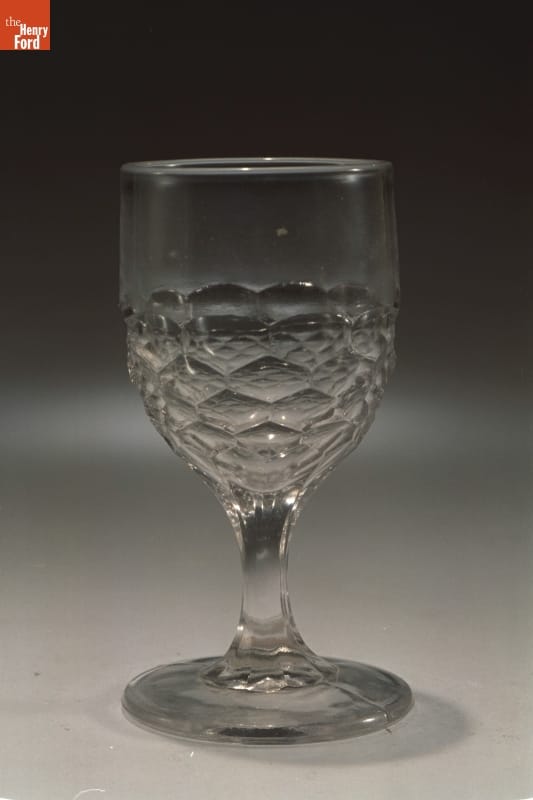
- 1865-1890
- Collections - Artifact
Wine Glass, 1865-1890
Nineteenth-century American glassmakers experimented with new methods to create products for a growing consumer market. In the 1820s, pressing glass into metal molds by machine was perfected, and by the mid-1800s, manufacturers were creating a variety of inexpensive pressed glass housewares. America's middle-class consumers could now decorate their homes with attractive glass bowls, creamers, dishes, plates, vases, and other tableware.
- Goblet, 1865-1900 - Nineteenth-century American glassmakers experimented with new methods to create products for a growing consumer market. In the 1820s, pressing glass into metal molds by machine was perfected, and by the mid-1800s, manufacturers were creating a variety of inexpensive pressed glass housewares. America's middle-class consumers could now decorate their homes with attractive glass bowls, creamers, dishes, plates, vases, and other tableware.
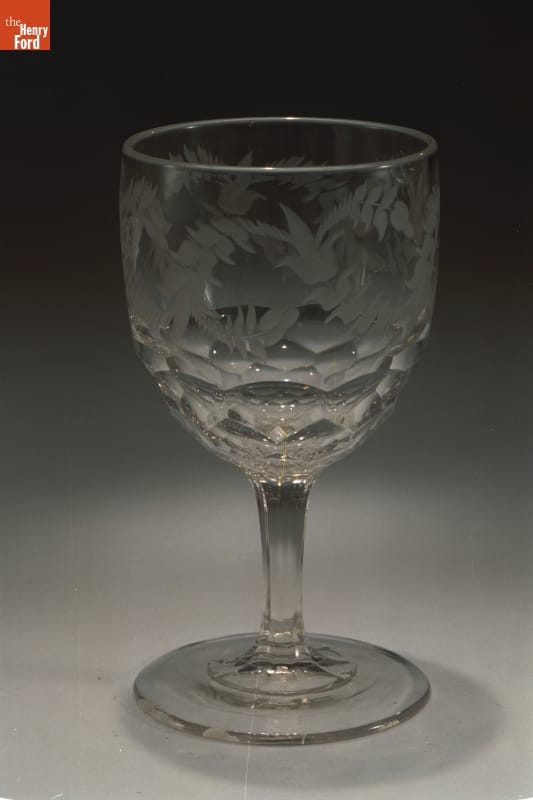
- 1865-1890
- Collections - Artifact
Goblet, 1865-1900
Nineteenth-century American glassmakers experimented with new methods to create products for a growing consumer market. In the 1820s, pressing glass into metal molds by machine was perfected, and by the mid-1800s, manufacturers were creating a variety of inexpensive pressed glass housewares. America's middle-class consumers could now decorate their homes with attractive glass bowls, creamers, dishes, plates, vases, and other tableware.
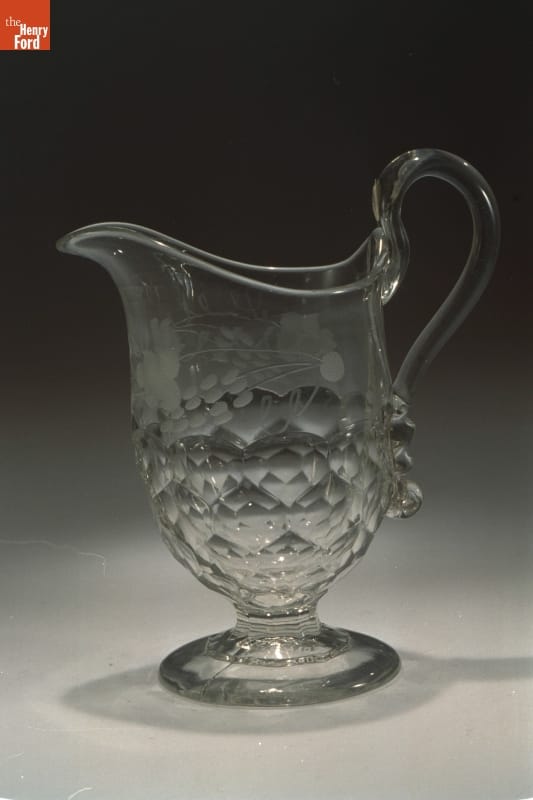
- Creamer, 1865-1890 - Nineteenth-century American glassmakers experimented with new methods to create products for a growing consumer market. In the 1820s, pressing glass into metal molds by machine was perfected, and by the mid-1800s, manufacturers were creating a variety of inexpensive pressed glass housewares. America's middle-class consumers could now decorate their homes with attractive glass bowls, creamers, dishes, plates, vases, and other tableware.
- 1865-1890
- Collections - Artifact
Creamer, 1865-1890
Nineteenth-century American glassmakers experimented with new methods to create products for a growing consumer market. In the 1820s, pressing glass into metal molds by machine was perfected, and by the mid-1800s, manufacturers were creating a variety of inexpensive pressed glass housewares. America's middle-class consumers could now decorate their homes with attractive glass bowls, creamers, dishes, plates, vases, and other tableware.
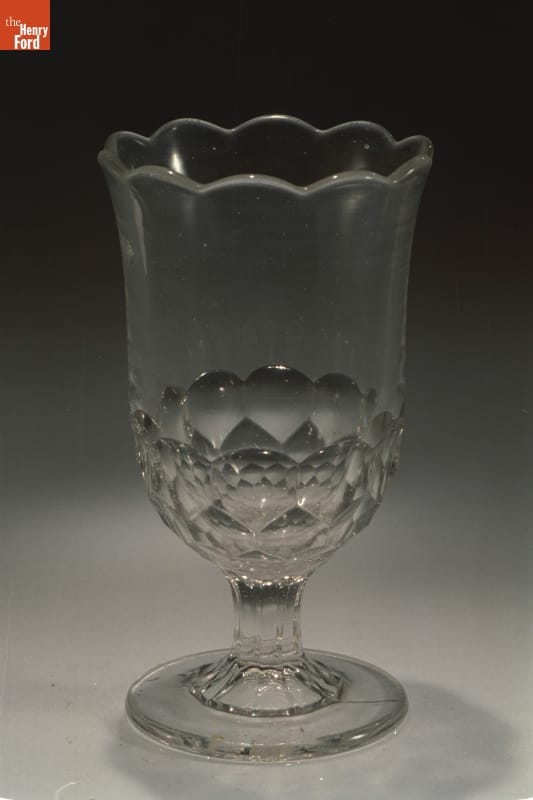
- Spoon Holder, 1865-1900 - Specialized tableware proliferated in American households during the late 19th century. Pressed glass spoon holders held silver or silver-plated spoons needed at a moment's notice. Guests who dropped by for a visit would judge the hostess as being well-prepared when seeing a spoon holder filled and at the ready.
- 1865-1900
- Collections - Artifact
Spoon Holder, 1865-1900
Specialized tableware proliferated in American households during the late 19th century. Pressed glass spoon holders held silver or silver-plated spoons needed at a moment's notice. Guests who dropped by for a visit would judge the hostess as being well-prepared when seeing a spoon holder filled and at the ready.
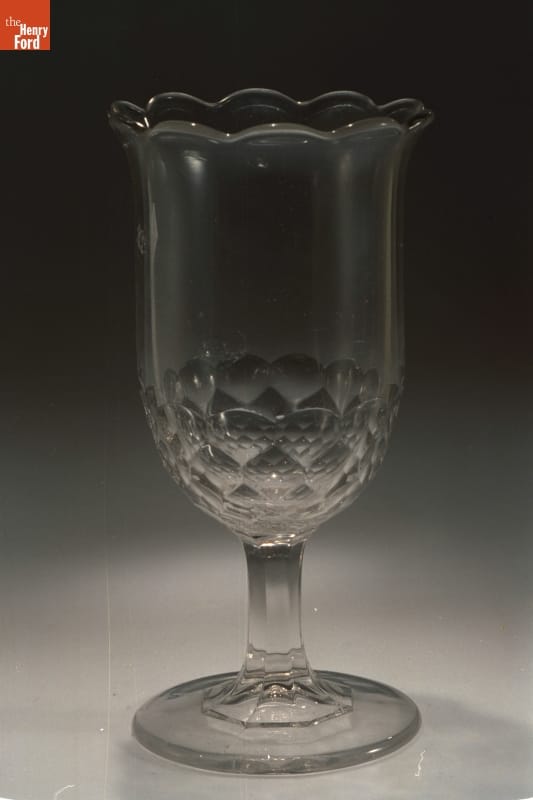
- Celery Vase, 1865-1890 - Class-conscious Americans in the late 19th century displayed their social standing by serving a variety of exotic foods in specialized tableware. Celery vases or glasses held the costly and status-laden vegetable. This tall, pressed glass vase became a middle-class necessity until growing methods made celery common and the dish less socially significant.
- 1865-1890
- Collections - Artifact
Celery Vase, 1865-1890
Class-conscious Americans in the late 19th century displayed their social standing by serving a variety of exotic foods in specialized tableware. Celery vases or glasses held the costly and status-laden vegetable. This tall, pressed glass vase became a middle-class necessity until growing methods made celery common and the dish less socially significant.
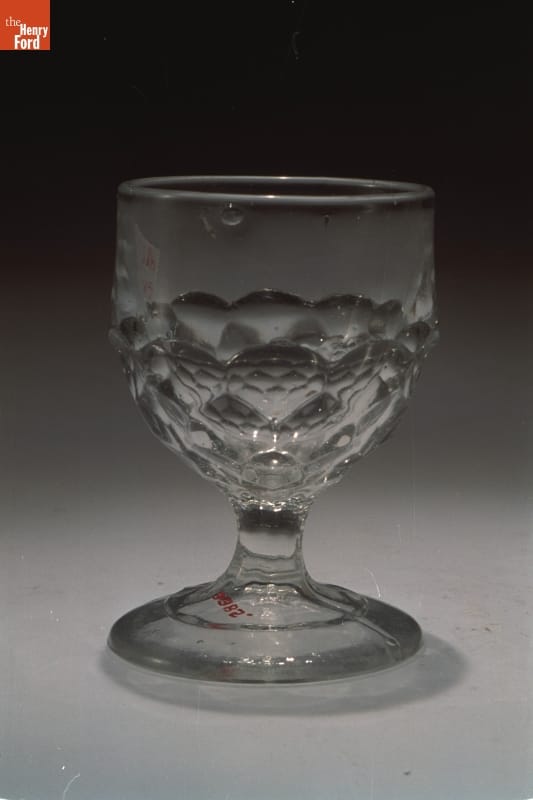
- Eggcup, 1865-1890 - People have used eggcups for centuries. This small specialized tableware held soft-boiled eggs served in the shell. Pressed glass eggcups, like this one, could be found on middle class Americans' breakfast tables throughout the 19th century.
- 1865-1890
- Collections - Artifact
Eggcup, 1865-1890
People have used eggcups for centuries. This small specialized tableware held soft-boiled eggs served in the shell. Pressed glass eggcups, like this one, could be found on middle class Americans' breakfast tables throughout the 19th century.
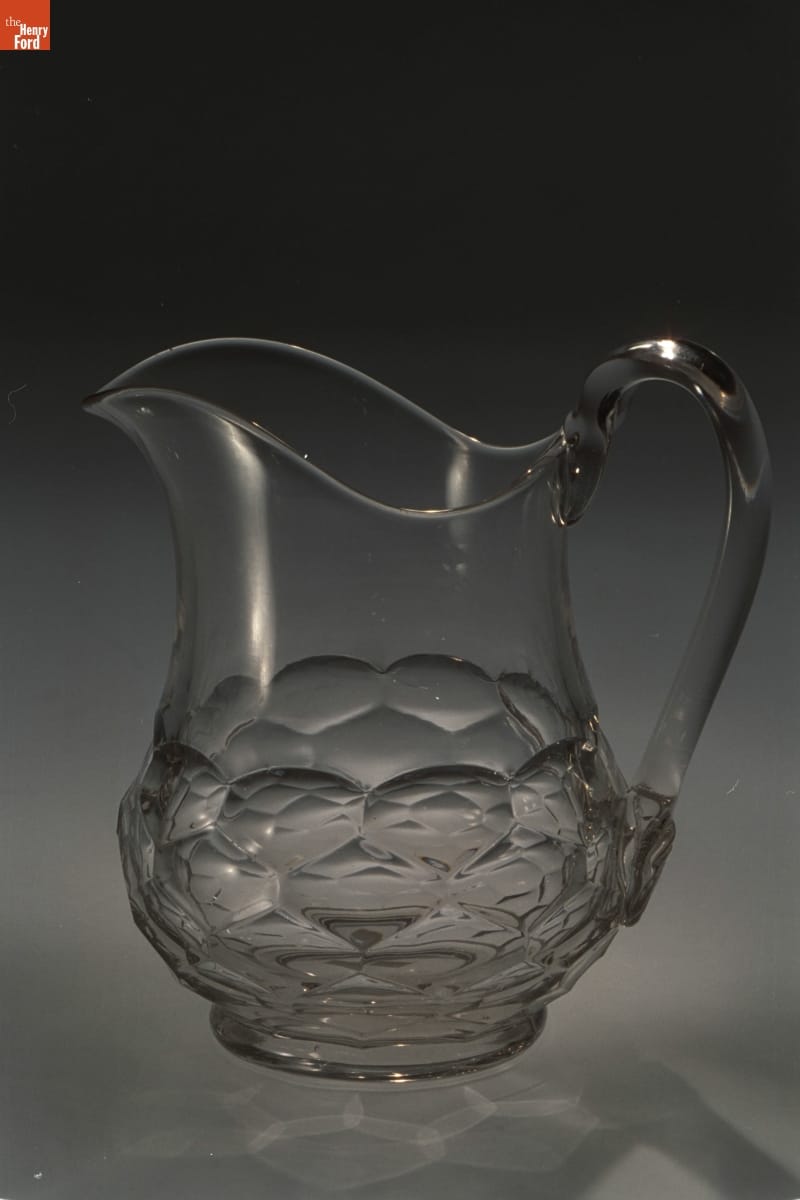
- Water Pitcher, 1865-1890 - Nineteenth-century American glassmakers experimented with new methods to create products for a growing consumer market. In the 1820s, pressing glass into metal molds by machine was perfected, and by the mid-1800s, manufacturers were creating a variety of inexpensive pressed glass housewares. America's middle-class consumers could now decorate their homes with attractive glass bowls, creamers, dishes, plates, vases, and other tableware.
- 1865-1890
- Collections - Artifact
Water Pitcher, 1865-1890
Nineteenth-century American glassmakers experimented with new methods to create products for a growing consumer market. In the 1820s, pressing glass into metal molds by machine was perfected, and by the mid-1800s, manufacturers were creating a variety of inexpensive pressed glass housewares. America's middle-class consumers could now decorate their homes with attractive glass bowls, creamers, dishes, plates, vases, and other tableware.