
Search
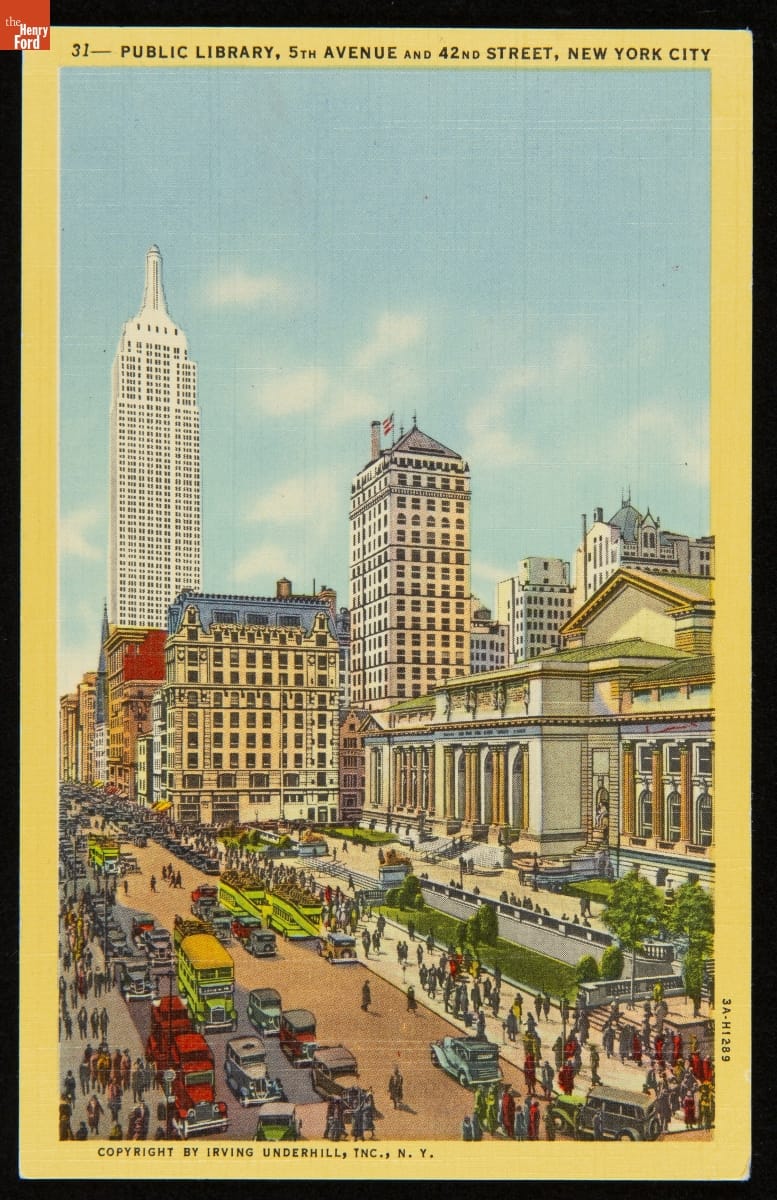
- Postcard, "Public Library, 5th Avenue and 42nd Street, New York City," 1933 - Until the 20th century, most book collections were not available to everyday Americans. They were either privately owned, accessible only by paid subscription, or stored away haphazardly. Free public libraries gained traction in the early 1900s. Library buildings remained sources of civic pride even in large cities like New York, where more imposing buildings might dwarf the structures.
- 1933
- Collections - Artifact
Postcard, "Public Library, 5th Avenue and 42nd Street, New York City," 1933
Until the 20th century, most book collections were not available to everyday Americans. They were either privately owned, accessible only by paid subscription, or stored away haphazardly. Free public libraries gained traction in the early 1900s. Library buildings remained sources of civic pride even in large cities like New York, where more imposing buildings might dwarf the structures.
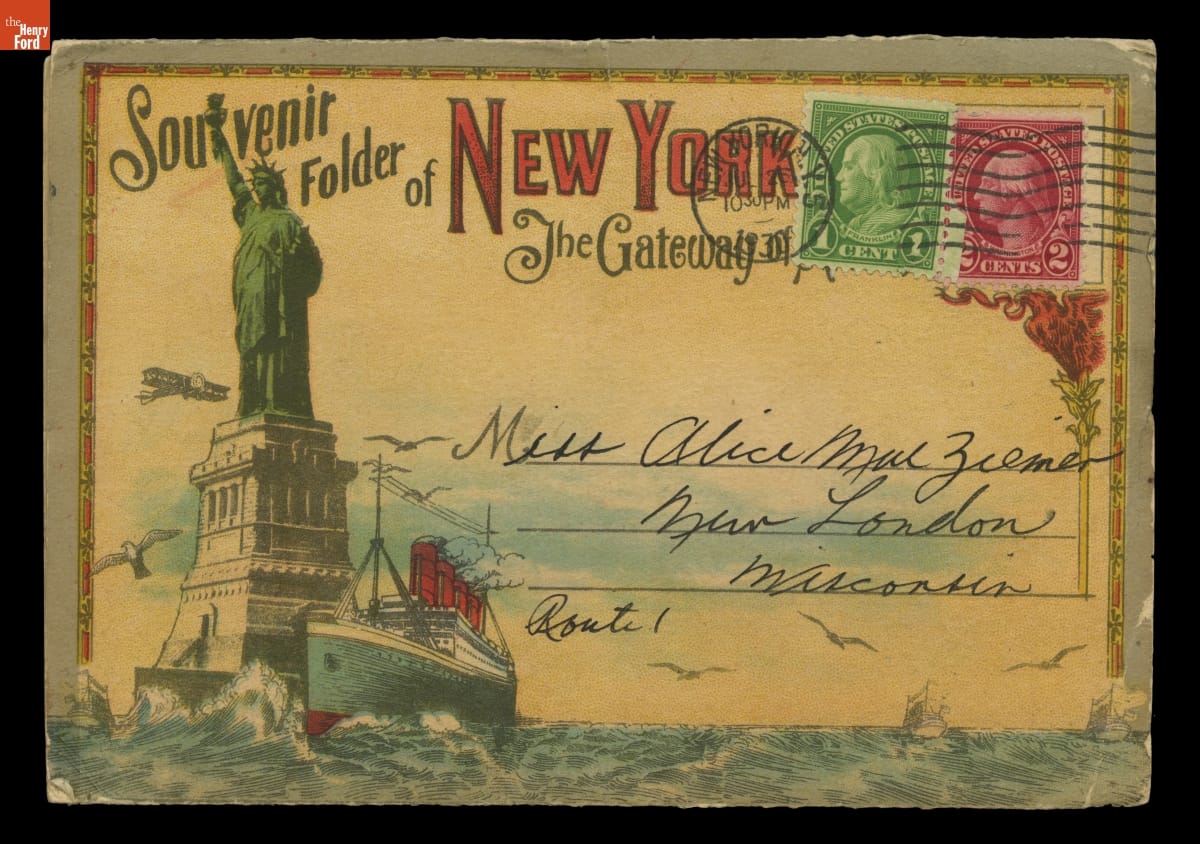
- Souvenir Viewbook of New York City, circa 1930 - What's better than receiving a postcard from a vacationing friend? How about a souvenir viewbook with multiple images that fold neatly into a postcard-sized packet? This viewbook contains twenty color views and information about New York City. This souvenir includes images of museums, monuments, government buildings, steamships, parks, and out-of-the-way neighborhoods found in America's largest metropolis around 1930.
- circa 1930
- Collections - Artifact
Souvenir Viewbook of New York City, circa 1930
What's better than receiving a postcard from a vacationing friend? How about a souvenir viewbook with multiple images that fold neatly into a postcard-sized packet? This viewbook contains twenty color views and information about New York City. This souvenir includes images of museums, monuments, government buildings, steamships, parks, and out-of-the-way neighborhoods found in America's largest metropolis around 1930.
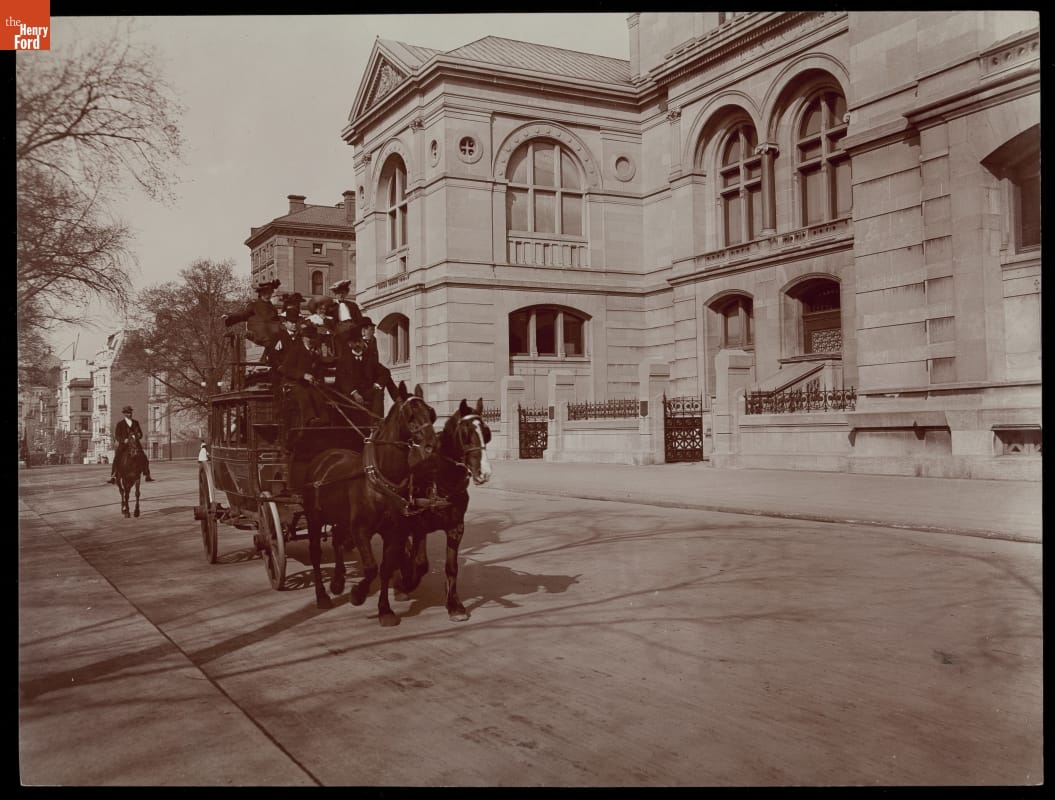
- Horse-Drawn Omnibus on Fifth Avenue, New York City, 1900-1906 - Fifth Avenue residents opposed streetcar lines, claiming the vehicles were too quick and quiet to safely share the street with pedestrians and horse-drawn traffic. As an alternative, the Fifth Avenue Coach Company ran omnibuses like the one in this Detroit Publishing Company photograph. The fleet was replaced by gasoline-driven motor coaches in 1907.
- 1900-1906
- Collections - Artifact
Horse-Drawn Omnibus on Fifth Avenue, New York City, 1900-1906
Fifth Avenue residents opposed streetcar lines, claiming the vehicles were too quick and quiet to safely share the street with pedestrians and horse-drawn traffic. As an alternative, the Fifth Avenue Coach Company ran omnibuses like the one in this Detroit Publishing Company photograph. The fleet was replaced by gasoline-driven motor coaches in 1907.
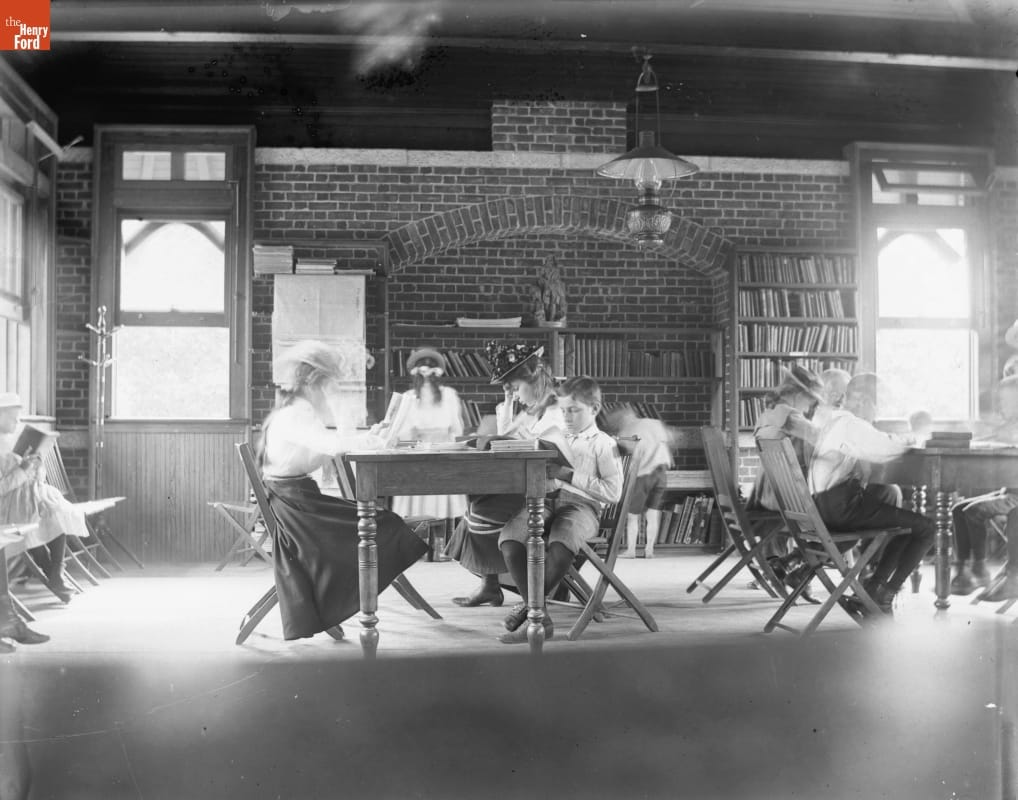
- Library, Tompkins Park, New York, circa 1910 - In 1890, Jenny Young Chandler, 25 years old and recently widowed, began working for the <EM>New York Herald</EM>. As a photojournalist and feature writer, Chandler captured life in Brooklyn, New York, and vicinity. By 1922, the time of her death, she had produced over 800 glass plate negatives. Her sensitive, insightful photographs depict people from all walks of life and the world in which they lived.
- circa 1910
- Collections - Artifact
Library, Tompkins Park, New York, circa 1910
In 1890, Jenny Young Chandler, 25 years old and recently widowed, began working for the New York Herald. As a photojournalist and feature writer, Chandler captured life in Brooklyn, New York, and vicinity. By 1922, the time of her death, she had produced over 800 glass plate negatives. Her sensitive, insightful photographs depict people from all walks of life and the world in which they lived.