
Search
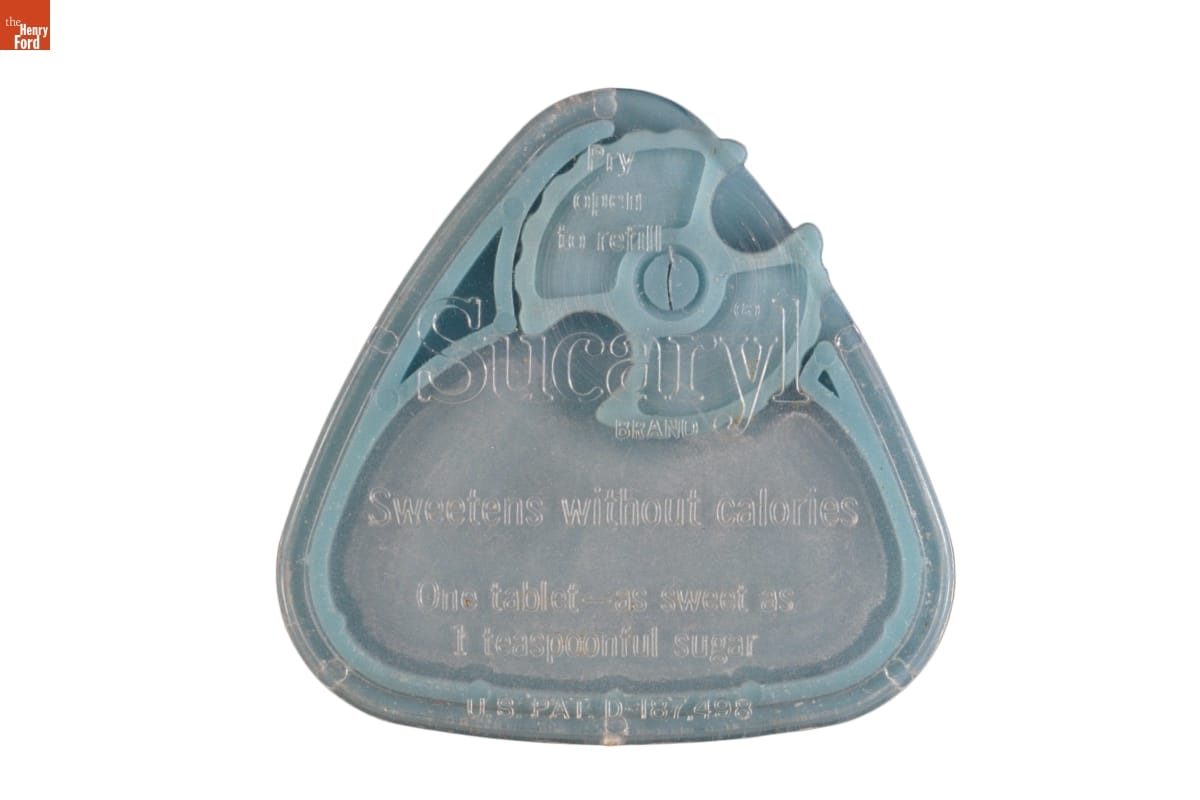
- Sucaryl Artificial Sweetener Dispenser, circa 1967 - Artificial sweeteners provide dieters and people with diabetes or other metabolic disorders with a sugar substitute. Sucaryl, a cyclamate-based sweetener, was first marketed to the public in 1951. Though Sucaryl promised sweet-tasting foods without adding calories, links to possible increased cancers risks spurred the Food and Drug Administration to ban cyclamates in 1969.
- circa 1967
- Collections - Artifact
Sucaryl Artificial Sweetener Dispenser, circa 1967
Artificial sweeteners provide dieters and people with diabetes or other metabolic disorders with a sugar substitute. Sucaryl, a cyclamate-based sweetener, was first marketed to the public in 1951. Though Sucaryl promised sweet-tasting foods without adding calories, links to possible increased cancers risks spurred the Food and Drug Administration to ban cyclamates in 1969.
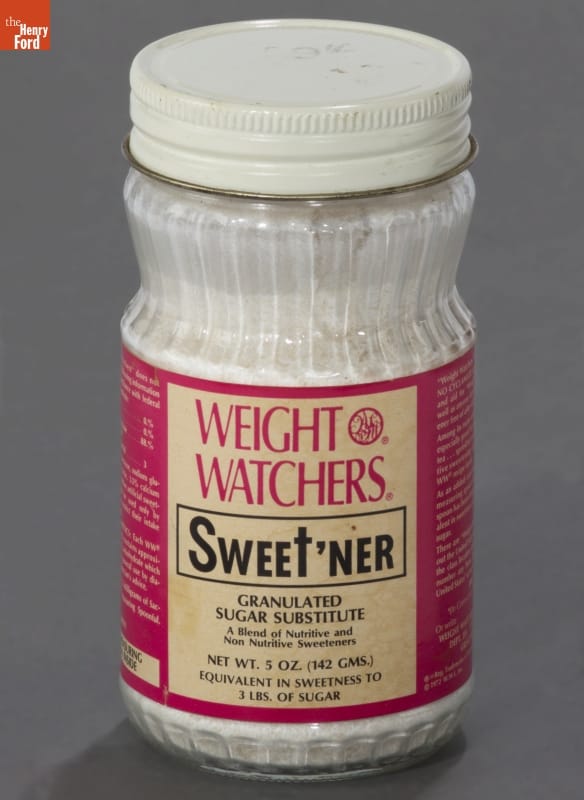
- Weight Watchers "Sweet'ner" Jar, circa 1972 - Jean Nidetch, a 40-year-old homemaker who struggled with dieting, founded Weight Watchers in 1963. The program she devised brought dieters together to share stories of their weight loss struggles and highlight successful eating strategies. By the early 1970s, the consumption of sugar was generally not permitted. Weight Watchers instead promoted artificial sweeteners, even introducing this branded product around 1972.
- circa 1972
- Collections - Artifact
Weight Watchers "Sweet'ner" Jar, circa 1972
Jean Nidetch, a 40-year-old homemaker who struggled with dieting, founded Weight Watchers in 1963. The program she devised brought dieters together to share stories of their weight loss struggles and highlight successful eating strategies. By the early 1970s, the consumption of sugar was generally not permitted. Weight Watchers instead promoted artificial sweeteners, even introducing this branded product around 1972.
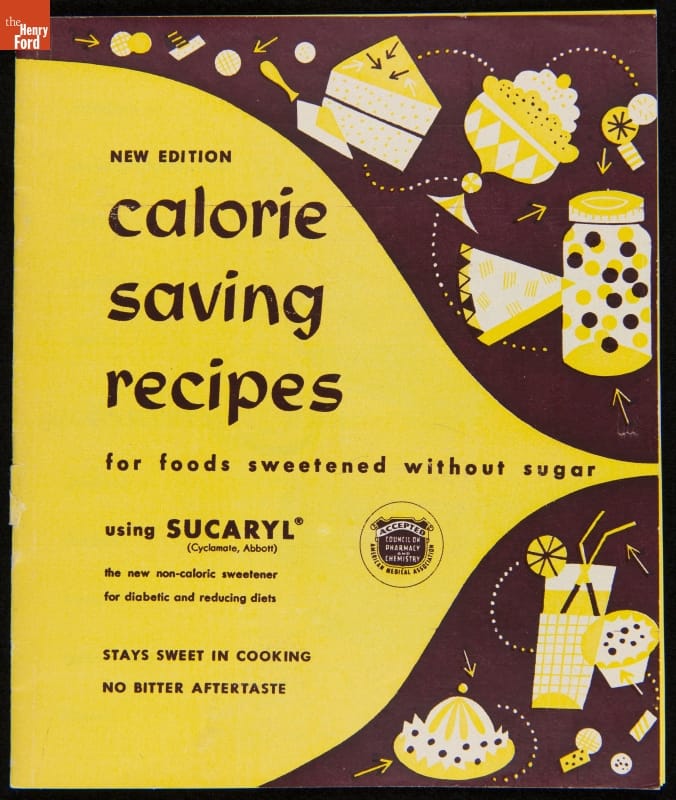
- "New Edition, Calorie Saving Recipes for Foods Sweetened without Sugar Using Sucaryl," 1952 - Artificial sweeteners provide dieters and people with diabetes or other metabolic disorders with a sugar substitute. Sucaryl, a cyclamate-based sweetener, was first marketed to the public in 1951. Though Sucaryl promised sweet-tasting foods without adding calories, links to possible increased cancers risks spurred the Food and Drug Administration to ban cyclamates in 1969.
- 1952
- Collections - Artifact
"New Edition, Calorie Saving Recipes for Foods Sweetened without Sugar Using Sucaryl," 1952
Artificial sweeteners provide dieters and people with diabetes or other metabolic disorders with a sugar substitute. Sucaryl, a cyclamate-based sweetener, was first marketed to the public in 1951. Though Sucaryl promised sweet-tasting foods without adding calories, links to possible increased cancers risks spurred the Food and Drug Administration to ban cyclamates in 1969.
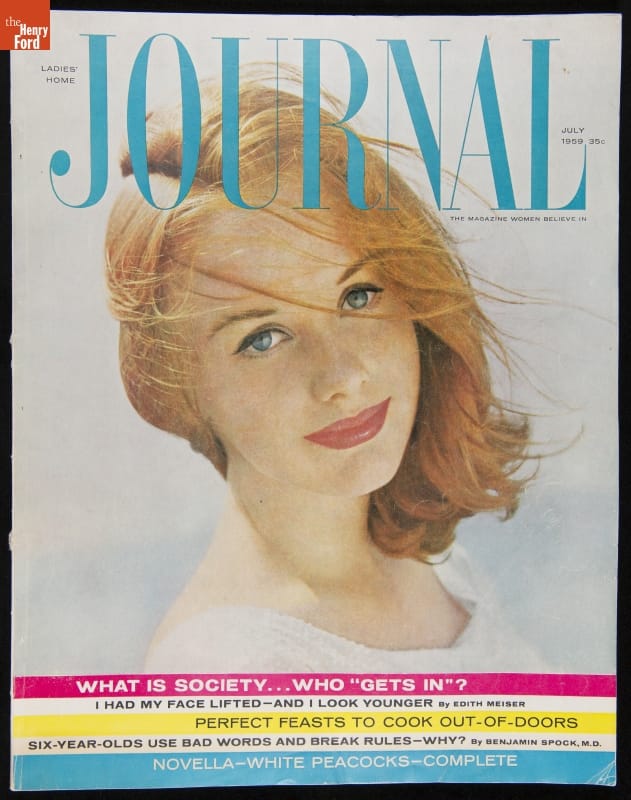
- "Ladies' Home Journal" Magazine for July 1959 -
- July 01, 1959
- Collections - Artifact
"Ladies' Home Journal" Magazine for July 1959
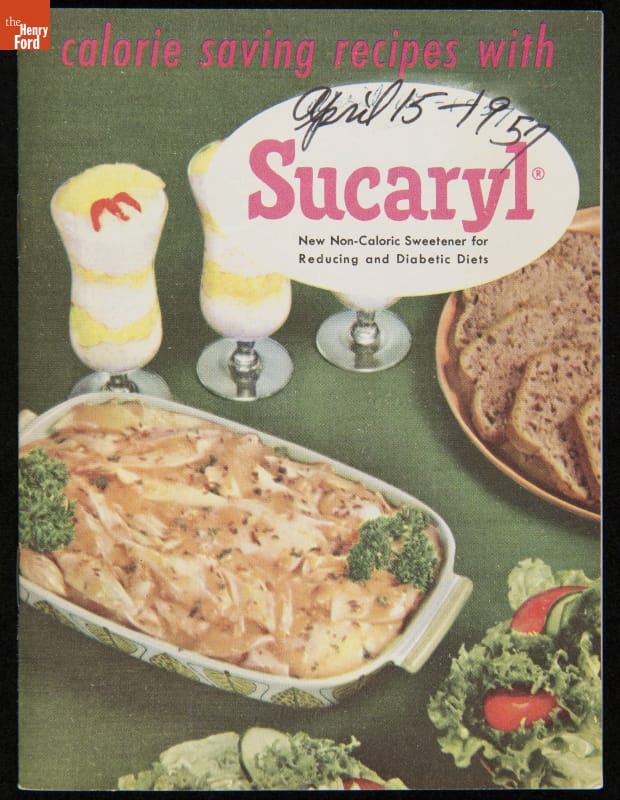
- Recipe Booklet, "Calorie Saving Recipes with Sucaryl," 1955 - Artificial sweeteners provide dieters and people with diabetes or other metabolic disorders with a sugar substitute. Sucaryl, a cyclamate-based sweetener, was first marketed to the public in 1951. Though Sucaryl promised sweet-tasting foods without adding calories, links to possible increased cancers risks spurred the Food and Drug Administration to ban cyclamates in 1969.
- 1955
- Collections - Artifact
Recipe Booklet, "Calorie Saving Recipes with Sucaryl," 1955
Artificial sweeteners provide dieters and people with diabetes or other metabolic disorders with a sugar substitute. Sucaryl, a cyclamate-based sweetener, was first marketed to the public in 1951. Though Sucaryl promised sweet-tasting foods without adding calories, links to possible increased cancers risks spurred the Food and Drug Administration to ban cyclamates in 1969.
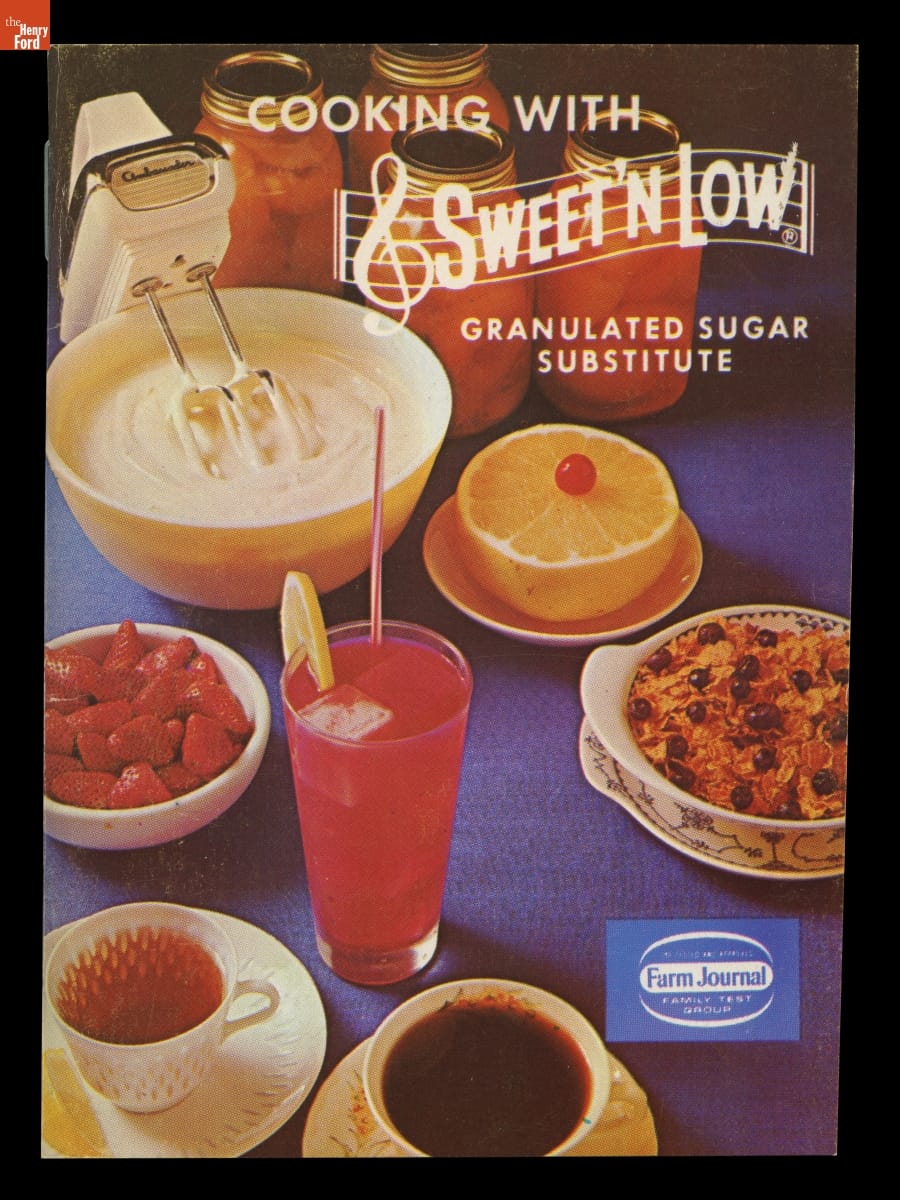
- "Cooking with Sweet 'N Low Granulated Sugar Substitute," 1965 -
- 1965
- Collections - Artifact
"Cooking with Sweet 'N Low Granulated Sugar Substitute," 1965