
Search
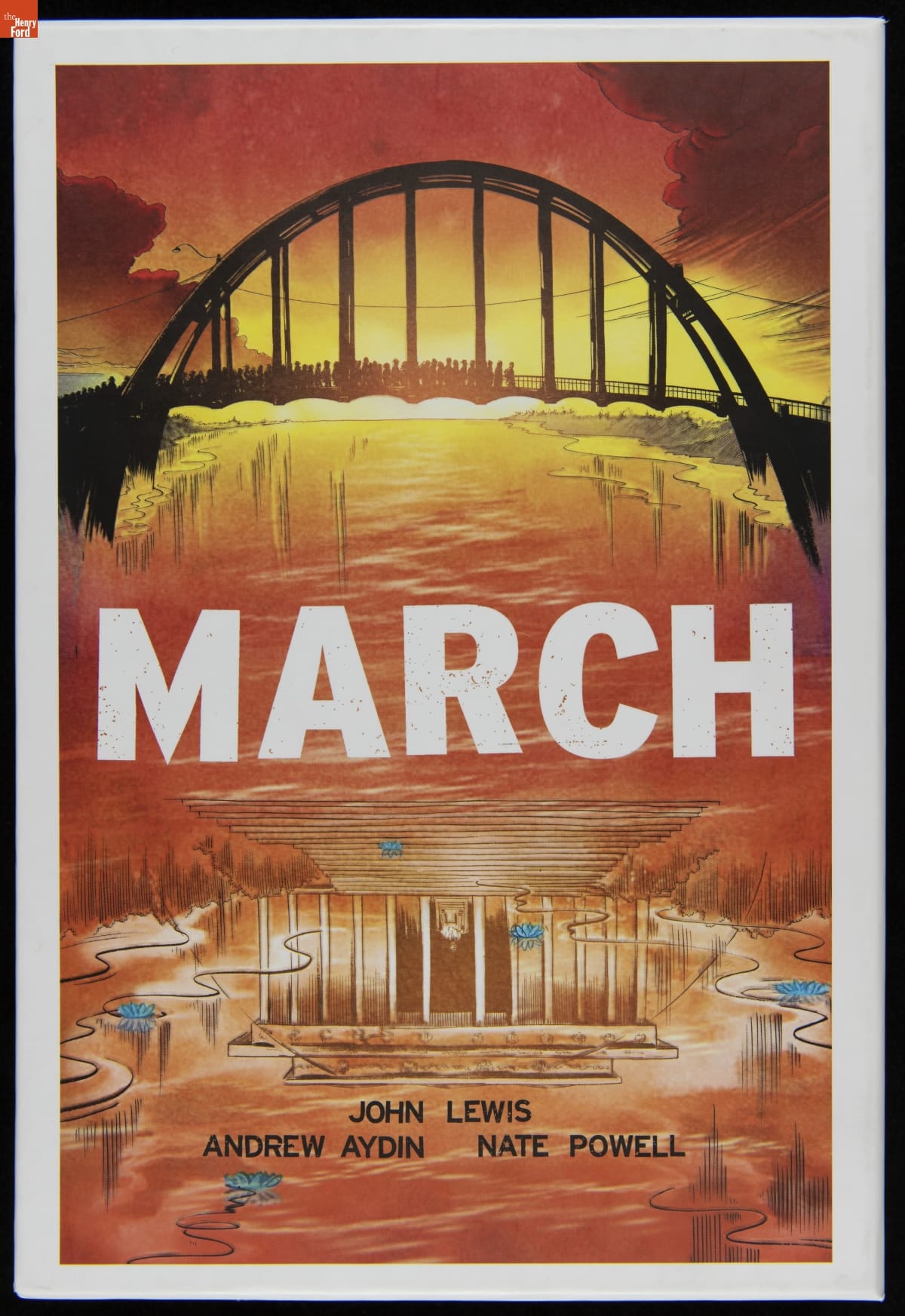
- March, 2016 - <html><body>John Lewis (1940-2020) was a civil rights activist and US congressman. In the mid-2010s, he co-wrote his autobiographical graphic novel series called <i>Mar</i><i>c</i><span style="font-style:normal"><i>h</i></span>. While the books follow Lewis throughout his life, they focus on his participation in civil rights protests such as the Freedom Rides in 1961 and the "Bloody Sunday" march in 1965. </body> </html>
- 2016
- Collections - Artifact
March, 2016
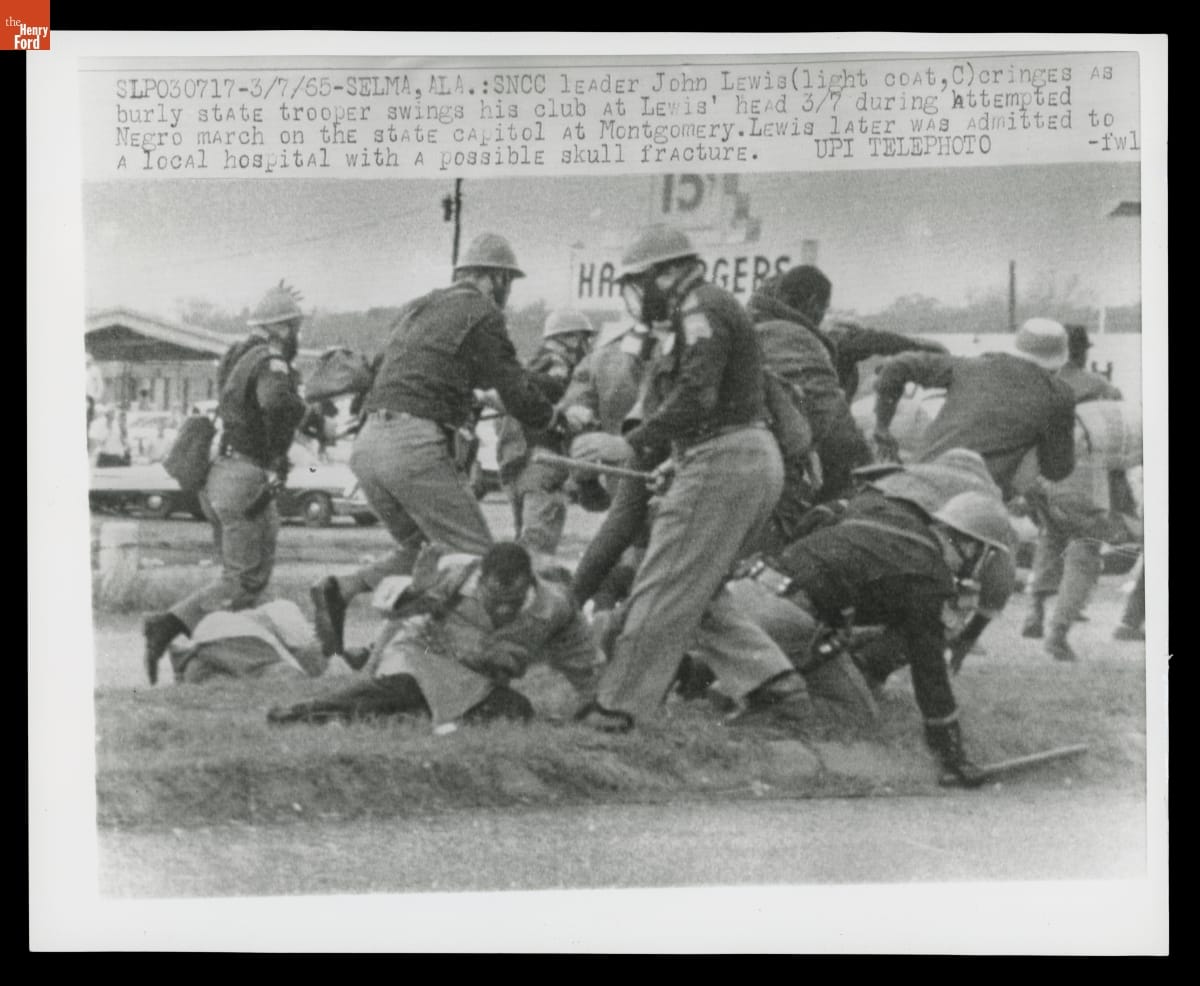
John Lewis (1940-2020) was a civil rights activist and US congressman. In the mid-2010s, he co-wrote his autobiographical graphic novel series called March. While the books follow Lewis throughout his life, they focus on his participation in civil rights protests such as the Freedom Rides in 1961 and the "Bloody Sunday" march in 1965. - State Trooper Swings Club at the Head of SNCC Leader John Lewis during Attempted March from Selma to Montgomery, March 7, 1965 -
- March 07, 1965
- Collections - Artifact
State Trooper Swings Club at the Head of SNCC Leader John Lewis during Attempted March from Selma to Montgomery, March 7, 1965
- "The Student Voice," Vol. 5, No. 8, March 3, 1964 -
- March 03, 1964
- Collections - Artifact
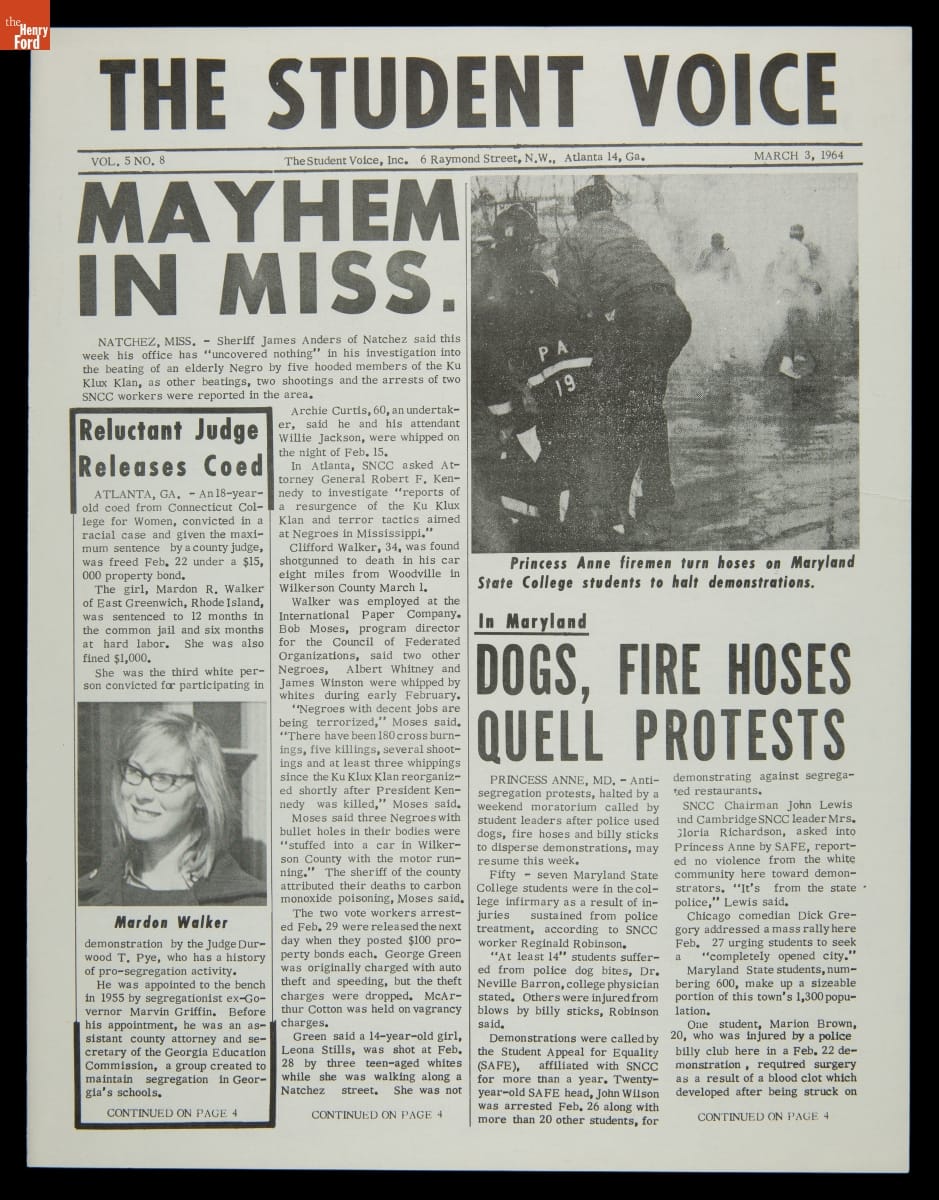
"The Student Voice," Vol. 5, No. 8, March 3, 1964
- John Lewis of the Student Non-Violent Coordinating Committee is Forced to the Ground by State Trooper, March 7, 1965 -
- March 07, 1965
- Collections - Artifact
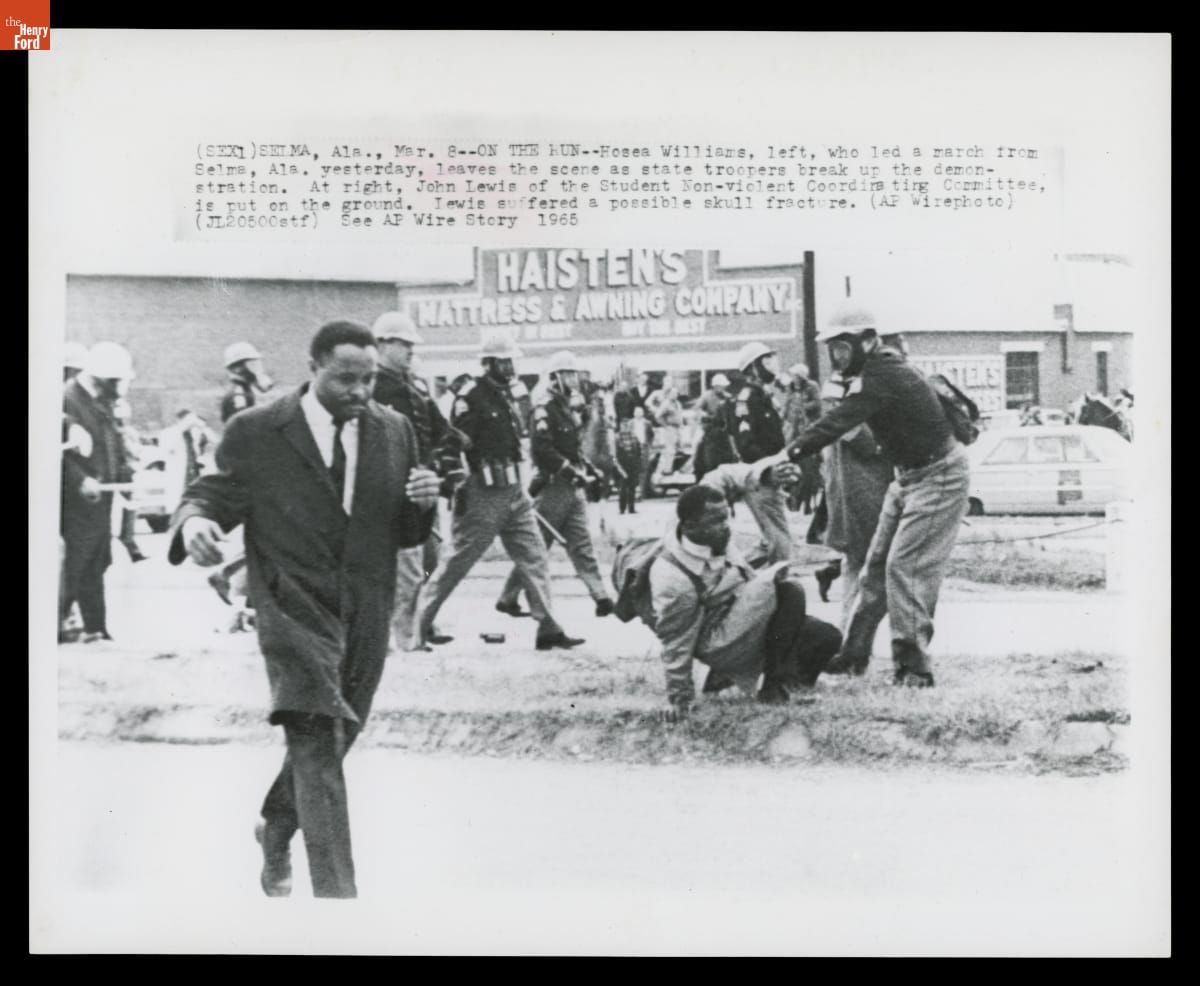
John Lewis of the Student Non-Violent Coordinating Committee is Forced to the Ground by State Trooper, March 7, 1965
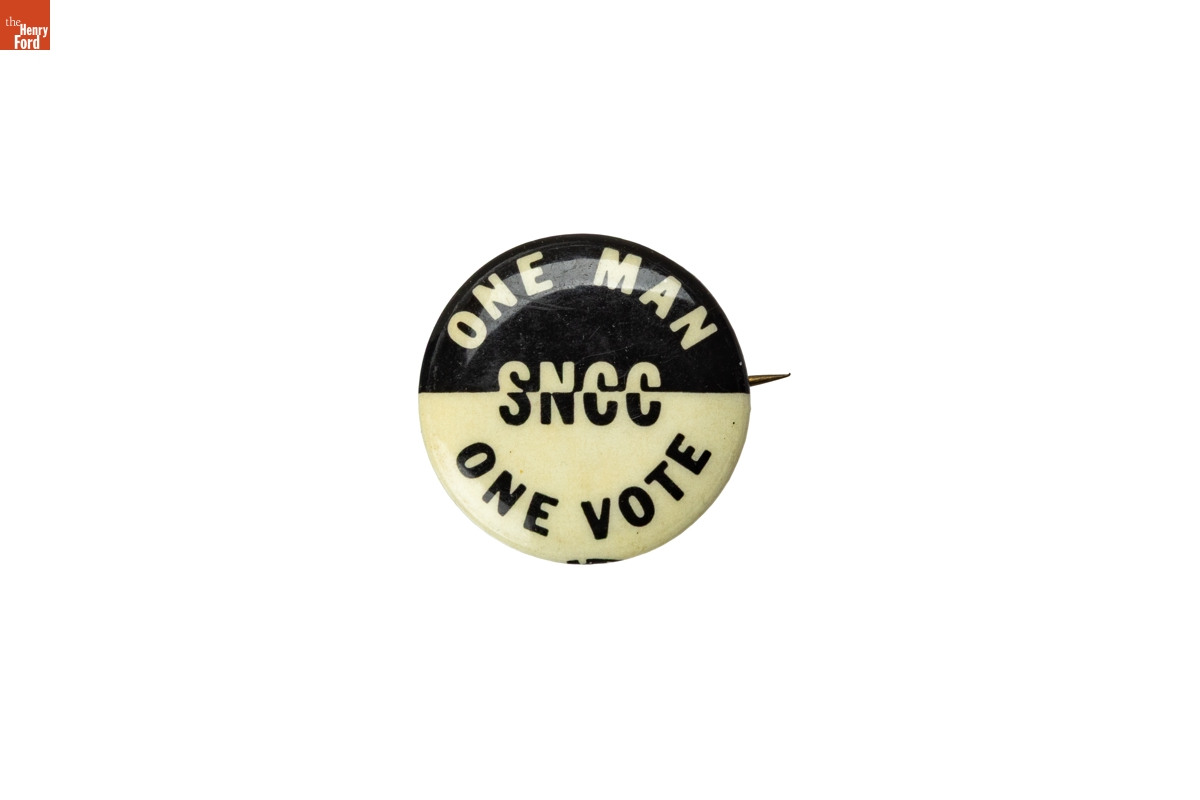
- Button, "One Man SNCC One Vote," 1960-1967 - The Student Nonviolent Coordinating Committee (SNCC) was organized in 1960 after four black college students demanded service at a Woolworth's lunch counter. The organization worked with black communities throughout the South to support sit-ins and other non-violent direct actions protesting segregation, as well as register African-American voters. By the late 1960s, the organization had become more militant, often clashing with mainstream civil rights groups.
- 1960-1967
- Collections - Artifact
Button, "One Man SNCC One Vote," 1960-1967
The Student Nonviolent Coordinating Committee (SNCC) was organized in 1960 after four black college students demanded service at a Woolworth's lunch counter. The organization worked with black communities throughout the South to support sit-ins and other non-violent direct actions protesting segregation, as well as register African-American voters. By the late 1960s, the organization had become more militant, often clashing with mainstream civil rights groups.
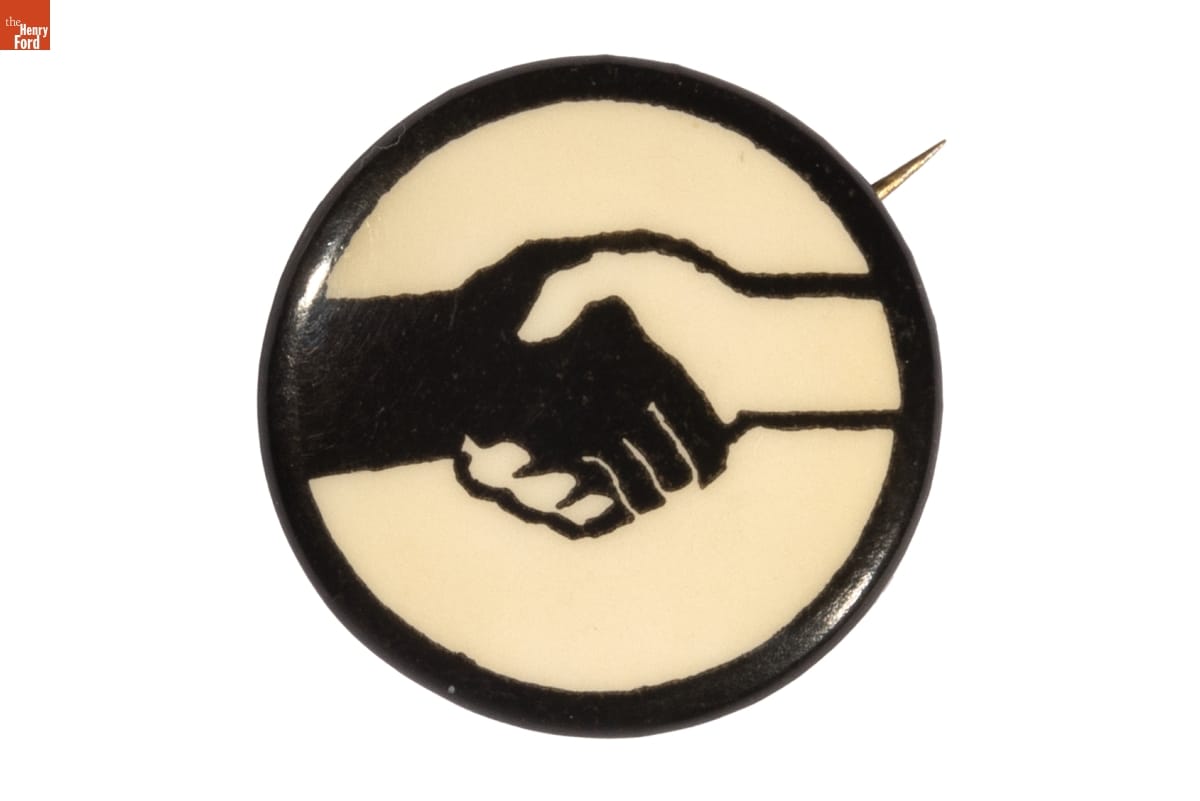
- Student Nonviolent Coordinating Committee Button, circa 1961 - The Student Nonviolent Coordinating Committee (SNCC) was organized in 1960 after four black college students demanded service at a Woolworth's lunch counter. The organization worked with black communities throughout the South to support sit-ins and other non-violent direct actions protesting segregation, as well as register African-American voters. By the late 1960s, the organization had become more militant, often clashing with mainstream civil rights groups.
- circa 1961
- Collections - Artifact
Student Nonviolent Coordinating Committee Button, circa 1961
The Student Nonviolent Coordinating Committee (SNCC) was organized in 1960 after four black college students demanded service at a Woolworth's lunch counter. The organization worked with black communities throughout the South to support sit-ins and other non-violent direct actions protesting segregation, as well as register African-American voters. By the late 1960s, the organization had become more militant, often clashing with mainstream civil rights groups.
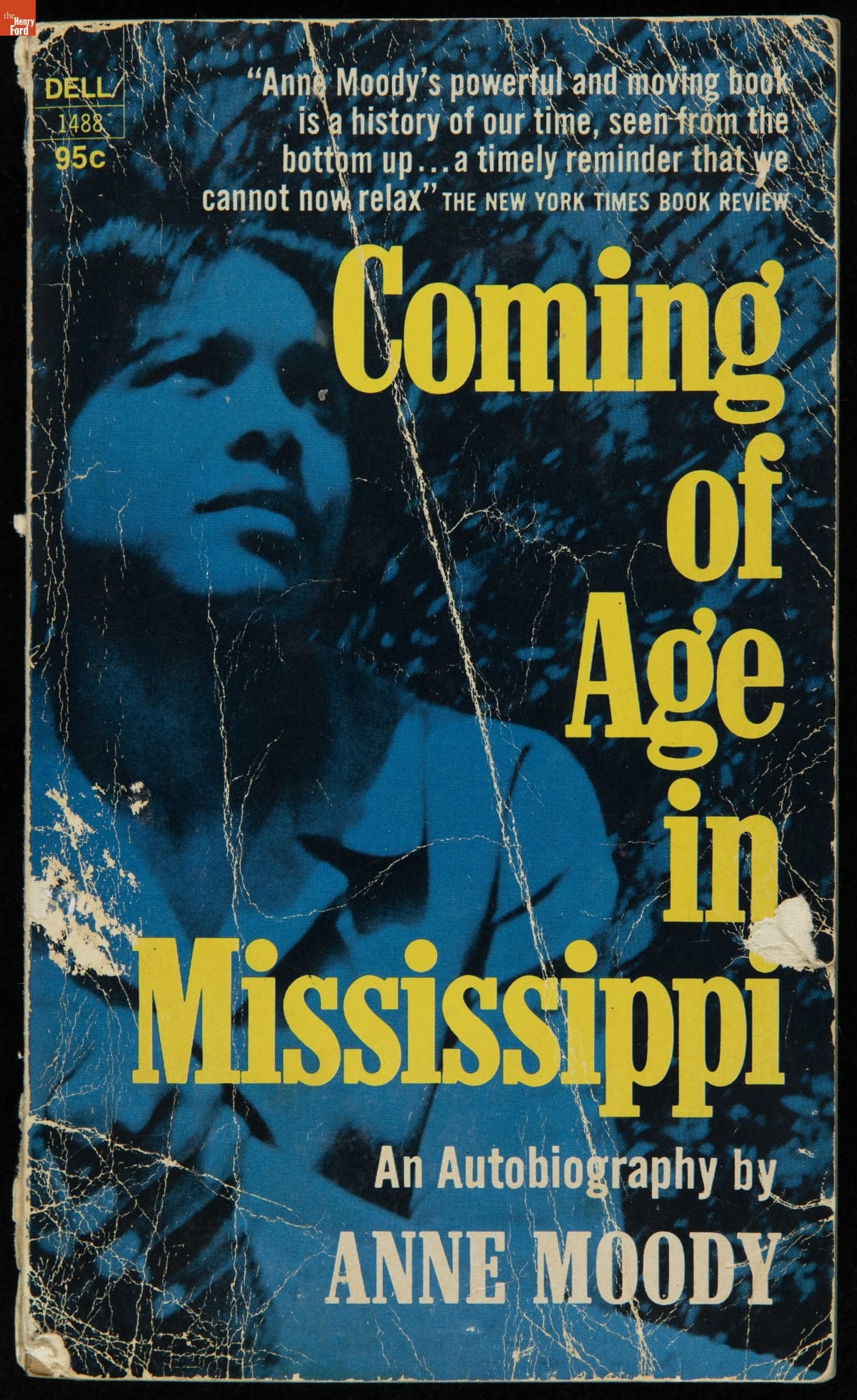
- Coming of Age in Mississippi, 1968 -
- 1968
- Collections - Artifact
Coming of Age in Mississippi, 1968
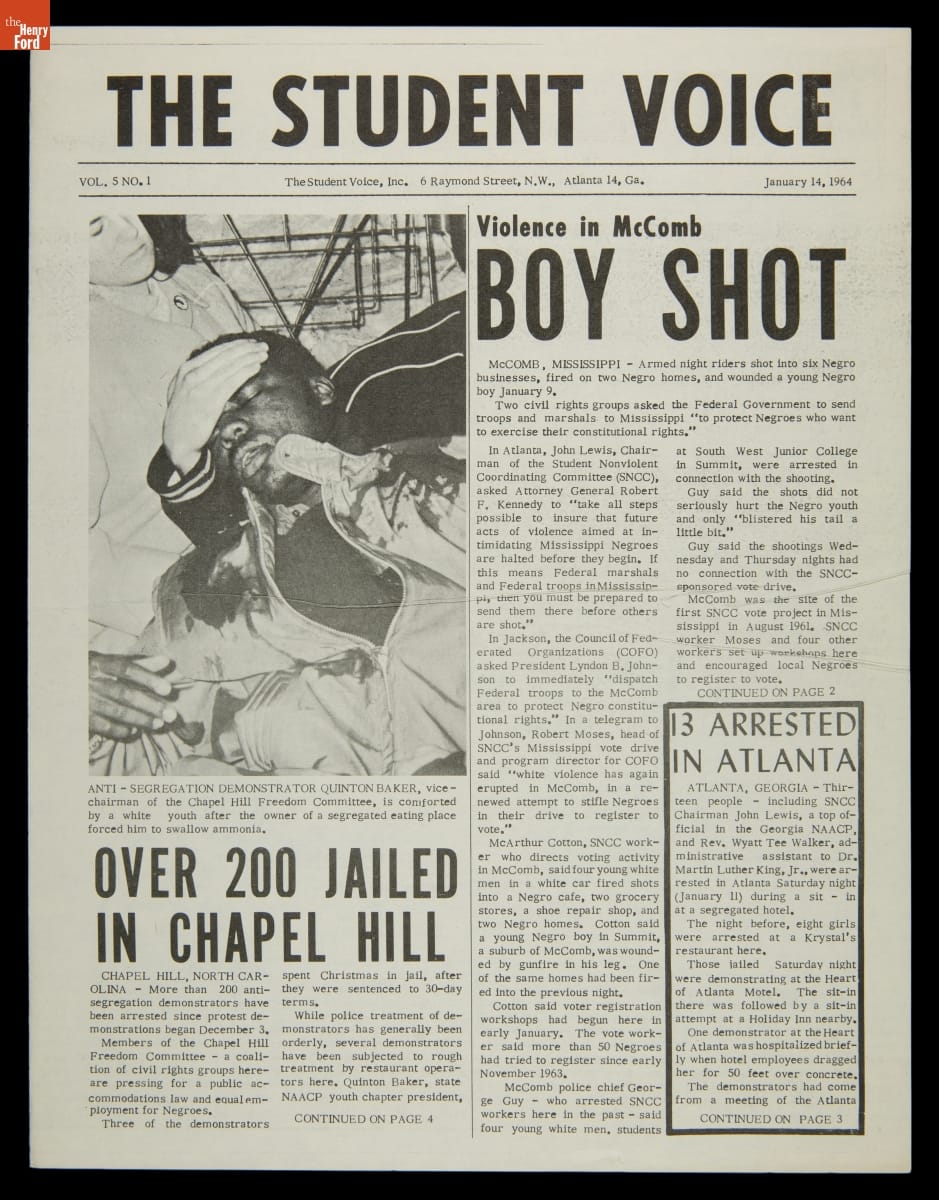
- "The Student Voice," Vol. 5, No. 1, January 14, 1964 -
- January 14, 1964
- Collections - Artifact
"The Student Voice," Vol. 5, No. 1, January 14, 1964
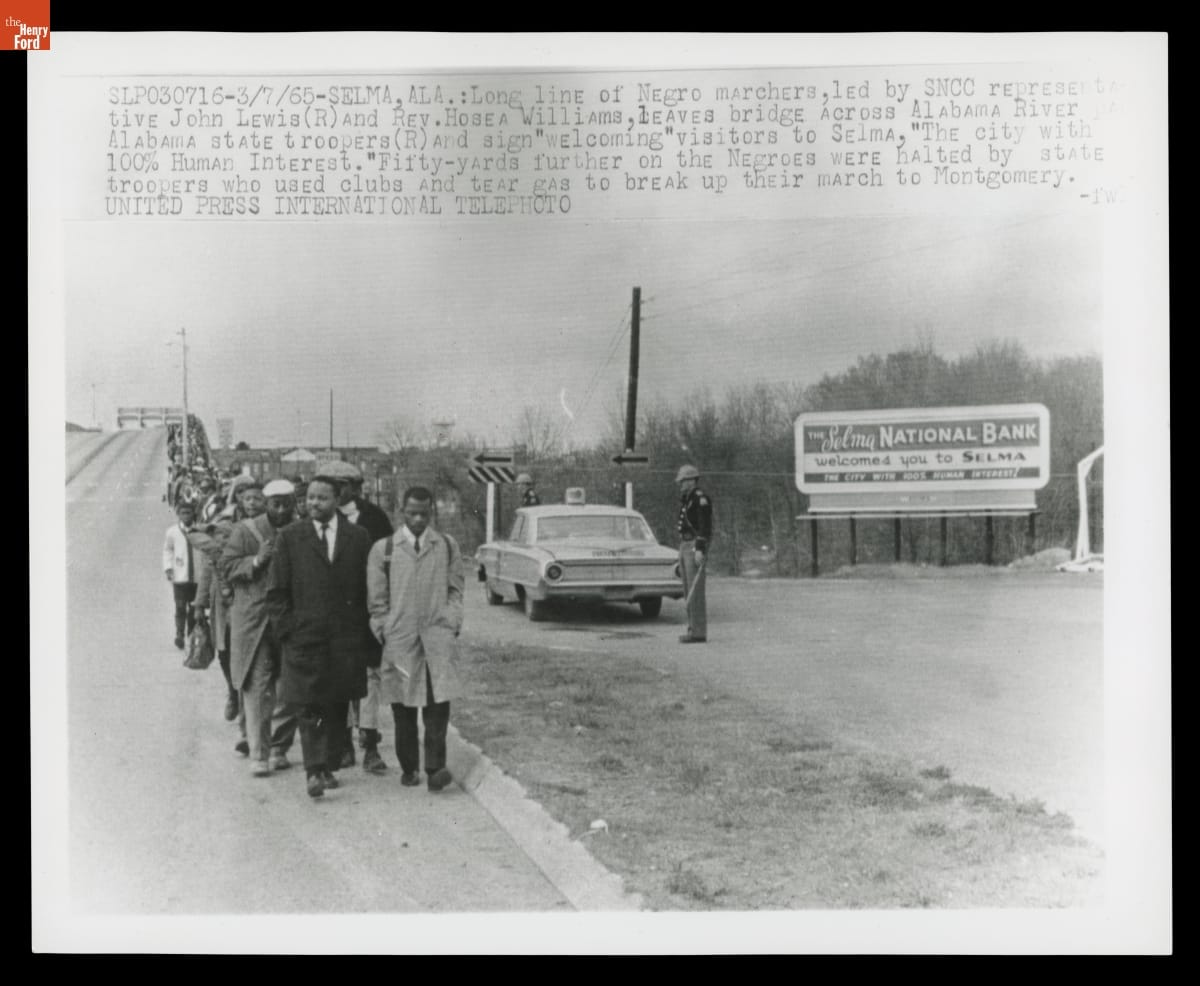
- John Lewis and Rev. Hosea Williams Lead a Long Line of Marchers over the Edmund Pettis Bridge, March 7, 1965 -
- March 07, 1965
- Collections - Artifact
John Lewis and Rev. Hosea Williams Lead a Long Line of Marchers over the Edmund Pettis Bridge, March 7, 1965
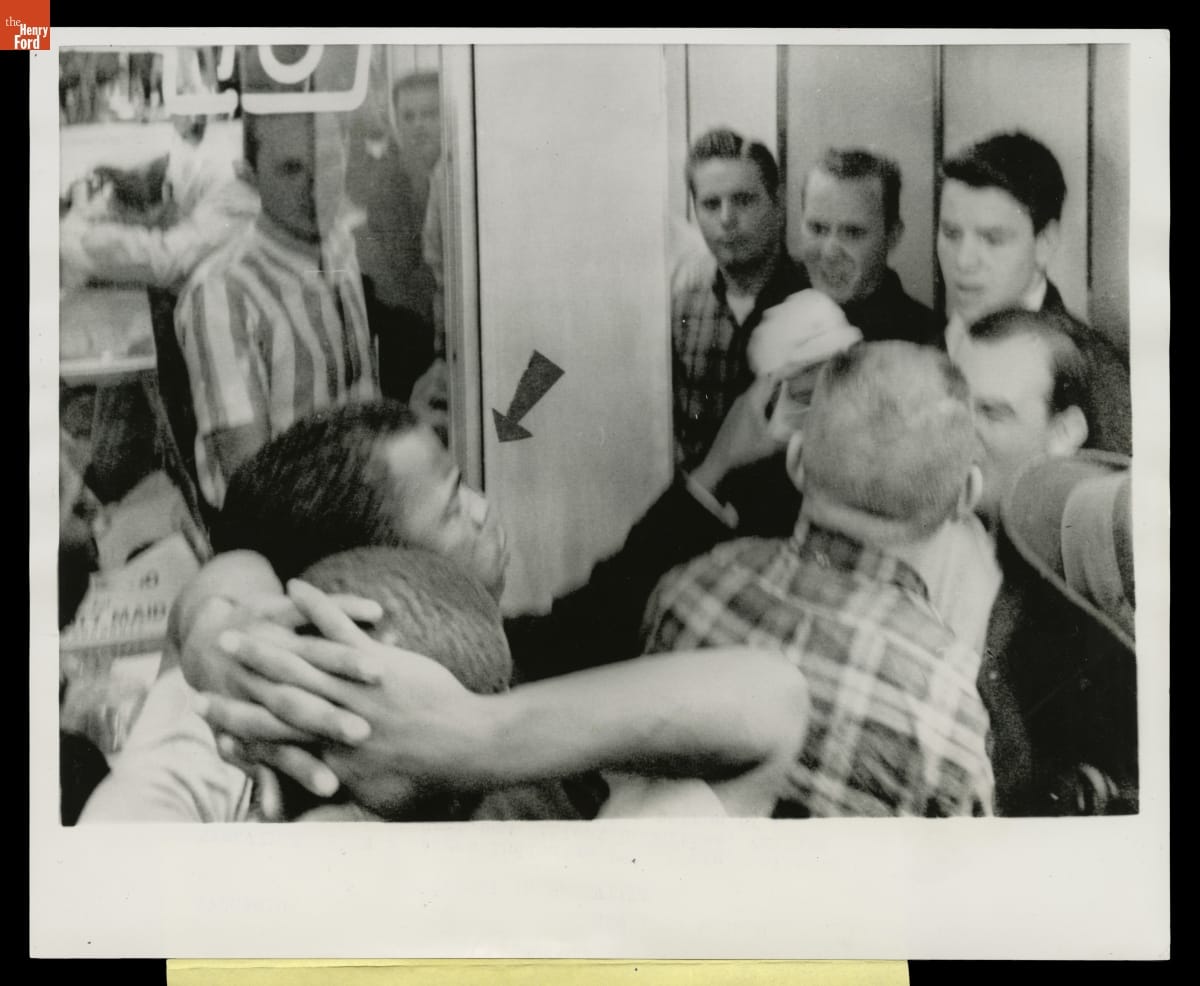
- John Lewis Falls after Being Struck while Protesting at a Nashville Restaurant That Refused to Serve Blacks, May 1, 1964 -
- May 01, 1964
- Collections - Artifact
John Lewis Falls after Being Struck while Protesting at a Nashville Restaurant That Refused to Serve Blacks, May 1, 1964