
Search
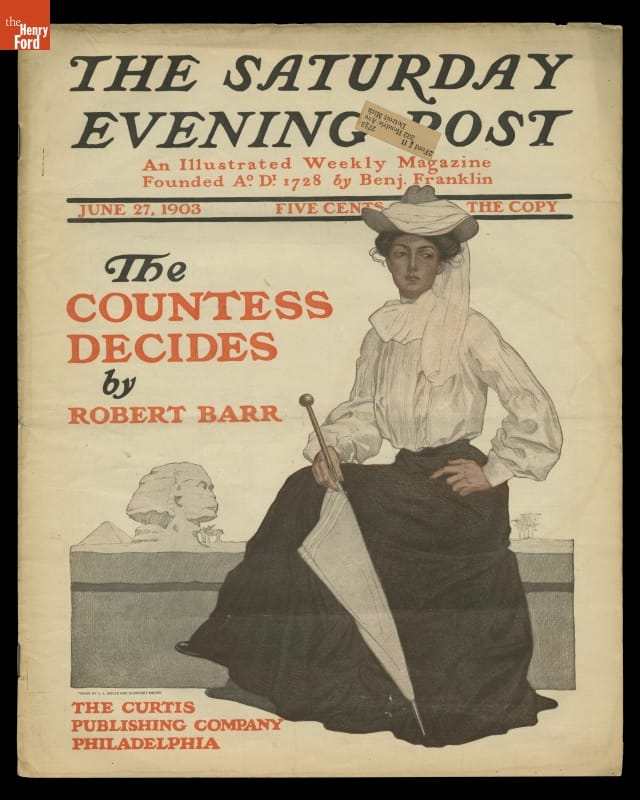
- "The Saturday Evening Post," June 27, 1903 - Before The Call of the Wild was a book, it was serialized in four issues of <EM>The Saturday Evening Post</EM>, a popular weekly magazine. This issue of the magazine -- part of a subscription owned by Clara Ford -- presented Part Two of the story. Jack London's approach was to unfold the story through the thoughts and emotions of his dog-hero, Buck.
- June 27, 1903
- Collections - Artifact
"The Saturday Evening Post," June 27, 1903
Before The Call of the Wild was a book, it was serialized in four issues of The Saturday Evening Post, a popular weekly magazine. This issue of the magazine -- part of a subscription owned by Clara Ford -- presented Part Two of the story. Jack London's approach was to unfold the story through the thoughts and emotions of his dog-hero, Buck.
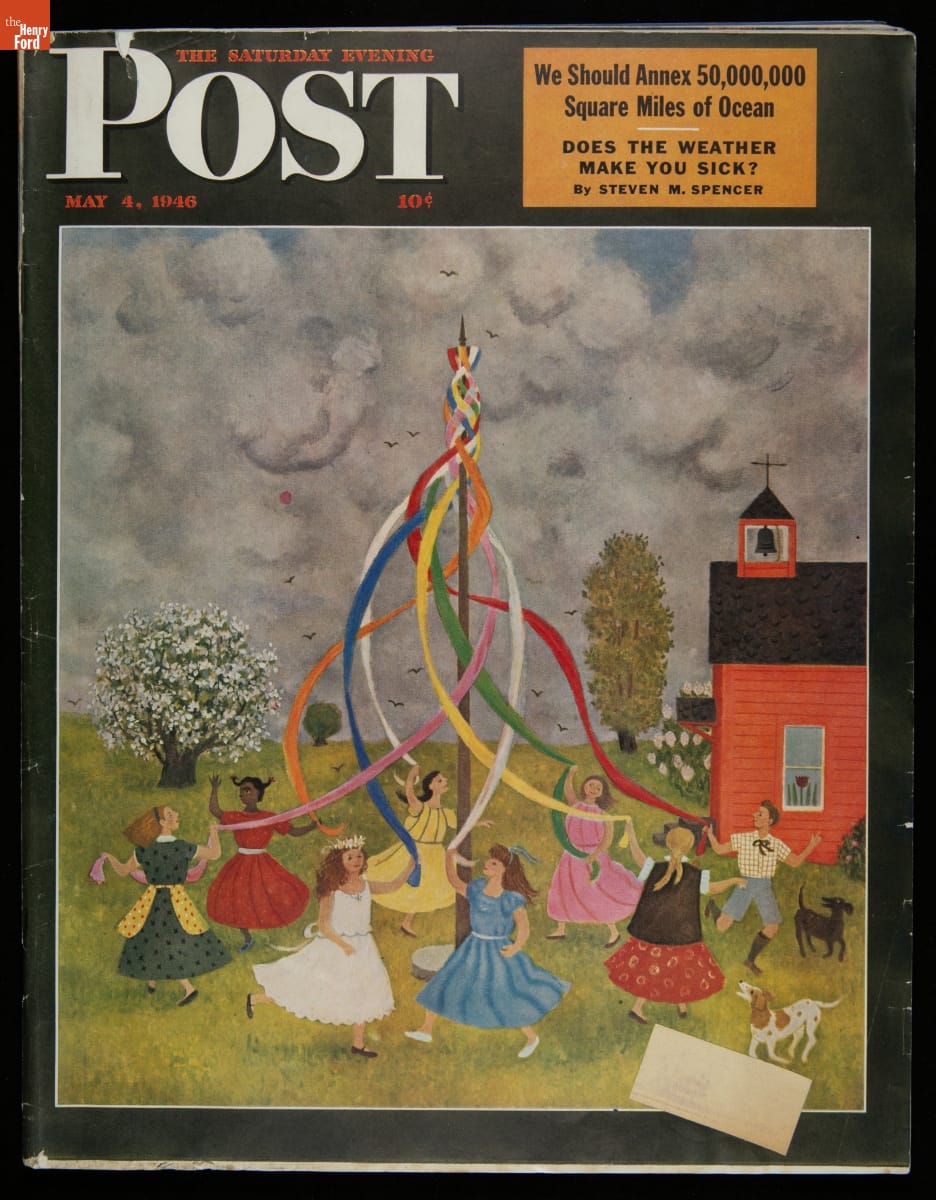
- The Saturday Evening Post, May 4, 1946 - <em>The Saturday Evening Post</em>, first published in 1821 as a four-page weekly newspaper, became one of America's most popular weekly publications by the mid-1900s. The magazine contained news, commentaries, fiction, and general interest articles. But its most distinctive feature was its front cover illustrations by well-known artists and illustrators. Publishers chose a painting by artist Doris Lee for this May 1946 issue.
- May 04, 1946
- Collections - Artifact
The Saturday Evening Post, May 4, 1946
The Saturday Evening Post, first published in 1821 as a four-page weekly newspaper, became one of America's most popular weekly publications by the mid-1900s. The magazine contained news, commentaries, fiction, and general interest articles. But its most distinctive feature was its front cover illustrations by well-known artists and illustrators. Publishers chose a painting by artist Doris Lee for this May 1946 issue.
- Theatrical Play Poster, "Uncle Tom's Cabin," circa 1906-1908 -
- circa 1906-1908
- Collections - Artifact
Theatrical Play Poster, "Uncle Tom's Cabin," circa 1906-1908
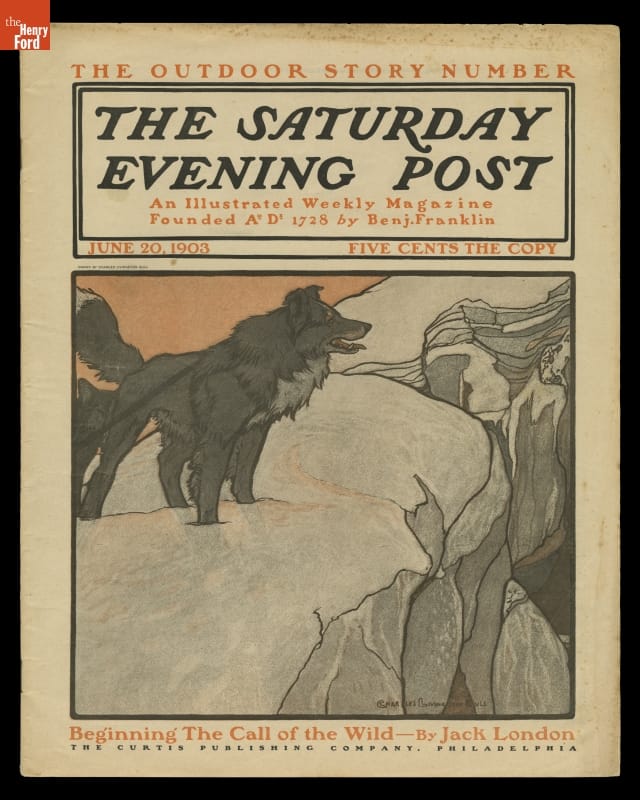
- "The Saturday Evening Post," June 20, 1903 - Before The Call of the Wild was a book, it was serialized in four issues of <EM>The Saturday Evening Post</EM>, a popular weekly magazine. This issue, with its striking cover, presented Part One of the story. In keeping with a popular literary style of the time, Jack London told the story through the thoughts and emotions of his dog-hero, Buck.
- June 20, 1903
- Collections - Artifact
"The Saturday Evening Post," June 20, 1903
Before The Call of the Wild was a book, it was serialized in four issues of The Saturday Evening Post, a popular weekly magazine. This issue, with its striking cover, presented Part One of the story. In keeping with a popular literary style of the time, Jack London told the story through the thoughts and emotions of his dog-hero, Buck.
- "Porgy," 1925 - <body>DuBose Heyward incorporated real-life elements of Charleston, South Carolina into his 1925 novel <i>Porgy</i>. The book's setting is based on an all-Black tenement in Charleston nicknamed "Cabbage Row"; some characters speak in a regional language called Gullah. Following the novel's critical and commercial success, Heyward and songwriters George and Ira Gershwin wrote the beloved 1935 opera adaptation, <i>Porgy and Bess</i>. </body>
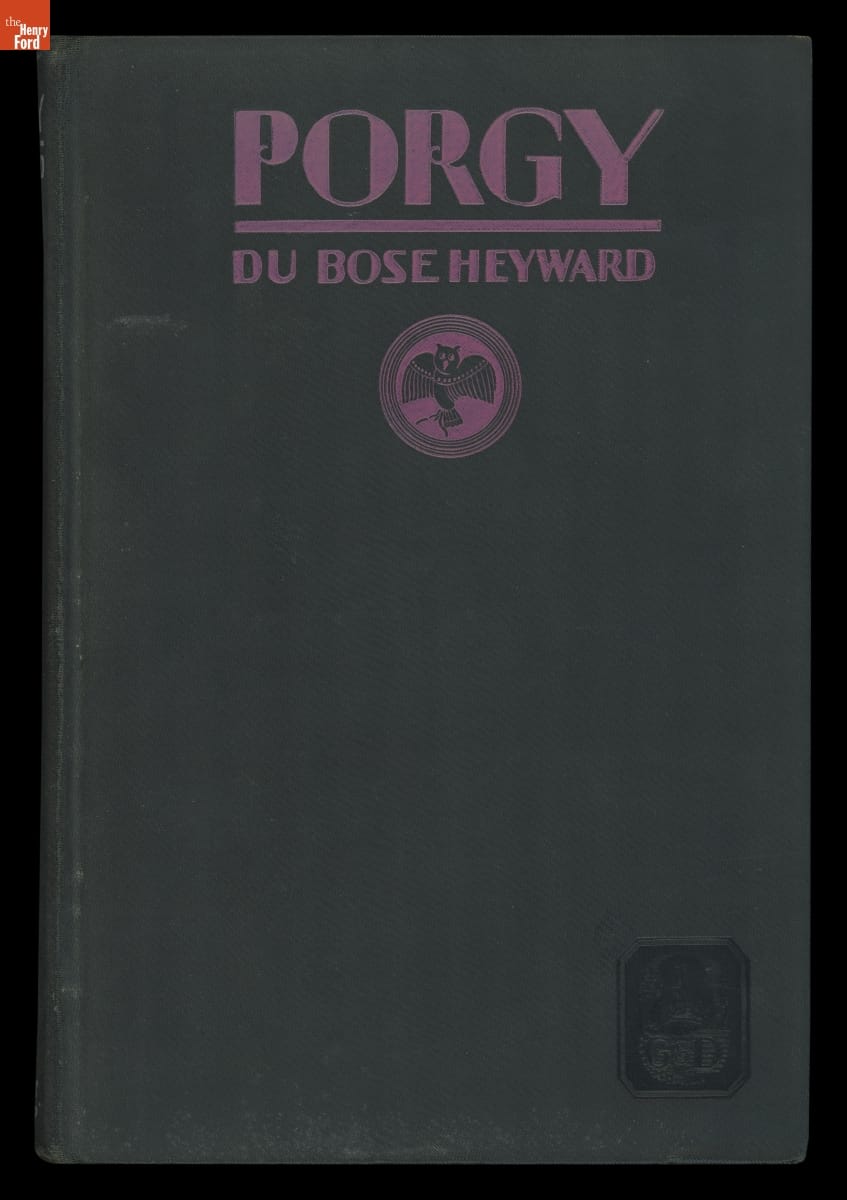
- 1925
- Collections - Artifact
"Porgy," 1925
DuBose Heyward incorporated real-life elements of Charleston, South Carolina into his 1925 novel Porgy. The book's setting is based on an all-Black tenement in Charleston nicknamed "Cabbage Row"; some characters speak in a regional language called Gullah. Following the novel's critical and commercial success, Heyward and songwriters George and Ira Gershwin wrote the beloved 1935 opera adaptation, Porgy and Bess.