
Search
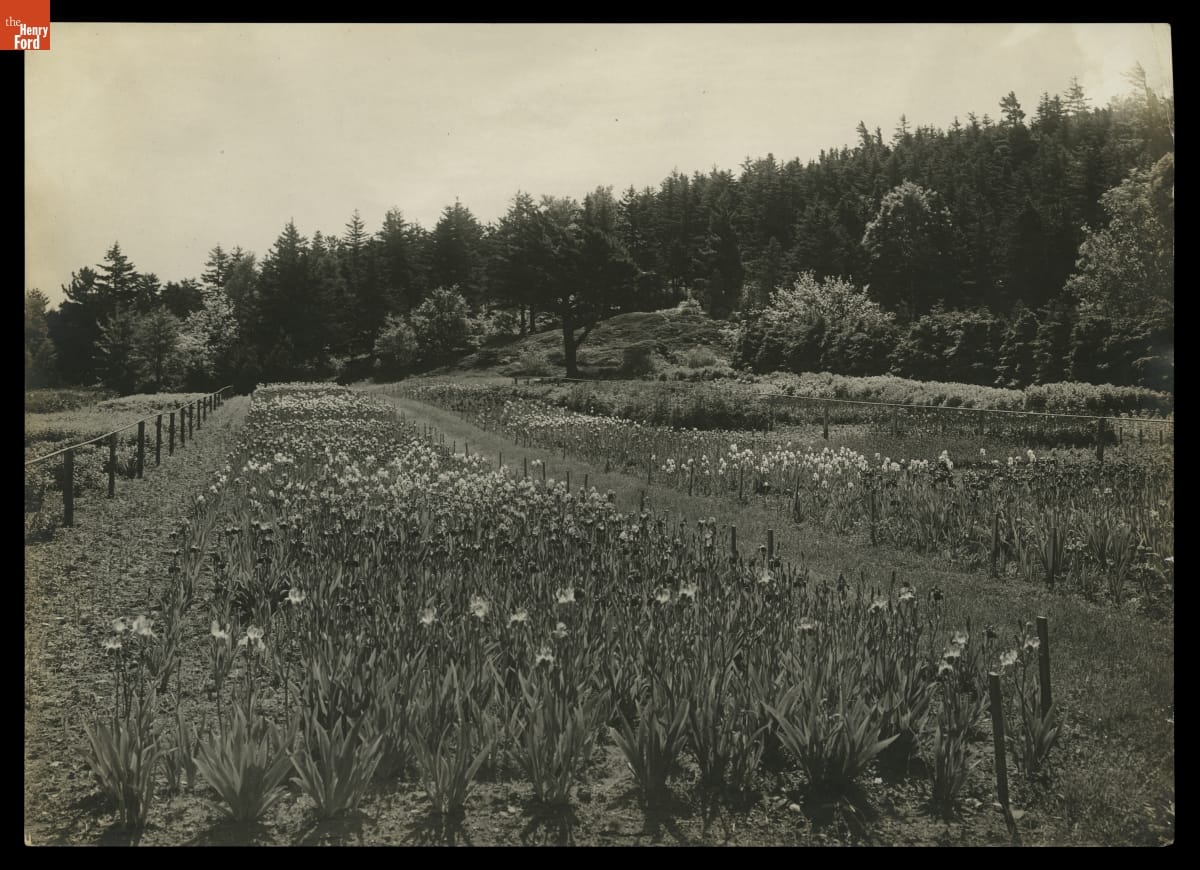
- German Irises Growing in a Nursery, circa 1923 -
- circa 1923
- Collections - Artifact
German Irises Growing in a Nursery, circa 1923
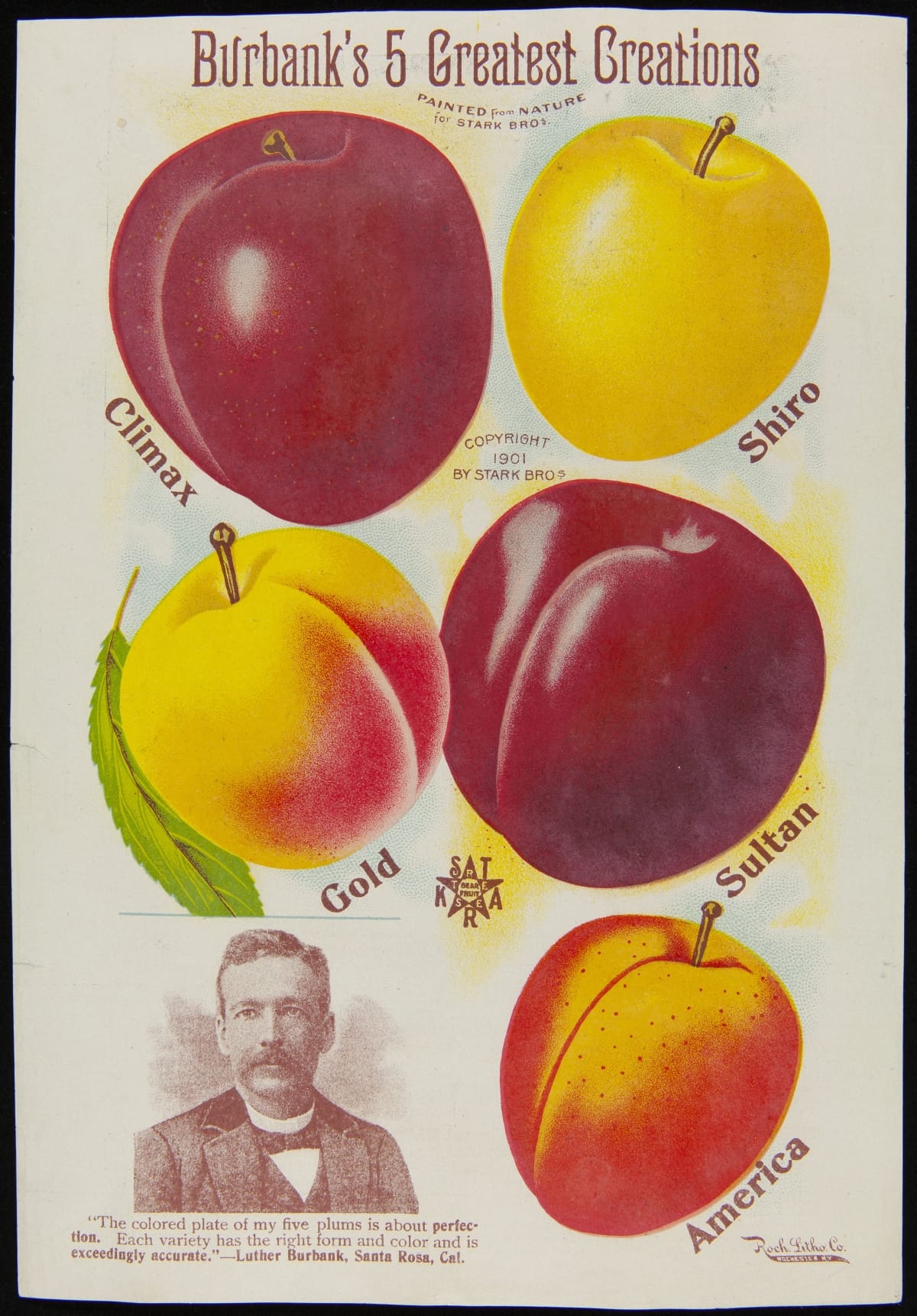
- Stark Bro's Nurseries & Orchards Company Trade Card, "Burbank's 5 Greatest Creations," 1901 - Luther Burbank's 1893 catalog, <em>New Creations in Fruits and Flowers</em>, captured the attention of established nursery businesses, including Stark Brothers Nurseries in Missouri. Clarence Stark traveled to California to see Burbank's creations for himself and purchased the rights to sell some of Burbank's plum varieties. This began an exclusive distribution partnership that continued after Burbank's death.
- 1901
- Collections - Artifact
Stark Bro's Nurseries & Orchards Company Trade Card, "Burbank's 5 Greatest Creations," 1901
Luther Burbank's 1893 catalog, New Creations in Fruits and Flowers, captured the attention of established nursery businesses, including Stark Brothers Nurseries in Missouri. Clarence Stark traveled to California to see Burbank's creations for himself and purchased the rights to sell some of Burbank's plum varieties. This began an exclusive distribution partnership that continued after Burbank's death.
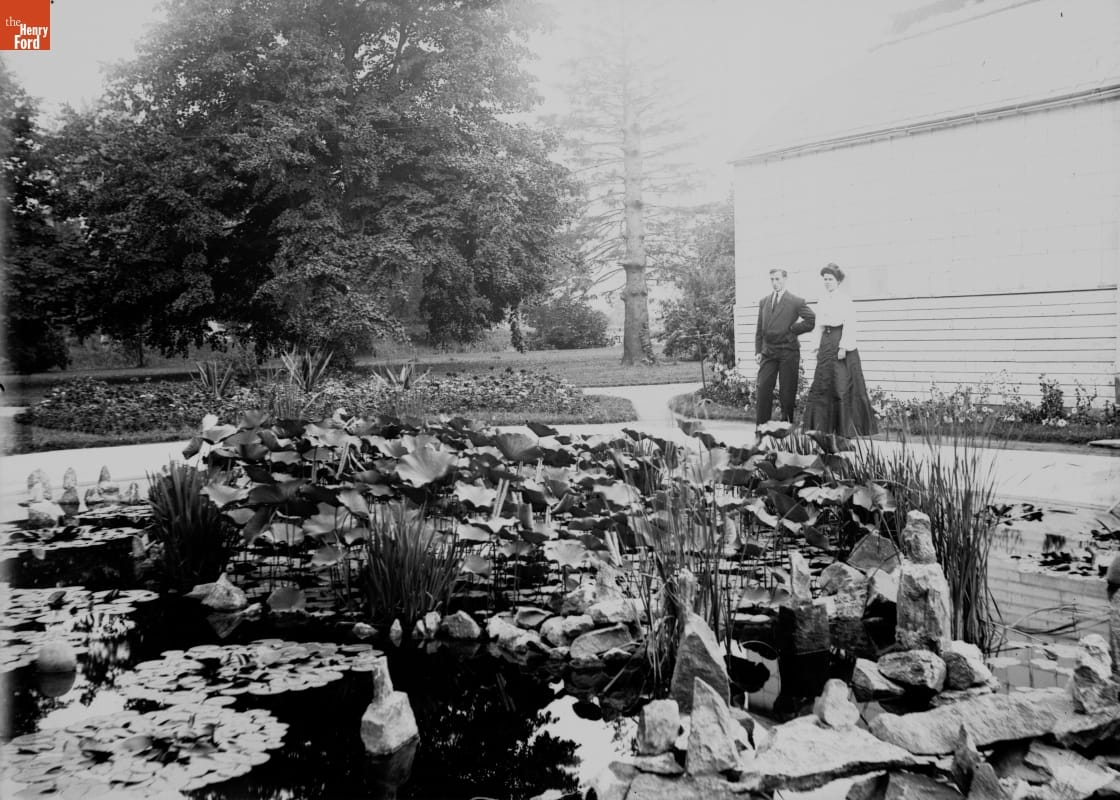
- Schlegel Orchids, Lily Land, 1890-1915 - In 1890, Jenny Young Chandler, 25 years old and recently widowed, began working for the <EM>New York Herald</EM>. As a photojournalist and feature writer, Chandler captured life in Brooklyn, New York, and vicinity. By 1922, the time of her death, she had produced over 800 glass plate negatives. Her sensitive, insightful photographs depict people from all walks of life and the world in which they lived.
- 1890-1915
- Collections - Artifact
Schlegel Orchids, Lily Land, 1890-1915
In 1890, Jenny Young Chandler, 25 years old and recently widowed, began working for the New York Herald. As a photojournalist and feature writer, Chandler captured life in Brooklyn, New York, and vicinity. By 1922, the time of her death, she had produced over 800 glass plate negatives. Her sensitive, insightful photographs depict people from all walks of life and the world in which they lived.
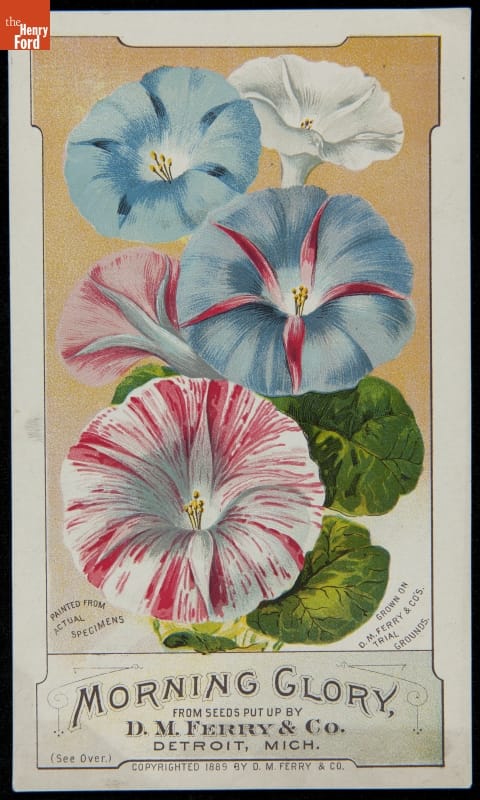
- Trade Card for Morning Glory Seeds, D. M. Ferry & Co., 1889 - Advertisers used trade cards to sell goods and services and new color printing techniques increased their appeal during the late 19th century. Americans enjoyed and often saved the vibrant little advertisements added to product packages or distributed by local merchants. This trade card from D.M. Ferry & Co. features a colorful image of Morning Glory flowers with additional educational information on the back.
- 1889
- Collections - Artifact
Trade Card for Morning Glory Seeds, D. M. Ferry & Co., 1889
Advertisers used trade cards to sell goods and services and new color printing techniques increased their appeal during the late 19th century. Americans enjoyed and often saved the vibrant little advertisements added to product packages or distributed by local merchants. This trade card from D.M. Ferry & Co. features a colorful image of Morning Glory flowers with additional educational information on the back.
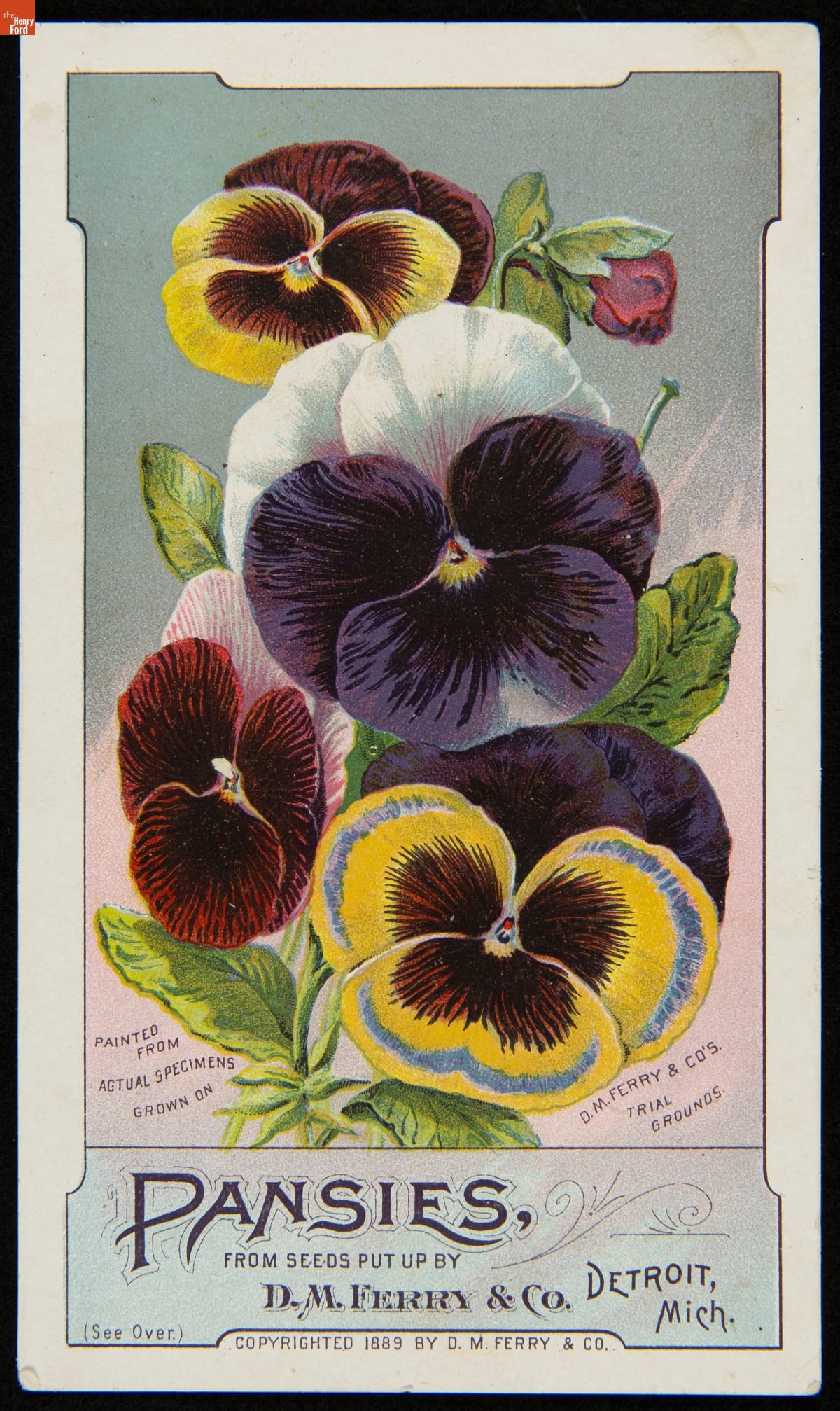
- Trade Card for Pansies Seeds, D. M. Ferry & Co., 1889 - Advertisers used trade cards to sell goods and services and new color printing techniques increased their appeal during the late 19th century. Americans enjoyed and often saved the vibrant little advertisements added to product packages or distributed by local merchants. This trade card from D.M. Ferry & Co. features a colorful image of Pansies with additional educational information on the back.
- 1889
- Collections - Artifact
Trade Card for Pansies Seeds, D. M. Ferry & Co., 1889
Advertisers used trade cards to sell goods and services and new color printing techniques increased their appeal during the late 19th century. Americans enjoyed and often saved the vibrant little advertisements added to product packages or distributed by local merchants. This trade card from D.M. Ferry & Co. features a colorful image of Pansies with additional educational information on the back.
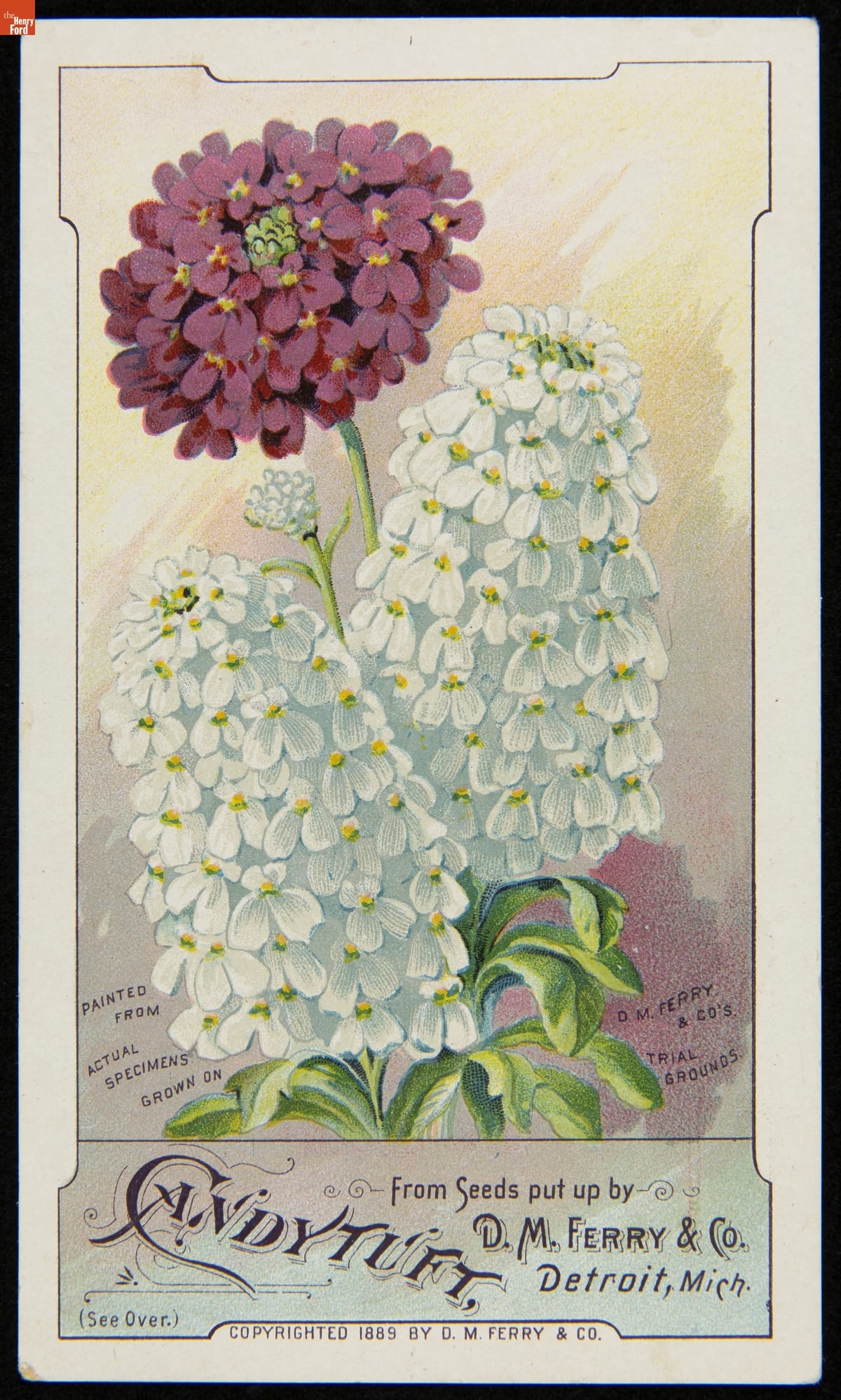
- Trade Card for Candytuft Seeds, D.M. Ferry & Company, 1889 - Advertisers used trade cards to sell goods and services and new color printing techniques increased their appeal during the late 19th century. Americans enjoyed and often saved the vibrant little advertisements added to product packages or distributed by local merchants. This trade card from D.M. Ferry & Co. features a colorful image of Candytuft flowers with additional educational information on the back.
- 1889
- Collections - Artifact
Trade Card for Candytuft Seeds, D.M. Ferry & Company, 1889
Advertisers used trade cards to sell goods and services and new color printing techniques increased their appeal during the late 19th century. Americans enjoyed and often saved the vibrant little advertisements added to product packages or distributed by local merchants. This trade card from D.M. Ferry & Co. features a colorful image of Candytuft flowers with additional educational information on the back.
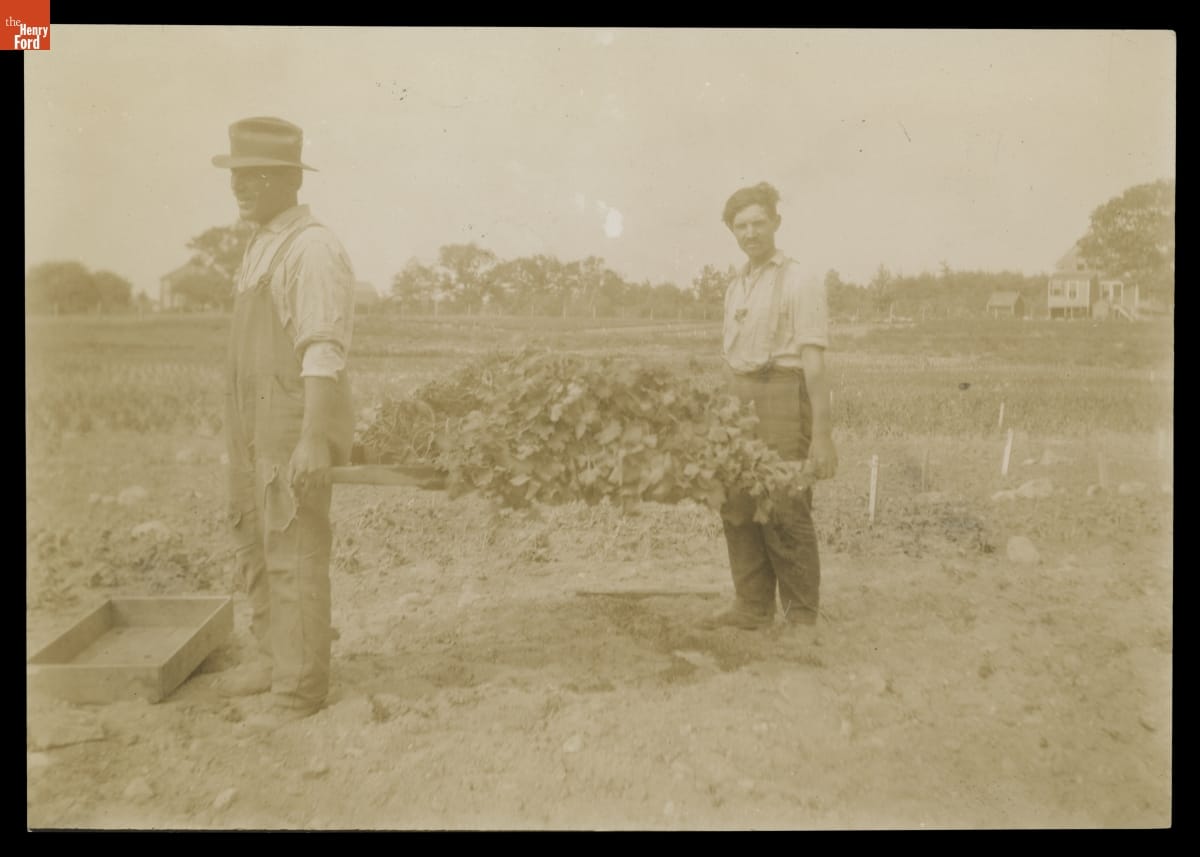
- Moving Plants in a Nursery, circa 1923 -
- circa 1923
- Collections - Artifact
Moving Plants in a Nursery, circa 1923
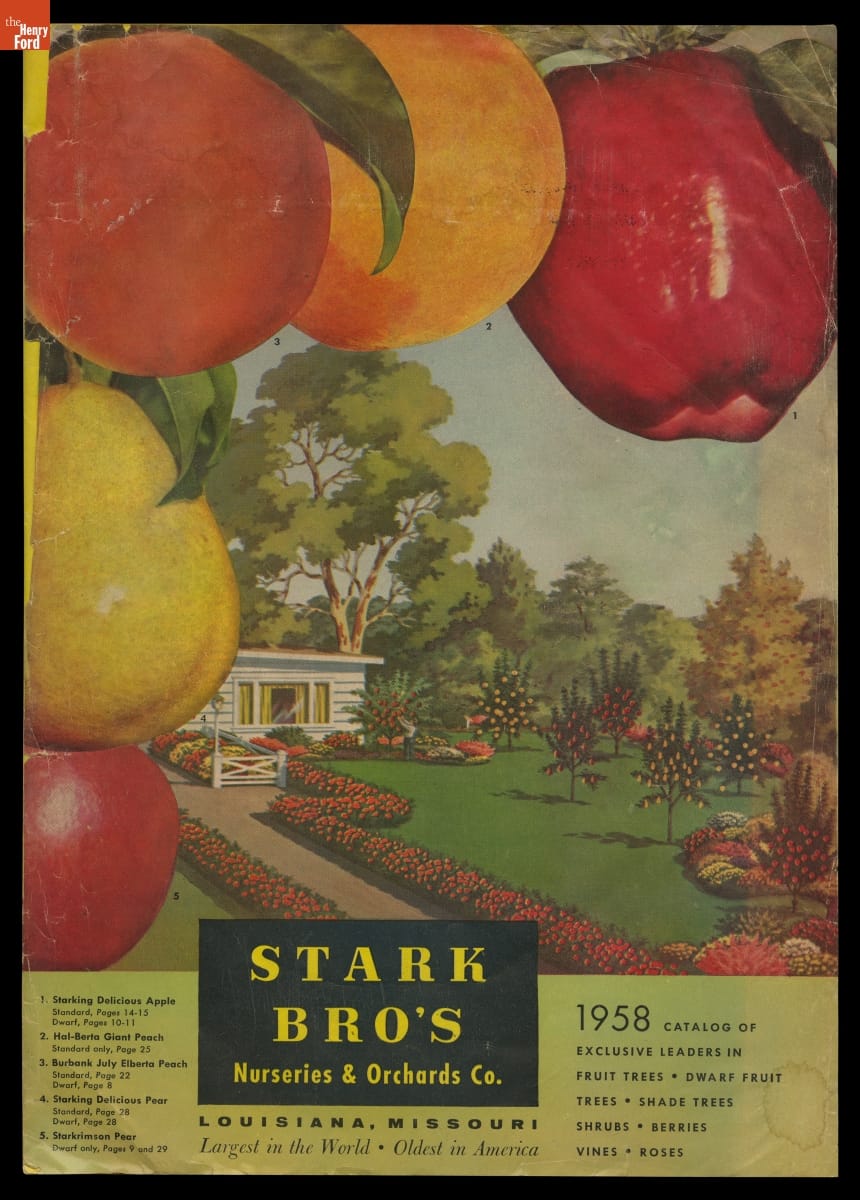
- Stark Bro's Nurseries & Orchards Co. Catalog, 1958 -
- 1958
- Collections - Artifact
Stark Bro's Nurseries & Orchards Co. Catalog, 1958
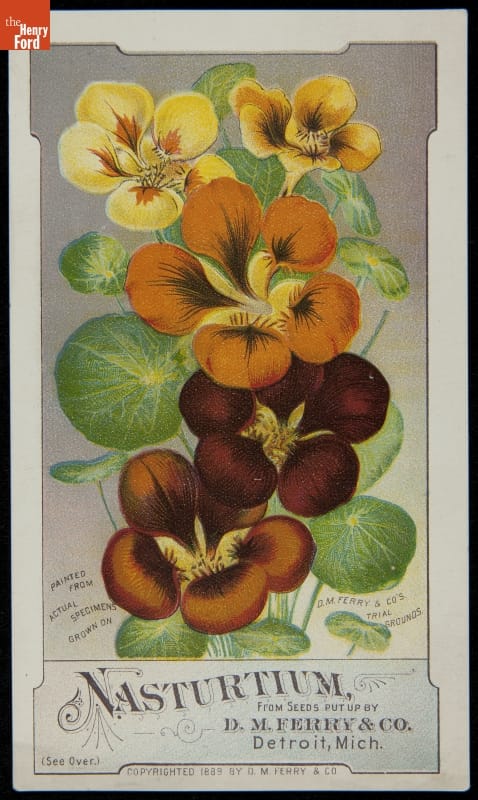
- Trade Card for Nasturtium Seeds, D.M. Ferry & Company, 1889 - Advertisers used trade cards to sell goods and services and new color printing techniques increased their appeal during the late 19th century. Americans enjoyed and often saved the vibrant little advertisements added to product packages or distributed by local merchants. This trade card from D.M. Ferry & Co. features a colorful image of Nasturtium flowers with additional educational information on the back.
- 1889
- Collections - Artifact
Trade Card for Nasturtium Seeds, D.M. Ferry & Company, 1889
Advertisers used trade cards to sell goods and services and new color printing techniques increased their appeal during the late 19th century. Americans enjoyed and often saved the vibrant little advertisements added to product packages or distributed by local merchants. This trade card from D.M. Ferry & Co. features a colorful image of Nasturtium flowers with additional educational information on the back.
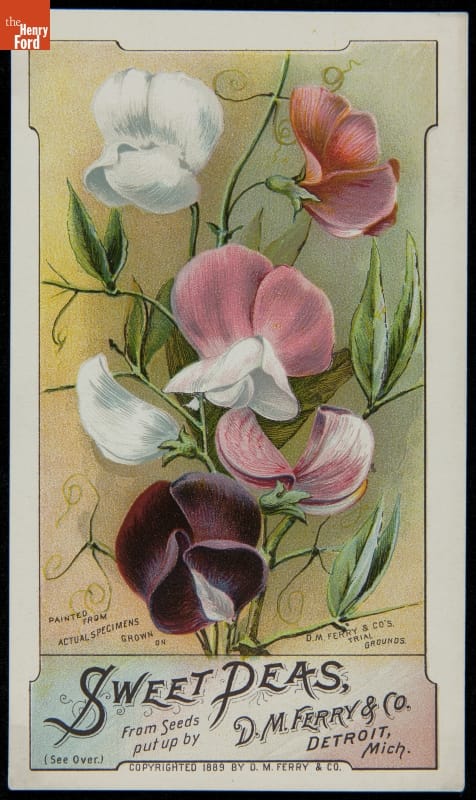
- Trade Card for Sweet Pea Seeds, D.M. Ferry & Company, 1889 - Advertisers used trade cards to sell goods and services and new color printing techniques increased their appeal during the late 19th century. Americans enjoyed and often saved the vibrant little advertisements added to product packages or distributed by local merchants. This trade card from D.M. Ferry & Co. features a colorful image of Sweet Pea flowers with additional educational information on the back.
- 1889
- Collections - Artifact
Trade Card for Sweet Pea Seeds, D.M. Ferry & Company, 1889
Advertisers used trade cards to sell goods and services and new color printing techniques increased their appeal during the late 19th century. Americans enjoyed and often saved the vibrant little advertisements added to product packages or distributed by local merchants. This trade card from D.M. Ferry & Co. features a colorful image of Sweet Pea flowers with additional educational information on the back.