
Search
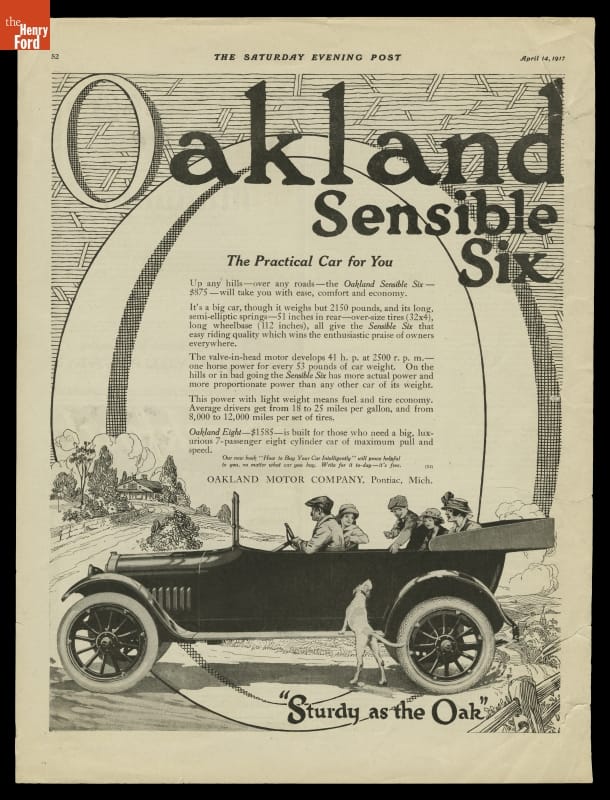
- Advertisement, Oakland Motor Company, "Oakland Sensible Six-- the Practical Car For You, As Sturdy as the Oak," 1917 - The automobile is a paradox -- a practical tool that plays host to both human needs and fantasies. Like car consumers, automotive ads seem to land somewhere between fantasy and reality, emotions and rationality. Many ads incorporate apparent opposites: fantasy can sell practicality, and vice versa. Sometimes the car has disappeared completely -- an emotional appeal prompts us to complete the ad.
- April 14, 1917
- Collections - Artifact
Advertisement, Oakland Motor Company, "Oakland Sensible Six-- the Practical Car For You, As Sturdy as the Oak," 1917
The automobile is a paradox -- a practical tool that plays host to both human needs and fantasies. Like car consumers, automotive ads seem to land somewhere between fantasy and reality, emotions and rationality. Many ads incorporate apparent opposites: fantasy can sell practicality, and vice versa. Sometimes the car has disappeared completely -- an emotional appeal prompts us to complete the ad.
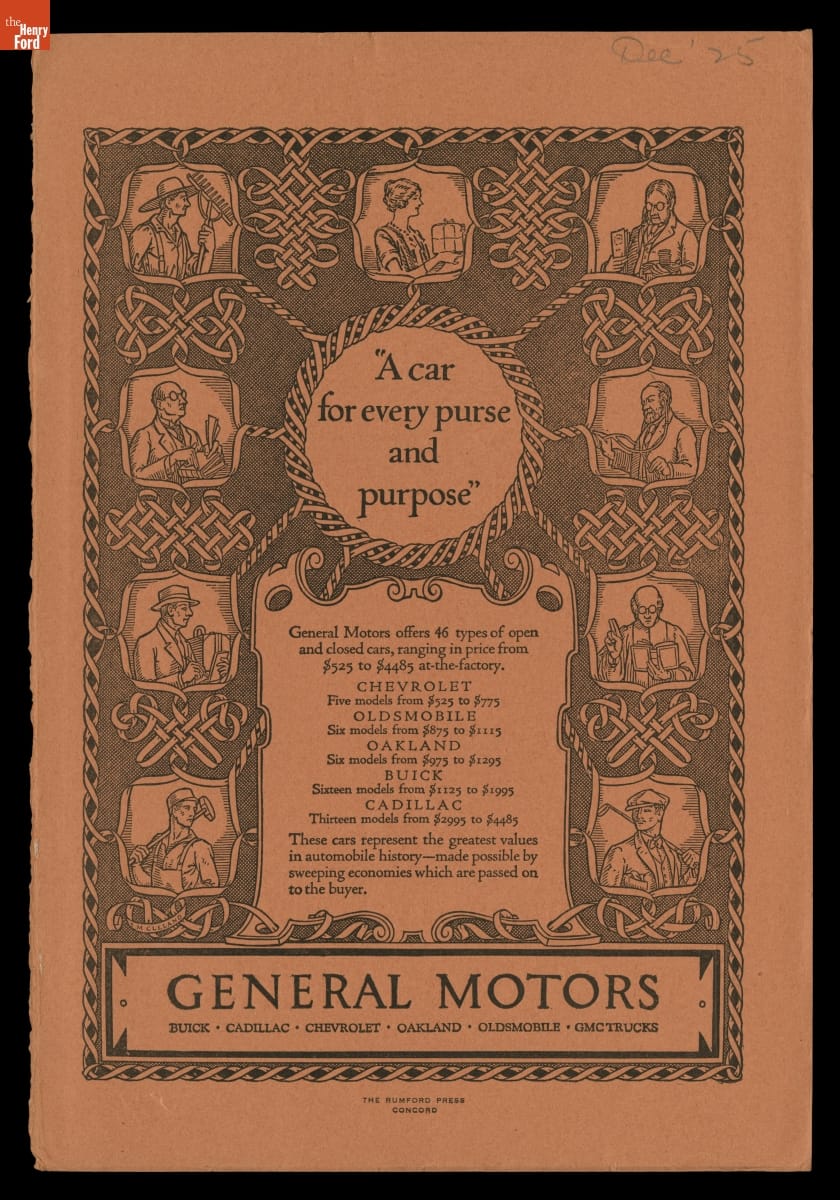
- Advertisement for General Motors, "A Car for Every Purse and Purpose," 1925 - Under company president Alfred P. Sloan, General Motors offered "a car for every purse and purpose." A buyer might start with a Chevrolet and gradually trade up to a fancier Oldsmobile, Buick, or Cadillac. It was the opposite of Henry Ford's one-size-fits-all Model T. As customers' wants and wallets grew in the 1920s, Sloan's approach took hold throughout the industry.
- December 01, 1925
- Collections - Artifact
Advertisement for General Motors, "A Car for Every Purse and Purpose," 1925
Under company president Alfred P. Sloan, General Motors offered "a car for every purse and purpose." A buyer might start with a Chevrolet and gradually trade up to a fancier Oldsmobile, Buick, or Cadillac. It was the opposite of Henry Ford's one-size-fits-all Model T. As customers' wants and wallets grew in the 1920s, Sloan's approach took hold throughout the industry.
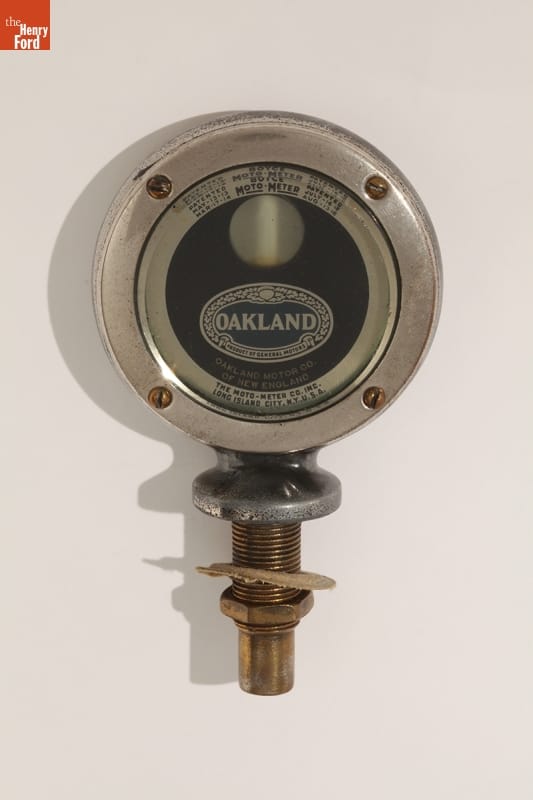
- Oakland Motometer, circa 1925 - Automobiles often came without temperature gauges before the early 1930s, so enterprising manufacturers sold aftermarket motometers. Mounted on a car's radiator, these devices measured and displayed coolant water vapor temperature, notifying drivers if their automobiles were in danger of overheating. Moto-Meter Co. Inc. dominated the American market, producing the popular Boyce motometer and others featuring an automotive manufacturer's name or logo.
- circa 1925
- Collections - Artifact
Oakland Motometer, circa 1925
Automobiles often came without temperature gauges before the early 1930s, so enterprising manufacturers sold aftermarket motometers. Mounted on a car's radiator, these devices measured and displayed coolant water vapor temperature, notifying drivers if their automobiles were in danger of overheating. Moto-Meter Co. Inc. dominated the American market, producing the popular Boyce motometer and others featuring an automotive manufacturer's name or logo.