
Search
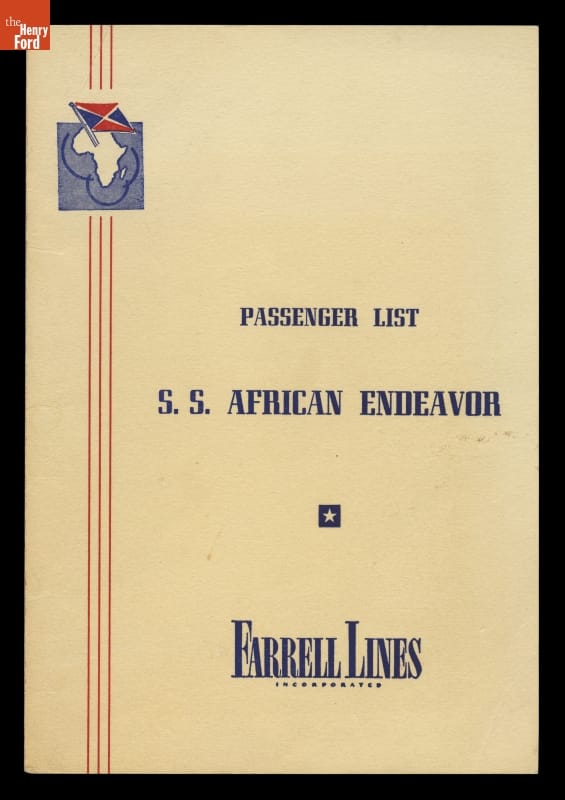
- Passenger List for SS African Endeavor, Farrell Lines, Cape Town to New York, 1954 - Launched in 1939, SS <em>Delbrasil</em> ran between New Orleans and South America. During World War II, the ship became a U.S. Navy troop transport under the name USS <em>George F. Elliott</em>. Following the war, American South African Lines -- later, Farrell Lines -- acquired the ship, rechristened it SS <em>African Endeavor</em>, and operated it between New York City and Cape Town, South Africa.
- 1954
- Collections - Artifact
Passenger List for SS African Endeavor, Farrell Lines, Cape Town to New York, 1954
Launched in 1939, SS Delbrasil ran between New Orleans and South America. During World War II, the ship became a U.S. Navy troop transport under the name USS George F. Elliott. Following the war, American South African Lines -- later, Farrell Lines -- acquired the ship, rechristened it SS African Endeavor, and operated it between New York City and Cape Town, South Africa.
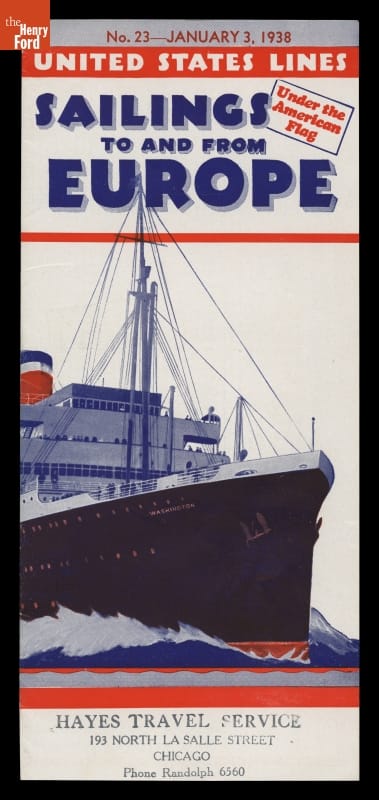
- "United States Lines, Sailings To and From Europe," January 3, 1938 - United States Lines was formed in 1921 and operated transatlantic passenger ocean liners until 1969. In the 1930s, when this brochure was printed, the company built two new liners: <em>Manhattan</em> and <em>Washington</em>. The arrival of transatlantic jet airliners in the late 1950s -- which cut travel time from days to hours -- ended the age of ocean liners.
- January 03, 1938
- Collections - Artifact
"United States Lines, Sailings To and From Europe," January 3, 1938
United States Lines was formed in 1921 and operated transatlantic passenger ocean liners until 1969. In the 1930s, when this brochure was printed, the company built two new liners: Manhattan and Washington. The arrival of transatlantic jet airliners in the late 1950s -- which cut travel time from days to hours -- ended the age of ocean liners.
- Josiah Cummings & Son Case with Photographic Equipment, Used by Isaac Harris, 1906-1919 -
- 1906-1919
- Collections - Artifact
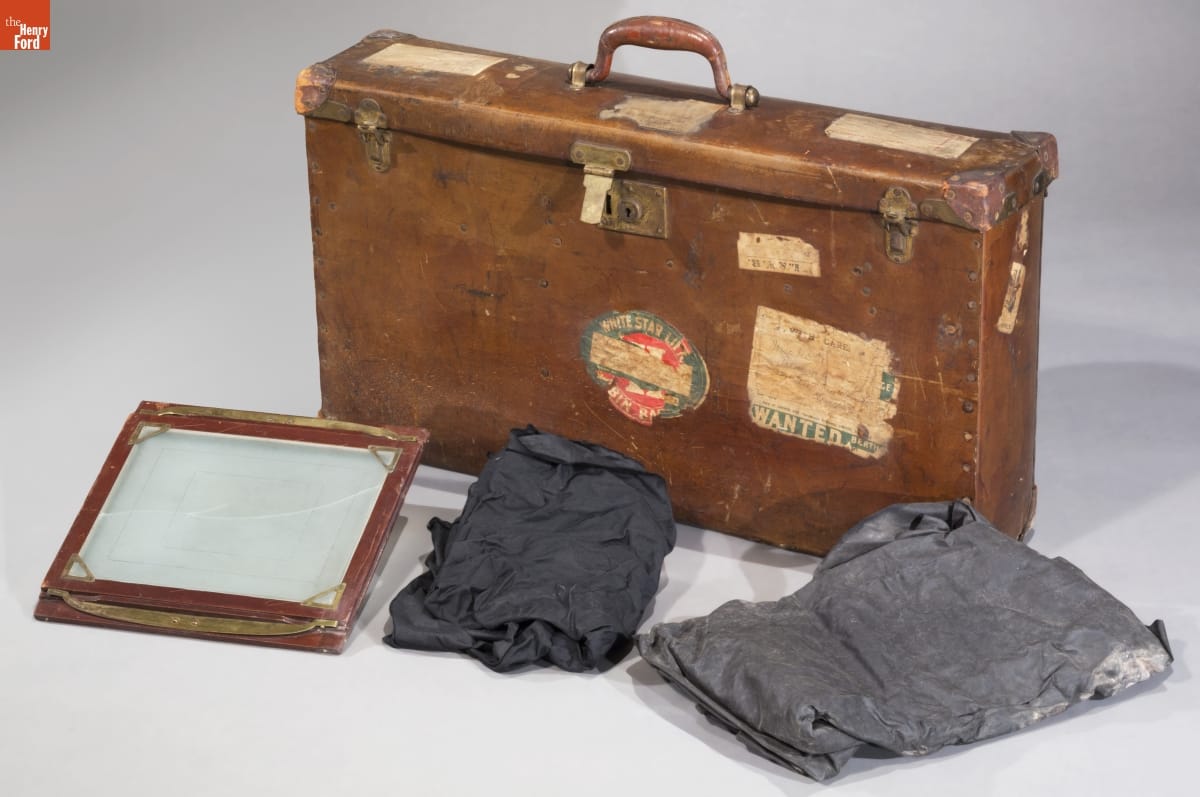
Josiah Cummings & Son Case with Photographic Equipment, Used by Isaac Harris, 1906-1919
- Firestone Family's Return from Europe Prior to Wedding of Martha Firestone and William Clay Ford, June 1947 -
- June 09, 1947
- Collections - Artifact
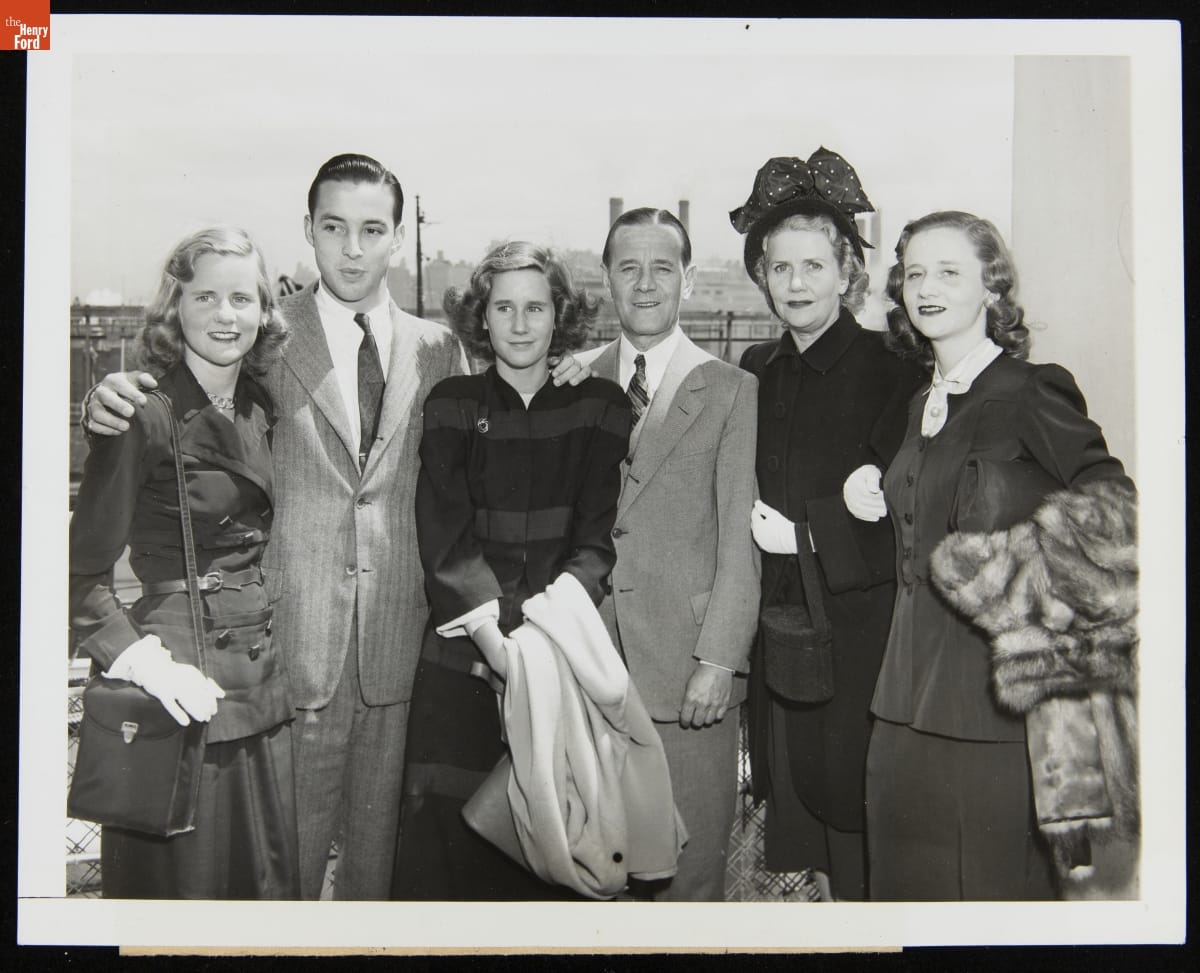
Firestone Family's Return from Europe Prior to Wedding of Martha Firestone and William Clay Ford, June 1947
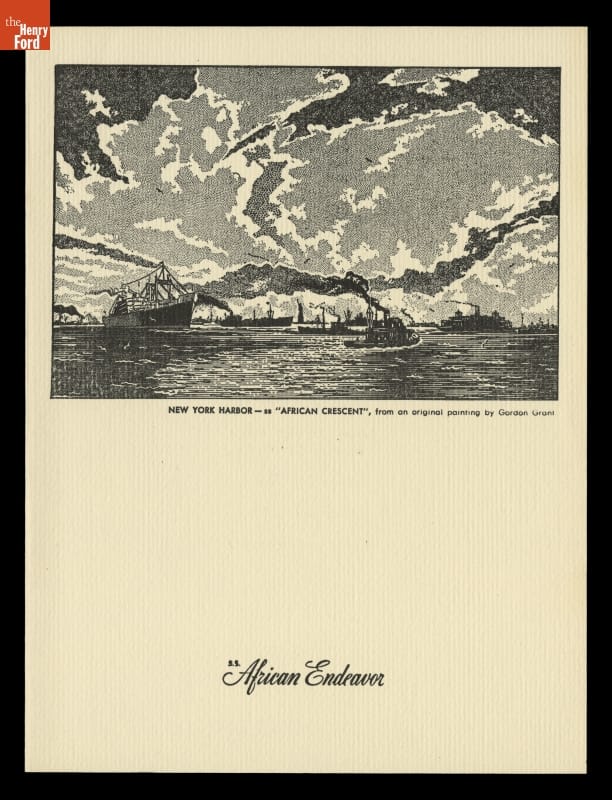
- Menu from the SS African Endeavor, March 12, 1954 -
- March 12, 1954
- Collections - Artifact
Menu from the SS African Endeavor, March 12, 1954
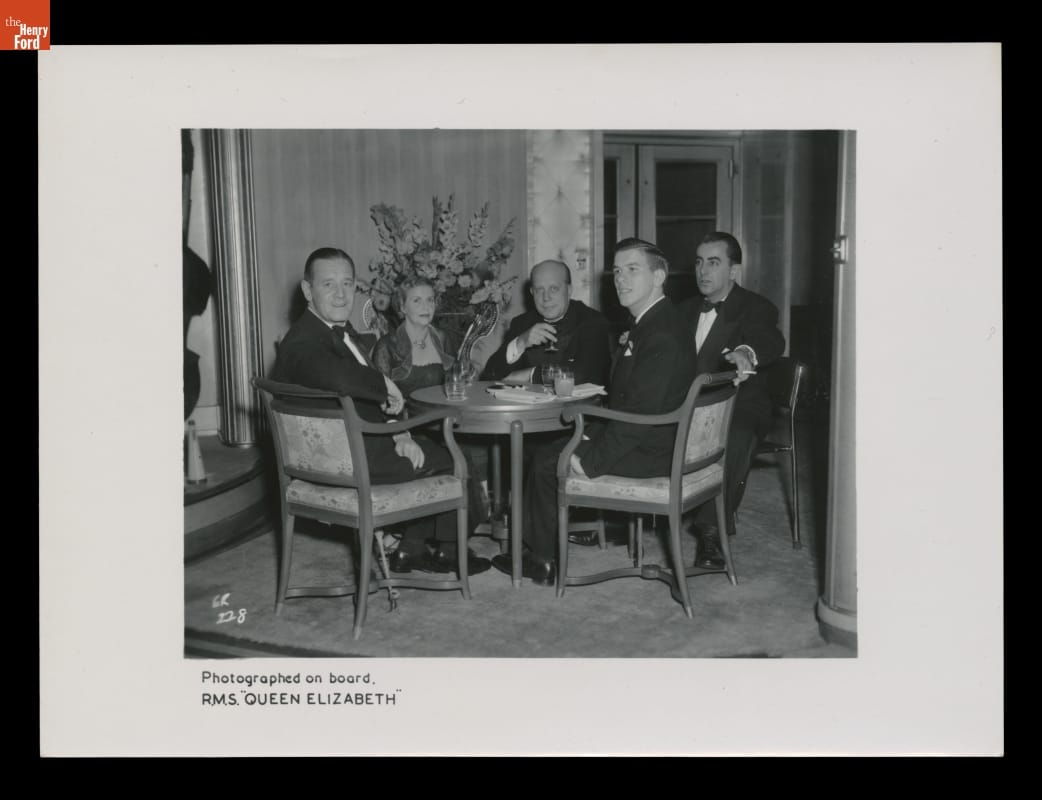
- Elizabeth Parke Firestone, Harvey Firestone, Jr. and Harvey Firestone III with Others on Board the "Queen Elizabeth," October 1950 - The family of Elizabeth Parke Firestone and Harvey Firestone, Jr., traveled aboard the RMS <em>Queen Elizabeth</em> in 1950. Together with its Cunard Line running mate, the RMS <em>Queen Mary</em>, the ocean liner provided weekly express service between Great Britain, France and the United States. The arrival of transatlantic jet airliners in the late 1950s ended the age of ocean liners.
- October 01, 1950
- Collections - Artifact
Elizabeth Parke Firestone, Harvey Firestone, Jr. and Harvey Firestone III with Others on Board the "Queen Elizabeth," October 1950
The family of Elizabeth Parke Firestone and Harvey Firestone, Jr., traveled aboard the RMS Queen Elizabeth in 1950. Together with its Cunard Line running mate, the RMS Queen Mary, the ocean liner provided weekly express service between Great Britain, France and the United States. The arrival of transatlantic jet airliners in the late 1950s ended the age of ocean liners.
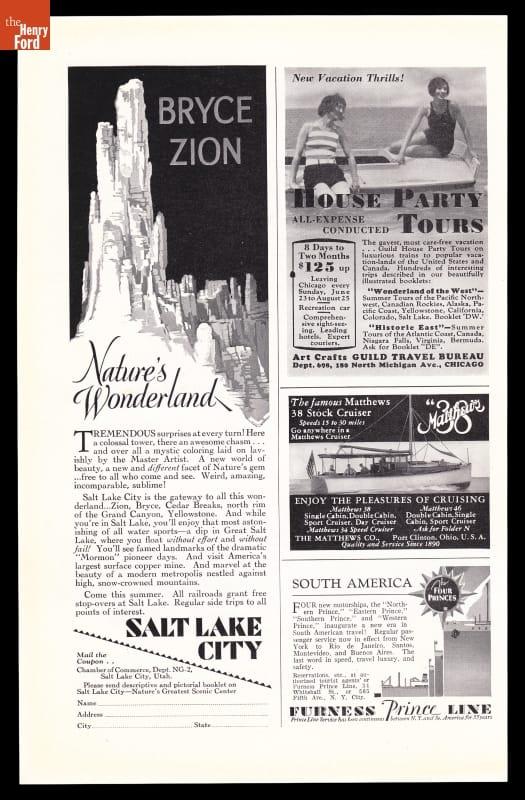
- Furness Prince Steamboat Line Advertisement, "South America," July 1929 - Furness Withy was formed in Hartlepool, England, in 1891. The company operated a fleet of cargo ships and passenger liners, with its passenger ships offering regular transatlantic service between Britain and North America. It acquired the Prince Line -- and its routes between New York City and South America -- in 1916. Furness Withy ended its passenger operations in 1966.
- July 01, 1929
- Collections - Artifact
Furness Prince Steamboat Line Advertisement, "South America," July 1929
Furness Withy was formed in Hartlepool, England, in 1891. The company operated a fleet of cargo ships and passenger liners, with its passenger ships offering regular transatlantic service between Britain and North America. It acquired the Prince Line -- and its routes between New York City and South America -- in 1916. Furness Withy ended its passenger operations in 1966.
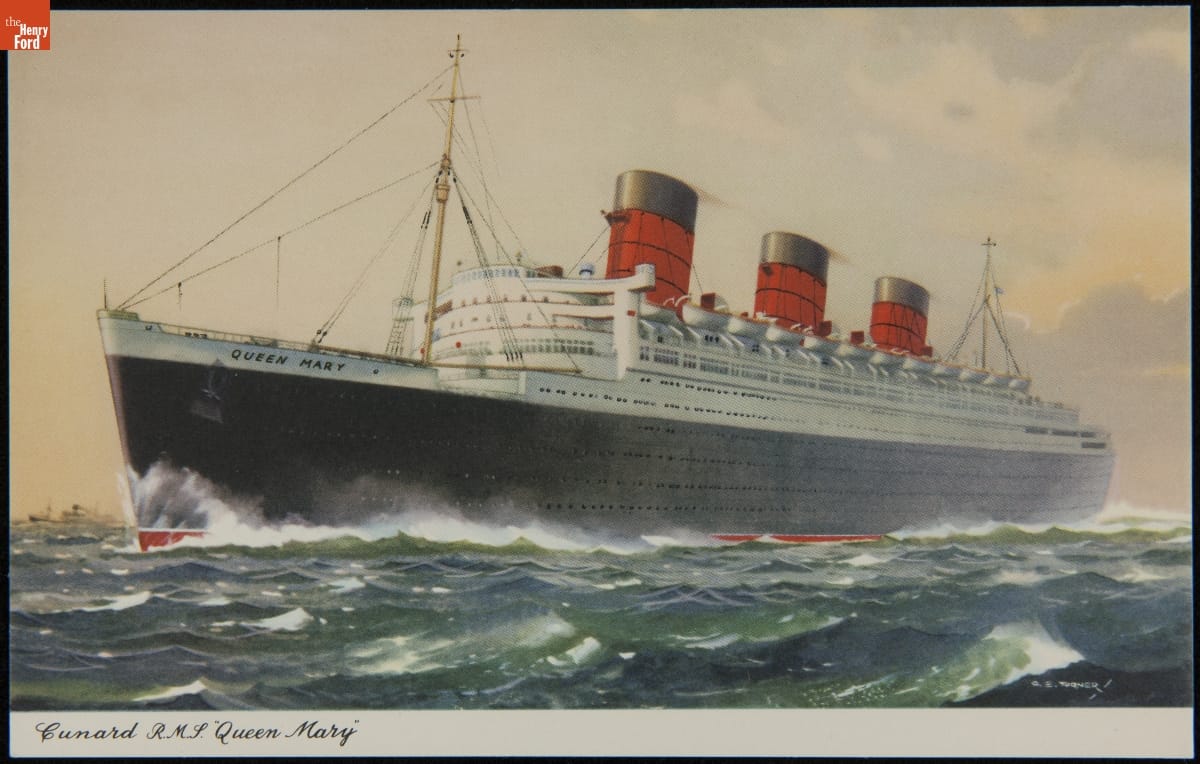
- Postcard, "Cunard RMS Queen Mary," circa 1949 - Cunard White Star Line launched RMS <em>Queen Mary</em> in 1934. Along with its running mate, RMS <em>Queen Elizabeth</em>, the <em>Queen Mary</em> provided weekly express service between Great Britain, France and the United States. The arrival of transatlantic jet airliners in the late 1950s -- which cut travel time from days to hours -- ended the age of ocean liners.
- circa 1949
- Collections - Artifact
Postcard, "Cunard RMS Queen Mary," circa 1949
Cunard White Star Line launched RMS Queen Mary in 1934. Along with its running mate, RMS Queen Elizabeth, the Queen Mary provided weekly express service between Great Britain, France and the United States. The arrival of transatlantic jet airliners in the late 1950s -- which cut travel time from days to hours -- ended the age of ocean liners.
- Advertisement for Summer Travel Rainwear, "Bonnie Cashin Barnstormers," 1952 -
- 1952
- Collections - Artifact
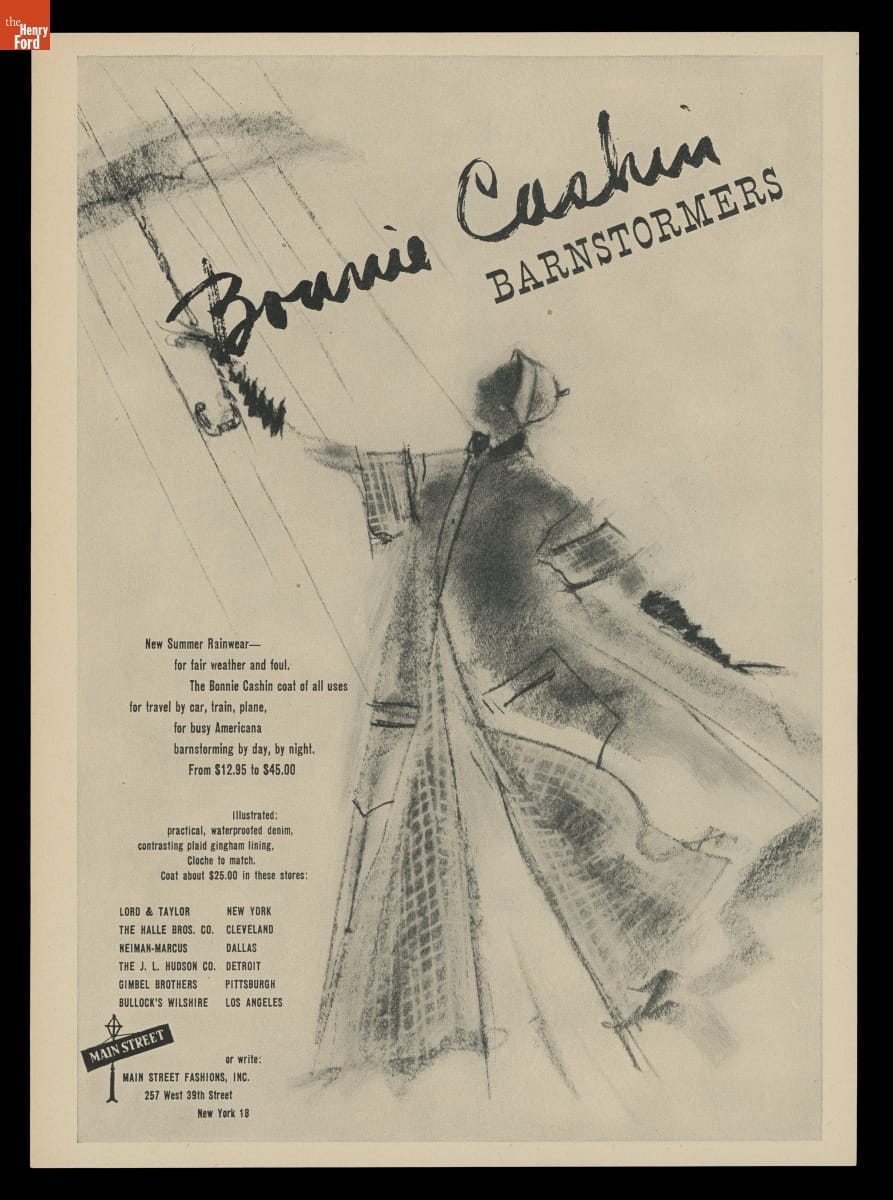
Advertisement for Summer Travel Rainwear, "Bonnie Cashin Barnstormers," 1952
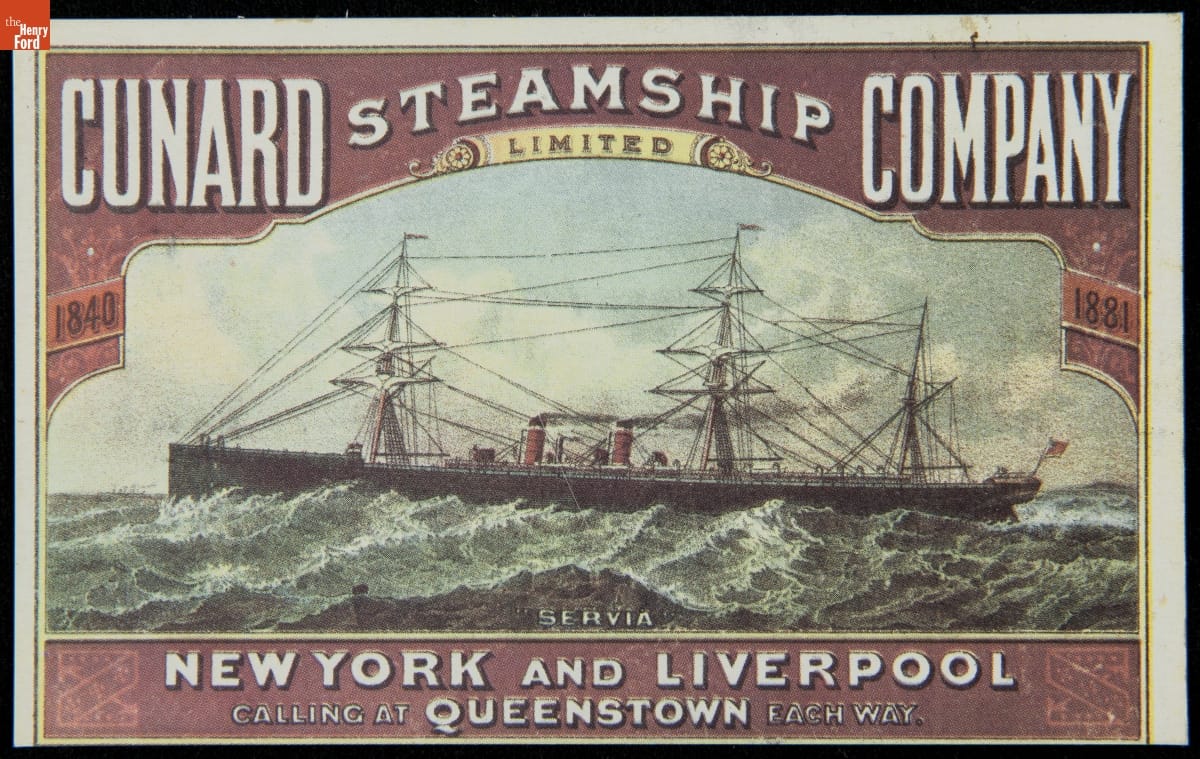
- Trade Card for the Cunard Steamship Company, 1881 - The Cunard Steamship Company Ltd. began its first regularly scheduled transatlantic service in 1840. The 392-ton <em>Servia</em>, built in 1881, was the company's first steel ship and the first in the world to use electric lights. The Cunard line profited through transatlantic trade, mail-carrying, transporting emigrants, and the pampering of first-class passengers who were taking extended pleasure trips.
- 1840-1881
- Collections - Artifact
Trade Card for the Cunard Steamship Company, 1881
The Cunard Steamship Company Ltd. began its first regularly scheduled transatlantic service in 1840. The 392-ton Servia, built in 1881, was the company's first steel ship and the first in the world to use electric lights. The Cunard line profited through transatlantic trade, mail-carrying, transporting emigrants, and the pampering of first-class passengers who were taking extended pleasure trips.