
Search
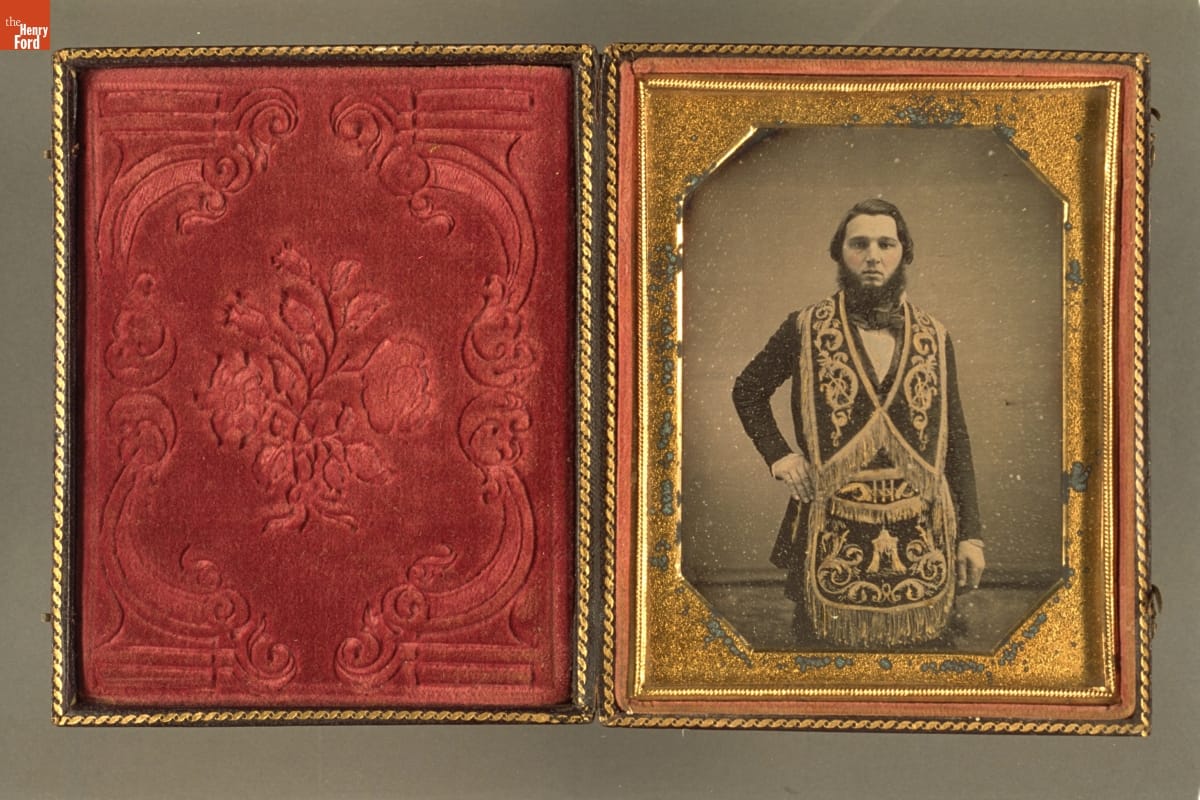
- Member of the Independent Order of Odd Fellows, circa 1850 - The daguerreotype, popular in the early 1840s-late 1850s, was the first form of photography available to the public. Sheets of silver-plated copper--polished to a mirror finish--were bathed in photosensitive vapors, and exposed in cameras. In formal studios and traveling booths, photographers created affordable portraits. For the first time, people saw their likenesses--fixed permanently in time and place.
- circa 1850
- Collections - Artifact
Member of the Independent Order of Odd Fellows, circa 1850
The daguerreotype, popular in the early 1840s-late 1850s, was the first form of photography available to the public. Sheets of silver-plated copper--polished to a mirror finish--were bathed in photosensitive vapors, and exposed in cameras. In formal studios and traveling booths, photographers created affordable portraits. For the first time, people saw their likenesses--fixed permanently in time and place.
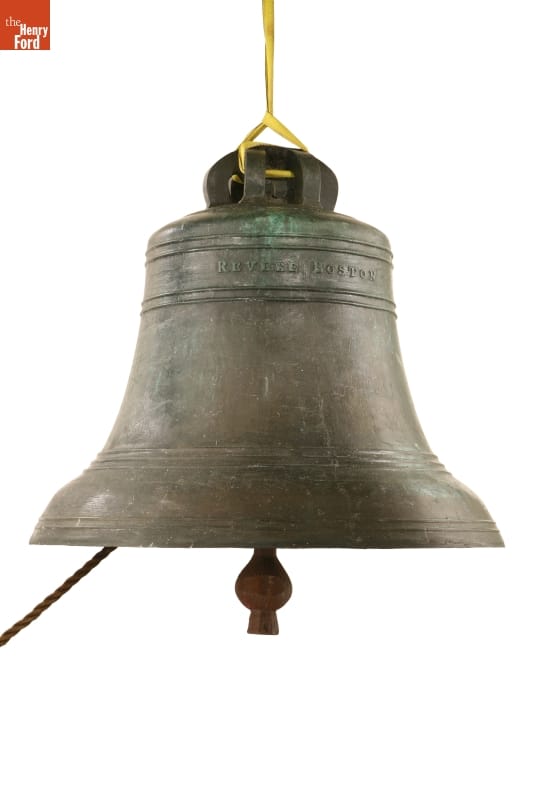
- Bell, Cast by Joseph Warren Revere, circa 1834 - Joseph Warren Revere cast this bell circa 1834. Revere was the son of the famous silversmith Paul Revere who had an extensive knowledge of metallurgy and opened his own foundry in 1792. This bell hung in the belfry of the Universalist Church in Hingham, Massachusetts, from 1834 to 1927, before being installed at the Martha-Mary Chapel in Greenfield Village.
- circa 1834
- Collections - Artifact
Bell, Cast by Joseph Warren Revere, circa 1834
Joseph Warren Revere cast this bell circa 1834. Revere was the son of the famous silversmith Paul Revere who had an extensive knowledge of metallurgy and opened his own foundry in 1792. This bell hung in the belfry of the Universalist Church in Hingham, Massachusetts, from 1834 to 1927, before being installed at the Martha-Mary Chapel in Greenfield Village.