
Search
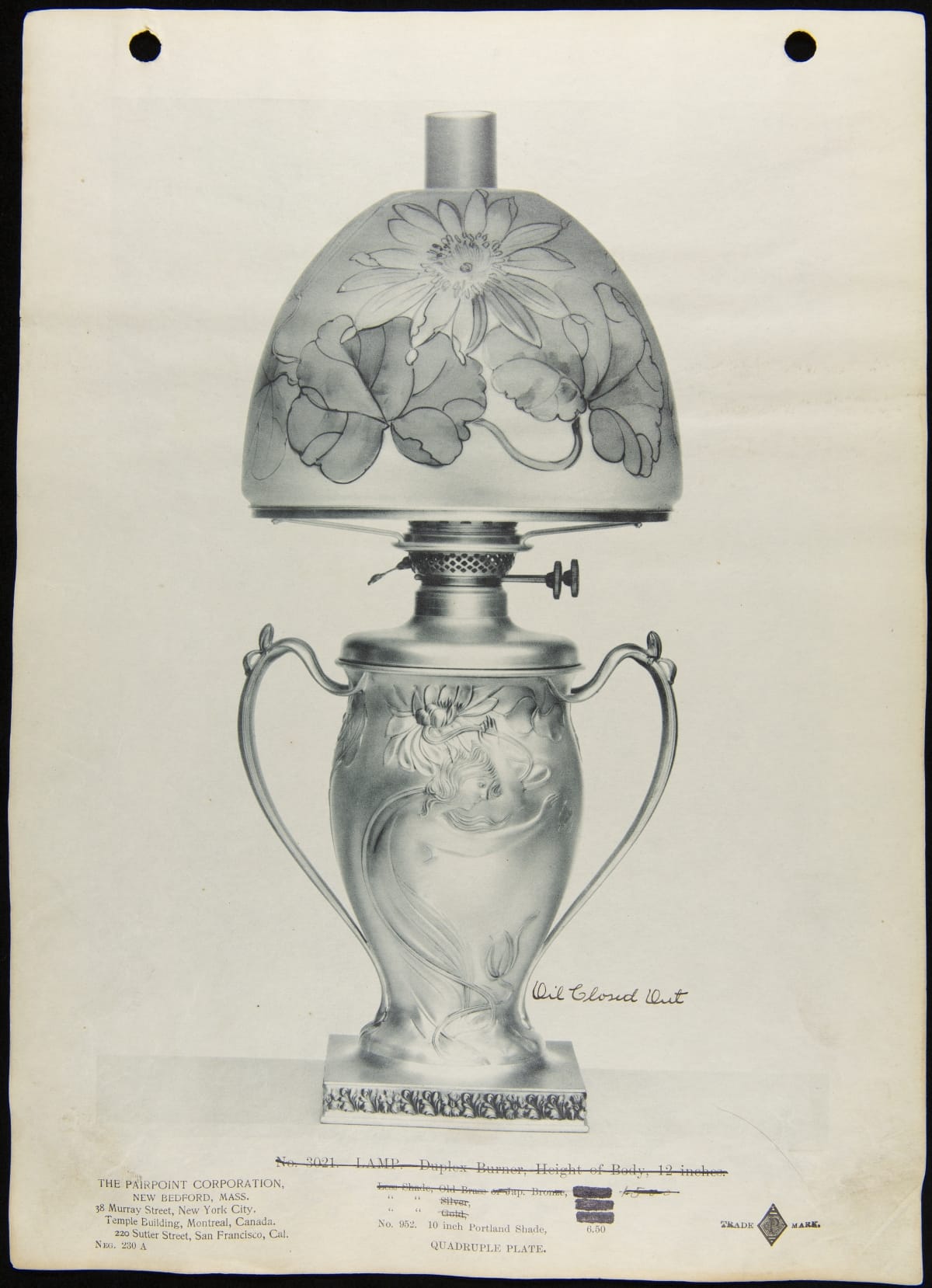
- Trade Literature for Pairpoint Oil Lamp No. 3021, 1899-1907 - In the early 1890s, Louis Comfort Tiffany applied the emerging Art Nouveau style to lighting products. They became so popular that other companies -- especially the Pairpoint Corporation of New Bedford, Massachusetts -- produced lamps to rival Tiffany's. The undulating lines, botanical motifs, and female figure encircling the Pairpoint lamp depicted here are characteristic of Art Nouveau aesthetics.
- 1899-1907
- Collections - Artifact
Trade Literature for Pairpoint Oil Lamp No. 3021, 1899-1907
In the early 1890s, Louis Comfort Tiffany applied the emerging Art Nouveau style to lighting products. They became so popular that other companies -- especially the Pairpoint Corporation of New Bedford, Massachusetts -- produced lamps to rival Tiffany's. The undulating lines, botanical motifs, and female figure encircling the Pairpoint lamp depicted here are characteristic of Art Nouveau aesthetics.
- Whale Oil Lamp, 1813-1830 -
- 1813-1830
- Collections - Artifact
Whale Oil Lamp, 1813-1830
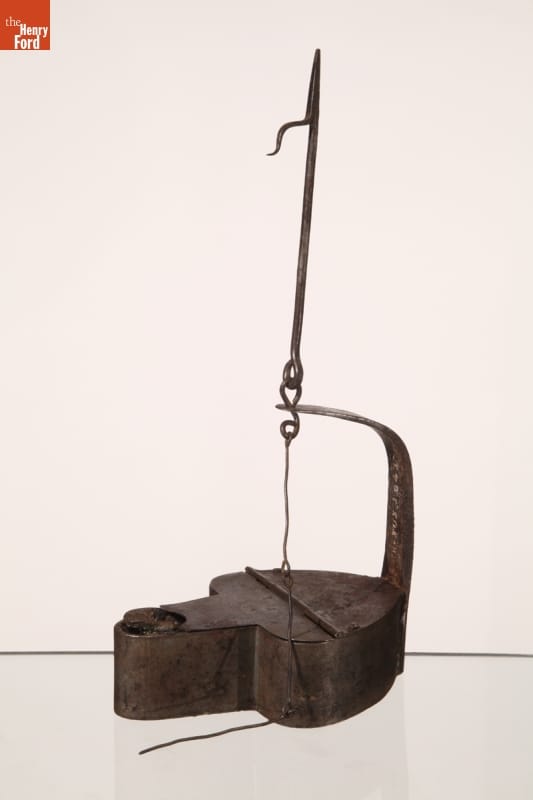
- Betty Lamp, 1841 - Betty lamps were one of the earliest forms of American lighting, burning grease and fat. They could be hung or placed on a table. The flame projected from the spout on the front of the lamp. Lamps usually came with a wick pick should the wick need adjustment. This is a late example; by the 1840s, the preferred fuel was whale oil.
- 1841
- Collections - Artifact
Betty Lamp, 1841
Betty lamps were one of the earliest forms of American lighting, burning grease and fat. They could be hung or placed on a table. The flame projected from the spout on the front of the lamp. Lamps usually came with a wick pick should the wick need adjustment. This is a late example; by the 1840s, the preferred fuel was whale oil.
- Betty Lamp, circa 1800 -
- circa 1800
- Collections - Artifact
Betty Lamp, circa 1800
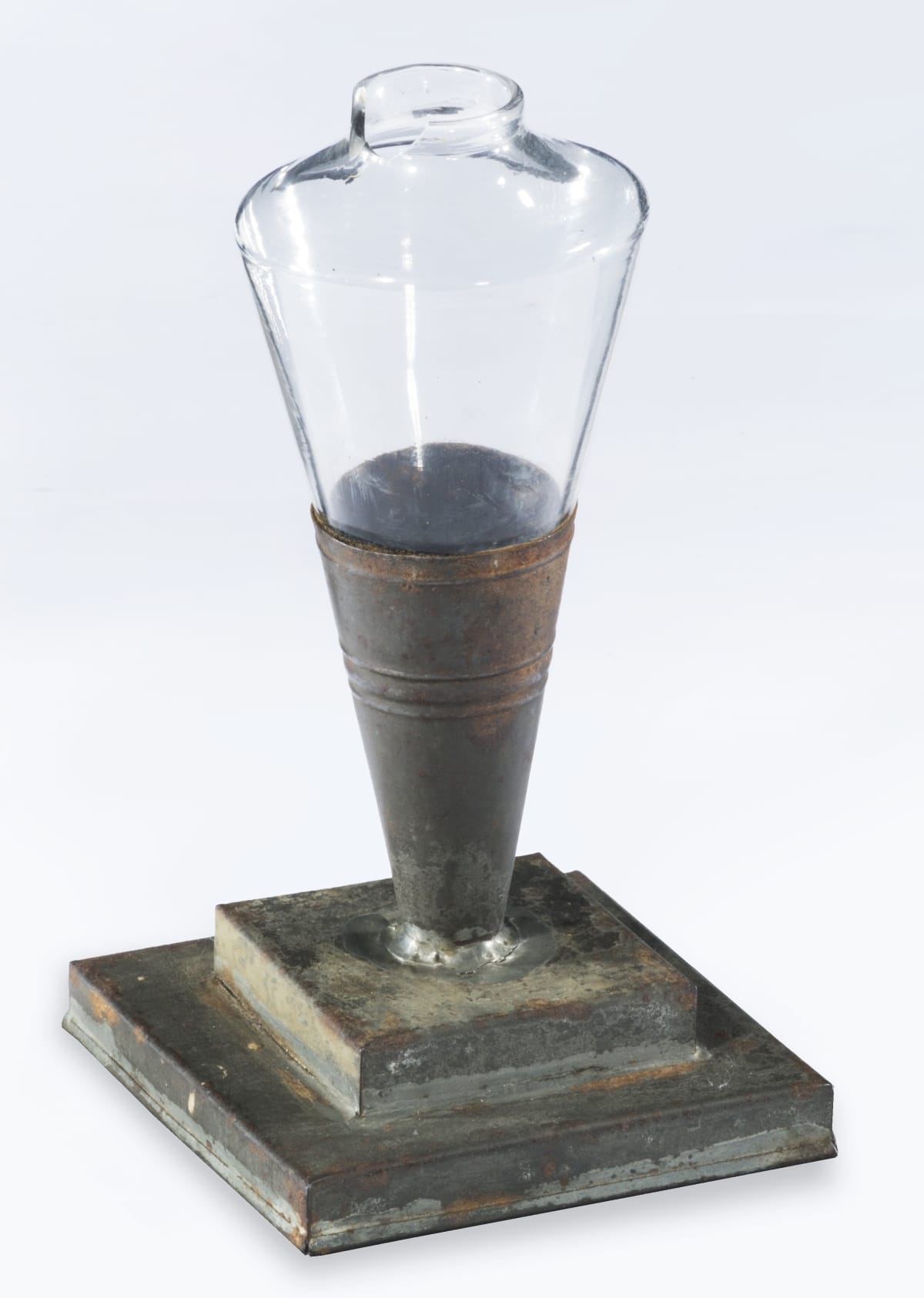
- Whale Oil Lamp, circa 1850 - Traditional make-dos are useful and precious objects that broke during their working lives. Their owners felt compelled to restore or repurpose these objects in a variety of ways. The glass base of this lamp broke and it was given a new base made of tin.
- circa 1850
- Collections - Artifact
Whale Oil Lamp, circa 1850
Traditional make-dos are useful and precious objects that broke during their working lives. Their owners felt compelled to restore or repurpose these objects in a variety of ways. The glass base of this lamp broke and it was given a new base made of tin.
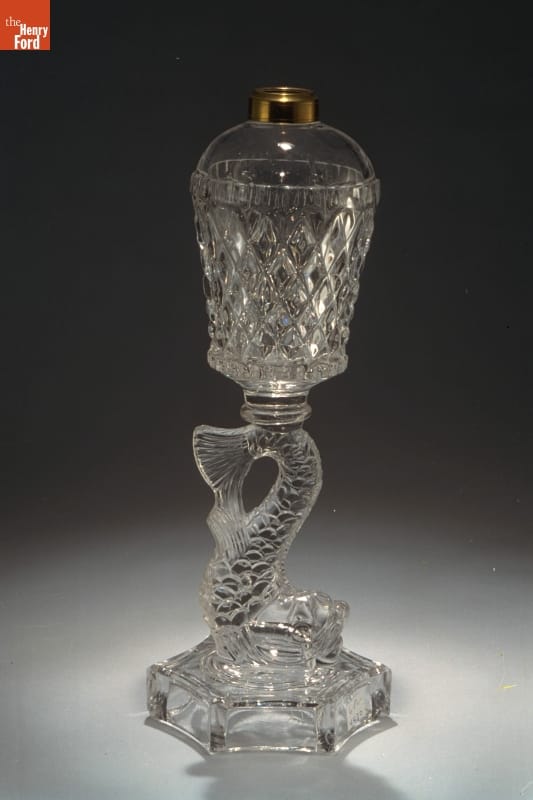
- Oil Lamp, 1850-1860 -
- 1850-1860
- Collections - Artifact
Oil Lamp, 1850-1860
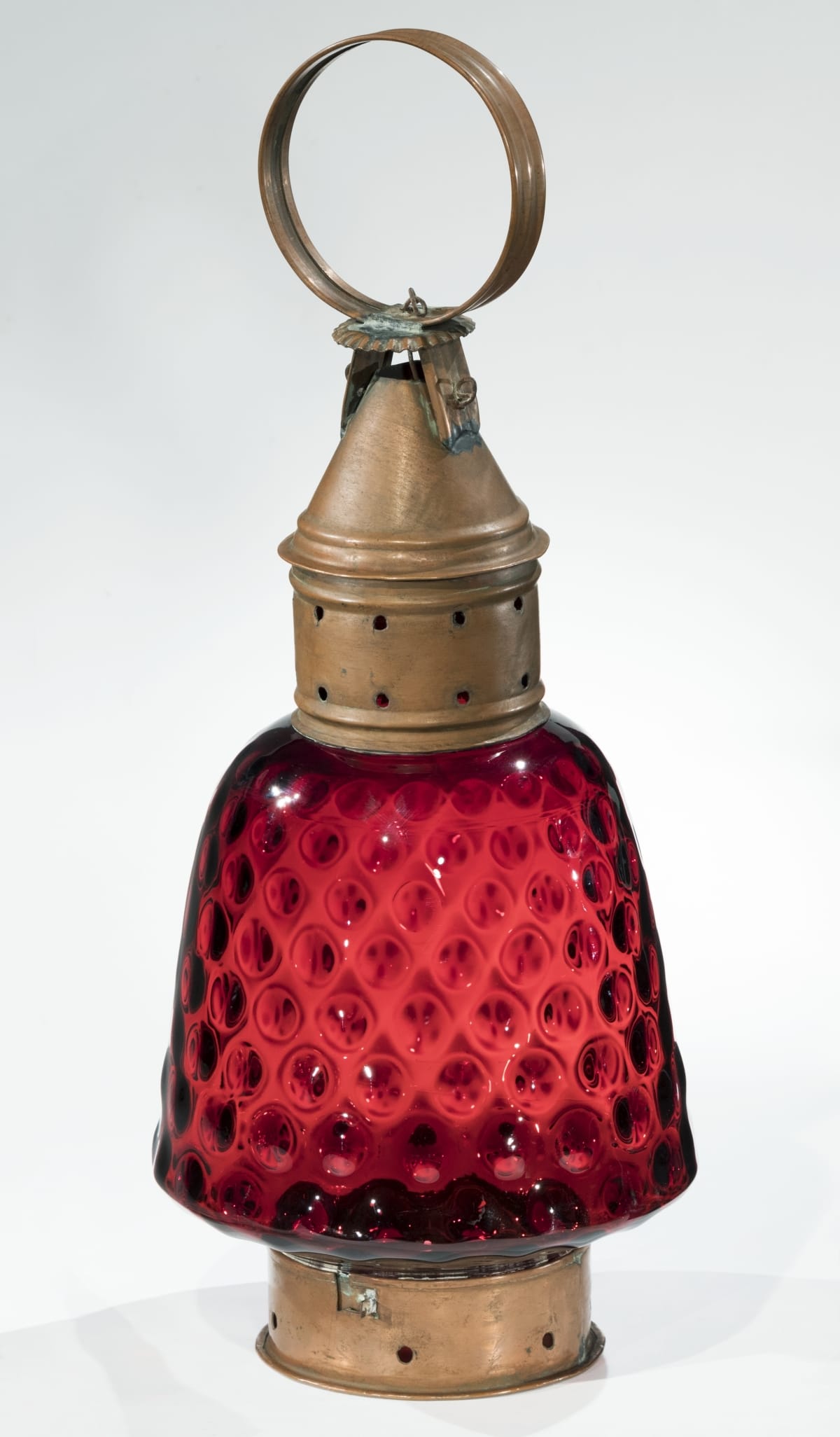
- Lantern, circa 1890 - Traditional make-dos are useful and precious objects that broke during their working lives. Their owners felt compelled to restore or repurpose these objects in a variety of ways. This lantern has a pressed glass chimney--that was originally a vase.
- circa 1890
- Collections - Artifact
Lantern, circa 1890
Traditional make-dos are useful and precious objects that broke during their working lives. Their owners felt compelled to restore or repurpose these objects in a variety of ways. This lantern has a pressed glass chimney--that was originally a vase.
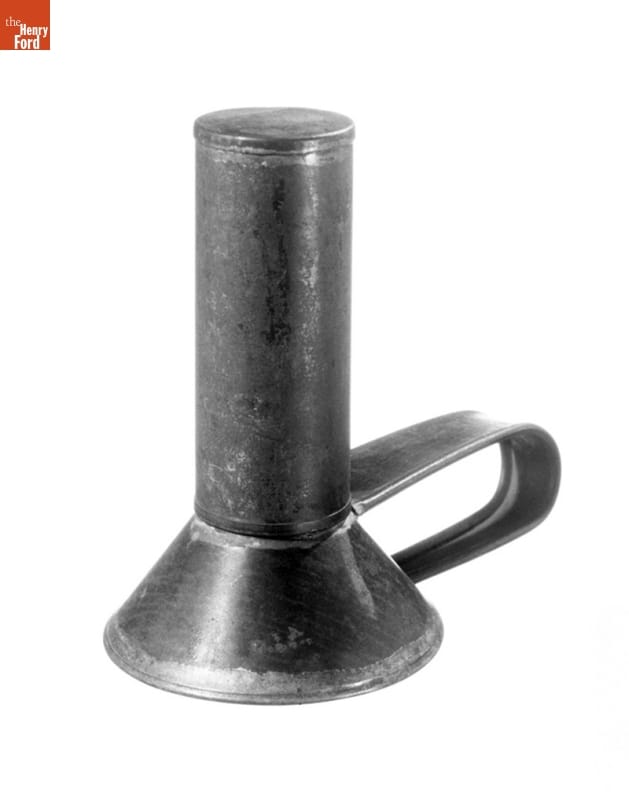
- Hand Lamp, circa 1830 - The United Society of Believers in Christ's Second Appearing, commonly known as the Shakers, is a religious sect begun in the late 1700s. Members banded together into small, mostly self-sufficient, communal enclaves scattered from Maine to Kentucky. Shaker craftsmen fashioned household furnishings with plain lines, little ornamentation, and painted or stained in a uniform color. Their craftsmanship expressed honesty, simplicity, and utility--in keeping with the guiding principles of the Shaker faith.
- circa 1830
- Collections - Artifact
Hand Lamp, circa 1830
The United Society of Believers in Christ's Second Appearing, commonly known as the Shakers, is a religious sect begun in the late 1700s. Members banded together into small, mostly self-sufficient, communal enclaves scattered from Maine to Kentucky. Shaker craftsmen fashioned household furnishings with plain lines, little ornamentation, and painted or stained in a uniform color. Their craftsmanship expressed honesty, simplicity, and utility--in keeping with the guiding principles of the Shaker faith.
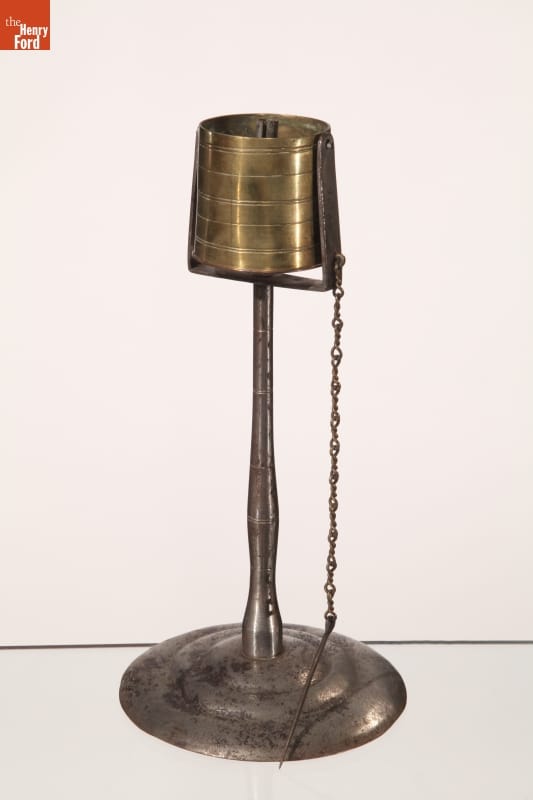
- Kettle Lamp, 1855 - Peter Derr, a well-known lighting maker and metal worker, initialed and dated this lamp. The decoration on the base and twisted chain are typical of Derr's work. It features a swinging cylindrical font called a "Gallows." Allowing the user to tip the font, the "Gallows" provided constant fuel to the wick, thus maintaining the flame.
- 1855
- Collections - Artifact
Kettle Lamp, 1855
Peter Derr, a well-known lighting maker and metal worker, initialed and dated this lamp. The decoration on the base and twisted chain are typical of Derr's work. It features a swinging cylindrical font called a "Gallows." Allowing the user to tip the font, the "Gallows" provided constant fuel to the wick, thus maintaining the flame.
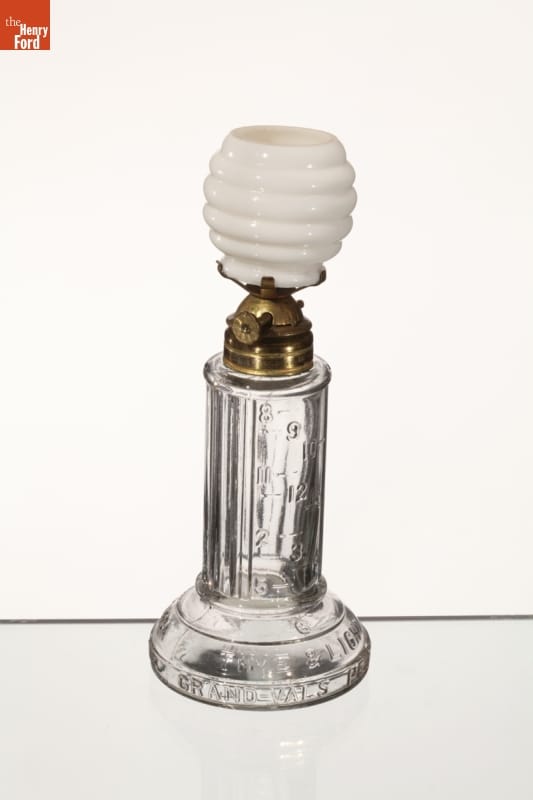
- Grand-Val's Perfect Time Indicating Lamp, circa 1880 - Time lamps are much like today's night lights; mainly used in bedrooms. Hour numerals are pressed into the glass reservoir. As the kerosene burned overnight, the diminishing fuel was supposed to indicate the time. Though a clever novelty, they proved unreliable, as the level of consumption was inconsistent.
- circa 1880
- Collections - Artifact
Grand-Val's Perfect Time Indicating Lamp, circa 1880
Time lamps are much like today's night lights; mainly used in bedrooms. Hour numerals are pressed into the glass reservoir. As the kerosene burned overnight, the diminishing fuel was supposed to indicate the time. Though a clever novelty, they proved unreliable, as the level of consumption was inconsistent.