
Search
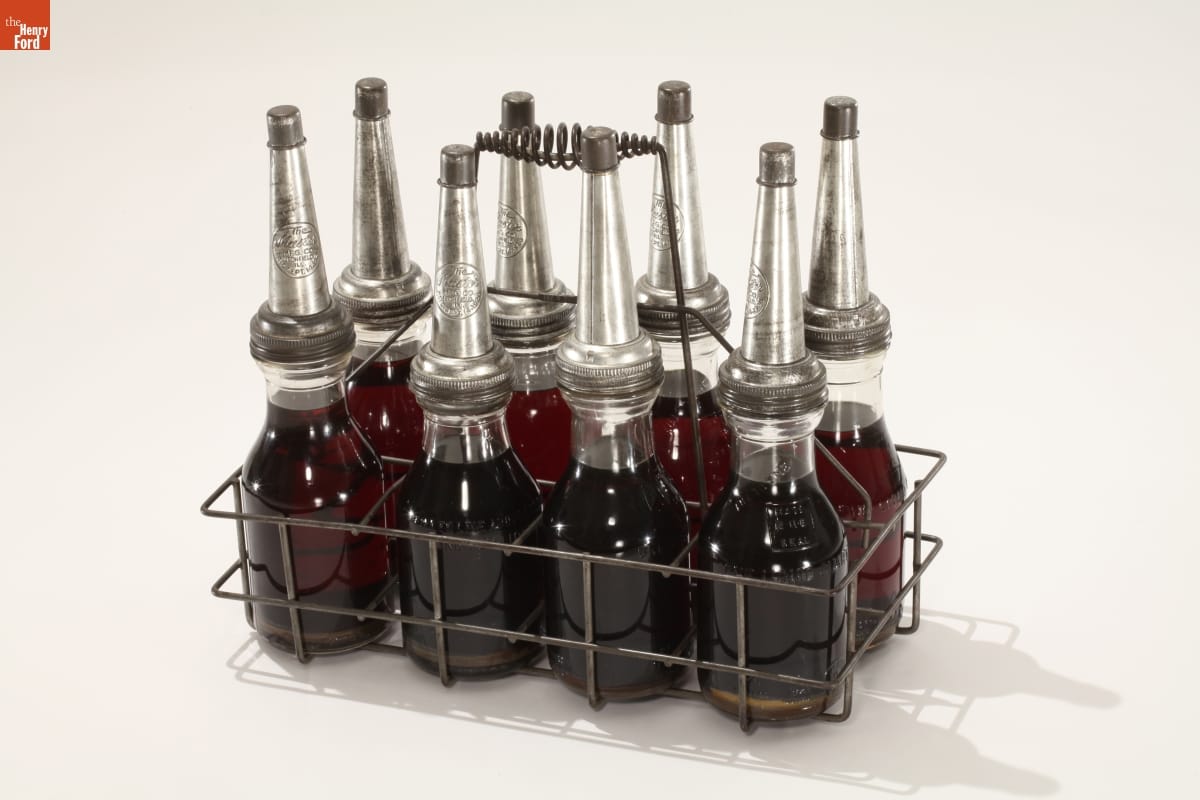
- Oil Rack and Bottles, 1926-1950 - Electric gas pumps gave station attendants more time to focus on customer service. Attendants would wash windows, check tire pressures, polish radiators, look for loose hoses or belts under the hood, and check and fill oil as needed. By the 1930s, many gas stations offered complete oil changes -- a welcome new revenue source during the Great Depression.
- 1926-1950
- Collections - Artifact
Oil Rack and Bottles, 1926-1950
Electric gas pumps gave station attendants more time to focus on customer service. Attendants would wash windows, check tire pressures, polish radiators, look for loose hoses or belts under the hood, and check and fill oil as needed. By the 1930s, many gas stations offered complete oil changes -- a welcome new revenue source during the Great Depression.
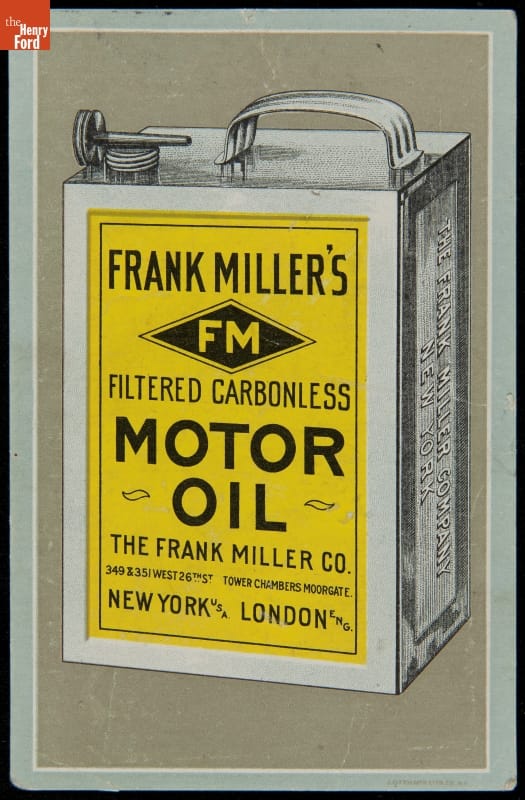
- Trade Card for Frank Miller's Filtered Carbonless Motor Oil, Frank Miller Co., 1910-1930 - In the last third of the nineteenth century, American consumers could choose from an unprecedented variety of goods and services. Seeking to distinguish certain products and businesses from the competition, advertisers began to print and distribute trade cards. Though the popularity of these cards diminished after 1900, some companies employed the informative, often vibrant little advertisements well into the twentieth century.
- 1910-1930
- Collections - Artifact
Trade Card for Frank Miller's Filtered Carbonless Motor Oil, Frank Miller Co., 1910-1930
In the last third of the nineteenth century, American consumers could choose from an unprecedented variety of goods and services. Seeking to distinguish certain products and businesses from the competition, advertisers began to print and distribute trade cards. Though the popularity of these cards diminished after 1900, some companies employed the informative, often vibrant little advertisements well into the twentieth century.
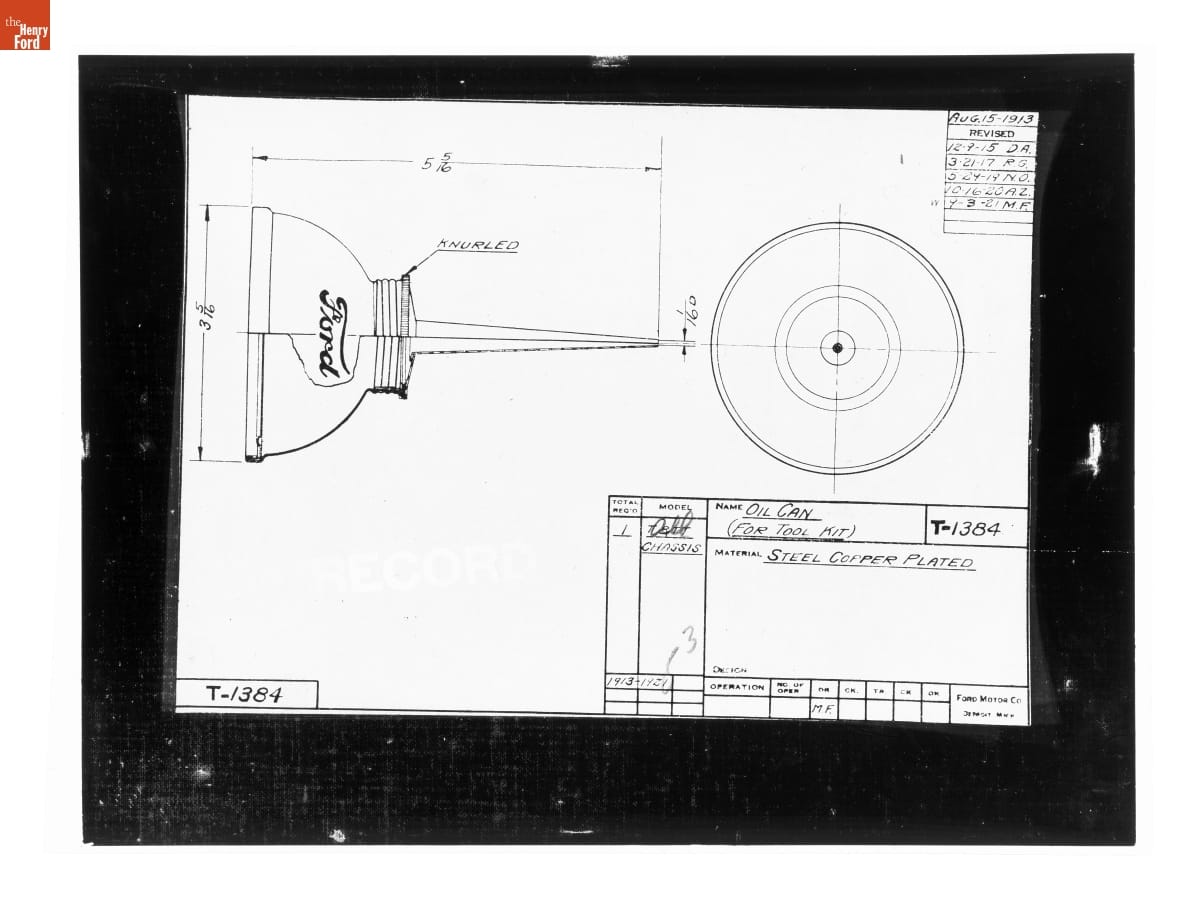
- Drawing, "Oil Can (for Tool Kit)," Ford Model T, September 3, 1921 - The Ford Motor Company created over a million parts drawings from 1903 to 1957. Many of these drawings specify engineering requirements for the components of Ford-made vehicles--including automobiles, trucks, tractors, military vehicles and Tri-motor airplanes. Others document assembly components, stages of casting and forging, or experimental designs. Beginning in the 1940s, Ford transferred the drawings to microfilm.
- September 03, 1921
- Collections - Artifact
Drawing, "Oil Can (for Tool Kit)," Ford Model T, September 3, 1921
The Ford Motor Company created over a million parts drawings from 1903 to 1957. Many of these drawings specify engineering requirements for the components of Ford-made vehicles--including automobiles, trucks, tractors, military vehicles and Tri-motor airplanes. Others document assembly components, stages of casting and forging, or experimental designs. Beginning in the 1940s, Ford transferred the drawings to microfilm.
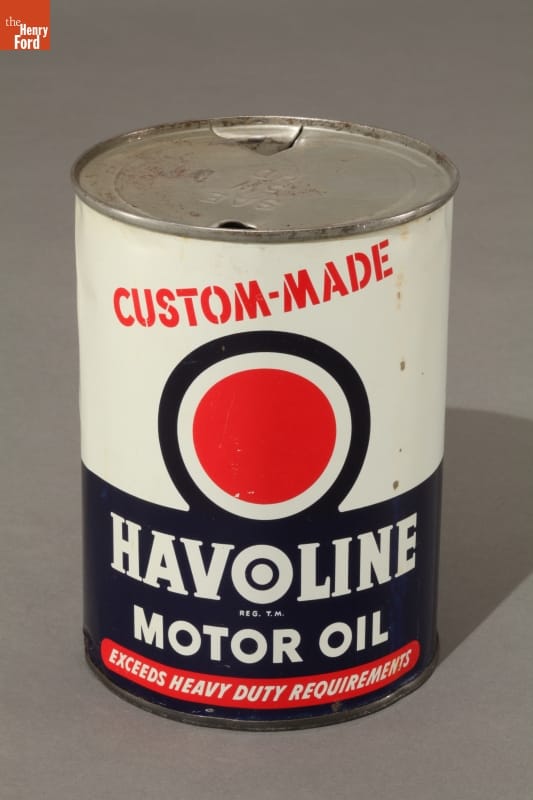
- Havoline Oil Can, 1942-1949 -
- 1942-1949
- Collections - Artifact
Havoline Oil Can, 1942-1949
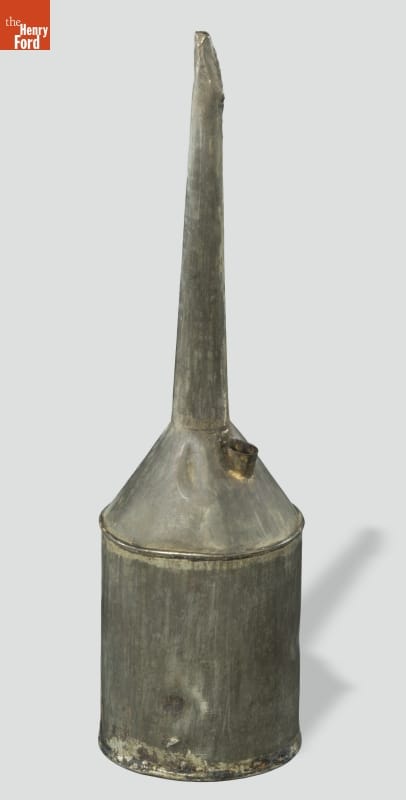
- Oilcan -
- Collections - Artifact
Oilcan
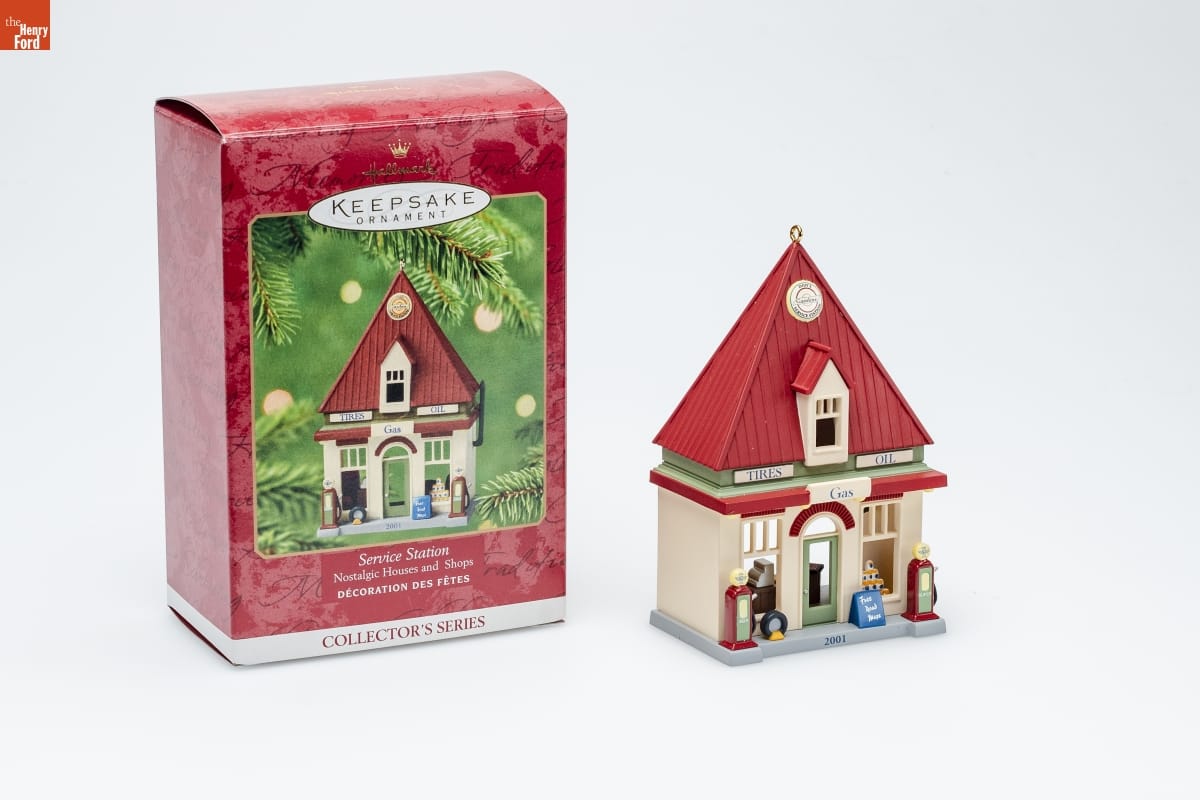
- Hallmark "Nostalgic Houses and Shops Series: Service Station" Christmas Ornament, 2001 - Hallmark's "Nostalgic Houses and Shops" ornament series reflects a centuries-old Christmas tradition of placing small buildings under the tree to create tiny "villages." It began in 1984 and is one of Hallmark's longest-running series. Hung on the tree, these ornaments--depicting homes, stores, and other buildings--evoke small-town American life in days gone by.
- 2001
- Collections - Artifact
Hallmark "Nostalgic Houses and Shops Series: Service Station" Christmas Ornament, 2001
Hallmark's "Nostalgic Houses and Shops" ornament series reflects a centuries-old Christmas tradition of placing small buildings under the tree to create tiny "villages." It began in 1984 and is one of Hallmark's longest-running series. Hung on the tree, these ornaments--depicting homes, stores, and other buildings--evoke small-town American life in days gone by.
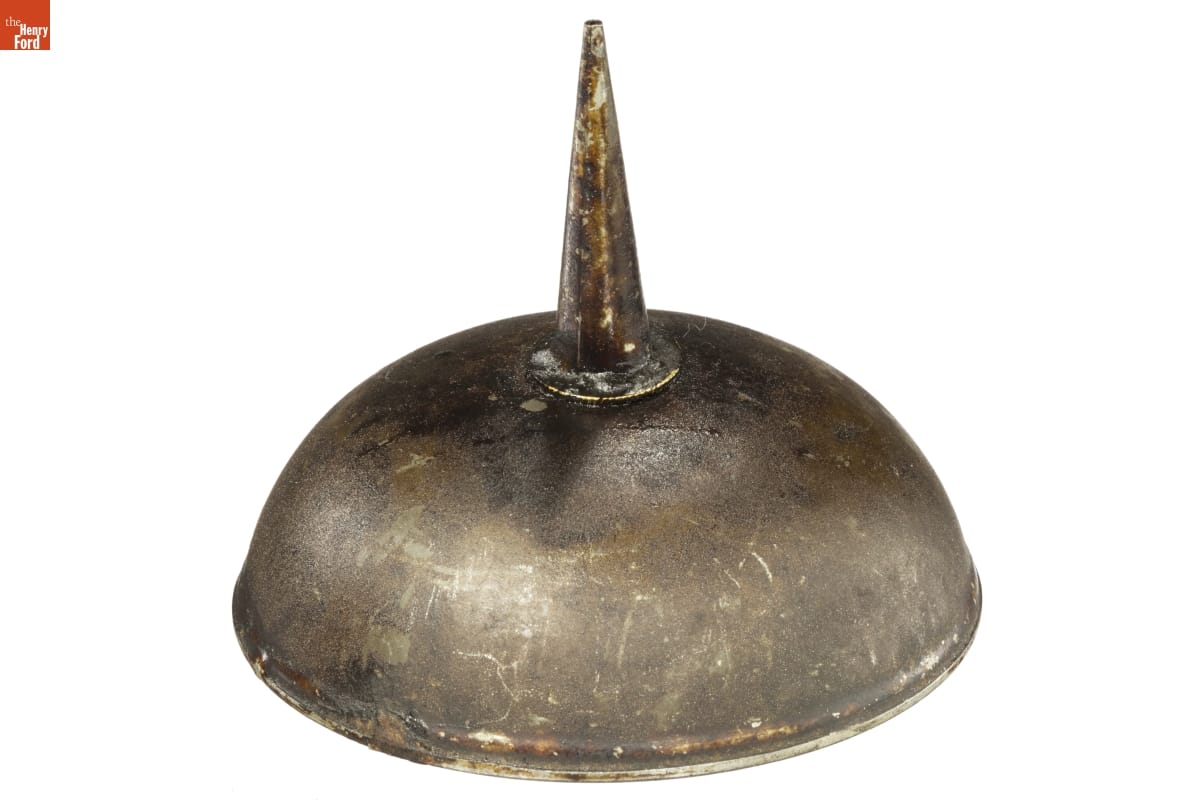
- Oilcan -
- Collections - Artifact
Oilcan
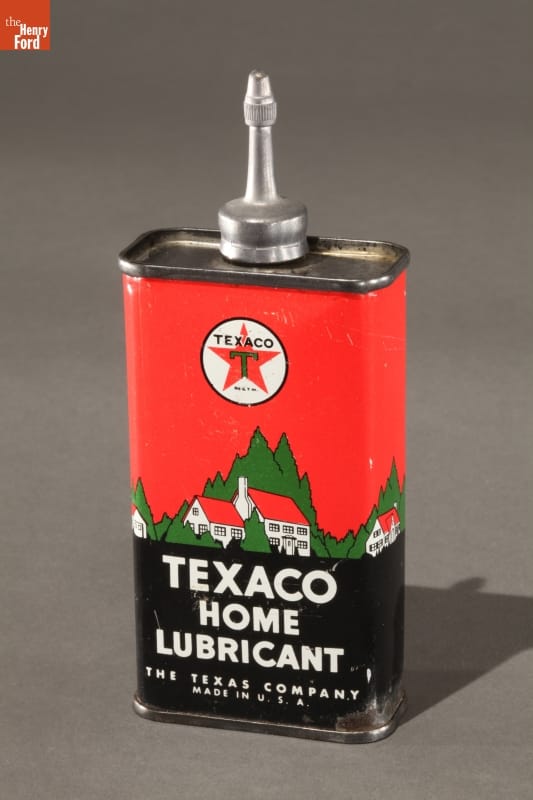
- Texaco Home Lubricant Can, 1930-1950 - The Texas Company, better known as Texaco, had its roots in the Spindletop, Texas, oil strike of 1901. While most of its competitors focused on regional markets prior to World War II, Texaco built itself into a national brand. By 1942, the company had 40,000 outlets across the United States. Texaco sold everything from gasoline to motor oil to household lubricants.
- 1930-1950
- Collections - Artifact
Texaco Home Lubricant Can, 1930-1950
The Texas Company, better known as Texaco, had its roots in the Spindletop, Texas, oil strike of 1901. While most of its competitors focused on regional markets prior to World War II, Texaco built itself into a national brand. By 1942, the company had 40,000 outlets across the United States. Texaco sold everything from gasoline to motor oil to household lubricants.
- Oil Can, 1930-1960 -
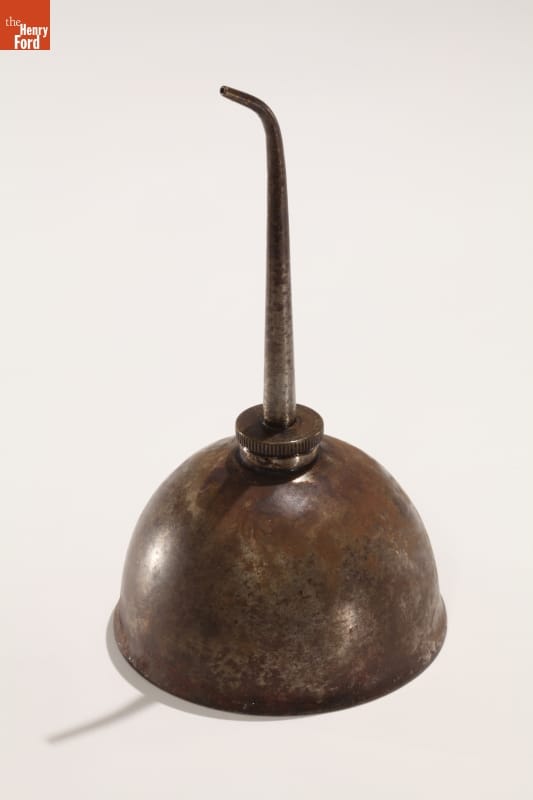
- 1930-1960
- Collections - Artifact
Oil Can, 1930-1960
- Texaco Insulated Motor Oil Sign, circa 1939 - The Texas Company, better known as Texaco, had its roots in the Spindletop, Texas, oil strike of 1901. While most of its competitors focused on regional markets prior to World War II, Texaco built itself into a national brand. By 1942, the company had 40,000 outlets across the United States. Texaco sold everything from gasoline to motor oil to household lubricants.
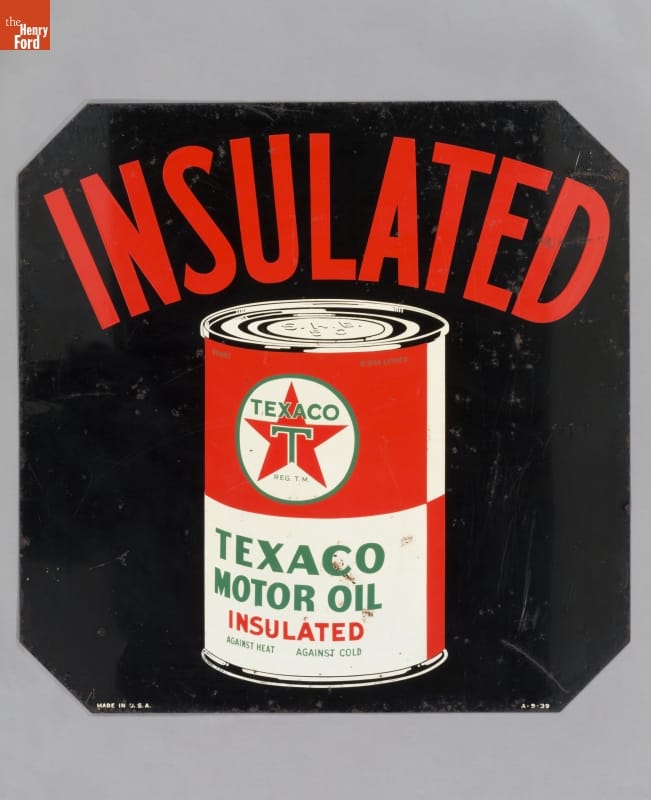
- circa 1939
- Collections - Artifact
Texaco Insulated Motor Oil Sign, circa 1939
The Texas Company, better known as Texaco, had its roots in the Spindletop, Texas, oil strike of 1901. While most of its competitors focused on regional markets prior to World War II, Texaco built itself into a national brand. By 1942, the company had 40,000 outlets across the United States. Texaco sold everything from gasoline to motor oil to household lubricants.