
Search
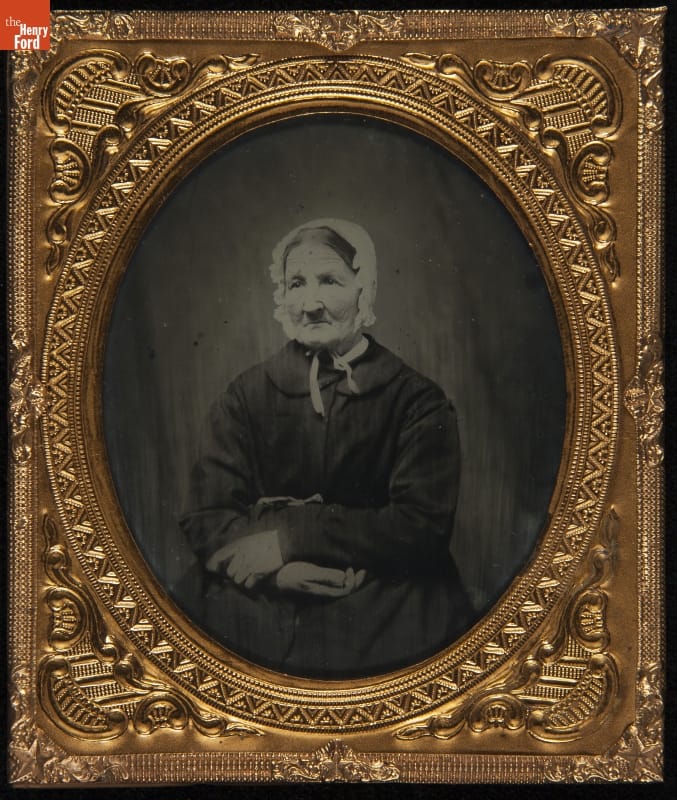
- Older Woman in Plain Dress and Day Cap, circa 1865 - Ambrotypes (meaning, "imperishable pictures") were popular in the mid-1850s through the 1860s. Glass plates coated with photosensitive collodion were exposed in cameras while wet. The resulting image on glass, backed with black material, appeared as a photographic positive. Ambrotypes replaced daguerrotypes as an affordable and convenient alternative; however, improvements in photographic processes soon led to widespread adoption of the tintype.
- circa 1860
- Collections - Artifact
Older Woman in Plain Dress and Day Cap, circa 1865
Ambrotypes (meaning, "imperishable pictures") were popular in the mid-1850s through the 1860s. Glass plates coated with photosensitive collodion were exposed in cameras while wet. The resulting image on glass, backed with black material, appeared as a photographic positive. Ambrotypes replaced daguerrotypes as an affordable and convenient alternative; however, improvements in photographic processes soon led to widespread adoption of the tintype.
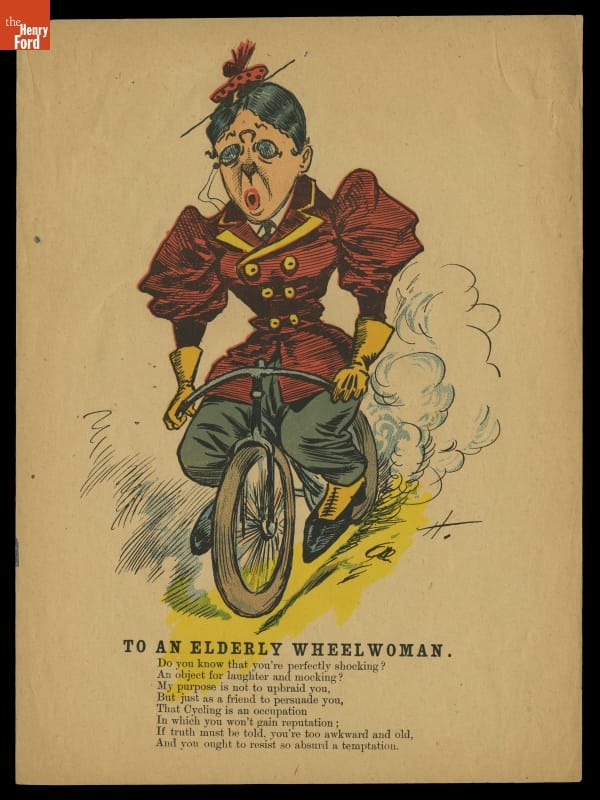
- Comic Valentine, "To an Elderly Wheelwoman," circa 1895 - From the 1840s into the early 1900s, some people sent inexpensive Valentine's Day greetings that chided, warned, or insulted the recipient. An exaggerated, often garish cartoon and short verse described and dismissed someone's looks, intelligence, personality, or behavior. Within the atmosphere of a festive holiday, under the cover of humor, these "vinegar valentines" were acceptable critiques of behaviors that deviated from social norms.
- circa 1895
- Collections - Artifact
Comic Valentine, "To an Elderly Wheelwoman," circa 1895
From the 1840s into the early 1900s, some people sent inexpensive Valentine's Day greetings that chided, warned, or insulted the recipient. An exaggerated, often garish cartoon and short verse described and dismissed someone's looks, intelligence, personality, or behavior. Within the atmosphere of a festive holiday, under the cover of humor, these "vinegar valentines" were acceptable critiques of behaviors that deviated from social norms.
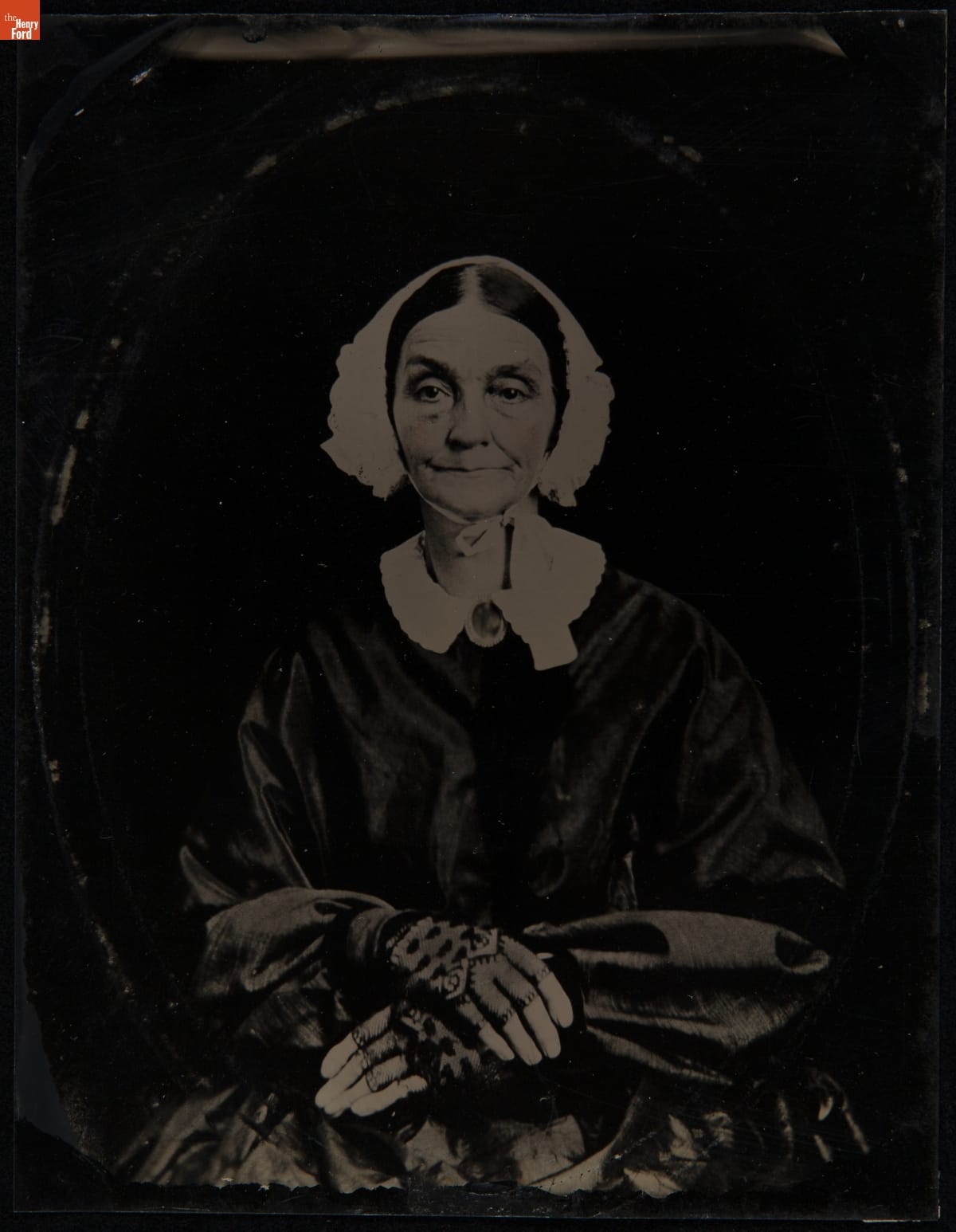
- Woman Wearing Black Lace Gloves, 1860-1870 - Tintypes, the popular "instant photographs" of the 19th century, could be produced in a matter of minutes at a price most people could afford. Tintypes democratized photography. Beginning in the mid-1850s, they gave more people than ever before the chance to have a real likeness of themselves--capturing unique glimpses of how everyday Americans looked and lived.
- 1860-1870
- Collections - Artifact
Woman Wearing Black Lace Gloves, 1860-1870
Tintypes, the popular "instant photographs" of the 19th century, could be produced in a matter of minutes at a price most people could afford. Tintypes democratized photography. Beginning in the mid-1850s, they gave more people than ever before the chance to have a real likeness of themselves--capturing unique glimpses of how everyday Americans looked and lived.
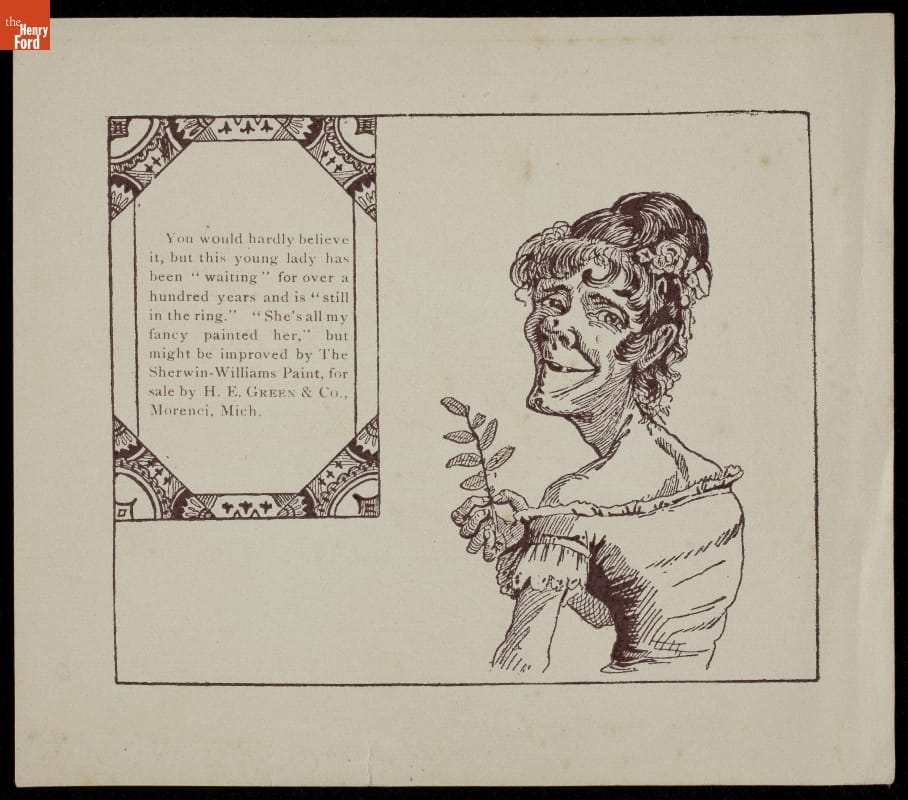
- Trade Card for Sherwin-Williams Paint, 1870-1900 - In the last third of the nineteenth century, an unprecedented variety of consumer goods and services flooded the American market. Advertisers bombarded potential customers with trade cards. Americans enjoyed and saved the often illustrated little advertisements found in product packages or distributed by local merchants. Many survive as historical records of commercialism in the United States.
- 1870-1900
- Collections - Artifact
Trade Card for Sherwin-Williams Paint, 1870-1900
In the last third of the nineteenth century, an unprecedented variety of consumer goods and services flooded the American market. Advertisers bombarded potential customers with trade cards. Americans enjoyed and saved the often illustrated little advertisements found in product packages or distributed by local merchants. Many survive as historical records of commercialism in the United States.