
Search
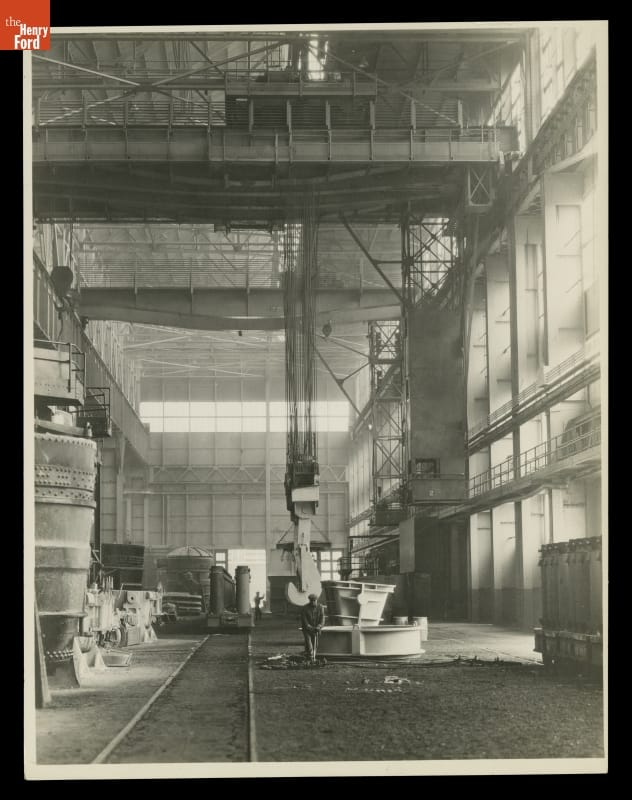
- Open Hearth Building at Ford Rouge Plant, 1927 - A worker shovels debris in the Ford Rouge Plant's open-hearth building, where ten monstrous furnaces worked day and night to produce steel for plant operations. Suspended behind him is the giant hook of a 125-ton crane. Its job was to transport massive ladles (one is partially visible, left) of molten metal through the steelmaking process.
- July 12, 1929
- Collections - Artifact
Open Hearth Building at Ford Rouge Plant, 1927
A worker shovels debris in the Ford Rouge Plant's open-hearth building, where ten monstrous furnaces worked day and night to produce steel for plant operations. Suspended behind him is the giant hook of a 125-ton crane. Its job was to transport massive ladles (one is partially visible, left) of molten metal through the steelmaking process.
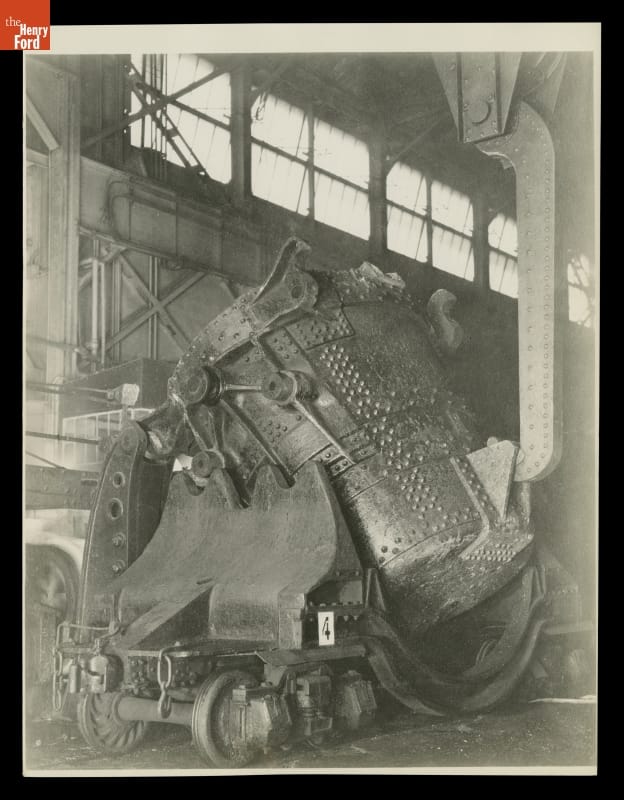
- Open Hearth Ladle at Ford Rouge Plant, 1927 - To produce steel for Rouge plant operations, Ford used ten open-hearth furnaces with a capacity of at least 180 tons. The furnaces operated day and night, producing nearly 2,000 tons of steel daily. The process relied on cranes and railcars to transport colossal ladles like the one seen here. Each of them carried 75 tons of molten metal.
- 1927
- Collections - Artifact
Open Hearth Ladle at Ford Rouge Plant, 1927
To produce steel for Rouge plant operations, Ford used ten open-hearth furnaces with a capacity of at least 180 tons. The furnaces operated day and night, producing nearly 2,000 tons of steel daily. The process relied on cranes and railcars to transport colossal ladles like the one seen here. Each of them carried 75 tons of molten metal.
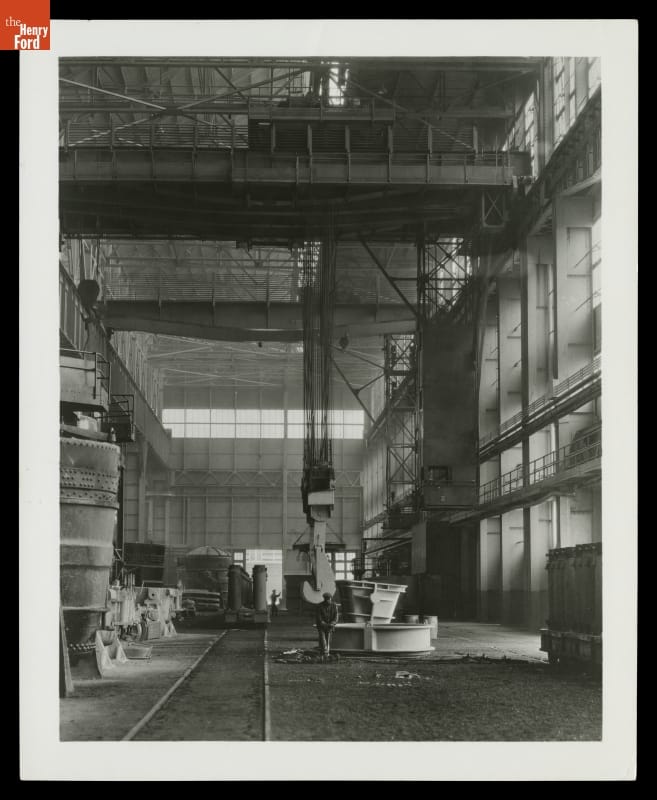
- Open Hearth Building at Ford Rouge Plant, 1927 - A worker shovels debris in the Ford Rouge Plant's open-hearth building, where ten monstrous furnaces worked day and night to produce steel for plant operations. Suspended behind him is the giant hook of a 125-ton crane. Its job was to transport massive ladles (one is partially visible, left) of molten metal through the steelmaking process.
- 1927
- Collections - Artifact
Open Hearth Building at Ford Rouge Plant, 1927
A worker shovels debris in the Ford Rouge Plant's open-hearth building, where ten monstrous furnaces worked day and night to produce steel for plant operations. Suspended behind him is the giant hook of a 125-ton crane. Its job was to transport massive ladles (one is partially visible, left) of molten metal through the steelmaking process.
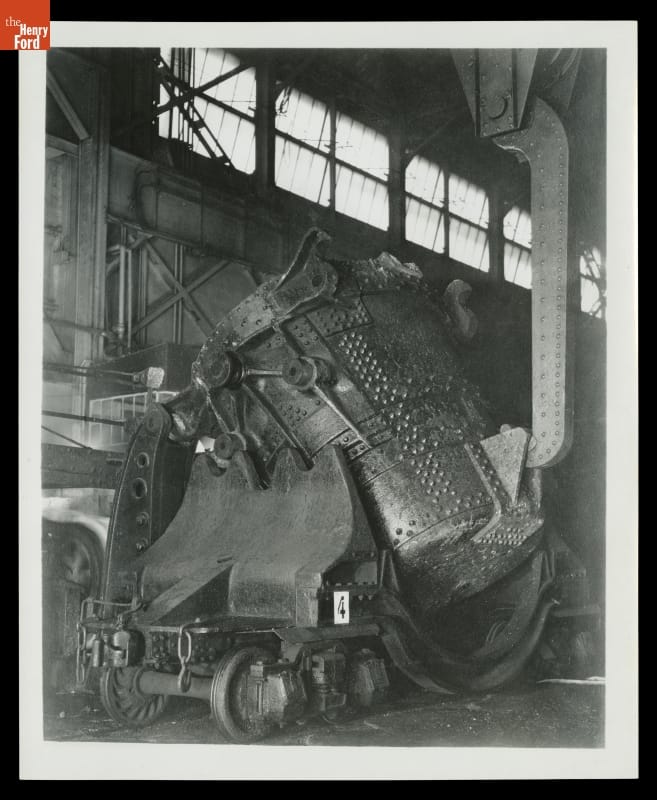
- Open Hearth Ladle at Ford Rouge Plant, 1927 - To produce steel for Rouge plant operations, Ford used ten open-hearth furnaces with a capacity of at least 180 tons. The furnaces operated day and night, producing nearly 2,000 tons of steel daily. The process relied on cranes and railcars to transport colossal ladles like the one seen here. Each of them carried 75 tons of molten metal.
- 1927
- Collections - Artifact
Open Hearth Ladle at Ford Rouge Plant, 1927
To produce steel for Rouge plant operations, Ford used ten open-hearth furnaces with a capacity of at least 180 tons. The furnaces operated day and night, producing nearly 2,000 tons of steel daily. The process relied on cranes and railcars to transport colossal ladles like the one seen here. Each of them carried 75 tons of molten metal.
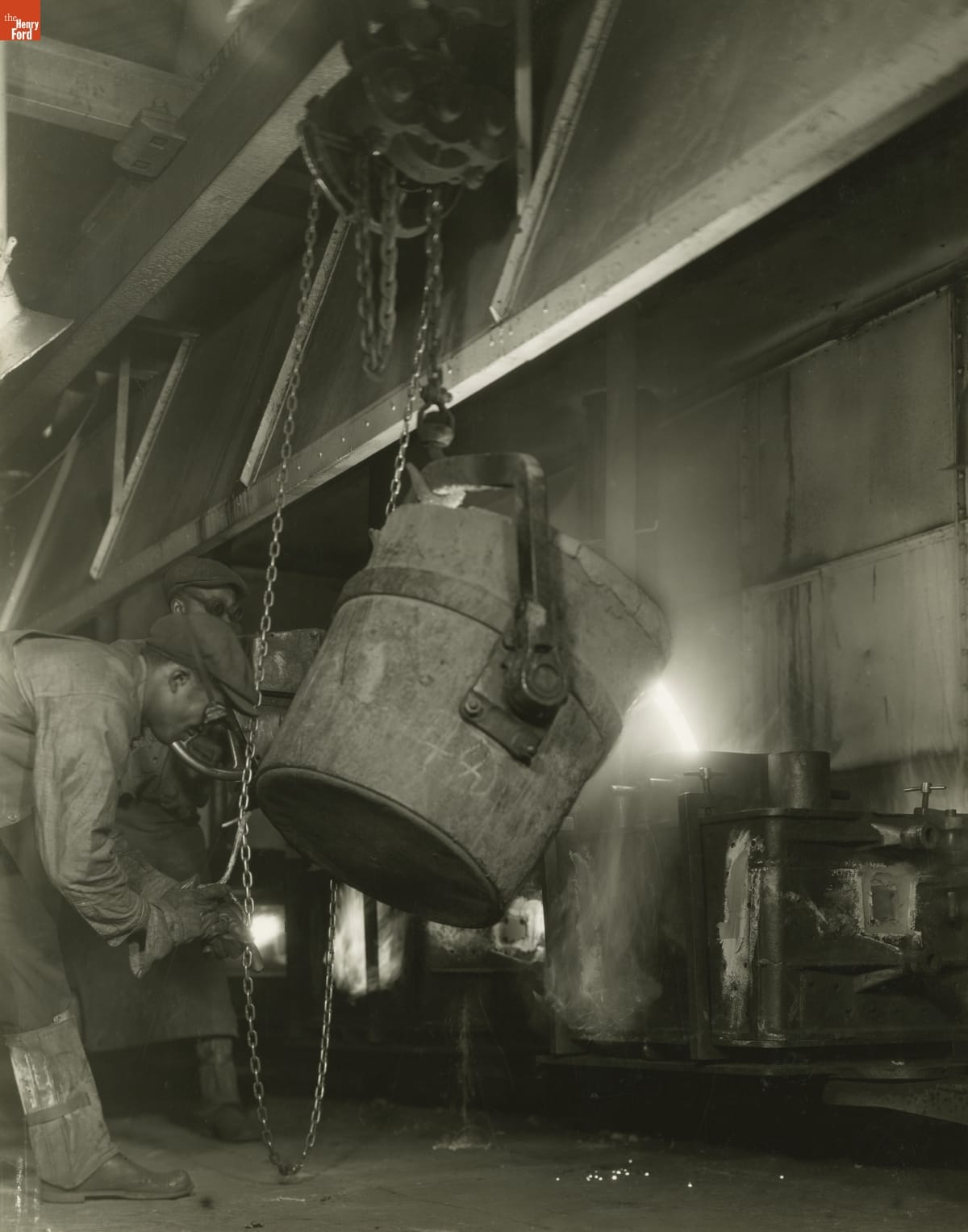
- Foundry Workers Pouring Metal into Molds in the Open Hearth Building at the Ford Rouge Plant, 1934 - Workers at the Ford Rouge plant's foundry poured a molten mixture of metal, coke, and limestone into molds to create cast-metal engine blocks and parts. Once "shaken out" of their molds, castings were roughly machined before heading elsewhere for finishing and assembly. The Rouge foundry set an industry benchmark in 1932 by successfully casting Ford's intricate, single-piece V-8 engine block.
- November 01, 1970
- Collections - Artifact
Foundry Workers Pouring Metal into Molds in the Open Hearth Building at the Ford Rouge Plant, 1934
Workers at the Ford Rouge plant's foundry poured a molten mixture of metal, coke, and limestone into molds to create cast-metal engine blocks and parts. Once "shaken out" of their molds, castings were roughly machined before heading elsewhere for finishing and assembly. The Rouge foundry set an industry benchmark in 1932 by successfully casting Ford's intricate, single-piece V-8 engine block.