
Search
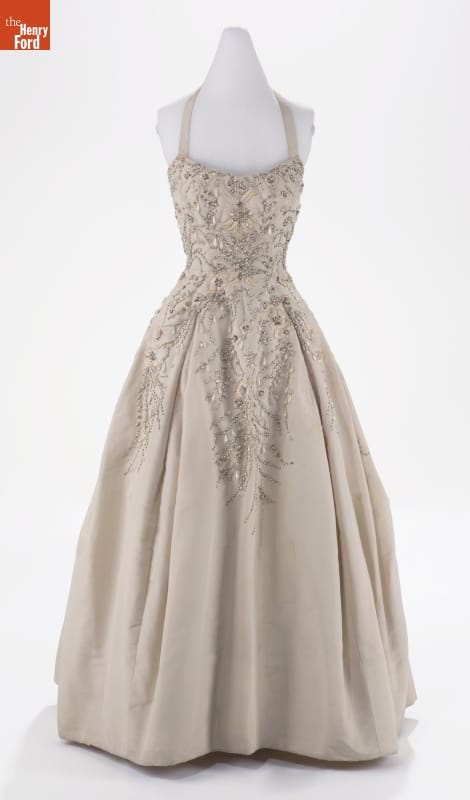
- Christian Dior Evening Dress, "Fontainebleau Adaptation," Worn by Anne Firestone to the 1955 Reopening of the Vienna Opera House, 1954 -
- 1955
- Collections - Artifact
Christian Dior Evening Dress, "Fontainebleau Adaptation," Worn by Anne Firestone to the 1955 Reopening of the Vienna Opera House, 1954
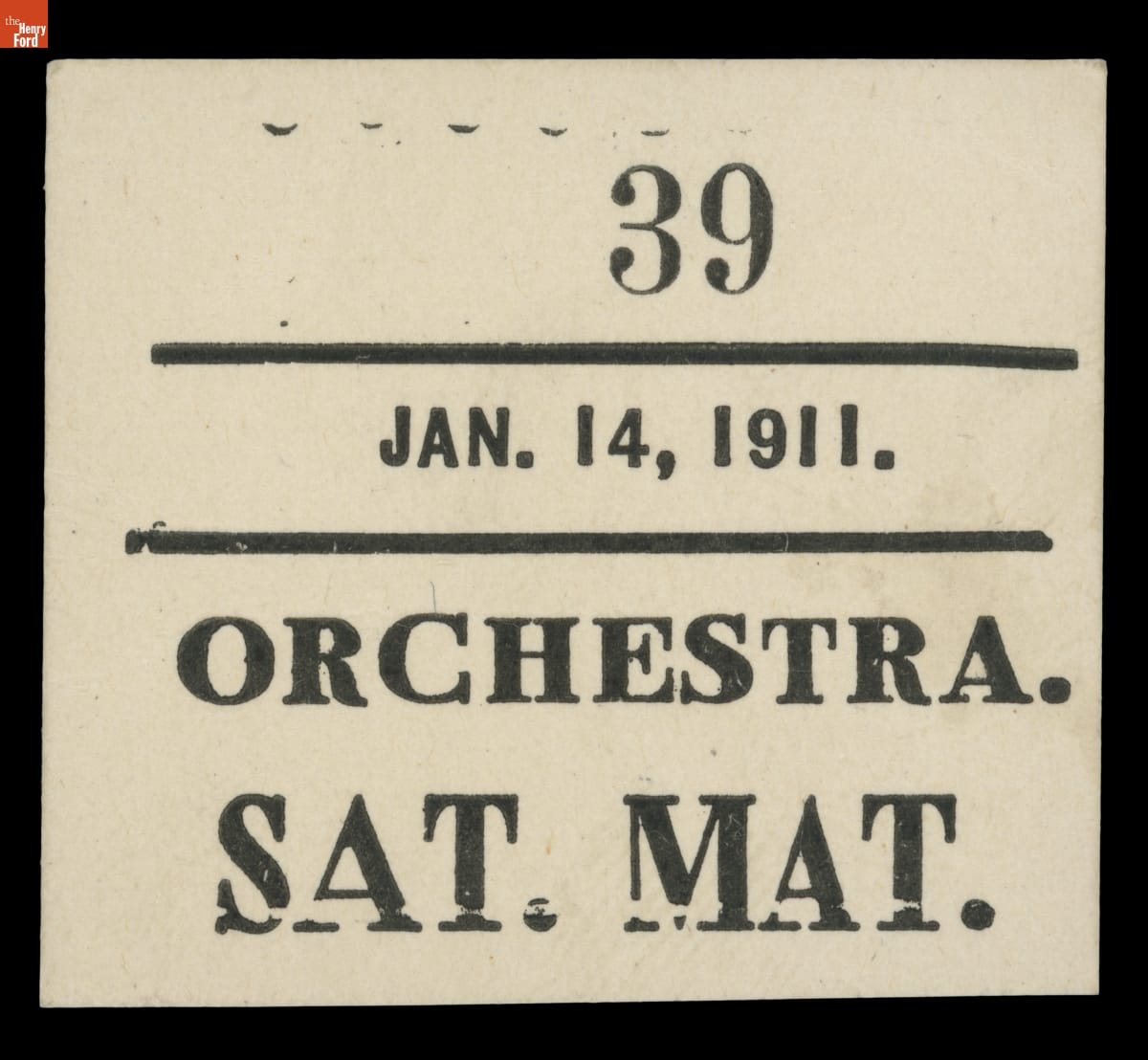
- Ticket for a Performance of "The Fascinating Widow," Saturday Matinee, January 14, 1911 -
- January 14, 1911
- Collections - Artifact
Ticket for a Performance of "The Fascinating Widow," Saturday Matinee, January 14, 1911
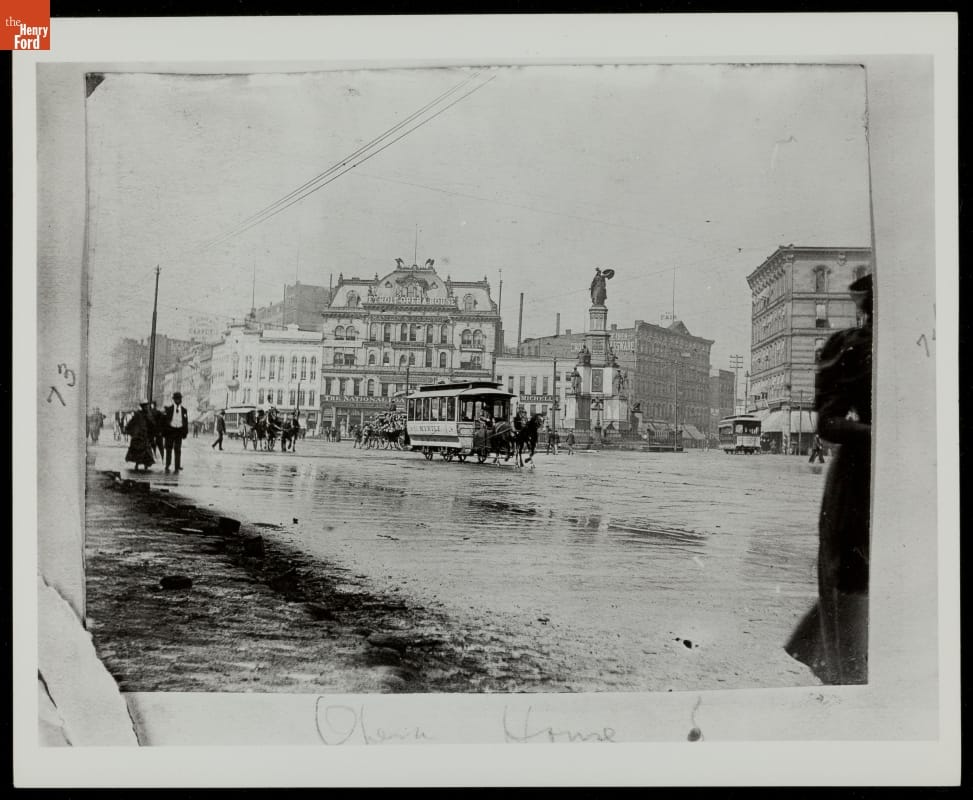
- Detroit Opera House, Detroit, Michigan, circa 1890 - The first Detroit Opera House stands behind a horse-drawn streetcar at Campus Martius, a former military training ground that became the "point of origin" of Detroit's coordinate street system and site of the Michigan Soldiers' and Sailors' Monument. Electric streetcar lines (note the wires strung above the streets) coexisted with horsecars in turn-of-the-ninteenth-century Detroit.
- circa 1890
- Collections - Artifact
Detroit Opera House, Detroit, Michigan, circa 1890
The first Detroit Opera House stands behind a horse-drawn streetcar at Campus Martius, a former military training ground that became the "point of origin" of Detroit's coordinate street system and site of the Michigan Soldiers' and Sailors' Monument. Electric streetcar lines (note the wires strung above the streets) coexisted with horsecars in turn-of-the-ninteenth-century Detroit.
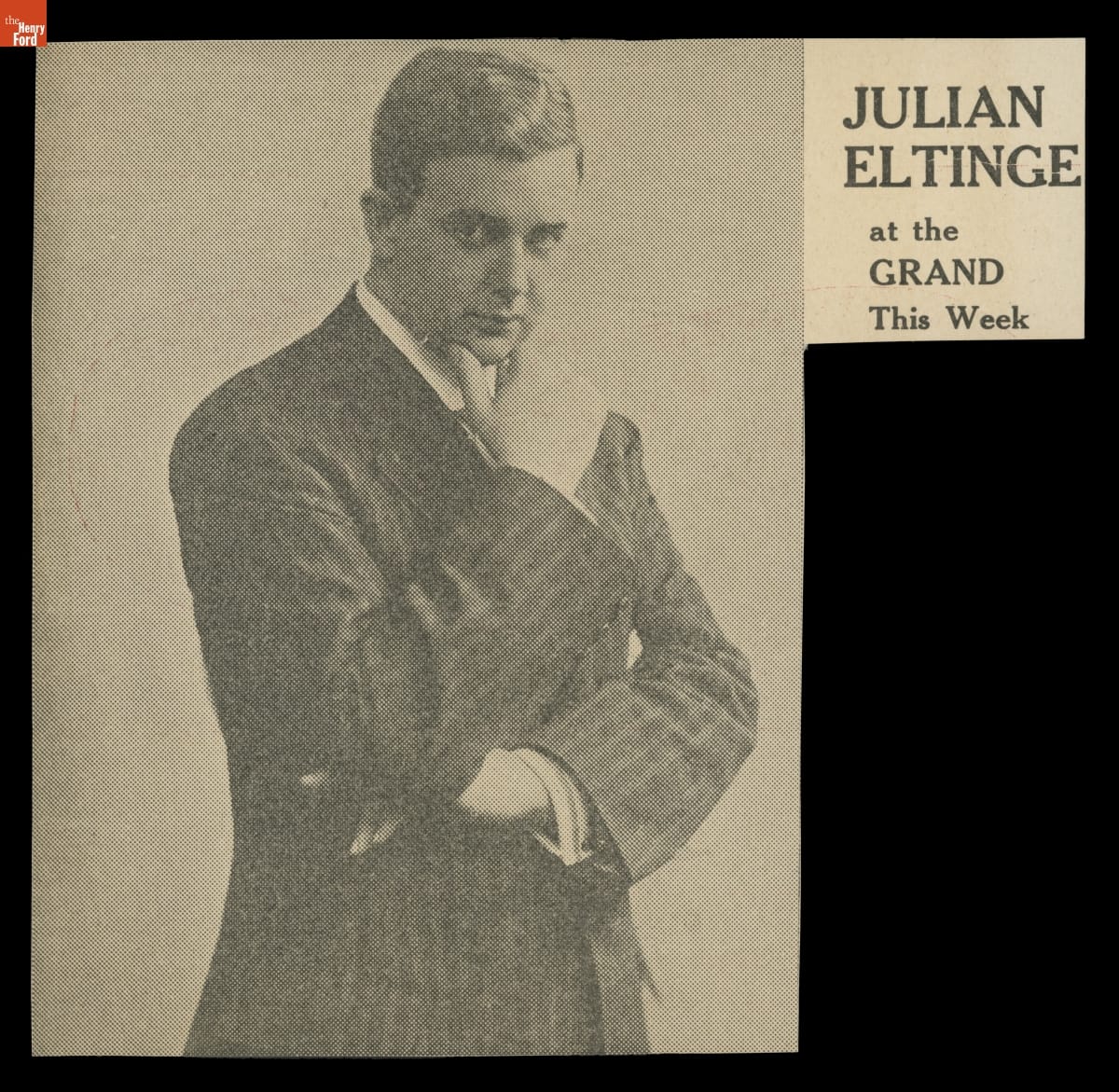
- "Julian Eltinge at the GRAND this Week," 1911 - Vaudeville performer Julian Eltinge was the most famous and highly paid female impersonator of the early 20th century. He embodied gaudy elegance, wore glamourous gowns, and perfected female mannerisms. His most well-known show -- <em>The Fascinating Widow</em> -- opened on Broadway in 1910. He would go on to appear in several Hollywood films, in addition to his continued stage performances.
- January 01, 1911
- Collections - Artifact
"Julian Eltinge at the GRAND this Week," 1911
Vaudeville performer Julian Eltinge was the most famous and highly paid female impersonator of the early 20th century. He embodied gaudy elegance, wore glamourous gowns, and perfected female mannerisms. His most well-known show -- The Fascinating Widow -- opened on Broadway in 1910. He would go on to appear in several Hollywood films, in addition to his continued stage performances.
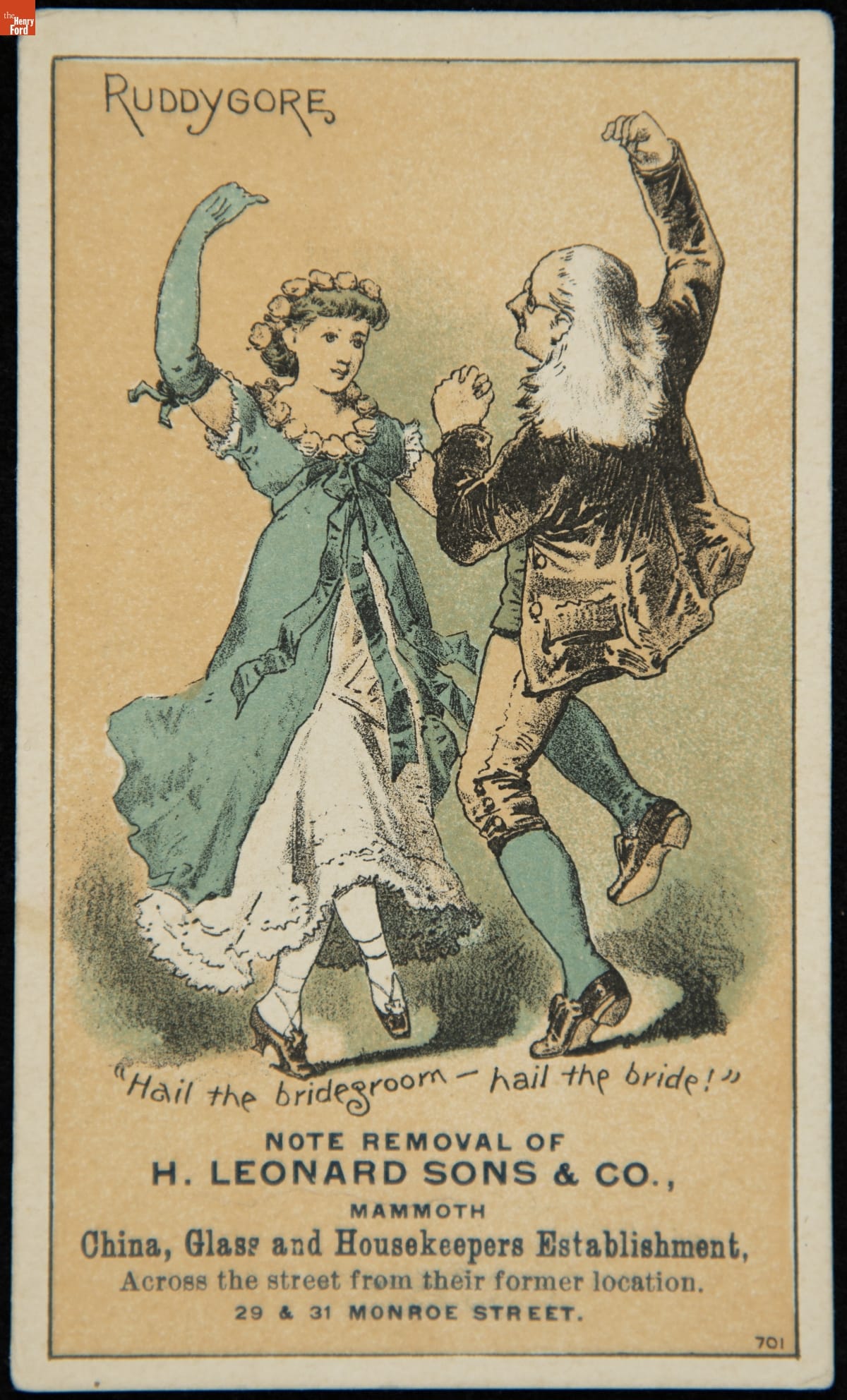
- Trade Card for H. Leonard Sons & Co., "Hail, the Bridegroom!, Hail, the Bride," circa 1887 - In the last third of the nineteenth century, an unprecedented variety of consumer goods and services flooded the American market. Advertisers, armed with new methods of color printing, bombarded potential customers with trade cards. Americans enjoyed and often saved the vibrant little advertisements found in product packages or distributed by local merchants. Many survive as historical records of commercialism in the United States.
- circa 1887
- Collections - Artifact
Trade Card for H. Leonard Sons & Co., "Hail, the Bridegroom!, Hail, the Bride," circa 1887
In the last third of the nineteenth century, an unprecedented variety of consumer goods and services flooded the American market. Advertisers, armed with new methods of color printing, bombarded potential customers with trade cards. Americans enjoyed and often saved the vibrant little advertisements found in product packages or distributed by local merchants. Many survive as historical records of commercialism in the United States.
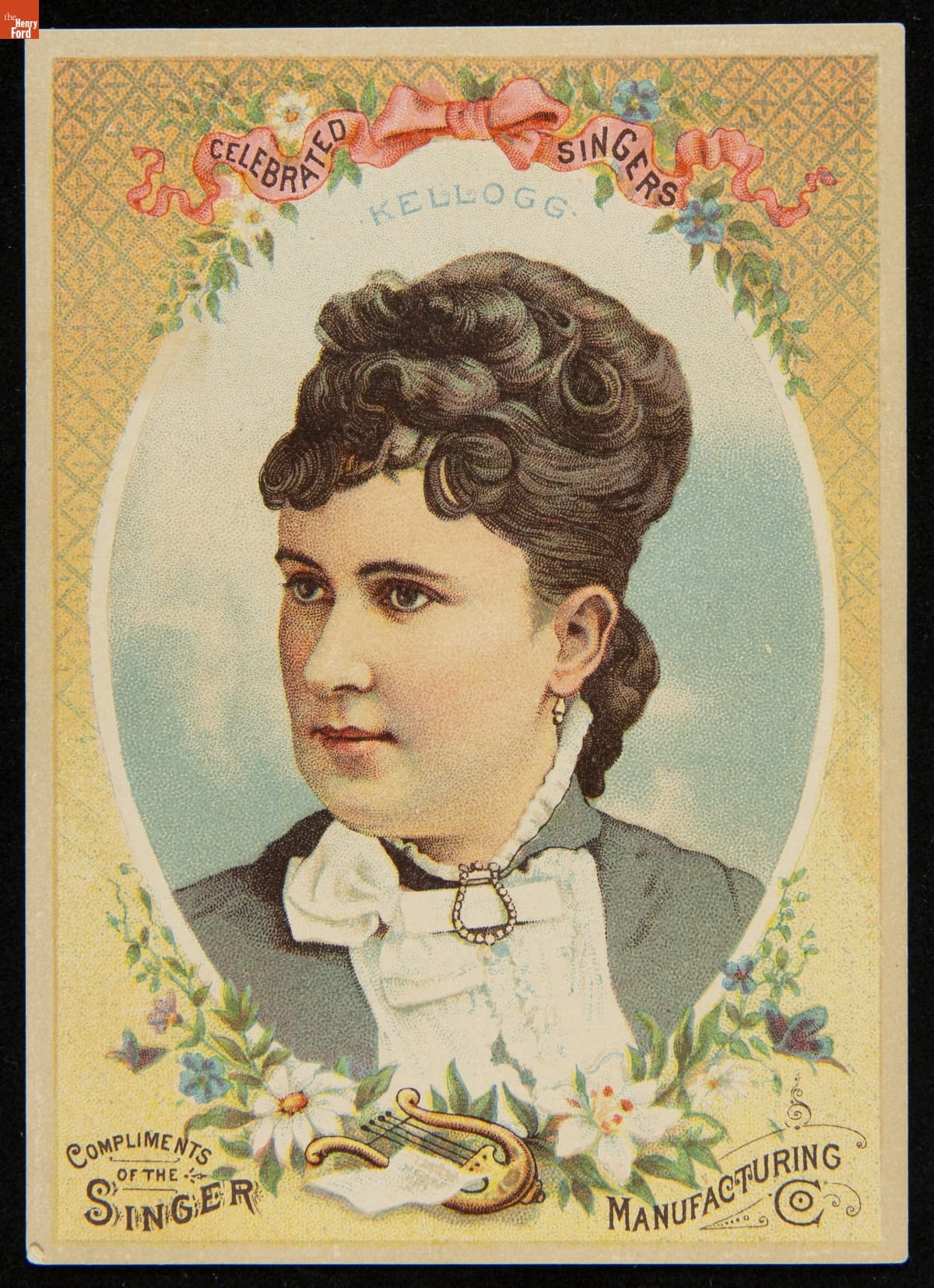
- Trade Card for Singer Sewing Machines, Featuring Opera Singer Clara Louise Kellogg, 1880-1900 - Clara Louise Kellogg (1842-1916), America's preeminent soprano from the 1860s through the 1880s, made her operatic debut in New York in 1861. Six years later, she made her European debut, gaining international recognition. In 1873, Kellogg formed an opera company to perform in English to familiarize American audiences with European opera. After retiring, she taught promising students and authored her autobiography.
- 1880-1900
- Collections - Artifact
Trade Card for Singer Sewing Machines, Featuring Opera Singer Clara Louise Kellogg, 1880-1900
Clara Louise Kellogg (1842-1916), America's preeminent soprano from the 1860s through the 1880s, made her operatic debut in New York in 1861. Six years later, she made her European debut, gaining international recognition. In 1873, Kellogg formed an opera company to perform in English to familiarize American audiences with European opera. After retiring, she taught promising students and authored her autobiography.
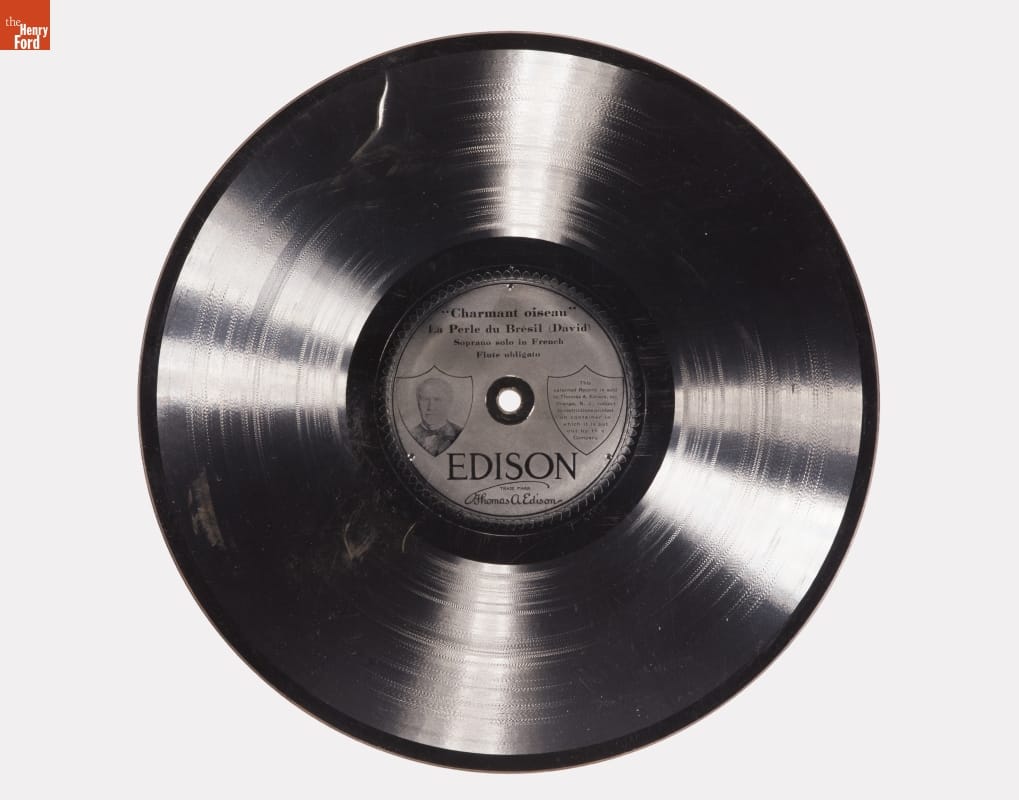
- Edison Diamond Disc Record, "Charmant Oiseau (from La Perle de Brasil)" and a Message for Thomas Edison, 1915 - This rare recording was the brainchild of Thomas Edison's Chief Engineer Miller R. Hutchison. A group of Edison's friends and business associates gathered at Edison's West Orange, New Jersey, laboratory as this pre-recorded speech was played during a telephone call made to Edison over the newly completed transcontinental telephone line. Edison was visiting the 1915 Pan-American Exhibition in San Francisco on the opposite coast. This recording was never sold commercially.
- October 21, 1915
- Collections - Artifact
Edison Diamond Disc Record, "Charmant Oiseau (from La Perle de Brasil)" and a Message for Thomas Edison, 1915
This rare recording was the brainchild of Thomas Edison's Chief Engineer Miller R. Hutchison. A group of Edison's friends and business associates gathered at Edison's West Orange, New Jersey, laboratory as this pre-recorded speech was played during a telephone call made to Edison over the newly completed transcontinental telephone line. Edison was visiting the 1915 Pan-American Exhibition in San Francisco on the opposite coast. This recording was never sold commercially.
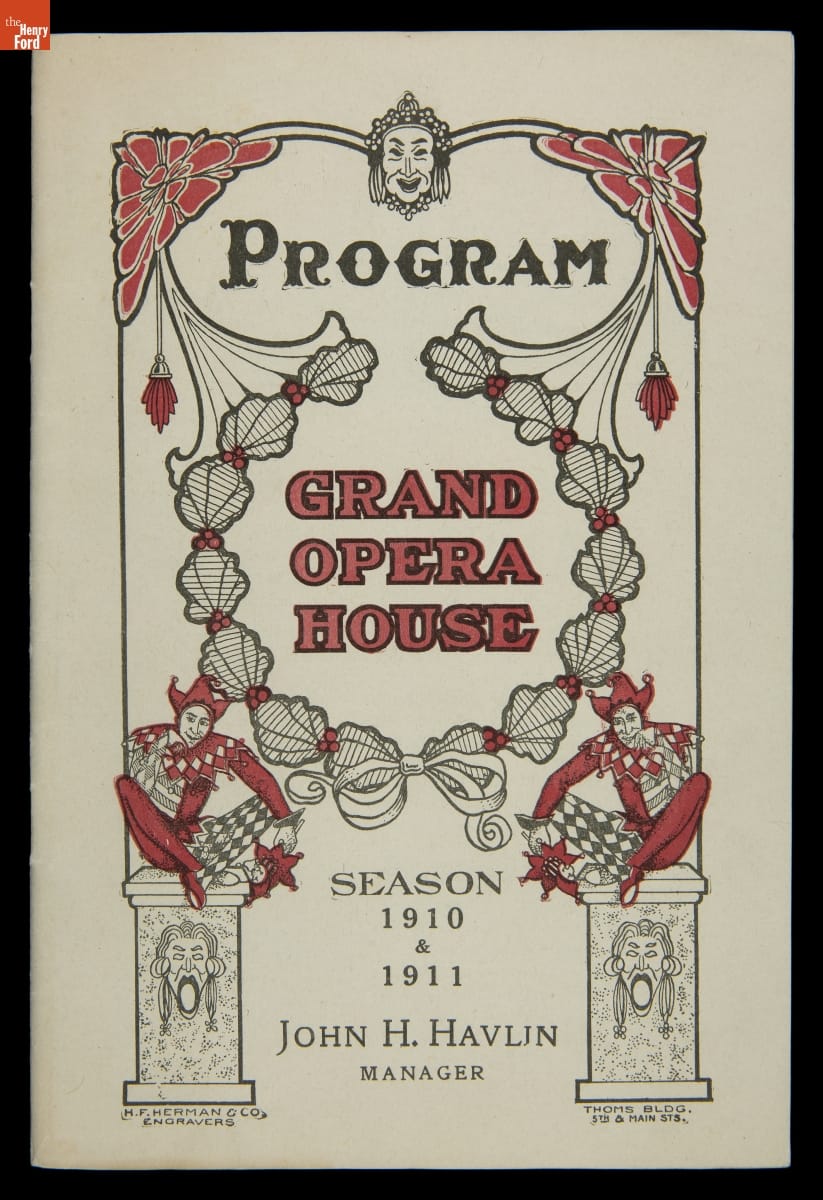
- Grand Opera House Program for the Week Beginning January 9, 1911, "Julian Eltinge, The Fascinating Widow" - Vaudeville performer Julian Eltinge was the most famous and highly paid female impersonator of the early 20th century. He embodied gaudy elegance, wore glamourous gowns, and perfected female mannerisms. His most well-known show -- <em>The Fascinating Widow</em> -- opened on Broadway in 1910. He would go on to appear in several Hollywood films, in addition to his continued stage performances.
- January 01, 1911
- Collections - Artifact
Grand Opera House Program for the Week Beginning January 9, 1911, "Julian Eltinge, The Fascinating Widow"
Vaudeville performer Julian Eltinge was the most famous and highly paid female impersonator of the early 20th century. He embodied gaudy elegance, wore glamourous gowns, and perfected female mannerisms. His most well-known show -- The Fascinating Widow -- opened on Broadway in 1910. He would go on to appear in several Hollywood films, in addition to his continued stage performances.
- Actress Appearing in the Musical, "H.M.S. Pinafore," circa 1880 - Professional photographers began producing cabinet cards in 1867. Consumers quickly preferred them over earlier cartes-de-visite, which were mounted on smaller cardboard stock. Through the early 1900s, Americans commonly exchanged and collected cabinet photographs of family, friends and celebrities. This example features an actress from "H.M.S. Pinafore"--a landmark comic opera that marked the beginning of popular American musical theatre.
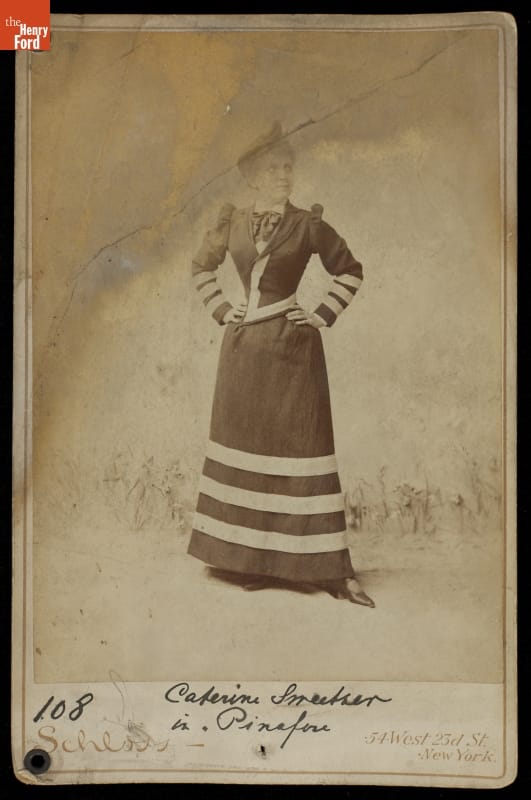
- circa 1880
- Collections - Artifact
Actress Appearing in the Musical, "H.M.S. Pinafore," circa 1880
Professional photographers began producing cabinet cards in 1867. Consumers quickly preferred them over earlier cartes-de-visite, which were mounted on smaller cardboard stock. Through the early 1900s, Americans commonly exchanged and collected cabinet photographs of family, friends and celebrities. This example features an actress from "H.M.S. Pinafore"--a landmark comic opera that marked the beginning of popular American musical theatre.
- Note by Elizabeth Parke Firestone regarding Her Christian Dior Dress for the Reopening of Vienna Opera House, November 1955 - Elizabeth Parke Firestone's refined sense of fashion reflected years of interest in clothing design and collaboration with world-renowned couturiers. She often appeared in fashion and society magazines. In 1955, Firestone proudly noted that the custom Christian Dior gown she had worn for the reopening of the Vienna Opera House "was the only one mentioned in all the Paris papers."
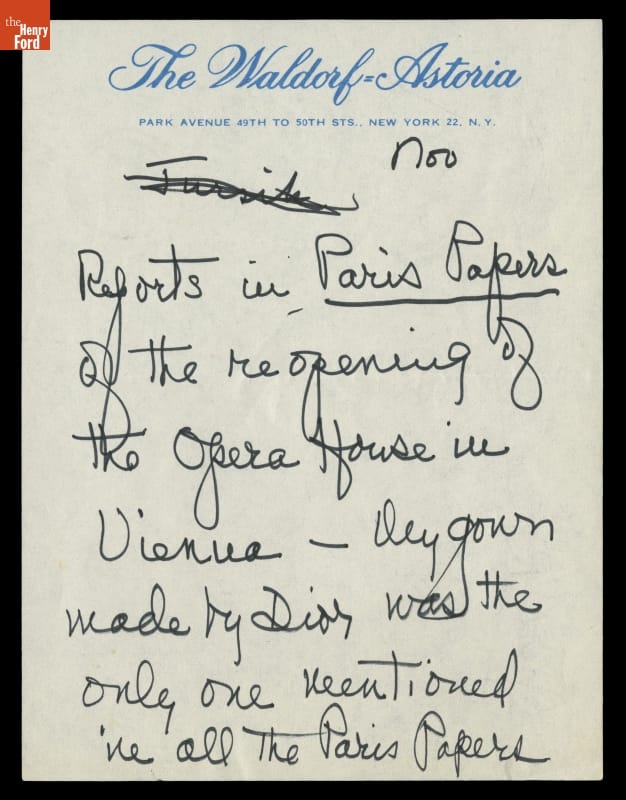
- November 01, 1955
- Collections - Artifact
Note by Elizabeth Parke Firestone regarding Her Christian Dior Dress for the Reopening of Vienna Opera House, November 1955
Elizabeth Parke Firestone's refined sense of fashion reflected years of interest in clothing design and collaboration with world-renowned couturiers. She often appeared in fashion and society magazines. In 1955, Firestone proudly noted that the custom Christian Dior gown she had worn for the reopening of the Vienna Opera House "was the only one mentioned in all the Paris papers."