
Search
- Ticket for a Performance of "The Fascinating Widow," Saturday Matinee, January 14, 1911 -
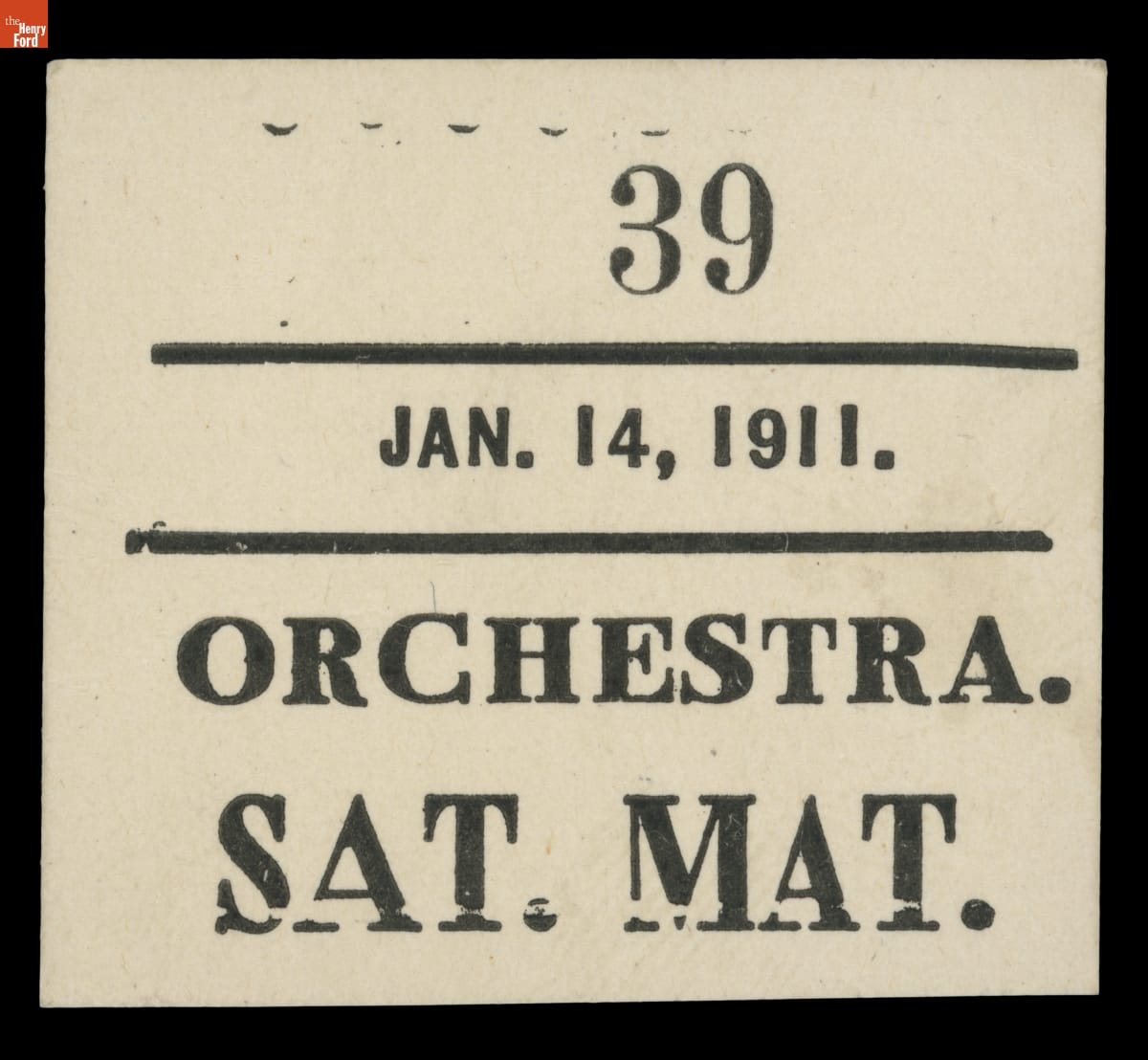
- January 14, 1911
- Collections - Artifact
Ticket for a Performance of "The Fascinating Widow," Saturday Matinee, January 14, 1911
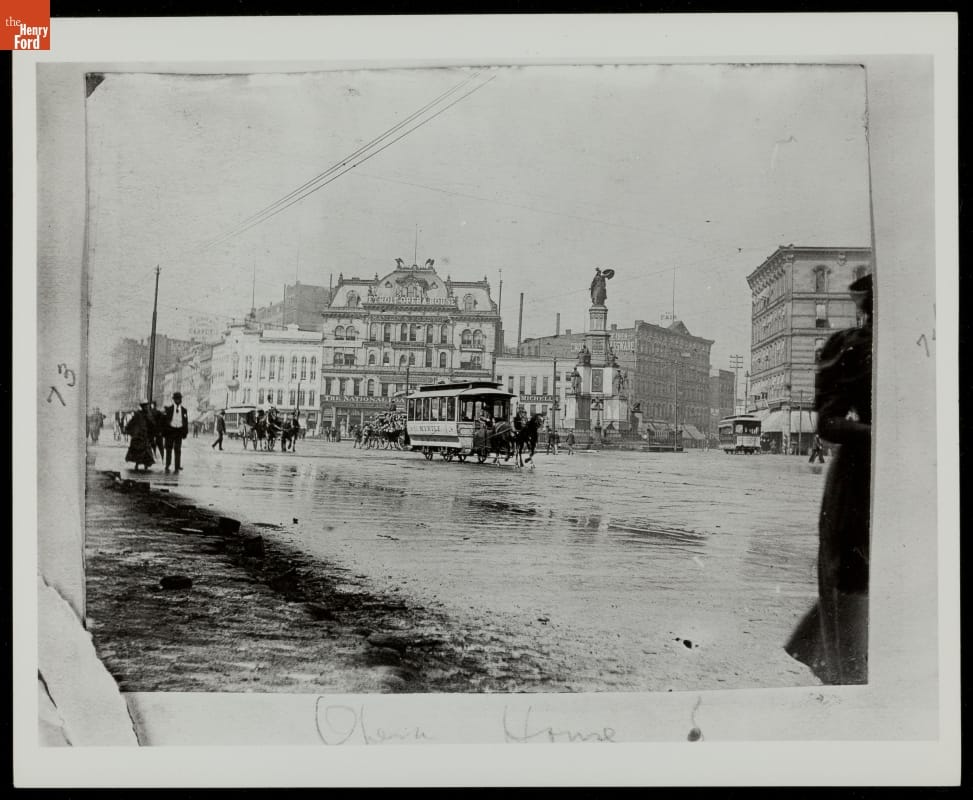
- Detroit Opera House, Detroit, Michigan, circa 1890 - The first Detroit Opera House stands behind a horse-drawn streetcar at Campus Martius, a former military training ground that became the "point of origin" of Detroit's coordinate street system and site of the Michigan Soldiers' and Sailors' Monument. Electric streetcar lines (note the wires strung above the streets) coexisted with horsecars in turn-of-the-ninteenth-century Detroit.
- circa 1890
- Collections - Artifact
Detroit Opera House, Detroit, Michigan, circa 1890
The first Detroit Opera House stands behind a horse-drawn streetcar at Campus Martius, a former military training ground that became the "point of origin" of Detroit's coordinate street system and site of the Michigan Soldiers' and Sailors' Monument. Electric streetcar lines (note the wires strung above the streets) coexisted with horsecars in turn-of-the-ninteenth-century Detroit.
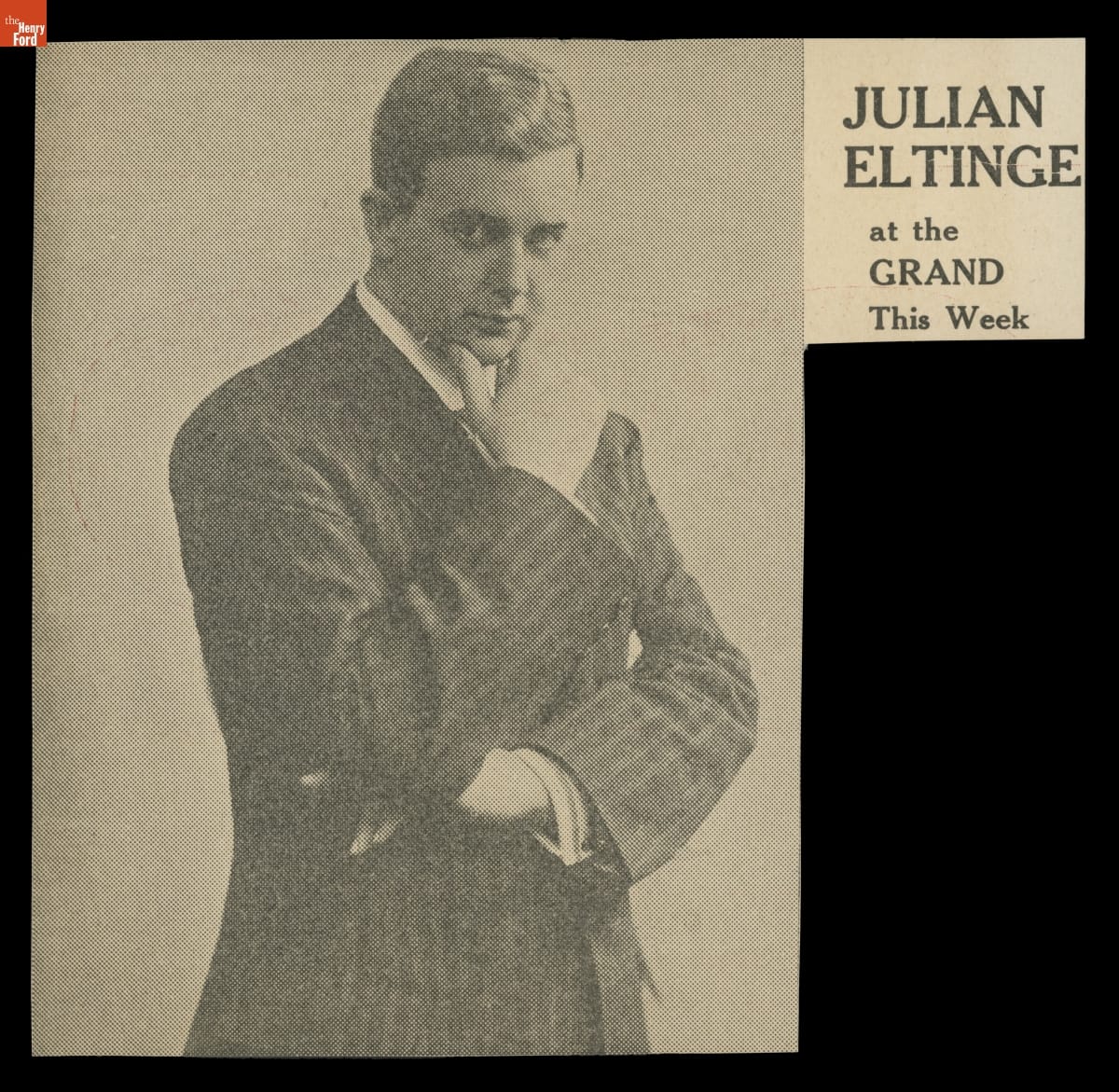
- "Julian Eltinge at the GRAND this Week," 1911 - Vaudeville performer Julian Eltinge was the most famous and highly paid female impersonator of the early 20th century. He embodied gaudy elegance, wore glamourous gowns, and perfected female mannerisms. His most well-known show -- <em>The Fascinating Widow</em> -- opened on Broadway in 1910. He would go on to appear in several Hollywood films, in addition to his continued stage performances.
- January 01, 1911
- Collections - Artifact
"Julian Eltinge at the GRAND this Week," 1911
Vaudeville performer Julian Eltinge was the most famous and highly paid female impersonator of the early 20th century. He embodied gaudy elegance, wore glamourous gowns, and perfected female mannerisms. His most well-known show -- The Fascinating Widow -- opened on Broadway in 1910. He would go on to appear in several Hollywood films, in addition to his continued stage performances.
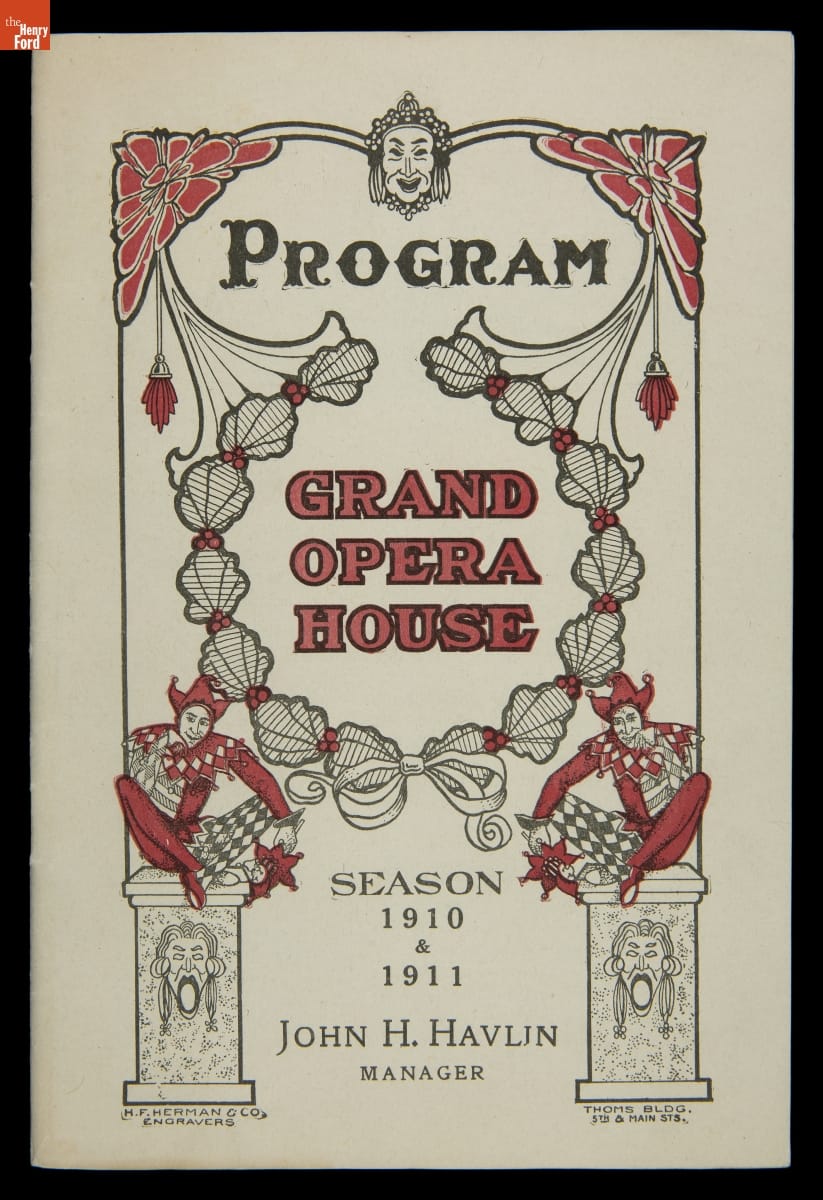
- Grand Opera House Program for the Week Beginning January 9, 1911, "Julian Eltinge, The Fascinating Widow" - Vaudeville performer Julian Eltinge was the most famous and highly paid female impersonator of the early 20th century. He embodied gaudy elegance, wore glamourous gowns, and perfected female mannerisms. His most well-known show -- <em>The Fascinating Widow</em> -- opened on Broadway in 1910. He would go on to appear in several Hollywood films, in addition to his continued stage performances.
- January 01, 1911
- Collections - Artifact
Grand Opera House Program for the Week Beginning January 9, 1911, "Julian Eltinge, The Fascinating Widow"
Vaudeville performer Julian Eltinge was the most famous and highly paid female impersonator of the early 20th century. He embodied gaudy elegance, wore glamourous gowns, and perfected female mannerisms. His most well-known show -- The Fascinating Widow -- opened on Broadway in 1910. He would go on to appear in several Hollywood films, in addition to his continued stage performances.
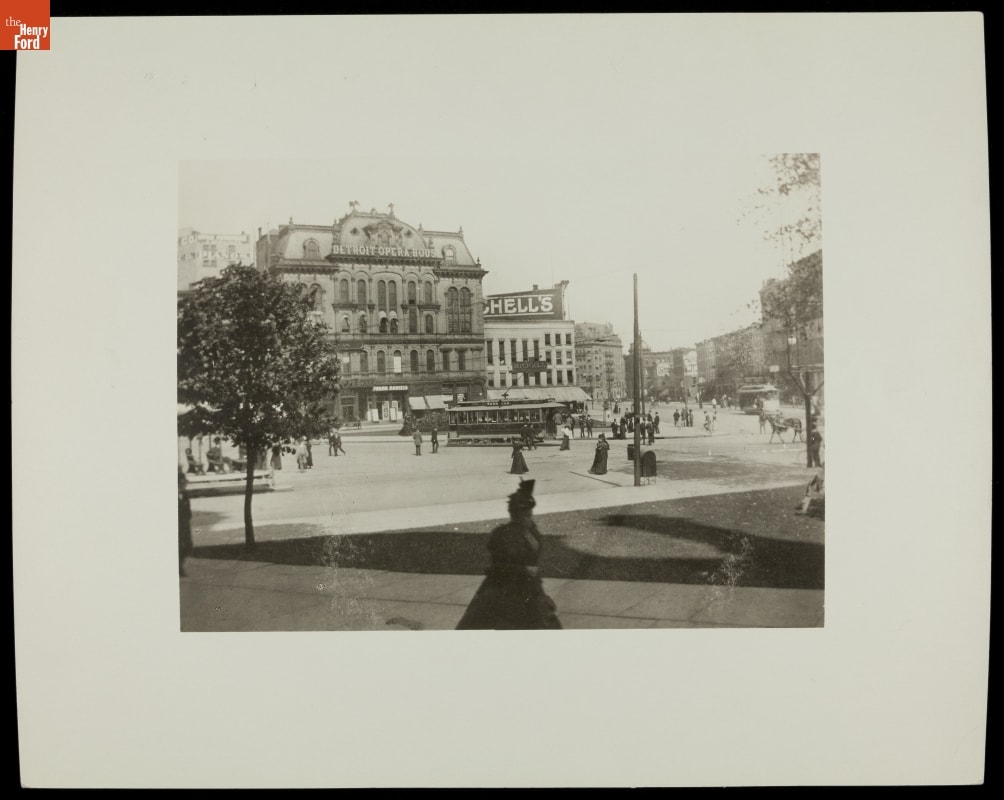
- Street scene showing Detroit Opera House, circa 1890 - Streetcars and pedestrians travel through Campus Martius, a former military training ground that became the "point of origin" of Detroit's coordinate street system. The tall French Renaissance building behind them is the first Detroit Opera House.
- circa 1890
- Collections - Artifact
Street scene showing Detroit Opera House, circa 1890
Streetcars and pedestrians travel through Campus Martius, a former military training ground that became the "point of origin" of Detroit's coordinate street system. The tall French Renaissance building behind them is the first Detroit Opera House.
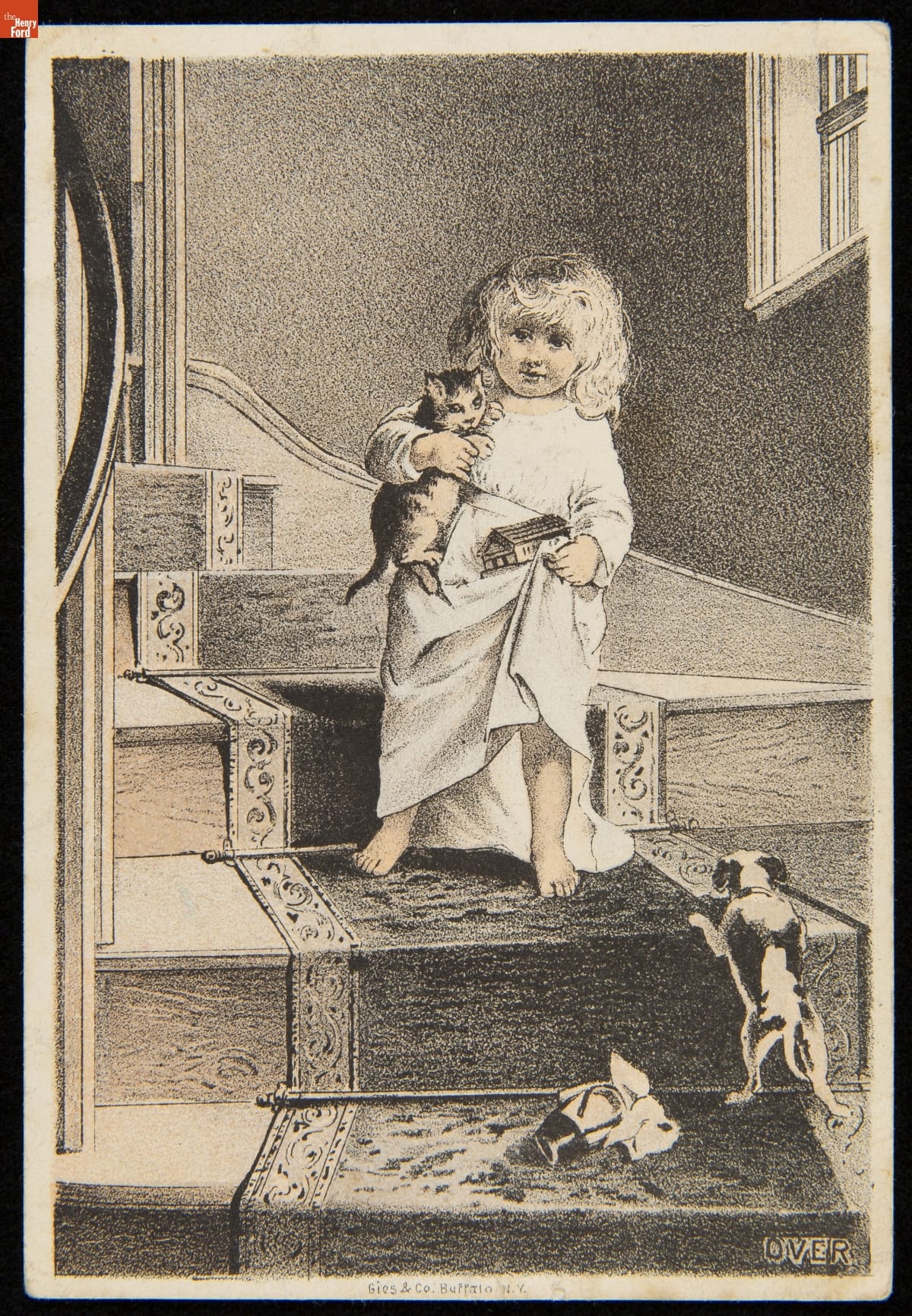
- Trade Card Advertising a Social Dance, Letcher's Opera House, Fayette, Ohio, 1880 - In the last third of the nineteenth century, promoters used a popular medium--trade cards--to announce shows, activities, and community events. Americans enjoyed and often saved the vibrant little advertisements, which survive as historical records of leisure in the United States.
- October 15, 1880
- Collections - Artifact
Trade Card Advertising a Social Dance, Letcher's Opera House, Fayette, Ohio, 1880
In the last third of the nineteenth century, promoters used a popular medium--trade cards--to announce shows, activities, and community events. Americans enjoyed and often saved the vibrant little advertisements, which survive as historical records of leisure in the United States.
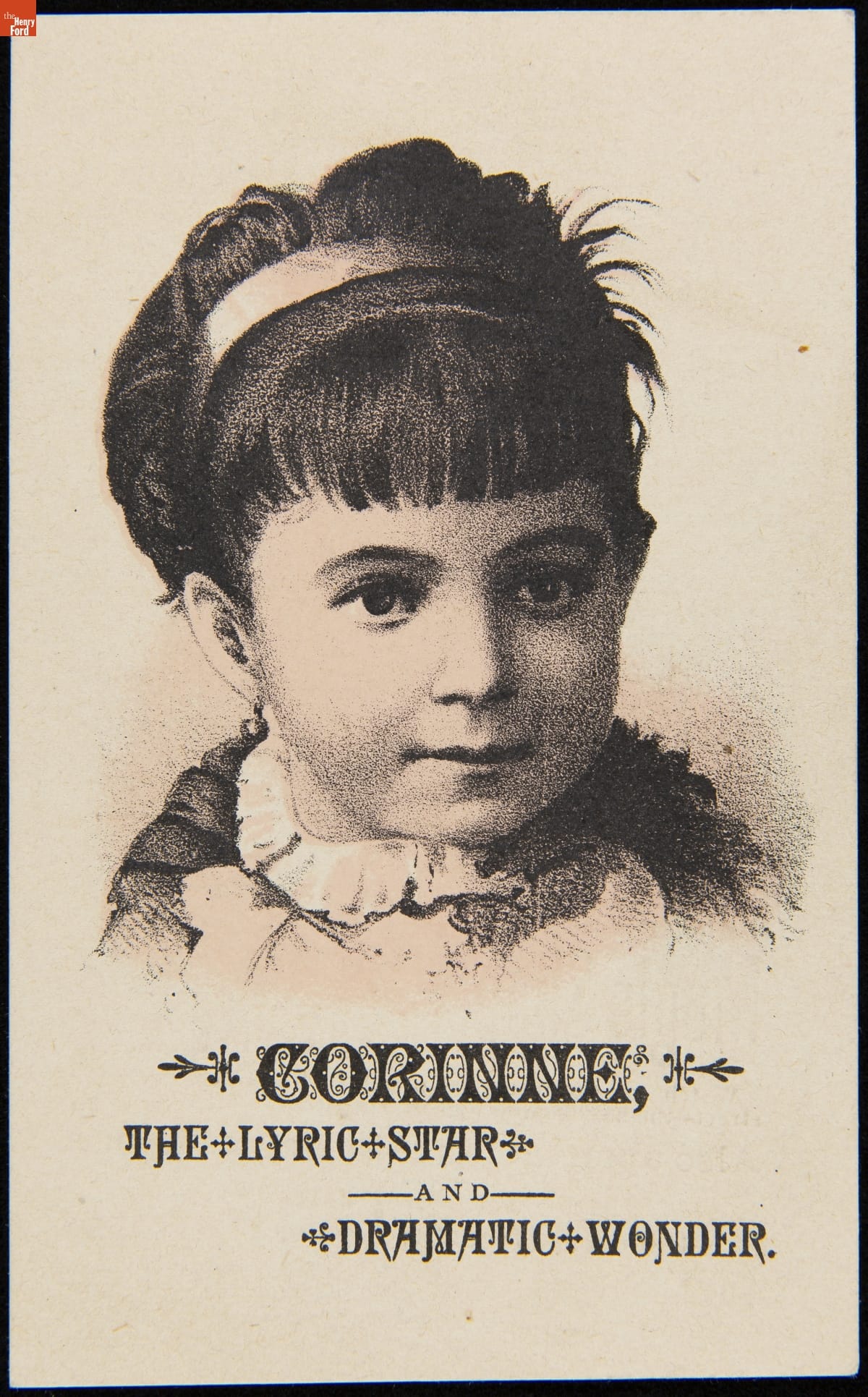
- Trade Card for the Westfield Music Hall Featuring "Corinne, The Lyric Star and Dramatic Wonder," May 12, 1883 - In the last third of the nineteenth century, an unprecedented variety of consumer goods and services flooded the American market. Advertisers, armed with new methods of color printing, bombarded potential customers with trade cards. Americans enjoyed and often saved the vibrant little advertisements found in product packages or distributed by local merchants. Many survive as historical records of commercialism in the United States.
- May 12, 1883
- Collections - Artifact
Trade Card for the Westfield Music Hall Featuring "Corinne, The Lyric Star and Dramatic Wonder," May 12, 1883
In the last third of the nineteenth century, an unprecedented variety of consumer goods and services flooded the American market. Advertisers, armed with new methods of color printing, bombarded potential customers with trade cards. Americans enjoyed and often saved the vibrant little advertisements found in product packages or distributed by local merchants. Many survive as historical records of commercialism in the United States.
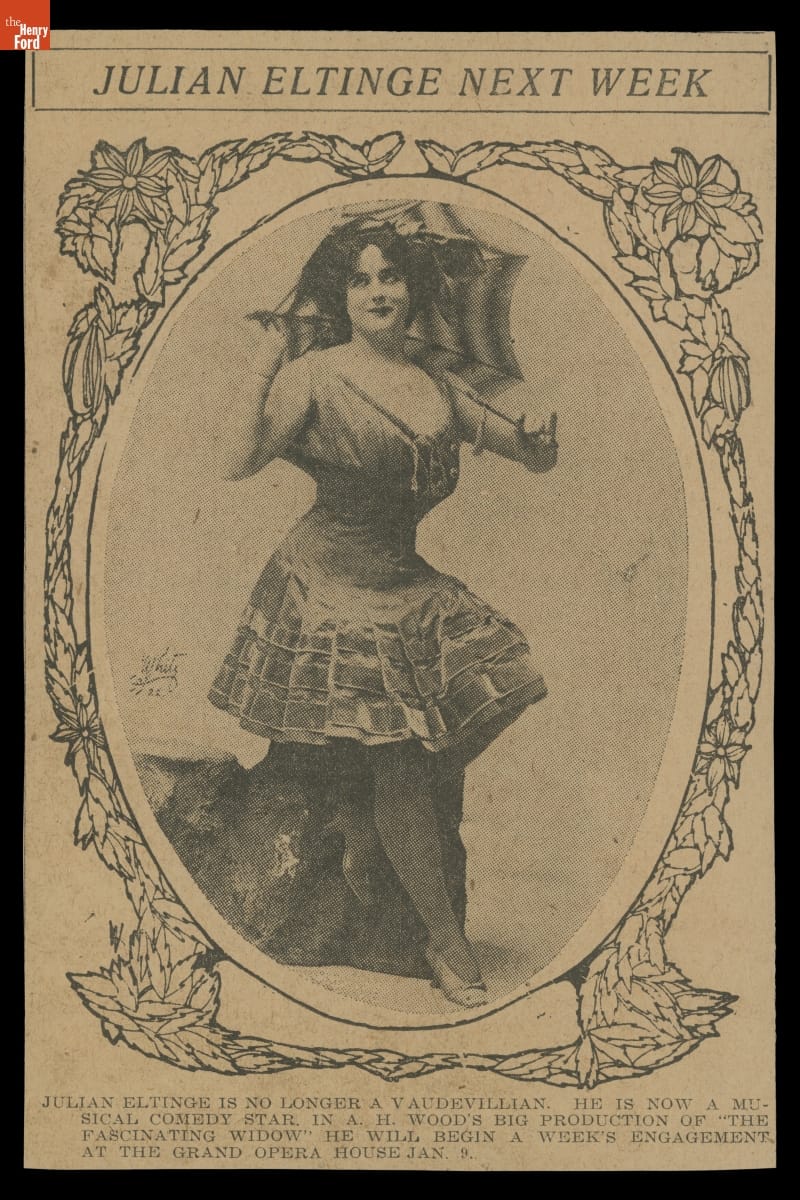
- "Julian Eltinge Next Week," January 1911 - Vaudeville performer Julian Eltinge was the most famous and highly paid female impersonator of the early 20th century. He embodied gaudy elegance, wore glamourous gowns, and perfected female mannerisms. His most well-known show -- <em>The Fascinating Widow</em> -- opened on Broadway in 1910. He would go on to appear in several Hollywood films, in addition to his continued stage performances.
- January 01, 1911
- Collections - Artifact
"Julian Eltinge Next Week," January 1911
Vaudeville performer Julian Eltinge was the most famous and highly paid female impersonator of the early 20th century. He embodied gaudy elegance, wore glamourous gowns, and perfected female mannerisms. His most well-known show -- The Fascinating Widow -- opened on Broadway in 1910. He would go on to appear in several Hollywood films, in addition to his continued stage performances.
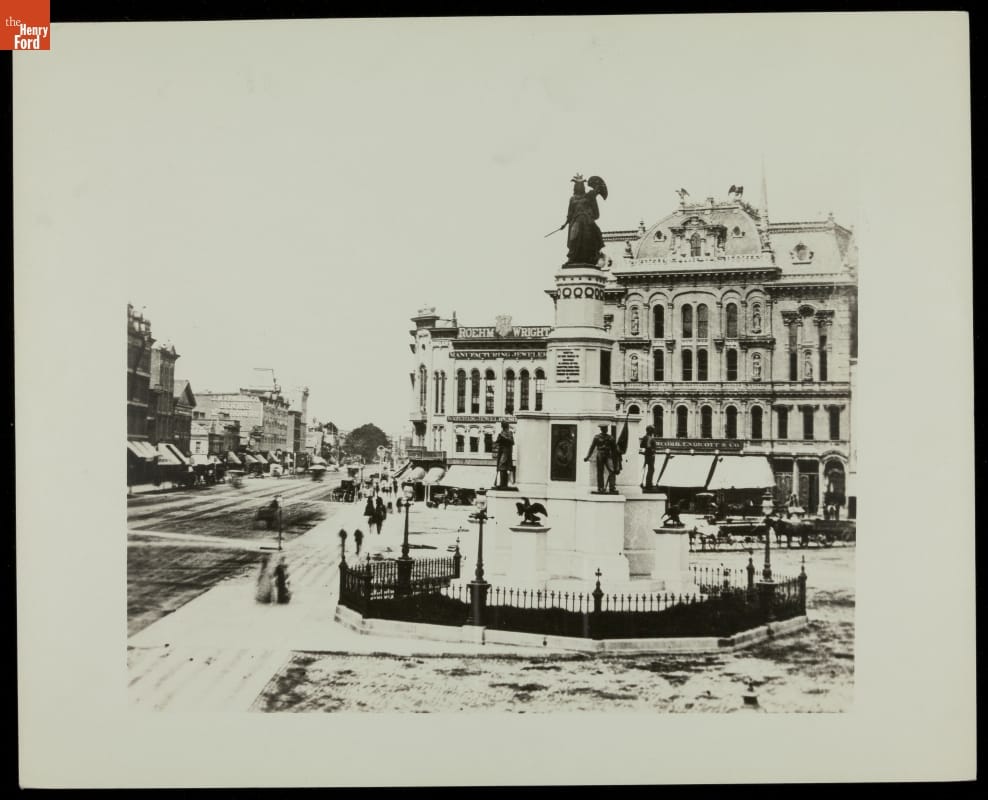
- Michigan Soldiers and Sailors Monument, Detroit, Michigan, circa 1895 - The Michigan Soldiers' and Sailors' Monument stands in front of the first Detroit Opera House at Campus Martius--a former military training ground that became the "point of origin" of the city's coordinate street system. Fundraising for the commemorative civic sculpture began after the end of the Civil War in 1865, and the completed monument was unveiled in 1872.
- circa 1895
- Collections - Artifact
Michigan Soldiers and Sailors Monument, Detroit, Michigan, circa 1895
The Michigan Soldiers' and Sailors' Monument stands in front of the first Detroit Opera House at Campus Martius--a former military training ground that became the "point of origin" of the city's coordinate street system. Fundraising for the commemorative civic sculpture began after the end of the Civil War in 1865, and the completed monument was unveiled in 1872.
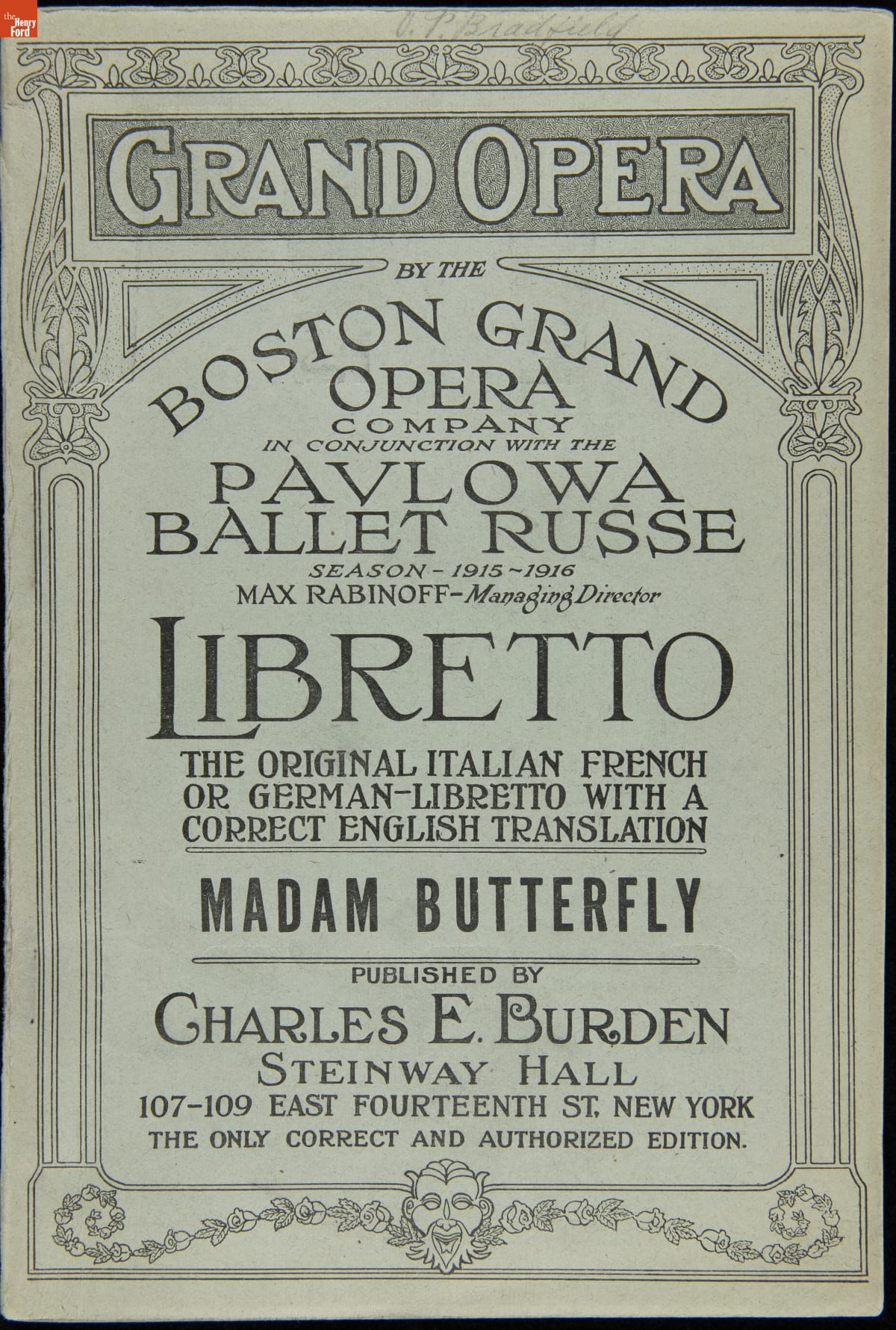
- Madam Butterfly: A Japanese Tragedy, Italian Libretto, 1915-1916 -
- 1915-1916
- Collections - Artifact
Madam Butterfly: A Japanese Tragedy, Italian Libretto, 1915-1916